
Skip The Butterfly Bush And Plant This North Carolina Native That Pollinators Swarm Instead
Follow us on Google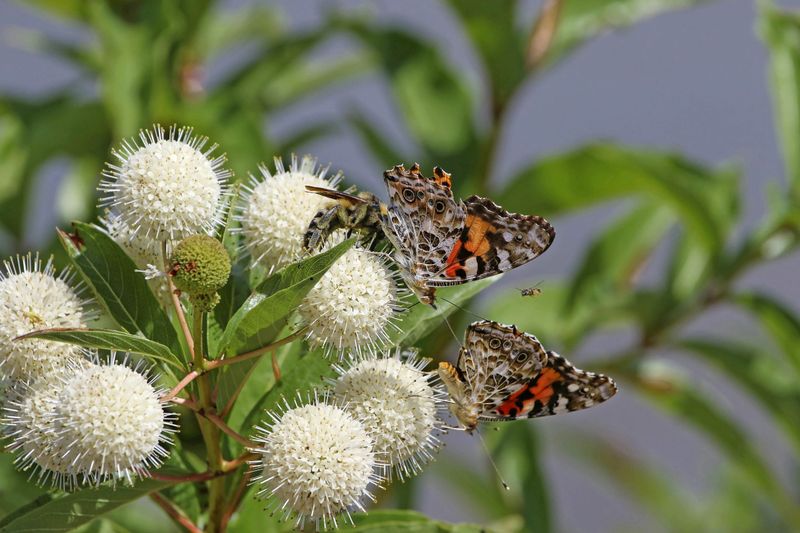
Walk past a butterfly bush on a July afternoon in North Carolina and you will see a handful of swallowtails sipping nectar, which looks like a win for the garden. But those butterflies are getting a quick meal, not a home, and there is a native shrub that goes much further for the bees, birds, and butterflies you actually want to keep around.
Buttonbush, Cephalanthus occidentalis, is a strong native option for moist North Carolina yards, and once you match it to the right spot, it earns its place from June clear through winter.
Meet Buttonbush, A Native Option For Wet Yards
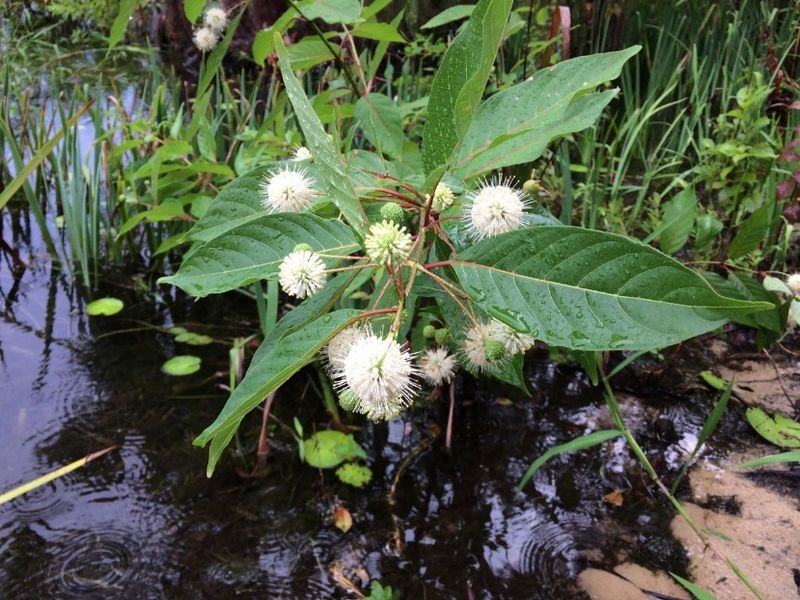
Buttonbush, Cephalanthus occidentalis, is native throughout North Carolina and grows naturally in every region of the state, from the Coastal Plain to the Piedmont to the mountains. NC State Extension lists it as a pollinator plant associated with bees, butterflies, hummingbirds, and other wildlife, and it was named North Carolina’s 2023 Wildflower of the Year, a sign of genuine regional recognition.
What makes it worth considering is where it works best: rain gardens, pond edges, drainage swales, stream margins, and any naturally damp corner of the yard that sits wet after a storm. Many Piedmont homeowners have a low spot in the backyard that stays soggy for days after a good rain.
That is exactly the kind of place buttonbush was built for.
The flowers run from June through September, pushing fragrant white blooms through the hottest stretch of a North Carolina summer when most flowering shrubs have already called it quits. That extended bloom period makes it genuinely useful rather than just pretty for a week.
The article’s recommendation here is site-specific: buttonbush is a well-supported native option for moist yards, not a universal replacement for every shrub in every garden in the state.
Butterfly Bush Attracts Adults, But It Is Not The Whole Habitat
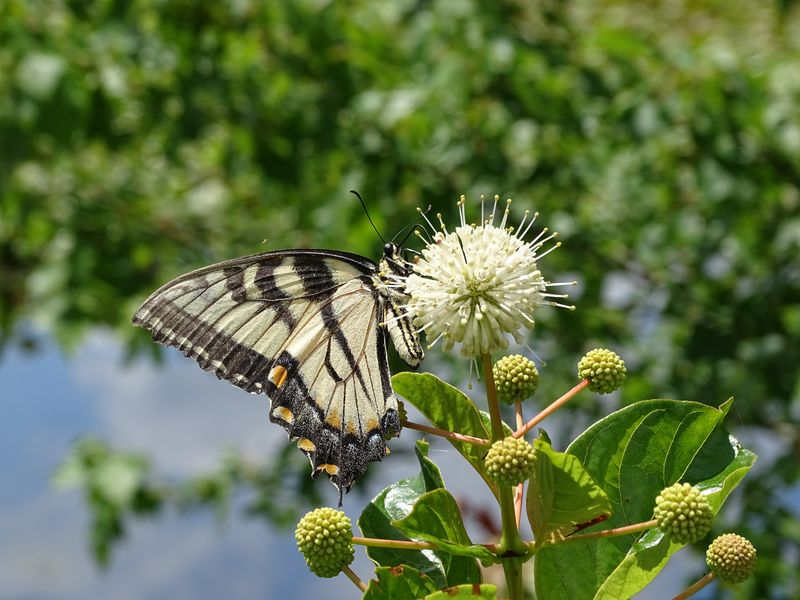
Butterfly bush earned its name honestly. Buddleja davidii produces nectar that adult butterflies genuinely seek out, and on a warm afternoon it can draw swallowtails, skippers, and fritillaries to its long purple spikes.
That visual is real, and nobody who planted one was wrong to enjoy it.
The problem is what happens after the butterflies leave. NC State Extension describes butterfly bush as “junk food” for pollinators, meaning it feeds adults without supporting the rest of the life cycle.
Native butterfly caterpillars cannot feed on butterfly bush leaves, so the shrub provides a nectar stop but no place for the next generation to develop. Bees also need pollen-rich plants and nesting resources, not just a quick sugar source.
The invasive concern is real but specific. NC State lists Buddleja davidii as invasive in North Carolina’s Mountain and Piedmont regions, where it can self-seed along roadsides and stream banks.
That designation applies to the species, not necessarily to every Buddleja cultivar. NC State and NC State Extension’s Ask Extension resource both recognize noninvasive options, including the Lo and Behold series developed at NC State, as a middle-ground choice for homeowners who want the look without the spread.
If you already have a butterfly bush in the yard, removal is not required by law in North Carolina. The case for adding buttonbush is not that your current shrub is a disaster.
U.S. Forest Service research on conserving pollinators points toward native-plant diversity as the stronger long-term strategy, and buttonbush simply offers more of the habitat pieces that pollinators need to complete their life cycles.
Buttonbush Does More Than Offer A Nectar Stop
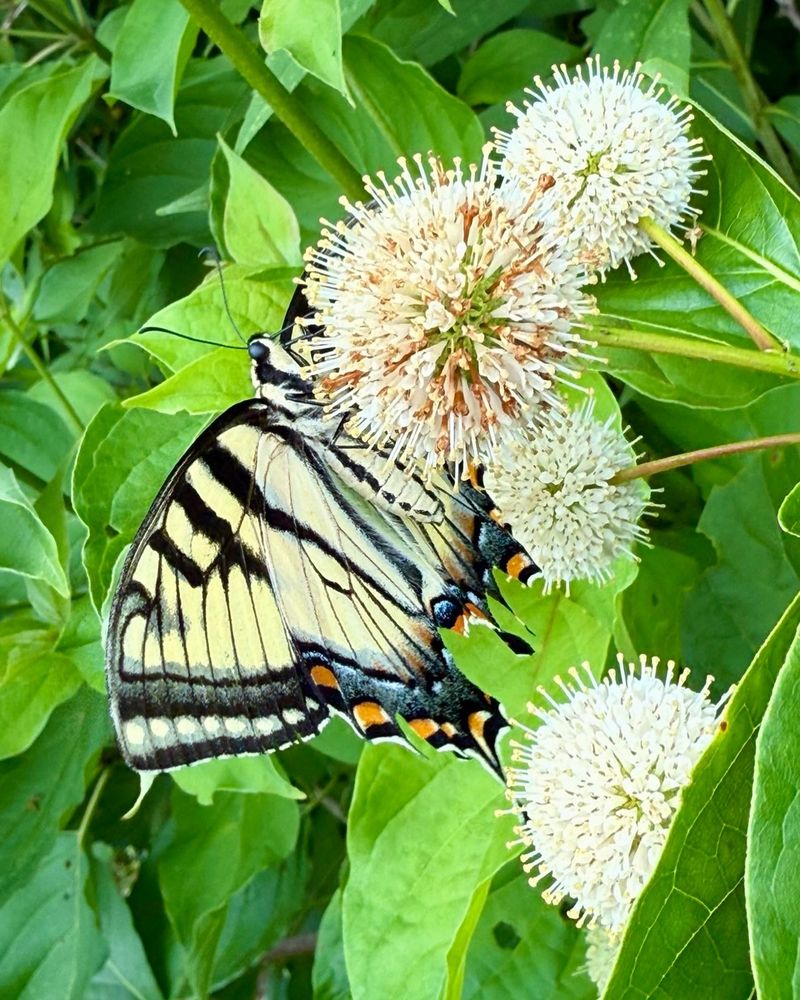
Those round white flower clusters look a little like a pincushion or a firework frozen mid-burst. Each cluster is made up of dozens of small, tubular, fragrant flowers with protruding styles, and NC State Extension documents buttonbush as attractive to bees, hummingbirds, butterflies, and eastern tiger swallowtails specifically.
The plant supplies both nectar and pollen, which matters because bees need pollen to feed their larvae, not just themselves.
After the flowers fade, buttonbush produces reddish-brown spherical fruits that can hang on the branches well into winter. NC State lists songbirds and waterfowl among the wildlife associated with the shrub, so a plant that finishes blooming in September keeps working for the yard through December.
That multi-season function sets it apart from a strictly flowering ornamental.
Here is where the comparison with butterfly bush needs to stay honest. The Xerces Society explains that picking plants for pollinators means thinking beyond adult nectar sources.
Butterflies need specific host plants for egg-laying and caterpillar development, and NC State Extension’s butterflies guide reinforces that a yard full of nectar plants may attract passing adults without supporting future generations. Bees also need nesting resources beyond flowers alone.
What the available research does not show is a controlled head-to-head count proving buttonbush draws more individual pollinators than butterfly bush in every North Carolina yard. The defensible comparison is functional: buttonbush is a regionally native shrub that supplies nectar, pollen, fruit, and wildlife habitat across multiple seasons, while butterfly bush is primarily an adult nectar source with documented invasive risk in parts of the state.
Match The Shrub To Where Water Gathers
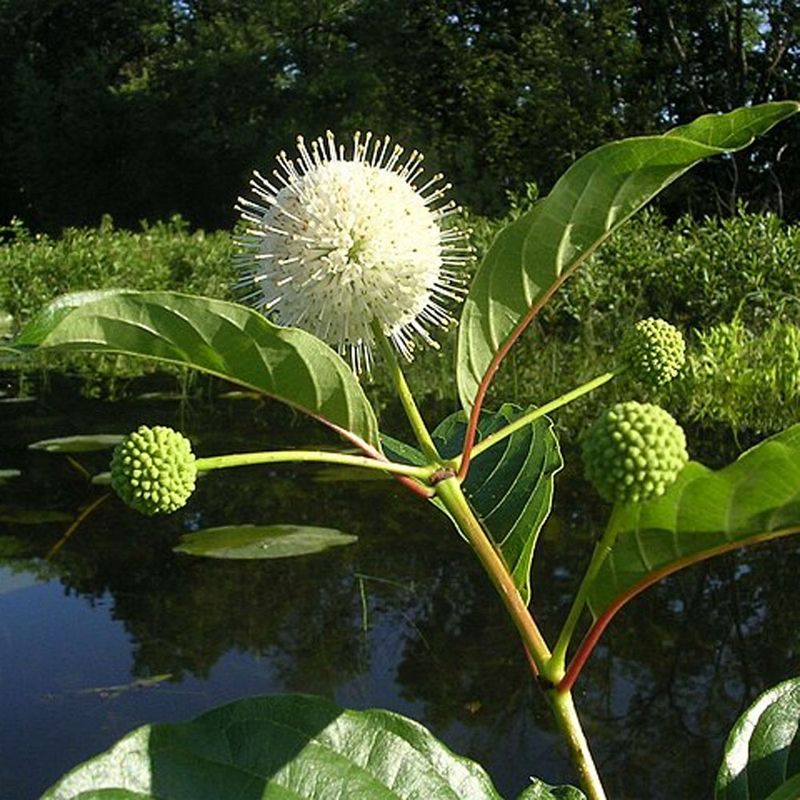
Before you buy a buttonbush, walk your yard after a heavy rain and watch where the water goes. The low corner that stays wet for two or three days after a storm, the edge of the pond, the swale that drains the driveway, the spot along the fence where the grass always looks greener: those are buttonbush locations.
NC State Extension confirms that buttonbush tolerates clay, sand, loam, occasional standing water, and even standing water up to 3 feet deep, making it one of the few landscape shrubs that actually thrives where other plants drown.
Full sun to partial shade works well. In shadier spots or during drought, the plant will flower less heavily and grow more slowly, so the sunniest end of that wet area is the better choice if you want the full summer flower show.
Piedmont homeowners dealing with heavy red clay should look for a naturally low area rather than trying to amend a raised bed into a wet environment. Coastal Plain gardeners with sandy soil should not assume the shrub will hold up without reliable moisture, because sand drains fast and buttonbush will struggle if the site dries out regularly.
The placement rule is worth stating plainly: buttonbush is not the right shrub for a dry foundation bed, a hot south-facing slope, or a raised berm without dependable irrigation. Forcing it into a dry location because the flowers are appealing is the most common reason it fails.
Match the plant to where water genuinely gathers, and it will reward you. Put it where the soil bakes in July, and you will be replacing it by August.
Plan For Summer Flowers And Winter Fruit
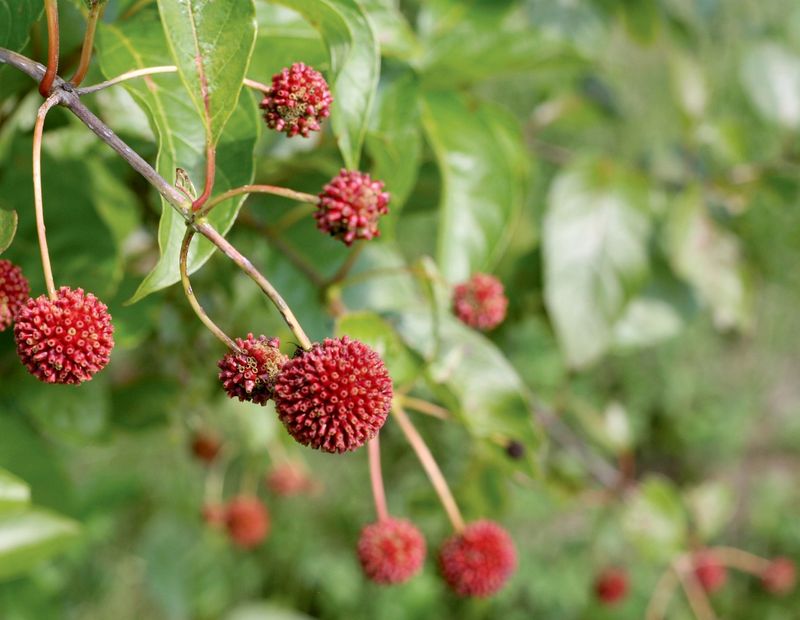
Picture a rounded shrub covered in white golf-ball-sized flower clusters, buzzing with bees on a hot July morning in the Piedmont. That is what a well-placed buttonbush looks like in its element.
The bloom period runs from June through September, which covers the stretch of North Carolina summer when many gardeners assume there is nothing left to offer pollinators.
NC State Extension gives buttonbush typical landscape dimensions of 5 to 8 feet tall and 3 to 6 feet wide, though plants in very favorable conditions, with reliable water and full sun, can push closer to 12 feet tall and 8 feet wide over time. Plan the planting location with the larger size in mind so the shrub does not end up crowding a path or a fence line five years from now.
After the flowers finish, the plant shifts into its second act. The reddish-brown spherical fruits develop and can persist on the branches into winter, giving songbirds and waterfowl something to work with long after the nectar season ends.
A shrub that earns its space in June and still contributes in December is a good deal for a wet corner of the yard.
The 2023 NC Wildflower of the Year designation is worth mentioning as a marker of regional recognition and horticultural support. Nurseries across North Carolina stocked it more widely that year, and it is easier to find locally than it was a decade ago.
That designation reflects appreciation for the plant’s native value, not a scientific ranking of pollinator visits compared to other shrubs.
Give Its Natural Form Room To Grow
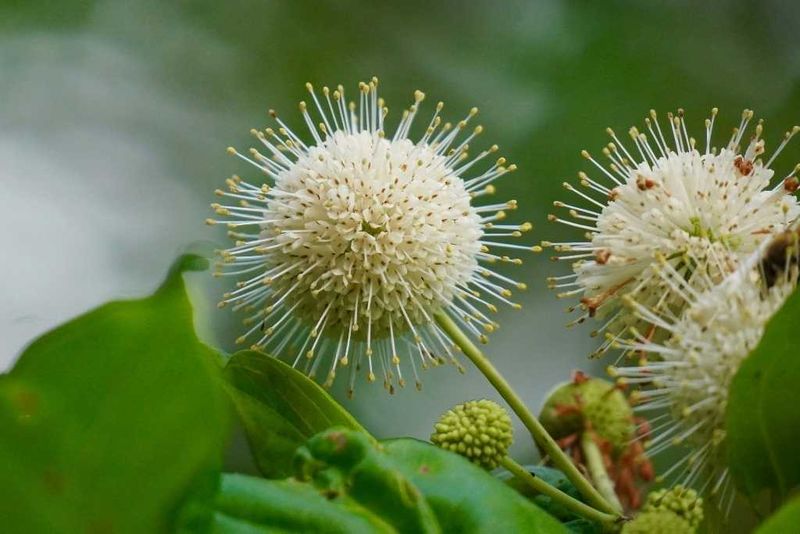
Buttonbush is not a shrub that wants to be clipped into a tidy box. NC State Extension describes it as a multi-stemmed shrub with a rounded to irregular crown that generally needs little pruning.
Give it room to develop its natural shape rather than fighting it into a formal hedge, and the maintenance becomes nearly effortless.
During the first summer after planting, keep the soil reliably moist while roots establish. A rain garden or swale will handle most of that work naturally, but if your wet area occasionally dries between storms, a deep watering once or twice a week during the first season helps the plant get settled.
After establishment, a healthy buttonbush in a genuinely moist site is largely self-sufficient.
For dry-site gardeners who love the idea of this shrub but do not have the right spot, the honest answer is to choose a different native. The North Carolina Native Plant Society’s butterfly gardening guide and NC State Extension’s landscaping for wildlife resource both point toward plants suited to drier conditions.
North Carolina’s top 25 native pollinator plants list includes butterfly weed, mountain mint, goldenrod, asters, bee balm, coneflower, and Joe-Pye weed as options that thrive in sunnier, drier spots. Those plants are worth exploring if your yard does not have a reliably wet area, but that is a separate conversation.
The point is to choose plants that fit the conditions you actually have, not the ones you wish you had.
Build The Habitat Around The Shrub
A single buttonbush in a wet corner is a good start, not a finished habitat plan. Pollinators need bloom succession across the whole season, specific host plants for caterpillar development, nesting resources, clean water, and reduced pesticide pressure.
One shrub, however well-placed, cannot supply all of that on its own.
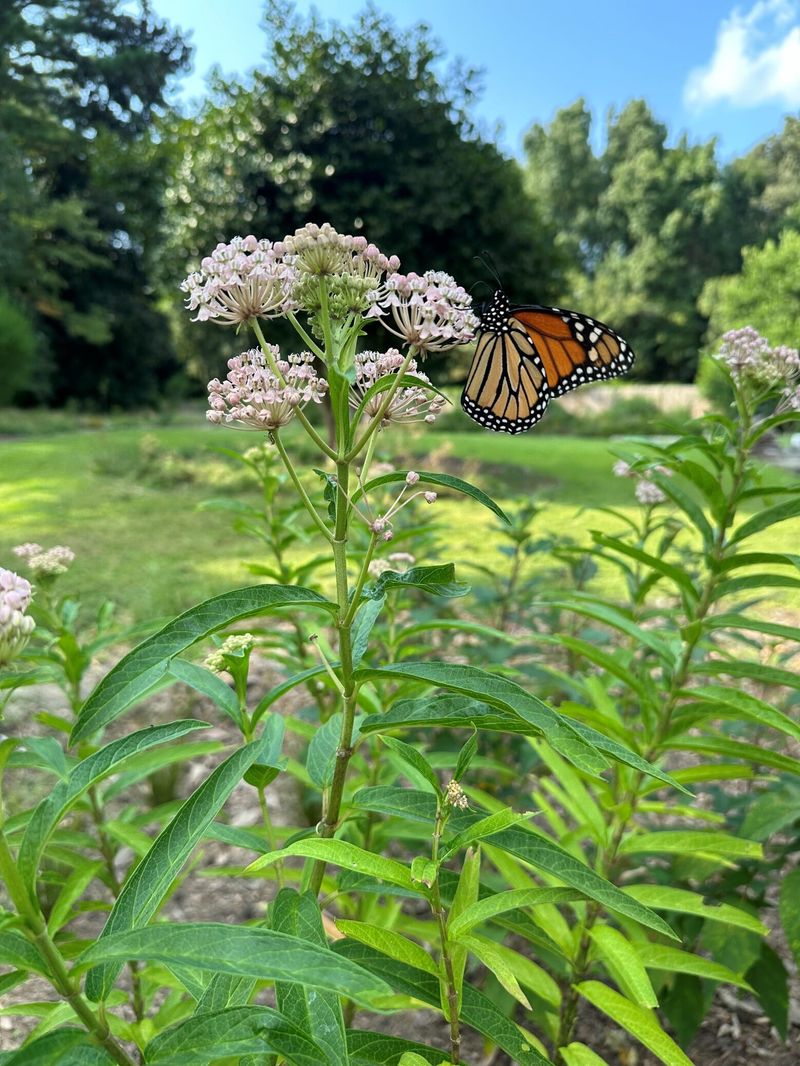
Monarch caterpillars need milkweed, not buttonbush. If supporting monarchs is part of the goal, the Xerces Society’s native milkweed resource identifies regionally appropriate species for North Carolina.
Adding milkweed alongside the buttonbush gives passing fall monarchs both a nectar source and a place to reproduce. Bees also need more than flowers: Xerces Society guidance on nesting resources explains that ground-nesting bees need bare or sparsely vegetated soil patches, while cavity nesters need hollow stems or wood.
Leaving a small area of undisturbed ground near the shrub costs nothing and helps considerably.
A shallow birdbath or water dish near the garden adds another layer of habitat value. If you add one, EPA guidance on protecting pollinators in your backyard recommends changing the water a few times each week to help prevent mosquito breeding.
For pest problems that do come up, EPA’s pollinator protection strategies and tips for reducing pesticide impacts on wildlife advise treating only when necessary, following the product label, avoiding blooming plants when possible, reducing drift, and limiting treatment to affected areas only.
Building out the yard with pollinator-friendly native plants suited to your specific region of North Carolina gives every visiting bee, butterfly, and bird more reasons to stay. The buttonbush handles the wet corner, and the rest of the yard fills in the gaps it cannot cover on its own.