
These Native Texas Borders Look Better Than Lantana In Every Single Season
Follow us on Google
You step outside before breakfast and the patio already feels warm, a familiar Texas summer morning.
You glance at the edge of your bed and there it is, your lantana looking ragged again, or maybe just plain gone after that last hard freeze.
Many of us have a love-hate thing going with lantana.
It feeds pollinators all summer, sure, but it leaves a bald gap the second cold weather rolls in, and some non-native kinds spread like they own the place.
There is a better way, a genuinely Texas way, to have borders that keep their charm from the first bluebonnet of spring through the quietest winter days.
These native picks endure our wild weather and actually thrive.
1. Texas Sage Offers Silver Splendor And Purple Rains
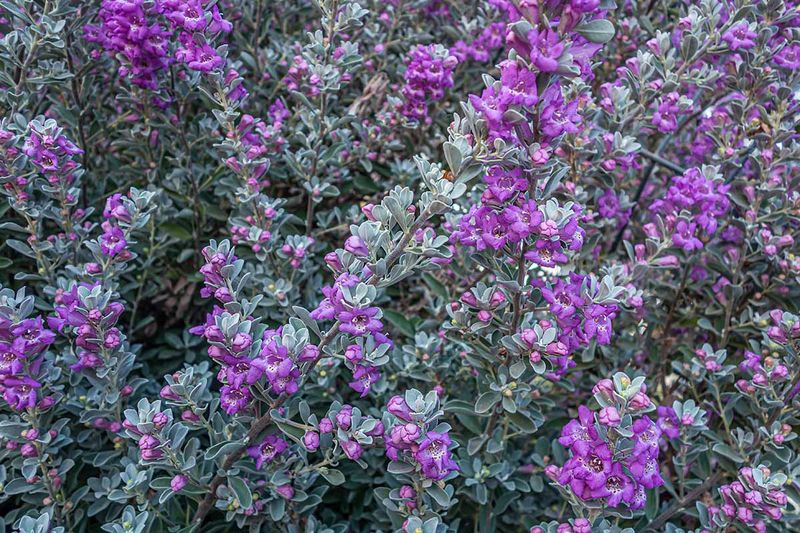
Picture a border that shimmers silvery-green on the hottest days, then bursts into purple almost the moment a summer rain shower passes through.
That is the quiet trick of Texas Sage, Leucophyllum frutescens, which folks also call Cenizo or the barometer bush.
Here is where it beats lantana.
Many common lantanas die back to the ground after a hard freeze, leaving a gap.
Texas Sage keeps its evergreen structure through winter, so your landscape holds its shape year-round.
Central Texas gardeners know the pain of plants that scorch under the August sun.
Those small silver leaves reflect sunlight and hold moisture, which means you are not dragging the hose out every day.
It loves full sun and sips very little water once established, a smart move for your water bill.
Expect a mature plant around 4 to 5 feet tall and wide, forming a tidy rounded mound.
It does not bloom nonstop, but its surprise purple shows after humidity or rain feel like a small event, sometimes even into December in warmer spots.
Deer tend to walk right past it, which is a genuine blessing across much of the state.
2. Autumn Sage Blooms From Spring Through Frost
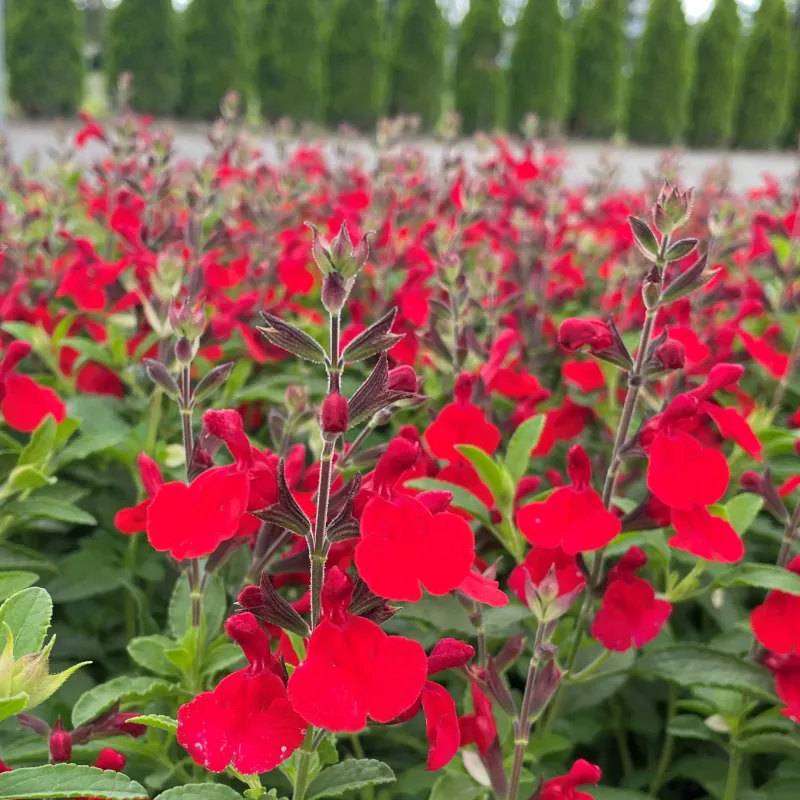
If you want steady color that outlasts lantana’s on-and-off habit, get to know Autumn Sage, Salvia greggii.
It is a semi-evergreen perennial that runs a bloom show from early spring right up to the first hard frost.
The colors range from bold reds and pinks to coral and clean white.
Down along the Gulf Coast and in the Lower Rio Grande Valley, it may keep tossing out blooms into early winter.
That is months of genuine color feeding hummingbirds and butterflies, often long after your lantana has quit.
Autumn Sage is tough stuff.
It grows happily across south-central and West Texas, even clinging to rocky slopes, and it shrugs off dry stretches without wilting.
Most plants form a neat shrub 2 to 4 feet tall and wide, though some compact types stay a tidy 12 to 18 inches.
You can keep it looking sharp with a light trim, about 4 inches, in late winter and again in mid-summer.
That haircut triggers a fresh flush of flowers.
Like Texas Sage, it is drought-tolerant once settled and deer tend to leave it be, so more beauty lands on you and less worry about hungry visitors.
3. Turk’s Cap Provides Shade-Loving Red Hues
Got a tricky spot where full sun is too much and dappled shade keeps other bloomers shy?
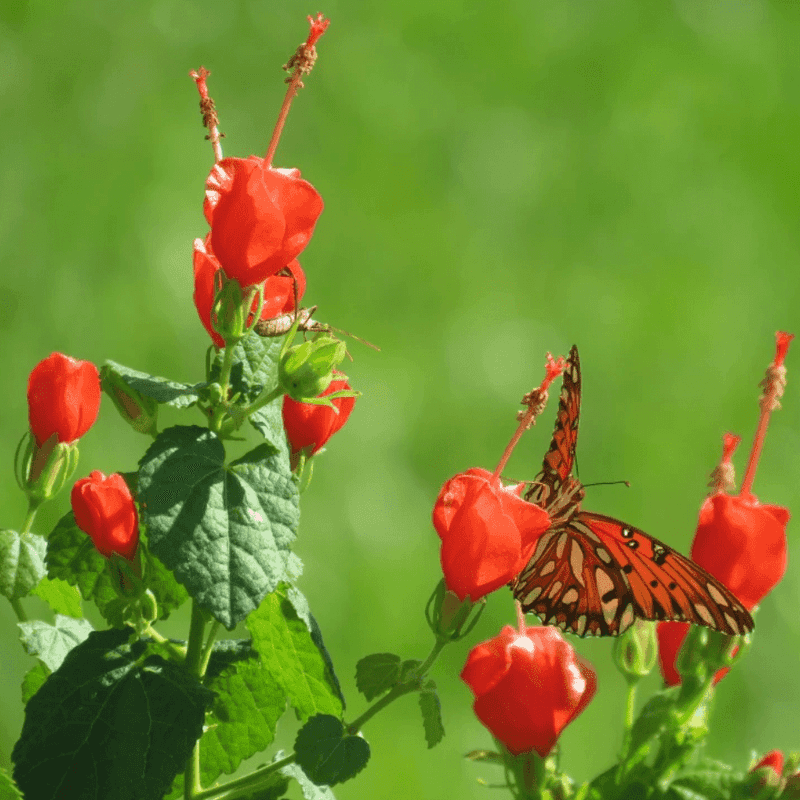
Turk’s Cap, Malvaviscus arboreus var. drummondii, steps in exactly where lantana usually sulks.
Most lantanas demand full sun to really perform.
Turk’s Cap is one of the few plants that blooms hard in part shade, and it even manages in deeper shade.
Its bright red, turban-shaped flowers never fully open, and they pull in hummingbirds from about May through November, a burst of color when the summer heat has other plants loafing.
It is deciduous, so it drops its leaves in winter, especially up in North Texas and the Panhandle.
But its sturdy stems still give some winter structure, and it leafs out fast in early spring for another long run.
Heat and drought barely faze it once established, and it handles almost any Texas soil, sandy, loamy, clay, even limestone.
It usually runs 2 to 3 feet tall, though in the right spot it can stretch to 10 feet.
Turk’s Cap has earned the Texas Native Superstar label, and honestly, it delivers.
4. Flame Acanthus Brings Fiery Color To The Hottest Spots
Some plants sulk when the thermometer hits triple digits.
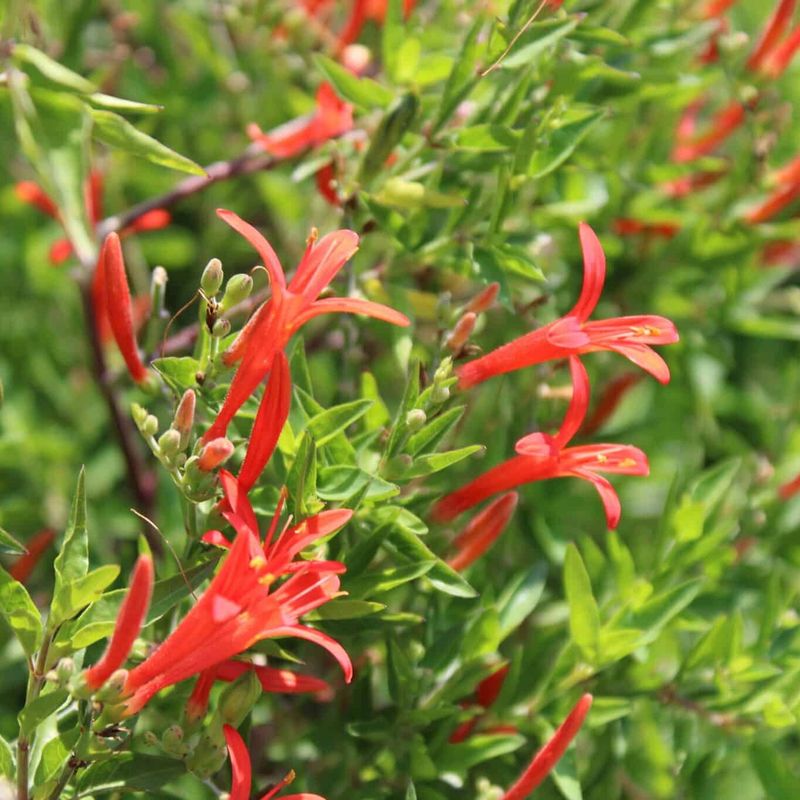
Flame Acanthus, Anisacanthus quadrifidus var. wrightii, does the opposite, it seems to enjoy the punishment.
This native shrub throws out fiery red-orange tubular flowers from June through October.
Its stamina in sustained heat often beats lantana, and it stays a critical nectar source for hummingbirds and butterflies, including monarchs passing through in fall.
During those late-season migrations across Central Texas, that matters.
Flame Acanthus is deciduous and will shed its leaves in winter.
Do not let that worry you.
It is freeze-hardy and bounces back with fresh green growth every spring.
Water needs are genuinely modest once it settles in, which makes it a natural fit for xeriscape beds across West and South-Central Texas.
Plants reach about 3 to 6 feet tall and 3 to 4 feet wide.
Give it a quick cutback after the first frost and it returns with real vigor.
Deer usually pass it by too, one more headache off your plate.
5. Gregg’s Mistflower Offers Misty Blue For Late Pollinators
Most borders lean loud and bright.
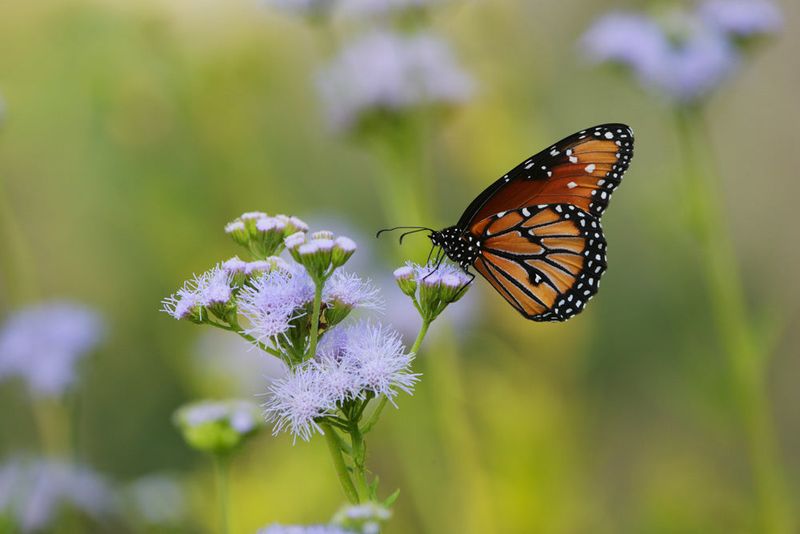
Gregg’s Mistflower, Conoclinium greggii, goes soft instead, a hazy cloud of powder-blue flowers that offers a dreamy break from lantana’s bold punch.
This herbaceous perennial peaks from late summer into fall, right when a lot of the garden is winding down.
Its fuzzy, ageratum-like blooms act like a magnet for butterflies, especially Queens, and bees.
During the fall monarch migration through Central Texas, that nectar is genuinely important.
It is another Texas Superstar, recognized by Texas A&M AgriLife Extension for low maintenance and toughness in rough conditions.
It stays about 12 inches tall, reaching 18 inches with blooms, and spreads to roughly 24 inches wide.
Give it full sun to part shade and well-drained soil, and it adapts to a wide range of soil types and pH.
Once established, it is drought-tolerant and nearly hands-off, you can plant it and mostly forget it.
A hard freeze sends it back to the ground, but it is root hardy down to 0 degrees and returns faithfully each spring for another soft, buzzing display.
6. Native Roots Outlast Every Wild Texas Weather Swing
Weather is the real antagonist here, and it plays dirty in Texas.
Long dry stretches, sudden downpours, hail, high winds, hard freezes, and Gulf hurricanes rolling in anytime from June through November.
Non-native borders often fold under that chaos.
Native plants carry a quiet advantage underground.
Over generations they built deeper, tougher root systems tuned to our exact conditions, from the blackland clay of North and Central Texas to the sandy acidic soil of East Texas and the shallow caliche of the Hill Country.
Here is the practical part.
Give any new native border a real soak, watering to about 6 inches deep, two or three times a week for roughly the first 8 weeks.
After that, back off hard.
Most of these plants ask for far less supplemental water than traditional ornamentals.
Deeper roots also mean fewer casualties after a freeze or a windstorm.
Your border comes back on its own instead of leaving you with a spring full of gaps to fill.
That resilience is the whole point, and it is why these plants keep looking sharp when lantana is still deciding whether to return.
7. What Else Actually Helps Your Native Borders Thrive
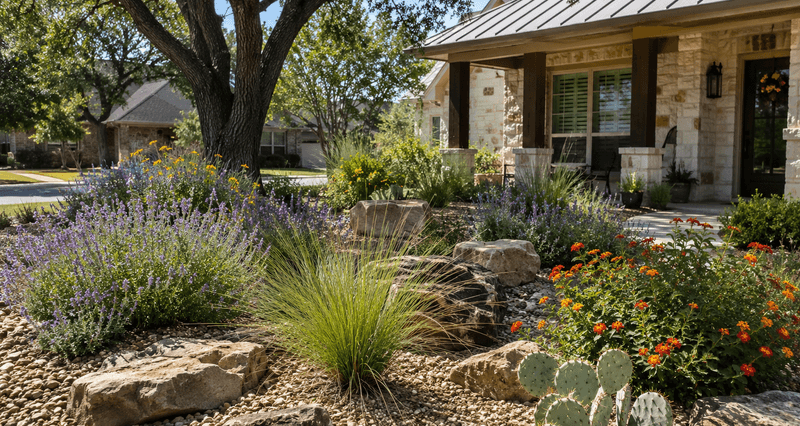
Choosing native Texas plants is the strongest first move for borders that outshine lantana in every season.
These plants already fit the wild range of conditions across our state, so you are working with the land instead of fighting it.
Once established, usually around 8 weeks after planting, they need a lot less water than most fussy ornamentals.
That means less time on the hose and a friendlier water bill during restrictions.
Lay down a layer of organic mulch, about 2 to 3 inches deep, around each plant.
Keep it a couple inches off the stems so nothing rots.
Mulch steadies soil temperature, slows evaporation, and smothers weeds, giving your border an extra edge through the worst of summer.
Space plants by their mature size, not their nursery-pot size, so air moves freely and fire ants and spider mites get fewer cozy hiding spots.
Give it a season or two, and you will notice these Texas-tough plants are not just hanging on, they are flourishing.
Your yard ends up more alive, more resilient, and genuinely easier to love.