
13 Red Perennials That Stand Out Strong In Massachusetts Summer Landscapes
Follow us on Google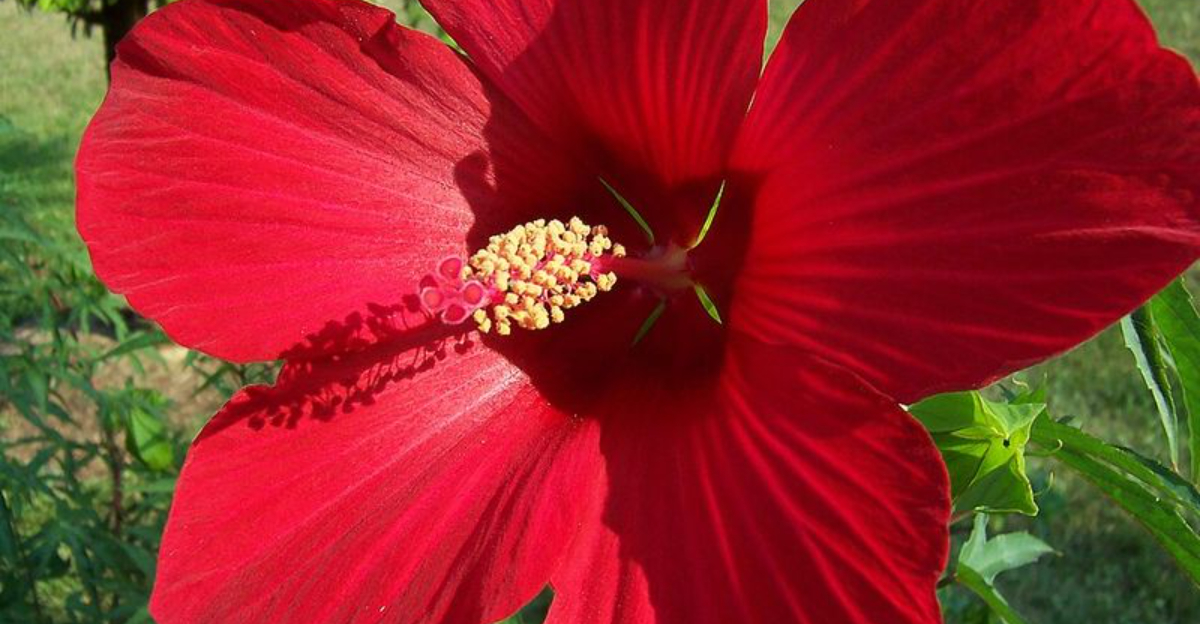
A strong red flower can change the whole mood of a summer border, especially in Massachusetts where bright greens and blue hydrangeas dominate the season. The right perennial does more than add color – it pulls your eye across the yard, anchors mixed beds, and keeps pollinators busy through the heat.
If you want planting ideas that can handle New England seasons and still look striking in July and August, these picks earn their space. Each one brings a different kind of red, from clear scarlet to deep cranberry, so you can build a garden that feels layered instead of flat.
Bee Balm
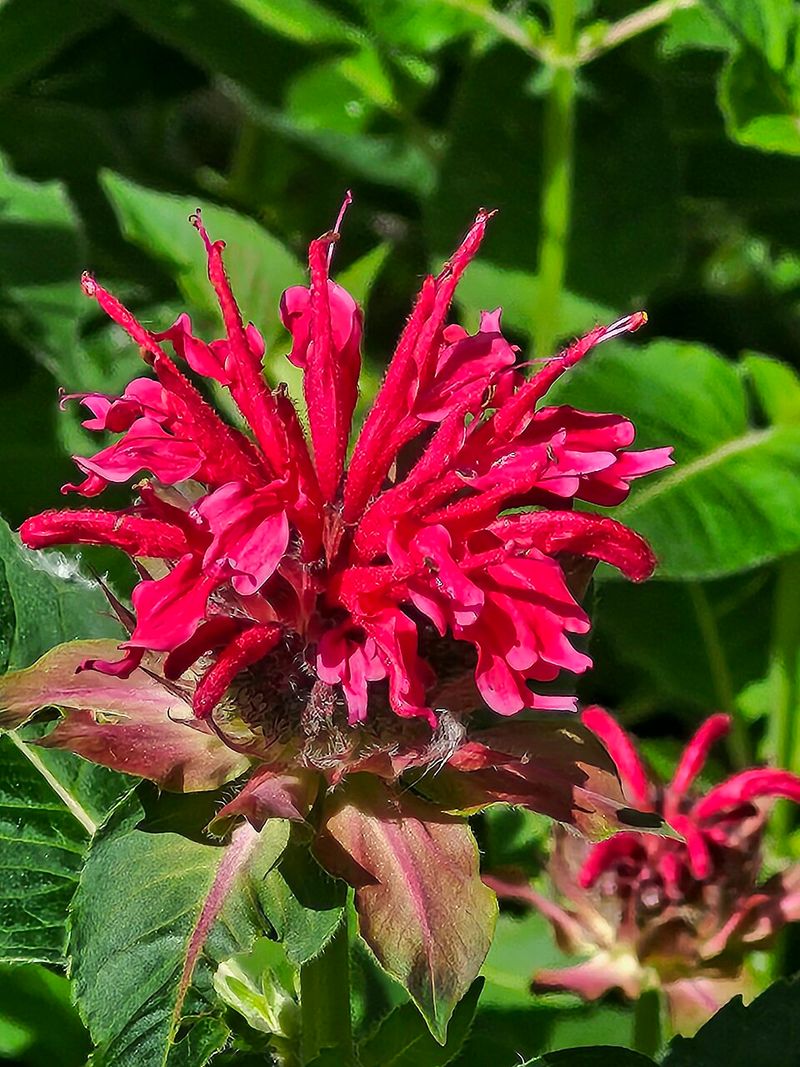
Few summer perennials grab attention as quickly as these shaggy scarlet blooms, especially when they sit above aromatic foliage in a sunny Massachusetts border. Bee balm adds height, motion, and a slightly wild garden character that looks right at home near picket fences, stone walls, and informal cottage plantings.
Hummingbirds find it fast, and once the first flowers open, your bed suddenly feels alive.
Good air flow matters here because humid New England summers can invite powdery mildew. I like placing plants where morning sun dries the leaves early, then spacing clumps generously instead of packing them too tightly.
If you keep the roots evenly moist and add mulch, flowering stays stronger through heat waves and dry stretches.
For the boldest red, look for cultivars like ‘Jacob Cline’, which is widely praised for both color and disease resistance. Pairing it with blue catmint, white phlox, or dark-leaved heuchera creates contrast that keeps the red from looking harsh.
It also works beautifully near patios, where the fragrance and pollinator traffic are easy to enjoy.
After the first flush, deadheading often brings a tidier second round of bloom. Every few years, dividing the clumps helps maintain vigor and prevents crowded centers.
That small bit of maintenance pays off with one of the most memorable red displays you can grow in a Massachusetts summer garden.
Cardinal Flower
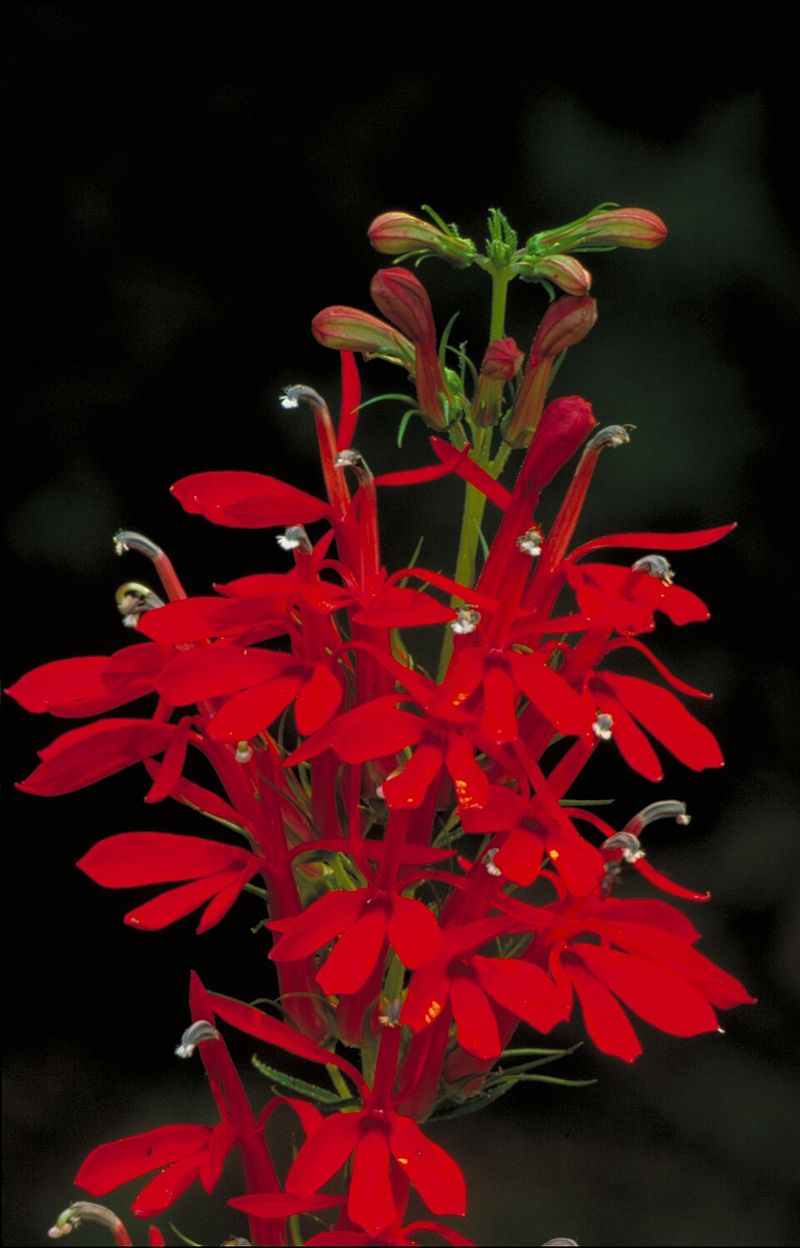
Nothing looks quite as electric in a summer garden as a stand of cardinal flower glowing near water or moist soil. Its upright spikes carry a true saturated red that reads clearly from a distance, which is useful when many other perennials fade into the background by late July.
In Massachusetts landscapes, it shines brightest where the ground stays cool and reliably damp.
This is one of the smartest choices for rain gardens, pond edges, or low spots that frustrate plants needing perfect drainage. Afternoon shade helps the foliage stay fresh during hotter periods, though it still wants enough light to bloom well.
If you have a damp border that feels hard to design, this plant gives that space real purpose.
Hummingbirds absolutely love it, and that alone makes it worth planting near a window or seating area. Combining it with blue lobelia, ferns, or white turtlehead creates a layered woodland-meets-meadow look that suits many New England yards.
The flowers rise cleanly above the leaves, so the color feels vertical and elegant rather than heavy.
Because it can self-sow in happy conditions, a drift often develops naturally over time. I would not place it in a hot, dry foundation bed and hope for the best, since drought quickly weakens performance.
Give it moisture, organic soil, and a little shelter from harsh afternoon heat, and it becomes one of the richest reds in the garden.
Red Hot Poker
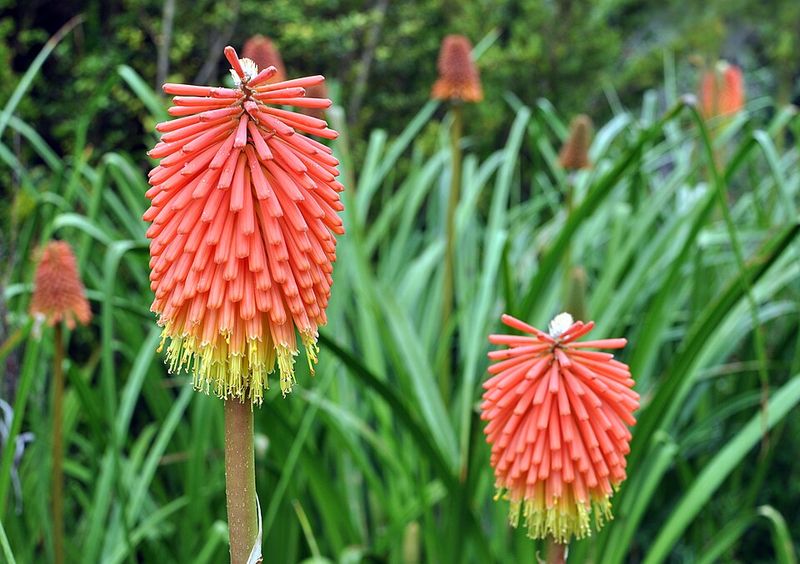
Torch-like flower spikes bring a dramatic shape that instantly changes the rhythm of a planting bed. Red hot poker stands apart from rounded daisies and mounding perennials because its blooms rise like bright exclamation points, adding architecture as much as color.
In Massachusetts gardens, that bold form feels especially effective in sunny spots that need a little heat and movement.
Sharp drainage matters more than rich soil, particularly through winter when wet roots can become a problem. A raised bed, gravelly slope, or south-facing area usually gives better long-term results than a low, soggy border.
Once established, this plant handles summer dryness fairly well, which makes it useful during those stretches when rain seems to disappear for weeks.
Varieties with strong red or red-orange tones work best when surrounded by cooler companions like Russian sage, blue fescue, or silver artemisia. That contrast keeps the flowers looking crisp instead of blending into a warm-color overload.
You also get a long season of interest because the strappy foliage stays present even when the spikes are finished.
Winter protection can be as simple as leaving the foliage in place and avoiding excessive crown moisture. I like using it as a repeating accent rather than a one-off curiosity, since repetition makes the design feel intentional.
If your landscape needs upright red energy without relying on annuals, this perennial can do the job with style.
Daylily ‘Pardon Me’
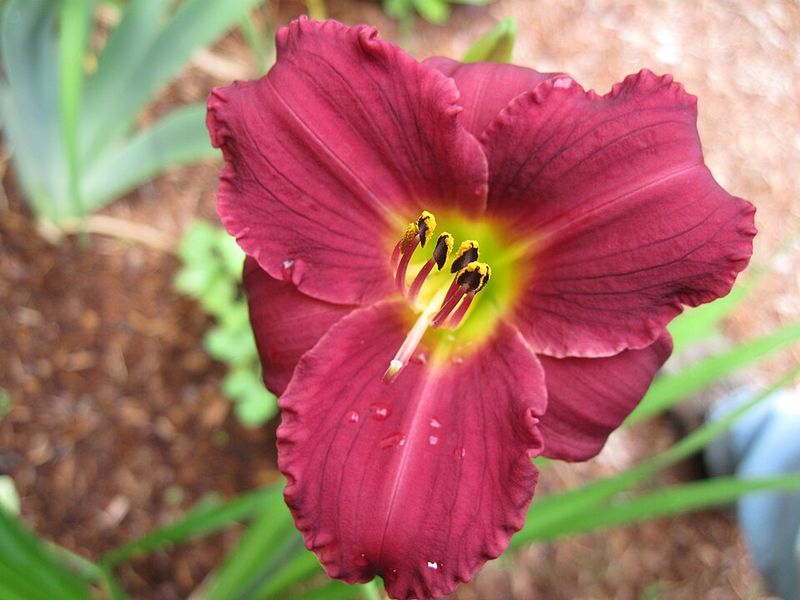
Deep red daylilies offer one of the easiest ways to work strong color into a Massachusetts landscape without adding extra fuss. ‘Pardon Me’ is especially useful because it stays compact, reblooms, and fits neatly into front-of-border spaces where taller plants would block the view. The flowers are velvety and rich, giving garden beds a more polished look than many brighter tomato-red selections.
Full sun brings the best flowering, though a little afternoon relief can help the color stay saturated during very hot spells. Average garden soil is usually enough, and once established, the plant tolerates normal summer ups and downs with little drama.
That reliability makes it a smart choice for foundation beds, mailbox gardens, or long borders along walkways.
Because the strappy foliage forms tidy clumps, it also helps cover bare ground between showier perennials. I like combining it with purple salvia, white shasta daisies, or chartreuse sedum for a clean, high-contrast look that still feels easygoing.
Its scale works well in smaller yards where oversized flowers and floppy stems can quickly feel crowded.
Deadheading spent blooms keeps things neat, and dividing every few years maintains strong performance. You are not getting the biggest flower in the world here, but you are getting consistency, long bloom, and a red tone that reads clearly in summer light.
For many Massachusetts homeowners, that practical beauty is exactly the point.
Yarrow ‘Paprika’
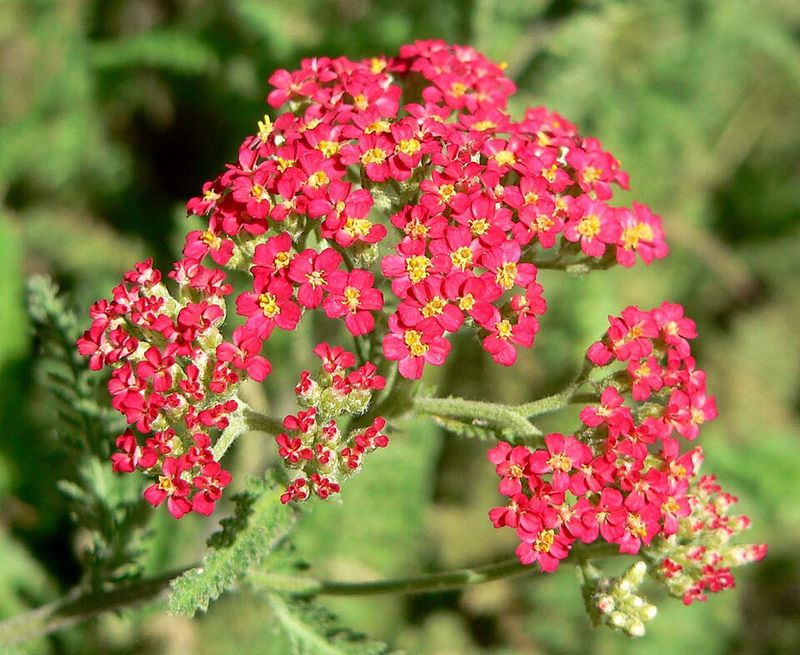
Flat clusters of smoky red flowers make this yarrow feel a little more relaxed than the glossy, high-impact reds found on larger blooms. ‘Paprika’ blends beautifully into sunny Massachusetts borders because the color softens as flowers age, moving through warm shades instead of sitting at one loud note all season. That subtle shift gives mixed plantings more depth and a less rigid look.
Dry, sunny soil suits it best, which is good news if you have a bank, roadside strip, or lean planting bed where fussier plants struggle. Too much fertilizer or overly rich soil can make stems floppy, so restraint actually improves the display.
Once rooted in, it handles heat and drought well and keeps looking useful when summer weather turns rough.
The ferny foliage brings texture even before flowering starts, and pollinators consistently stop by. Pairing it with ornamental grasses, coreopsis, or lavender creates a meadow-inspired feel that works especially well in informal or coastal Massachusetts gardens.
It also makes a practical bridge plant between bolder reds and softer pastels.
Deadheading can extend bloom, though I sometimes leave a few aging flower heads because the fading tones look natural and layered. Dividing every few years keeps the center fresh and prevents a tired appearance.
If you want red that feels easy, sun-loving, and flexible in design, this one deserves a serious look.
Astilbe ‘Fanal’
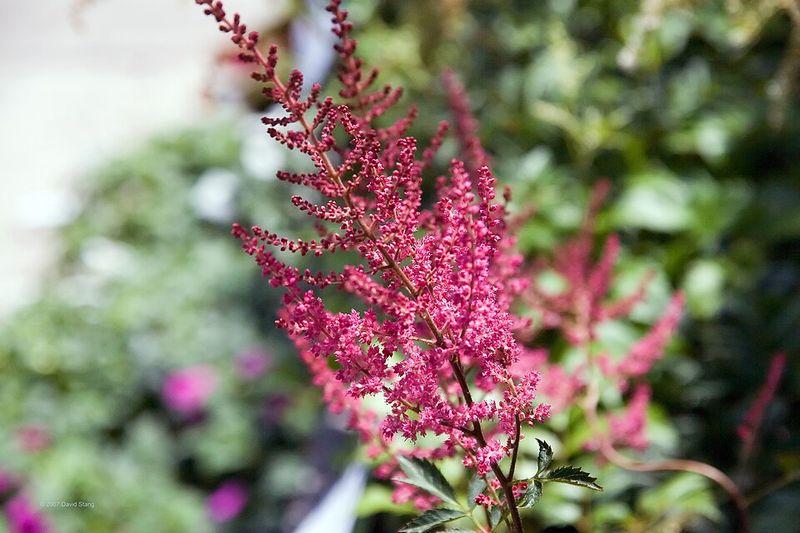
Feathery crimson plumes bring a refined kind of red that feels perfect for shaded Massachusetts gardens where bright summer color can be harder to find. ‘Fanal’ stands out because the flower heads are rich and upright, while the foliage creates a neat, ferny base that looks attractive long before bloom. If a woodland border feels too green by midsummer, this plant changes the mood quickly.
Consistent moisture is the key to success, especially during July heat. In soil that dries out repeatedly, leaves can brown at the edges and the whole plant loses its fresh look, so mulch and supplemental water are worth the effort.
Morning sun with afternoon shade often produces the best balance of flowering and foliage quality.
This is a natural partner for hostas, heucheras, ligularia, and Japanese painted ferns. The plume shape contrasts nicely with broad leaves, and the red reads even more strongly against cool greens, silvers, and burgundy foliage.
Near a shaded patio or entry path, it adds a tailored, intentional feel without seeming stiff.
After flowering, the seed heads can remain decorative for a while, especially in more naturalistic plantings. Dividing clumps every several years keeps them vigorous and helps you expand the display into nearby shade beds.
For gardeners who want true red in lower light without relying on annuals, this perennial fills an important gap beautifully.
Peony ‘Karl Rosenfield’
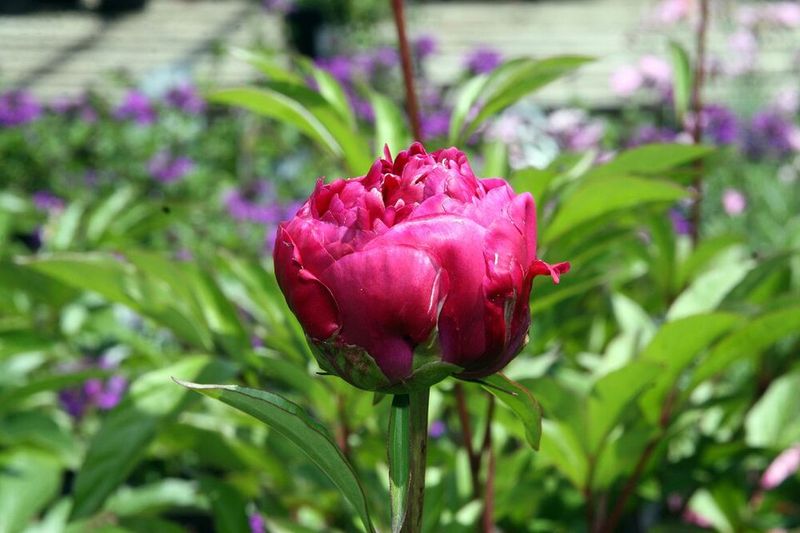
Big, fragrant, double flowers in a saturated deep red give this classic peony real presence at the front end of summer. ‘Karl Rosenfield’ has been popular for years for a reason: the bloom size is generous, the color shows well from a distance, and the plant fits beautifully into traditional Massachusetts landscapes. When it flowers, the whole border suddenly feels more established and substantial.
Patience matters because peonies settle in slowly, but the payoff can last for decades. They want full sun, decent air circulation, and planting depth that is not too deep, since buried eyes often lead to poor flowering.
In New England gardens, good drainage and avoiding heavy mulch over the crown make a noticeable difference.
Once the flowers open, staking or ring support can help, especially after rain. I like pairing deep red peonies with catmint, alliums, or white irises so the display feels balanced and not overly dense.
Even after bloom, the glossy foliage stays useful and helps anchor the bed through the rest of summer.
Because the bloom period is shorter than some perennials, placement matters most near entries, patios, or paths you use often in June. This is less about nonstop color and more about a memorable seasonal high point.
For many Massachusetts gardeners, that brief show is worth every bit of space the plant takes.
Garden Phlox ‘Starfire’
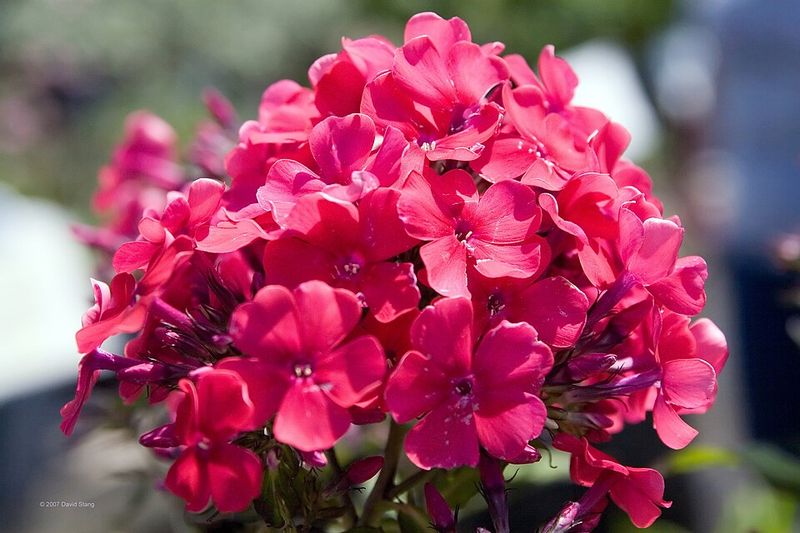
Bright cherry-red flower clusters make ‘Starfire’ one of the better phlox choices if you want strong summer color that reads clearly across the yard. Garden phlox fits Massachusetts landscapes naturally, especially in mixed borders where you need mid-to-late season bloom after peonies and irises are finished.
The color is vivid, but the overall habit still feels classic rather than flashy.
Air circulation should be part of the design from the start, because mildew can become an issue in humid spells. Full sun helps, but spacing, thinning, and watering at the base matter just as much.
If you have a border that tends to crowd itself by midsummer, a little discipline here will improve both health and appearance.
Tall stems make this a useful middle or back-of-border plant, and the flowers draw butterflies steadily. It combines especially well with ornamental grasses, echinacea, rudbeckia, and blue salvias, giving you a layered high-summer look that feels abundant without being chaotic.
Near a fence or stone wall, those red heads stand out even more.
Deadheading can extend the display, and dividing every few years keeps clumps vigorous. Choosing mildew-resistant cultivars is smart, but good siting still does a lot of the work.
If your Massachusetts garden needs a reliable red perennial that delivers the traditional border look people remember from older New England gardens, this one earns consideration.
Crocosmia ‘Lucifer’
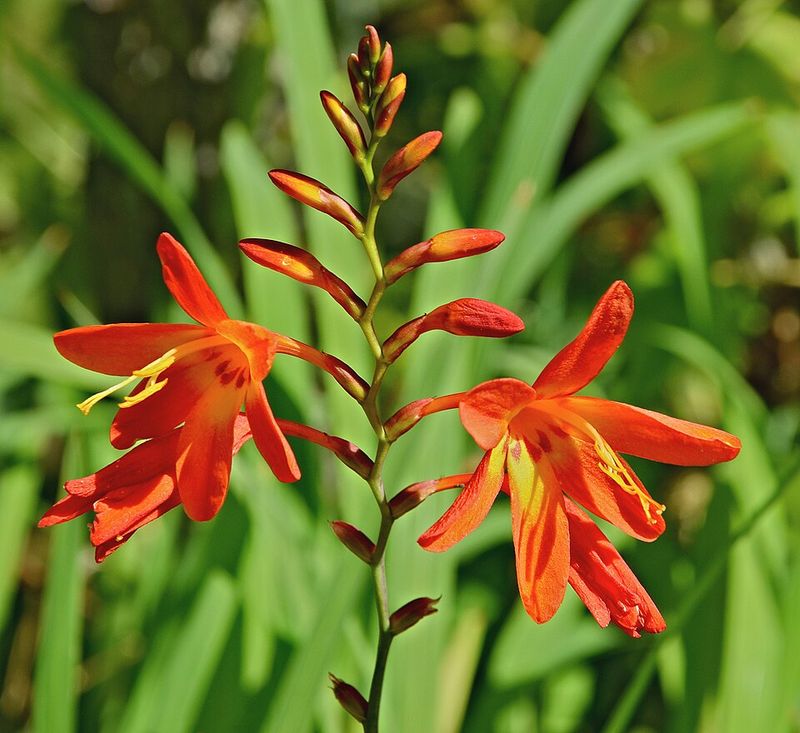
Arching stems lined with scarlet flowers give this perennial an energetic look that instantly loosens up a formal planting. ‘Lucifer’ is one of those plants that creates motion even when the air is still, and that makes it valuable in Massachusetts beds that need more lift during late summer. The sword-like foliage also adds a vertical texture missing from many broader-leaved perennials.
Sun and well-drained soil are essential, especially through winter. In warmer pockets of Massachusetts, it often performs very well, while colder or wetter sites may need mulch and careful placement to protect the corms.
A south-facing bed near a wall or driveway can provide the extra warmth that helps it return more reliably.
This is a strong design plant because the flower shape is so different from daisies, spikes, and mounds. I like pairing it with dark cannas, purple verbena bonariensis, or airy grasses for a border that feels bold but not heavy.
Hummingbirds usually notice it fast, which adds another layer of appeal near outdoor seating areas.
After bloom, the foliage should be left in place long enough to feed the corms for next year. If winter survival concerns you, try planting a few in the most protected part of the garden first and watch how they handle your site.
When happy, the red is unforgettable and surprisingly elegant.
Maltese Cross
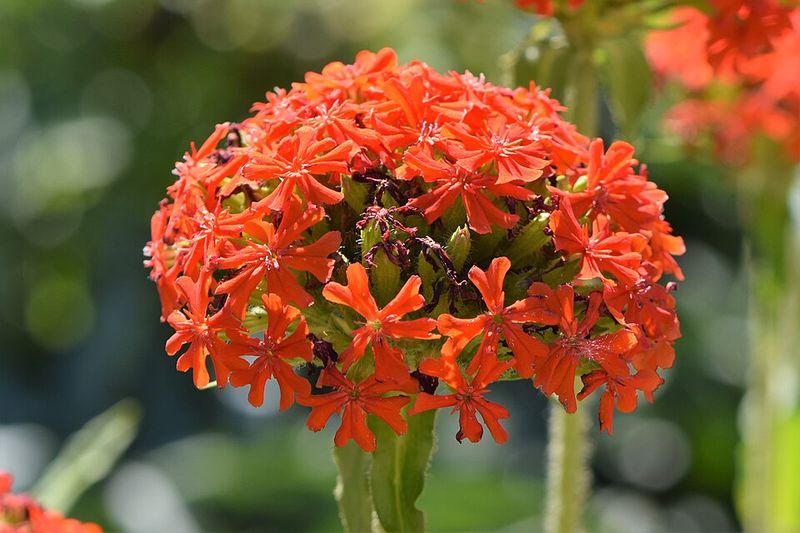
Brilliant scarlet flower clusters and softly fuzzy foliage give Maltese cross an old-garden character that feels especially fitting in New England settings. It does not look overly polished, and that is part of the appeal.
In a Massachusetts summer border filled with peonies, phlox, and lilies, it adds a vivid red note that feels rooted in tradition rather than trendy.
Full sun keeps stems sturdier and flowering stronger, while average soil is usually enough. Good drainage is important, but the plant is not demanding once established, which makes it a comfortable choice for gardeners who want impact without a complicated maintenance list.
It often performs best where it is not pampered too heavily.
The blooms sit in tight clusters, so the color reads as a solid patch from across the yard. That makes it useful for breaking up long green stretches or linking other red accents in the border.
Paired with blue baptisia foliage, silver lamb’s ear, or white daisies, the saturated red looks even sharper.
Because it can self-sow lightly, you may find a few welcome seedlings in open soil nearby. I would call that a bonus in cottage-style beds, where a little spontaneity helps the planting feel settled and natural.
If you like perennial choices that look as though they belong in an older Massachusetts garden, this one fits beautifully.
Geum ‘Mrs. Bradshaw’
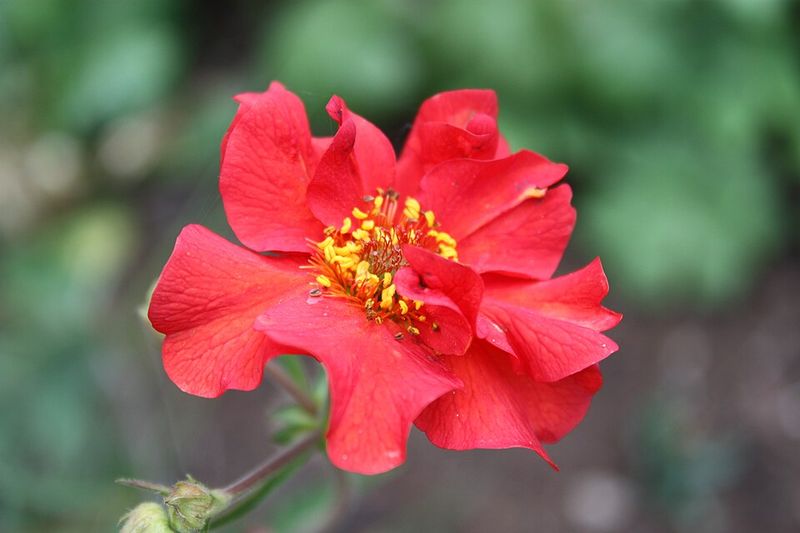
Smaller flowers can still carry a lot of visual weight, and this geum proves it with glowing red blooms held above tidy green foliage. ‘Mrs. Bradshaw’ has a slightly old-fashioned charm, but the color keeps it relevant in modern borders too. In Massachusetts gardens, it helps bridge the gap between spring bulbs and the heavier summer performers.
Cooler conditions suit it well, which is part of why it works nicely in New England. It prefers fertile, well-drained soil with regular moisture, and it appreciates not being baked in the hottest, driest corner of the yard.
Morning sun with a bit of afternoon relief often keeps the foliage looking freshest through summer.
Because the plant stays relatively compact, it is easy to tuck into front or middle positions where larger perennials would overwhelm the bed. I like using it near nepeta, salvia, or lady’s mantle, where the warm red flowers play against cooler tones and softer textures.
The result feels detailed and layered instead of blunt.
Deadheading encourages more bloom and keeps the plant neat. Geums can be short-lived if conditions are poor, so dividing and replanting younger growth every few years is a smart habit.
If you want a red perennial that adds finesse instead of brute force, this one offers a very usable kind of color.
Hardy Hibiscus
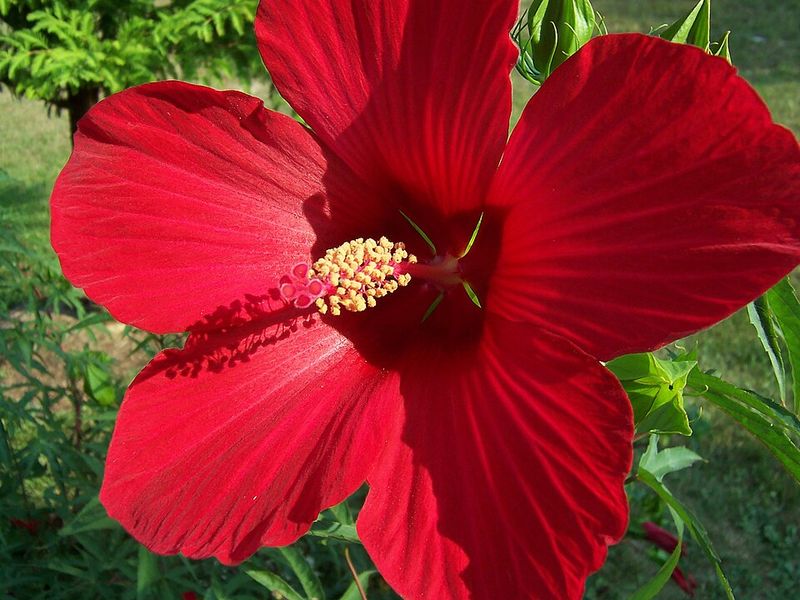
Giant red flowers on hardy hibiscus can make a Massachusetts border feel almost tropical for a few weeks in late summer. The blooms are enormous, the color is unapologetically bold, and the plant has enough height to act like a seasonal focal point.
If your garden needs a red perennial with real visual weight, this one does not whisper.
Patience is important in spring because hardy hibiscus often emerges late, long after many gardeners worry it is gone. Once warmth settles in, growth speeds up dramatically, especially in full sun and fertile, moisture-retentive soil.
Regular watering helps support those oversized flowers, and mulch keeps the roots from drying too quickly in hot weather.
Because the leaves and stems become substantial, give it room instead of squeezing it between smaller neighbors. I like using it near the back of a border with ornamental grasses or blue-flowering perennials nearby, which helps frame the flowers and calm the intensity.
Near a deck or patio, it becomes an easy conversation piece.
Cut stems down after frost and mark the spot so you do not disturb the crown next spring. In colder parts of Massachusetts, winter mulch can help, especially during open winters with little snow cover.
For gardeners who want late-season red that feels almost oversized and theatrical, hardy hibiscus is a memorable choice.
Penstemon ‘Red Rocks’
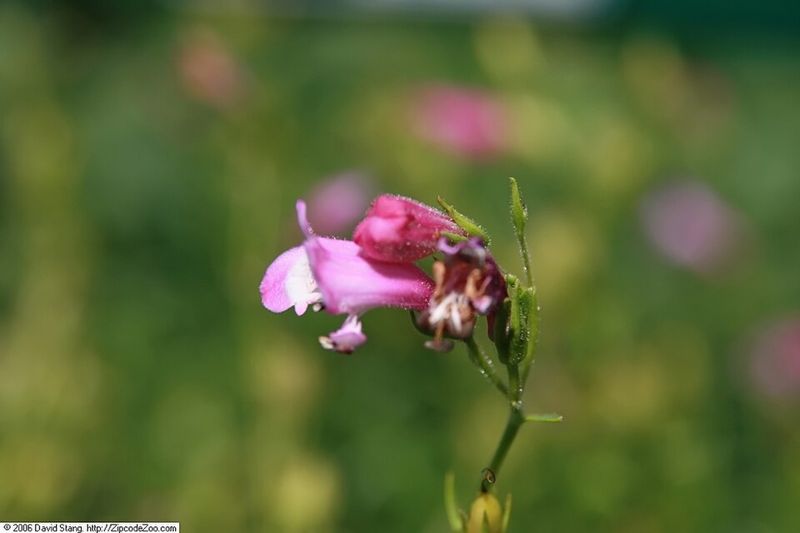
Airy stems lined with tubular red flowers give penstemon a lighter, more open look than many dense summer perennials. ‘Red Rocks’ and similar red selections add color without blocking everything around them, which is useful in Massachusetts borders where you want movement and pollinator appeal at the same time. The overall effect feels bright and graceful rather than heavy.
Well-drained soil is the main requirement, especially through winter. In beds that stay wet, the crown can struggle, but in sunny sites with leaner soil, performance is much stronger.
I would avoid tucking it into rich, irrigated spots meant for thirsty plants, because that extra comfort often works against longevity.
Hummingbirds and bees appreciate the tubular blooms, and the flower spikes mix easily with salvias, catmint, coreopsis, and ornamental grasses. Because the plant has an upright but not bulky habit, it fills the middle layer of a border very effectively.
It is also a good pick if you want red accents that do not dominate every other color nearby.
Cutting back spent stems can encourage additional flowering and a tidier shape. Some penstemons are short-lived, so think of them as dynamic contributors rather than permanent anchors.
In the right Massachusetts site, though, they earn their keep quickly by bringing clear red color, vertical structure, and a pollinator-friendly presence all summer.