
15 Blue Blooming Perennials Making Pennsylvania Yards Look Cooler And Calmer
Follow us on Google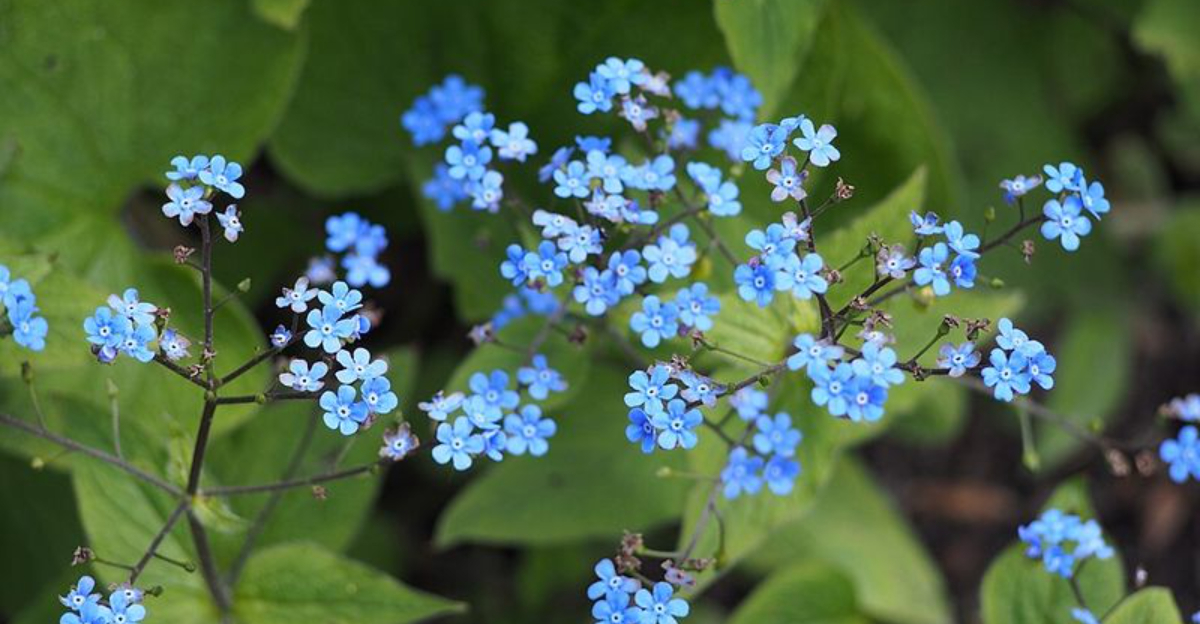
Blue flowers have a way of quieting a yard, especially during Pennsylvania summers when everything else can feel bright, busy, and a little overheated. The right perennial blooms add color without shouting, and they come back ready to work year after year.
If you want beds, borders, and foundation plantings to feel more relaxed and polished, these blue bloomers are worth your attention. Each one brings a slightly different shade, season, and texture, so you can build a yard that feels cooler the moment you step outside.
Baptisia
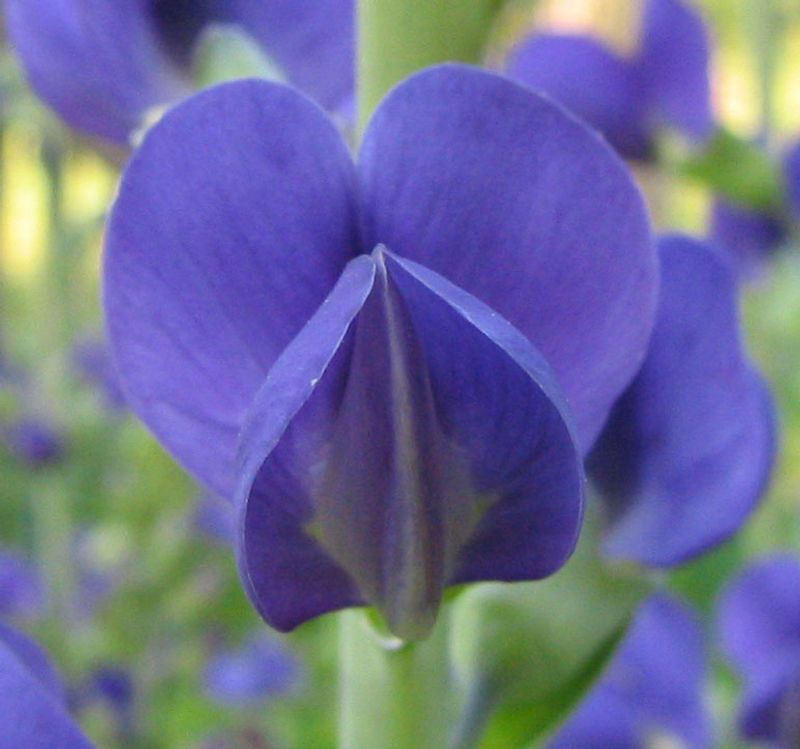
Few plants make a border feel grounded the way this sturdy native-adjacent favorite does. In late spring, you get spires of blue-violet flowers that read cool and clean from a distance, then handsome blue-green foliage keeps the clump useful long after blooming ends.
That combination is especially helpful in Pennsylvania yards where you want color without constant fuss.
Once established, it handles heat, dry spells, and clay better than many gardeners expect. You should plant it where it can stay for years, because the deep root system resents moving and rewards patience with a broader, shrub-like presence.
Near a mailbox bed, along a fence line, or at the back of a sunny mixed border, it gives you structure that feels calm rather than rigid.
There is also a practical bonus: deer and rabbits usually leave it alone, and pollinators show up reliably when the flowers open. Pair it with catmint, ornamental grasses, or pale yellow companions if you want the blue tones to look even cooler.
Give it full sun and decent drainage, then step back and let it settle into its rhythm.
Salvia
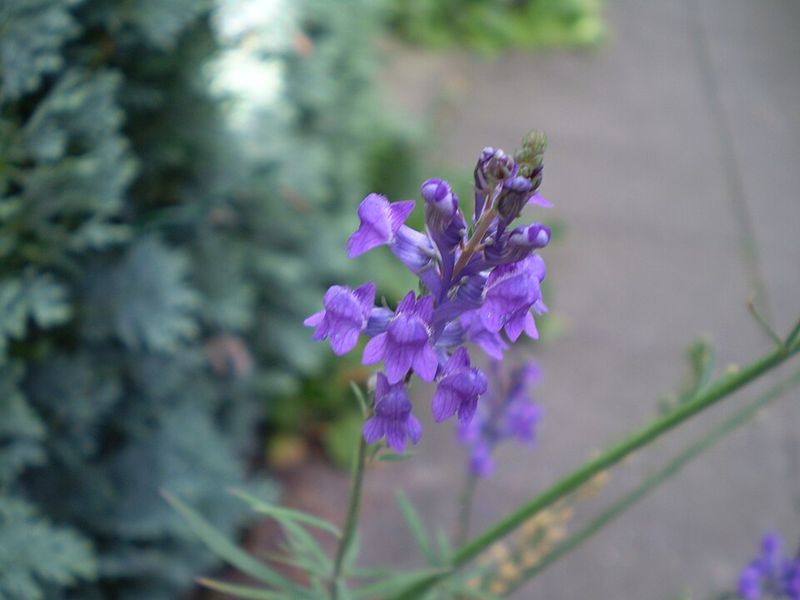
If you want a blue perennial that starts strong and keeps earning its space, this is an easy pick. Dense spikes of saturated blue to violet-blue flowers rise above tidy foliage, creating a cooler note in the garden without looking washed out.
In Pennsylvania, it performs beautifully in sunny beds where summer color needs to stay crisp.
The smartest move is to give it full sun and soil that drains well, because soggy roots are usually the real problem. After the first flush fades, a quick shearing often brings a second round of bloom, which means your border keeps working while other plants rest.
That habit makes it useful near walkways, patios, and entry beds where you notice every gap.
Bees, butterflies, and hummingbirds treat it like a regular stop, so the planting feels lively without becoming messy. You can pair it with white coneflowers, silver foliage, or soft pink perennials if you want the blue to read cooler and more intentional.
For gardeners who like a polished look but do not want to babysit plants every weekend, this one lands in the sweet spot.
Catmint
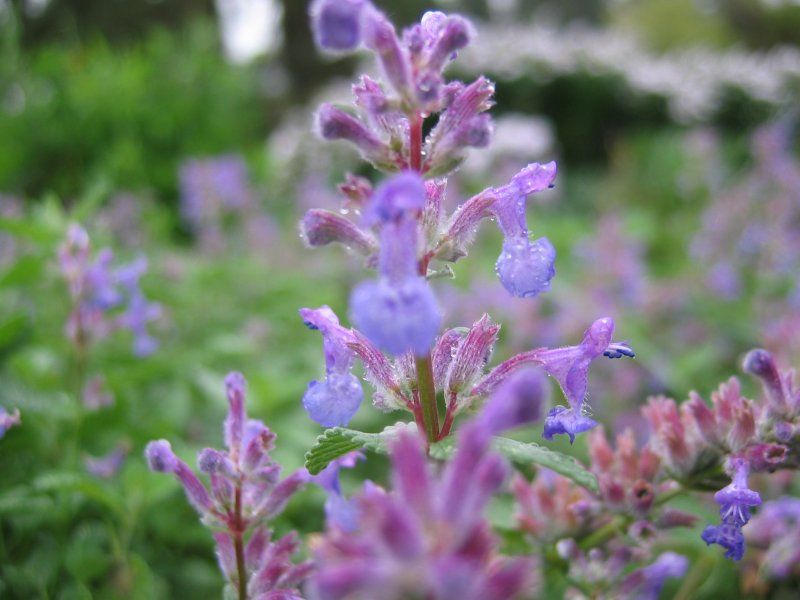
Soft mounds of gray-green foliage and airy blue flowers can make even a straightforward yard feel more relaxed. This perennial has a loose, cooling look that works especially well against stone, brick, or dark mulch, where the color seems to float.
In Pennsylvania landscapes, it starts early, blooms generously, and gives you long visual value for very little effort.
You will get the best shape in full sun, though it tolerates a bit of light shade. After the first heavy bloom, clipping it back by about a third usually encourages a fresh flush and keeps the plant from looking tired or split open.
That one simple task can carry the display through a big stretch of summer.
Because the habit spills gently, it is excellent at softening hard edges along paths, driveways, and front borders. Pollinators love it, deer usually ignore it, and the foliage has a pleasant herbal scent when brushed.
Try pairing it with roses, salvias, alliums, or yellow daylilies if you want the blue to calm brighter colors. For gardeners who appreciate an easy plant that still looks intentional, this one punches far above its maintenance level.
Siberian Iris
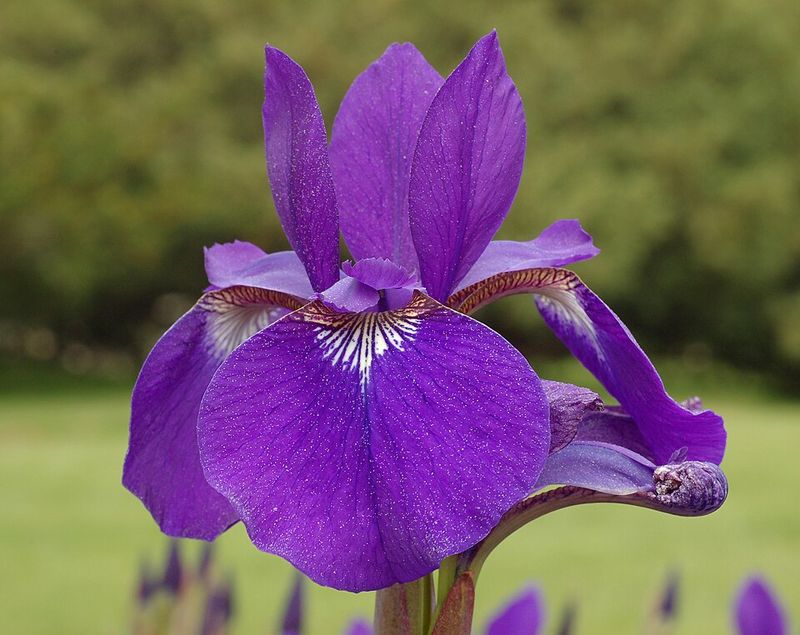
There is something especially refined about the way these elegant flowers hover above slim, grassy foliage. The blue tones tend to read clear and cool, not heavy, which makes them useful when you want a bed to feel calmer rather than crowded.
In Pennsylvania gardens, they bridge spring and early summer with a look that feels polished but never stiff.
Unlike bearded iris, this type appreciates more consistent moisture and handles wetter spots with better grace. You can tuck it near a downspout bed, rain garden edge, or low area that stays evenly moist without becoming swampy.
Full sun gives the strongest bloom, though light afternoon shade can help in hotter inland spots.
After flowering, the foliage remains upright and attractive, so the clump still contributes shape through much of the season. That makes it valuable in mixed borders where every plant needs to earn its footprint after bloom time.
Pair it with baptisia, alliums, or broad-leaved hostas for contrast in texture, and divide every few years if flowering declines. If your yard needs blue flowers with a clean vertical line, this one offers beauty without drama.
Balloon Flower
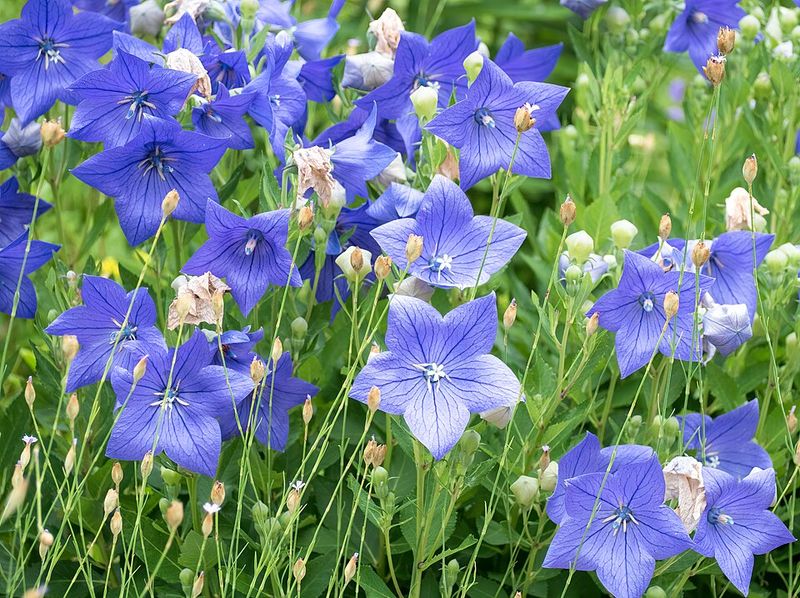
One of the most charming details in any summer border is the way the buds swell before they open. That balloon stage gives you a little anticipation, then the starry blue flowers arrive and hold their own without overwhelming nearby plants.
In Pennsylvania yards, the color reads cool and clear, especially when planted near silver leaves or white bloomers.
This perennial prefers full sun to part sun and average soil, and it usually asks for very little beyond decent drainage. Because it emerges late in spring, many gardeners accidentally disturb it, so marking the spot is a smart move.
Once it is settled, the plant forms a dependable clump that works well in front or middle positions.
You can use shorter varieties near paths and taller ones in mixed borders where upright stems help tie the planting together. Deadheading extends the display, though even without constant grooming, it stays fairly tidy compared with fussier summer bloomers.
Try pairing it with coreopsis, catmint, or dwarf grasses for a cooler palette that still has movement. If you like flowers with a touch of personality but do not want a plant that takes over, this one is a reliable and easygoing choice.
Veronica
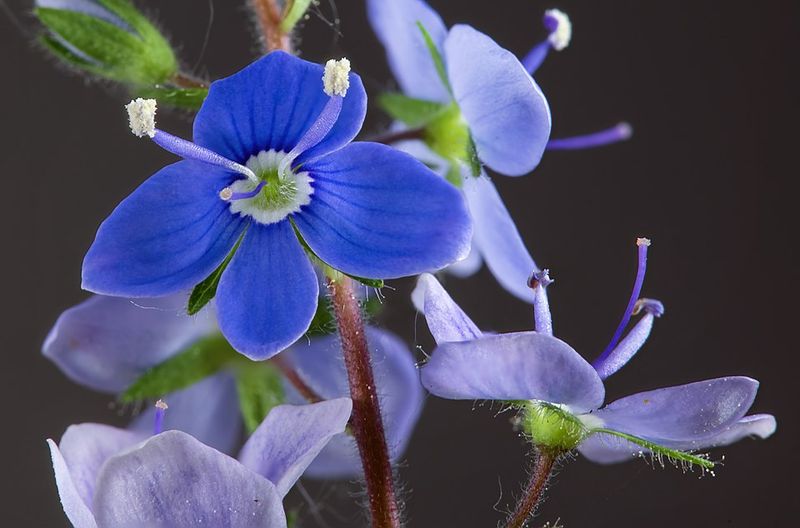
Vertical flower spikes can bring order to a planting bed, and this perennial does that without feeling severe. The blue shades range from soft sky to richer violet-blue, so you can steer the mood toward airy or more saturated depending on the cultivar.
In Pennsylvania, it fits neatly into sunny borders where structure and repeated bloom both matter.
Good drainage is the main requirement, especially through winter, because heavy wet soil can shorten its life. When planted in full sun, it usually keeps a better shape and flowers more generously, then rewards a quick trim with another wave of color.
That reblooming habit makes it useful around patios and front walk gardens where you see the details every day.
The spikes play well with rounded forms, so pair it with coneflowers, yarrow, salvia, or low mounding catmint for balance. Pollinators are frequent visitors, yet the overall look stays neat enough for formal or suburban landscapes.
If your garden tends to blur together by midsummer, this plant adds definition and a welcome cool note. Choose a mildew-resistant variety, give it breathing room, and you will get a perennial that looks more tailored than temperamental.
Jacob’s Ladder
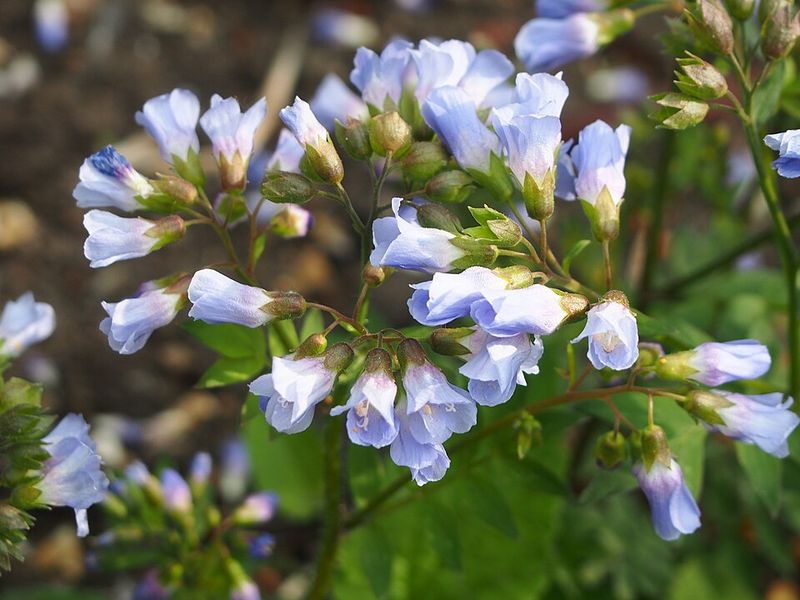
Shade gardens often lean green, so a true blue flower can feel like a small luxury there. This perennial brings clusters of nodding blue blossoms above beautifully divided foliage that adds fine texture even when the plant is not in bloom.
In Pennsylvania yards, it is especially useful for bright shade beds that need spring interest without flashy color.
Moist, humus-rich soil keeps it happiest, though established clumps can handle normal garden conditions if they do not dry out hard. Morning sun with afternoon shade usually produces the best balance of flowering and fresh-looking foliage.
If your woodland edge or north-side foundation bed feels flat in May, this plant can lift the whole scene.
The leaves pair nicely with hostas, ferns, brunnera, and spring bulbs, giving you layered texture rather than a one-note patch. It is not the loudest performer, but that is part of the appeal when you want calm, cool combinations that reward a closer look.
In hotter sites, a little extra mulch and regular watering during dry stretches will keep it from fading early. For gardeners trying to add blue beyond the sunny border, this is one of the most graceful ways to do it.
Brunnera
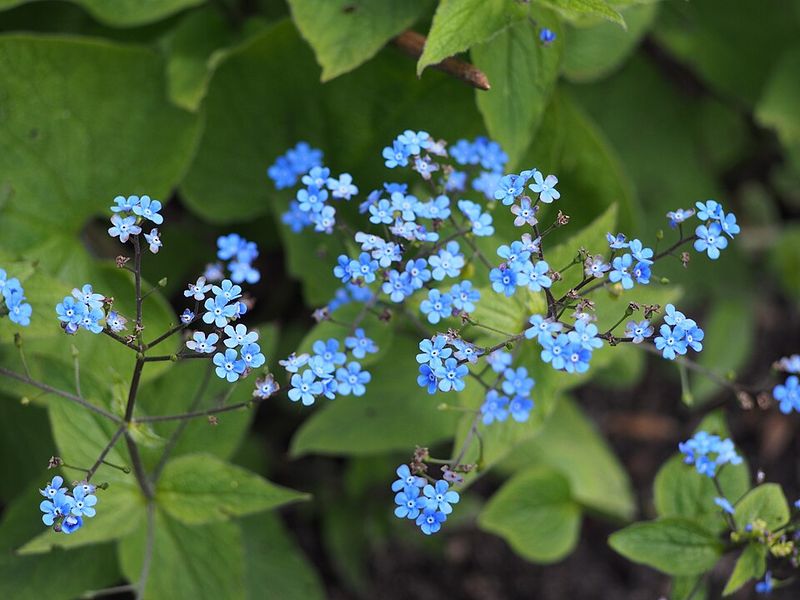
Tiny blue flowers can have an outsized effect when they float above bold foliage in spring. This shade perennial is loved as much for its leaves as for its bloom, especially the silver-patterned forms that brighten darker corners all season.
In Pennsylvania gardens, it helps shady beds feel cooler and more intentional from April onward.
Rich soil with steady moisture gives the best performance, and afternoon shade protects the foliage from looking tired by midsummer. The flowers resemble forget-me-nots, creating a soft blue haze that works beautifully near paths, where you can appreciate the details up close.
Under trees, along a north-facing wall, or beside a shaded porch, it fills a very useful design role.
Because the leaves are broad and eye-catching, this plant anchors delicate companions like ferns and bleeding heart without overpowering them. It also helps carry a bed after spring bloomers disappear, which is something many blue-flowered perennials fail to do.
You can remove tired leaves later in summer and often get a fresh flush if the plant has enough moisture. If your shade garden needs color that reads cool rather than gloomy, this is an elegant choice that keeps working long after the flowers fade.
Great Blue Lobelia
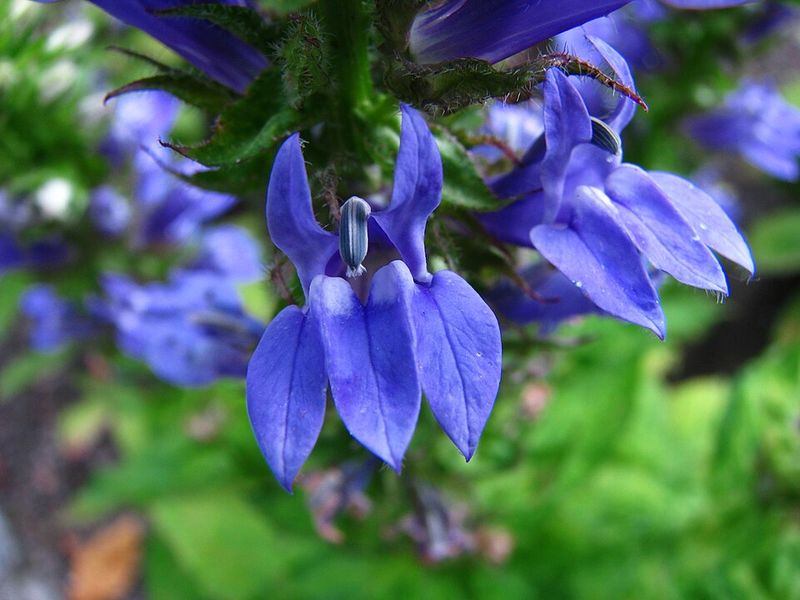
Late summer can be surprisingly short on true blue flowers, which is exactly where this native standout shines. Tall spikes packed with vivid blue blooms bring energy to damp areas just when many earlier perennials are winding down.
In Pennsylvania yards, that timing is incredibly useful if you want your cooler color palette to continue into fall.
Moisture matters here more than with many border plants, so think rain gardens, pond edges, low spots, or beds with irrigation. Full sun works best where soil stays consistently damp, while part shade helps in areas that dry a bit between waterings.
If you have struggled to fill a wetter area with something elegant, this plant solves that problem beautifully.
Hummingbirds, bees, and butterflies are drawn to the flowers, adding motion without making the planting feel chaotic. The upright form mixes well with joe pye weed, grasses, turtlehead, and white obedient plant if you want a layered native look.
Because it self-sows lightly in happy conditions, you may get welcome repeats without losing control. For gardeners who need real blue in the second half of the season, few perennials feel as fresh, cool, and regionally appropriate as this one.
Delphinium
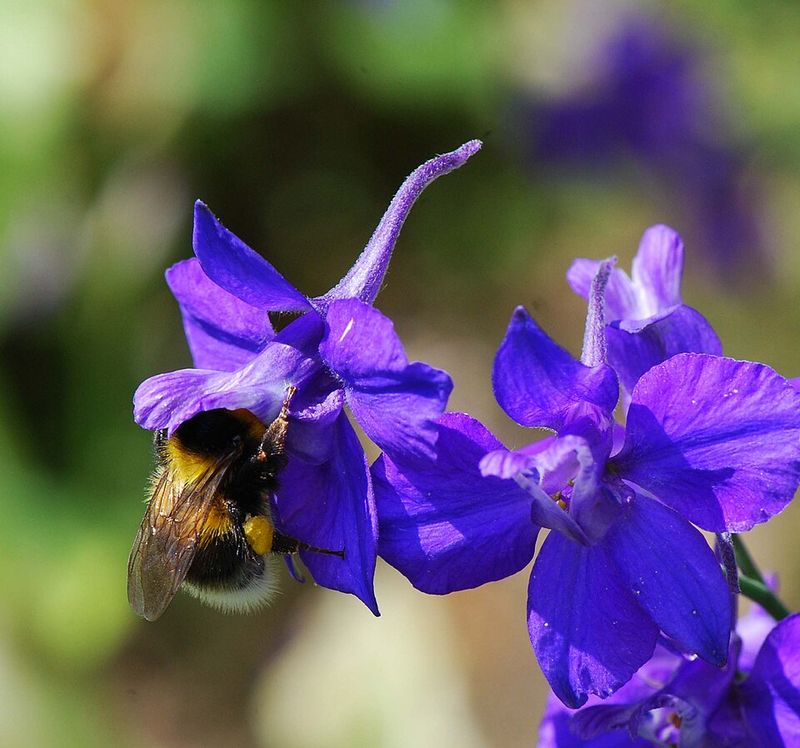
Nothing creates vertical drama quite like tall blue spires rising above a summer border. The flowers can look almost luminous in morning or evening light, bringing a cooler tone that balances hot reds, oranges, and yellows nearby.
In Pennsylvania gardens, the effect is stunning, especially in cottage-style beds where height and rhythm matter.
Success comes from smart siting more than luck. Rich soil, steady moisture, and full sun are important, but protection from strong wind is just as critical because tall stems can topple after storms.
Many gardeners get better results by planting them where neighboring shrubs, peonies, or supports can give discreet backing.
These plants do ask more than the average perennial, yet the payoff can be worth it if you love a layered, classic border. Cutting back after the first flush may encourage rebloom, and staking early keeps the display graceful rather than precarious.
Pair them with roses, catmint, foxgloves, or pale yellow companions for a cool, romantic look. If your yard has a prominent bed that needs a true focal point, few blue perennials command attention with this much elegance.
Just think of them as special-occasion performers that earn their keep when conditions are right.
Amsonia
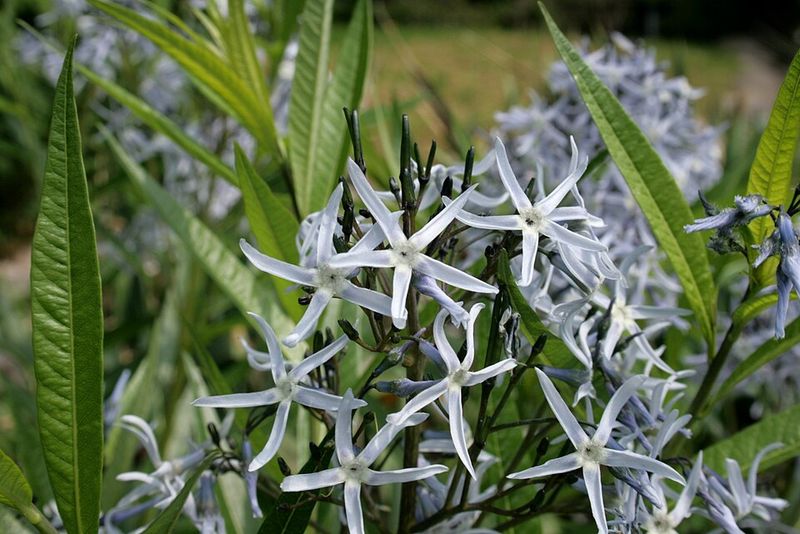
Some perennials earn their place with one spectacular week, but this one contributes for months. Pale blue star-shaped flowers appear in spring, then finely textured foliage carries the planting through summer before turning a handsome golden yellow in fall.
In Pennsylvania yards, that long season of interest makes it an especially smart investment.
Full sun to light shade works well, and average garden soil is usually enough once the plant is established. It is slower to bulk up than some faster fillers, yet that patience pays off with a durable clump that rarely needs dividing and seldom flops badly.
Near foundations, mixed borders, or pollinator plantings, it reads calm, airy, and dependable.
The softer blue is ideal if you prefer a more relaxed palette over saturated jewel tones. Pair it with baptisia, echinacea, ornamental grasses, or spring bulbs to take advantage of its gentle texture and long-lasting foliage.
Deer tend to pass it by, and drought tolerance improves nicely after the root system settles in. If you are trying to build a lower-maintenance yard that still looks thoughtfully layered from spring through autumn, this perennial quietly does a tremendous amount of work without ever seeming needy.
Campanula
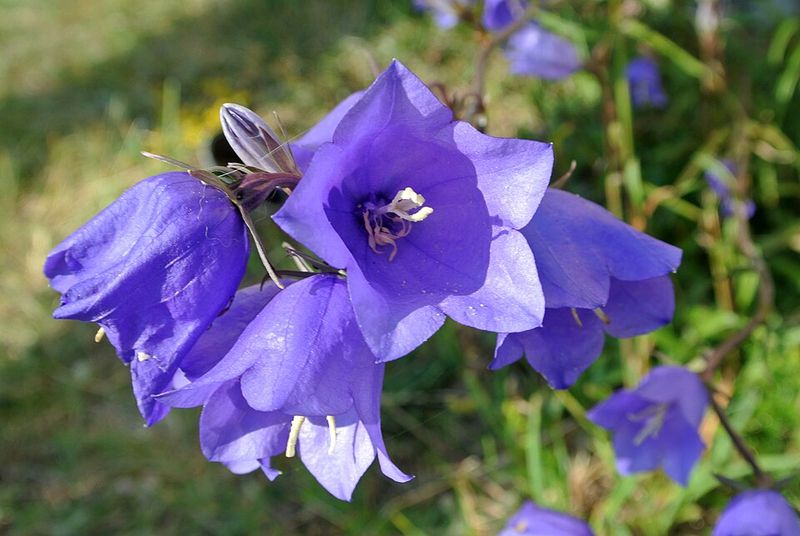
Bell-shaped blue flowers bring a softer, friendlier mood than some of the sharper spiked bloom forms. This perennial comes in several sizes, from ground-hugging spreaders to upright border types, so you can use it in rock gardens, edging, or mixed beds.
In Pennsylvania, it is a handy way to thread cool color through spring and early summer plantings.
The best results usually come in full sun to part shade with evenly moist, well-drained soil. Taller forms may need a little support in richer ground, while lower growers can spread gently between stones or at the front of a border.
That flexibility makes it easier to match the plant to the space instead of forcing one habit everywhere.
You can deadhead to stretch the bloom period and keep the planting looking fresh, especially near entrances where details matter. Blue campanulas pair beautifully with lady’s mantle, salvia, dianthus, and white annuals for a crisp, cooler effect.
Just check the variety before planting, since some are better behaved than others and a few can wander more than expected. For gardeners who like blue flowers with a classic cottage feel but still want practical options for different bed sizes, this group offers plenty to work with.
Geranium ‘Johnson’s Blue’
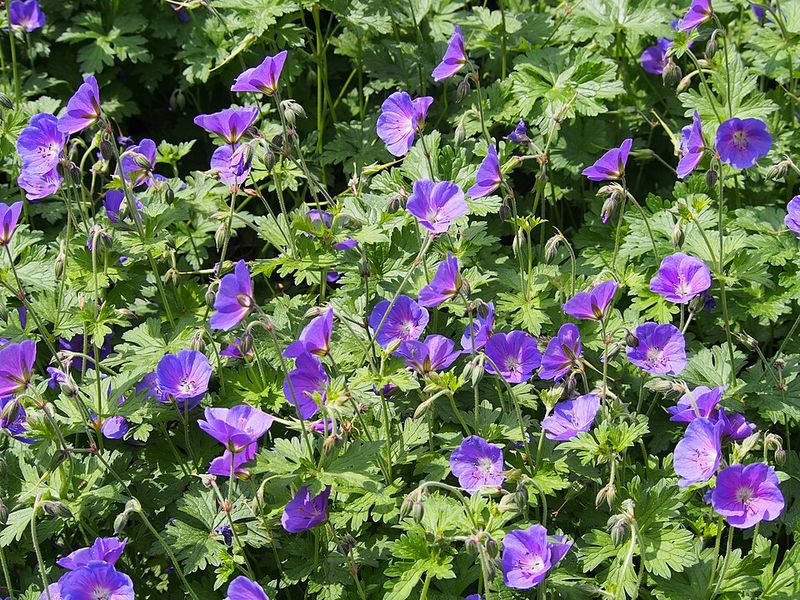
Hardy geraniums are some of the most useful gap-fillers you can plant, and this classic blue-flowered selection proves why. The blooms lean lavender-blue rather than dark navy, creating a relaxed wash of color that cools a border without stealing the whole show.
In Pennsylvania gardens, it is especially valuable where you want a plant to weave around neighbors and soften transitions.
Sun or part shade both work, though it tends to flower best with several hours of direct light. Average soil is fine if drainage is decent, and a post-bloom trim often freshens the foliage and encourages a tidier mound.
That easy reset is helpful in long borders that need to keep their shape through summer.
Because the plant spreads gently, it can knit together roses, peonies, salvias, and ornamental grasses in a way that looks natural but still controlled. The open flowers also attract pollinators, adding life to the bed without changing the overall calm feel.
Try it near stepping stones, in front of shrubs, or along the edge of a cottage-style planting where softness matters. If your yard needs a dependable blue perennial that covers ground, blends well, and does not become a maintenance project, this one remains an easy favorite.
Agastache ‘Blue Fortune’
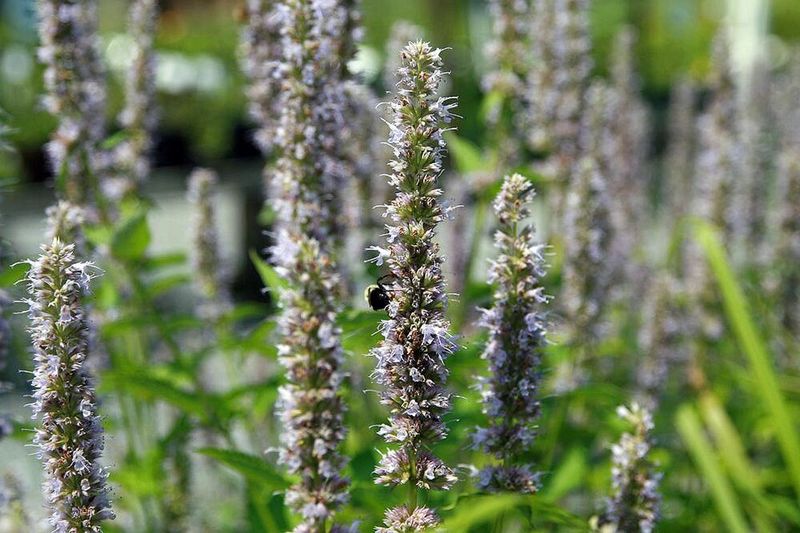
Long-blooming color is hard to ignore when summer beds begin to fade, and this perennial keeps showing up. Upright stems carry soft blue-lavender flower spikes for weeks, creating a cooler layer that still feels lively thanks to constant pollinator activity.
In Pennsylvania yards, it fits beautifully into sunny borders that need dependable midsummer to fall performance.
Good drainage is the key to success, especially over winter, so raised beds or looser soil often give the best results. The aromatic foliage is another advantage, making deer and rabbits less interested while adding a pleasant herbal note when brushed along a path.
Give it full sun, avoid overly rich soil, and it usually stays sturdier than you might expect.
This plant works well with echinacea, rudbeckia, nepeta, and ornamental grasses if you want a naturalistic look with enough structure to feel planned. Deadheading is optional, though removing spent flowers can keep the clump cleaner and extend the display a bit.
Because it blooms for such a long stretch, it helps tie together early and late performers in the same bed. If your goal is a cooler-toned pollinator garden that still reads tidy from the street, this is one of the easiest blue-flowered perennials to build around.
Blue Wood Aster
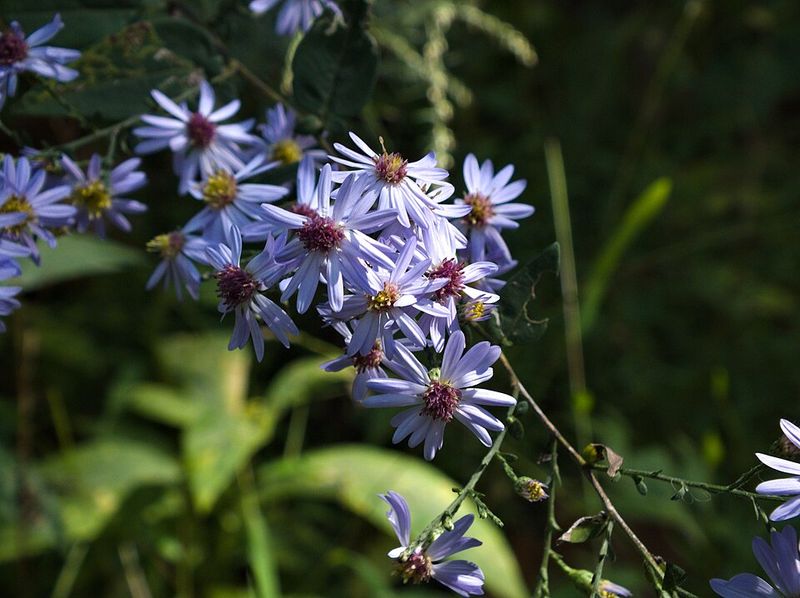
Fall gardens often need a final cool note, and this native perennial provides it with surprising grace. Clouds of small pale blue flowers with yellow centers brighten the shady edge of the yard just as many summer bloomers are finishing.
In Pennsylvania, that late-season timing makes it valuable for both beauty and ecological support.
Part shade is ideal, especially in woodland borders, under high tree canopy, or along the back of a lightly shaded property line. The plant tolerates average soil and is generally easier than many people assume, though pinching or cutting back in early summer can keep it bushier and less floppy.
That one step helps it look more intentional in residential landscapes.
Pollinators appreciate the flowers when nectar sources are dwindling, and the airy habit blends naturally with ferns, goldenrods, sedges, and other native companions. It is not the kind of perennial that delivers a rigid formal outline, but it creates a relaxed, cooler finish that feels right at home in Pennsylvania.
If your garden looks tired by September, adding this aster can quietly reset the mood. Think of it as the plant that softens the season’s landing while keeping the color palette gentle, fresh, and unmistakably calm.