
Plant These 8 Texas Natives This Fall And Let Dragonflies Thin Out Next Year’s Mosquitoes
Follow us on Google
Dragonflies eat mosquitoes by the hundreds, and the right Texas native plants can pull them into your yard by next spring. You just have to plant this fall.
Picture a warm October evening on the back porch, glass of tea sweating in your hand, and that thin whine buzzing past your ear again. Fall planting gives roots months of cool weather to settle in, so by May your yard is ready to host a hungry squadron of winged hunters.
1. Swamp Milkweed Builds a Dragonfly Hunting Ground
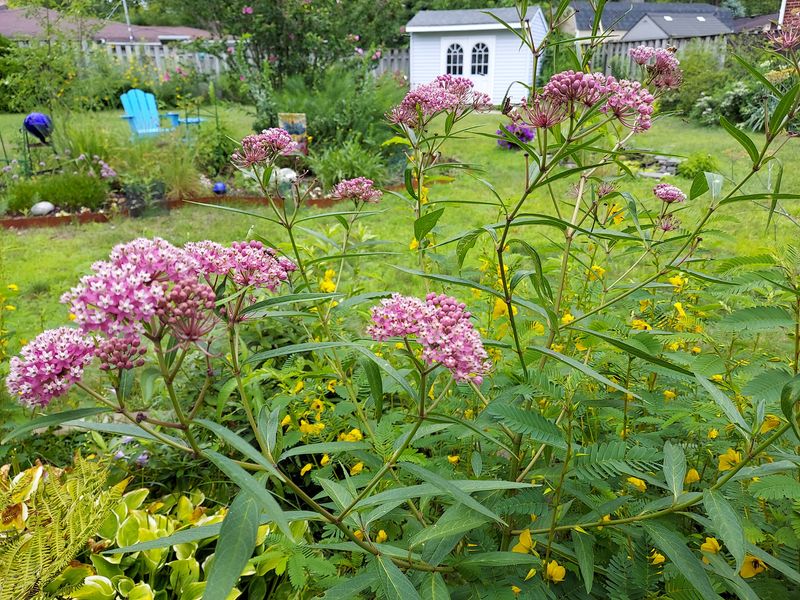
Most people plant milkweed for monarchs and stop there. Swamp milkweed (Asclepias incarnata) quietly does a second job, because its pink flower clusters pull in clouds of small flying insects that dragonflies love to snatch midair.
Here is the turn. Dragonflies do not eat nectar, they eat bugs, so any plant that gathers bugs becomes a hunting ground.
Swamp milkweed is basically a buffet table, and the dragonflies are the guests who skip the food and eat the other guests.
Plant it in October or November in a damp spot, like a low corner or near a downspout. Space plants about 2 feet apart and expect them to reach 3 to 5 feet.
East Texas and Gulf Coast yards with heavier rainfall suit it best.
And yes, you still feed the fall monarch migration as a bonus. One plant, two kinds of wonder.
2. Gregg’s Mistflower Keeps the Insect Buffet Running All Fall
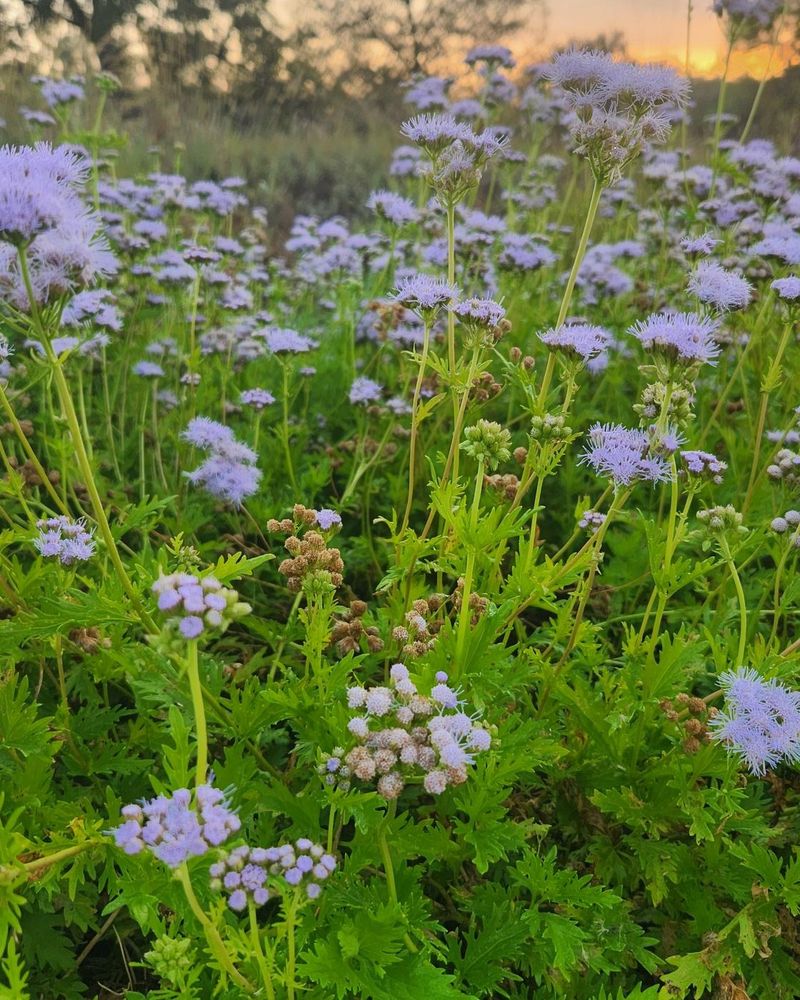
You step out on a September morning and the mistflower bed looks like it is breathing. Gregg’s mistflower (Conoclinium greggii) draws so many insects that the whole patch hums with movement.
That crowd matters. Dragonflies patrol where prey gathers, and a dense patch of lavender puffballs keeps them circling your yard instead of your neighbor’s.
The busier the bed, the more reasons they have to stay.
Plant it in fall across Central Texas and South Texas in well-drained soil and full sun to light shade. It grows 1 to 2 feet tall and spreads fast, so start plants about 18 inches apart.
Once established, it gets by on roughly 1 inch of water per week during dry stretches.
Be warned, it wanders. Most gardeners decide they do not mind.
3. Cenizo Thrives Where Thirsty Plants Give Up
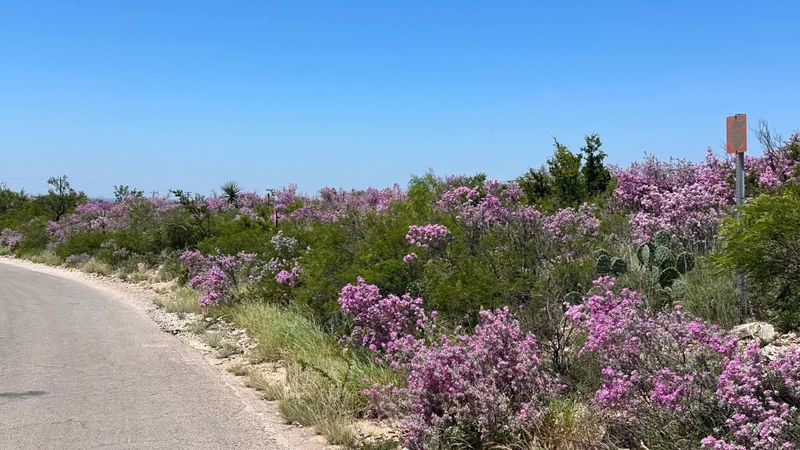
Hill Country soil can be six inches of dirt sitting on rock. Plenty of flowers sulk there, but cenizo (Leucophyllum frutescens), also called Texas sage, actually seems to enjoy it.
Here is where it gets interesting. Cenizo often bursts into purple bloom right after a rain, and that sudden flush pulls in small insects at the same time mosquitoes hatch from fresh puddles.
The dragonflies show up to a two-course meal.
Plant it in fall in full sun with fast drainage, spacing shrubs 4 to 6 feet apart. Water deeply every week or two through winter, then back off.
Once rooted, it shrugs off 100 degree heat with almost no help, which your water bill will appreciate.
Silver leaves, purple blooms, zero fuss. It earns its spot.
4. Turk’s Cap Gives Dragonflies a Shady Place to Rest
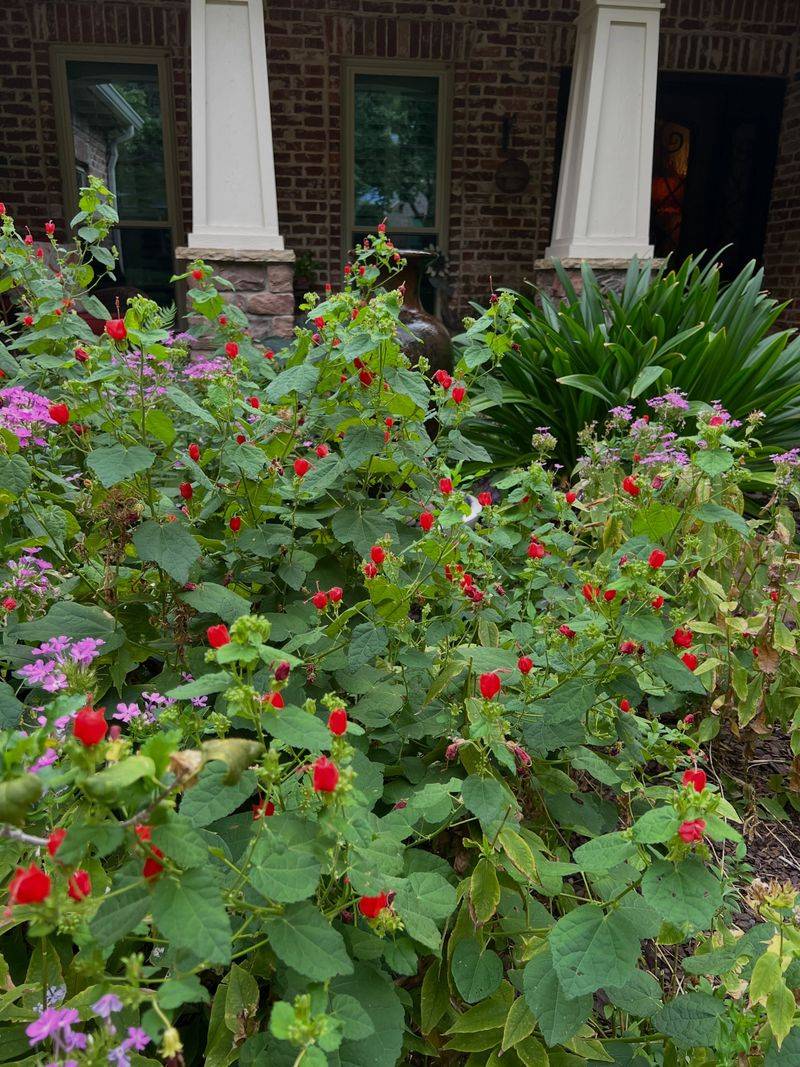
Myth first. People assume dragonflies only need open sun, but on a scorching Texas afternoon they duck into shade just like you do.
Turk’s cap (Malvaviscus arboreus var. drummondii) offers that cool hideout. Its broad leaves and sturdy stems make shaded perches under trees where few other bloomers survive, and its red swirled flowers keep pollinators and small insects moving through the gloom.
Plant it in fall from North Texas clay to East Texas sand. It handles morning sun or deep shade and grows 3 to 6 feet tall and wide, so leave at least 4 feet between plants.
Cut it back to about 6 inches in late winter if a freeze browns it.
Think of it as the porch swing of your dragonfly hotel. Rest stops keep hunters around.
5. Fall Aster Feeds Hunters When Everything Else Fades
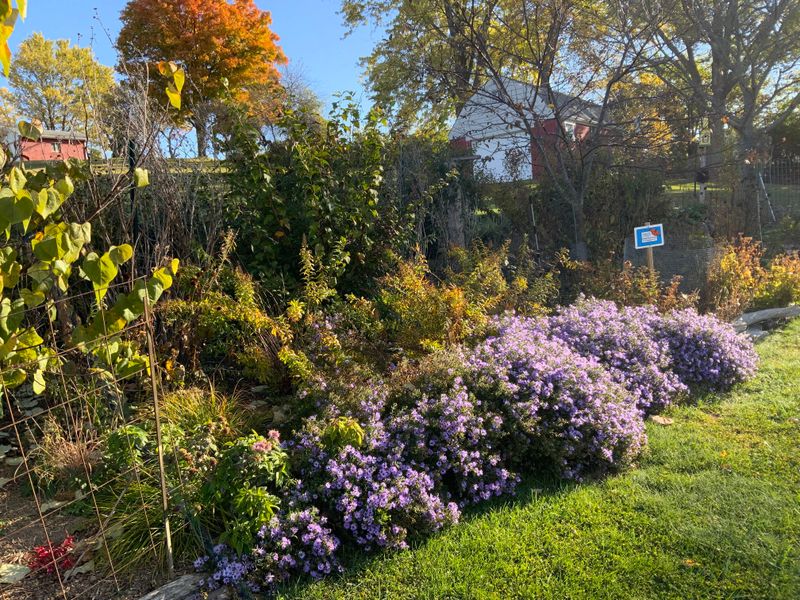
By late October, most summer flowers look tired. Aromatic aster (Symphyotrichum oblongifolium) waits until then to explode into purple mounds.
That timing is the whole point. Dragonflies keep hunting well into Texas autumn, and late bloomers keep prey insects around so the hunters do not drift off searching for food.
A yard with something blooming in November stays on their map.
Plant it this fall in full sun and well-drained soil, about 2 to 3 feet apart. Trim it back by half in early June so it stays compact instead of flopping.
It tolerates alkaline soil in Central Texas well and needs little water once settled.
So when the neighborhood goes brown, your corner glows. That feels genuinely good.
6. Black-Eyed Susan Lures the Prey Dragonflies Chase
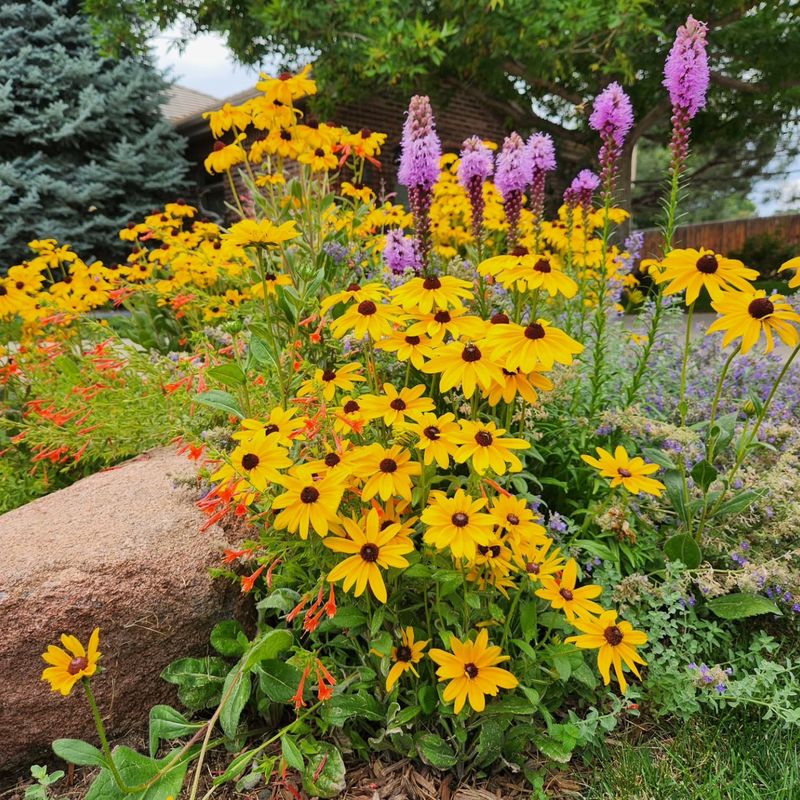
Golden petals, dark centers, and a steady stream of visitors. Black-eyed Susan (Rudbeckia hirta) is the friendly wildflower everyone recognizes from Texas roadsides.
It does not feed dragonflies directly. Instead it draws gnats, small flies, and other little fliers that dragonflies pick off like outfielders shagging fly balls.
More prey up front means more dragonflies patrolling your patio.
Scatter seed or set out transplants in fall, about 1 foot apart, in at least 6 hours of sun. It handles blackland clay and sandy soil alike as long as water drains.
Short-lived plants reseed freely, so a small patch becomes a meadow in two seasons.
Cheap, cheerful, and hardworking. Hard to argue with that.
7. Yarrow Rolls Out a Landing Strip for Tiny Insects

Flat flowers are easy landing pads. White yarrow (Achillea millefolium) offers wide, tabletop clusters where small wasps and flies can perch and feed.
That steady traffic of tiny insects keeps dragonflies interested. Yarrow stems also give smaller dragonflies, the ones called damselflies, a low perch to watch from.
Plant it in fall from North Texas to the Gulf Coast, 18 inches apart in full sun. It spreads by underground runners, so keep it away from tidy borders.
Water weekly the first month, then only in long dry spells.
Tough, plain, and dependable. Like a good neighbor.
8. Pickerelweed Raises the Next Generation of Mosquito Eaters
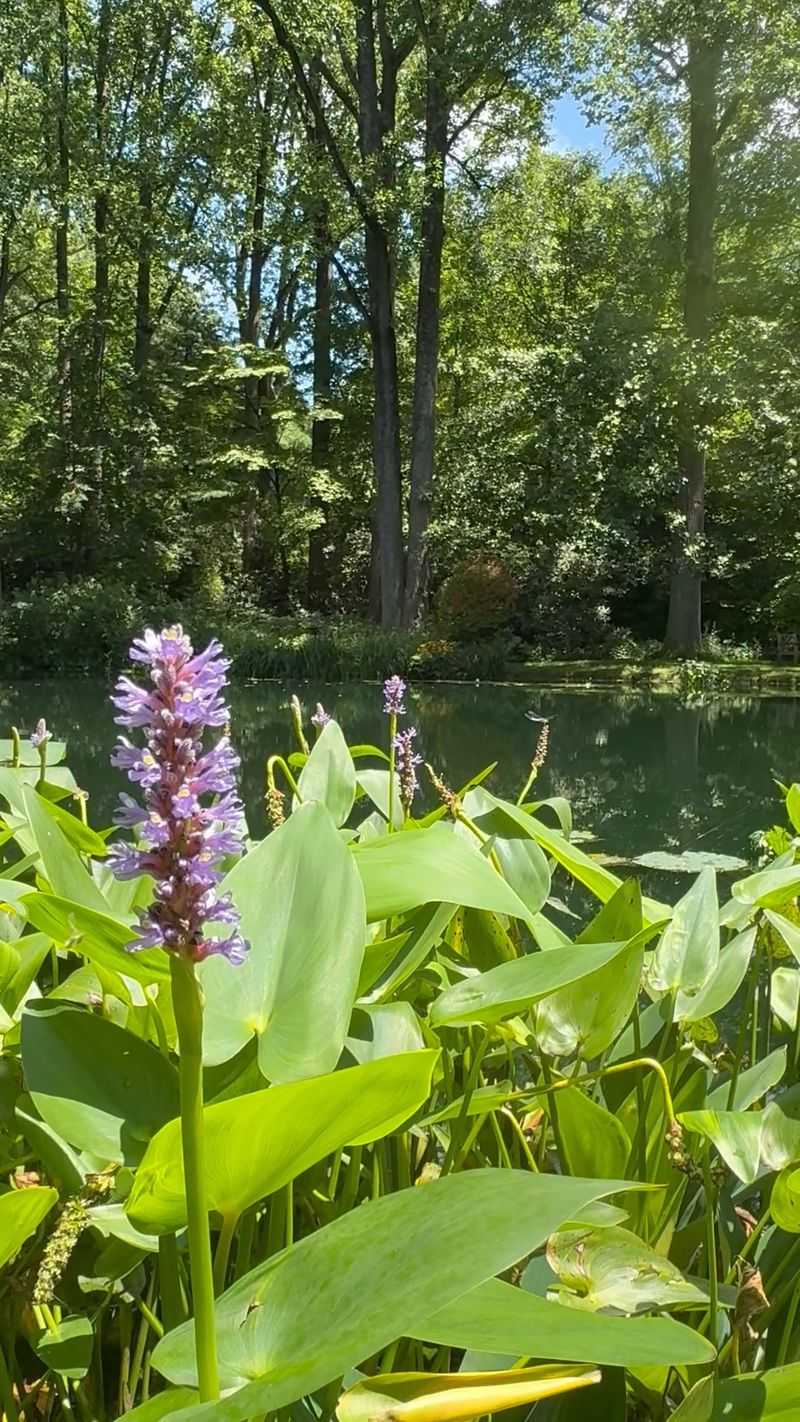
Surprising fact: baby dragonflies hunt mosquitoes too. The underwater young, called nymphs, eat mosquito larvae before they ever grow wings, and they need water plants to climb out on when they transform.
Pickerelweed (Pontederia cordata) is the ladder. Its tall stems rise from shallow water, giving nymphs a place to crawl up and split into adults, and its purple spikes draw insects all summer.
Plant it in fall in a pond edge or a sunk tub in 2 to 6 inches of water. Keep fish out, since they eat nymphs.
Texas A&M AgriLife Extension notes that still water also breeds mosquitoes, so pair it with a dragonfly-friendly pond rather than a stagnant bucket, and skip broad pesticides that kill dragonflies too.
It is not a magic shield, just one smart layer. But next spring, you may watch a dragonfly unfold on your own stem, and that is something to be proud of.
