
Hummingbirds Quit Your Yard For A Reason That Has Nothing To Do With Your Nectar
Follow us on Google
It’s a quiet morning on the porch, the feeder is full, and the little buzzing visitors have gone missing. Here’s a clue many yards share: the feeder may not be the problem at all.
Hummingbirds also need nearby cover, perches, and insects, and a yard that loses those things can become less useful to them. It is one possible reason, not a sure one, and you can check it before spring.
Could Lost Cover Make the Yard Less Useful?
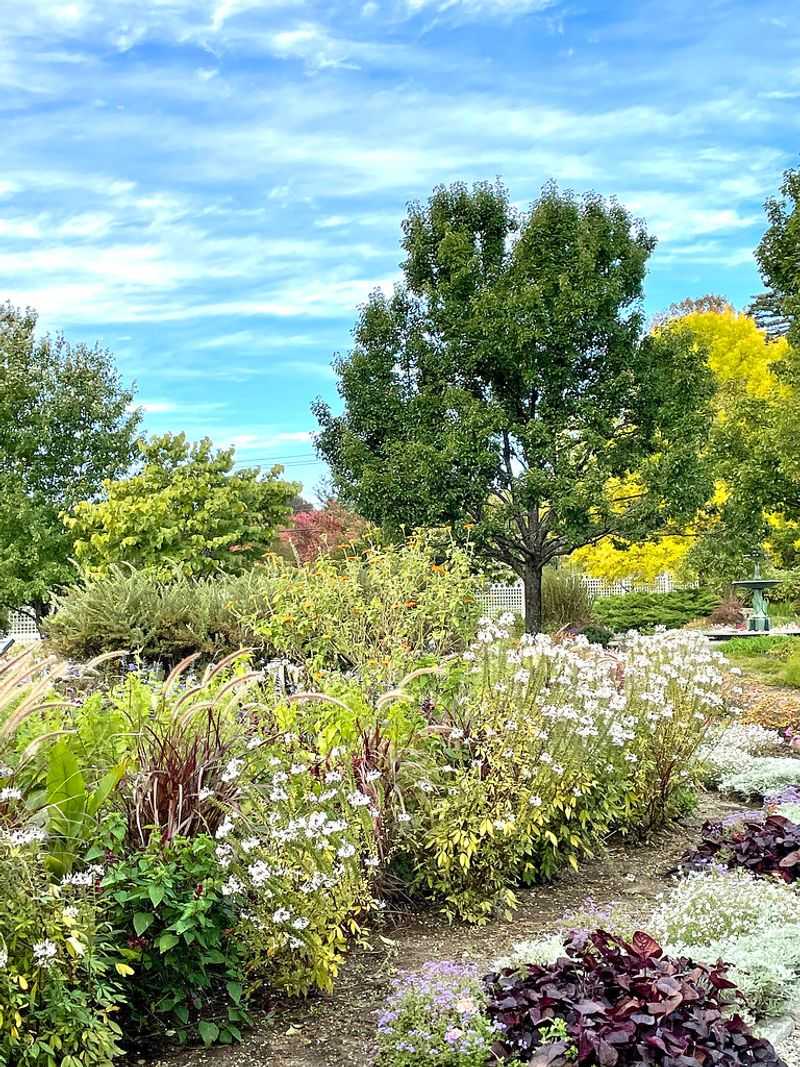
Picture a summer evening on the porch, ice melting in your glass, and a feeder swinging empty of visitors. The nectar is fresh.
The feeder is clean. Yet the tiny birds that zipped past all June have gone quiet.
Here is a possibility many homeowners overlook. A hummingbird does not treat your yard as just a feeder.
It treats it as a whole place, with spots to hide, rest, and find food. If a hedge came out last fall or a small tree was removed, the yard may have lost some of that usefulness.
Audubon recommends keeping shrubs and small deciduous trees for protective cover, which gives birds a safe place to duck away from trouble. Think of cover like a hallway with doors.
A bird can slip in, rest, and come back out when the coast is clear.
Now for the honest part. Fewer visits do not prove that lost cover is to blame.
Cornell Lab says changes in natural food or nest-site availability are among several possible reasons for fewer birds at a feeder, and birds simply move around too.
So treat a recent change in your yard as a clue, not a verdict. Walk the property and ask what stood near the feeder a year ago that is gone now.
That small bit of detective work is a good first step, and it costs nothing.
Branches Offer Shelter and Perches
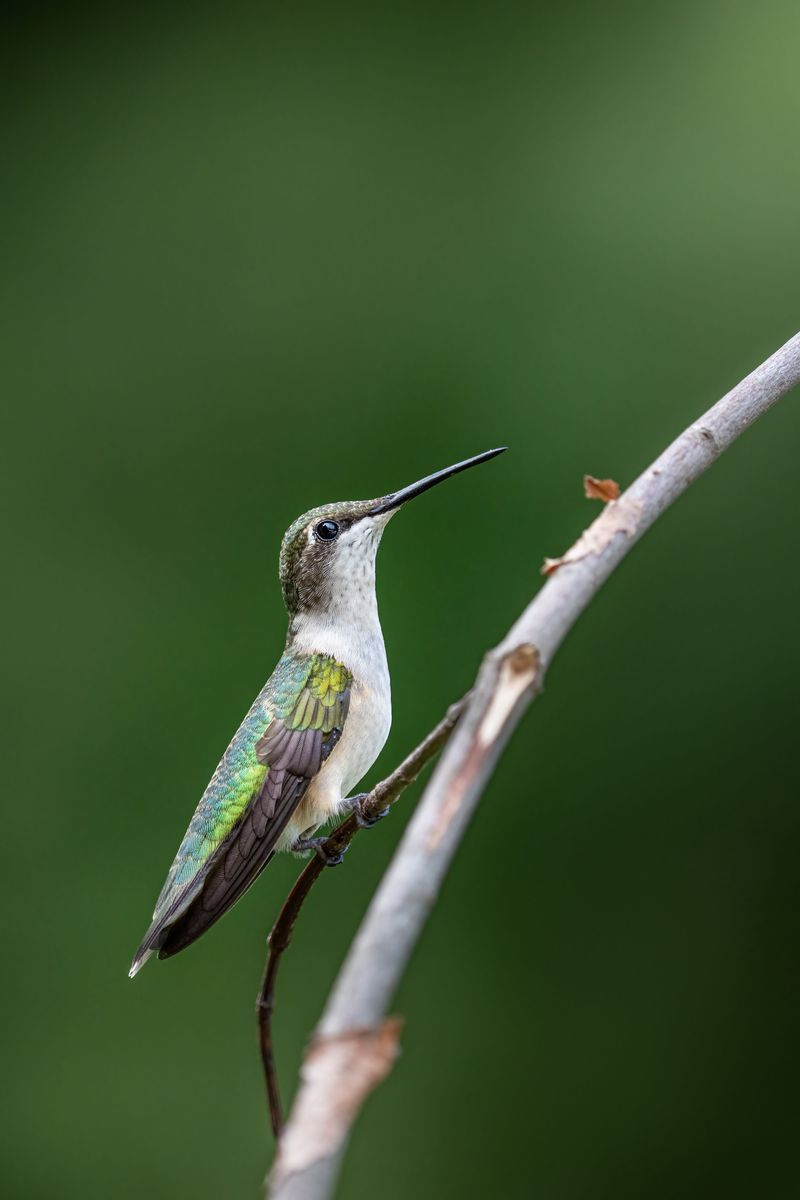
Hummingbirds look like they never stop moving. But watch one long enough and you will see it settle on a thin twig, tail twitching, head turning to keep an eye on its surroundings.
Audubon notes that hummingbirds perch to rest or survey their territory, and it suggests leaving some small branches on bushes and trees. Shrubs and small trees also give shelter from wind, rain, and hungry predators.
A bare lawn with a lone feeder offers very little of that.
Cover and perches can make a yard more useful. That is a fair way to say it.
Taking out one shrub will not necessarily drive birds off, and adding one will not necessarily bring them back.
The Ruby-throated Hummingbird is a handy example. Cornell lists its habitat as forest edges, orchards, stream borders, and backyards, and describes nests on slender tree branches, often 10 to 40 feet above ground.
Those details belong to that species, so they do not describe every hummingbird.
One more caution. A bird sipping at your feeder is not necessarily nesting in your yard.
Some may nest nearby, some may just be passing through. Either way, thin branches at different heights give them more reasons to stay a while.
Nectar Is Only Part of the Menu
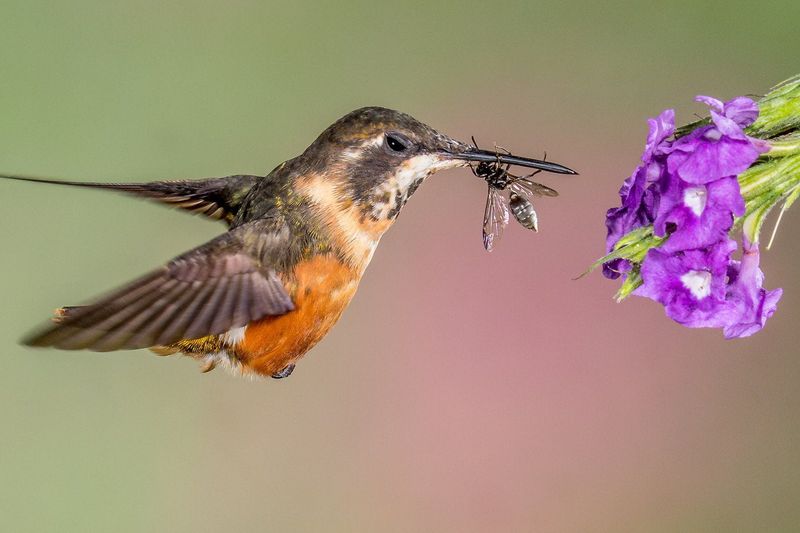
Here is a surprising fact for anyone who thinks hummingbirds live on sugar water. They eat bugs too.
Insects and spiders are part of the daily menu.
Nectar is a major energy source, the fuel for all that hovering. But insects and spiders supply protein that nectar cannot.
Audubon explains that hummingbirds eat insects and spiders as well as nectar, and that spraying pesticides can cut into this food supply and may harm the birds.
Young birds lean on this even more. Audubon Rockies reports that nesting young depend heavily on arthropods, which are small creatures like insects and spiders.
So the buzzing gnats you swat away may be a snack for someone.
Think of nectar as the gas in the tank and bugs as the groceries. A bird needs both.
Neither one replaces the other.
What can you do? Skip broad-spectrum sprays when you can, and try spot treatments only where truly needed.
Leave a few leafy corners where small insects can live. Insects alone will not explain a quiet feeder, but a bug-free yard is a thinner pantry.
Check What Changed Around the Feeder
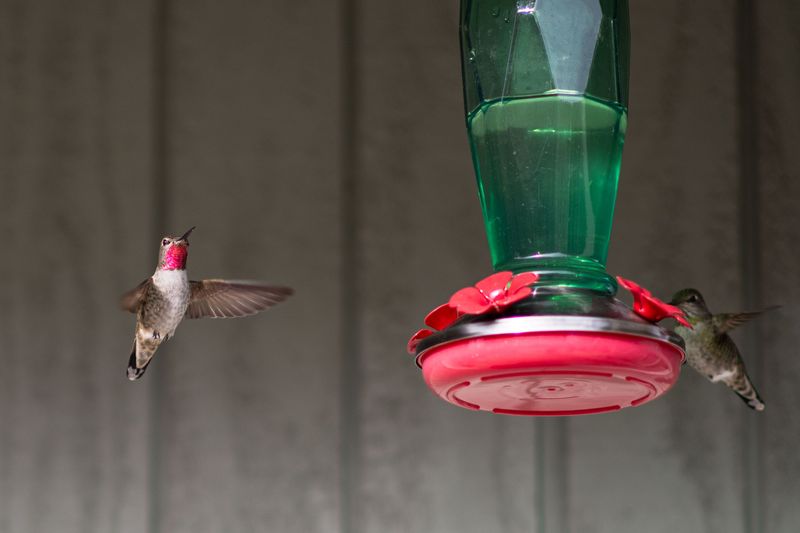
Grab a coffee and take a slow lap around the feeder. You are looking for recent changes, not proof.
Start with cover. Did a hedge get trimmed hard, a tree come down, or a brush pile get hauled away?
Then look at food. Have you started spraying more, or pulled out flowering plants that drew small insects?
Keep the neighbors in mind too. Habitat loss next door or down the block can matter, since a yard is part of a bigger landscape.
Now the reassuring part. Cornell Lab points out that changes in natural food or nest sites are possible explanations, and so is territorial behavior.
One feisty bird can chase off others, which makes a feeder look empty even when birds are close by.
Audubon adds that populations naturally fluctuate, individuals change locations, and birds may be using other food sources. So a quiet feeder alone does not show your yard has gone wrong.
Write down what you find, even if it is only a short list. If you spot a clear loss of cover, you have a place to start.
If you do not, nothing is lost, and the yard still benefits from the steps ahead.
Restore Cover Without Hiding a Predator
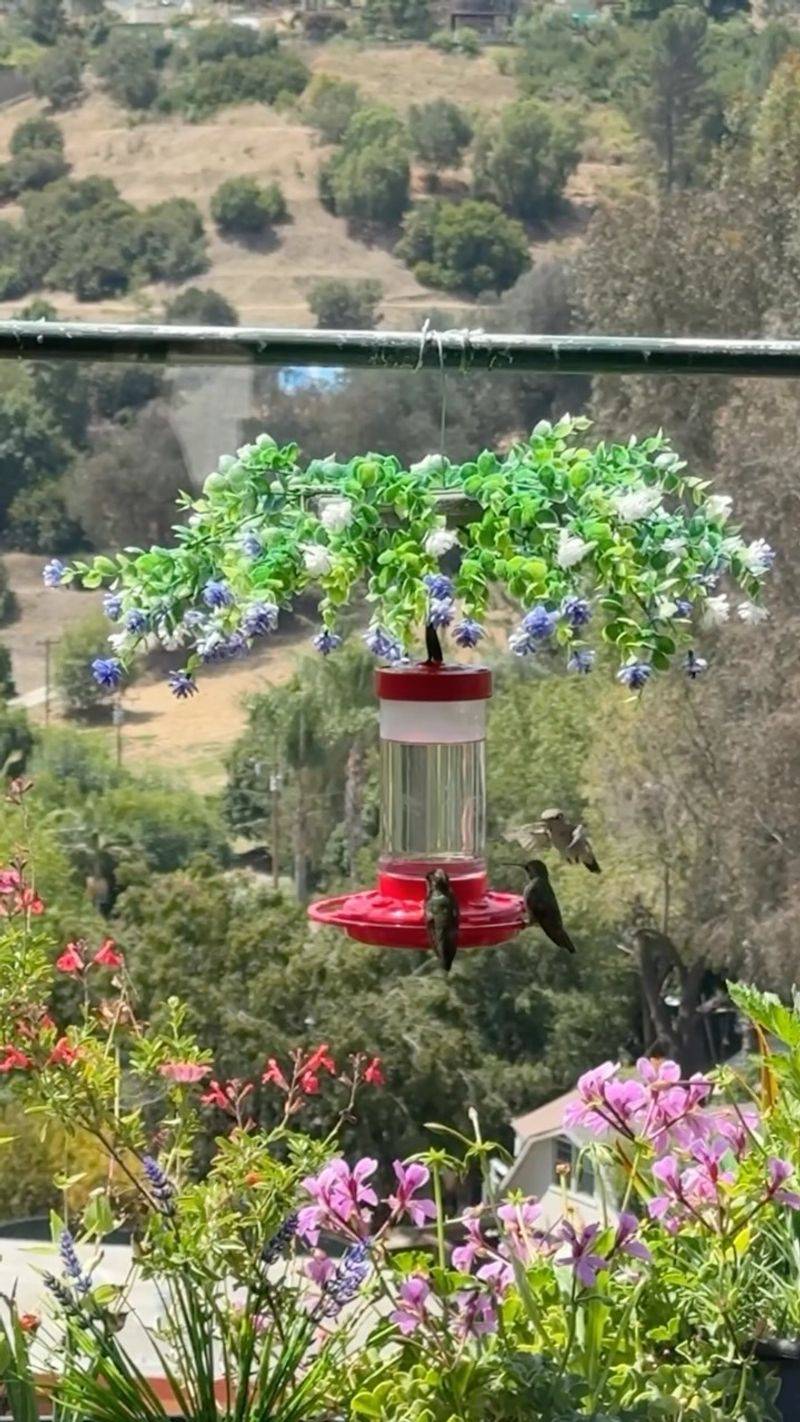
Rebuilding cover sounds simple, but there is a catch. Birds like shelter nearby, and cats like a hiding place too.
Audubon suggests maintaining shrubbery and small deciduous trees, and leaving some small branches on bushes and trees when you prune. That is an easy first move.
Skip the urge to cut everything neat and bare.
Audubon also says connected habitat is more valuable than scattered patches. So a shrub that links to a neighbor’s hedge may do more than a lone one in the middle of the lawn.
Your yard is one piece of a bigger puzzle.
For the feeder itself, think balance. Cornell Lab suggests about 10 feet from cover as a compromise in its general bird-feeder advice.
That is not a hummingbird-specific rule, and it is not a magic number for every yard.
Close enough means a bird can dash to safety. Far enough means a cat cannot pounce from dense branches right beside the feeder.
Try a spot, watch for a week or two, and move it if it feels off.
No placement can promise the birds will return. But a feeder with an escape route and no ambush spot is a kinder setup for visitors.
Keep the Feeder Safe and Fresh
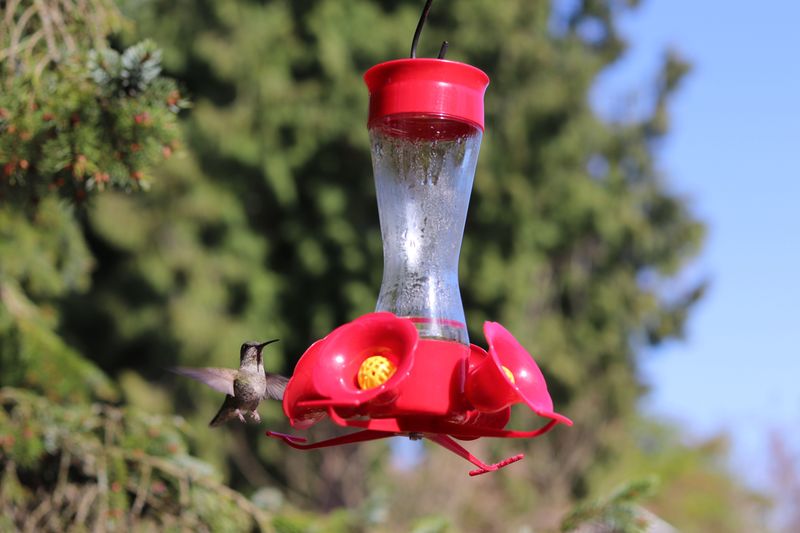
A clean feeder will not fix a missing habitat. But a dirty one can undo the good you do.
Audubon’s recipe is simple: one part refined white sugar to four parts water. Skip honey, artificial sweeteners, and red dye.
Audubon says dye is unnecessary and potentially harmful, and refined white sugar is the safe choice.
Cleaning depends on the weather. In hot weather, clean daily or every other day.
In temperate weather, every three days is the guidance. In cooler weather, twice a week is enough.
If you see mold or insects in the nectar, clean sooner. Sugar water spoils like milk left on a sunny counter, only faster.
Placement helps here too. Cornell Lab advises protecting feeders from wind and keeping them mostly shaded to help limit spoilage.
A spot under a porch eave or the edge of a tree canopy can work well.
Fill the feeder only partway if traffic is light. Less nectar means less waste when you toss it.
Think of the feeder as a helpful side dish, with shrubs, perches, and insects as the main course.
A Quiet Feeder Is Not a Verdict
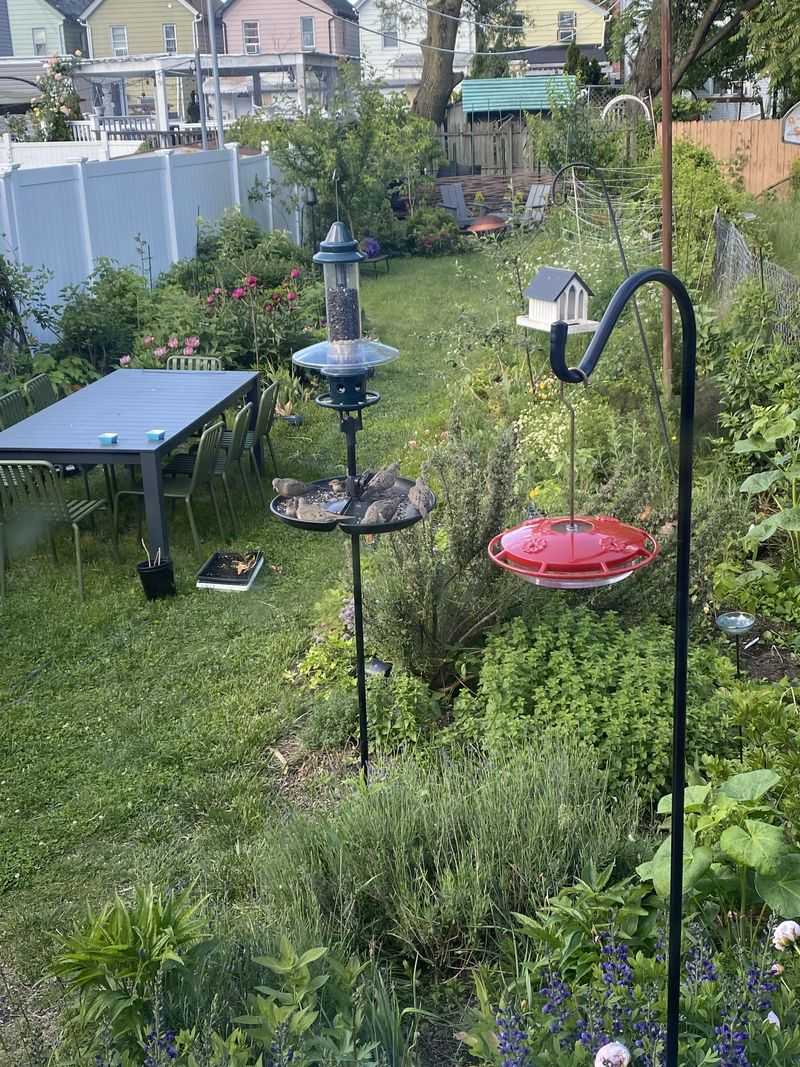
Improving your yard is worth doing. Promising yourself the birds will return is another matter.
Timing varies by location and species. The U.S.
Fish and Wildlife Service describes many hummingbirds that migrate, though Anna’s Hummingbirds are year-round residents in parts of the West, and some species overwinter in parts of the southern United States. So there is no single nationwide schedule or spring date to wait for.
Leaving a feeder up will not stop migratory birds from leaving. Audubon says they go on their own schedule, so a quiet feeder in fall may simply mean travel is underway.
Birds also come and go. Audubon notes that populations fluctuate and individuals move, and Cornell mentions that natural food and nest sites can shift.
No single change in your yard caused every absence.
So keep the small branches, go easy on sprays, and tend that feeder. Those steps make your corner of the neighborhood a better stop.
The birds will decide the rest, and a patient porch is a good place to wait.
