
How Pennsylvania Wood Frogs Survive Winter Freezing
Follow us on Google
You step into the yard on a gray February morning and hear nothing but wind rattling the oak leaves. Under all that quiet, a small brown frog may be doing something that sounds made up.
Wood frogs can survive freezing, and Pennsylvania has the woods they need. Here is how it works, and how to leave them some room.
Wood Frogs Use More Than Leaf Piles
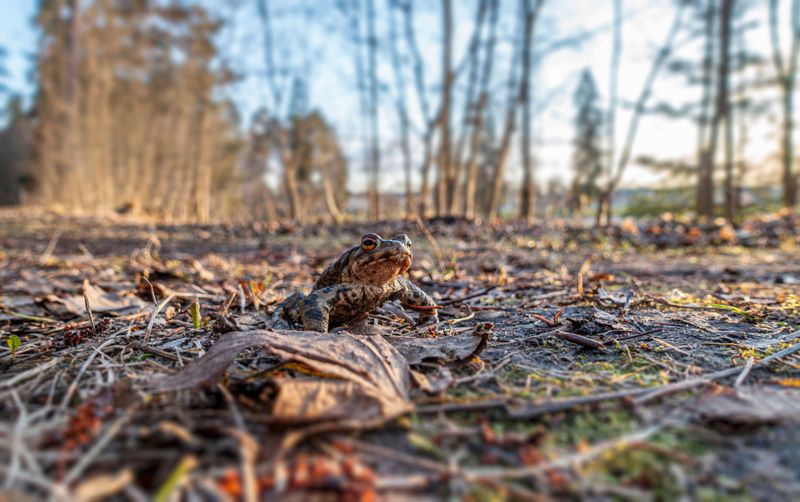
Picture a hillside of oak and maple in the central valleys. Wood frogs, the small tan frogs with a dark eye mask, live in places like that all across Pennsylvania wherever the habitat suits them.
The Pennsylvania Fish and Boat Commission says suitable habitat occurs statewide.
Here is the catch. Statewide does not mean in your yard.
Nobody can say that a certain leaf pile holds a frog, and no source can either.
What we do know is how they spend the year. Wood frogs live much of their lives in wooded uplands, the drier forest ground around seasonal pools.
In winter they may tuck beneath leaf litter or snow, or into shallow burrows. Think of leaves as a blanket that might be used, not a guest room with a name on the door.
Pennsylvania DCNR calls the wood frog the state’s most common vernal-pool indicator. That tells you the frog’s story is tied to forest and to temporary spring pools, not just to a pile of leaves by the shed.
So a yard near woods may sit inside a wood frog’s world, while a lawn in the middle of town probably does not. Either way, the leaves are only one piece of a much bigger habitat puzzle.
The Frog Freezes, But Not Every Cell
“Freezes solid” is a great line, but it is shorthand. A wood frog does not turn into a uniform block of ice from nose to toes.
Research reviewed in a physiology review of freeze tolerance in vertebrates describes a lot of the frog’s body water freezing in the spaces outside cells. The cells themselves avoid the same kind of freezing, and protective processes help limit cell damage.
Glucose, a sugar, is a big part of the story. As freezing begins, the liver releases it, and it helps protect tissues.
People often call it antifreeze, but that is incomplete. Glucose does not stop ice from forming, and it does not make a frog immune to freezing.
Then comes the strangest part. During freezing, the heartbeat and breathing can stop.
After thawing, they can start again, as noted by Colorado Parks and Wildlife.
This is not effortless, and it is not guaranteed. Think of it like a well-practiced fire drill.
It works well when conditions cooperate, but not every frog survives every freeze.
Survival Depends on More Than Cold
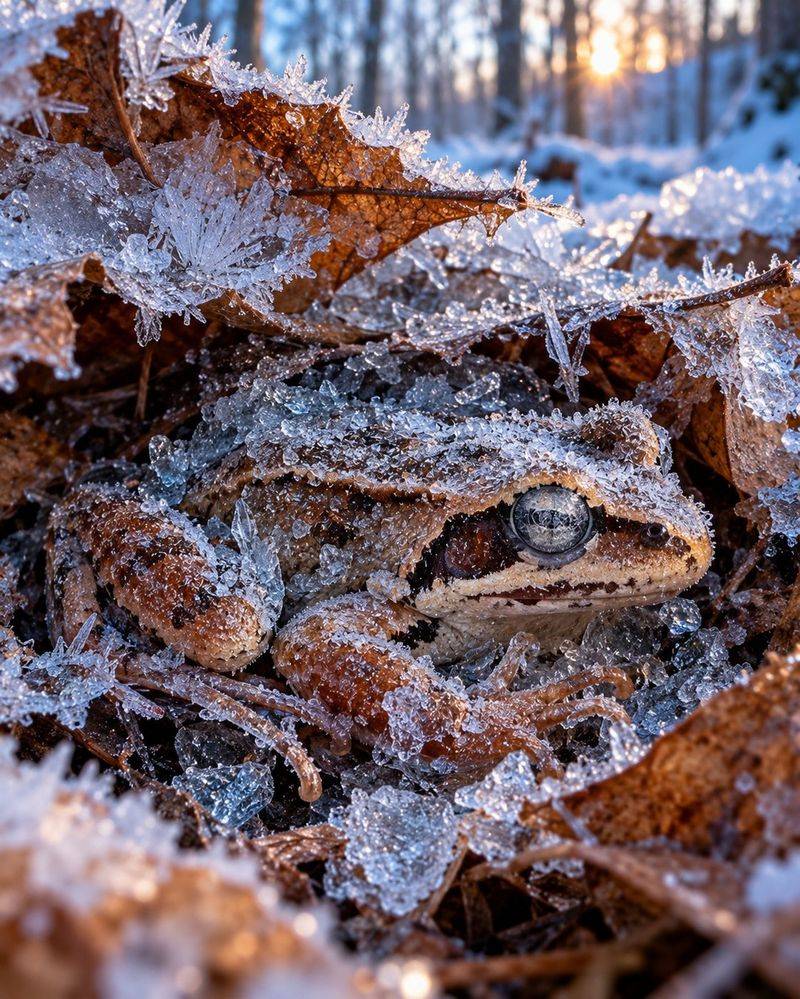
Some people hear the freezing story and assume every wood frog has the same superpower. Science says it is more flexible than that.
Freeze tolerance varies with population and season. A study of a subarctic population looked at how that ability changes through the year, which shows it is not a fixed switch.
Then there are the Alaskan frogs. Researchers studying them found they endured much colder and longer freezing than reported for more southerly populations.
Those extreme numbers belong to Alaska. They are not a Pennsylvania backyard threshold, and nobody should assume Pennsylvania frogs can match them.
Air temperature is not the whole story either. Conditions beneath leaves or snow can differ from the air above them.
One more detail. In a laboratory study, a frog’s heartbeat resumed within an hour after thawing.
That is what happened in the lab, not a promise for every frog in a natural winter.
The honest takeaway is simple. Wood frogs can handle impressive freezing, but how much depends on the frog, the place, and the weather.
Spring Pools Set the Next Chapter
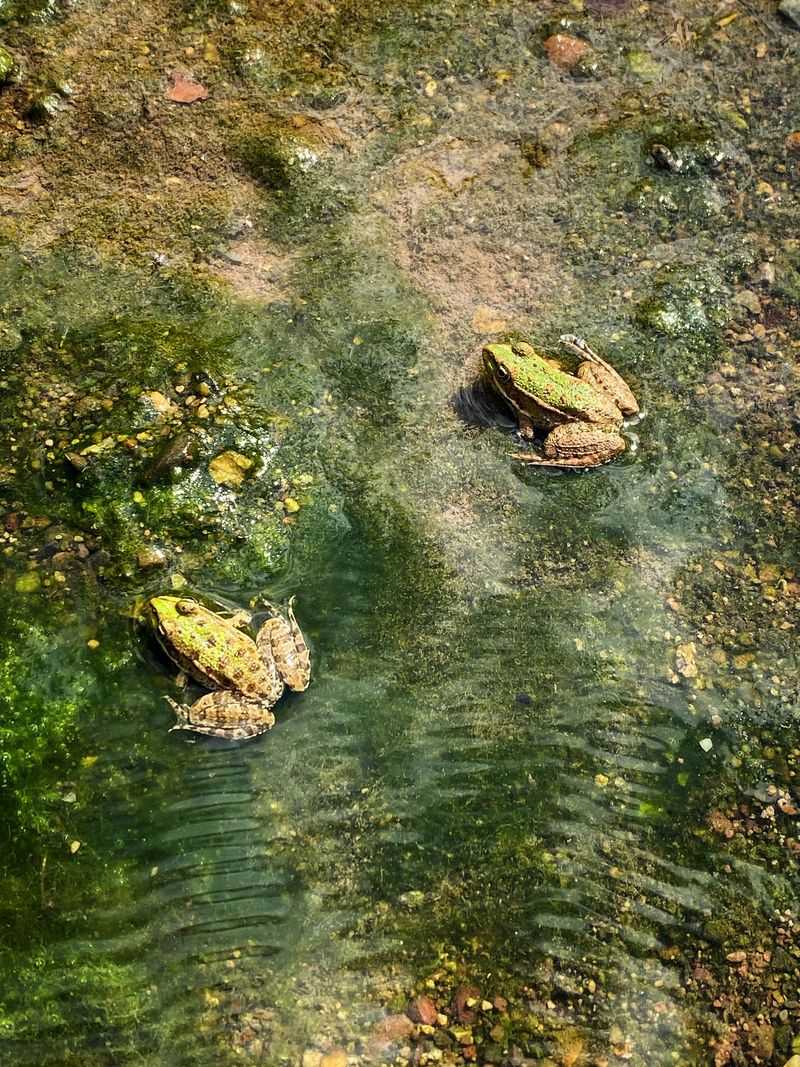
Winter is only half the job. Once the ground thaws and rain arrives, wood frogs head for seasonal pools to breed.
When that happens changes from year to year. Pennsylvania DCNR reports that migrations may begin anywhere from late February into early April, depending on temperature and rainfall.
So there is no single statewide date.
A cold, snowy spring in the Poconos or near Lake Erie may run later than a mild one in the Delaware Valley. Many Pennsylvanians first notice the frogs on a wet, mild night when they start moving.
The pool matters just as much as the timing. Vernal pools depend on rain and snowmelt, and their water levels vary by pool and year.
Wood frogs need pools that hold water for several months or longer.
That is why winter cover cannot do the whole job. A leaf pile cannot hold tadpoles.
As described by the DCNR amphibian page, the frogs split their lives between upland woods and breeding pools.
Think of the leaves as the bedroom and the pool as the nursery. They need both, and they need a path between them.
Keep Some Leaves, Not Every Leaf
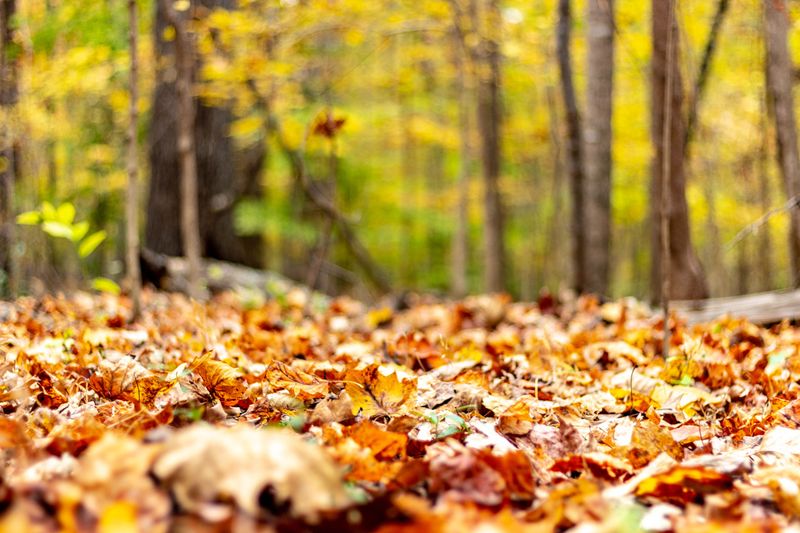
Fall cleanup is where this story meets your rake. The good news is you do not have to choose between a tidy yard and a helpful one.
Rutgers guidance, Why Leave the Leaves and How to Do It, names wood frogs among the animals that overwinter under leaf litter. It suggests keeping some litter intact under trees and shrubs.
So leave a loose layer there rather than clearing every bed. That is habitat support.
It is not a trick to attract frogs, and it cannot guarantee any will move in.
Leaves still need limits. Too many can smother plant roots.
If they pile up on a lawn or walkway, move them gently to a garden bed instead of leaving a thick mat.
Skip the shredder on the patch meant to be cover. Shredded leaves lose the loose, airy structure that makes a hiding place.
A good rule is to treat leaves like a blanket, not a lid. Enough to shelter, not enough to suffocate.
Leave Possible Winter Shelter Undisturbed
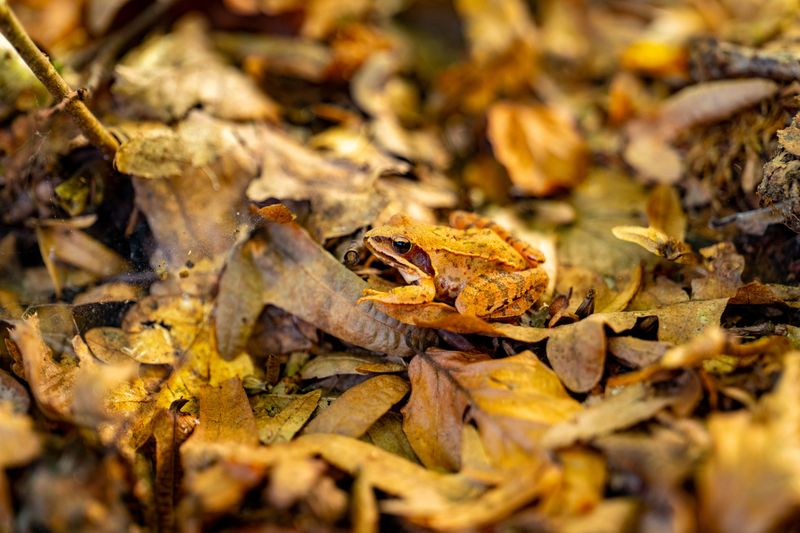
The kindest winter move is often the quietest one. If you have leaf cover under shrubs or near the woods, let it sit.
Do not dig through likely shelter areas to see who is home. And if you ever come across a frozen frog, do not handle it, thaw it, or relocate it.
The sources point toward leaving habitat undisturbed, not stepping in.
There is one more caution for the warm months. Amphibians breathe and absorb moisture through permeable skin, so chemicals can pass right through.
EPA guidance on frogs and pesticides advises keeping pesticides out of water and following label directions. That brochure covers another frog species, so treat it as a general amphibian caution.
Remember the bigger picture too. Wood frogs need woodland and seasonal pools, and pools that hold water for months cannot be replaced by a pile in the corner.
The Rutgers leaf guidance frames leaves as one helpful piece.
Intact leaf cover is not proof a frog is there. It is just a good habit with a possible reward.
Somewhere in the woods, a frog may be waiting out the cold with a stopped heart and a plan.
