
Grow These Pennsylvania Natives Instead Of Hostas In The Dry Shade Under Big Trees
Follow us on Google
You step into the backyard on a blistering August afternoon, the air thick and heavy, and find your hostas looking tired.
Their leaves are browning at the edges, maybe nibbled by a critter or two, sulking under the sprawling canopy of your big old trees.
It is a quiet annual battle, and plenty of Pennsylvania homeowners fight it right alongside you.
Those thirsty tree roots drink up every drop of water, and the dense leaves overhead block the rain hostas crave.
But do not fret.
There are native plants, true Pennsylvanians, that genuinely thrive in dry shade and ask for almost nothing in return.
1. The Big Trees Always Win For Water
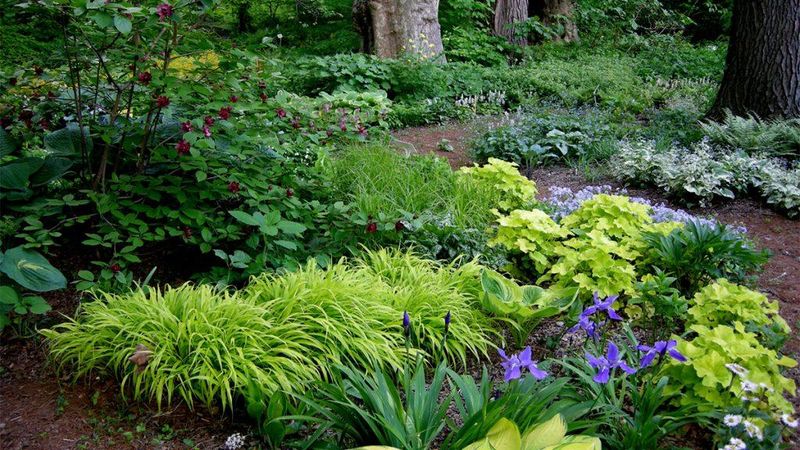
You have seen that dusty, dry soil under a mature oak or maple.
The problem is simple.
Tree roots are efficient, and they outcompete smaller plants for every drop of water.
This competition creates a microclimate that baffles even experienced gardeners across the Susquehanna Valley and into the Laurel Highlands.
Your hostas prefer consistently moist soil, so they cannot keep up.
You get crispy edges and weak, floppy growth.
It is not a design flaw on your part, it is just nature doing its thing.
Here is where it gets tricky.
Many gardeners try to compensate by overwatering, but that can actually create new problems.
Think shallow roots and even root rot when the soil does not drain well.
The real fix is choosing plants naturally built for this tough spot.
These natives adapted over centuries to coexist with robust tree roots and to make the most of the little moisture that reaches the forest floor.
They are the quiet heroes under the canopy, genuinely built for resilience.
Once you switch your thinking from forcing water into the ground to matching the plant to the place, the whole job gets easier.
And your weekends stop revolving around a leaky hose.
2. Pennsylvania Sedge Forms A Carpet Of Green
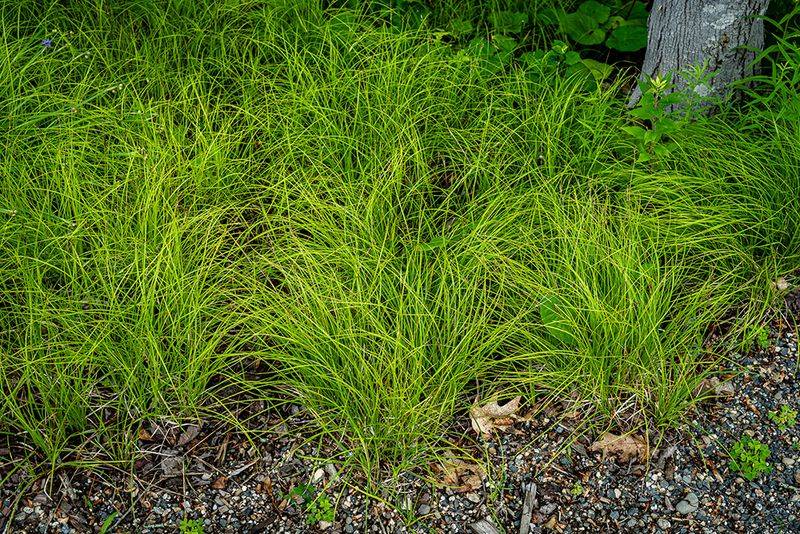
Picture a soft, flowing carpet of green thriving right where grass gives up.
Pennsylvania sedge (Carex pensylvanica) is exactly that plant.
It is a low-growing, semi-evergreen native that forms dense mats, looking like a finer lawn without the mowing or the fuss.
Common throughout Pennsylvania woodlands, especially under oaks, this sedge grows about 6 to 10 inches tall and spreads gracefully.
It brings a calm, tidy texture your struggling hostas never quite managed.
Bare summer feet love walking across it.
The real charm is its stubborn independence.
It favors dry to medium, well-drained soil, which makes it perfect for those thirsty spots under big trees.
Once established, it genuinely needs very little from you, no constant watering and rarely any mowing.
It also quietly feeds wildlife, providing a home for dozens of butterfly and moth species.
Plant individual plugs about 12 to 18 inches apart in spring or fall, and watch them slowly knit together.
Penn State Extension recommends native sedges like this one for erosion-prone, shady ground where turfgrass fails.
Give it a season, then step back.
It practically establishes itself for free, coming back thicker every year while you sip coffee on the porch.
3. Allegheny Spurge Wakes Up Early And Fragrant
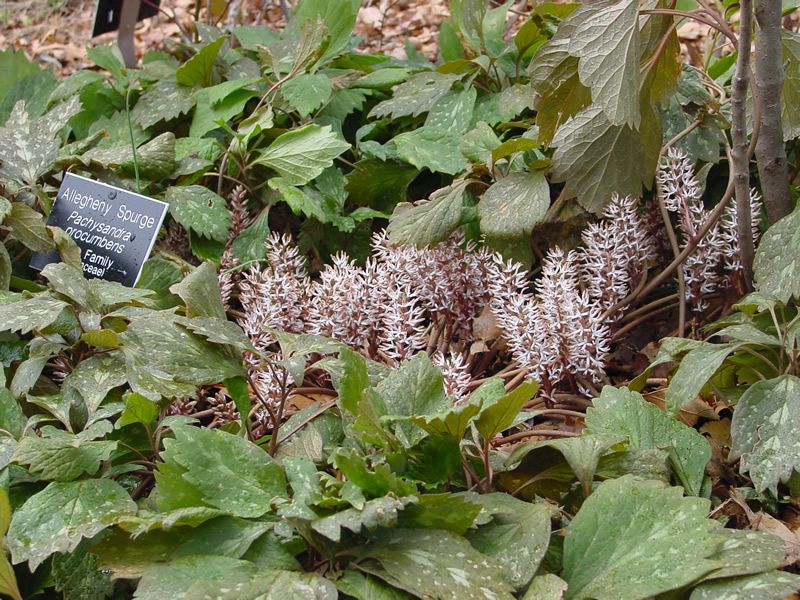
As spring whispers across southeastern Pennsylvania, Allegheny spurge (Pachysandra procumbens) stirs with quiet elegance.
It sends up delicate, fragrant white flowers in early spring, a lovely surprise before the trees fully leaf out.
This low-growing perennial reaches about 6 to 12 inches tall and spreads by underground rhizomes into a dense, weed-suppressing mat.
Its leaves show off a soft marbled pattern that gets richer as summer fades.
Unlike its pushy non-native cousin, Japanese pachysandra, this native plays well with its neighbors.
Here is the part gardeners love.
Allegheny spurge prefers part to full shade and rich, slightly acidic soil, but once settled it genuinely tolerates drought.
That makes it a stellar pick for the challenging ground beneath large trees.
Deer tend to leave it alone, a real relief for folks in the Poconos where browsing is a constant headache.
Plant it where air moves freely to keep leaf spot at bay, and space clumps about 12 inches apart.
It is not a magic solution for every corner, but as one layer of a shady garden it earns its keep.
You get year-round leaves, a spring perfume, and one less patch of dirt to babysit.
4. Barrenwort Shrugs Off Bone-Dry Root Zones
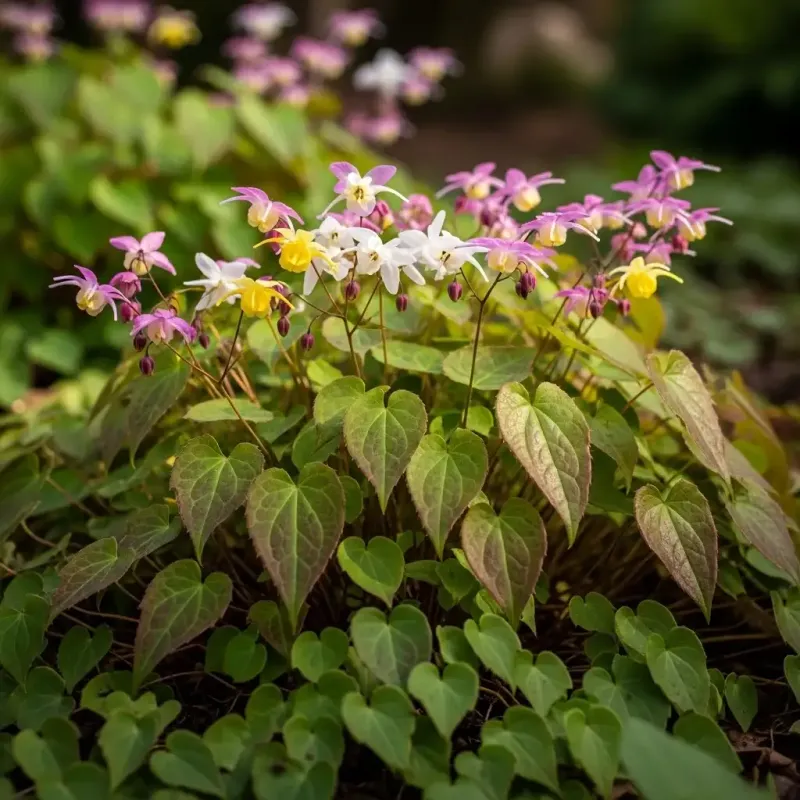
Bone-dry shade is where most plants quietly surrender.
Barrenwort, or Epimedium, treats it like home.
Gardeners nickname it Fairy Wings for the delicate, jester-hat flowers that hover above heart-shaped leaves in mid to late spring.
The foliage puts on a full-season show.
It emerges with a burgundy blush, settles into green for summer, then flushes deep red or purple in fall.
Four seasons of interest from one carefree clump feels almost unfair.
What genuinely sets barrenwort apart is its comfort in dry shade, exactly where hostas throw in the towel.
It tolerates shallow, rocky soils common across central and western Pennsylvania, and both deer and rabbits usually pass it by.
After a season or two of steady watering, it becomes remarkably drought-tolerant.
Space plants about 12 to 14 inches apart to build a slow, weed-suppressing groundcover.
One easy chore keeps it looking sharp.
Trim back last year’s foliage in late winter, before the new flowers and leaves push up, so the blooms are not hidden behind tired old leaves.
Do that one February afternoon and it rewards you all year.
For the toughest, root-choked corner under an old maple, this quiet worker is hard to beat.
5. Christmas Fern Holds Its Color Through Snow
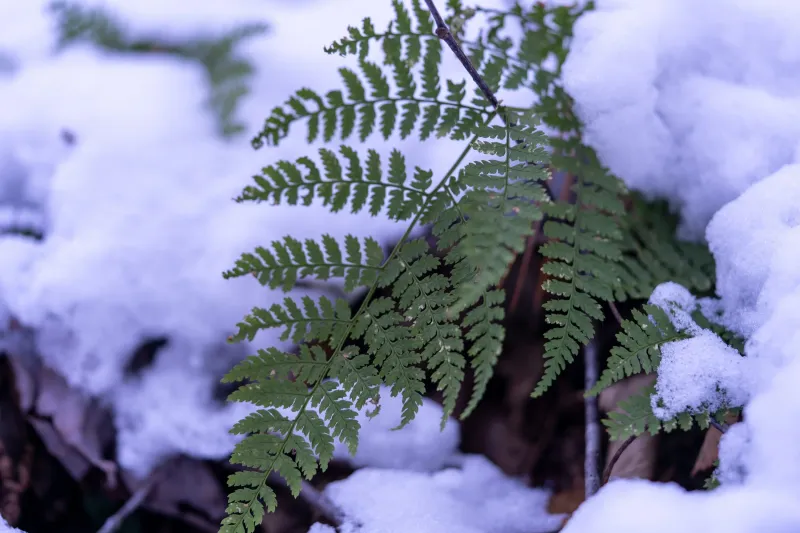
Walk your yard in December, when everything else has retreated, and most of the ground looks stark and brown.
Then you spot the dark green fronds of Christmas fern (Polystichum acrostichoides) standing tall against the snow.
That flash of living color in the cold is a genuine gift.
This evergreen native unfurls its curled fiddleheads in spring, then grows fountain-like clumps with fronds up to 2 feet long.
The old fronds hold on through winter, which is how it earned its holiday name.
It is wonderfully unfussy.
Christmas fern handles part to full shade and a wide range of soils, from moist and fertile to dry and rocky, as long as drainage is decent.
That flexibility makes it perfect for shady hillsides, where its roots also help hold soil in place and slow erosion.
Across the Allegheny Plateau and the northern tier, where winter runs long and hard toward zone 5b, this fern shrugs off serious pests and diseases.
Set plants about 18 inches apart and let them slowly colonize.
It asks almost nothing from you, and it pays you back on the grayest days of the year with a stubborn, cheerful green.
6. Heuchera Paints Shade With Colored Leaves
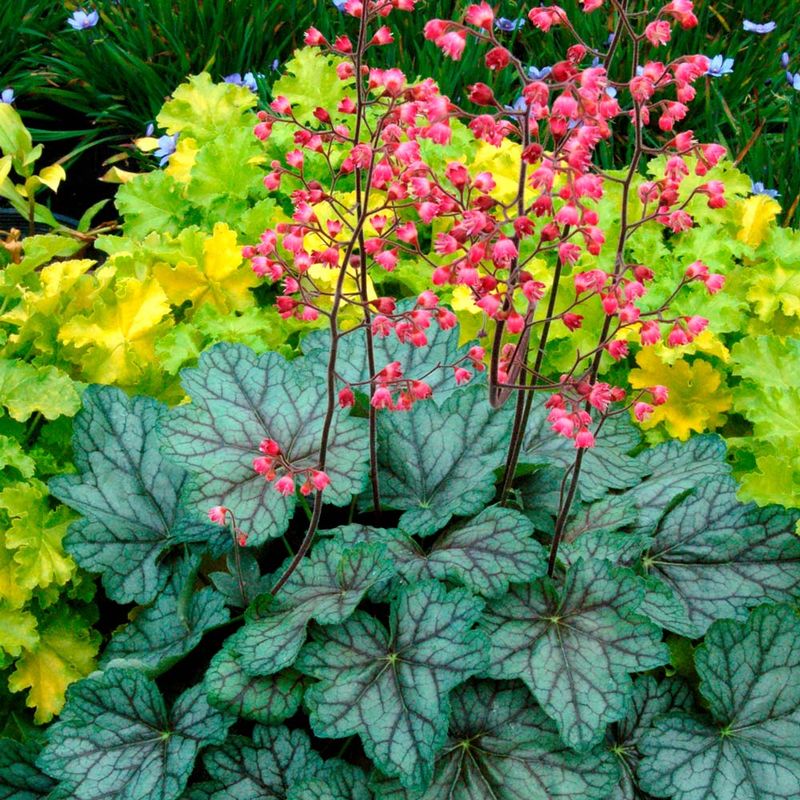
Shade under big trees can feel a little flat and same-y, all one shade of green.
Heuchera, also called alumroot or coral bells (Heuchera americana), breaks that spell with a jolt of color that lasts all year.
This evergreen perennial forms neat, mounded rosettes about 6 to 12 inches tall, with airy flower stalks reaching 2 to 3 feet in early summer.
The leaves are the true showstoppers, arriving in greens, bronzes, silvers, and purples, often veined with intricate patterns.
Native to the woodlands of much of Pennsylvania, heuchera genuinely thrives in part shade to filtered sun and tolerates dry, rocky ground once it is settled.
That toughness makes it a fine swap for the root-filled spots where hostas shrivel.
Plant them about 18 inches apart for a continuous border or a bold mass planting.
The foliage stays handsome even through cold winters, especially in the warmer urban pockets around Philadelphia and Pittsburgh, where zones can nudge toward 7a.
One honest warning.
Soggy winter soil is their real enemy, so pick a spot with good drainage.
Get that right, and you get color where you least expected it, all the way from spring cleanup to the first porch evening of the year.
7. White Wood Aster Lights Up Late-Season Shade
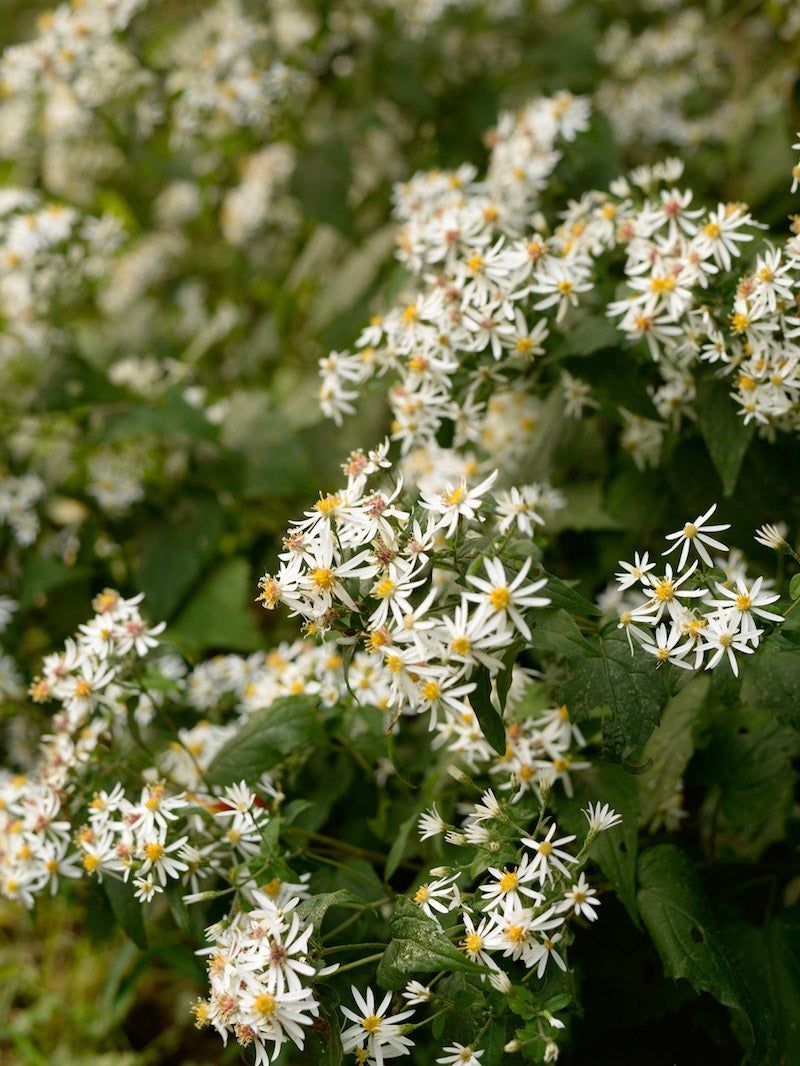
As summer fades and an early cold snap rolls across the central valleys, you might figure the show in your shade garden is over.
Then white wood aster (Eurybia divaricata) bursts open with sprays of bright white.
Suddenly the dim corner under your trees looks like it caught starlight.
This perennial native throws out clusters of dainty, 1-inch, daisy-like flowers from July clear through October, long after most shade plants have quit.
It naturally lives in the dry woods of Pennsylvania, so those tough spots under big trees suit it perfectly.
It is remarkably easygoing, handling many soil types and dry shade without complaint.
It spreads slowly by rhizomes into a loose groundcover that crowds out weeds and adds texture.
The timing is what makes it genuinely special.
Those late blooms feed migrating pollinators when little else is flowering, and the seeds that follow help sustain winter songbirds.
So while you are raking leaves and closing up the garden, this quiet hero keeps your yard humming with life.
It is the kind of plant that makes fall cleanup feel a little less like an ending.
Space clumps about 18 inches apart and let it fill in on its own.
8. What Else Actually Helps Under Big Trees
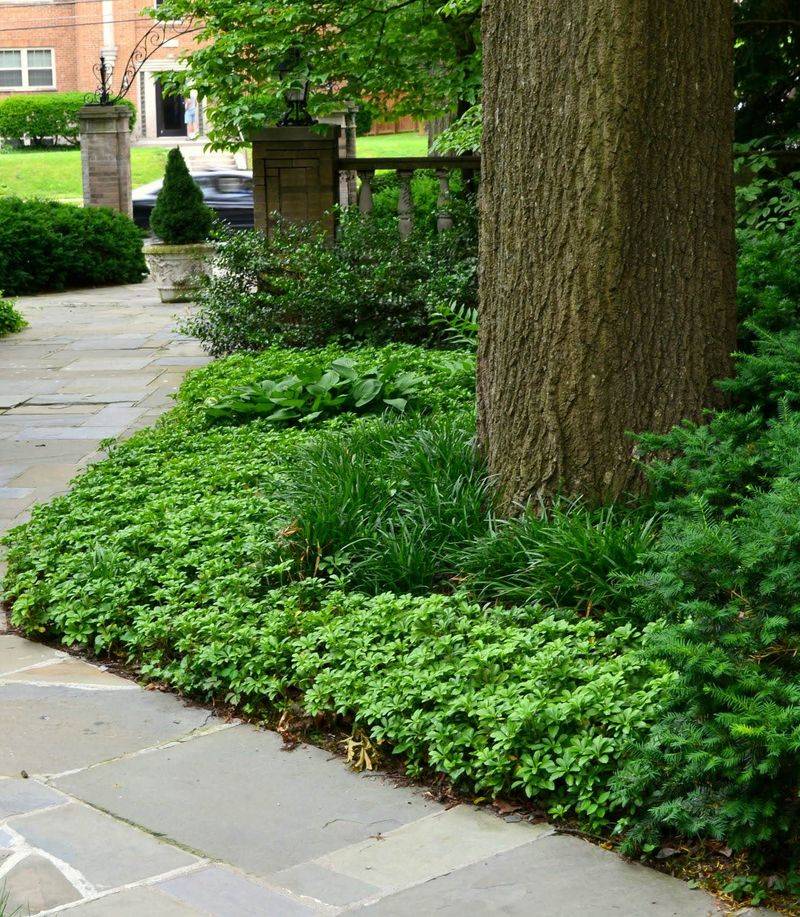
Even with these tough natives, success under big trees usually comes down to a few basics.
Those massive roots are greedy, so give your new plants a real head start.
When planting, dig a hole twice as wide as the root ball but no deeper.
Work in some compost to feed that early growth.
Try not to slice through big tree roots, and tuck plants into the pockets of soil between them.
Watering matters most for the first stretch.
Even drought-tolerant natives need steady moisture for their first year, sometimes two to three, to build deep roots.
During dry spells in our humid Pennsylvania summers, aim for about 2 inches of water per week.
Water slowly, roughly 30 to 40 minutes at a time, twice a week, so it soaks down at least 18 inches.
Once established, a deep drink every three to four weeks during dry periods from April to October usually does it.
Always check the soil 2 to 3 inches down before you reach for the hose.
Mulch is the other genuine helper.
A 2 to 3 inch layer of shredded bark or leaf mulch holds moisture, steadies soil temperature through freeze-and-thaw swings, and feeds the ground as it breaks down.
Keep it a few inches off plant stems and tree trunks to prevent rot.
Do these small things, and your shady corner takes care of itself.
Then you get to just sit back and enjoy it.