
Florida Plants That Make A Gopher Tortoise Stop In, And What Its Burrow Does For The Whole Yard
Follow us on Google
You step onto the patio after breakfast and the air already feels heavy, promising another long, hot Central Florida day.
The sprinklers just finished, and near the old oak you spot a fresh pile of sandy soil where none was yesterday.
That mound is the calling card of a gopher tortoise, a shy neighbor quietly digging a home under your yard.
Feed it the right native plants and that tortoise pays you back in ways you cannot buy at any garden center.
Here is what to plant, and why that burrow is the best thing to happen to your soil in years.
1. Gopher Apple Is The Buffet They Cannot Refuse
Watch a gopher tortoise for ten minutes and you notice it moving slow and low, nose to the ground, hunting for something specific.
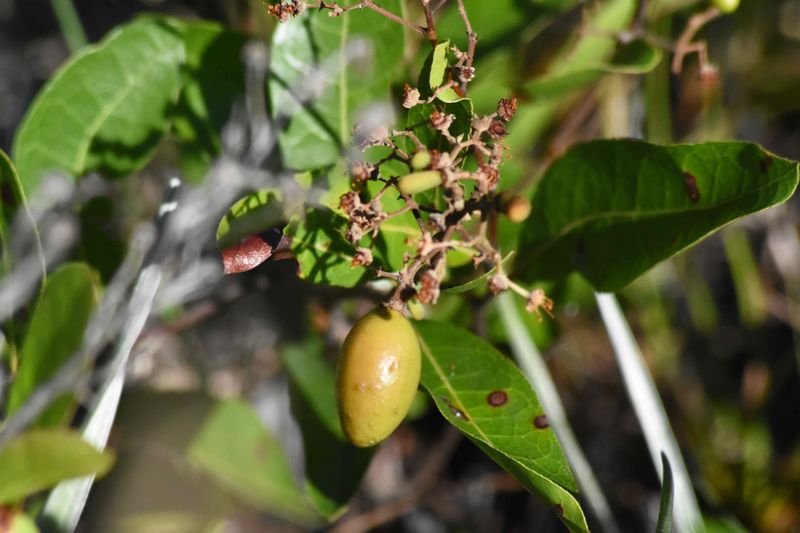
More often than not, that something is gopher apple (Licania michauxii), an evergreen ground cover named for the very animal it feeds.
The plant hugs the ground barely a foot tall, sending up leathery leaves and small pale fruit that tortoises genuinely relish.
It thrives in the acidic, sandy, well-drained soil common across Central and North Florida, and it shrugs off the intense summer sun that fries fussier plants.
Plant it in full sun in spots that drain fast, and give clumps about 18 inches to spread.
Once it roots, it needs almost no water, which is kind to your bill during a winter dry spell.
You are not planting a lawn ornament.
You are setting a table.
2. Prickly Pear Feeds A Tortoise Head To Toe
Most plants offer a tortoise a snack.
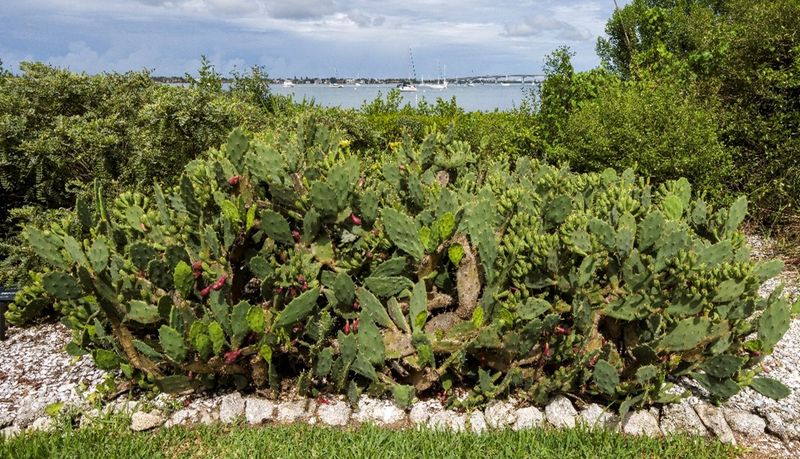
Prickly pear cactus (Opuntia spp.) hands over the whole meal, pads, flowers, and fruit included.
Tortoises eat nearly every part of this spiny survivor, and the moisture packed inside the pads matters during the long dry stretches that grip the Gulf Coast between rains.
So the cactus doubles as food and drink, which is a rare thing.
Give it a sunny, sandy corner with sharp drainage, since standing water invites root rot fast.
Space plants about 3 feet apart and keep them away from foot traffic, because the glochids, those tiny hair-like spines, catch skin easily.
It looks tough and a little wild, but that is exactly the point.
A tortoise sees a pantry, not a decoration.
3. Native Grasses Are The Everyday Staple
Grasses do not get the glory, but they are the bread and butter of a tortoise diet.
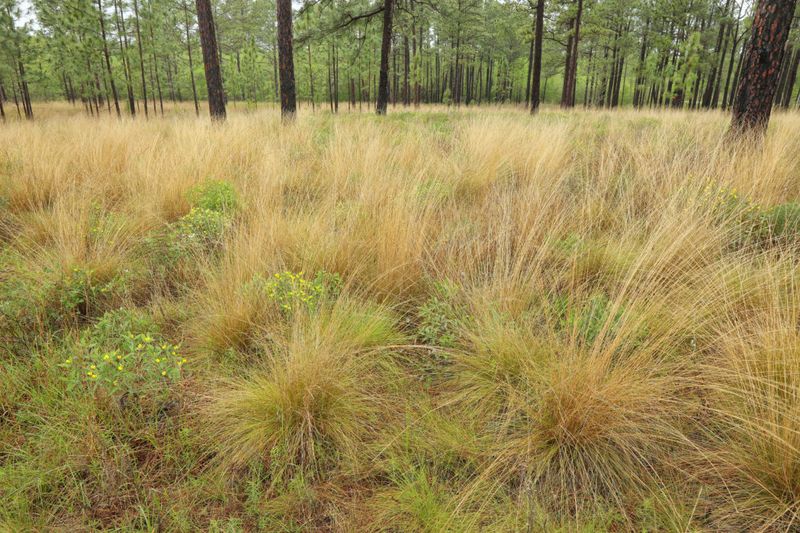
Wiregrass (Aristida stricta) and pink muhly grass (Muhlenbergia capillaris) show up again and again in what these reptiles graze across Florida scrub and flatwoods.
Here is where it gets useful for you.
Both grasses handle poor sandy soil, tolerate salt spray along the Atlantic Coast, and ask for very little water once established.
Muhly grass throws up clouds of pink blooms in fall, so you get beauty as a bonus, not the main event.
Plant clumps about 2 to 3 feet apart in full sun.
Water them deeply, around 6 inches into the soil, until roots take hold, then step back and let them fend for themselves.
They sway, they feed, they hold the sandy ground together.
Quiet workers, every one.
4. Saw Palmetto And Beautyberry Add Food Plus Cover
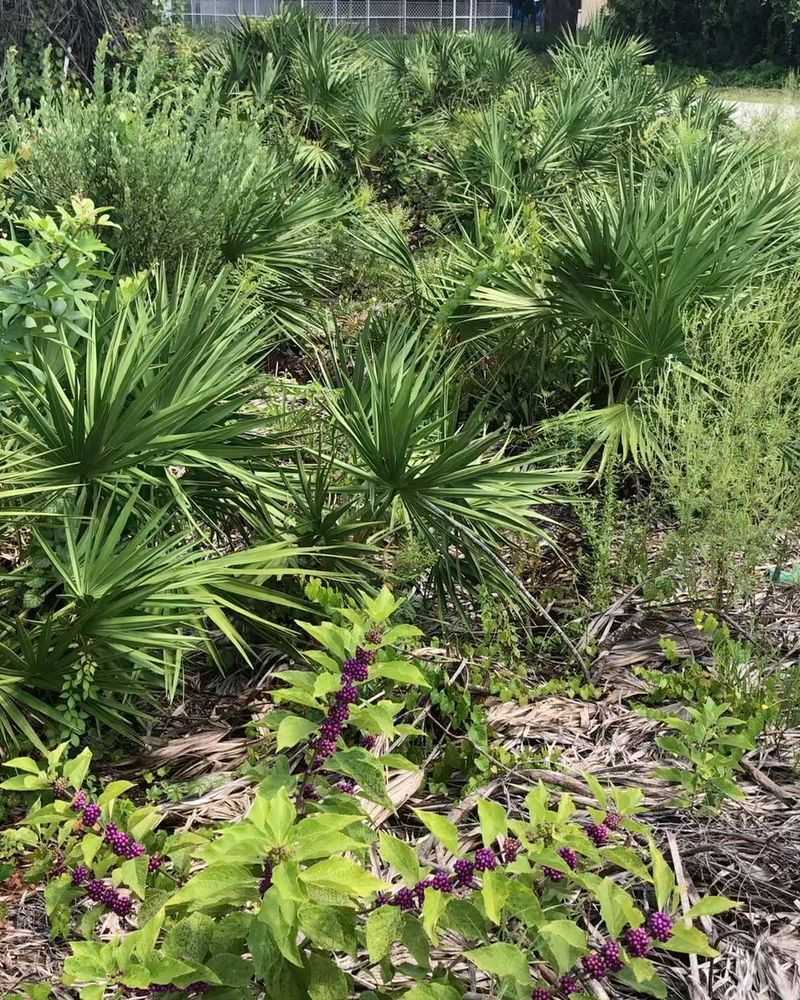
Some plants pull double duty, and tortoises notice.
Saw palmetto (Serenoa repens) and American beautyberry (Callicarpa americana) both drop fruit a tortoise will eat, while giving it shade and a place to duck out of the open.
Saw palmetto is a Florida icon, tough as old boots, salt-tolerant, and happy from the Panhandle down through South Florida.
Beautyberry shines in North and Central Florida, its bright purple berry clusters lighting up the shade in late summer.
Space saw palmetto about 4 to 5 feet apart in full to partial sun.
Beautyberry prefers a little afternoon relief and about 4 feet of room.
Both handle the sudden downpours and the brief cold snaps Central Florida sees each winter.
A tortoise gets lunch and a lean-to in one stop.
That is the kind of two-for-one deal a shy animal will keep coming back for.
5. The Burrow Is A Climate-Controlled Underground Room
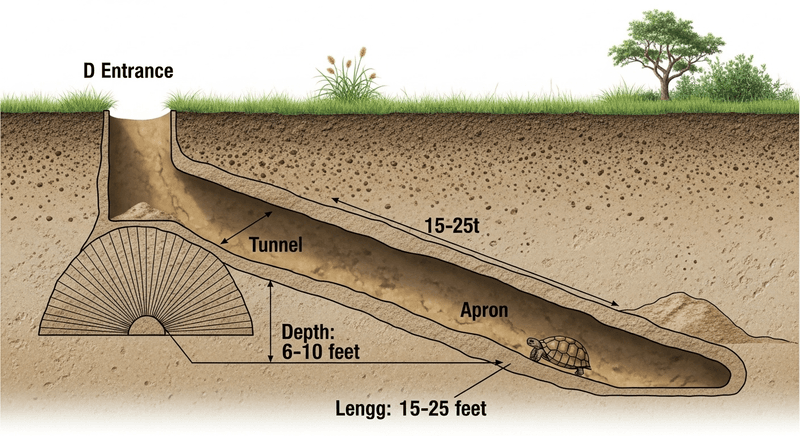
That half-moon shaped hole with a fan of sand out front, called an apron, is no simple hole in the dirt.
It is one of the most impressive digs any animal in Florida pulls off.
Burrows commonly run 15 feet long and reach 6 to 10 feet deep, and some champion diggers have carved tunnels over 40 feet long.
Down there the temperature holds steady, roughly 70 to 80 degrees in summer and 60 to 70 in winter, a genuine escape from the surface where the sun can push soil past 100.
So when a summer storm rolls in fast or a North Florida freeze drops below 32 degrees, the tortoise simply retreats to its stable room and waits it out.
You paid nothing for that engineering.
It just showed up in your yard and started building.
6. More Than 350 Neighbors Move In Downstairs
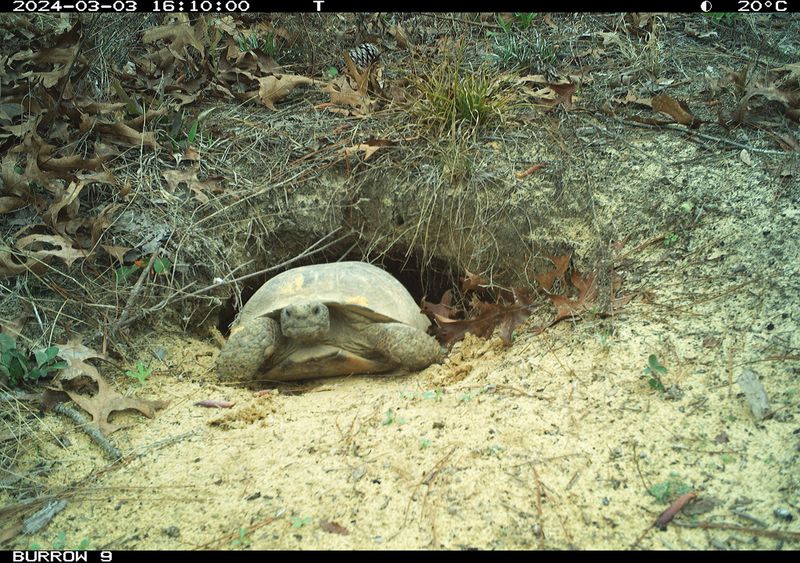
Dig one burrow and you house a crowd.
Scientists have documented over 350 species using gopher tortoise burrows, which is why they call the tortoise a keystone species, meaning the whole neighborhood leans on it.
The federally threatened Eastern indigo snake shelters in that cool tunnel.
The Florida mouse branches off its own little side rooms.
Burrowing owls (Athene cunicularia floridana) sometimes claim abandoned burrows and sun themselves on the sandy apron.
And that is just the big names.
Over 300 kinds of insects, spiders, snails, and beetles ride out the heat inside, including species that help clean up after the tortoise itself.
Picture it as an apartment building your yard grew on its own.
One landlord, hundreds of tenants, and not a single vacancy sign in sight.
7. All That Digging Actually Feeds Your Sandy Soil
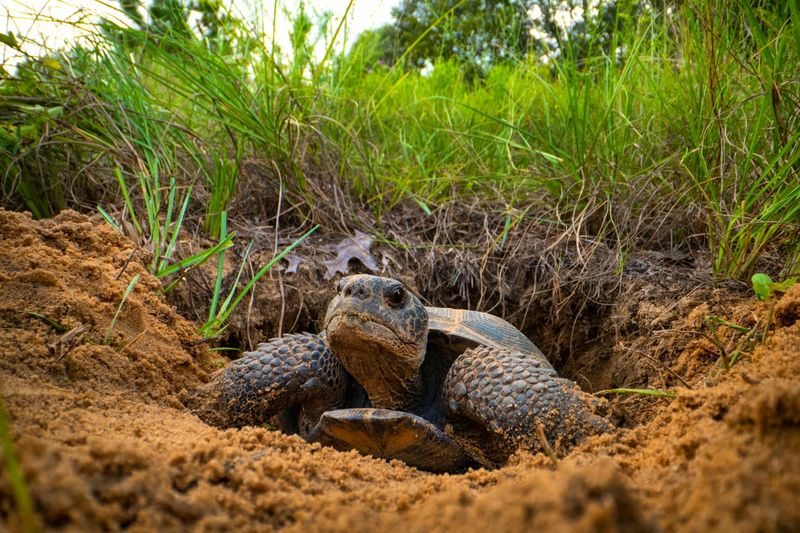
Florida sand can be stingy stuff, fast-draining and low on nutrients, which is a headache for anything you try to grow.
A tortoise fixes some of that for free, just by doing its daily job.
As it excavates, it churns and mixes the soil layers, a natural version of what gardeners call aeration.
Nutrients buried deep get lifted toward the surface where roots can reach them, and loose ground lets rain soak in instead of running off.
The sun-warmed apron matters too.
Female tortoises often lay eggs in that loose sand because it holds the right warmth and moisture for hatchlings, something compacted developed lots cannot offer.
So the mound you almost raked away is genuinely improving the ground under your feet.
Leave it be, and let the tortoise do the tilling you would rather skip.
8. Their Grazing Keeps Your Landscape In Balance
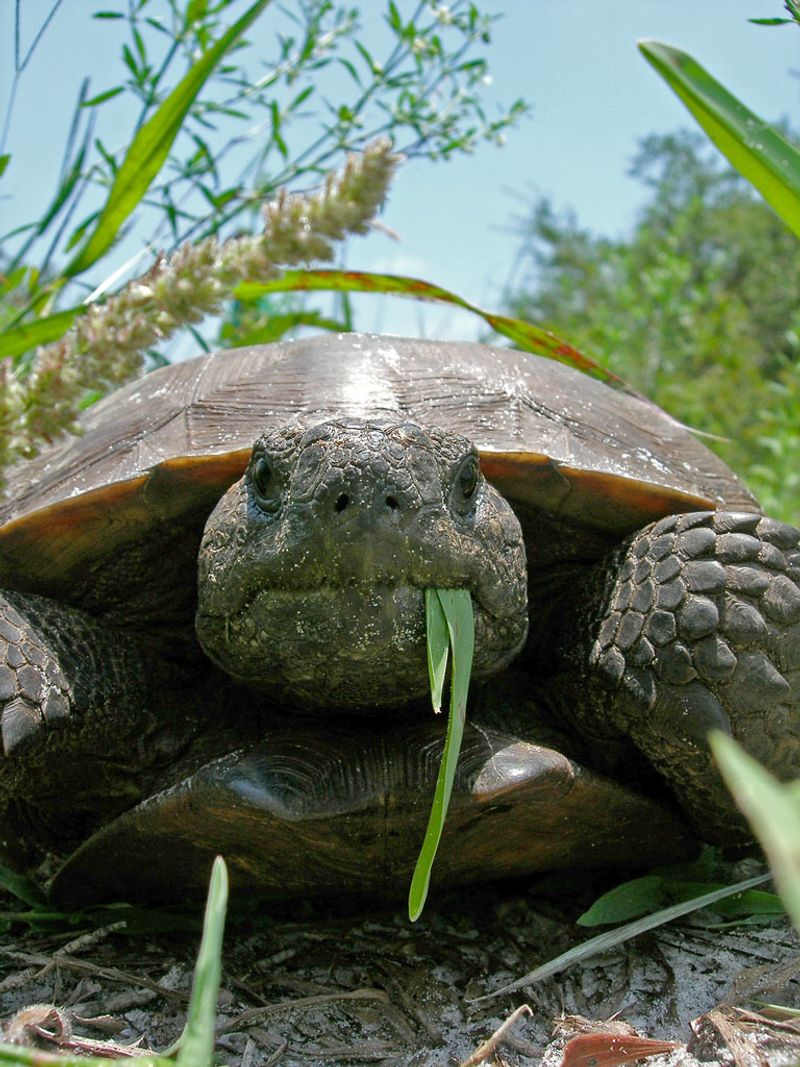
A tortoise is a slow, tireless landscaper working shifts you never see.
Munching a wide mix of grasses, wildflowers, and fruit, it keeps any single plant from taking over, which nudges your yard toward a richer variety of growth.
That habit pays off in fire country too.
Across the pine flatwoods and scrub of the Panhandle and Central Florida, grazing trims the dense undergrowth that fuels wildfires, so what gardeners call the fuel load stays lower and safer.
Tortoises usually forage within about 160 feet of their burrow, though they will wander farther chasing a good meal.
That range means your planting choices really do shape what your resident eats.
Give it native grasses and low wildflowers, and you get a self-trimming yard that also honors the balance Florida ran on long before any of us showed up.
9. Sharing Your Yard Is Easier And The Law
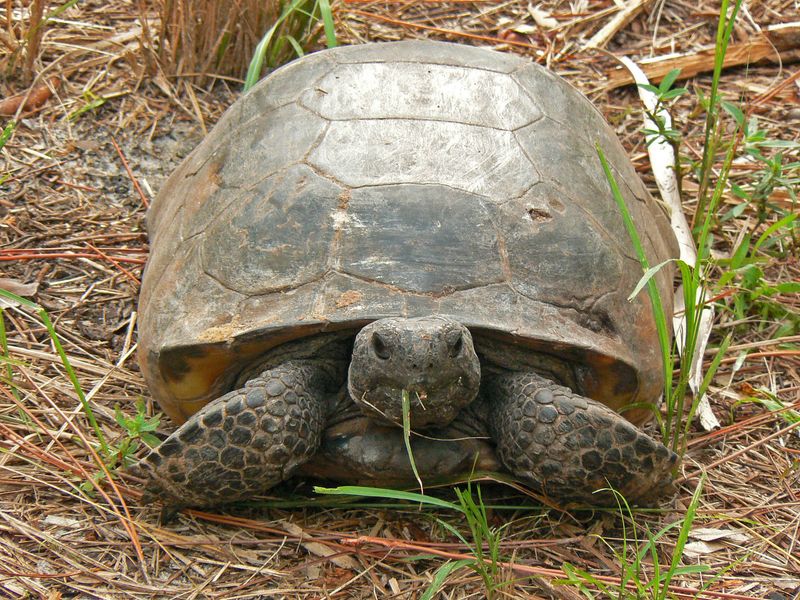
Coexisting with a gopher tortoise takes less effort than mowing does.
Plant native grasses like muhly and wiregrass, add fruiting shrubs like saw palmetto and beautyberry, and you have built a buffet that also cuts your water and fertilizer costs once it settles in.
But there is a hard line to respect.
Gopher tortoises and their burrows are protected by state law, and you cannot disturb, harass, or move one without a permit from the Florida Fish and Wildlife Conservation Commission.
That is not a suggestion, it carries real penalties.
A safe habit is to keep mowers, shovels, and tires at least 25 feet from any burrow entrance.
UF/IFAS Extension is the place to check region-specific advice if you are unsure.
Do that much, and you are not just feeding a shy reptile.
You are keeping a whole underground community alive, right there under your own sandy patch of Florida.