
Eastern Screech-Owls May Hunt Rats in Your Florida Yard, But Here Is What Actually Works
Follow us on Google
Step outside on a warm Florida night and you might catch a small, robin-sized silhouette dropping silently from a live oak branch.
That is an eastern screech-owl, and yes, it does eat rats.
But before you cancel your pest-control appointment, there is something worth knowing: one owl is not a guarantee that your yard stops being a buffet for roof rats.
The real story is more interesting, and a lot more useful.
Meet Florida’s Small Night Hunter
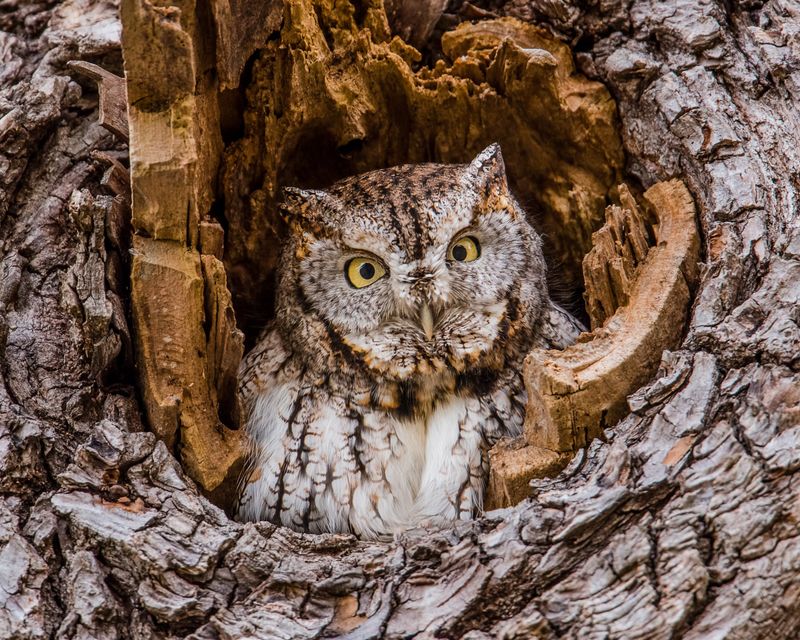
Somewhere between the size of a robin and a can of soup, the eastern screech-owl, Megascops asio, is one of Florida’s most overlooked backyard predators.
Most people never see one because it roosts motionless against bark during the day, its mottled gray or reddish-brown feathers blending perfectly into rough tree surfaces.
What gives it away after dark is its call, not a deep theatrical hoot but a descending whinny or a long, wavering trill that sounds more like a small horse than a bird.
According to the Florida Fish and Wildlife Conservation Commission, these owls are found in wooded residential yards, suburban parks, and woodland edges across the state.
They do not build nests.
Instead, they claim existing cavities in mature trees, move into abandoned woodpecker holes, or take up residence in nest boxes and occasionally neglected building openings.
That dependence on ready-made cavities is one reason older, larger trees matter so much to them.
Here is where the headline needs a correction.
Seeing a screech-owl in your yard means you have a genuine native predator hunting nearby, and that is worth celebrating.
What it does not mean is that your roof-rat problem is about to disappear on its own.
Think of this owl as one helpful layer in a bigger plan, a quiet neighbor who pulls some weight but cannot do every job alone.
Other Florida owls, like barred owls and great horned owls, are larger and have different habitat needs.
Burrowing owls favor open, treeless ground and are a completely different story.
The screech-owl is the one most likely to show up in a typical Florida yard with mature trees, and it is the species this article focuses on.
The eastern screech-owl’s diet reads like a Florida wildlife inventory.
Insects and other invertebrates make up a substantial share of what these owls eat on any given night.
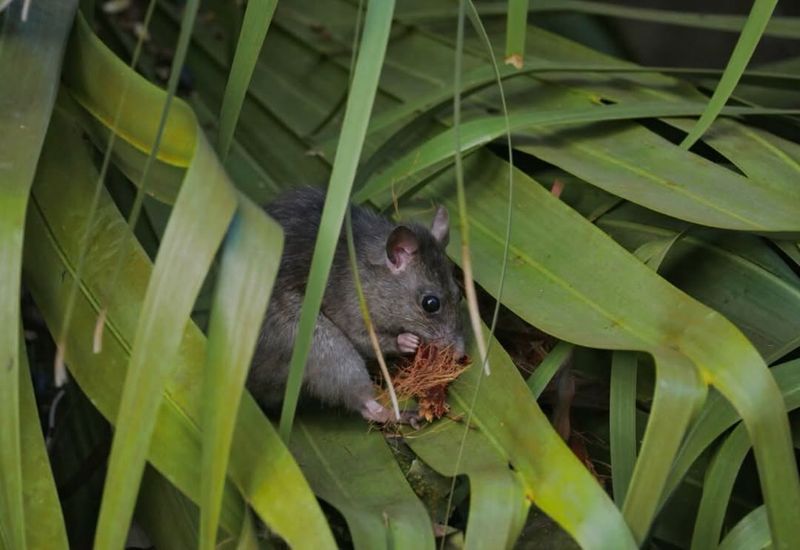
Beyond that, they take lizards, frogs, small snakes, crayfish, earthworms, small birds, bats, and yes, small mammals including mice and rats.
Research on screech-owl prey selection shows they tend to take prey within a manageable size range for their small body, which means a full-grown adult roof rat may be at or beyond the upper limit of what one owl can reliably handle.
That distinction matters in Florida, where the roof rat, Rattus rattus, is the dominant nuisance rodent in residential areas.
UF/IFAS Extension research shows that roof rats can travel 100 to 150 feet from their harborage while searching for food or water, climb palms, citrus trees, ornamental shrubs, fences, and wires, and breed year-round in Florida with peak activity in spring and fall.
A single pair can produce multiple litters annually, which means a population can rebound faster than most predators can reduce it.
So where does the owl fit?
Screech-owls may remove young or smaller rodents from a yard, and their presence could add some pressure on local mouse and rat activity.
What has not been established is whether a single owl or a nesting pair can suppress an already established roof-rat population in a suburban Florida yard.
An owl hunting nightly is genuinely useful, but a yard with fallen citrus, open pet-food bowls, and branches touching the roofline gives rats resources that no predator can fully compete with.
The honest framing is this: support the owl, and separately, take direct action against the rats.
Build Habitat, Not an Owl Lure
No single plant will make an eastern screech-owl choose your yard.
That claim is not supported by research, and planting one shrub and waiting for an owl to appear is a recipe for disappointment.
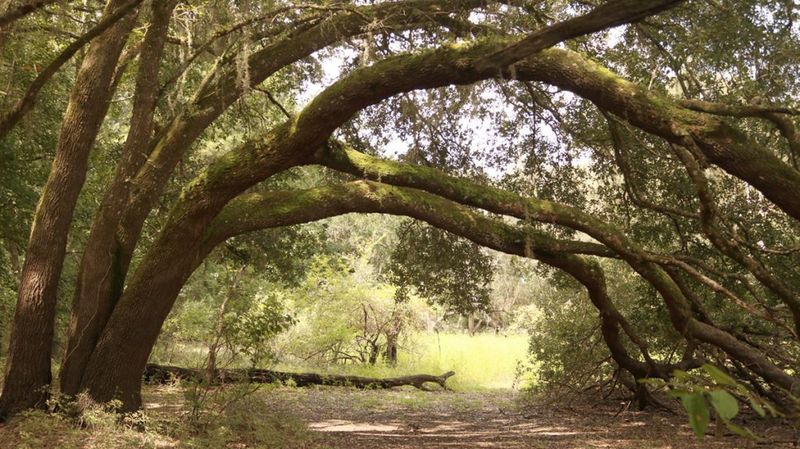
What does matter is structure: mature trees with real canopy, open ground or low grass nearby for hunting, perches at varying heights, a reliable water source, and enough native vegetation to support the insects and small animals that fill out the owl’s broad diet.
FWC’s habitat guidance recommends providing food, clean water, shelter, space for young, native plants, reduced pesticide use, and standing dead trees or stumps where safe.
A dead snag left standing in a corner of the yard can host woodpeckers, which eventually create the cavities screech-owls need.
Reducing pesticide use matters because owls that eat heavily sprayed insects accumulate chemical residues over time.
Live oak, Quercus virginiana, earns its place in a Florida habitat yard.
The Florida Native Plant Society notes that live oak provides nesting structure, supports dozens of caterpillar species, and produces acorns that feed a wide range of wildlife.
As the tree ages, its bark and branch unions develop natural cavities.
It does not attract screech-owls by itself, but a mature live oak in a well-structured yard is a genuine asset.
For plant selection, the Florida Native Plant Society’s landscaping guidance encourages matching plants to local soil, drainage, freeze exposure, and regional conditions rather than following a single statewide recipe.
North Florida gardeners working in USDA zone 8b face occasional hard freezes that South Florida gardeners near zone 10b or 11b never see.
One caution: native plants near a structure can work against you if they are not managed carefully.
UF/IFAS research on landscaping and pest prevention notes that plants installed less than 2 feet from a home at maturity can provide harborage for nuisance wildlife.
Keep layered habitat away from the building’s perimeter, maintain clear access zones, and remove fallen fruit and palm litter regularly.
When a Nest Box Makes Sense
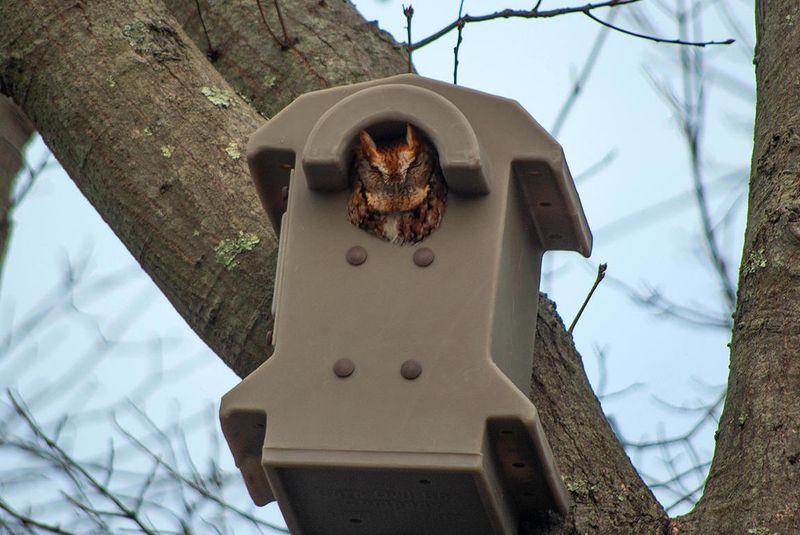
A screech-owl nest box is a reasonable habitat project, not a pest-control device.
That distinction matters before you buy lumber.
If your yard already has mature trees, a woodland or woodland-edge feel, open hunting space nearby, and some evidence of small prey, a box adds a nesting option the owl might actually use.
If your yard is mostly turf with a few young palms and a fence line touching a neighbor’s concrete, the box is likely to sit empty or get claimed by a squirrel.
NestWatch guidelines from the Cornell Lab of Ornithology specify a 3-inch round entrance hole, placement between 10 and 30 feet above ground, roughly 100 feet between boxes if you install more than one, and 2 to 3 inches of wood shavings inside as a substrate.
The box should face a nearby branch that an owl can use as a landing approach, but that branch should not block the entrance itself.
A woodland edge with adjacent open space or a wetland edge gives the best odds.
Mounting on a pole with a predator guard reduces the risk of cats, raccoons, and rat snakes reaching the box.
NestWatch nest-box placement guidance recommends against sites with heavy foot traffic, constant human disturbance, or flood risk.
Avoid spots under roof overhangs where hurricane debris could damage the box or block the entrance.
Timing matters in Florida, and the state’s geography creates real differences.
NestWatch advises installing boxes by February in southern areas and by mid-to-late March in northern regions.
Those are general regional guidelines, not promises.
An owl may find a new box within weeks, or it may take a full year or longer.
Occupancy is never guaranteed, and that is a reasonable expectation to hold going in.
Think of the box as an invitation, not a contract.
You are creating the conditions; the owl decides whether to accept.
Keep the Habitat Safe
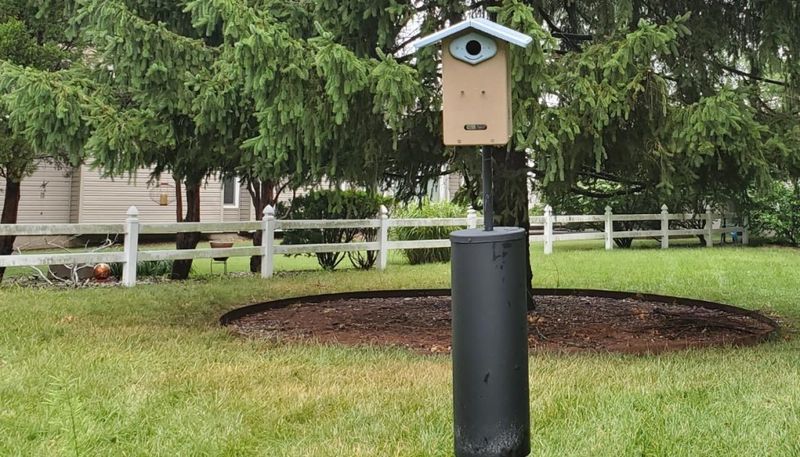
Good intentions can create real problems if a nest box ends up in the wrong spot.
A box mounted near a busy road, a cat’s regular patrol route, a low-lying area that floods after summer downpours, or a spot where squirrels can leap directly onto it is more likely to cause harm than good.
Site selection deserves as much thought as the box itself.
Once a pair moves in, leave them alone.
Do not open the box to check on eggs, clean out old material during an active nesting season, or handle owlets that appear near the box.
Under the federal Migratory Bird Treaty Act, FWC confirms that owls, their young, and active nests are protected.
Do not feed owls, and do not release live mice or rats near a box thinking you are helping.
Artificially provisioned owls can become dependent, and introduced rodents may carry disease or simply add to your existing rat problem.
The most serious hazard to address is rodent poison.
USGS research on secondary poisoning of owls by anticoagulant rodenticides documented fatal hemorrhaging in owls that ate rodents killed by several common anticoagulant products.
An owl hunting your yard is actively eating whatever rodents it catches, and if those rodents have fed on poison bait, the owl absorbs the toxin too.
The NestWatch screech-owl guidance reinforces avoiding disturbance near an active box, particularly during and shortly after egg-laying when the female is most sensitive to disruption.
When home measures fall short, the safer path is exclusion, sanitation, carefully managed trapping, and professional pest-control advice.
Poison should not be part of a yard that also supports owls or any other native raptor.
Close the Roof-Rat Routes
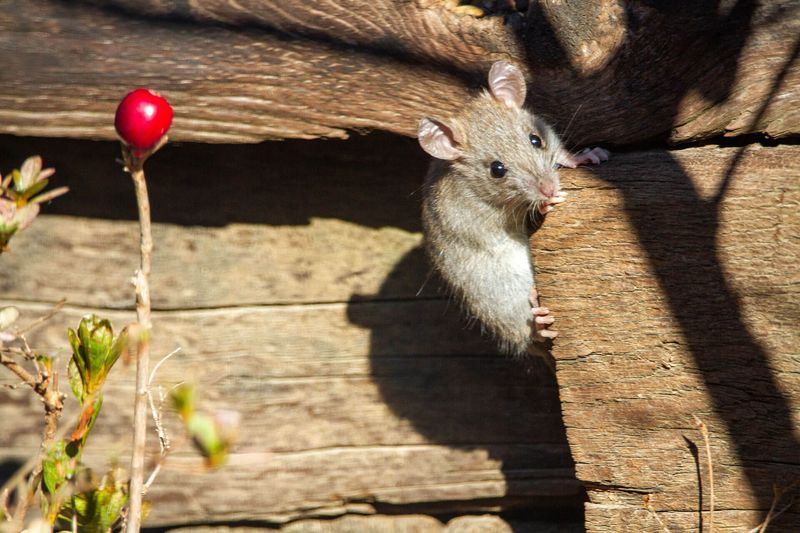
Roof rats are genuinely good at what they do.
UF/IFAS Extension reports they can travel 100 to 150 feet from their harborage each night while searching for food or water, which means a colony sheltering in a neighbor’s overgrown hedge can be raiding your citrus tree and your attic within the same hour.
That travel range is why removing attractants around your own property matters so much, even when the source is partly next door.
Start with food.
Pick up fallen fruit every day during citrus season, secure garbage cans with tight-fitting lids, and bring in pet-food bowls before dusk.
Rats that cannot find a reliable food source move on faster than rats with a nightly routine.
Clear debris piles, stacked lumber, and unmanaged palm litter from near the house, because dense ground cover within a few feet of a wall is essentially a rat hotel.
UF/IFAS guidance on roof-rat control in fruit trees recommends isolating trees from fences, wires, and neighboring branches, since rats use all of those as highways.
A sheet-metal trunk guard 18 to 24 inches wide, wrapped around the trunk at least 2 feet above the ground, can block climbing.
For short or forked trunks, a 2-foot-tall barrier around the base works similarly.
Both options fail the moment a branch, wire, or fence comes within jumping distance, so prune those connections first.
Prune any branch that touches or hangs over a roof, wall, or utility line.
Rats do not need a wide bridge; a single branch tip brushing a roofline is enough of an on-ramp.
When trapping is part of the plan, UF/IFAS landscaping and pest-prevention research supports setting outdoor traps from dusk until dawn to reduce accidental captures of squirrels and daytime birds.
Rats are cautious around new objects, so leave traps in one location for at least a week before moving them.
Patience here is actually a strategy.
Use the Owl as One Layer
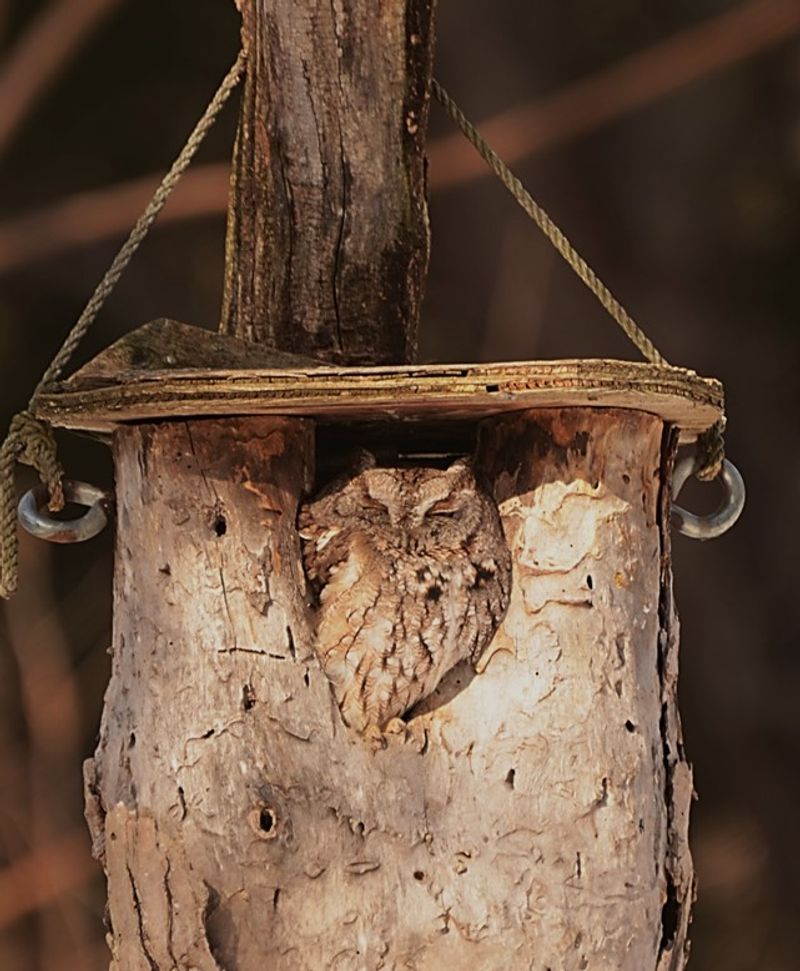
A realistic plan for a Florida yard combines several layers, and an eastern screech-owl can genuinely be one of them.
Preserve mature trees, protect any standing dead wood that is safely away from the house, and reduce pesticide use so the food web that supports the owl stays intact.
If the site fits the habitat requirements, install a nest box with a predator guard and the right specifications, then give it time.
NestWatch placement guidance is a reliable starting point for getting the details right.
At the same time, work the rat problem directly.
Remove food, clear harborage near the building, prune access routes, seal openings, and use protected trapping when needed.
UF/IFAS Extension describes roof-rat control as genuinely difficult and recommends integrated management, meaning no single method carries the whole load.
If the infestation is established and growing, a licensed pest-control professional is a reasonable next call.
The owl’s contribution is real but modest on its own.
It may remove some young or smaller rodents, add behavioral pressure on the local population, and bring a level of ecological activity to the yard that makes the whole space feel more alive.
What it cannot do is compensate for an open bag of dog food on the porch, a citrus tree with branches draped over the roof, and a palm skirt that has not been trimmed in two years.
FWC’s wildlife habitat tips frame the goal well: match the habitat to the wildlife and the site, rather than applying one recipe statewide.
The standard worth aiming for is a yard that supports native wildlife while making the home and its food sources genuinely harder for rats to reach.
That is a goal the owl can help with, one quiet night at a time.