
Cut Your Pennsylvania Salvia Back Now And Get A Second Wave Of Fall Blooms
Follow us on Google
Your salvia looked great in June, and now it’s a tangle of brown spikes and floppy stems.
Good news: a well-timed cut on the right plant can encourage fresh growth and, with some luck and warm weather, another round of blooms before frost shuts everything down.
This works best for certain ornamental types, and late August is genuinely the moment to act if you’re in southeastern Pennsylvania or the central valleys.
Know your plant, check your frost window, and you have a real shot at a prettier fall bed.
Late-August Pruning Can Help, But It Cannot Promise Fall Flowers
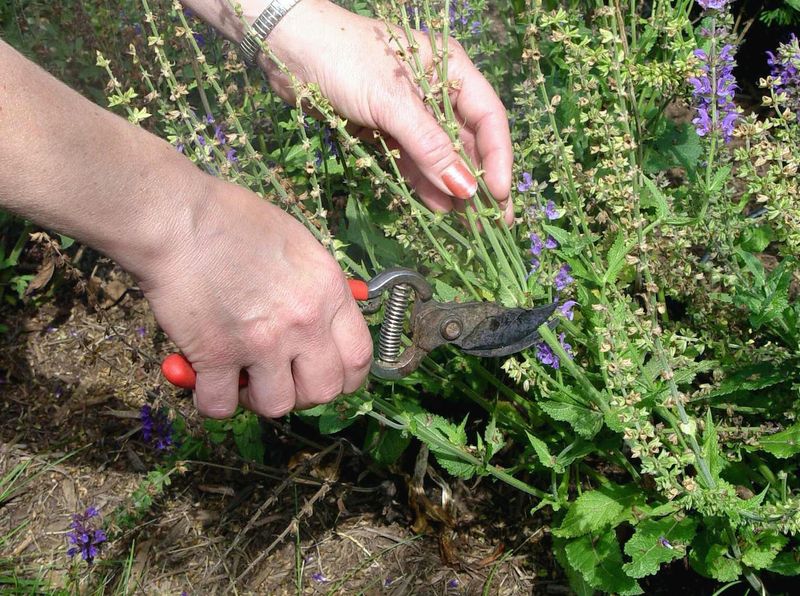
Spent salvia flower spikes are not a lost cause, but they are also not a guaranteed second act.
Cutting faded stems on a healthy ornamental salvia can encourage fresh growth and, when the remaining season cooperates, additional blooms.
Penn State Extension notes that post-flowering cuts on suitable perennials can stimulate new growth, though the second flush may be shorter and carry smaller flowers than the first.
The Royal Horticultural Society reports that hardy salvias often produce a second, slightly smaller flush after being cut back, fed, and watered. “Often” is doing real work in that sentence.
It means the response is common enough to be worth trying, not common enough to count on.
Timing is where Pennsylvania gets complicated.
Southeastern Pennsylvania and the Delaware Valley typically carry a longer warm-weather window into fall than the Poconos, the northern tier, or the Allegheny Plateau.
Penn State’s frost tables show that average first fall frost dates vary widely across the state, with some northern locations seeing frost as early as mid-September and warmer southern areas staying frost-free considerably longer.
Check the table for your county and watch your local forecast, because an average date is a planning reference, not a calendar guarantee.
A quick decision rule: prune a healthy ornamental salvia that still has good green growth and a realistic stretch of warm days ahead.
Skip severe cutting when frost is close, when the plant looks drought-stressed or diseased, or when it has been sitting in soggy soil.
A stressed plant will not reward an aggressive cut, it will just sit there looking worse.
Identify the Salvia Before You Reach for Pruners
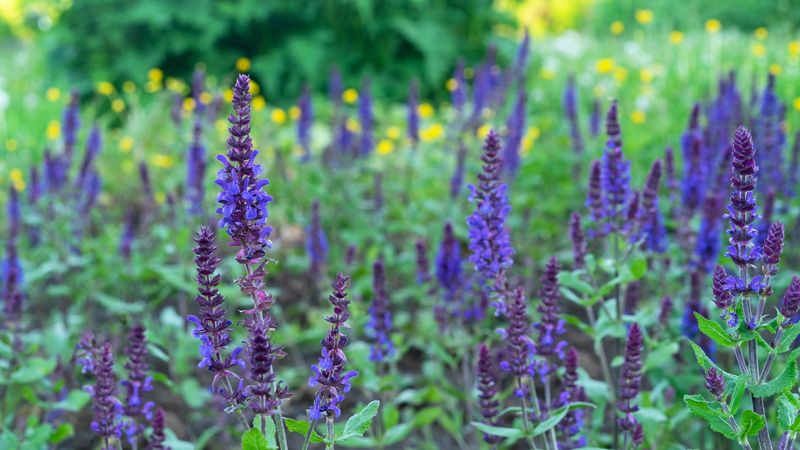
“Salvia” covers a surprisingly wide range of plants, and the cut that helps one type can genuinely damage another.
Before you grab the pruners, figure out what you are actually growing.
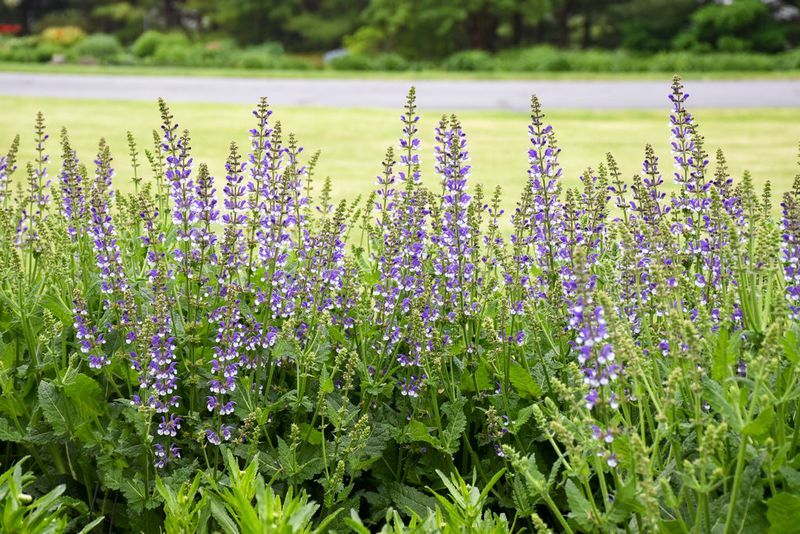
The four most common types Pennsylvania gardeners encounter are perennial Salvia nemorosa (woodland sage), annual Salvia splendens (scarlet sage), tender perennials like Salvia coccinea and Salvia guaranitica, and the kitchen-garden staple Salvia officinalis (culinary sage).
Salvia nemorosa is the clearest repeat-bloom candidate.
Missouri Botanical Garden documents that these plants may rebloom through summer and early fall with regular moisture and deadheading.
They form tidy clumps of soft, green stems topped with purple, blue, or pink flower spikes, and they do not develop thick woody bases the way culinary sage does.
Salvia splendens, the common bedding annual with bright red or purple blooms, responds to a more aggressive refresh when it is healthy but leggy, and that treatment is covered in its own section below.
Tender perennials like Salvia coccinea and Salvia guaranitica require identification-specific guidance because their hardiness and growth habits differ enough to make general rules unreliable.
University of Minnesota Extension highlights these tender types as valuable pollinator plants, but their late-season management depends on knowing exactly what you have.
Culinary sage is the clear exception.
NC State Extension explains that Salvia officinalis develops mature woody stems over time, and those sections rarely produce new growth after hard pruning.
Do not cut culinary sage back into its old woody framework in late summer.
Light trimming of soft green tips is fine, but leave the woody structure alone.
Penn State’s pruning guidance reinforces the principle: match the severity of the cut to the growth habit of the plant, not just the name on the tag.
Deadhead Salvia Nemorosa Above Healthy Growth
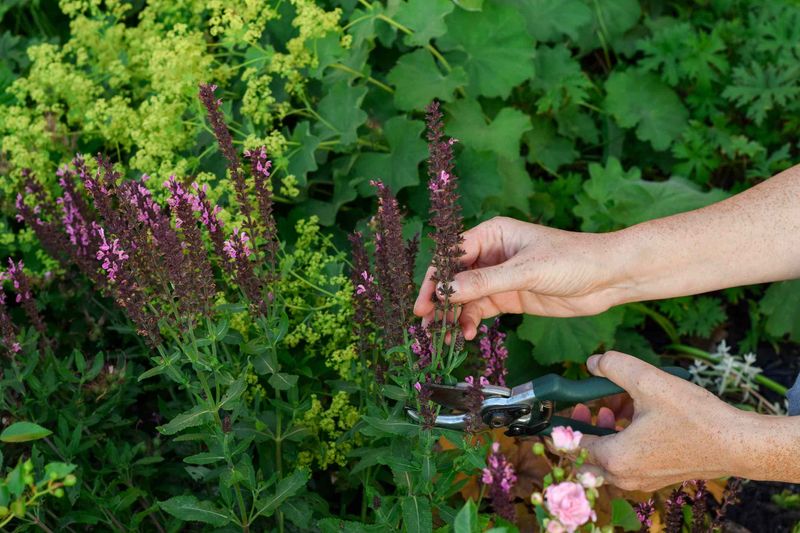
Walk up to your Salvia nemorosa and look at the flower spikes.
If the color is gone and the stems are brown and papery at the top, those are the sections to remove.
Follow each spent spike down the stem until you reach a point where a healthy leaf or a visible bud is attached, then make a clean cut just above that leaf or bud.
Penn State’s deadheading guidance recommends cutting above a healthy leaf or bud rather than leaving a bare stub, which can invite disease and looks ragged.
Simple deadheading suits plants that are mostly tidy but have a few exhausted bloom spikes.
If the whole plant has flopped over, grown sparse, or looks generally tired rather than just spent at the tips, a broader cut back to the basal foliage is worth considering.
Basal foliage is the cluster of healthy leaves sitting close to the ground, and it is where new growth tends to emerge.
Missouri Botanical Garden notes that Salvia nemorosa may repeat bloom through summer and into early fall when deadheaded, and that a floppy plant can tolerate being cut back to that basal growth.
Use clean, sharp hand pruners.
A dull blade crushes the stem instead of cutting it, and dirty tools can carry disease from one plant to the next.
Penn State Extension recommends clean cuts and removing only the finished material rather than stripping every green leaf from the plant.
Leave as much healthy foliage as possible.
That green tissue is what the plant uses to keep growing, and removing all of it slows recovery rather than speeding it up.
What happens next depends on moisture, sunlight, and the remaining season in your part of Pennsylvania.
The cut can encourage fresh growth and additional flowering, but the second round is often smaller and less abundant than the first flush.
That is still worth having in a late-August garden.
Give Leggy Scarlet Sage a Measured Refresh
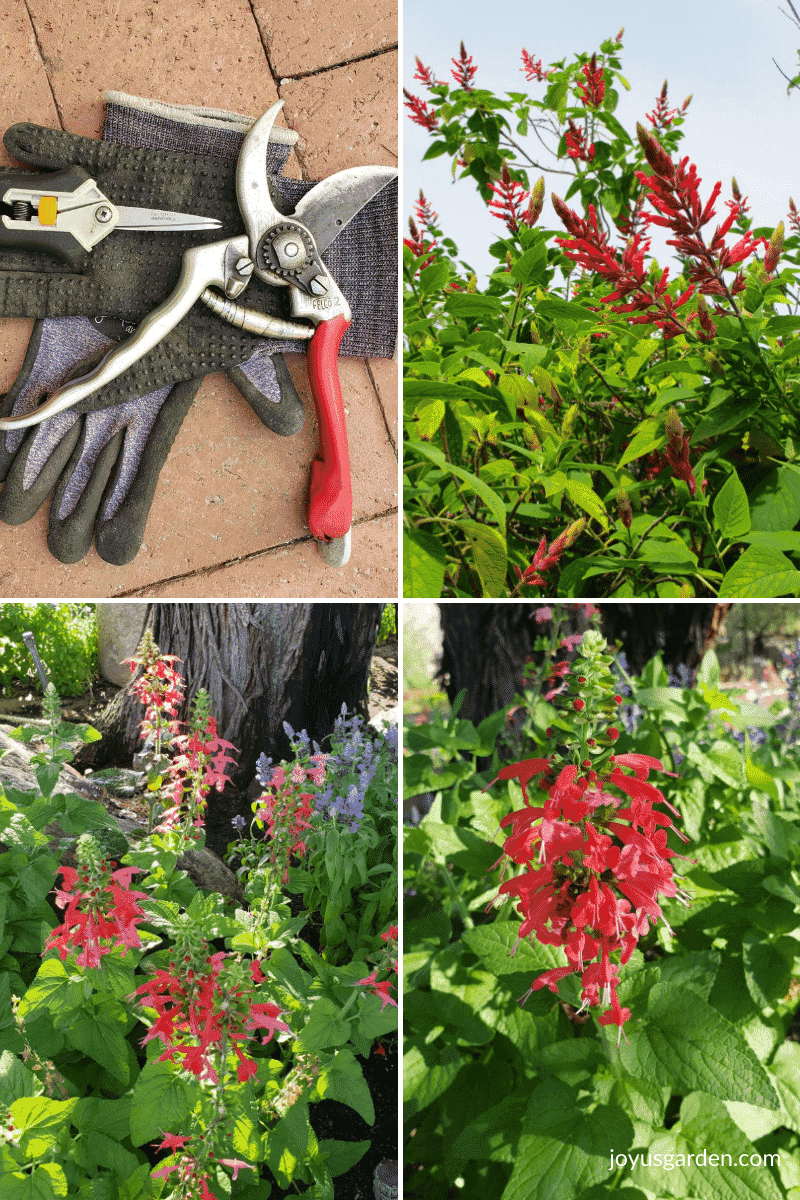
Scarlet sage, Salvia splendens, behaves differently from the perennial clump-formers.
When a healthy plant has stretched into a leggy mess, long bare stems and sparse flowers at the very top, a more substantial cut can actually help.
Penn State Extension documents a specific treatment for leggy annuals: cut the plant back so that only 3 to 5 inches of stem remain, leaving about 4 or 5 nodes (the points along the stem where leaves or new branches emerge).
Those nodes are where the new growth will come from.
That 3- to 5-inch cut is not a universal annual-salvia prescription.
Apply it only to a Salvia splendens that is genuinely healthy, just stretched and tired.
Do not use it on plants weakened by drought, sitting in poorly drained soil, showing signs of disease, or already close to their first frost.
A stressed plant does not have the reserves to push new growth after a hard cut, and a frost-threatened plant does not have the time.
For plants that are blooming adequately but carrying a few spent spikes, simply removing those finished flower heads is the less severe and usually sufficient option.
Think of the two choices as a dial: turn it only as far as the plant’s condition and your remaining warm-weather window justify.
Many central-valley and southeastern Pennsylvania gardeners have enough season left in late August to see a response from a measured cut.
Gardeners in the Poconos or the northern tier are working with a tighter margin, and the frost table for their county should drive that decision.
Check your local Penn State frost information before making a significant cut on any annual.
New growth needs warm days to develop and set buds.
If frost is likely within a few weeks, a light deadhead is a safer bet than cutting the plant nearly to the ground.
Water Deeply Only When the Soil Needs It
After a pruning cut, a salvia is doing quiet work underground before anything visible happens above ground.
Keeping the soil in good shape during that window matters more than most gardeners expect.
Water deeply if the soil is dry, but do not reach for the hose automatically after every summer thunderstorm.
Pennsylvania storms are uneven, they can drop an inch of rain in one yard and barely wet the pavement two blocks over.
A rain gauge tells you what actually fell, and checking soil moisture 3 to 4 inches down tells you whether the plant needs more.
Penn State Extension recommends about 1 inch of water per week for established garden plants as a general reference, with less frequent, deeper watering preferred over shallow daily sprinkling.
University of Illinois Extension notes that 1 inch of water can penetrate roughly 6 to 8 inches into average soil, though sandy or rocky soil absorbs water faster and clay-heavy soil holds it longer and dries more slowly.
Southeastern Pennsylvania gardeners dealing with heavy clay should be especially cautious about overwatering, soggy roots are as damaging as dry ones.
Full sun and well-drained soil are the background conditions that make the rest of this advice work.
Missouri Botanical Garden describes Salvia nemorosa as preferring full sun and average to dry, well-drained soil.
Shade reduces flowering and increases disease risk, and persistently wet soil can lead to root problems that no amount of pruning will fix.
A 2- to 3-inch layer of mulch around the plant helps conserve soil moisture between waterings.
Penn State Extension warns that mulch piled against the plant’s base can contribute to stem rot, so keep it pulled back a few inches from the crown.
Shallow daily sprinkling wets the surface without reaching the roots and can keep foliage damp in ways that invite disease.
Water at the soil level and water thoroughly when you do.
Let Frost, Plant Health, and Expectations Set the Outcome
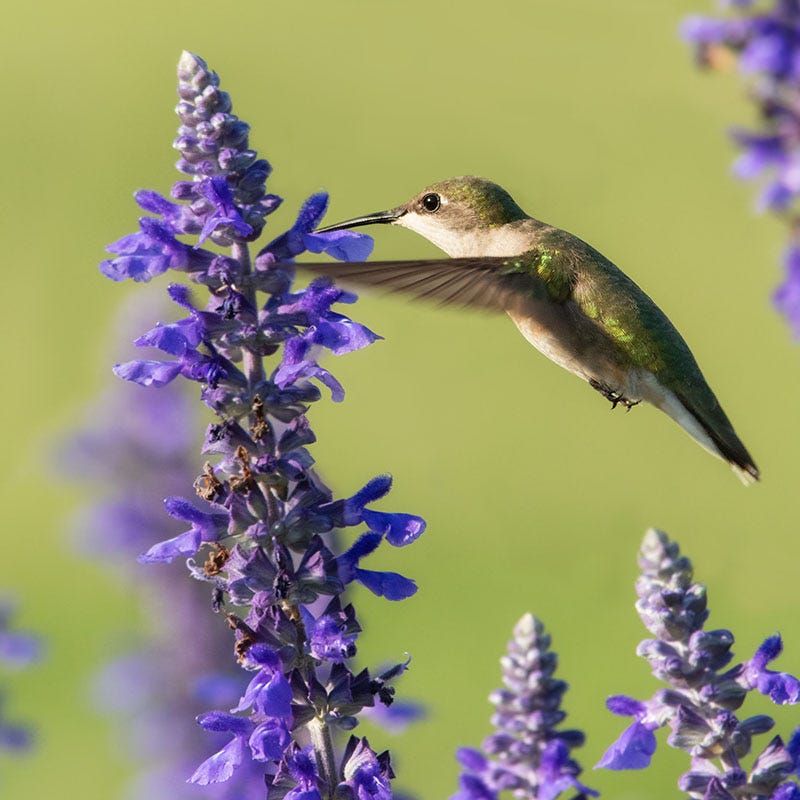
A second flush of salvia blooms is a possibility, not a scheduled delivery.
The Royal Horticultural Society describes hardy salvias as often producing a second, slightly smaller flush after cutting back, feeding, and watering. “Slightly smaller” is worth taking seriously.
The second round may carry fewer spikes, shorter stems, or less intense color than the first.
That is a normal response, not a sign something went wrong, and it is genuinely worth having in a late-season border.
How much time remains before frost is the variable that cannot be negotiated.
A late-August cut in the Delaware Valley sits in a different position than the same cut in Scranton or Altoona, where Penn State’s frost tables show average first frost dates arriving considerably earlier.
No fixed timeline applies to how quickly new growth will appear.
Weather, sunlight, plant condition, soil moisture, and the specific cultivar all affect the pace.
Do not count on blooms by a specific date.
Fertilizer comes up here because the RHS mentions feeding alongside watering as part of the post-cut routine for hardy salvias.
That is worth noting, but Penn State Extension cautions that many perennials need little fertilizer and that overfertilizing can produce excessive soft growth while actually reducing flower production.
Heavy feeding is not a rebloom trigger.
If your soil has been prepared and the plant looks healthy, water is the more defensible next step.
Any fertilizer application should follow the product label and should never go onto a drought-stressed plant.
A soil test is the most reliable way to know whether feeding is warranted at all.
Penn State also notes that plant condition going into the cut matters.
A healthy plant with adequate moisture and sun has the best chance of responding.
Manage expectations, watch the forecast, and let the plant tell you what it can do.
Protect Salvia and Its Pollinators After the Cut
Pruning is not a cure for a struggling plant.
If your salvia has powdery mildew coating its leaves, leaf spot spreading across the foliage, or roots sitting in water that never drains, a haircut will not fix any of that.
Penn State Extension recommends addressing the growing conditions first: improve air circulation by avoiding overcrowding, correct drainage problems, and water at the soil level rather than repeatedly wetting the foliage.
Missouri Botanical Garden lists powdery mildew, leaf spot, rust, aphids, whitefly, and scale as possible problems for Salvia nemorosa, and none of them respond to pruning alone.
Full sun, good drainage, and soil-level watering are the foundation.
Penn State’s herb gardening guidance describes sage-type plants as suited to full sun with well-drained conditions, noting that wet soil increases disease risk.
If your salvia is in a spot that stays damp after rain, the best long-term fix is improving drainage or moving the plant, not pruning more aggressively.
On the pollinator side, selective deadheading and complete fall cleanup are two different things.
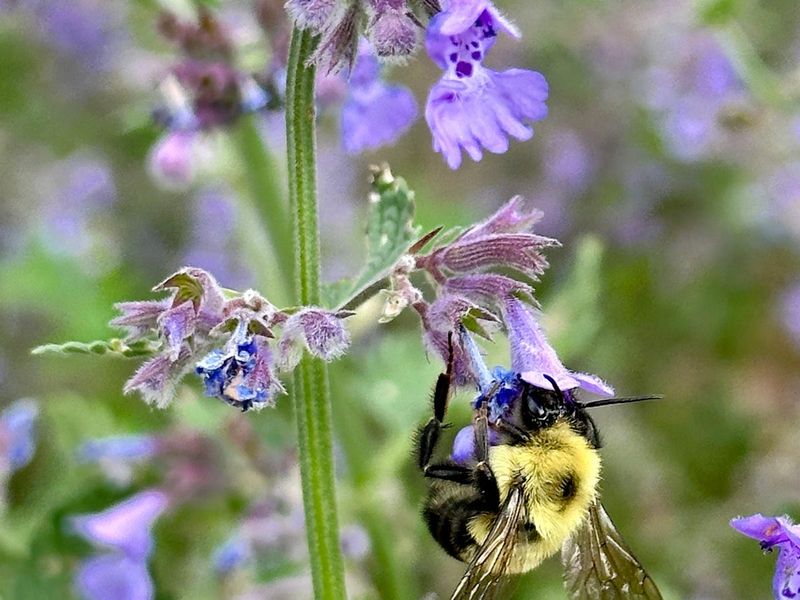
If your salvia is still carrying fresh flowers and attracting bees, removing only the finished spikes makes more sense than clearing the whole plant.
Penn State’s fall pollinator guidance recommends leaving some stems and garden debris standing because native bees and other insects overwinter in hollow stems and leaf litter.
Penn State Lackawanna Master Gardeners note that a tidy fall cleanup removes the very material many beneficial insects depend on through winter.
The practical decision path is straightforward.
Identify the plant, check its health, match the pruning severity to what it can handle, factor in your local frost window, water when the soil is actually dry, and leave some structure standing for the insects still using it.
A second flush of blooms is a welcome bonus, the plant doing its job well into fall is already a good outcome.