
10 Bright Red Perennials Thriving In Florida Heat And Humidity All Year
Follow us on Google
Florida gardens can feel relentless, with blazing sun, sticky air, and sudden downpours testing every plant you bring home. The good news is that plenty of red-flowering perennials actually love those conditions and keep the color coming when fussier plants fade out.
If you want a yard that looks vivid, tropical, and alive for most of the year, these picks earn their space fast. Each one brings strong color, reliable performance, and a much better chance of success in real Florida conditions.
Pentas
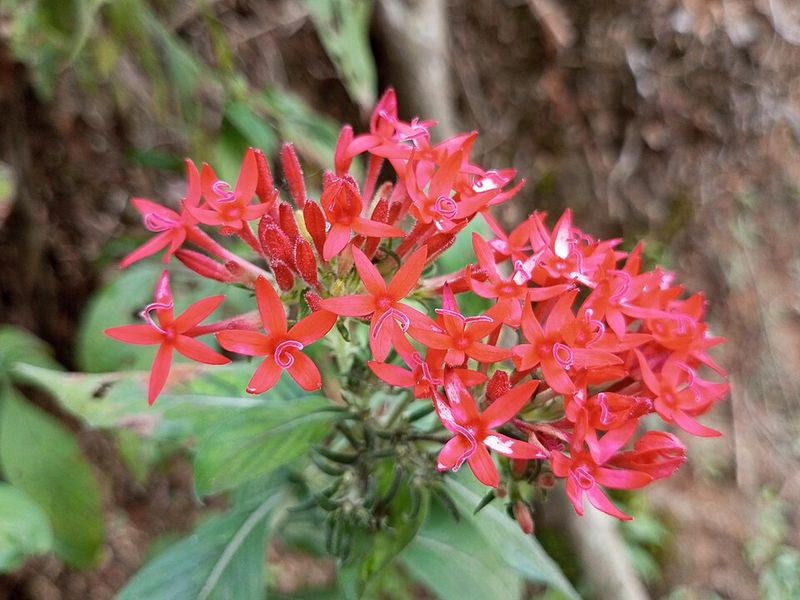
Few plants earn their keep in a Florida garden as quickly as this nonstop bloomer. Bright red flower clusters sit above neat mounded foliage and keep showing up through heat, humidity, and long rainy stretches without looking stressed.
You get a dependable burst of color that works in front borders, mailbox beds, and mixed tropical plantings.
Full sun gives the heaviest flowering, but light afternoon shade helps in the hottest inland spots. Once roots settle in, regular watering becomes less important, though new plants need steady moisture for several weeks.
Deadheading is helpful but not essential, so this choice fits nicely if you want color without constant grooming.
Butterflies flock to the nectar, and that makes the planting feel active instead of static. Red forms pair especially well with yellow lantana, blue salvia, or silver foliage that cools down the intensity.
If your yard has reflected heat near sidewalks or driveways, this plant usually handles it better than many bedding flowers.
Trim lightly every month or two to keep the shape dense and blooming stems coming. In frost-free parts of Florida, it behaves like a true year-round performer.
That combination of tidy growth, rich color, and pollinator value makes it one of the smartest red perennials you can grow.
Firespike
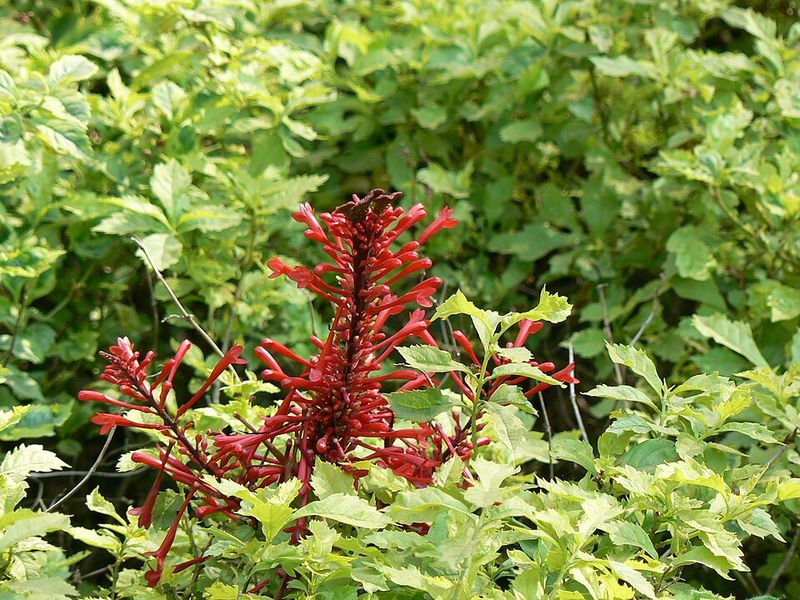
Bold color and tropical height make this plant stand out even in crowded Florida borders. Upright stems carry rich red flower spikes that light up shady corners and stay attractive through steamy weather when many bloomers slow down.
The foliage is large, deep green, and substantial enough to make the plant useful even between bloom cycles.
Morning sun or bright filtered light usually gives the best balance of flowering and leaf quality. Too much deep shade can reduce blooms, while brutal afternoon exposure may wilt tender new growth in sandy sites.
Consistent moisture helps it look fuller, especially during dry spring spells before summer rains return.
Hummingbirds treat the flowers like a personal feeding station, which is a huge bonus near patios or windows. Because the plant can get tall and wide, it works best at the back of a bed or along a fence line where it can spread naturally.
Hard pruning in late winter encourages a flush of fresh stems and better flowering.
Cold can knock it back in northern parts of the state, but established roots often rebound quickly when warmth returns. In central and south Florida, it can remain impressive for much longer stretches.
If you want saturated red without constant fuss, this one delivers presence, wildlife interest, and dependable tropical character.
Scarlet Sage
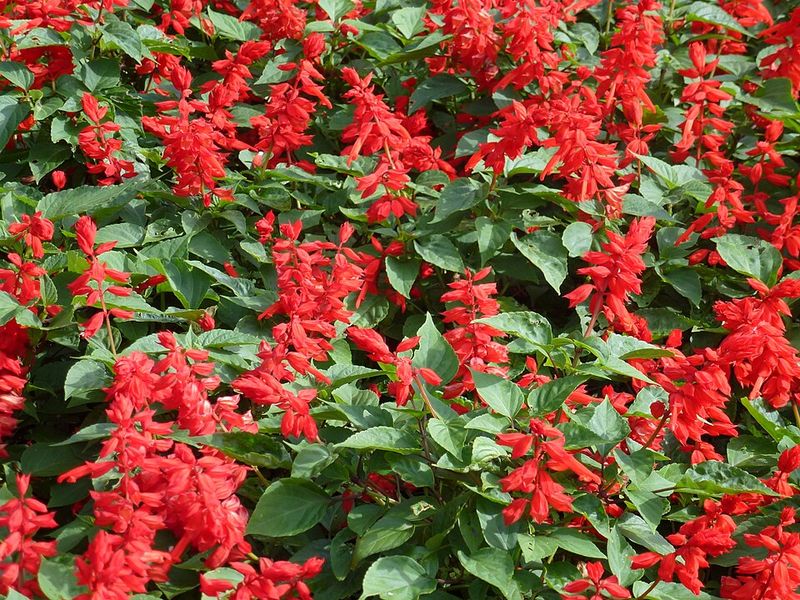
Airy, bright, and surprisingly tough, this native salvia brings clear red color without feeling heavy or formal. Slender stems hold small tubular blooms that flutter above the foliage, creating movement that softens hotter-looking plantings.
In Florida gardens, that loose habit feels especially natural around paths, cottage beds, or butterfly-friendly borders.
Sun encourages the strongest flowering, though a little afternoon shade is fine in punishing locations. Well-drained soil matters more than rich soil, and plants often perform better when you avoid overfeeding.
Too much fertilizer can push floppy growth, while modest care keeps the stems sturdier and the overall shape more graceful.
Hummingbirds love the flowers, and butterflies stop by often enough to keep the bed busy. Because it reseeds gently, you may notice new seedlings popping up in nearby spots where conditions suit them.
That can be useful if you want a relaxed planting that fills in naturally over time.
Shearing spent stems by a third encourages another cycle of bloom and prevents the plant from looking tired. The red plays nicely with black-eyed Susans, blue porterweed, or ornamental grasses that add contrast.
For gardeners who want native charm, pollinator value, and color that shrugs off humidity, this is a practical and very Florida-friendly choice.
Jatropha
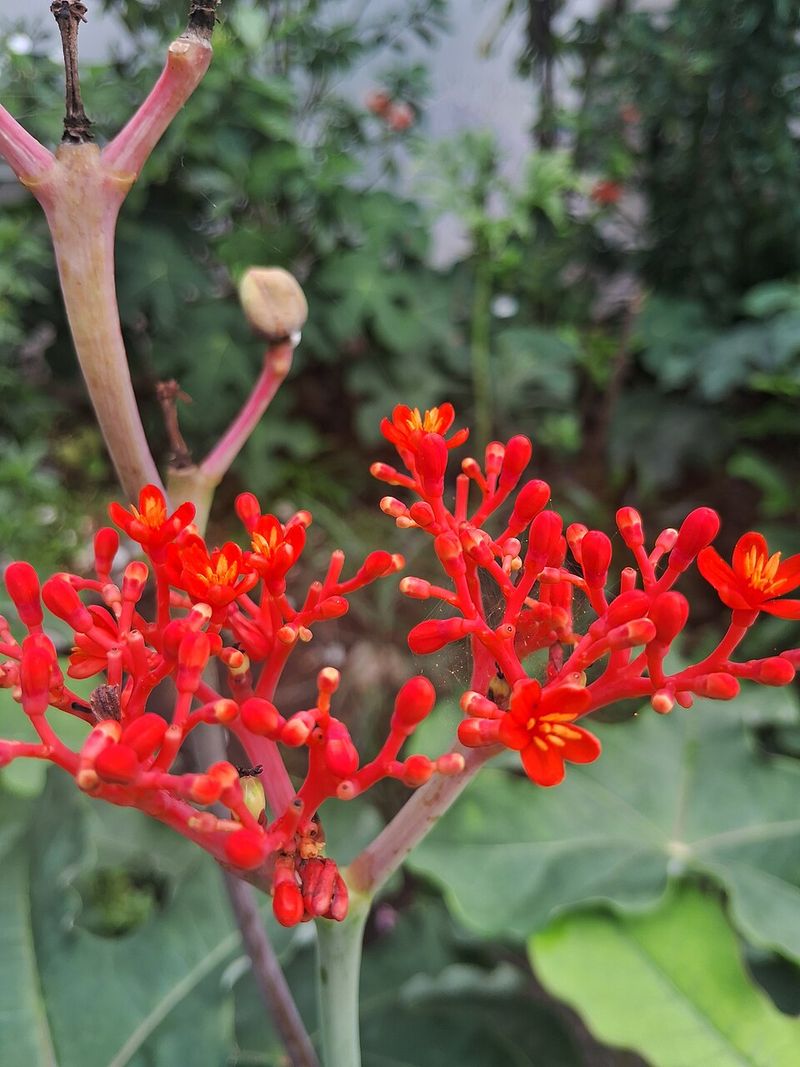
Clusters of red flowers seem to hover over the foliage, giving this tropical perennial a polished look without making it feel stiff. In warm parts of Florida, blooming can happen through much of the year, especially when the plant gets plenty of sun.
That long season is a major reason people use it near entryways, pools, and front foundation beds.
Good drainage is important, but this plant handles heat and humidity with very little complaint once established. It appreciates regular water while settling in, then becomes fairly forgiving if rainfall turns inconsistent.
Light shaping keeps it compact, though many gardeners prefer a looser form that shows off the flower sprays more naturally.
Butterflies visit often, and the bright color reads clearly from the street, which makes even a small yard feel more intentional. Red selections pair beautifully with crotons, dwarf ixora, or chartreuse foliage that sharpens the contrast.
If your landscape includes stucco walls or bright pavement, the flowers stay visible instead of getting washed out.
North Florida gardeners may see cold damage in winter, but south Florida usually gets an almost continuous show. Mulch helps protect roots and reduces stress during dry windy periods.
For reliable color, manageable maintenance, and a distinctly tropical vibe that still feels tidy, this one deserves a prominent spot in hot, humid landscapes.
Canna Lily
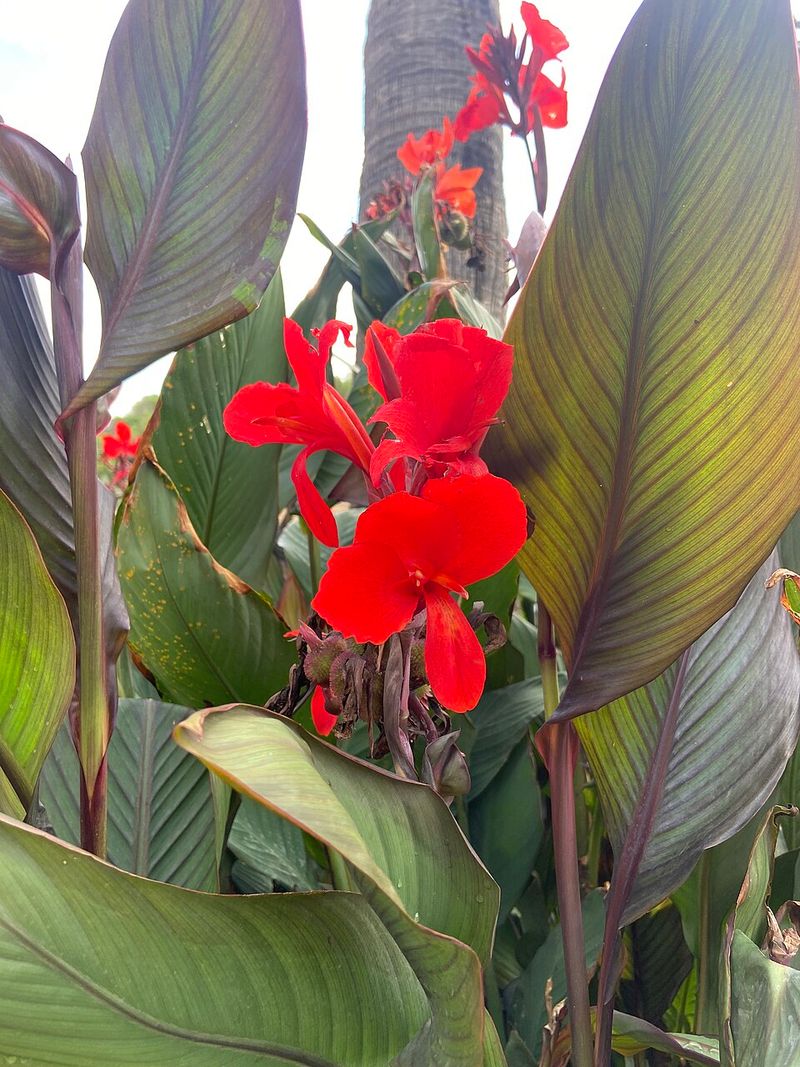
Big leaves and blazing flowers give this perennial an instant tropical presence that fits Florida beautifully. Red varieties bring strong color without needing delicate petals, so they still look convincing after rain, wind, and intense afternoon sun.
If you want a plant that reads bold from across the yard, this one does the job fast.
Moist soil keeps growth vigorous, and many cannas are happiest where irrigation is regular or drainage stays slightly damp. Full sun produces the strongest bloom, though a little shade is acceptable in extremely hot inland gardens.
Rich soil helps, but these plants are not especially demanding once their rhizomes start spreading.
The large foliage works as a design tool as much as a flower feature. You can use red cannas to anchor a bed, screen an ugly utility area, or frame a mailbox where smaller perennials would disappear.
They also pair well with bananas, coleus, and dwarf grasses when you want a layered tropical look.
Remove spent flower stalks to keep the clump tidy and encourage fresh growth. Every few years, dividing rhizomes improves vigor and gives you extra plants for other spots.
In Florida heat and humidity, few red perennials create this much impact with such straightforward care, especially if your garden needs height and strong architectural shape.
Red Hibiscus
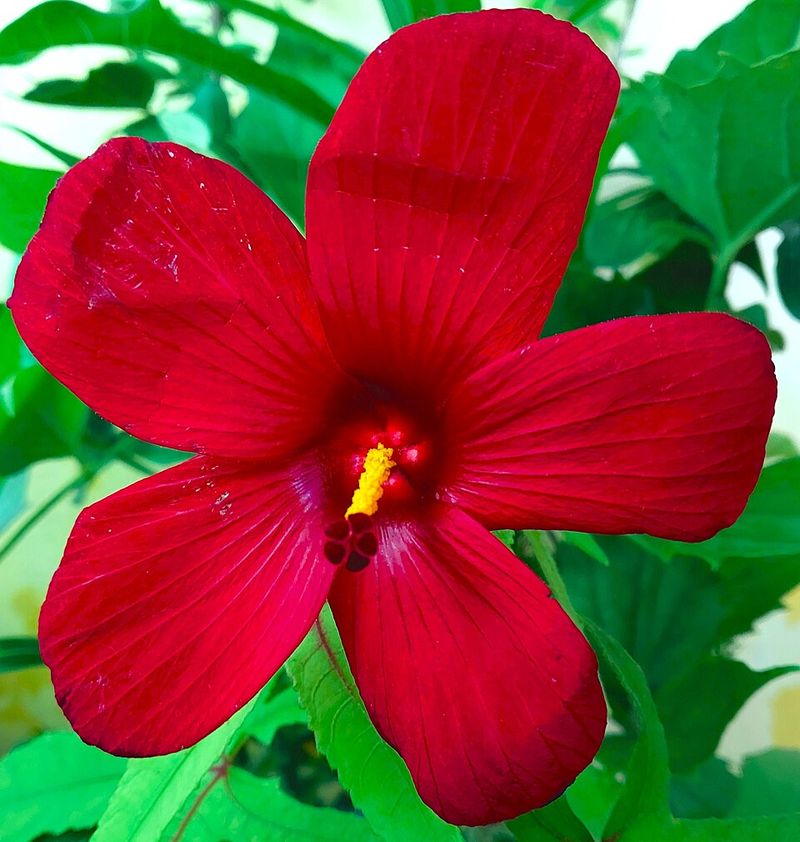
Few flowers announce summer in Florida as confidently as a large red hibiscus bloom. The color is intense, the petals are wide, and the plant gives patios and front beds an unmistakable tropical mood.
In frost-free areas, flowering can continue through much of the year, making it feel far more generous than many seasonal ornamentals.
Morning sun with some relief from the harshest late-day exposure often keeps foliage looking best. Regular water is important, especially in containers or fast-draining sandy soil where roots dry quickly.
A slow-release fertilizer made for blooming shrubs helps maintain color and bud production without forcing weak, overly soft growth.
Because the flowers are so dramatic, one plant can carry a small space on its own. You can place it near a porch, beside a pool screen, or in a courtyard where the blooms are easy to appreciate up close.
Red selections look especially strong against white walls, dark mulch, or glossy green companion foliage.
Prune lightly and often instead of waiting for a severe cutback, since that keeps branching dense and flower buds coming. Watch for aphids and whiteflies during warm wet stretches, because quick treatment prevents larger issues.
For a classic Florida look with serious flower power, this perennial shrub remains one of the easiest ways to keep red in view.
Red Ginger
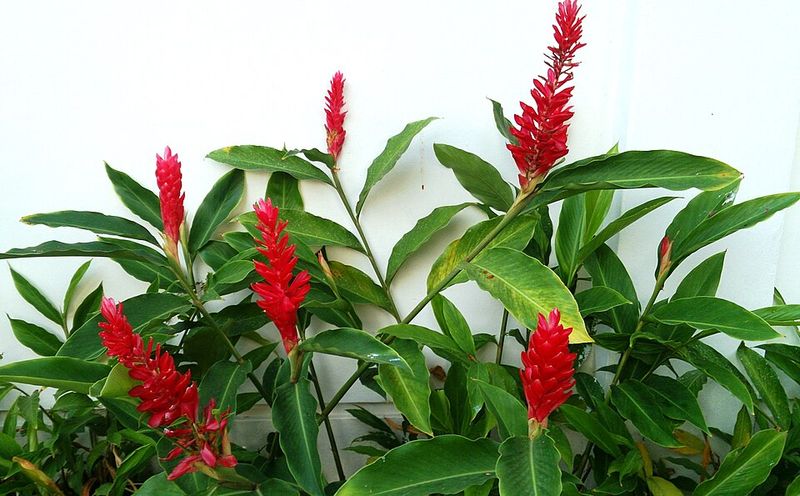
Glossy leaves and upright red flower heads give this plant a polished, tropical look that feels right at home in humid Florida gardens. The blooms have a lasting quality that makes them useful both outdoors and as cut flowers indoors.
In sheltered landscapes, the clumps gradually expand and create a dense, dramatic backdrop with very little effort.
Bright shade or filtered light usually produces the best foliage, especially where summer sun is intense. Consistent moisture is important, and plants respond well to mulch that keeps roots cool and soil evenly damp.
Rich organic soil helps the canes grow faster, but decent drainage still matters to prevent rot after prolonged rain.
This is a smart choice for softening fences, screening utility boxes, or filling side yards that feel too dim for sun-loving bloomers. The red flower spikes contrast beautifully with ferns, shell ginger, and variegated foliage that lightens darker corners.
Near a patio, the upright blooms make the planting feel intentional rather than overgrown.
Cold can damage the tops in northern parts of Florida, but established roots often recover when warmth returns. Remove old canes at the base to keep the clump fresh and give new shoots room.
If your garden needs red color in a semi-shaded, high-humidity spot, this perennial is unusually dependable and visually striking.
Blood Lily
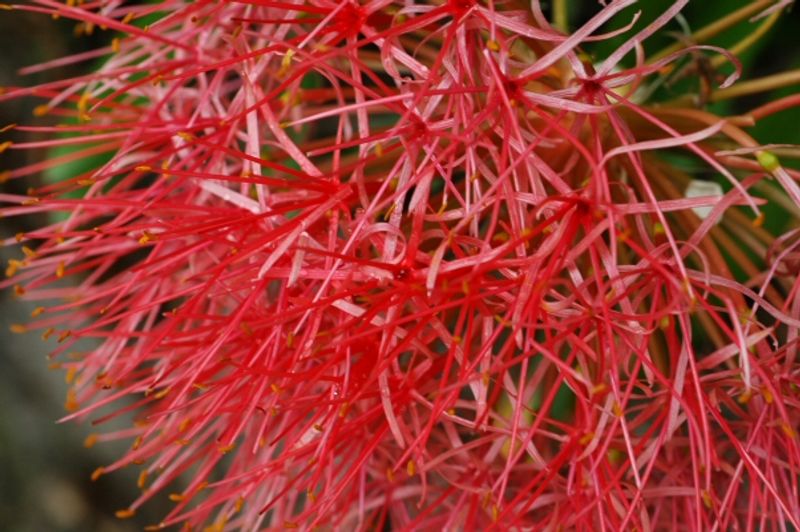
A round firework of red filaments makes this perennial look almost unreal when it blooms. The flower head rises above strap-like foliage and creates a sculptural moment that instantly catches attention in a warm, humid garden.
Because the display is so distinct, even one or two plants can give a bed a collector-style feel.
Filtered sun or bright shade is usually ideal, especially in areas with intense afternoon heat. Soil should stay lightly moist but never soggy, since the bulbs resent sitting in water for long periods.
Organic matter improves performance, and mulch helps moderate temperature swings around the root zone during unpredictable weather.
This plant works especially well near entries, courtyards, or tucked beside pathways where the unusual bloom can be appreciated up close. Red flower heads pair nicely with broad-leaved tropicals, bromeliads, or dark mulch that emphasizes the spherical form.
Because the effect is so architectural, it also suits more modern landscape designs.
After blooming, foliage continues feeding the bulb, so avoid cutting leaves prematurely just to tidy the space. In colder parts of Florida, a protected location helps the plant return more reliably year after year.
If you want bright red color that feels rare and artistic rather than common, this perennial offers a memorable twist on tropical gardening.
Firebush
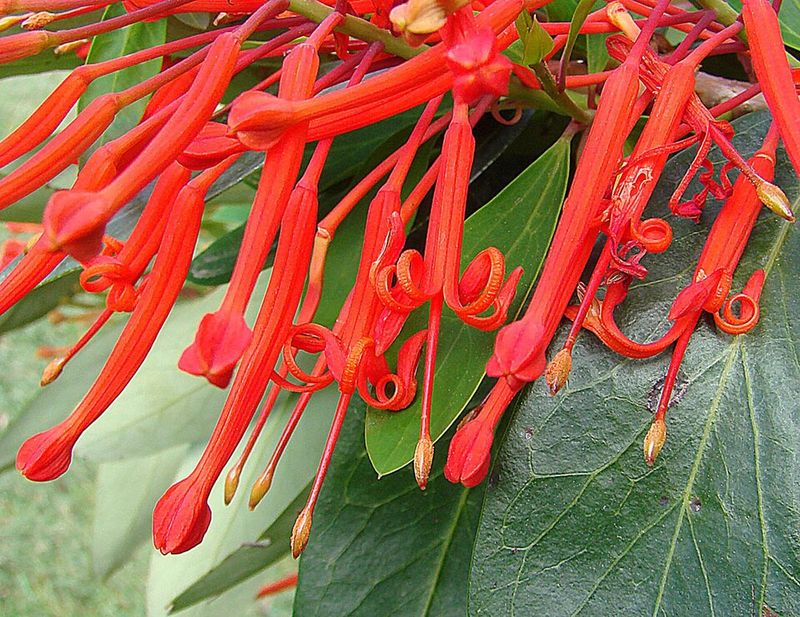
Florida gardeners often rely on this native favorite because it handles brutal weather with very little drama. Red to red-orange tubular flowers appear over long stretches of the year, and the plant keeps looking energetic even during sticky, rain-heavy months.
That durability makes it perfect for people who want color but do not want to babysit every planting bed.
Full sun gives the strongest bloom and the densest habit, though partial shade is still workable. Once established, drought tolerance improves significantly, but young plants need regular watering until roots spread into surrounding soil.
Pruning can be as simple as shaping once or twice a year, especially if you like a natural, informal outline.
Butterflies and hummingbirds visit constantly, so the plant adds motion as well as color. It works well near fences, at the back of mixed borders, or as a loose screening shrub where you want height without a rigid hedge effect.
The warm flower color pairs beautifully with blue salvias, yellow coreopsis, and coarse tropical foliage.
In colder parts of the state, winter may cut it back, yet roots usually rebound quickly in spring. South Florida gardens can enjoy near year-round flowering under favorable conditions.
If your goal is a resilient red-flowering perennial shrub that supports wildlife and shrugs off heat, humidity, and sandy soil, this one is hard to beat.
Red Ruellia
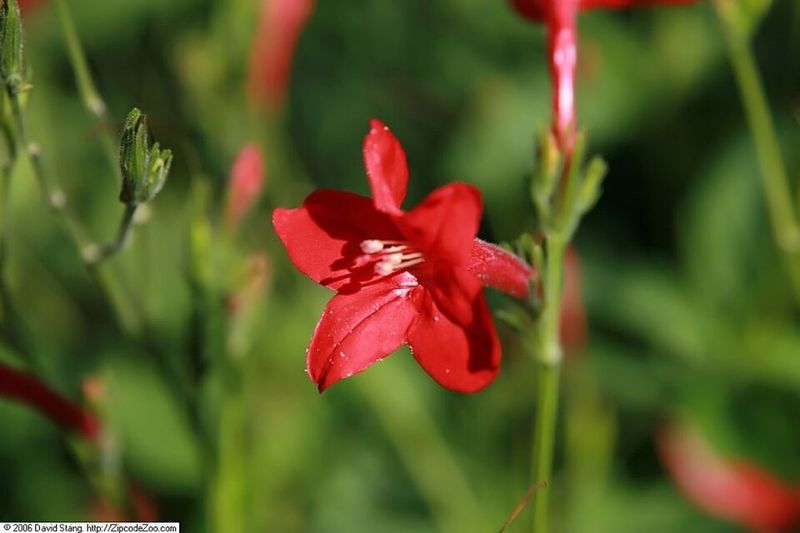
If you want a red perennial that looks lively even when the air feels heavy, this one earns a place fast. Red ruellia sends out slender tubular blooms for months, and the color stays clear and bright against soft green foliage.
It handles Florida’s sticky summers with surprising ease and keeps the garden looking fresh.
I like it most in mixed borders where its relaxed habit can weave between sturdier plants without feeling messy. Hummingbirds notice it quickly, which gives the whole planting a little more motion and life.
Give it sun, decent drainage, and occasional trimming, and it rewards you with dependable color nearly year-round.