
Small Perennials Fill Empty Garden Gaps Faster Than Most Homeowners Expect By Next Summer
Follow us on Google
By late July, that bare patch beside the walkway can look louder than the flowers around it. A few smart perennials can close those gaps much faster than most homeowners think, often in one growing season if you match the plant to the spot.
The trick is not buying the biggest plant at the garden center. It is choosing smaller spreaders that root fast, branch low, and keep working while you get on with summer.
1. Creeping Thyme Closes Hot Sunny Cracks Fast
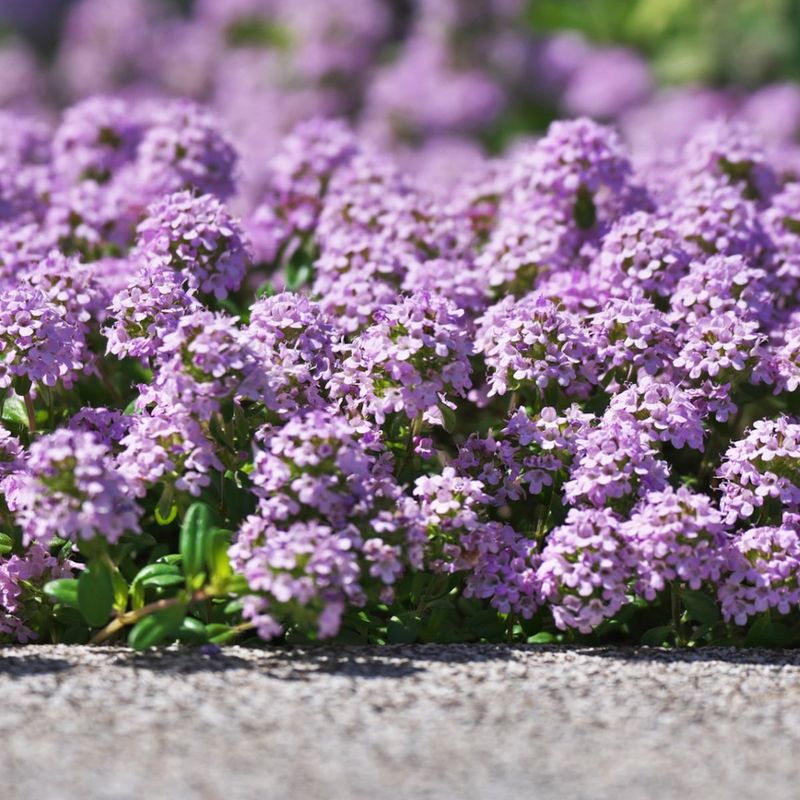
By breakfast, the stones near your front walk are already warm, and the empty joints between them seem to invite weeds overnight. Creeping thyme, Thymus serpyllum, solves that kind of gap with speed because it stays low, roots along the surface, and does not waste energy building tall stems first.
In full sun, meaning 6 to 8 hours a day, plugs spaced 6 to 10 inches apart can knit together in one season in many parts of the country. You will usually see the quickest fill where drainage is sharp, especially in sandy or gravelly soil, and slower growth in heavy clay that stays wet after rain.
The plant itself acts like a living doormat, softening edges and suppressing a fair share of weed seedlings once stems touch.
Set the crown level with the soil, water deeply right after planting, then give about 1 inch of water per week for the first month if rain is short. In the Southeast, afternoon humidity can slow it down, so leave a little extra air around pavers.
In colder northern yards, spring planting after the last hard freeze gives roots more time before winter. North Carolina Extension and several other public garden programs consistently note that thyme wants excellent drainage more than rich soil, and that single detail is often the difference between a quick carpet and a patchy disappointment.
2. Sweet Woodruff Brightens Dry Shade Under Trees
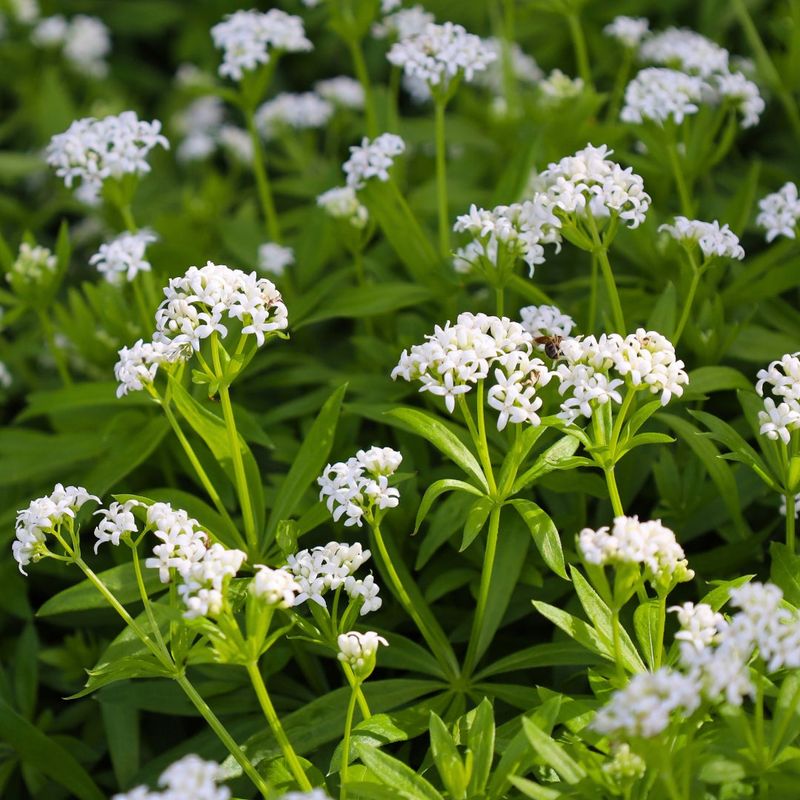
Under a big maple or oak, many homeowners keep trying annuals that fade by June. Sweet woodruff, Galium odoratum, is one of the rare small perennials that can make a shady bed look intentional instead of apologetic.
What makes it different is its comfort with partial to full shade and its ability to spread in a gentle mat 8 to 12 inches tall. Plants set 8 inches apart can begin touching by late spring after a fall planting, especially in the Mid-Atlantic, Pacific Northwest, and cooler parts of the Midwest.
The leaves also release a light hay-like scent when brushed, which gives a porch-side bed a quiet bonus on still evenings.
Give it soil with organic matter, not soggy mud and not bone-dry dust. Around thirsty tree roots, work in 2 to 3 inches of compost before planting and water weekly during the first summer when rainfall drops below 1 inch.
In hot inland South or Southwest locations, full afternoon shade matters because direct sun can scorch the foliage. It is not the best pick for every dry-shade situation, but where moisture is at least moderate, it spreads like a cool green tablecloth and helps keep bare soil from baking, splashing, and eroding after storms.
3. Hardy Geranium Weaves Color Between Bigger Plants
Here is the surprise many gardeners miss. A fast filler does not have to look like groundcover to do groundcover work.
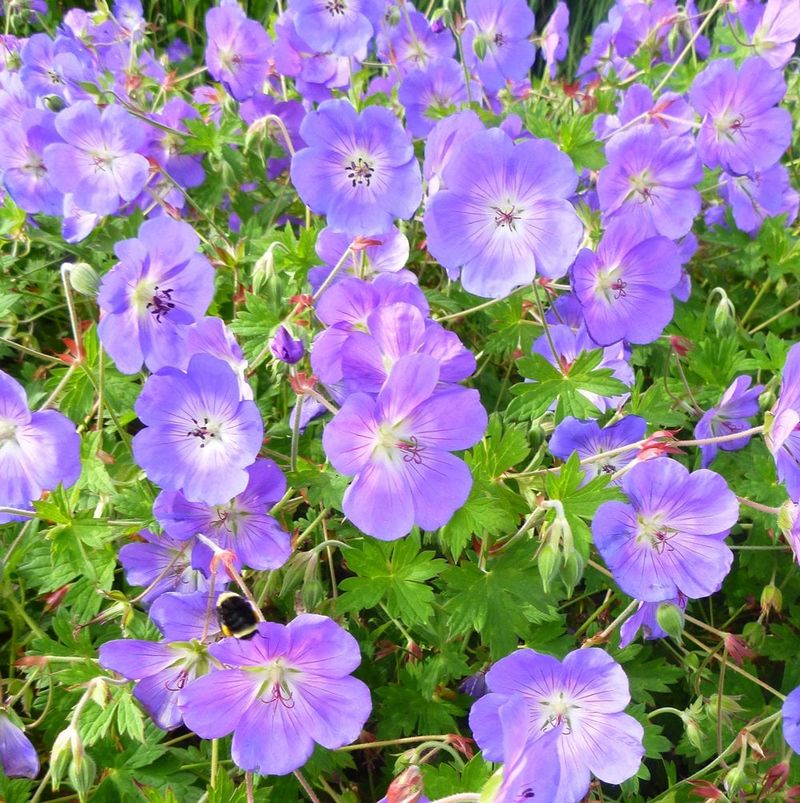
Hardy geranium, especially Geranium ‘Rozanne’, spreads in a loose mound that flows around neighboring plants and covers awkward openings without turning the whole bed into one flat sheet. In average garden soil, each plant can reach about 18 to 24 inches wide and 15 to 20 inches tall, which is enough to bridge the empty middle layer that often appears after spring bulbs finish or a small shrub gets leggy.
The bloom season is another reason it earns space, because in many regions it flowers from late spring until frost if you keep it from drying hard.
Place it where it gets morning sun and some afternoon relief in hotter states like Texas, Oklahoma, or inland California. In cooler northern gardens, 6 or more hours of sun usually gives the heaviest bloom.
Space plants 18 inches apart, mulch 2 inches deep, and water every 5 to 7 days for the first 6 weeks if rain is light. Ohio State and other Extension sources often point out that good air flow limits foliar issues, so do not pack it too tightly.
Think of it as the friend who slides into the conversation and makes everyone else look better, while also hiding the awkward pauses in your border.
4. Ajuga Covers Difficult Corners Before Weeds Settle In
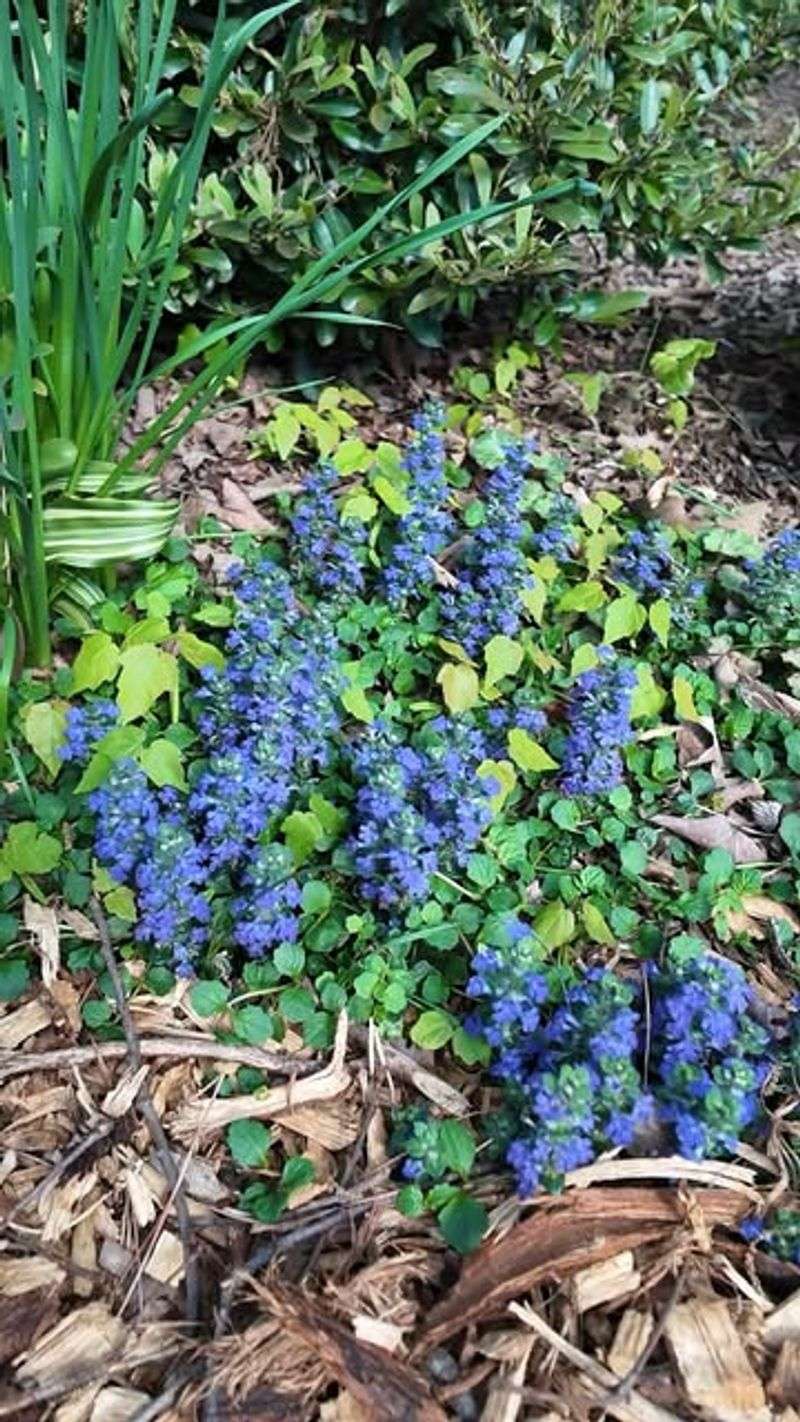
Most weedy corners are not cursed, they are simply open. Ajuga reptans, often called bugleweed, wins those races because it sends out short runners that root quickly and create a dense surface layer.
That habit makes it especially useful beside foundations, under shrubs with high branches, or near downspouts where the light shifts through the day. Plants usually grow 3 to 6 inches tall in leaf, with flower spikes rising higher in spring, and they can spread well beyond 18 inches over time.
Set young plants 8 to 12 inches apart and you may see a mostly filled patch by next summer if the soil does not stay waterlogged.
Ajuga tolerates more shade than creeping thyme and more moisture than many sun-loving fillers, but it is not a free pass everywhere. In humid regions, crowded foliage can invite crown rot, so keep mulch off the crowns and thin wandering clumps if they stack up.
In northern states it can handle more sun. In the Deep South or low-desert West, afternoon shade is safer.
A simple cleanup after bloom keeps it tidy, and the shiny leaves do real work by shading out many new weed seeds. For busy homeowners, that means fewer minutes bent over with a hand fork when the weekend is already full.
5. Sedum Turns Thin Dry Soil Into A Fuller Bed
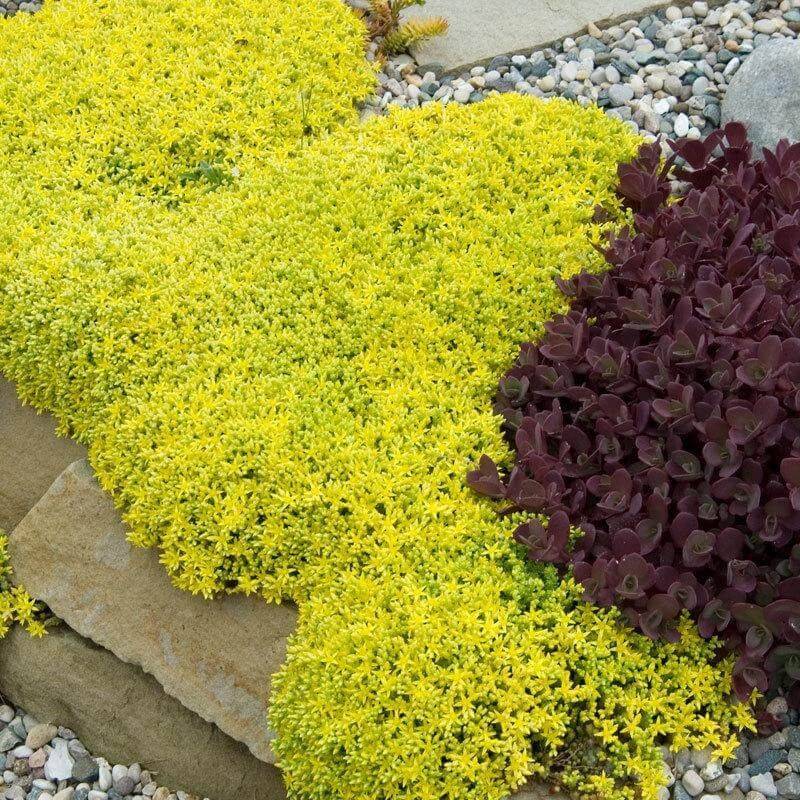
Gravelly beds near driveways often cook by noon, and many perennials treat them like a punishment. Low stonecrop sedums, including Sedum spurium and other creeping types, treat that same heat like a green light.
Their advantage is simple. Thick leaves store water, stems root where they touch, and the plants stay compact enough to slide into places where taller flowers would look crowded.
In a sunny bed with lean soil, spacing of 10 to 14 inches often gives noticeable coverage in one season, with mature mats only 4 to 6 inches tall. That makes sedum useful around mailbox plantings, retaining-wall edges, and the front lip of raised beds where irrigation is not always perfect.
Skip rich fertilizer because lush, floppy growth is not the goal here. Plant at the same depth as the nursery pot, top-dress with a half-inch of gravel if your soil is heavy, and water deeply every 7 to 10 days for the first month.
After establishment, many sedums need far less supplemental water than turf or annual color. In cold climates, snow cover usually helps.
In humid southern gardens, give enough spacing for air movement and avoid overhead watering late in the day. Sedum will not solve deep shade or soggy clay, but for hot, stingy ground it behaves like a tiny savings account, slowly cutting your water bill while the bed finally looks finished.
6. Foamflower Solves The Awkward Edge In Native-Friendly Shade
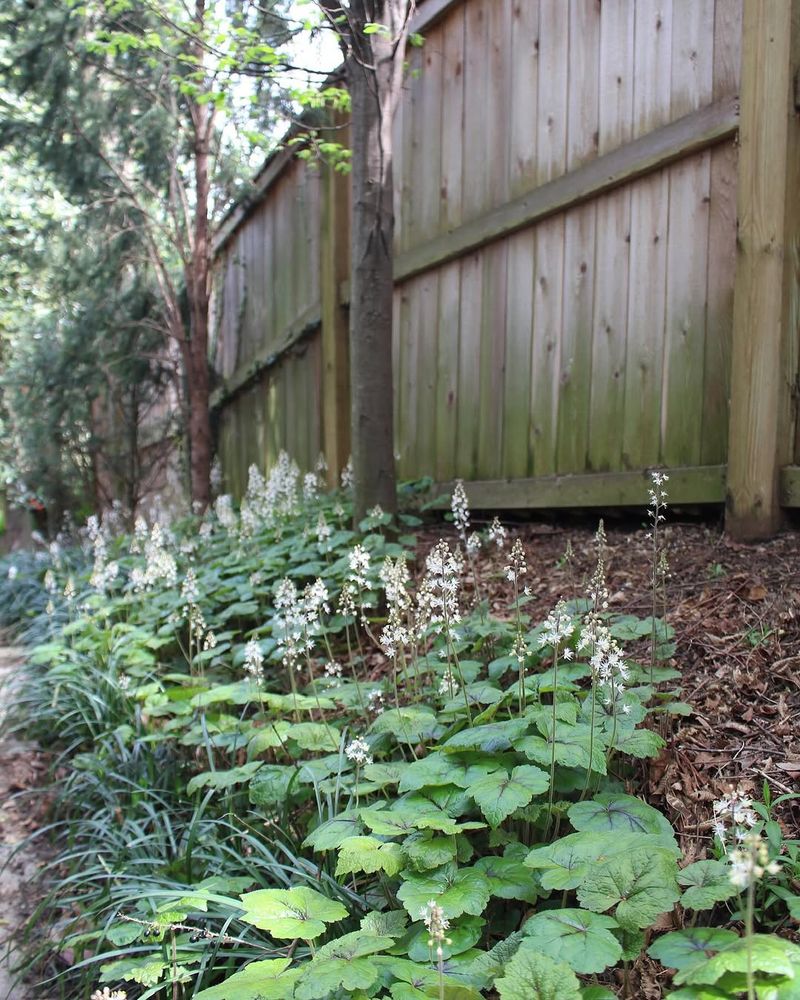
Along the edge of a shaded path, the hardest space is often the narrow one, too skinny for shrubs and too empty to ignore. Foamflower, Tiarella cordifolia and related garden selections, fills that strip with a soft spread that looks calm, not overgrown.
For eastern US gardeners especially, this is a useful answer because foamflower handles woodland conditions well and slowly expands by runners or enlarging clumps, depending on the selection. It usually reaches 6 to 12 inches tall and likes soil that holds moisture without staying swampy.
Set plants 10 to 12 inches apart, and by next summer many beds look noticeably more connected, especially where leaf mold or compost was mixed into the top 6 to 8 inches.
Placement matters more than pampering. Morning sun with afternoon shade works in cooler regions, while mostly shade is better in warmer zones 7 and 8.
Keep the crown just above heavy mulch, and do not pile shredded bark over the stems. The spring bloom spikes draw early pollinators, which adds life to a bed that might otherwise feel still until hostas bulk up.
It is not as fast or forceful as ajuga, and that is exactly why some homeowners prefer it near choice plants. Think of foamflower as the careful neighbor who fills the silence without taking over the whole block.
7. Mazus Creeps Between Stepping Stones Without Getting Tall
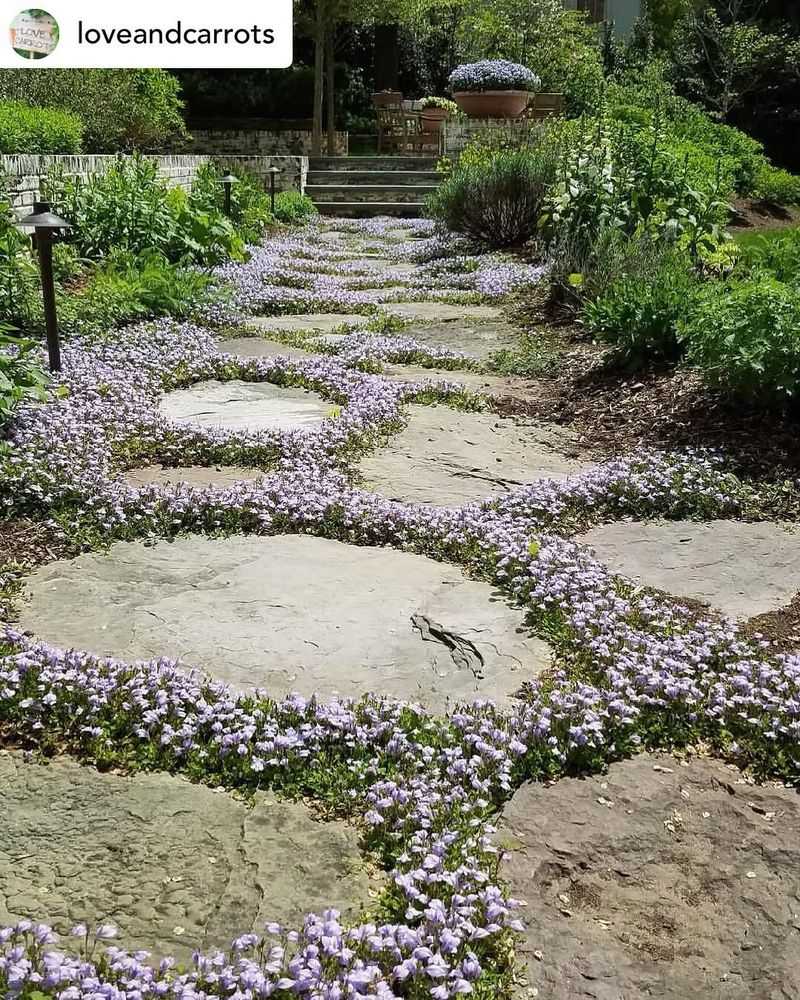
Some gaps need a plant that stays almost flat, or every footstep turns into a crushed mess. Mazus reptans earns attention because it spreads quickly while remaining only about 2 to 4 inches tall in leaf.
That low profile makes it handy between stepping stones, around patio edges, or in small sunny-to-part-shade openings where you want coverage but not a wall of foliage. In mild spring weather, plugs spaced 6 inches apart can begin joining within a few months, and the little flowers add color without asking for much deadheading.
Many homeowners who have fought moss in bright spots end up happier with mazus because it tolerates more sun if the soil does not dry out too sharply.
Give it consistent moisture the first season, especially in the Upper South and interior West where wind and reflected heat can stress shallow roots. Aim for roughly 1 inch of water per week during establishment, more during a heat wave above 90 degrees.
In very cold areas, winter heaving can loosen fresh plantings, so fall-set plugs need enough time to root before hard freezes. It is not a traffic-proof lawn substitute, and muddy winter spots can still cause trouble, but for that annoying narrow seam by your path, mazus works like grout with roots.
8. Blue Star Creeper Makes Small Spaces Look Finished Quickly
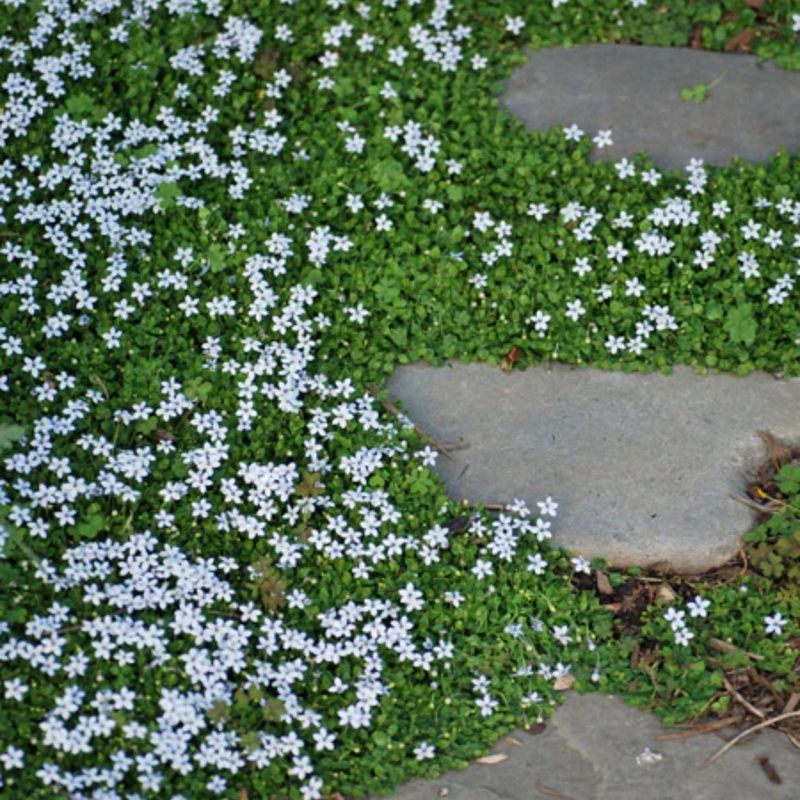
When a bed looks almost done but not quite, the missing piece is often scale. Blue star creeper, Isotoma fluviatilis, now often sold as Pratia pedunculata or Laurentia fluviatilis in some trade circles, fills tiny spaces that larger spreaders would swallow whole.
Its leaves are fine, its flowers are tiny, and that delicate look helps it blend around specimen rocks, dwarf shrubs, and the front edge of narrow borders. Yet the growth rate can still surprise you.
In moderate temperatures with regular moisture, plants spaced 6 to 8 inches apart often form a connected mat by the next growing season. Height usually stays around 1 to 3 inches, which means it frames rather than blocks.
Blue star creeper does best in full sun in cooler climates and part shade where summers are hot. Keep the soil evenly moist during the first 4 to 8 weeks, because drought right after planting slows the spread more than people expect.
It can wander into nearby turf if you let the edge blur, so a crisp border helps. In humid regions, avoid piling mulch through the crown, and in the coldest zone edges provide winter protection with snow or light leaf cover.
It will not stand up to constant soccer traffic, but in a small front-yard bed it behaves like the final puzzle piece that clicks the whole design into place.
9. Lamium Lights Up Shade Where Grass Refuses To Grow
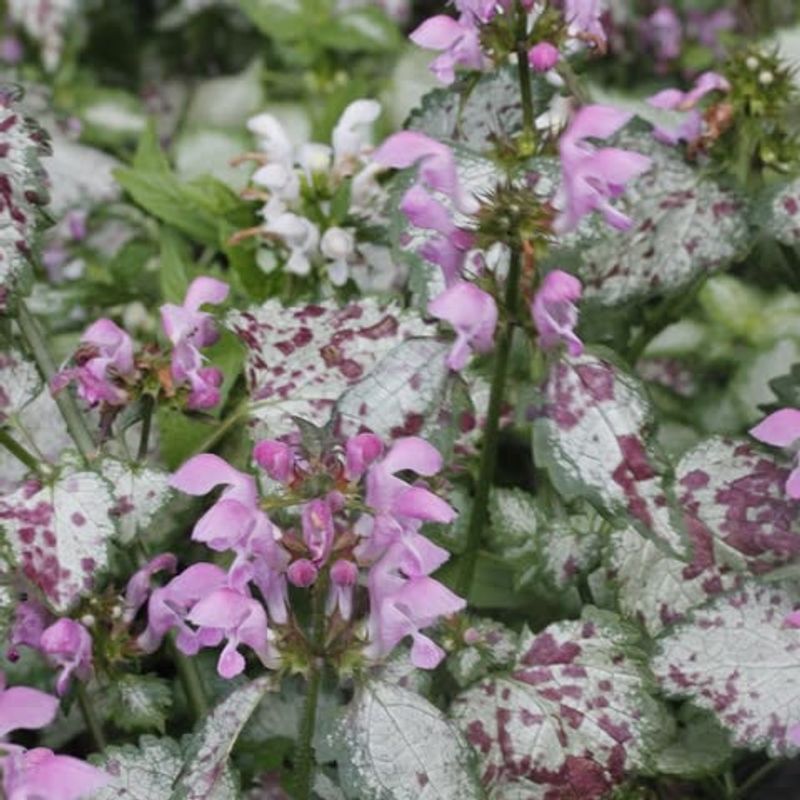
Grass often gives up first along the shaded side yard, leaving a tired strip that turns muddy after rain. Lamium maculatum, commonly called spotted deadnettle, steps into that space with bright foliage that can make the whole area look lighter.
Silver-patterned leaves are the real trick. They catch what little light is available and visually shrink the problem area, while the stems creep outward to fill open soil.
Most varieties stay around 6 to 8 inches tall and can spread 18 inches or more, depending on moisture and climate. Put plants 10 to 12 inches apart and you can often bridge a foundation gap by next summer, especially in regions with decent spring rainfall.
Lamium appreciates part to full shade and soil that drains but does not bake dry. In the Midwest and Northeast it can move with satisfying speed.
In muggy southern summers, some types may thin in August, then rebound when temperatures ease, so do not panic if the foliage looks tired during a long hot spell. Trim worn stems, water deeply, and let cooler weather do some repair.
It is not the best choice where you need a native-plant-only palette, and it can spread past its lane if conditions are ideal. Still, for homeowners staring at a dim strip by the house, lamium acts like a porch lamp for the ground.
10. Dianthus Spreads A Neat Cushion Along Sunny Borders
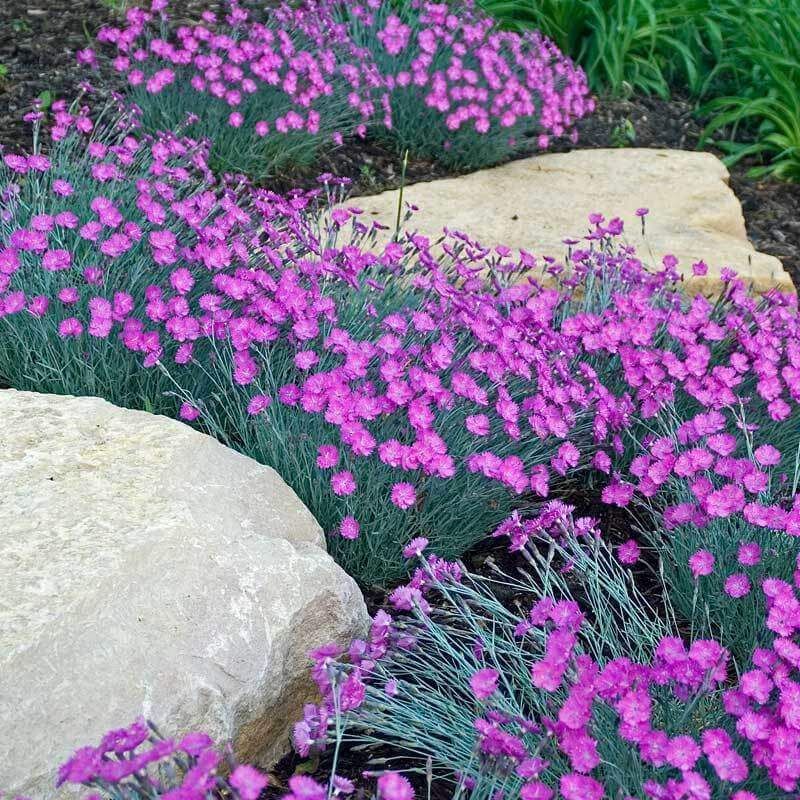
Not every gap needs a creeping mat. Sometimes the better answer is a row of small cushions that expand until the empty line disappears.
Dianthus gratianopolitanus and other low perennial pinks do that job well in sunny borders, especially where you want a crisp edge near sidewalks, mailboxes, or a patio seating area. Many selections stay about 6 to 10 inches tall and widen gradually to 12 inches or more, enough to close visual holes without covering nearby crowns.
Their blue-green foliage often stays attractive beyond bloom, which matters when you are trying to make a bed look full for more than one month.
Plant in full sun and sharply drained soil. If your yard has clay, mound the area 2 to 4 inches high or mix in coarse material and compost so winter wet does not sit around the crown.
Space plants 8 to 12 inches apart for a quicker seam, and shear spent flowers lightly to keep the clumps dense. In humid parts of the South, give them air and avoid crowding against mulch-heavy edges.
In cooler northern states, they are often more durable and can overwinter very well. Dianthus will not race across a bed like ajuga, but it gives you a tidy, fragrant border that fills in by steady inches, and steady inches are often what turn a patchy bed into one that looks cared for.
11. Planting Habits Decide Whether Gaps Fill By Next Summer
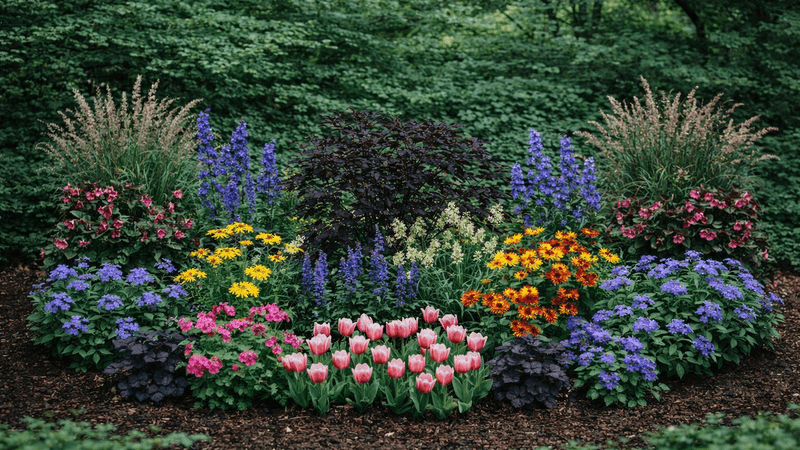
The fastest plant can still stall if the setup is wrong. Most gap-filling success comes down to a few boring choices that matter more than the label, soil depth, spacing, water, and mulch.
Loosen the bed 8 to 10 inches deep before planting so roots can move sideways instead of circling in a hard pan. Match spacing to the plant’s real spread, not your fear of the bed looking empty on day one.
If a tag says 18 inches wide, placing it 18 inches from the next crown is usually smarter than stretching to 30 inches and hoping. After planting, water enough to soak the root zone, then keep moisture steady for the first 4 to 6 weeks.
A 2-inch mulch layer helps hold that moisture, but keep mulch 1 to 2 inches away from crowns to reduce rot.
Time also matters. In much of the North, spring through early fall planting works if roots have at least 6 weeks before hard freeze.
In the South, fall planting often beats spring because roots can establish while air temperatures are milder. NOAA seasonal heat outlooks and your state Extension planting calendar can help you dodge the worst windows.
You do not need a perfect plan, just a realistic one. Give these small perennials the right spot and a clean start, and by next summer those bare patches usually stop stealing the whole show.