
The North Carolina Native Plant That Keeps Summer Firefly Yards Cooler, Damper, And More Alive
Follow us on Google
Fireflies blinking across a backyard on a warm June evening are one of those North Carolina summer moments that feel almost too good to be true. Fewer people are seeing them than they used to, and a lot of that comes down to how we manage our yards.
River oats, a native grass that thrives along shaded stream edges and woodland borders, can be part of a habitat patch that gives fireflies a better chance, but only when it works alongside the right conditions. This guide walks through what that really looks like, and how to do it without turning your yard into a pest problem.
River oats fits some North Carolina sites—not every yard
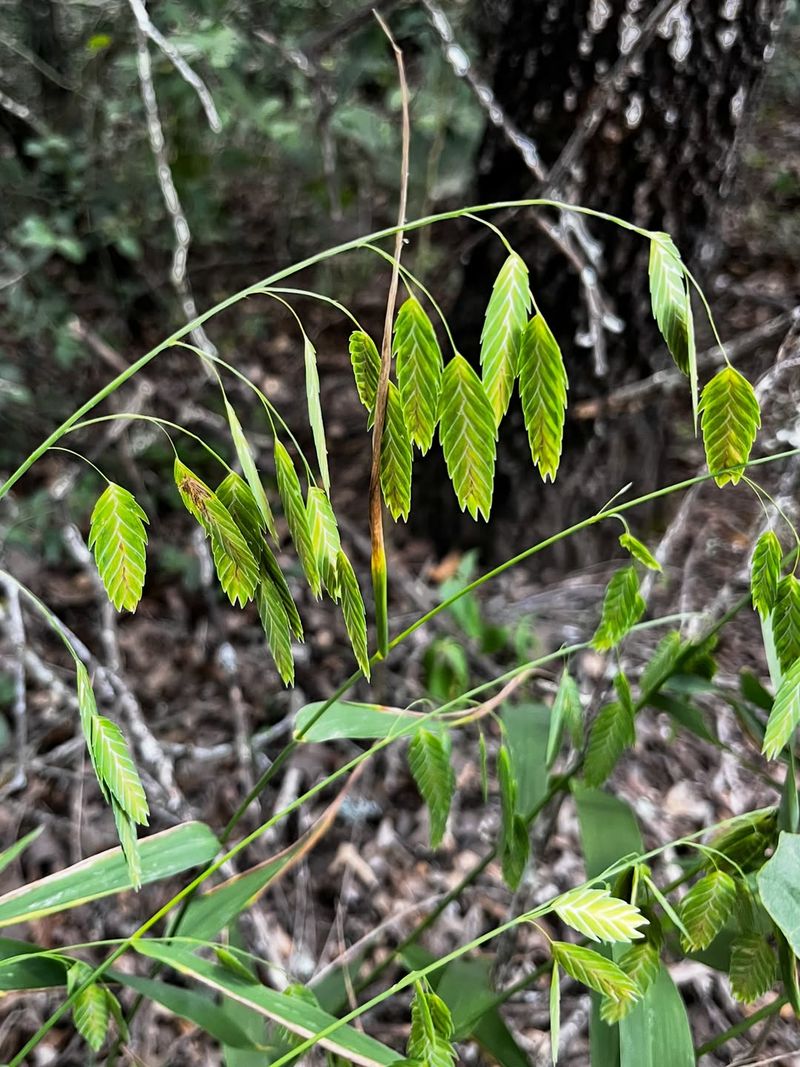
River oats, known botanically as Chasmanthium latifolium, grows naturally along stream banks, woodland edges, and shaded slopes across North Carolina. NC State Extension describes it as a native grass that typically reaches two to five feet tall, tolerates moist to wet soil, and performs best in partial to full shade.
Its flat, oat-like seed heads are easy to recognize and genuinely attractive, which makes it a practical choice for a naturalized garden corner rather than just a utilitarian filler plant.
The key word in that description is “tolerates moist to wet soil.” River oats is not a plant for a hot, dry, full-sun lawn or a slope that drains quickly after rain. Planting it in those conditions and expecting it to thrive is a setup for disappointment.
A shaded rain garden, a low spot near a downspout, a woodland edge, or a stream margin in a residential yard are all reasonable candidates.
One important practical note: river oats can spread by both rhizomes and seed, and it may become weedy in a smaller garden if left unmanaged. That is not a reason to avoid it, but it is a reason to plant it with intention.
Give it a defined space, check the perimeter each season, and pull seedlings that stray outside the patch before they get established.
Choosing the right plant for the right spot is the foundation of everything that follows. NC State Extension’s native plant guidance specifically recommends selecting plants according to the natural communities and conditions of the intended landscape rather than treating all North Carolina yards as interchangeable.
A plant that is native to the state is still only going to perform well where its light, drainage, and soil requirements are actually met.
Fireflies need ground-level habitat
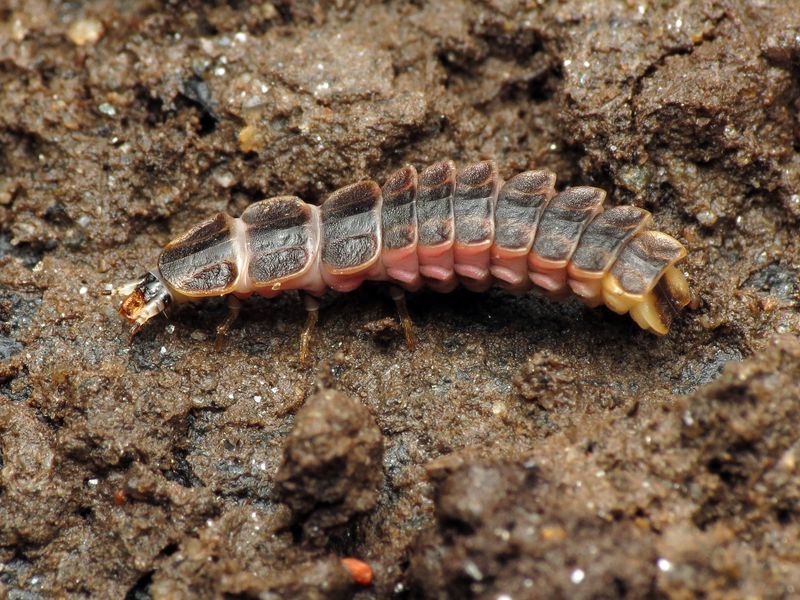
Most people think of fireflies as the blinking adults hovering above the grass on summer evenings. The adult stage, though, is a relatively short part of the firefly’s life.
The larvae spend months, sometimes longer, living at ground level, where they hunt soft-bodied prey like snails and slugs in the leaf litter and soil. NC State entomologist Gareth Powell notes that North Carolina is home to approximately 35 known firefly species, and each one has its own microhabitat preferences.
Some favor open fields, some dense forest understory, and some stay close to the ground while others perch higher in vegetation.
That diversity matters when you are planning a habitat patch. No single plant, including river oats, is going to benefit every North Carolina firefly species equally.
What the research does support is that the ground-level conditions matter most: moisture in the soil, intact leaf litter, shelter from sun and disturbance, and a reliable supply of the invertebrates larvae eat.
River oats can contribute to those conditions as a structural plant. Its arching stems and dense growth create shade at ground level, which helps retain moisture in the soil beneath it.
The leaf litter that accumulates under the patch adds organic matter and shelter. But the plant itself is not where fireflies live, and it does not directly feed most of them.
Think of it as providing the cover and the microclimate rather than the food or the nest.
Adults have their own requirements beyond larvae. The Xerces Society emphasizes that adult fireflies need vegetation to perch on, darkness to signal in, and low disturbance during the mating season.
A yard that provides good larval habitat but floods the area with artificial light or gets mowed every five days is going to have a harder time supporting adults even if the ground conditions are right.
A cooler-feeling, moisture-retaining patch comes from the whole landscape

Shade and vegetation genuinely do change how a patch of ground feels on a hot afternoon. EPA research on the benefits of trees and vegetation explains that plants cool surrounding surfaces and air through a combination of shade and evapotranspiration, the process by which plants release water vapor through their leaves.
A shaded, planted area can feel noticeably cooler than an exposed lawn or paved surface on the same property.
That effect comes from the system, not from any single species. A canopy tree shading the ground, a mid-layer shrub holding moisture in the soil, a native grass like river oats providing dense ground cover, and a layer of fallen leaves slowing evaporation from the soil surface are all working together.
EPA green infrastructure guidance supports vegetation and healthy soil as components of a cooler microclimate, without singling out any one grass or forb as the driver of that outcome.
“Damper” in this context means sheltered, moisture-retaining soil rather than soggy ground or standing water. A well-placed habitat patch with intact soil, organic matter, and a canopy overhead can hold moisture longer between rain events than an exposed, compacted lawn area.
EPA water-smart landscaping guidance connects healthy soil and appropriate plant cover to improved water retention, which is exactly what a firefly-friendly microhabitat needs to stay functional through dry stretches.
A single-species bed of river oats will not produce the same effect as a layered planting. Xerces recommends combining native plants of varying heights, from grasses and forbs to shrubs and small trees, to create shade, cover, and moisture-retaining conditions at multiple levels.
That layered structure also provides different perching and sheltering options for the different firefly species that use a yard.
Build a contained habitat patch around the plant
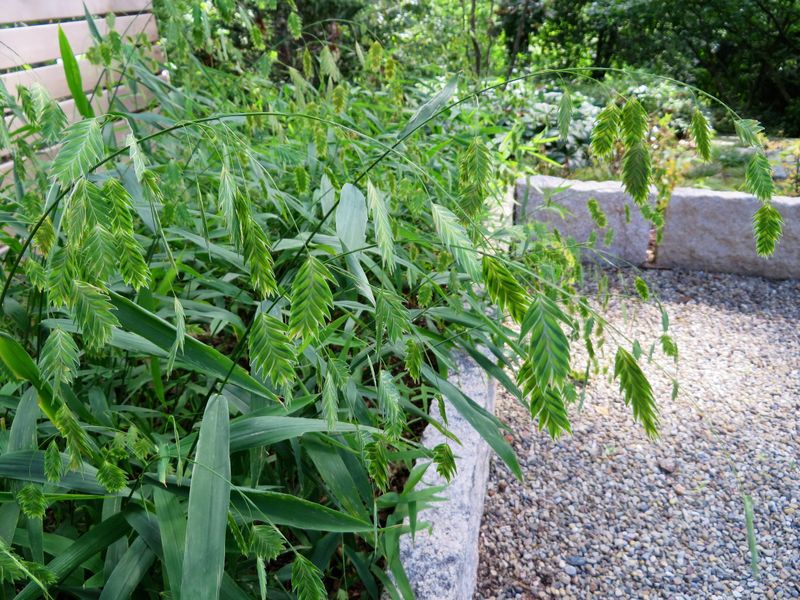
Putting a habitat patch together in a real yard is less about following a strict planting formula and more about making a series of connected decisions. Start by identifying a spot where river oats will actually thrive: partial to full shade, moist to occasionally wet soil, and enough room for the plant to spread a few feet without immediately invading a walkway or crowding out something you want to keep.
NC State Extension notes that river oats works well in naturalized edges, woodland gardens, stream margins, rain gardens, and pond-margin settings, all of which tend to appear at the perimeter of a residential lot rather than in the middle of it.
Once the location is set, resist the urge to rake it clean. Fallen leaves and small pieces of downed wood are habitat materials, not mess.
Xerces Society guidance on protecting fireflies at home cautions against heavy or compacted mulch in a designated habitat patch because it can interfere with egg-laying and with larval access to the prey living in the soil beneath. Fallen leaves and intact soil are more directly useful than a thick layer of wood-chip mulch.
Adding plants of different heights around the river oats makes the patch more functional. A native fern or two at ground level, a mid-height native shrub at the back, and the river oats filling the middle creates a layered structure that benefits multiple firefly species and makes the patch look intentional rather than abandoned.
Xerces recommends this kind of varied, native-plant structure as part of a complete firefly habitat approach.
Keeping the patch visible from a porch or seating area is worth planning for. A habitat patch that you can actually watch on a summer evening is one you will tend and protect.
A defined edge, whether a simple mown border or a row of stones, also signals to neighbors and family members that the area is intentional, which reduces the chance that someone will mow through it or pile yard waste on top of it. Xerces firefly habitat guidelines recommend keeping the habitat area away from play equipment, main walkways, and other high-use spaces while maintaining it as a deliberate part of the yard design.
Mowing, lighting, and pesticides determine habitat quality
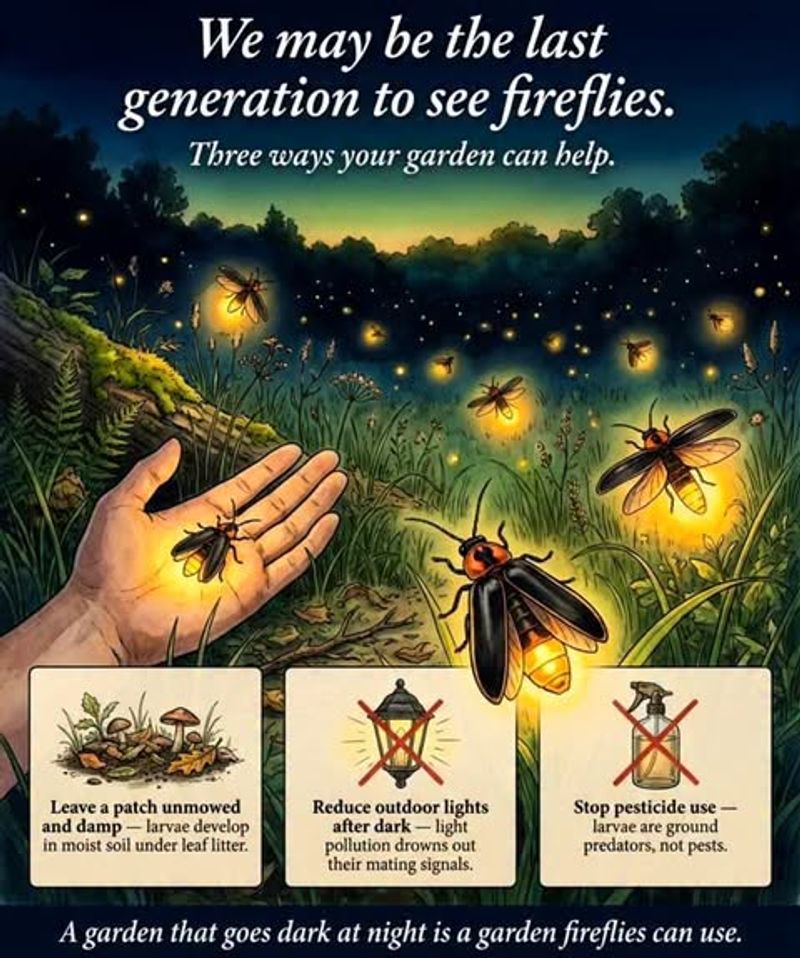
Planting river oats and walking away is not enough to make a habitat patch work for fireflies. How the area is managed after planting matters just as much as what goes in the ground.
The most consequential management decisions are how often you mow, what you do with outdoor lighting, and whether pesticides enter the picture.
Leaving part of the patch unmowed, or mowing it much less frequently than the surrounding lawn, is one of the most direct things a homeowner can do. Xerces Society firefly habitat guidelines explain that mowing, raking, leaf blowing, trampling, and thatch removal can destroy the microhabitat firefly larvae depend on or kill larvae and flightless females directly.
When mowing around the patch is necessary, raise the blade height and avoid disturbing the entire area at once. Cutting a little at a time on a rotating schedule gives larvae a chance to move rather than eliminating their entire habitat in one pass.
Outdoor lighting near the patch is worth rethinking. NC State research on firefly behavior explains that light pollution interferes with the visual signals fireflies use to find mates.
A bright flood light aimed at a wooded edge or a string of patio lights facing the habitat patch can suppress the flash-and-response courtship that fireflies rely on. Turning off unnecessary lights during peak firefly season, roughly late May through July in much of North Carolina, or shielding fixtures so they point downward rather than outward toward the patch, can make a real difference.
Pesticide choices affect the patch even when they are applied elsewhere in the yard. Broad-spectrum insecticides, neonicotinoids, and routine lawn treatments can move through the soil or drift onto habitat areas and harm larvae and the invertebrate prey they eat.
Xerces advises avoiding unnecessary pesticide use and, when pest control is genuinely needed, applying the narrowest possible treatment in the smallest possible area, well away from the habitat patch.
Manage mosquito and tick exposure through zoning
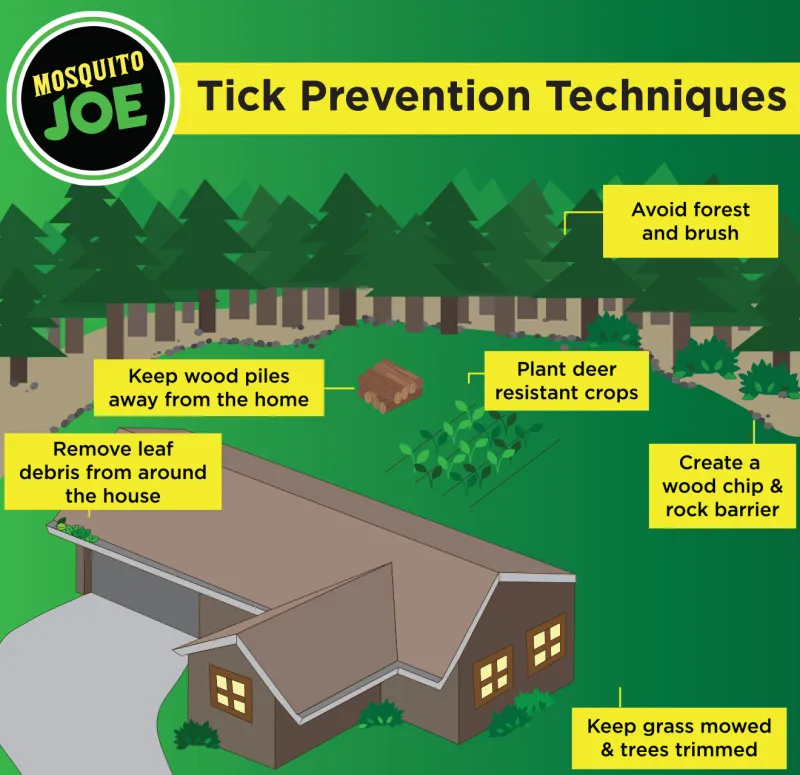
A yard that includes a firefly habitat patch does not have to be a yard where families feel uncomfortable. The practical answer to the tension between wildlife-friendly conditions and safe family spaces is zoning: keep a maintained, accessible buffer between the habitat patch and the areas where children play, pets roam, and adults spend most of their time outdoors.
CDC tick prevention guidance recommends keeping high grass, brush, and leaf litter away from frequently used lawn and play areas, and suggests using a three-foot wood-chip or gravel barrier where a lawn meets a wooded or brushy area. That kind of buffer does two things at once: it keeps the firefly-friendly conditions contained in the habitat patch and it creates a cleaner transition that ticks are less likely to cross.
Performing tick checks after any time spent near the patch, especially on children and pets, is a reasonable year-round habit in North Carolina.
Mosquitoes are a separate concern, and the habitat patch itself is not the source of the problem. Moist soil and leaf litter used by firefly larvae are not the same as the artificial, standing-water containers that support mosquito breeding.
CDC guidance on mosquito control at home focuses on emptying or scrubbing containers, flowerpot saucers, toys, birdbaths, gutters, and any other objects that hold water at least once a week. North Carolina DHHS mosquito prevention guidance echoes that source-control approach as the most effective step homeowners can take.
Planting river oats will not reduce mosquito pressure, and no native plant reliably does. The right approach separates those two problems: manage the habitat patch for fireflies, manage artificial water sources for mosquitoes, and use the buffer zone to keep both wildlife-friendly and family-use areas working the way you need them to.
Let site conditions choose the alternative
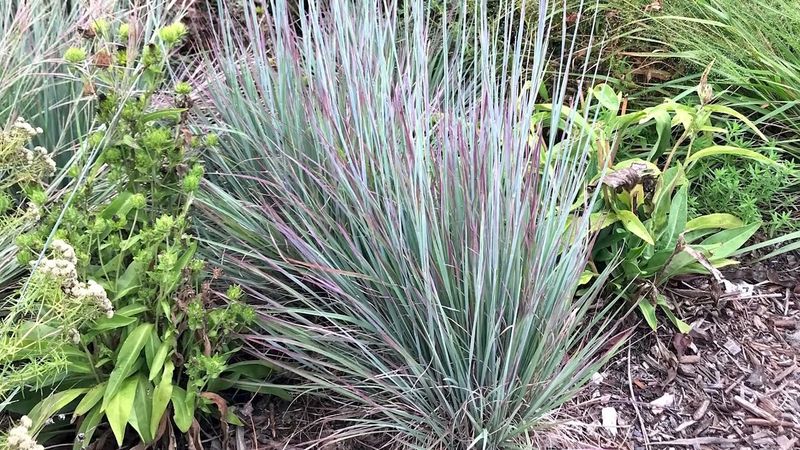
Not every North Carolina yard has a shaded, moist corner that suits river oats. A south-facing slope, a sunny open lot, or a well-drained sandy soil site calls for a different plant, and pushing river oats into those conditions will produce a struggling, unhappy planting rather than a habitat patch worth tending.
Little bluestem, Schizachyrium scoparium, is a good native option for those sunnier, drier situations. NC State Extension describes little bluestem as performing best in full sun and dry to medium-moist, well-drained soil.
It provides year-round wildlife cover and supports butterfly and moth larvae, which makes it genuinely useful for a habitat-minded homeowner. Its blue-green summer foliage turns a warm reddish-bronze in fall, so it earns its place visually as well as ecologically.
That said, it is a weaker match for the cooler, moister microhabitat conditions that firefly larvae most commonly use, so it is better framed as a habitat plant for a different site than as an equivalent substitute for river oats.
The decision rule is straightforward. NC State Extension’s native plant handbook recommends choosing plants that match the natural communities and conditions of the intended landscape.
Identify what the site actually offers, specifically its light level, drainage pattern, soil type, and regional location within North Carolina, then choose the plant that fits those conditions rather than the one that fits the article’s headline.
Once the right plant is in the ground, the habitat practices matter more than the species name. Preserved leaf litter, reduced disturbance, managed lighting, and a maintained buffer around the patch are what give fireflies a real chance.
More firefly activity remains a possible outcome of those combined improvements, not a guaranteed result of any single planting decision.
Better conditions—not one plant—make a better firefly yard
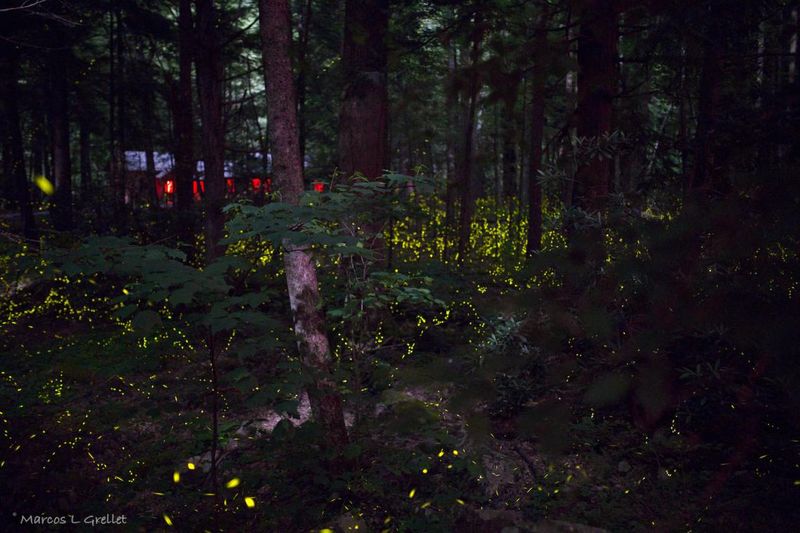
The honest takeaway from everything above is simple: river oats can be a useful structural plant in a suitable habitat patch, but the patch is what does the work. Plant it where the site actually fits, shaded or partly shaded with moist to wet soil, and pair it with preserved fallen leaves, some downed wood, and a layered mix of native plants rather than a single-species bed.
NC State Extension’s river oats profile confirms its value for those specific site conditions, and that is where its contribution begins and ends.
Reduce mowing frequency in the patch, turn off or shield outdoor lights during firefly season, and keep broad-spectrum pesticides away from the area. Remove artificial standing water containers weekly.
Maintain a clear buffer between the habitat patch and play areas, pet routes, and family spaces, and perform tick checks after spending time near it. Xerces Society firefly habitat guidelines and NC State firefly research both point to these management choices as the real drivers of habitat quality.
Increased firefly activity is a welcome possibility when conditions improve, not a guaranteed population rebound from a single planting season. The best first step is identifying one contained, suitable patch in your yard and adjusting how you manage it before adding more plants.
A yard that blinks back at you on a July evening is built one good decision at a time.