
What It Really Means When Ants Cover Your Peony Buds Before They Open
Follow us on Google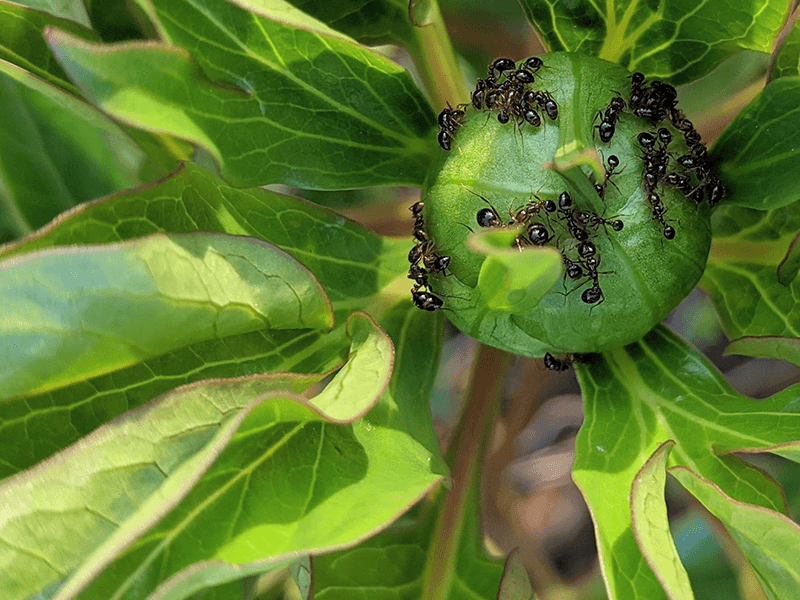
Every spring, North Carolina gardeners spot clusters of ants crawling over their peony buds and wonder if something has gone wrong. Those tiny visitors are not damaging the plant or stealing the bloom, and the real reason they are there is more interesting than most people expect. Understanding what the ants are actually doing can save you from a trip to the garden center for a spray you do not need.
The ants are after nectar, not the unopened flower
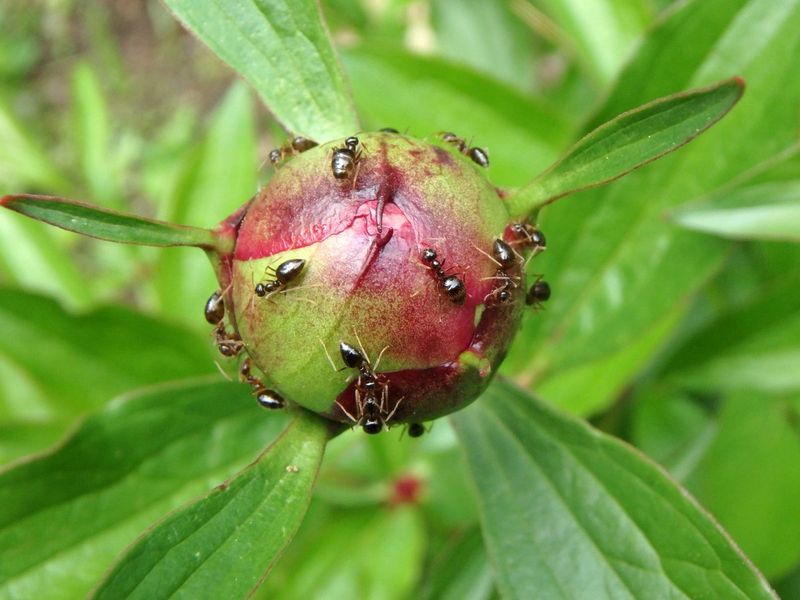
Peony buds produce something ants cannot resist: a sugary liquid called extrafloral nectar. University of Illinois Extension explains that peonies have specialized nectar-producing glands, called extrafloral nectaries, located on or around the outer bud scales. That nectar sits completely outside the flower, which means it has nothing to do with attracting the bees or butterflies that will later visit an open bloom.
For ants, early spring food sources are scarce, and these nectar glands offer an easy, reliable meal. When a scout ant finds the bud and begins feeding, it lays down chemical trails as it travels back to the colony. Those pheromone signals recruit other workers to follow the same path, which is why a single bud can quickly become covered in dozens of ants. University of Missouri Extension describes this recruitment behavior as the main reason so many ants appear so quickly around a bud that seemed untouched the day before.
None of that feeding involves chewing into the bud, prying apart the petals, or interfering with the flower in any way. The ants are working the outer surface of the bud scales, harvesting liquid that the plant is already releasing. Watching them move across a tightly closed bud can look alarming, but the behavior is closer to a hummingbird at a feeder than a pest boring into plant tissue. The peony is, in a sense, putting out a small welcome sign for insects willing to hang around.
Peony buds open on their own
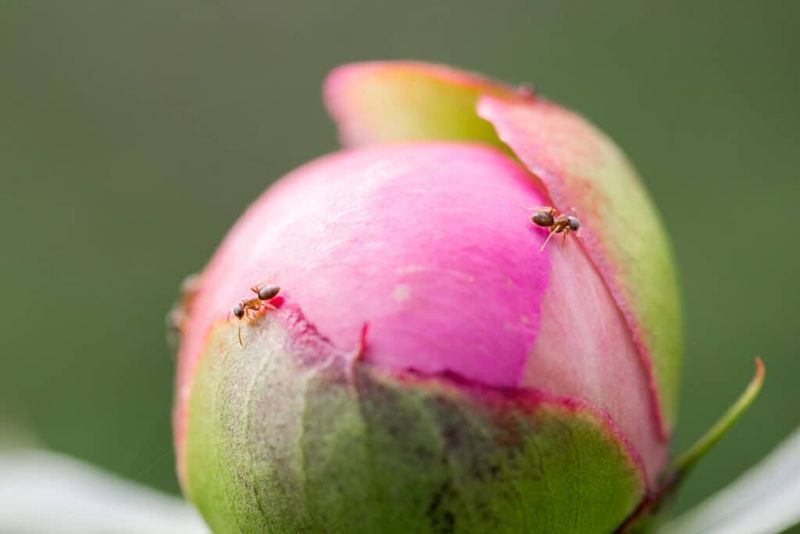
One of the most persistent stories in backyard gardening is that peonies need ants to open. The idea goes that ants tickle, massage, or pry apart the outer petals, or that their pheromones chemically trigger the bud to unfurl. Iowa State University Extension addresses this directly, stating that ants are not necessary for peonies to flower and that removing ants will not stop a healthy plant from blooming normally.
Illinois Extension’s Garden Scoop adds important detail: pheromone trails do help recruit ants to a food source, but no reliable evidence shows that those trails or the ants themselves affect how or when peony buds develop. The bud opens when the plant is ready, responding to temperature, light, and its own growth cycle, not to insect visitors on the outside. Ants happen to be there because the nectar is there, not the other way around.
Gardeners who have grown peonies in containers indoors, or who have carefully kept ants away from outdoor plants, report perfectly normal bloom. University of Illinois Extension confirms that peonies grown in greenhouses or other ant-free environments bloom just as well. If your buds are not opening, the cause is almost certainly something else entirely, such as too much shade, planting depth, or a late frost, not the absence of ants.
A possible defense system, with limits
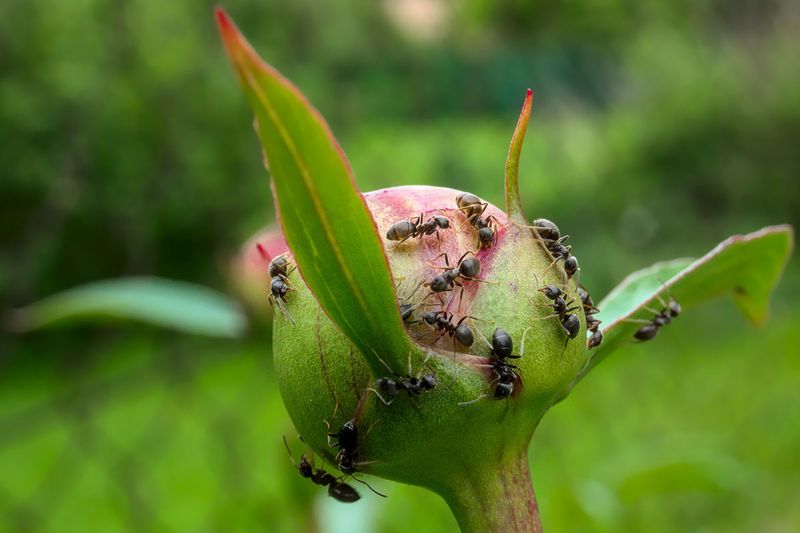
While ants are not required for bloom, their presence may give the plant an indirect advantage. University of Missouri Extension notes that ants patrolling a nectar source will sometimes attack or drive away other insects that land on the bud, including some that feed on floral tissue. Because the ants are already motivated to protect their food supply, they can end up functioning as an informal security patrol, discouraging certain visitors from settling in.
That said, “ants may help defend the plant” is a very different statement from “ants protect every peony from every pest.” Broader research on extrafloral nectaries makes clear why the distinction matters. A large dataset of ant-plant interactions published in Ecology shows that outcomes vary considerably depending on which ant species is present, which plant is involved, which herbivores are in the area, and the local environmental conditions. Some ant-plant relationships produce measurable reductions in herbivore damage; others show little or no effect.
Research published in the Journal of Plant Ecology on extrafloral nectary effectiveness similarly found that protection is not universal across plant species or settings. For North Carolina homeowners, the practical takeaway is this: the ants on your peonies may be providing some localized, indirect defense against a handful of floral-feeding insects, and that is genuinely useful, but they are not an immune shield. They will not prevent fungal disease, stop every pest, or guarantee a damage-free bloom season. Think of them as a low-level, naturally recruited benefit rather than a guaranteed protection system.
What do ants on peonies actually tell you?
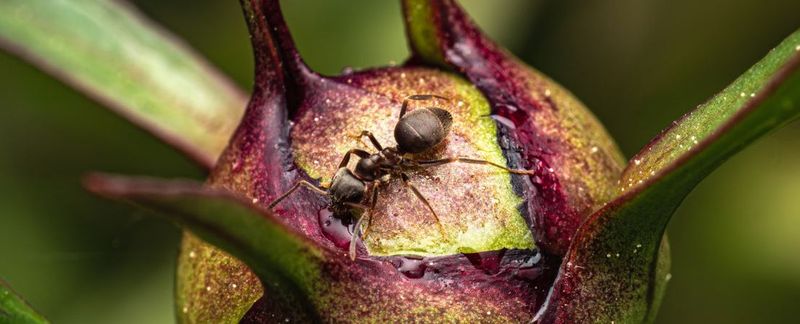
Seeing ants on your peony buds during late spring is almost always just a sign that the plant is producing nectar and the ants found it first. By itself, ant activity is not proof that something is wrong, and it is not proof that everything is fine either. The ants are there for one reason: food.
Where things get more complicated is when ants are also feeding on honeydew, a sticky waste product excreted by piercing insects like scale insects or aphids. University of Connecticut Extension’s peony factsheet points out that ants can be drawn to honeydew in addition to plant-produced nectar, so ant activity alone does not confirm a scale or aphid problem. What justifies a closer look is when ant traffic continues well after bloom ends, or when it accompanies sticky residue on stems and leaves, a dark powdery coating that looks like soot, yellowing foliage, stunted new growth, dieback, or raised bumps on the bark or stems that look like tiny shells.
Missouri Extension also identifies thrips as a separate peony flower-feeding pest worth knowing about. Thrips are tiny, fast-moving insects that can damage buds and open flowers, causing streaked or blemished petals, but they are not ants and ants are not responsible for their presence. If your blooms look distorted or scarred, thrips are a more likely explanation than the ants you can see crawling on the outside.
Missouri Botanical Garden’s peony problem guide lists additional non-ant causes of poor flowering, including too much shade, planting too deeply, immature plant age, root competition, excess nitrogen, and bud blast from late cold snaps. If your peonies are struggling, the ants are rarely the place to start looking for answers.
Leave outdoor ants alone unless you find a separate problem
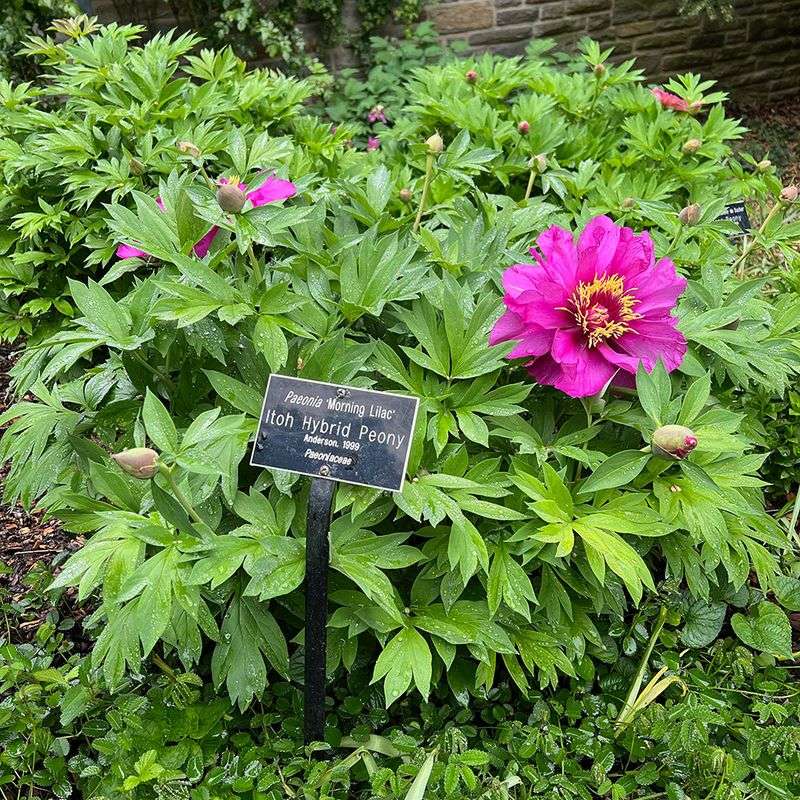
For most North Carolina gardeners, the right response to ants on outdoor peony buds is to do nothing. University of Missouri Extension advises leaving them alone, and that guidance reflects a straightforward reality: the ants are not harming the plant, they are not preventing bloom, and treating them serves no useful purpose in the garden.
Reaching for a broad-spectrum insecticide simply because ants are visible is one of the more common, and more counterproductive, reactions a gardener can have. Peonies in bloom attract native bees, bumble bees, and other pollinators, and a spray applied to or near an open or opening flower can harm those visitors along with the ants. EPA guidance on pollinator protection notes that pesticide labels may restrict applications during bloom periods or when pollinators are actively foraging, and those restrictions exist for good reason. NC State Extension’s Plant Toolbox lists ants commonly seen on peonies as harmless, which aligns with the broader extension consensus.
If you do identify a genuine pest, a different approach applies. Start by confirming what you are actually dealing with, whether thrips, scale insects, aphids, or something else, before choosing any product. Then read the label carefully for restrictions related to bloom timing, pollinator activity, and application rates. A targeted response to a confirmed problem is always preferable to a broad treatment triggered by visible ant traffic.
Ants will naturally move on once the nectar is exhausted or the flowers finish opening, so patience is often the simplest and most effective strategy available.
Cut flowers need a different ant plan
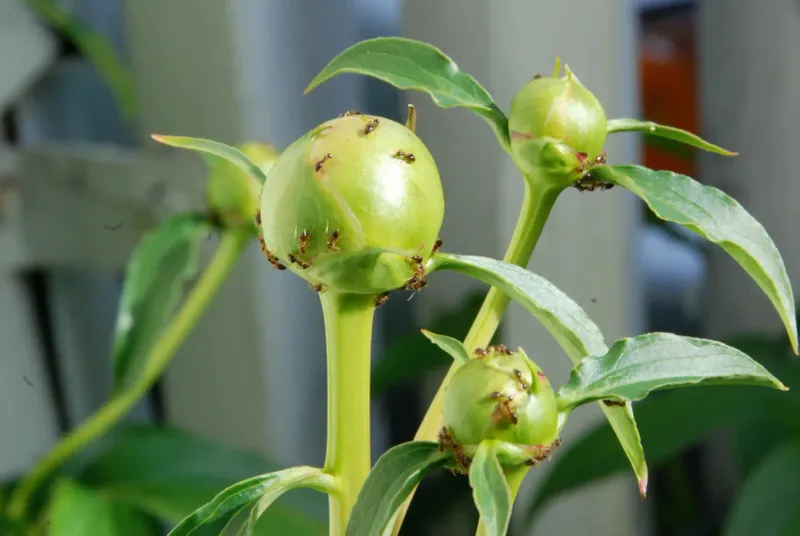
Outdoor ants on garden peonies are harmless and easy to ignore, but the same cannot be said when you are bringing cut stems inside. Ants that hitch a ride indoors can scatter through the house, and that is a problem worth preventing with a simple step or two before the flowers cross the threshold.
Penn State Extension Master Gardeners recommend gently shaking cut stems upside down outdoors to dislodge ants before bringing them inside. You can also submerge or rinse the blooms in cool water, which encourages ants to leave without damaging the petals. Both methods work well and take only a moment.
Timing your cut also helps. University of Missouri Extension recommends harvesting peonies at what growers call the marshmallow stage, when the bud has softened and taken on its full color but has not yet opened. Buds cut at that point can open successfully in a vase of water, often within roughly 8 to 48 hours, though timing varies by cultivar and stem. Cutting at this stage also means the bud has usually produced less nectar than a fully open flower, so fewer ants tend to be present in the first place.
A quick shake or rinse outdoors, and your cut peonies are ready to come inside with no passengers.
The right response is informed coexistence
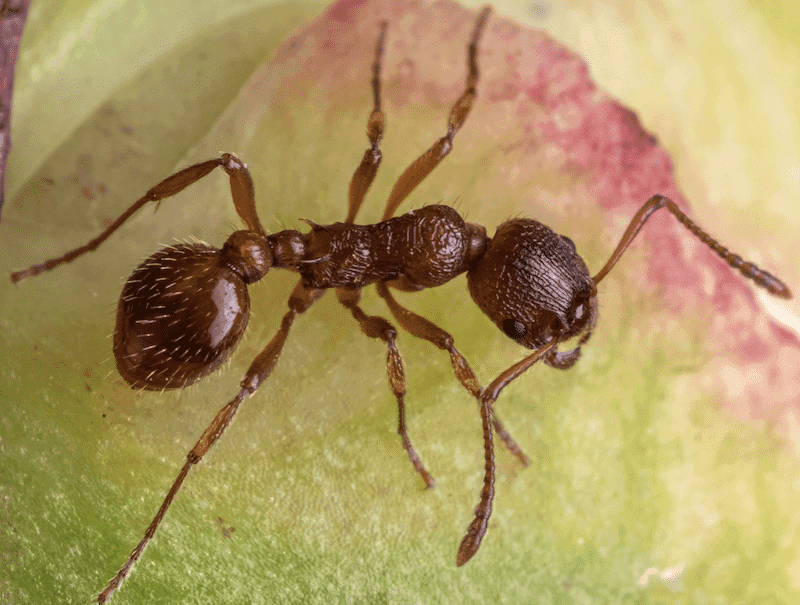
Ants on unopened peony buds are almost always doing exactly what the plant has invited them to do: collecting nectar from glands on the outer bud scales. Iowa State University Extension is clear that they are not opening the flower, and that removing them will not affect whether your peonies bloom.
The practical advice is straightforward. Leave outdoor ants alone during bud season. If ant activity continues well after bloom ends or shows up alongside sticky residue, sooty mold, yellowing, or visible pest damage, take a closer look for a separate problem. Missouri Extension recommends reserving any treatment for an identified pest rather than reacting to ant presence alone.
For cut flowers, a gentle shake or rinse outdoors handles the situation completely.
Keep in mind that this guidance applies specifically to ants on outdoor peony buds. Missouri Botanical Garden’s ant resource notes that ants near food or living spaces indoors are a separate household pest issue that calls for different management. A yard that supports pollinators, beneficial insects, and healthy plants is one where the default reaction to unfamiliar insect activity is curiosity first, not the spray bottle.