
Why leaving brushy edges in your North Carolina yard brings back bobwhites
Follow us on Google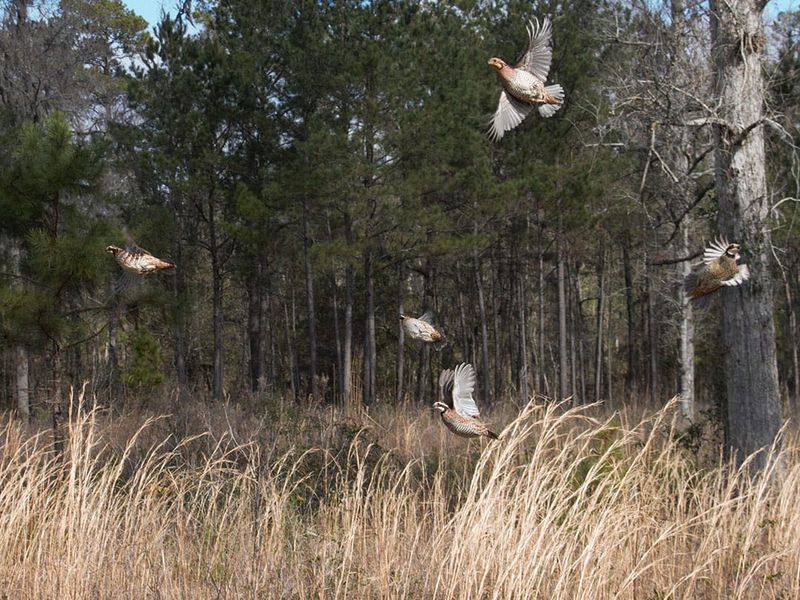
Northern bobwhites were once a familiar sound across North Carolina farms and fields, but that whistled “bob-WHITE” call has grown quieter over the decades. Habitat loss has pushed this small, round-bodied quail into steady decline, and the landscape changes that hurt bobwhites have been happening faster than most people realize. A carefully managed brushy edge on your property can play a real role in supporting these birds, though the full picture is more nuanced than simply letting your yard go wild.
A managed yard edge can help—but it cannot bring back bobwhites alone
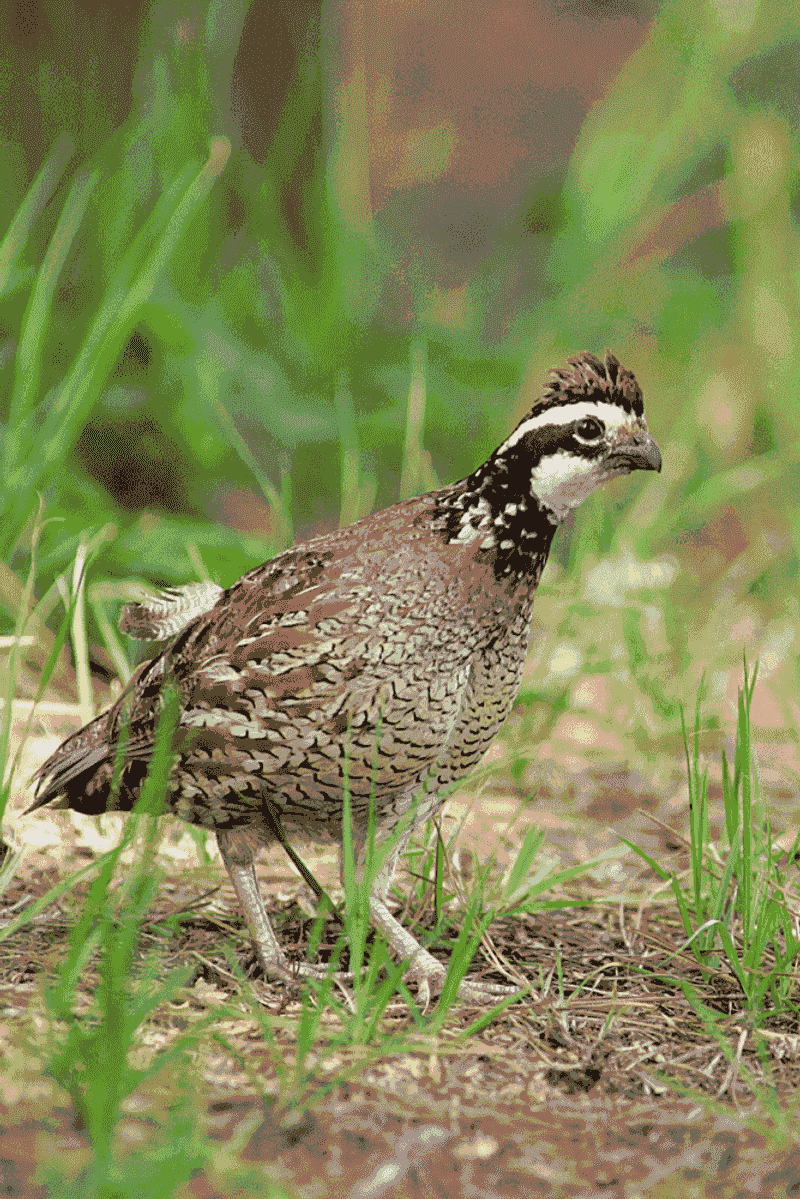
Northern bobwhite numbers have dropped sharply over a long stretch of time. USDA Natural Resources Conservation Service data shows that bobwhite populations have fallen by more than 80 percent over roughly six decades, with habitat loss and degradation identified as the primary driver. That is a range-wide trend, and local conditions vary across North Carolina counties, so the picture is not identical everywhere you go.
Adding a managed brushy margin to your yard addresses one real piece of that habitat problem. Bobwhites need a connected early-successional mosaic: native grasses and forbs for nesting and foraging, scattered dense shrubs for escape cover, and some bare ground so young chicks can move freely. A yard edge that provides those elements can function as a useful habitat component, particularly when it connects to nearby fields, old fields, open pine woods, or utility corridors where bobwhites might already be present.
The honest limit of a residential project is scale. Breeding Bird Survey trend data tracks long-term population shifts, but no single yard reverses a pattern that spans decades and millions of acres. A typical suburban lot is generally too small and too isolated to sustain a bobwhite covey on its own. Treating your brushy margin as one contributing piece of a larger habitat network, rather than a standalone fix, keeps expectations grounded and keeps the project pointed in a genuinely helpful direction.
What bobwhites need from a brushy margin
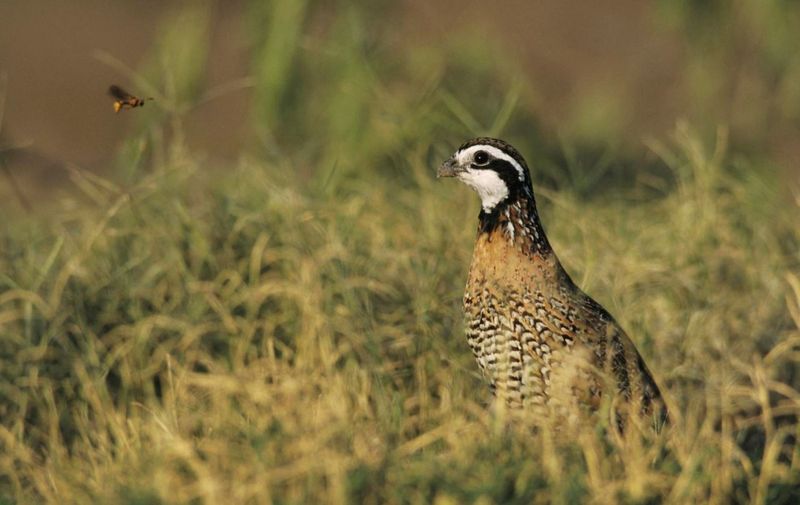
Bobwhites are specialists when it comes to habitat structure, and understanding what they actually use helps explain why a random overgrown fence line sometimes works and sometimes does not. NC Wildlife Resources Commission guidance describes the core requirements as a varied mix of native grasses for nesting cover, native forbs and legumes that produce seeds and attract insects, scattered dense shrubs or briars for escape and winter cover, and enough open ground beneath the vegetation that chicks can move and forage without fighting through a tangle.
Each of those elements fills a different biological role. Clumping native grasses like little bluestem or broomsedge create the kind of overhead concealment that nesting hens prefer. Forbs such as partridge pea, tickseed sunflower, and native clovers produce the seeds and insect activity that chicks depend on in their first weeks of life, when protein from invertebrates is critical for growth. Scattered blackberry, wild plum, native cane, or similar woody cover gives coveys a fast route to safety when a hawk or fox comes through.
What does not work is equally worth knowing. Dense mature forest shades out the low vegetation bobwhites need at ground level. A solid, impenetrable woody thicket without grassy openings is nearly as limiting. Turf dominated by nonnative perennial grasses like tall fescue, bermudagrass, or orchardgrass forms a dense mat that blocks chick movement and crowds out the forbs that supply food.
A useful brushy margin is not simply messy; it is structurally varied, with each layer doing a specific job for the birds that use it.
Build a connected mosaic instead of a single wall of brush
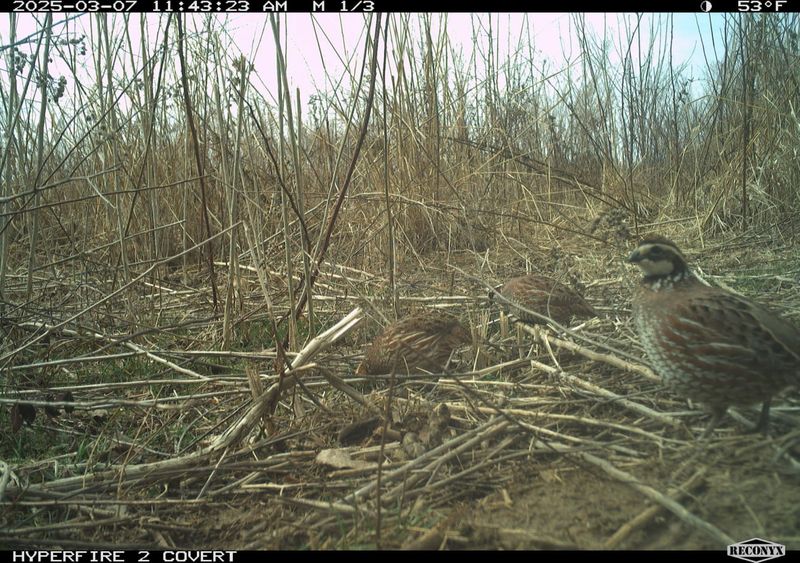
Translating habitat requirements into a yard layout does not require a landscape architecture degree, but it does require thinking beyond a single strip of plants along the fence. The goal is structural variety across the margin: clumping native grasses in some spots, native forbs and legumes in others, a few scattered shrub clumps of blackberry, wild plum, native cane, or briars, and deliberate patches of exposed ground where the soil surface is visible. That mix gives bobwhites the layered cover they actually use rather than one uniform band of vegetation.
Connections matter as much as the plantings themselves. A margin that runs along the edge of a hay field, an old field, an open pine stand, or a power-line corridor is far more useful than an identical margin surrounded entirely by mowed turf and pavement. If a neighboring landowner maintains similar cover, a conversation about linking your margins could multiply the value of both properties. NC Wildlife’s bobwhite guidance emphasizes habitat connectivity and proximity among patches as key factors in whether improvements produce measurable results.
NC Wildlife’s habitat management materials reference a field-border benchmark of 30 to 120 feet for native forb-and-grass strips, but that figure comes from agricultural habitat management guidance and is not a required dimension for a residential yard. Think of it as a useful reference point: wider margins generally provide better nesting and brood cover on larger properties, while even a narrower strip of varied native plants has real value on a smaller lot. Start with what your property allows, prioritize structural variety over sheer width, and design with the surrounding landscape in mind rather than treating the yard edge as a self-contained project.
Landscape context determines what a small property can accomplish
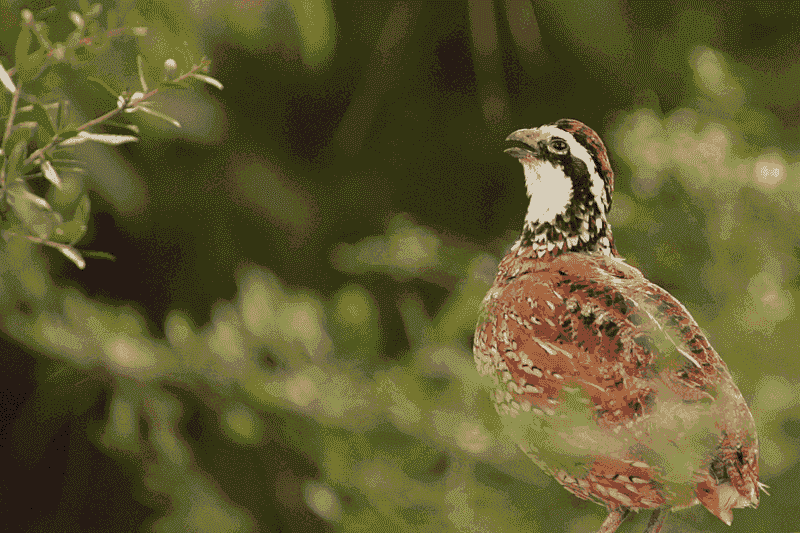
Scale is the honest limiting factor for any residential habitat project. NC Wildlife puts the bobwhite home range at roughly 40 to 200 acres, and its landscape guidance recommends grassland or shrubland patches of at least 15 acres with proximity to other suitable habitat. A typical suburban lot falls well short of those dimensions, which means a yard project alone is unlikely to sustain a resident covey, regardless of how well the plants are chosen.
That does not make the work pointless. Habitat improvements are most likely to produce results where bobwhites or connected suitable habitat already exist nearby. Some birds do disperse, and NC Wildlife notes that dispersal distances of roughly a mile have been observed, but that is a general biological reference rather than a promise that isolated yards will be colonized. The more realistic expectation is that a well-designed margin on a property near active bobwhite habitat contributes useful cover that birds already in the area can access.
Predation risk adds another layer of complexity. Research published through the National Quail Symposium found that nest-predation rates and nest success can vary depending on field-border conditions and the surrounding landscape, with factors like proximity to woody edges and predator pressure affecting outcomes in ways that differ by site. A study on mesopredator predation risk and bobwhite nesting habitat reinforces the point that habitat design matters beyond simply adding brush. NC Wildlife’s Green Growth Toolbox similarly notes that bobwhites do poorly in town and that landscape context shapes what any individual parcel can deliver.
Designing for connected, heterogeneous cover gives a yard project the best chance of contributing something real rather than just looking the part.
Maintain the rough edge without letting it become unsuitable
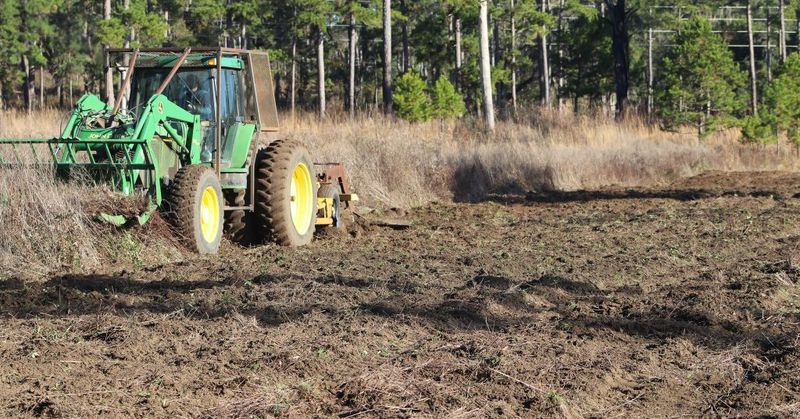
A brushy margin planted with native species does not stay useful forever without some attention. Left completely alone, most grass-and-forb edges in North Carolina will gradually succeed toward shrubby woodland as woody plants establish and grow, their canopy eventually shading out the ground-level vegetation that bobwhites depend on. Keeping the margin productive means applying periodic, site-appropriate disturbance before that succession goes too far.
On a small residential property, selective mowing is the most practical tool available. The key is to mow only a portion of the margin at a time, leaving the rest as standing cover, and to avoid disturbing likely nesting areas during the May through October breeding period that NC Wildlife identifies for bobwhites in North Carolina. Mowing during that window can destroy nests or kill young birds before they can escape, since bobwhites are ground-nesters and chicks are not capable of flight in their early weeks. Fall and winter mowing, done selectively and in rotation, resets vegetation structure without that risk.
Larger properties have additional options. NC Wildlife’s Priority Habitat Management Guidelines describe disking from November through early April, edge feathering, and prescribed fire as effective tools for maintaining early-successional habitat. Prescribed fire in particular can be highly effective on a two- to three-year rotation, but it is not a casual backyard technique. The North Carolina Prescribed Fire Council provides guidance on written burn plans, required permits, smoke management, and the training or certified-burner involvement that state law and safe practice require.
Herbicide use for vegetation control carries its own risks to insects and non-target plants; NC Wildlife recommends selective products, strict label compliance, and licensed applicator involvement when chemical control is part of a habitat prescription.
Choose habitat over routine feeding
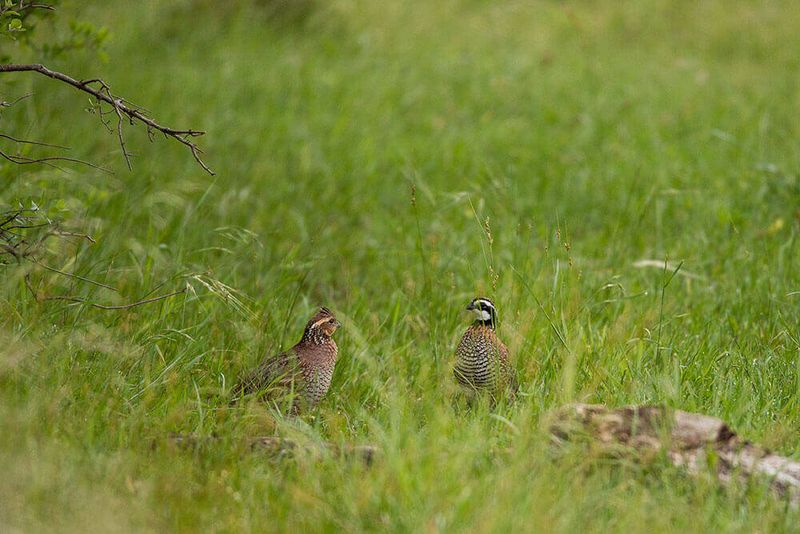
Putting out a grain feeder might seem like a shortcut to attracting bobwhites, but habitat is the more reliable conservation strategy for a species whose decline is rooted in the loss of suitable land. NRCS working-lands research consistently points to habitat restoration as the central tool for bobwhite recovery, and the same improvements that benefit quail also support wild turkeys, eastern cottontails, monarch butterflies, prairie warblers, Bachman’s sparrows, and a wide range of native pollinators.
NC Wildlife’s guidance on feeding birds responsibly warns that feeding stations can concentrate animals in ways that accelerate disease transmission, attract predators and other unwanted wildlife, and create management problems that outweigh any benefit to the target species. Native landscaping, by contrast, produces food and cover in place, distributed across the margin in a way that keeps birds spread out and foraging naturally.
Supplemental food is not categorically useless in every situation. U.S. Forest Service Fire Effects Information System reviews of bobwhite biology note that supplemental feeding may have context-dependent effects under extreme conditions, such as severe winter weather when natural food is scarce. But those are edge cases, not a general management recommendation, and they do not change the underlying calculus: a yard full of native grasses, forbs, and shrubs provides food, cover, nesting sites, and insect habitat simultaneously, while a feeder provides only grain and a congregation point.
Investing time in the margin pays off across more species, more seasons, and more habitat functions than any feeder can match.
Measure success by better habitat, not an immediate covey sighting
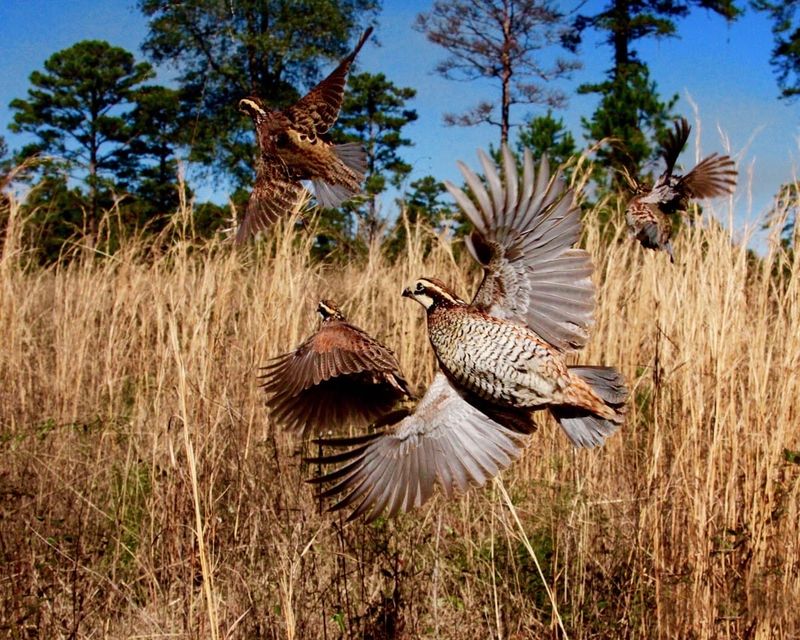
Replacing even a modest strip of turf with a managed, mixed-structure margin is a genuine conservation action, and the results show up in ways that go well beyond quail. NC Wildlife’s habitat management resources acknowledge that bobwhites do poorly in heavily developed settings, and that visible increases in the birds depend on landscape-level conditions that no single yard can create alone. Improved habitat quality is a real and measurable outcome even when the bird itself does not appear.
Practical next steps make the work more effective. Talk to neighboring landowners about connecting margins or managing adjacent land similarly. For properties with more acreage, contact NC Wildlife or a local NRCS office about habitat programs that provide technical and financial assistance for larger-scale early-successional management. NC Wildlife’s bobwhite resources include landowner contacts and program information for properties where larger habitat investments are possible.
A yard project that supports native bees, breeding sparrows, rabbits, and the occasional migrating warbler is doing real ecological work, even in a season when no bobwhite calls from the margin. The birds that recover from long-term decline do so across landscapes, not lot lines, and every well-managed edge that connects to something larger moves that recovery a small step forward.