
The Florida Shrubs That Keep Looking Full Without Constant Pruning
Follow us on Google
If you are tired of shrubs that look great for two weeks and shaggy the next, Florida gives you better options. Some varieties naturally grow dense, rounded, and polished without begging for constant shaping.
The real trick is choosing shrubs whose mature form already matches the look you want. Here are the dependable picks that stay full, handle Florida conditions well, and give you back your weekends.
Dwarf Yaupon Holly
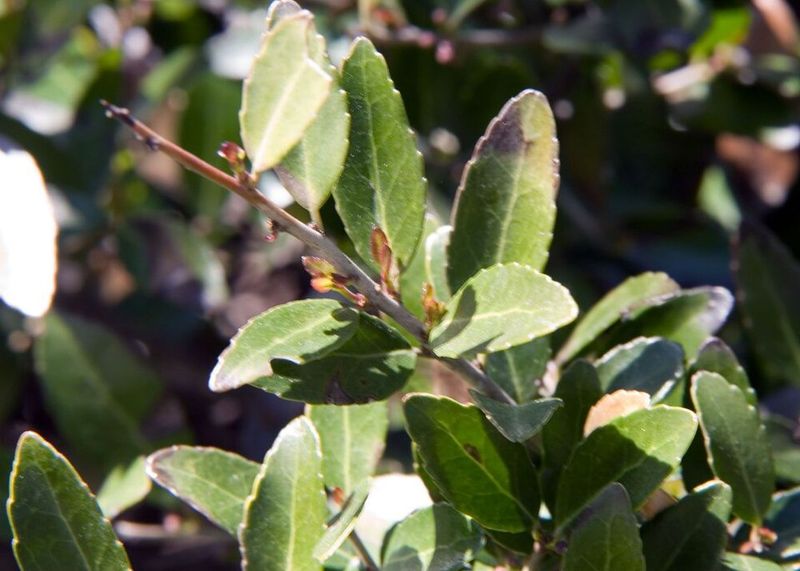
If you want a shrub that behaves itself in Florida heat, this one earns a close look. Dwarf yaupon holly naturally grows in a neat, mounded shape, so you are not fighting wild shoots every month.
Its tiny leaves also help the plant look tidy even when you skip trimming for a while.
Most yards can use it as a foundation plant, low hedge, or soft border along a walkway. Full sun gives the densest growth, but light shade still works, especially in hotter inland spots.
Once established, it handles drought better than many popular hedge plants, which means fewer stress gaps and less patchiness.
Good spacing matters more than frequent pruning. Give each shrub room to reach its mature width, and you will get that full, cushioned look without clipping it into a box.
I would only remove an occasional stray branch or lightly shape after spring growth if you want a more formal edge.
Another reason people stick with it is durability near the coast and in average soil. Salt tolerance is decent, pests are usually minor, and the branch structure stays dense from the ground up.
For a polished landscape that does not turn into a weekly chore, this one is hard to beat.
Cocoplum
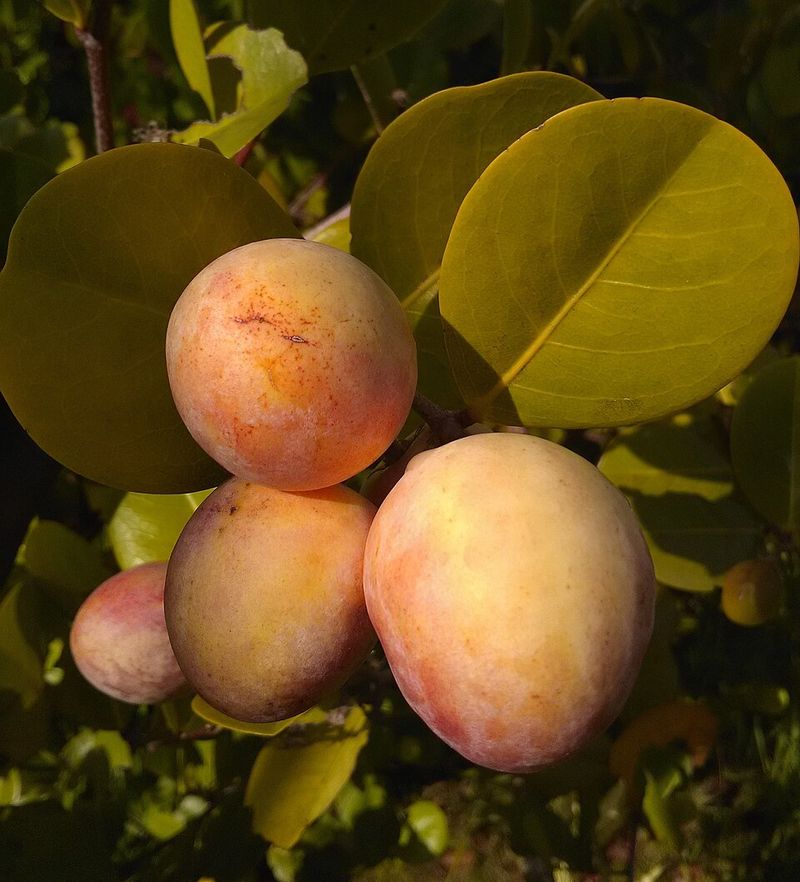
For a privacy shrub that keeps a naturally full outline, cocoplum is one of the smartest Florida choices. The foliage is thick, glossy, and naturally layered, so the plant looks substantial without being constantly sheared.
That matters if you want screening that feels soft and natural instead of stiff and overmanaged.
South and coastal Florida gardeners especially appreciate how well it handles salt, wind, and sandy soil. In sun to partial shade, growth stays dense enough to create a solid green backdrop along property lines, pool enclosures, or street-facing beds.
New growth fills in evenly, which reduces the bare spots that often push homeowners into overpruning.
It helps to choose the right type before planting. Horizontal forms stay lower and broader, while upright selections can become larger privacy screens with surprisingly little shaping.
I would skip tight hedge clipping and instead remove a few long stems selectively, because that keeps the natural fullness while avoiding a chopped look.
Once established, cocoplum is fairly forgiving about dry spells and ordinary maintenance. Birds also enjoy the fruit, which is a nice bonus if you like a yard that feels alive.
When you want coverage, structure, and a year-round full appearance, this shrub consistently earns its space.
Walter’s Viburnum
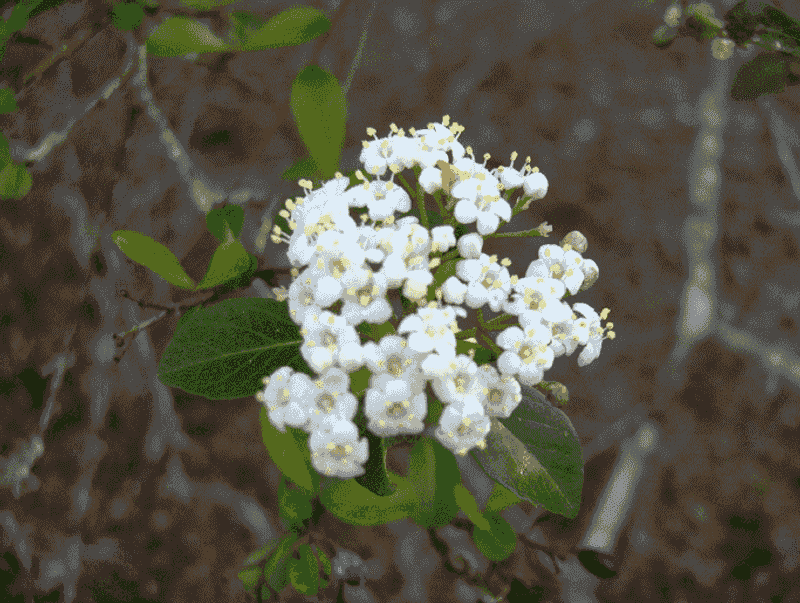
Few native shrubs make life easier in Florida landscapes than Walter’s viburnum. It naturally grows thick and leafy, which gives you a full hedge or foundation planting without constant cleanup cuts.
That dense habit starts at the base, so you are less likely to end up with the leggy, hollow look common in faster, looser growers.
Sun or partial shade both work well, and the plant adapts to many Florida soils once roots are established. Small leaves help it look refined even when you have not touched the pruners in months.
White spring flowers add a pleasant seasonal bonus, but the real value is the reliable structure it brings all year.
Spacing is where people often go wrong. If you cram plants too close, you will be forced into repeated trimming just to keep paths and windows clear.
Give each shrub enough room to mature, and you can usually maintain it with occasional thinning cuts rather than heavy shaping.
For informal hedges, that softer approach looks better anyway. The plant keeps a rounded, natural silhouette that suits both traditional and newer Florida homes.
I like it for homeowners who want a landscape that always appears cared for, yet does not demand weekend pruning sessions to stay presentable.
Simpson’s Stopper
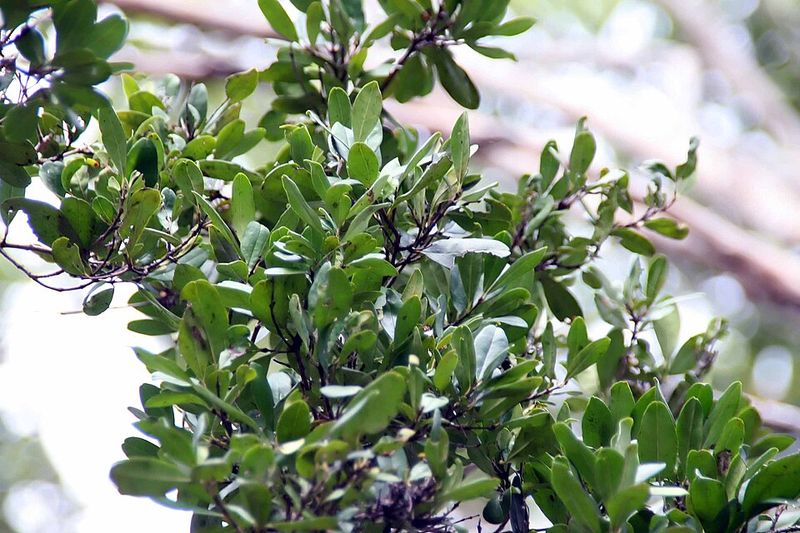
In a Florida yard that needs year-round fullness with a little extra character, Simpson’s stopper delivers. The foliage grows densely enough to form an attractive screen, but the overall shape stays graceful rather than unruly.
You also get handsome bark, seasonal flowers, and colorful berries, so the shrub works harder than a plain green hedge.
South Florida conditions suit it especially well, though it can be grown in other mild parts of the state. Sun to part shade keeps growth strong, and regular water during establishment helps it fill in quickly.
After that, maintenance becomes light because the plant tends to hold a naturally compact, leafy structure.
Instead of shearing it into a strict wall, selective pruning is the better move. Removing a few wayward branches preserves the airy outer texture while keeping the interior dense.
I like this approach near patios or front walks because the shrub still looks polished without appearing rigid or overcut.
Wildlife value is another reason it feels rewarding in a home landscape. Birds notice the fruit, and the evergreen canopy adds shelter throughout the year.
If you want a native shrub that stays substantial, handles heat well, and rarely begs for frequent shaping, this one deserves a prime spot.
Dwarf Ixora
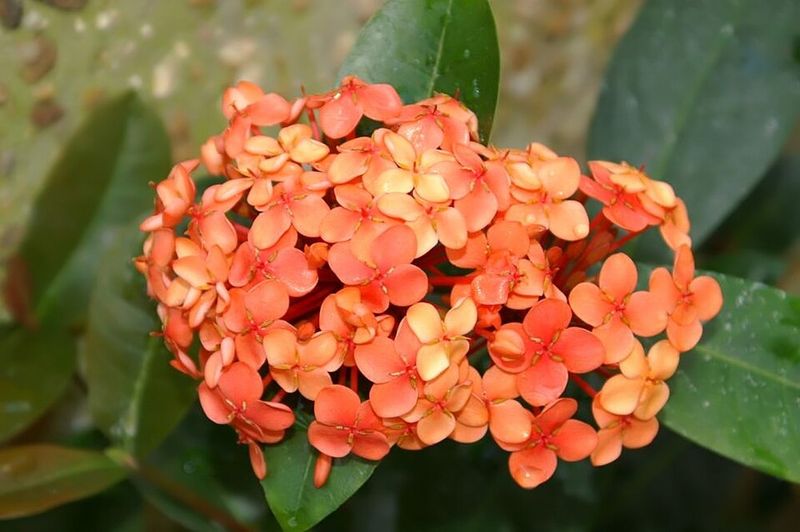
Color can be part of a low-pruning landscape, and dwarf ixora proves it. This compact shrub keeps a naturally tight form, so you get flowers and fullness without chasing long, awkward stems every few weeks.
In warm Florida zones, it stays attractive through most of the year, especially where the soil is prepared correctly.
Full sun encourages the best blooming and the densest branching. Because it remains smaller than standard ixora, it fits neatly along foundations, entry beds, and poolside borders where oversized shrubs quickly become a nuisance.
The leaf texture is fine enough that the plant still appears clean and finished even with minimal shaping.
Success depends on avoiding alkaline frustration. If your soil runs high in pH, amend appropriately and watch for nutrient issues so the foliage stays deep green and full.
I would rather feed and mulch it properly than prune it heavily, because healthy growth naturally creates the compact look you want.
A light trim after a major flush of blooms is usually plenty. That keeps the outline rounded without sacrificing the flower clusters that make it worth planting in the first place.
For gardeners who want a shrub that looks intentional, colorful, and consistently dense, dwarf ixora is a strong Florida pick.
Green Island Ficus
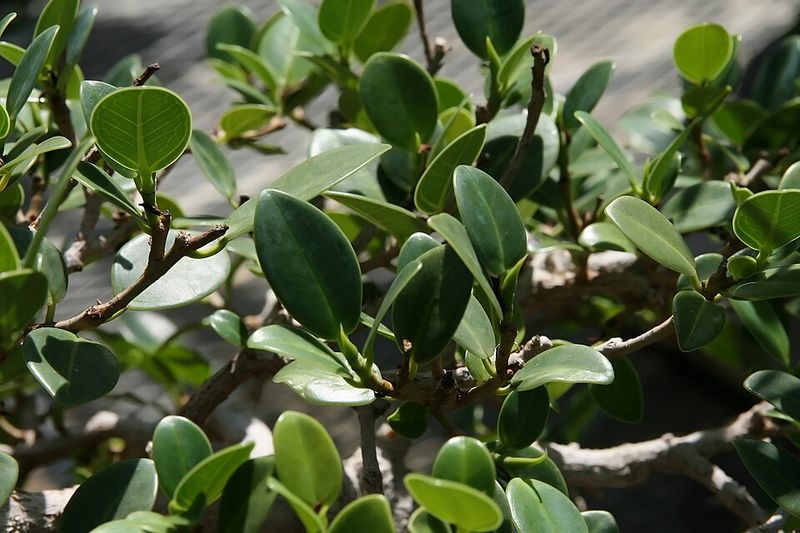
When you need a shrub that stays low, dense, and polished with very little effort, Green Island ficus stands out. Its rounded habit is naturally compact, and the thick glossy leaves give it a finished look even when you do almost nothing beyond basic care.
In frost-free parts of Florida, that dependable shape makes it especially useful near entryways and patios.
Heat and humidity do not bother it much, which is a big reason the plant remains full instead of thinning out under summer stress. Full sun to part shade both work, though a bit of afternoon relief can keep foliage looking especially fresh in hotter spots.
Because the leaves are broad and closely spaced, the shrub reads as substantial from a distance.
This is not a plant that wants aggressive shearing. If you clip it hard and often, you can lose the soft, naturally mounded silhouette that makes it appealing.
I prefer occasional touch-up cuts, mostly to remove a stray branch or maintain clearance along a walk.
Good drainage is important, especially in beds that stay wet after heavy rain. Once settled in, the plant needs surprisingly little intervention to keep its shape.
For a clean tropical look that does not create a constant pruning chore, Green Island ficus is one of the easiest wins.
Indian Hawthorn
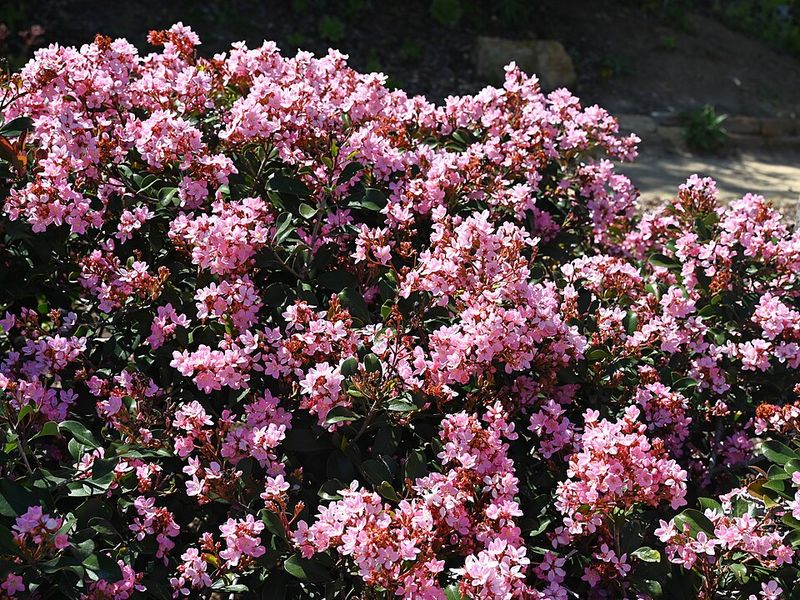
For smaller spaces that need a shrub to stay dense and orderly, Indian hawthorn is often a practical answer. The growth habit is naturally rounded, and the foliage remains thick enough that the plant looks deliberate without constant shaping.
Spring flowers add charm, but the real appeal is how little work it takes to keep the shrub looking composed.
Sunlight helps it stay fullest, so open exposures are usually best. Along driveways, mailbox plantings, or front foundation beds, it holds a manageable size that does not quickly swallow windows or spill over hardscape.
That means you spend more time enjoying the planting and less time dragging out tools.
Air circulation matters in humid climates, so resist the urge to pack plants tightly. Better spacing reduces disease pressure and lets each shrub develop its own naturally dense form.
I would also avoid overhead watering late in the day, because healthy foliage is what keeps the plant looking rich and full between any light trims.
A simple cleanup after flowering is usually enough to refine the shape. You can also remove occasional older stems to encourage fresh interior growth instead of shearing the entire plant.
If you want a compact evergreen with structure, flowers, and modest upkeep, Indian hawthorn remains a reliable Florida favorite.
Firebush
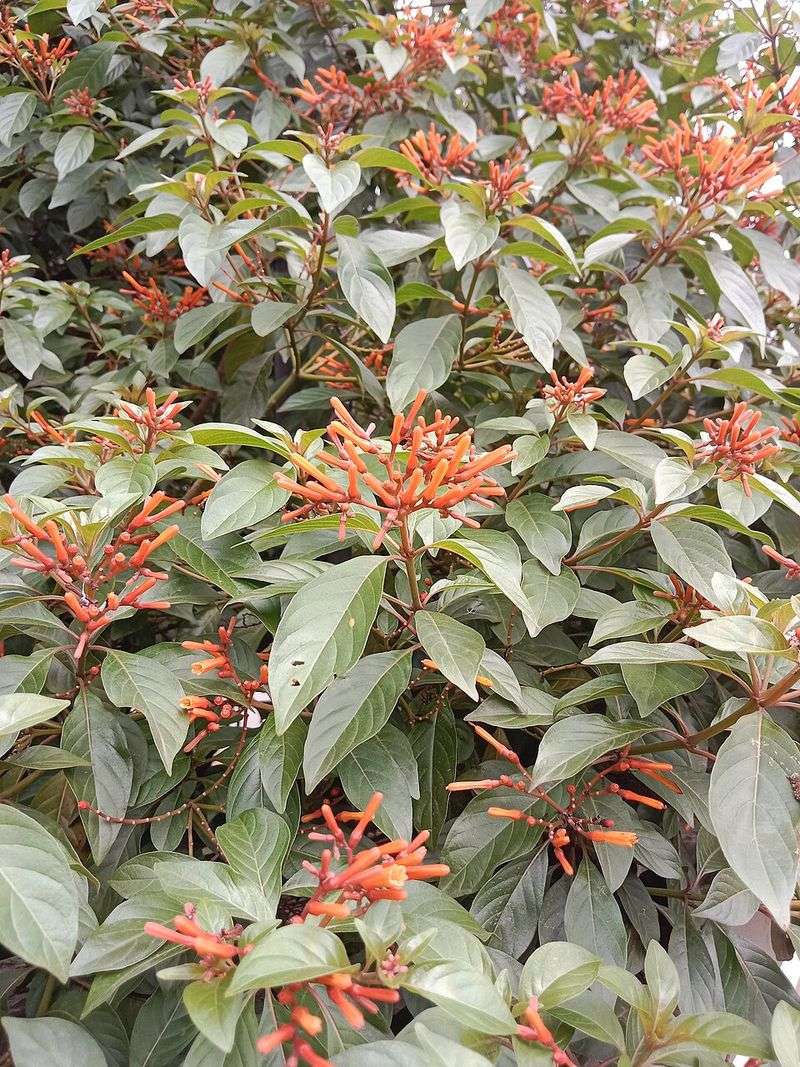
Not every low-pruning shrub has to be stiff or formal, and firebush is a great example. In the right Florida setting, it grows into a full, leafy mound with bright flowers that keep the plant lively for months.
The branching pattern fills in well on its own, so you are not constantly correcting awkward gaps.
Warmth and sunshine bring out its best shape and strongest bloom. It works beautifully in pollinator gardens, informal hedges, or mixed borders where a more relaxed look feels right.
Because it grows vigorously in the growing season, many people assume it needs constant trimming, but thoughtful placement usually solves that problem better than frequent pruning.
Give it room to reach its mature size, and the plant can settle into a naturally dense habit. A hard cutback every so often, especially after cold damage in cooler parts of the state, is more useful than endless small clips.
I like that approach because the shrub rebounds quickly and still looks full for most of the year.
Butterflies and hummingbirds add another layer of value that makes maintenance feel worthwhile. Even when not in peak bloom, the plant retains enough body to anchor a bed nicely.
If you want a shrub that looks abundant and lively without demanding tidy weekly attention, firebush deserves serious consideration.