
The Native Texas Shrubs Homeowners Grow Along The Driveway Instead Of Boxwood Hedges
Follow us on Google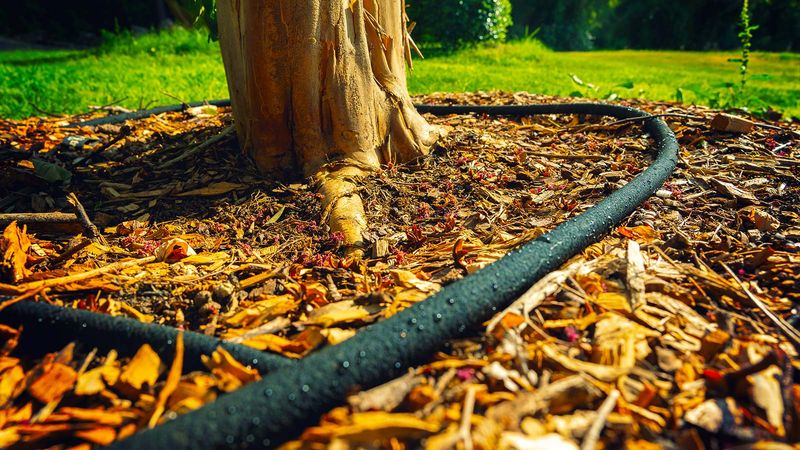
You pull into the driveway after work in July and the boxwoods look like toast, brown on the sunny side and thin where the hose never quite reaches. Plenty of Texas homeowners are quietly tearing them out and planting tough native shrubs that hold a clean edge without the summer rescue missions.
The swap isn’t about giving up a tidy look. It’s about picking plants that already know how to handle triple-digit heat, sudden freezes, and long dry stretches, so your driveway looks sharp and your weekends stay free.
1. Dwarf Yaupon Holly
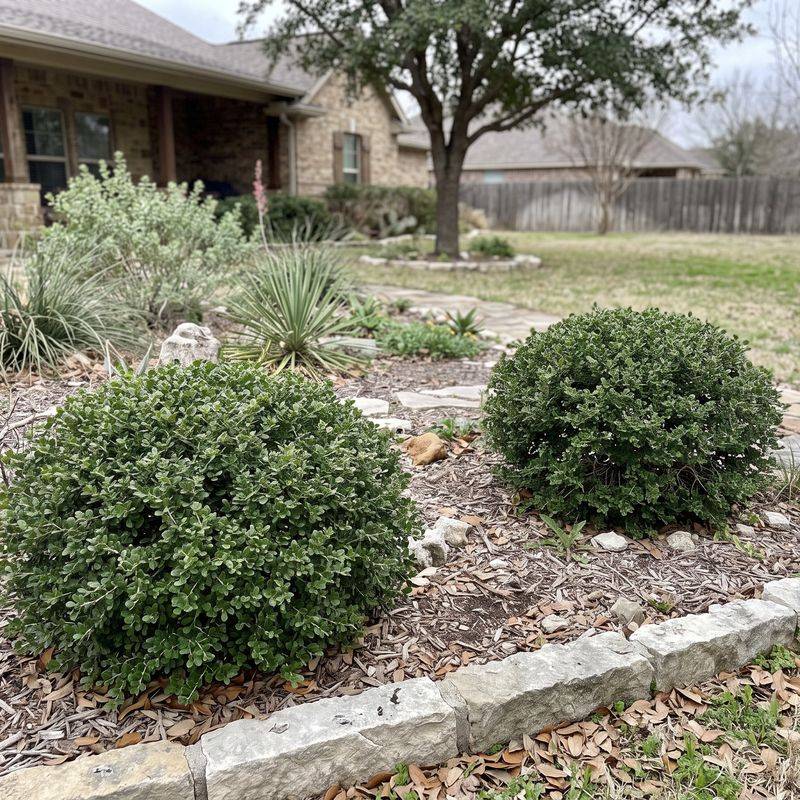
Here is the shrub that fools the neighbors. Dwarf yaupon holly (Ilex vomitoria ‘Nana’) has tiny, glossy evergreen leaves that look almost exactly like boxwood from the street.
The difference shows up in August. Boxwood often scorches and thins in Texas heat, while yaupon is native from East Texas to the Hill Country and shrugs off the same sun.
It handles acidic sand and alkaline clay, as long as water does not sit around its roots.
Plant it 2 to 3 feet apart for a solid low border. It matures around 2 to 4 feet tall and wide and grows slowly, adding just 3 to 5 inches a year.
So shaping it is easy. Give it one light trim in late winter, after the hardest freezes pass, and a quick touch-up in early summer if needed.
It behaves like a well-mannered houseguest that never overstays.
Plant in fall if you can, when roots settle in before summer. Then sit back, because this is the closest thing to a boxwood that actually belongs here.
2. Texas Sage
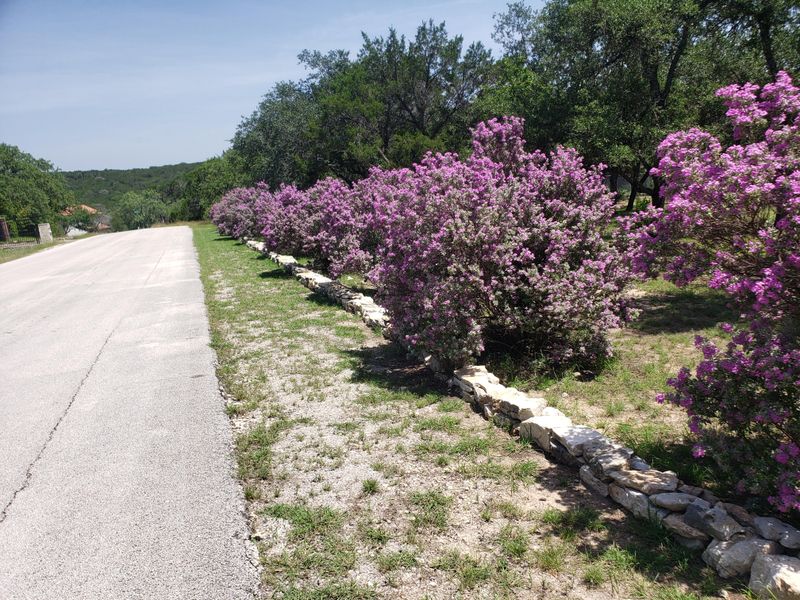
Most shrubs sulk in a drought. Texas sage (Leucophyllum frutescens) waits for rain, then explodes in purple flowers within a few days, which is why old-timers call it the barometer bush.
Its silvery leaves are a built-in sunscreen. That soft gray color reflects heat, so the plant stays calm along hot concrete in West Texas, South Texas, and the Panhandle.
Here is where it gets tricky. Texas sage hates wet feet, and in heavy blackland clay around Dallas or Waco, overwatering can rot it in one rainy season.
Plant it on a slight mound, or work in gravel, and give it at least 6 to 8 hours of direct sun.
Space plants about 2 to 3 feet apart for a hedge, a bit wider for larger varieties. Skip the electric shears.
Shearing into a box leaves bare patches, so hand-prune a few stems in early spring instead.
Once established, it rarely needs a hose at all. Your water bill will notice.
3. Flame Acanthus
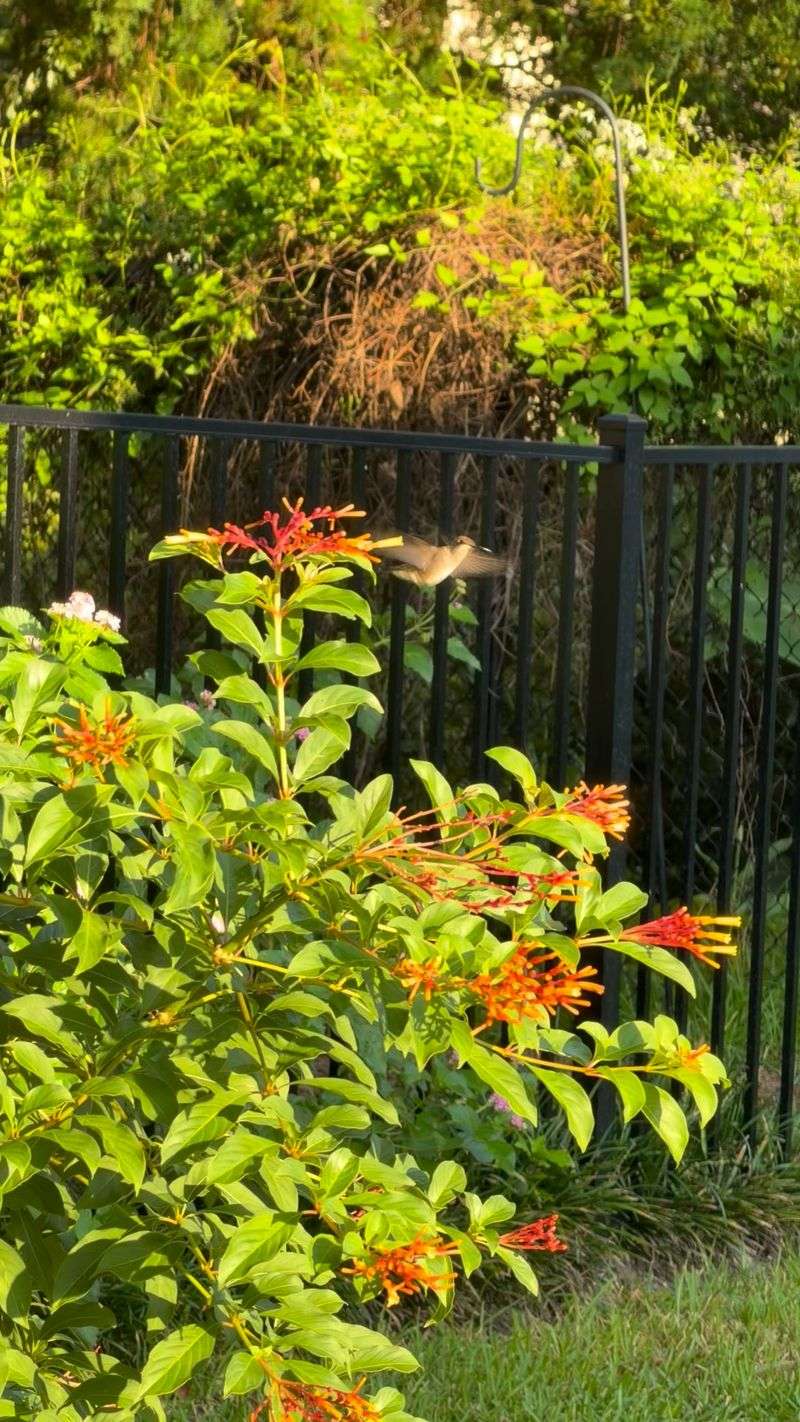
August usually knocks the color out of a Texas yard. Flame acanthus (Anisacanthus quadrifidus var. wrightii) waits until then to show off.
From midsummer into fall it covers itself in skinny orange-red tubes, and hummingbirds treat it like a drive-through. You will genuinely catch them zipping past your car door.
The catch is winter. It is deciduous in North and Central Texas, so the hedge goes twiggy for a few months, though it may stay semi-evergreen near the Gulf Coast and in South Texas.
Plant it 3 to 4 feet apart. It grows about 3 to 6 feet tall, handles rocky, sandy, or clay soil, and asks for little water once rooted.
In late winter, cut it back by one-third to one-half. That hard trim sounds brutal, but the shrub answers with fuller growth and more blooms.
Think of it as a haircut that makes it braver.
4. Turk’s Cap
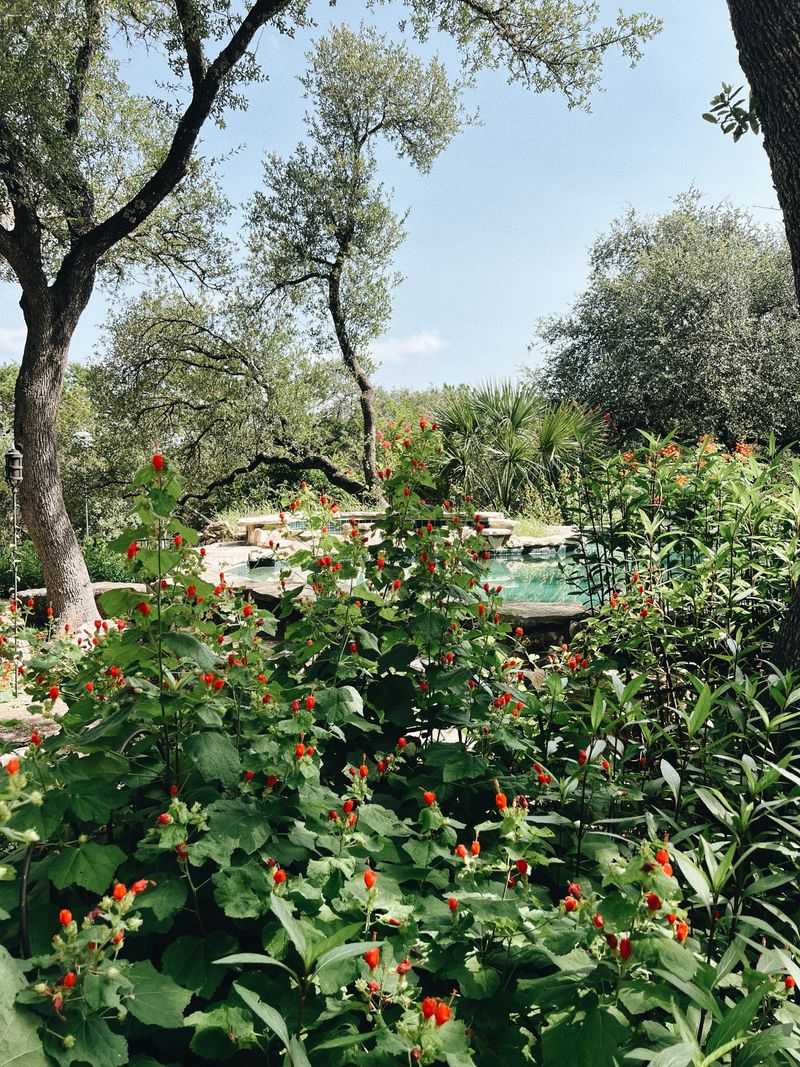
Boxwood fades under shade trees. Turk’s cap (Malvaviscus arboreus var. drummondii) seems to prefer them.
Many Central Texas driveways run under a live oak, where grass thins and most flowering shrubs give up. Turk’s cap fills those spots with little red flowers that look like twisted turbans from spring to frost.
It handles full sun too, with a bit more water, though sunny plants sometimes get powdery mildew, a dusty white coating on the leaves. Part shade keeps it happiest.
For a dense screen, plant 18 inches to 3 feet apart. In late winter, cut the whole thing back to about 5 inches tall.
It regrows fast and stays compact and full of blooms.
Hummingbirds and butterflies visit all season, and the small fruit is edible. It is genuinely one of the easiest natives in the state, a cheerful bloomer that does not mind the gloomy corner.
5. Possumhaw Holly
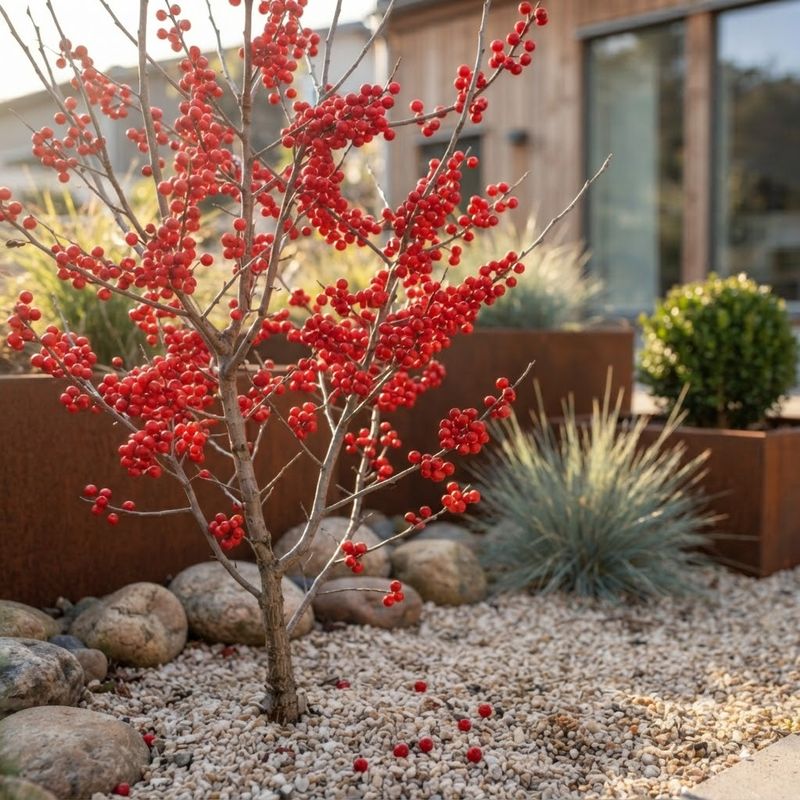
January turns most driveways brown and gray. Possumhaw holly (Ilex decidua) picks that moment to cover its bare branches in bright red berries.
It is not a formal hedge plant. It grows 7 to 15 feet tall, so think tall screen along a long rural drive, especially in East Texas and the eastern half of the state where it grows wild.
One detail trips people up. Only female plants make berries, and they need a male possumhaw nearby to set fruit, so buy a berried plant from a nursery in fall or winter to be sure.
Space plants 5 to 7 feet apart for a continuous screen, or 8 to 10 feet for individual small trees. It takes full sun to light shade and tolerates dry spells once established.
Prune in late winter after birds eat the berries. Robins and cedar waxwings will thank you, and so will your mood in February.
6. Agarita
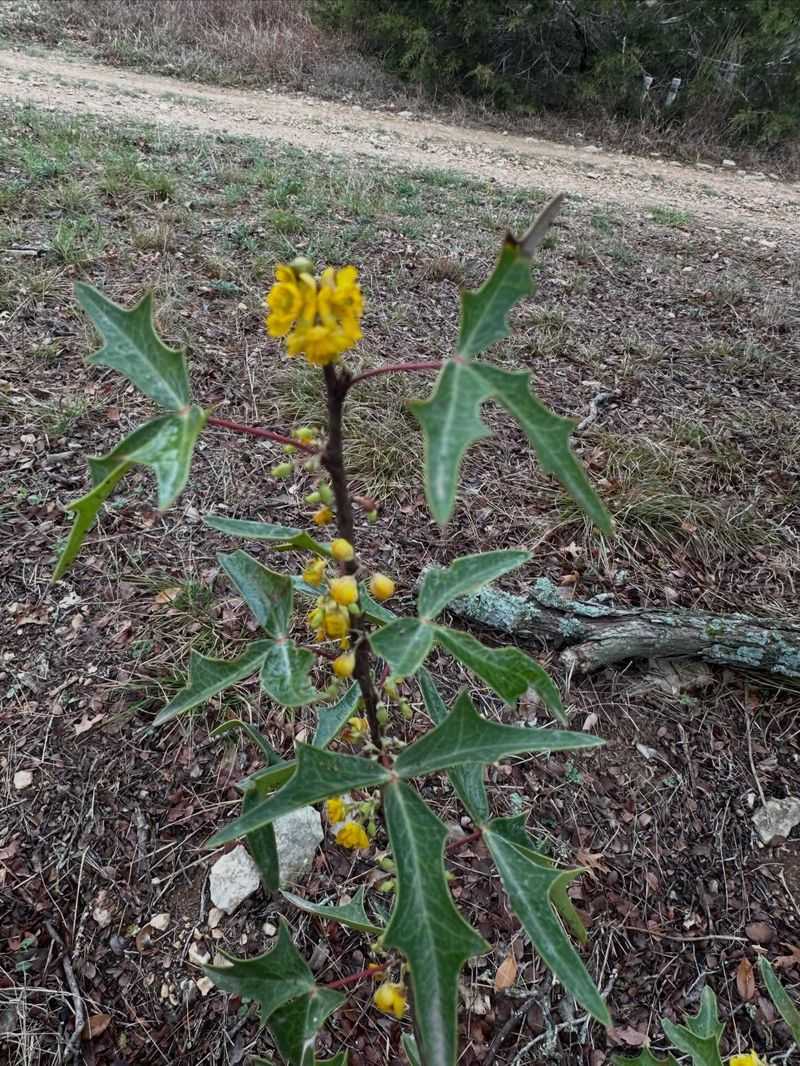
Some driveways need a guard, not a decoration. Agarita (Mahonia trifoliolata) is the native shrub for that job.
Its stiff blue-gray leaves have sharp, holly-like points, so dogs, deer, and cut-through foot traffic tend to avoid it. In the Hill Country, where deer eat almost everything, that alone wins it a spot.
It grows on shallow caliche and limestone that would starve a boxwood. Fragrant yellow flowers show up in late winter, often February, followed by red berries birds love.
Plant it 3 to 4 feet apart, a few feet back from the pavement so nobody gets scratched opening a car door. It grows slowly to about 3 to 6 feet tall and needs almost no pruning.
Wear thick gloves on planting day. After that, this prickly sentry asks for very little.
7. Autumn Sage
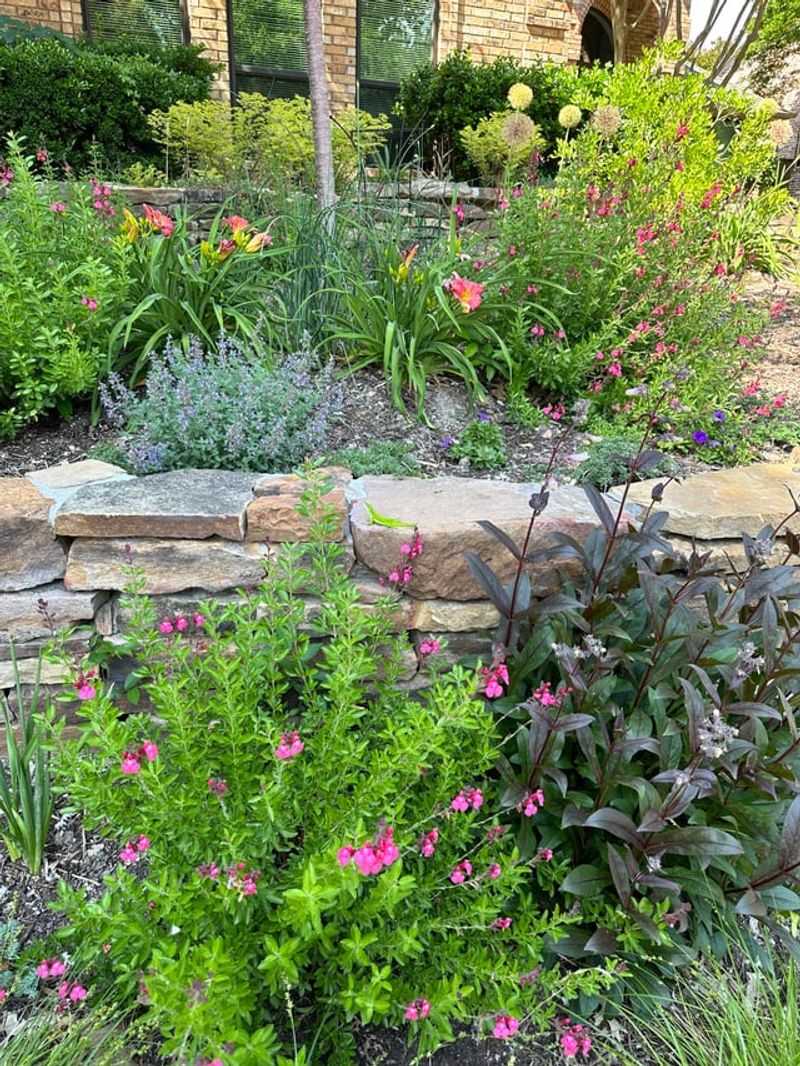
Not every driveway has room for a big hedge. Autumn sage (Salvia greggii) makes a tidy, knee-high edge for narrow strips.
It stays around 2 to 3 feet tall and blooms in spring and fall in red, pink, coral, or white. Plant it 2 feet apart and the flowers nearly touch.
The secret is drainage. Raise beds slightly in clay and give it full sun, and it handles North Texas heat with little extra water.
Trim it back by about one-third in late winter, plus a light shearing after the spring flush. Texas A&M AgriLife Extension lists it as a tough Earth-Kind choice for low maintenance.
It is small, but it actually punches above its height, a pocket-sized hedge with real staying power.
8. Watering And Pruning Your New Hedge
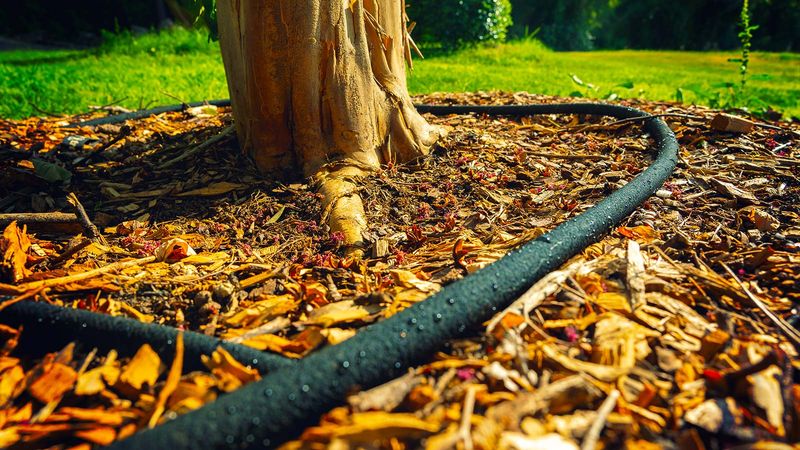
Native does not mean no care at the start. New shrubs still need help through their first summer.
Water deeply about once a week, roughly 1 inch, soaking the soil 6 to 8 inches down. A soaker hose beats a quick spray because roots follow the water down.
Spread 2 to 3 inches of mulch, keeping it a few inches off stems. After the first year, most of these shrubs get by on rain plus an occasional deep soak in long dry spells.
Prune in late winter for most of them, using clean, sharp tools. Texas A&M AgriLife Extension has detailed guides if you want specifics for your region.
Give it a season, then walk out some summer evening and look down that driveway. Green, blooming, and no longer fighting the heat, that border is yours.
