
The Gopher Tortoise Burrow In Your Florida Yard Means More Than You Think
Follow us on Google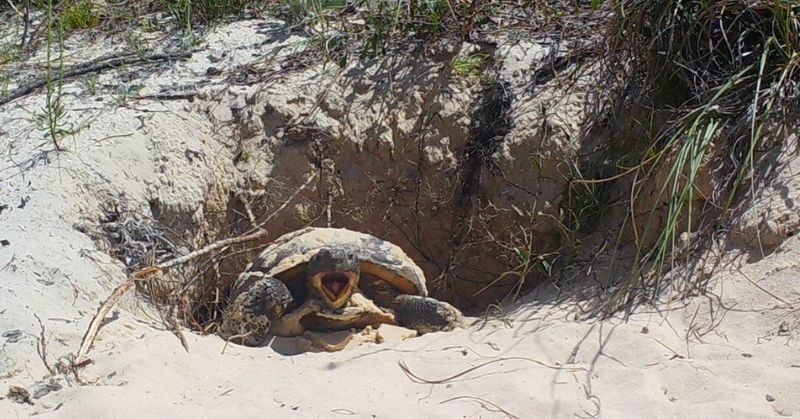
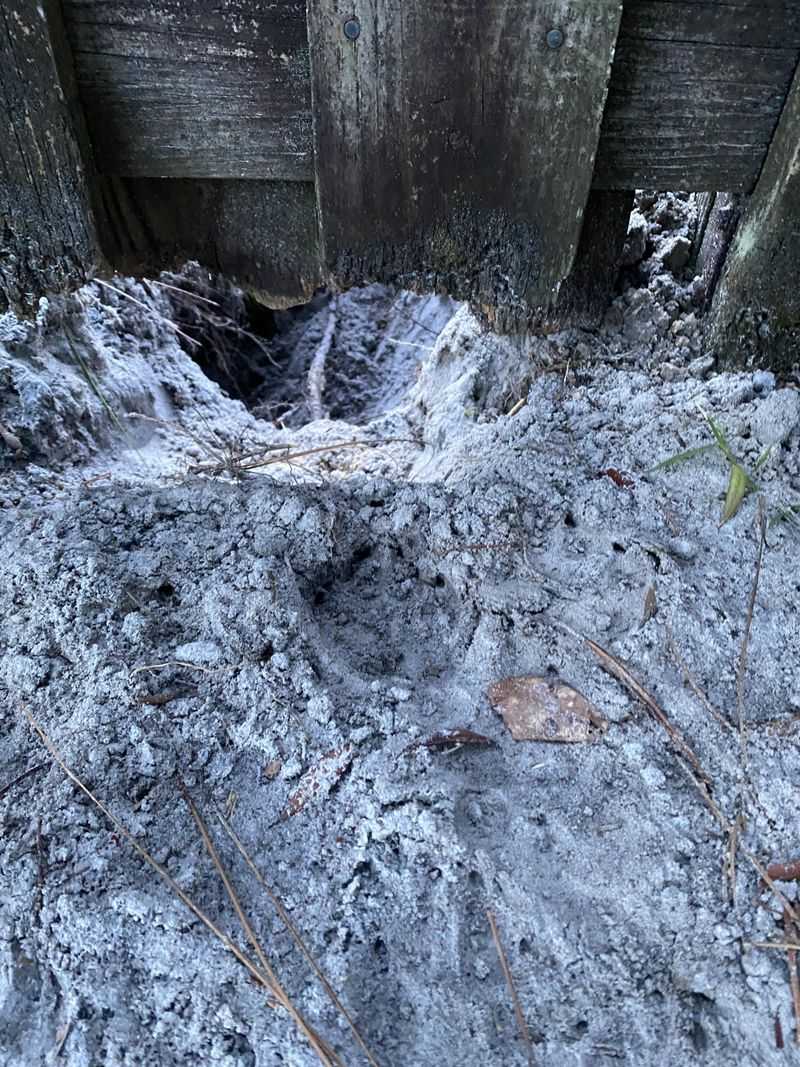
That sandy half-moon hole near your palmetto means a gopher tortoise has used that spot, and the ground there suits digging. In Florida, that makes it a small sign of wild history right in your own yard.
It also comes with a few simple rules and habits worth knowing. Here is what the burrow tells you, what it does not, and how to be a good neighbor to it.
What a Burrow Says About Your Yard
Spot a confirmed gopher tortoise burrow, and you have learned something real. A tortoise has used that location, and the ground there works for burrowing.
That is the plain meaning.
What it does not tell you is whether a tortoise is home today. A burrow alone does not establish current occupancy.
If a project ever depends on knowing, a qualified assessment may be needed, and a quick look from the lawn will not replace it.
The species likes well-drained, sandy soil, open sunny areas, and low-growing plants to eat, according to FWC’s gopher tortoise profile. Tortoises also turn up in disturbed places, including suburbs and yards.
So a burrow in your yard is not a strange accident. It is a tortoise making use of what it can find.
Keep the inference local, though. The burrow speaks for that patch of ground.
It does not mean your whole property is pristine, unusually healthy, or expertly landscaped, and it says nothing about your gardening skills or whether other wildlife is nearby.
Think of it like a footprint on a beach. It proves someone walked there, and it hints at what the sand is like.
It does not describe the whole shoreline.
Still, there is room for a little pride. Your sandy, sunny corner offered something a protected animal could use, and that is worth knowing about.
Clues for identifying the burrow itself are covered in FWC’s burrow identification guide.
A Burrow’s Shape Cannot Confirm Occupancy
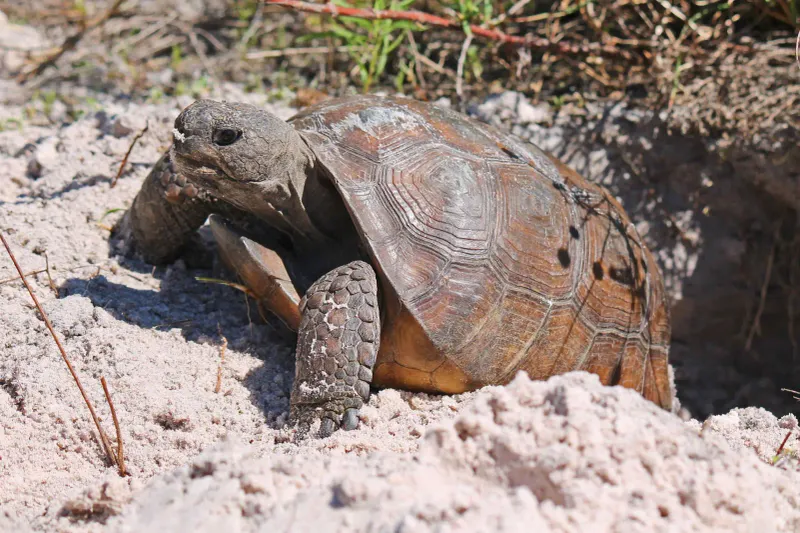
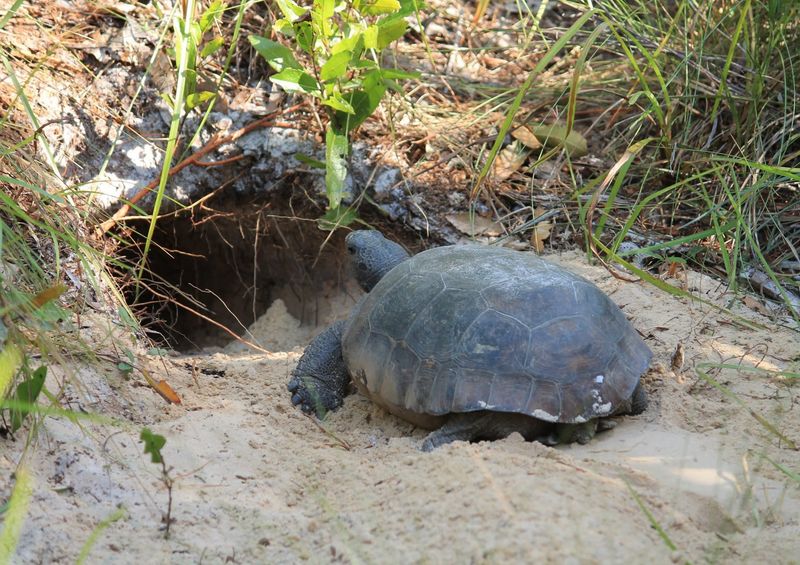
You may think you can read a burrow like a mailbox flag. Up, someone is home.
Down, nobody is. Sadly, burrows are not that simple.
FWC describes a potentially occupied burrow as having a half-moon-shaped entrance, a gently sloping opening, and a loose-soil apron out front that may show tracks. Entrance width varies with the tortoise’s size, roughly 2.5 to 15 inches.
Those details are all useful clues, as laid out in FWC’s burrow identification page.
But they are clues, not proof. Other animals dig holes that look similar, and a burrow that looks quiet may still be occupied, especially in winter, when tortoises spend more time tucked away.
So treat your own look-over as a friendly first impression. It is not an occupancy survey.
If you are planning construction, clearing, or anything else that depends on whether a tortoise is inside, a qualified assessment may be needed.
That keeps you out of guesswork. You do not have to be the expert.
You only have to know when to call one, and that is a genuinely useful thing to know.
One Burrow Supports a Wider Community
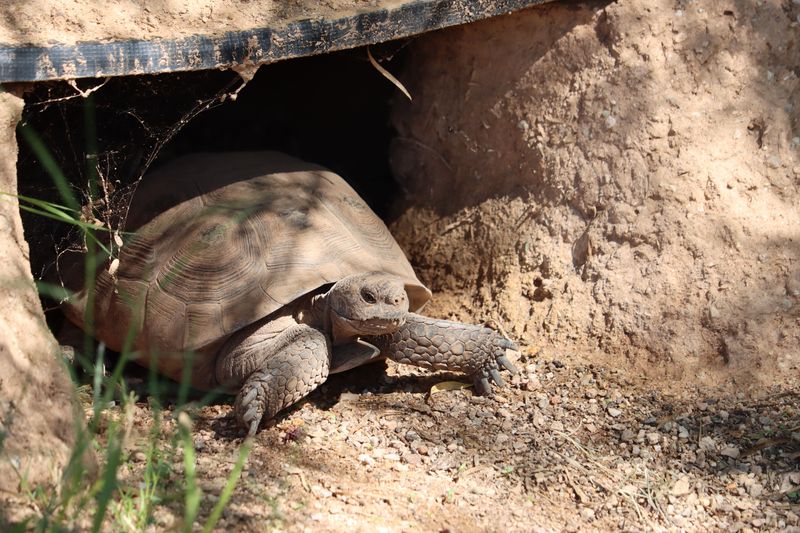
Underground is where the real action happens. Gopher tortoises spend up to 80 percent of their time in their burrows, which help buffer temperature extremes, drought, and fire.
FWC reports the average burrow is about 15 feet long and 6.5 feet deep. Documented record examples reach 40 feet long and 10 feet deep.
That is a serious piece of digging for an animal about the size of a large dinner plate. You can read those figures in FWC’s gopher tortoise profile.
Because of that shelter, FWC calls the tortoise a keystone species, meaning many others depend on what it does. According to FWC’s page on burrow users, more than 350 species use tortoise burrows for refuge across the tortoise’s range.
Here is the catch worth keeping straight. That number covers the whole range, not your yard.
It does not mean hundreds of animals live in any one burrow, and you should not expect to see them.
Still, it changes how a sandy hole looks. It is less a hole and more a shared shelter, built by one patient digger and used by many across Florida.
Small Yard Habits Reduce Burrow Risks
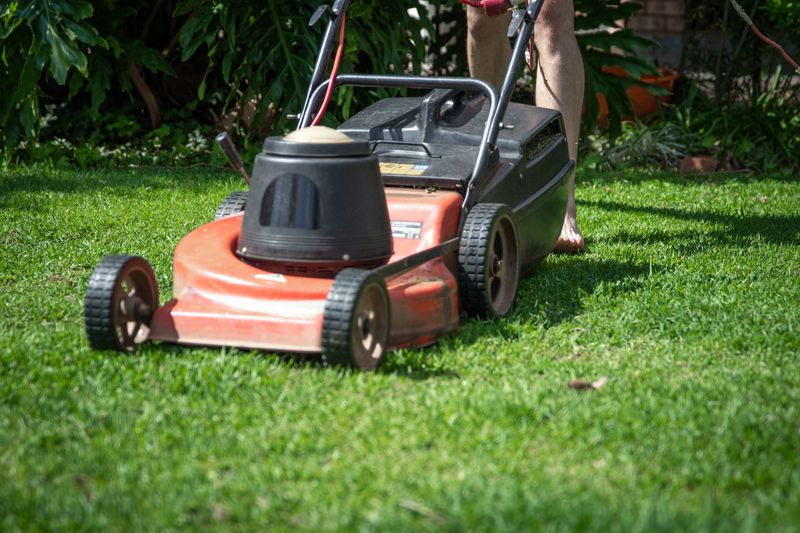
Most burrow trouble comes from a moment of not noticing. A mower rolls over the apron, or a dog dives in after a smell.
A few easy habits head that off.
FWC’s Gopher Tortoise Friendly Yard guidance recommends flagging the burrow so everyone who works in the yard can see it. Keep pets away from the entrance.
Keep riding mowers at least 13 feet from the burrow, use a weed trimmer near it, and set mower blades as high as possible.
Those steps come from FWC’s yard recognition program. They are protective recommendations, not a claim that every routine task nearby is illegal.
If you hire a lawn crew, point out the flag before the first pass. A thirty-second chat can save a collapsed tunnel.
None of this has to turn your Saturday into a chore. A bright stake, a trimmer, and a higher mower deck are about it.
The payoff is a quiet one. A tortoise can keep its home while you keep your lawn, and everyone gets on with the afternoon.
Routine Maintenance Is Not Development Work
Here is the myth: you cannot mow or garden anywhere near a burrow. That is not what FWC says.
Florida protects gopher tortoises and their burrows. But routine residential lawn and landscape maintenance generally does not require a permit, as long as it does not harm a tortoise or collapse a burrow.
Normal yard care can continue with care.
Development is a different story. FWC says development-related disturbance within 25 feet of a potentially occupied burrow requires a relocation permit, according to FWC’s gopher tortoise permit page.
That 25 feet is not a universal no-entry zone. It describes where building-type disturbance becomes a permitting matter.
So if you are planning construction, clearing, grading, or parking heavy equipment, contact FWC or an authorized agent before work begins. That includes a pool, a shed pad, or a driveway.
Do not move a tortoise yourself to avoid a delay. Relocation takes the proper permit and process.
The takeaway is simple. Weeding is fine.
Bulldozers need a phone call first.
Forage Plants Can Make the Yard Friendlier
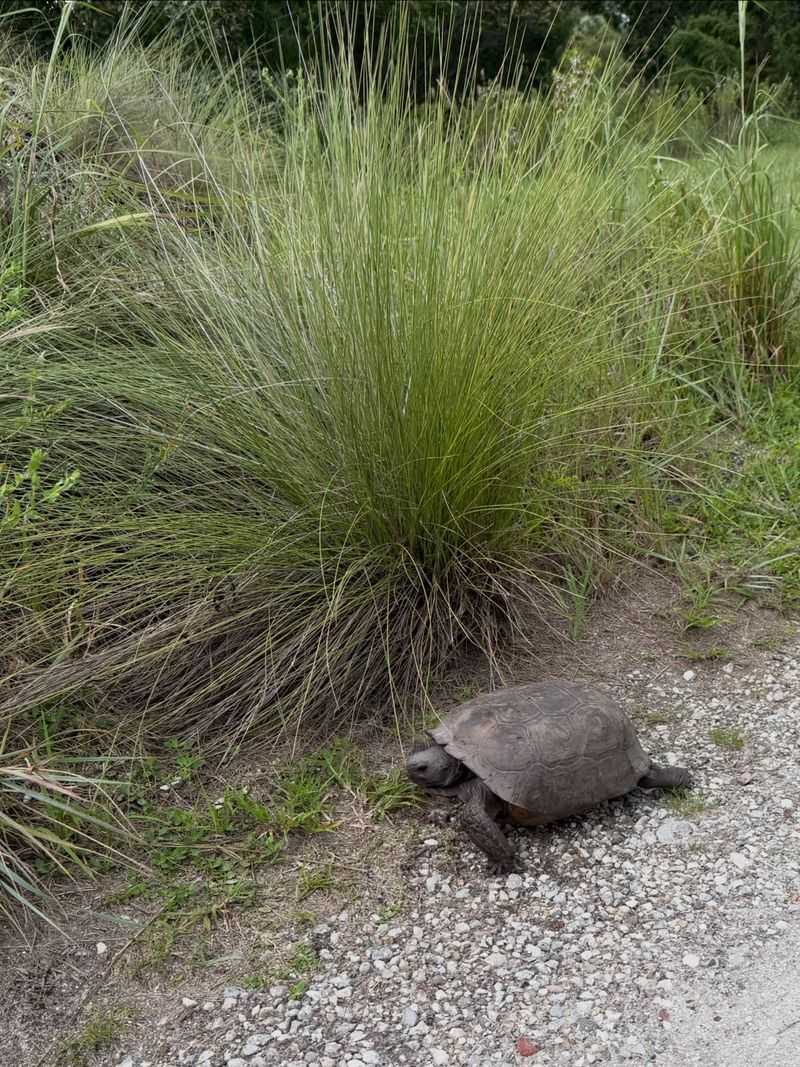
You do not need a landscape overhaul to help. A few good plants can make a yard friendlier to tortoises, though they are no guarantee that one will show up or stay.
FWC recommends choosing plants suited to your FWC region, which matters because the Panhandle and the Keys grow different things. Its recognition program asks applicants to plant at least three high- or very-high-forage species, preferably native ones, according to FWC’s yard recognition program.
That three-species mark is a program requirement, not a rule for homeowners.
Distance helps you plan. FWC’s plant guide says tortoises generally forage within about 160 feet of a burrow, though they may travel farther.
So plantings in that range are the ones most likely to matter.
Start small. A patch of low, sun-loving natives in a bed that already gets sun is a genuinely modest step.
Also, the program does not authorize bringing a tortoise onto your property. Plant for the neighbors you already have, and let them decide the rest.
Leave a Healthy Tortoise Where It Is
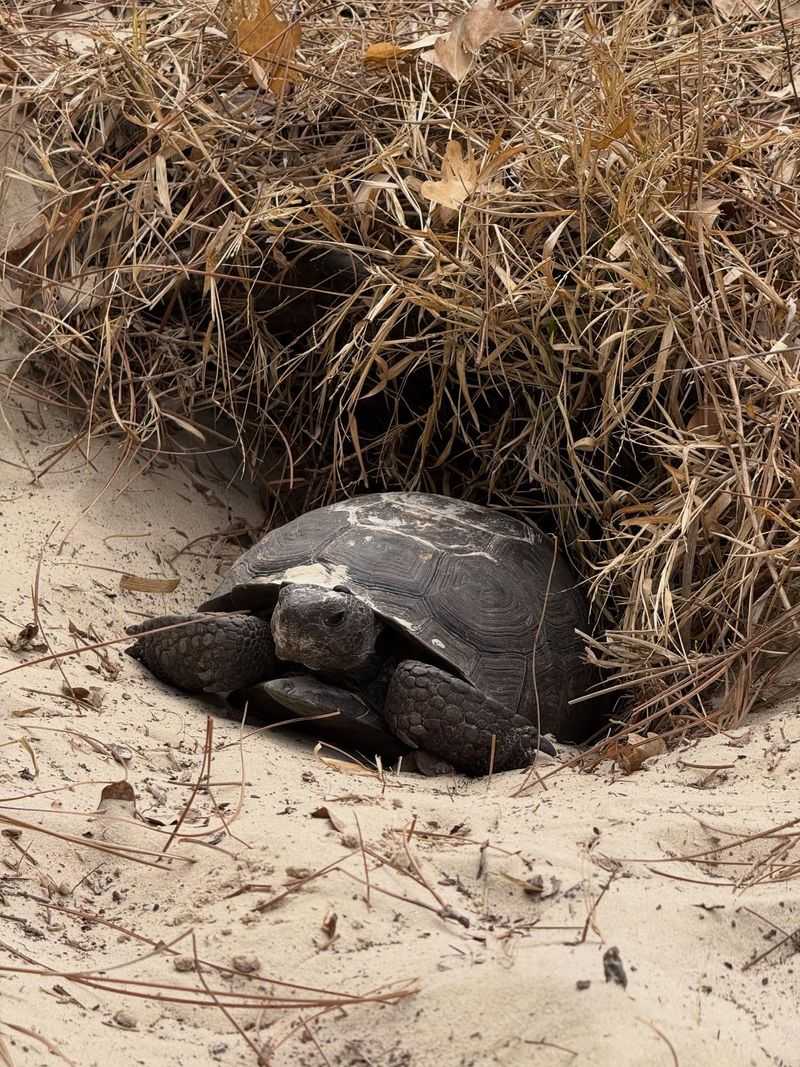
Dusk, a slow shadow crossing the lawn, and your first instinct is to help. For a healthy tortoise, helping means leaving it alone.
FWC says a healthy tortoise in a yard should be left where it is.
You can still contribute. FWC has a gopher tortoise sighting form where you can record tortoise and burrow locations for conservation data.
If a tortoise looks injured, note its location and photograph it if you can. Then seek agency or licensed-rehabilitator guidance.
FWC’s sightings page lists 850-921-1030 on weekdays from 8 a.m. to 5 p.m. and 888-404-3922 after hours and on weekends. More background is on FWC’s injured wildlife page.
Do not capture or carry it off yourself.
Storms add a twist. Flooded or collapsed burrows remain protected, so do not dig one open or fill it in.
Contact the regional FWC biologist, as described in FWC’s wildlife and storms guidance.
A good neighbor mostly watches, notes, and calls when needed. That is enough.
