
That Eerie Night Call Outside Your Florida Window Is Telling You Something About Your Yard
Follow us on Google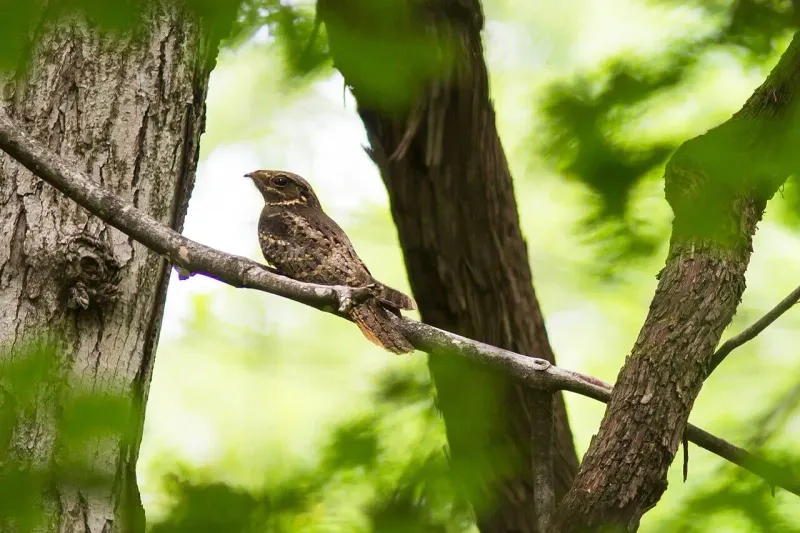
You step onto the porch after dark, and a loud, repeating call rolls out of the trees. In Florida, that eerie sound may be a chuck-will’s-widow, a nocturnal bird, and if it is, the call hints that wooded habitat is somewhere within earshot.
That is a bit of good news about your neighborhood, though it is not a report card for your own yard. Here is what the sound may mean, what it cannot tell you, and how to be a good neighbor to the woods.
Could That Call Be a Chuck-Will’s-Widow?

Here is the name behind the mystery. A chuck-will’s-widow is a nocturnal bird with a loud, repeated call, and it is one plausible source of the sound you heard.
Notice the word plausible. Hearing something loud at night does not confirm who is calling.
Other night callers exist, and the information here cannot tell you which bird was behind your window.
What helps is timing. According to Cornell Lab of Ornithology identification notes, this bird is typically heard at dusk, before dawn, and through the night.
So a repeated call that starts as the light fades fits the pattern.
Still, a matching time of day is a clue, not a signature. Think of it like hearing a familiar voice in a crowded room.
You might be right, but you would want to see the face.
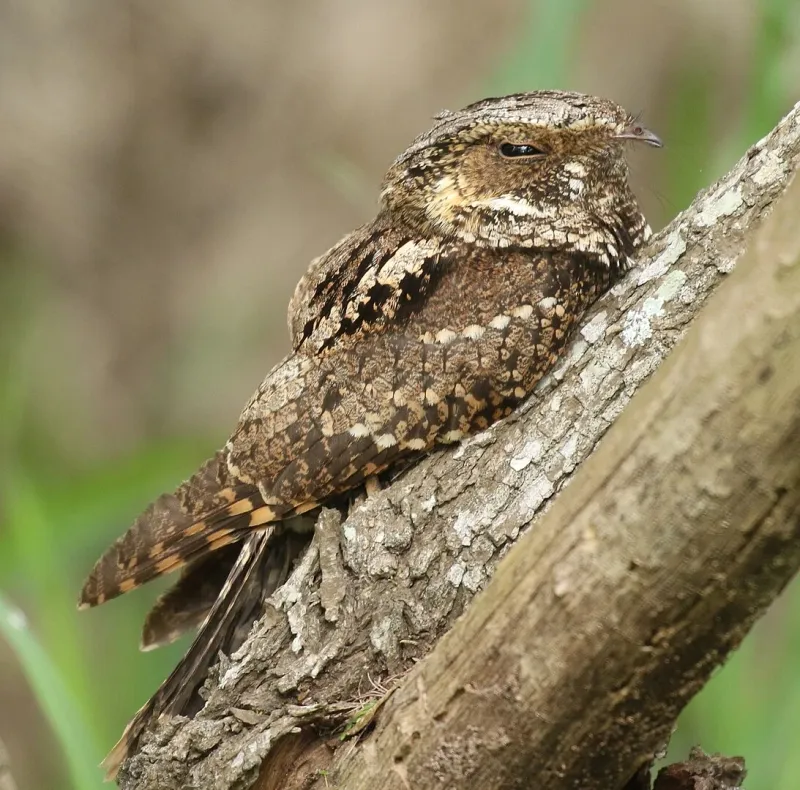
If the mystery bugs you, listen over a few evenings and compare the rhythm with recordings from a trusted bird guide. The bird itself is camouflaged and rarely seen, so most people never lay eyes on it.
That is part of its charm.
For the rest of this article, we will treat the chuck-will’s-widow as the likely suspect, while keeping the door open. Every habitat idea below depends on that one big if.
The Sound May Come From Beyond Your Yard
Here is a twist. A call heard outside your window tells you where the sound reached, not necessarily where the bird sat.
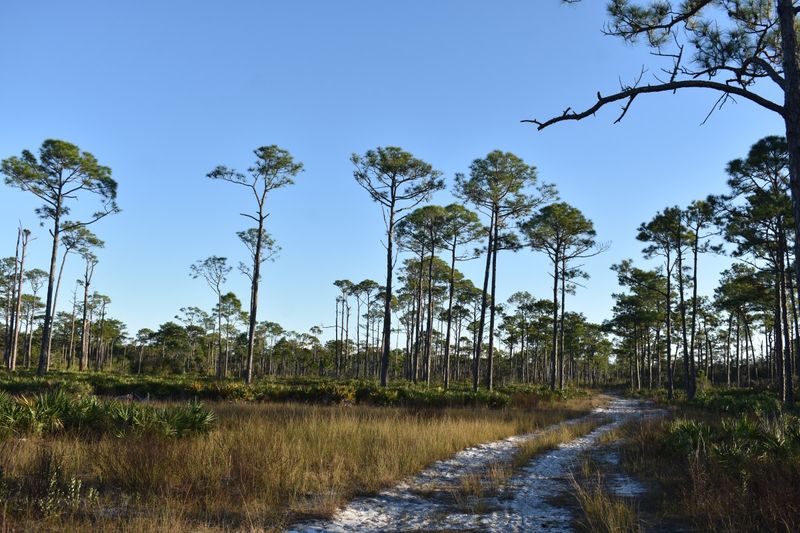
If the caller is a chuck-will’s-widow, it may be perched in nearby woods, along a forest edge, or in another suitable patch beyond your property line. Its voice carries far, so your yard may simply be in the audience.
According to Cornell Lab life history notes and a USDA Forest Service species review, the bird favors open pine and oak woods, shady understory, and woodland edges. Those are woodland-scale places, not single backyards.
So the fair reading is modest. The sound may suggest that suitable wooded habitat is within earshot.
It does not prove the bird is on your property, nesting there, or relying on your yard.
That is still something to appreciate. A neighborhood that sits close enough to real woods to hear this call has a wild neighbor worth knowing about.
Try standing in different spots on a quiet evening and noting which direction the sound seems to come from. It is a gentle, harmless way to sense the shape of the woods beyond your fence.
Florida’s Seasons Make the Call Hard to Read
Many people hear the first call of the year and assume the bird just flew in. Florida makes that guess shaky.
The USDA Forest Service review explains that chuck-will’s-widows breed in Florida. Some appear to remain year-round in southern Florida, and other birds winter there too.
That mix means birds are coming, going, and staying at different times. The Forest Service notes that seasonal movements in the state can be hard to tell apart.
So a single call cannot tell you that a bird has just arrived. It also cannot tell you a pair is trying to breed nearby.
It only tells you something called, at that moment, from somewhere within hearing range.
Here is a practical way to use this. If you want to learn more, jot down the date and time each time you hear the call.
Over a season, your notes may paint a more useful picture than any single evening.
You do not need to read meaning into every sound. Let the call be a pleasant mystery, and let the notebook do the patient work.
Woodland Edges Offer Food and Cover
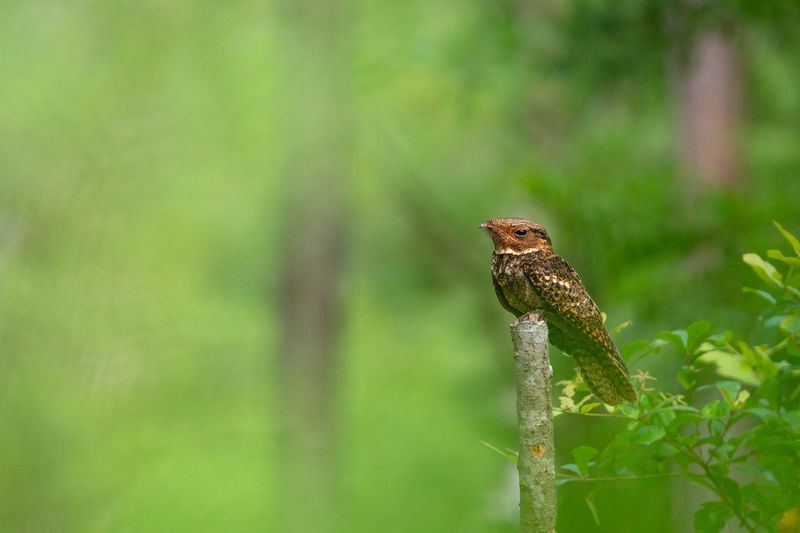
Picture the bird’s evening shift. If your caller is a chuck-will’s-widow, it likely works along open pine and oak woods, shady understory, and the edges where trees meet openings.
Those edges matter. According to Cornell Lab life history notes, the species often hunts over openings and forages from perches or along woodland edges.
Its menu is flying insects, especially moths and beetles, caught in the air. Cornell’s identification page describes the same night-flying hunter, with a very wide mouth built for the job.
Now the honest limit. Nothing here says the bird controls mosquitoes or pests, or removes any set number of insects.
It simply eats what flies by, like a quiet night diner.
What this means for you is simple. Wooded patches with openings and shade are part of the bird’s world, and those patches are worth keeping where you can.
Your yard may be one small piece of a larger woodland picture. That is plenty to feel good about.
The Bird Lays Its Eggs on the Ground
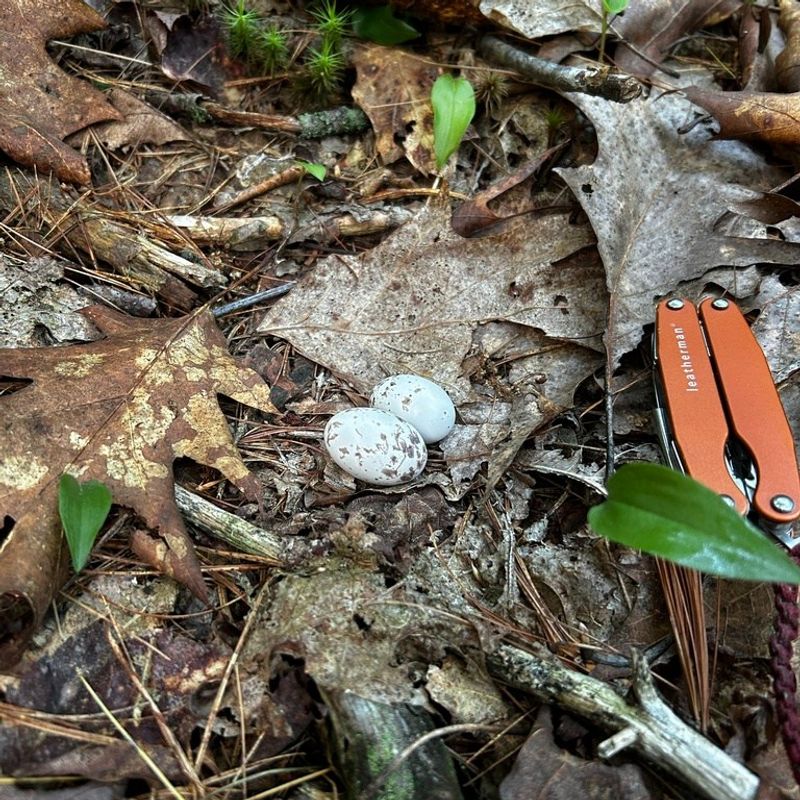
Here is the surprise. Chuck-will’s-widows do not build a conventional nest.
They lay eggs directly on the ground.
According to Cornell Lab life history notes and the USDA Forest Service review, the eggs rest among leaves, pine needles, or bare soil, often in shaded woodland understory.
Both the eggs and the adults are camouflaged. That is clever for hiding from predators, but it also means a person can step close without noticing anything at all.
This is why careless disturbance of ground cover is a real risk wherever a nest exists. A rake, a mower, or a curious walk through the leaves could harm something you never saw.
Notice what this does not mean. You should not go searching leaf litter for a nest, and no yard treatment is known to create nesting habitat.
Looking hard is the very thing that can cause harm.
The best move is a relaxed one. Enjoy the call, leave woodland ground alone, and let the camouflage do its work.
If You Find Eggs, Keep Your Distance
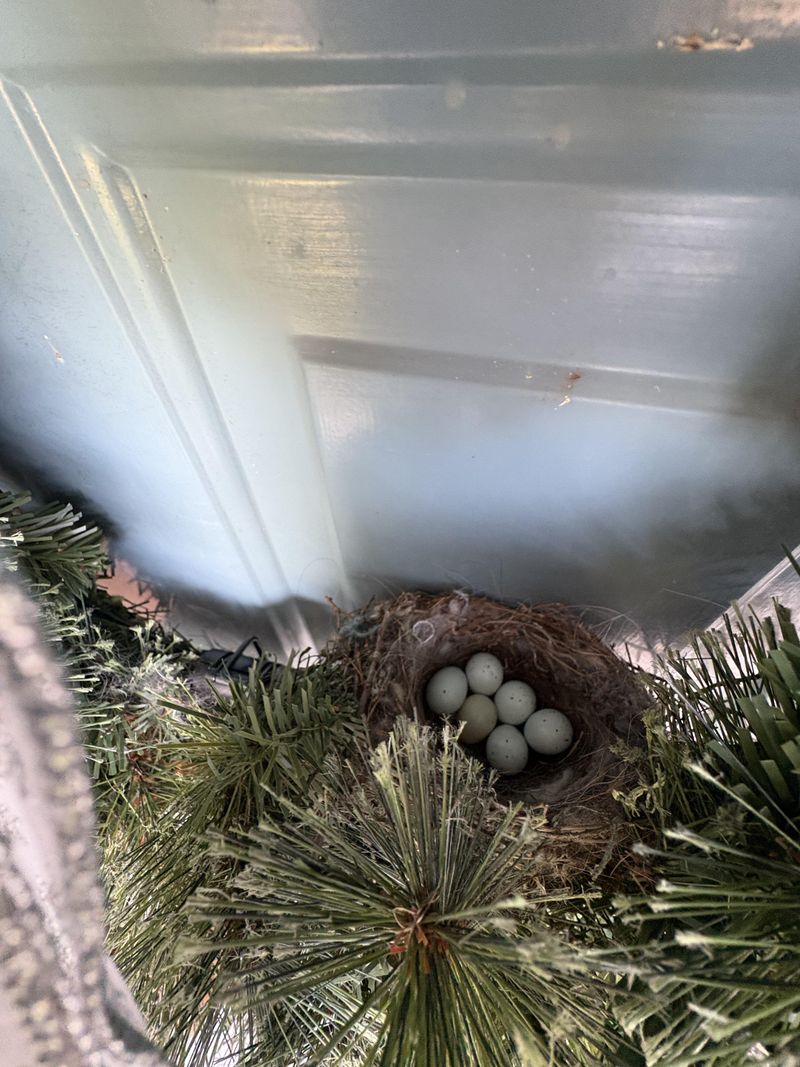
Say you stumble on eggs on bare ground or among pine needles. Stop, step back, and keep people and pets away.
Do not touch, handle, move, or repeatedly check the eggs. Camouflage is the bird’s protection, as Cornell Lab life history notes point out, and frequent visits can put the nest at risk.
Next, reach out for case-specific advice. Your local wildlife authorities can look at your situation and tell you what makes sense, which is better than guessing.
There is also a rules angle. The U.S.
Fish and Wildlife Service explains that most bird nests are protected under the Migratory Bird Treaty Act. It also says the law treats an empty nest differently from a nest containing eggs or birds.
That is as far as this article goes on the law. For your own situation, ask the wildlife authorities instead of relying on a general summary.
A leashed dog and a few steps in another direction cost you nothing. For the bird, that distance can mean everything.
Preserve the Woodland You Already Have
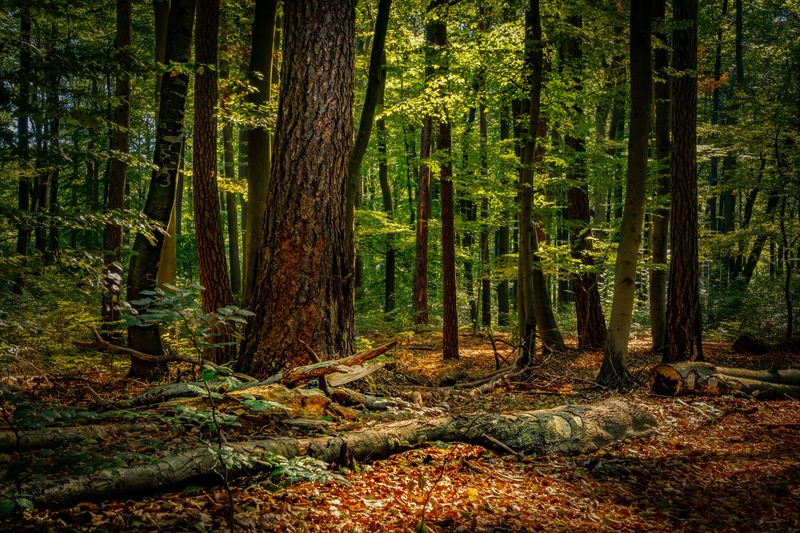
The most useful step is also the simplest. Where feasible, keep the wooded cover and understory you already have.
The habitat described by the USDA Forest Service review is woodland and woodland edge. Saving existing trees and shade is in step with that.
If you suspect a nest, leave it and the area right around it undisturbed.
Now the honest limits. A call does not certify your yard as healthy, pesticide-free, or wild enough.
The bird may be calling from somewhere else entirely.
There is also no tested small-yard recipe. The sources do not show that a particular plant, leaf depth, nest box, birdseed, or light change will attract this bird, so skip anyone who promises otherwise.
Population news is mixed too. Broad survey data show declines, according to Cornell Lab life history notes and the Forest Service, but regions vary, and one yard will not reverse a trend.
So keep what you have, listen, and stay curious. Some nights the best habitat work is just keeping the dark woods dark and the porch quiet.
