
Your Hydrangeas Are Already Holding Next Summer’s Flowers, And The Right Mulch Keeps Them Alive Through The Freeze
Follow us on Google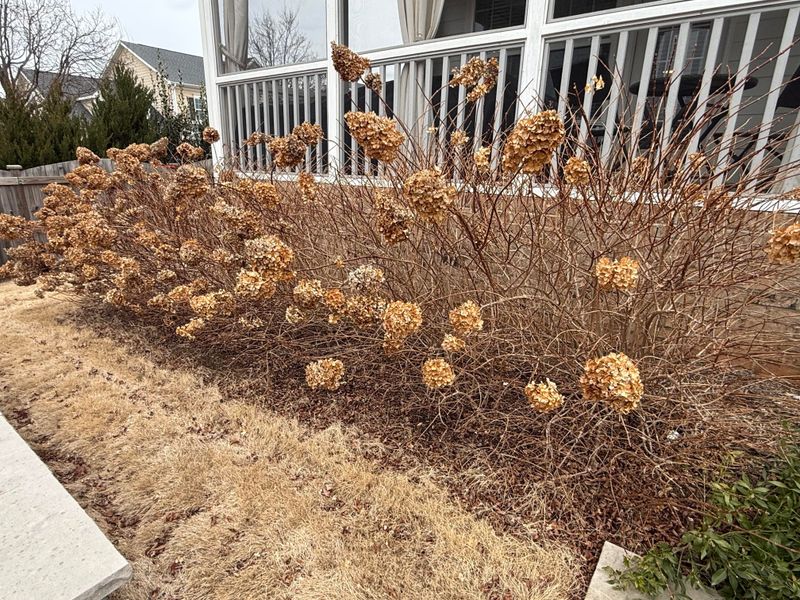
It’s a gray November afternoon, leaves are drifting onto the porch steps, and your hydrangea looks like a pile of bare sticks. But on some of those sticks, tiny flower buds are already tucked away for next summer.
Here’s the catch: mulch helps the roots, but it does not cover those buds. Let’s sort out which hydrangeas carry them and what actually helps.
Some Hydrangeas Carry Dormant Buds Into Winter
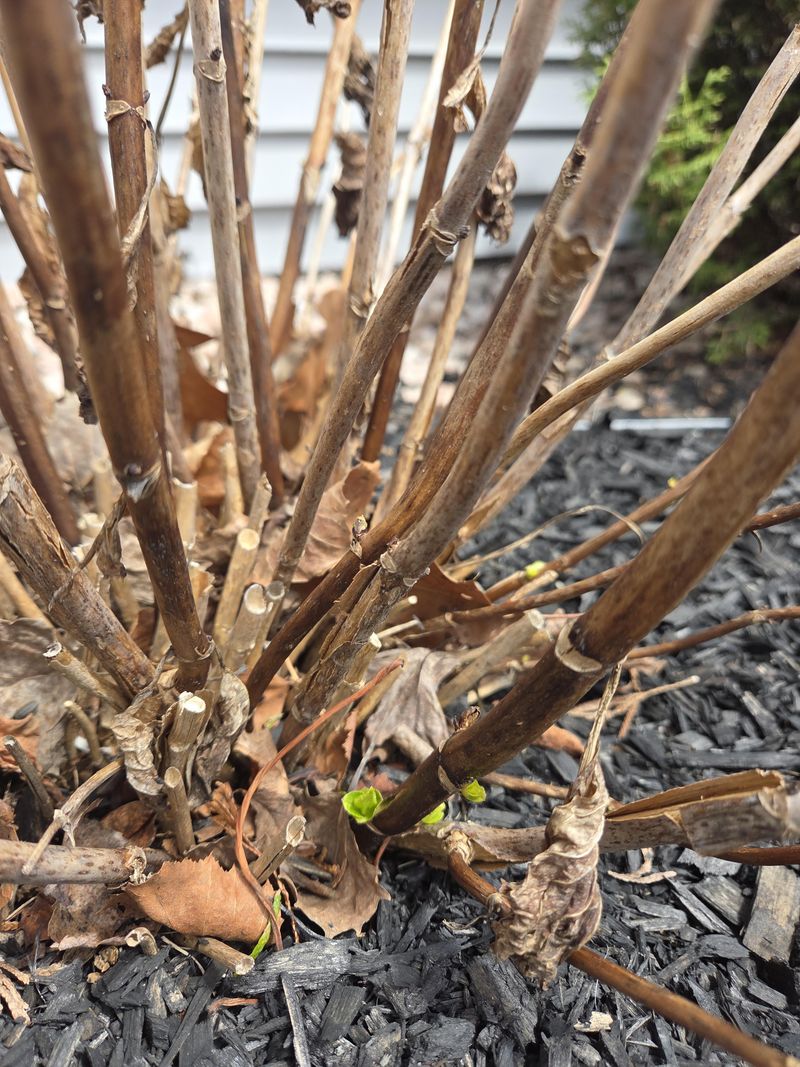
Walk out to your yard in late fall and look closely at the bare stems. On some hydrangeas, small plump buds sit near the tips, already holding next summer’s flower clusters in a dormant state.
That is true only for certain types. Bigleaf (Hydrangea macrophylla), mountain (H. serrata), oakleaf (H. quercifolia), and climbing hydrangeas form flower buds on older stems before winter.
Gardeners call this blooming on old wood, meaning stems that grew last season or earlier.
Smooth (H. arborescens) and panicle (H. paniculata) hydrangeas work differently. They flower on new growth, so their winter stems are not carrying next summer’s buds.
University of Maryland Extension’s pruning guide lays out this split, and it also notes that some bigleaf and mountain cultivars rebloom on both old and new growth.
So two plants in the same neighborhood can need different winter care. If the plant tag is long gone, Penn State Extension’s species guide can help you match your shrub to its type.
Knowing your type is the first step, and it is worth doing before you grab a bag of mulch or a pair of pruners. Even then, dormant buds are only a possibility.
They can still be lost to weather, and nothing you do can promise they will open.
What Soil-Level Mulch Can—and Cannot—Protect
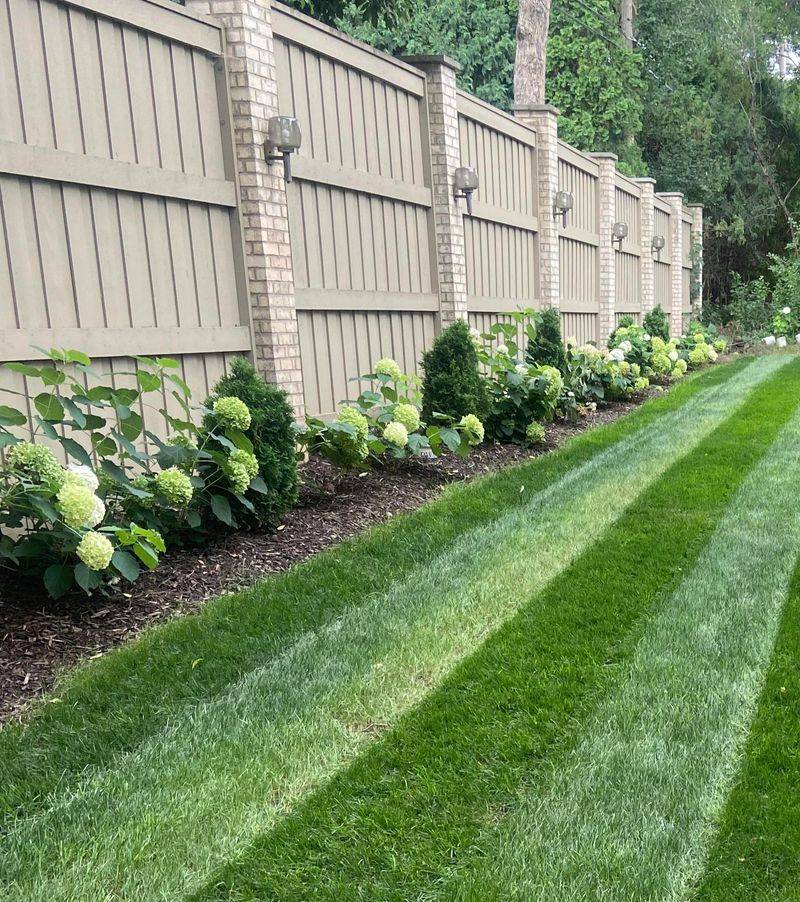
Mulch is a blanket for the ground, not a coat for the whole plant. That difference matters a lot for old-wood hydrangeas.
A layer of mulch over the soil helps protect the root zone, hold in soil moisture, and soften the swings between warm and freezing soil temperatures. Those are real benefits, and roots that stay steadier and moister tend to cope better with winter stress.
But the flower buds on old-wood types sit higher up, out on the stems. Mulch on the soil does not reach them.
Think of it like tucking in your feet while your hands stay bare to the wind.
That is why the idea that the right mulch keeps those buds alive through a freeze goes too far. In its guidance on growing bigleaf hydrangeas, UGA Cooperative Extension treats mulch over the soil and extra cold protection for the plant as separate steps.
So keep mulching, because your roots will thank you. Just treat it as one layer of a wider plan, not the whole plan.
And if you have a smooth or panicle hydrangea, mulch is mostly about the roots, since there are no stem buds to worry about.
Follow Local Guidance on Mulch Depth and Timing
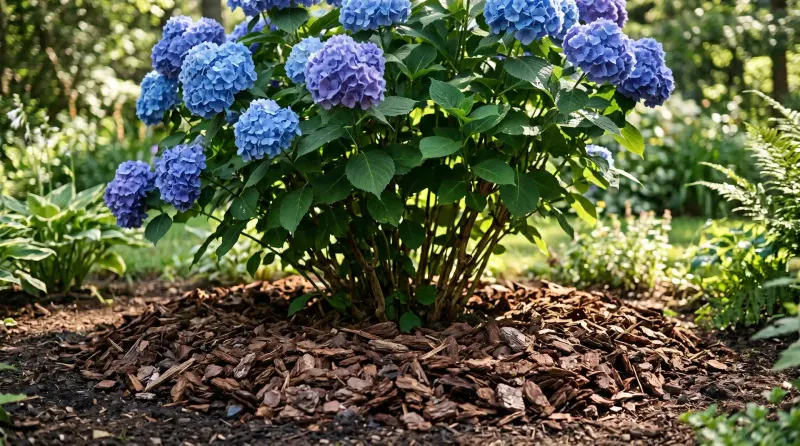
Ask five gardeners from five states how deep to mulch, and you may get five answers. Climate changes the advice, so no single depth or date fits everyone.
For bigleaf hydrangeas in Georgia, UGA Extension recommends 3 to 5 inches of organic mulch over the soil. That number comes from Georgia conditions and bigleaf plants, so treat it as a regional starting point, not a rule for Maine or Montana.
Timing varies too. University of Minnesota Extension advises applying protective mulch after the soil begins to freeze and removing it as the soil thaws in spring.
That advice is for Minnesota perennial and bulb beds, not for every hydrangea or every climate.
The safest move is simple. Call or search your own state’s Cooperative Extension office and ask what they suggest for hydrangeas in your area.
They know your frost dates, your soil, and your winters better than any national tip can.
Borrow the ideas from other regions, but let your local office set the numbers. No depth or date promises a bloom, either.
Keep Mulch Away From Stems and the Crown
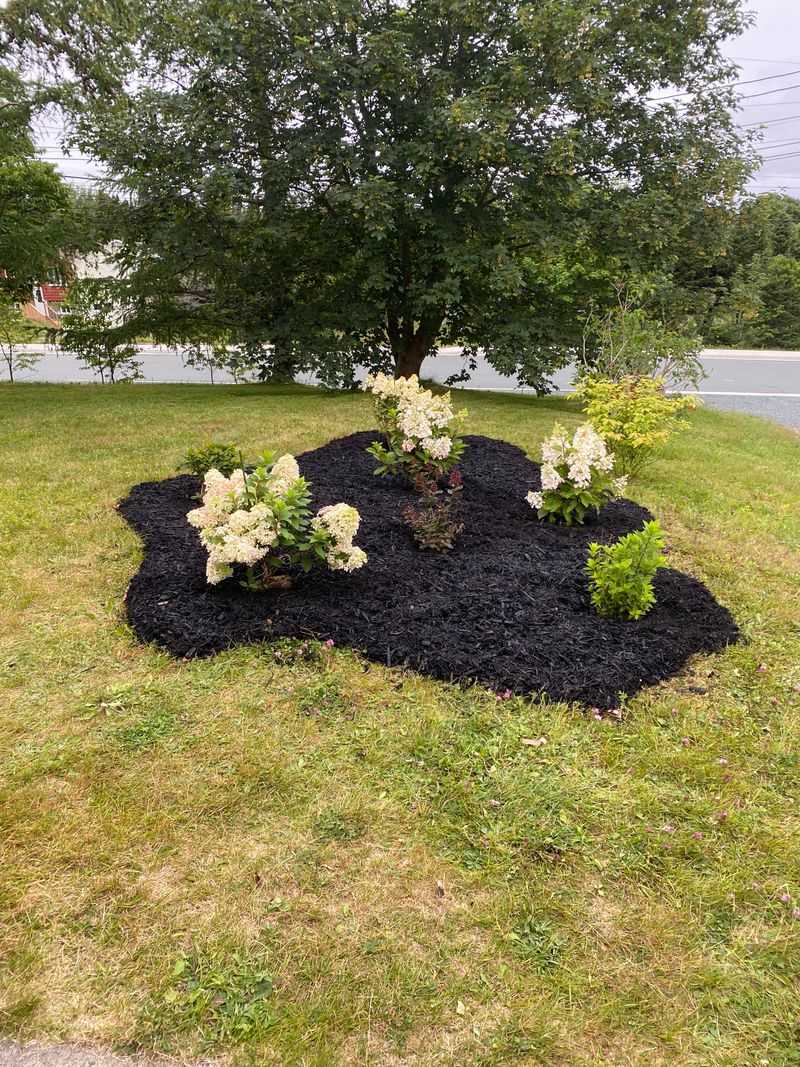
Picture a volcano of mulch piled around a shrub. It looks tidy, and it is exactly what you should skip.
The crown is the spot where stems meet roots, right at the soil line. Mulch piled against it or packed tightly around the stems can hold moisture against the plant.
Penn State Extension’s planting ornamentals guidance advises against piling mulch against plant trunks or stems.
The better habit is to spread mulch as a flat layer on the soil surface, then pull it back so a small ring of open soil surrounds the stems. UGA describes mulch in its bigleaf hydrangea publication as a layer over the soil, not a heap over the shrub.
Some folks hope a thicker mound at the base will shield the whole plant. It will not reach buds higher on the stems.
A mound only adds risk at the crown without protecting what sits above it.
So think wide and flat, not tall and tight. Your hydrangea gets its root-zone benefits, and the stems stay able to breathe.
Vulnerable Old-Wood Buds May Need Above-Ground Cover
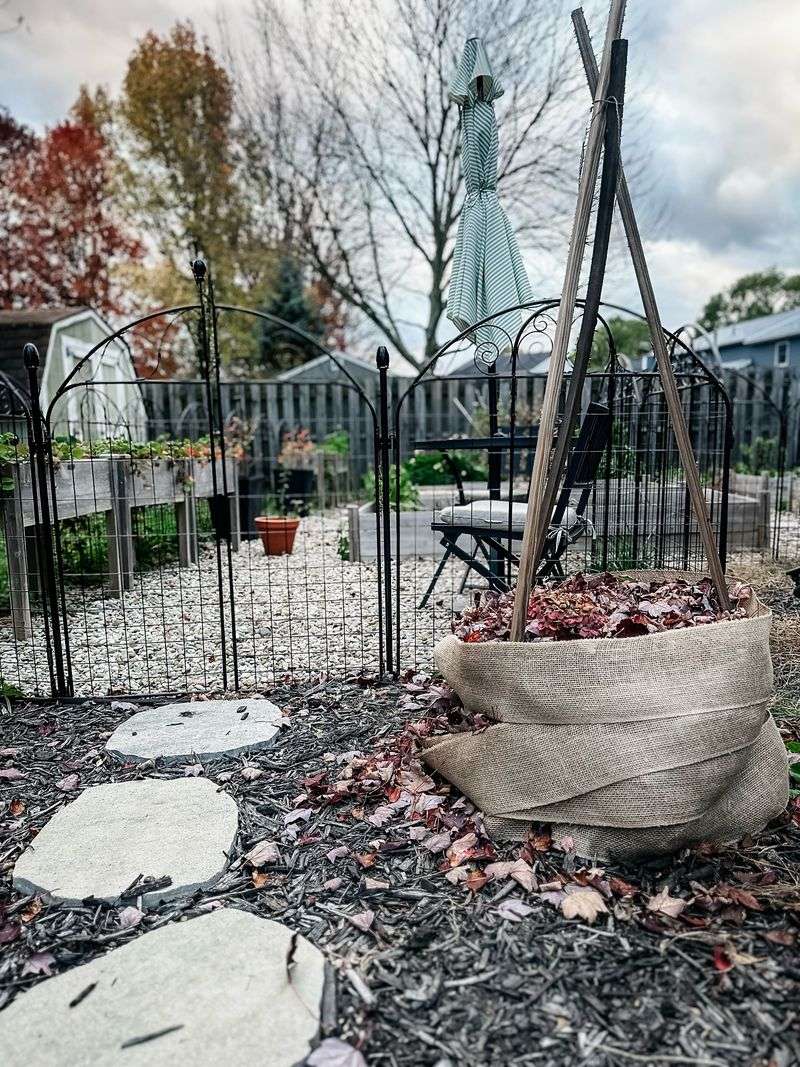
If mulch handles the roots, something else has to handle the stems. For vulnerable old-wood hydrangeas, that means cover above the ground.
For bigleaf hydrangeas, UGA Extension suggests covering the plant with a sheet, blanket, or cardboard container when temperatures drop below freezing. Another option is a chicken-wire cylinder around the shrub, filled with leaves.
Notice that the below-freezing cue is specific to UGA’s advice on covering bigleaf hydrangeas. It is not a magic number where buds always get hurt.
Actual damage depends on the plant, the cultivar, and the freeze itself.
Windy places have another option. Illinois Extension describes a cage filled with loose straw or coarse leaves to slow the wind around a reblooming hydrangea, while warning that winter dieback can still happen.
Think of these covers as a scarf and a windbreaker, helpful but not a force field. They are protective measures, and none of them guarantees that every bud will make it.
Prune According to the Hydrangea’s Flowering Wood
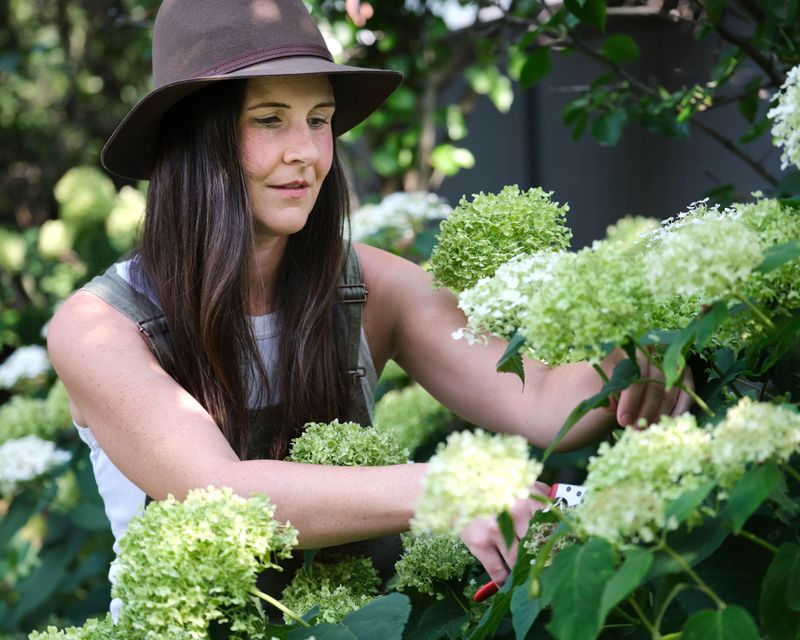
One well-meant fall cleanup can wipe out next summer’s flowers. That is the quiet risk of pruning an old-wood hydrangea at the wrong time.
Because those stems already carry dormant buds, cutting them in fall or winter can remove the flowers before they ever open. If blooms are your goal, skip fall and winter pruning on bigleaf, mountain, oakleaf, and climbing types.
The timing that fits them is right after flowering. University of Maryland Extension recommends pruning old-wood types just after they bloom, which gives the plant time to grow stems that will carry buds again.
New-wood types are the opposite. Smooth and panicle hydrangeas flower on growth they make this season, so Maryland’s guidance allows pruning them in late winter or early spring.
If you are not sure which kind you have, hold off and wait. A light touch, such as removing dead stems, costs far less than guessing wrong and cutting off the buds.
Winter Protection Cannot Guarantee a Summer Bloom
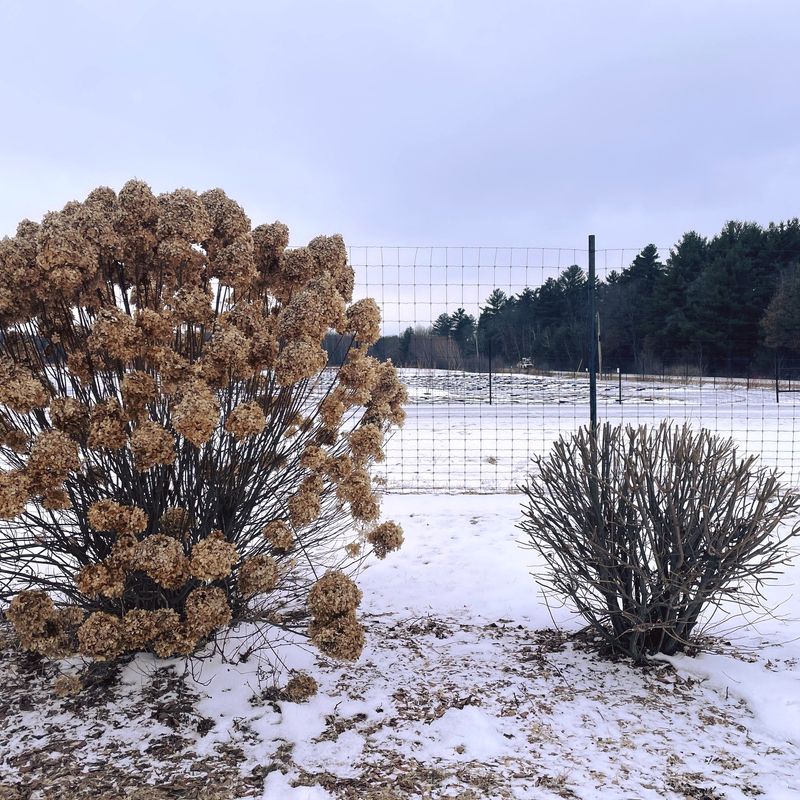
Surviving the winter and blooming in summer are two different outcomes. A hydrangea can come back strong from the roots and still skip its flowers.
Penn State’s guide, Why Doesn’t My Hydrangea Bloom?, notes that bigleaf hydrangeas may survive cold yet lose stems or buds, which cuts into the next summer’s bloom.
Cold is not the only culprit. University of Maryland Extension lists severe cold, late frost, drought, and other weather extremes as reasons bigleaf buds can be lost.
A mulch layer in fall does not stop a freeze in April.
Reblooming cultivars give you a little insurance. They may flower on new growth after old-wood buds are damaged, but as the Maryland pruning guide points out, that can mean later or lighter flowering rather than a full display.
So aim for realistic hopes. Mulch the roots, keep it off the stems, leave old-wood plants unpruned in fall, and cover the vulnerable ones when your local advice says to.
Then let the season decide, and enjoy whatever opens.
A hydrangea does not owe you a bloom, but it does reward patience.
