
Most Pennsylvania Homeowners Have No Idea What Squirrels Are Actually Doing For Their Yards
Follow us on Google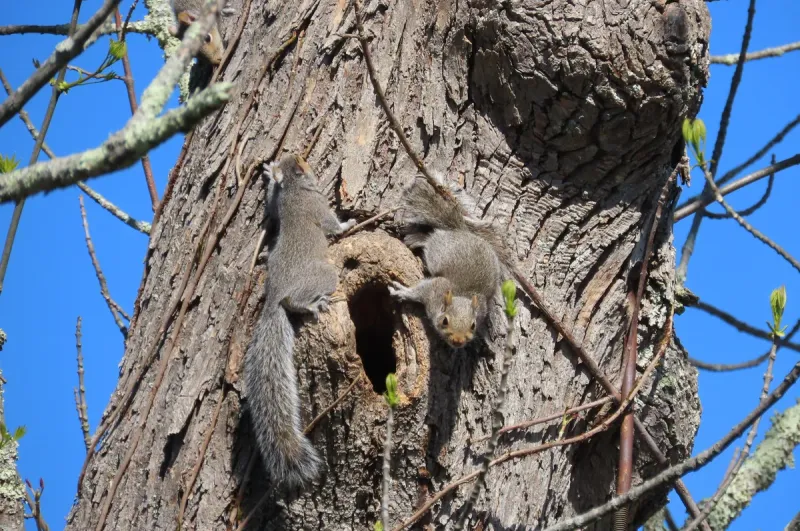
That squirrel you shooed off the feeder may be moving acorns that could grow into oak trees in Pennsylvania. Some of the acorns it buries get left behind, and a few of those can sprout.
It is not a tidy gardening job, and the story has limits, especially when it comes to fungi. Here is what squirrels may really be doing in your yard, and how to protect the plants you care about.
Pennsylvania Gray Squirrels Cache Acorns
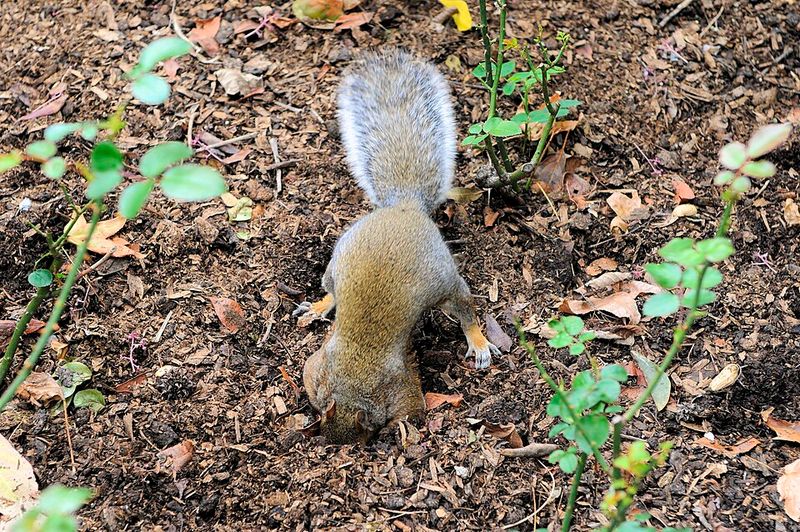
Picture a crisp October morning in a Pennsylvania neighborhood. A gray squirrel dashes across the lawn with an acorn in its mouth, stops, digs a quick hole, and pats the soil flat.
Then it is gone.
According to the Pennsylvania Game Commission, the eastern gray squirrel is the state’s most common squirrel. Its menu is wide.
Acorns, hickory nuts, walnuts, and beechnuts are on it, along with berries and even mushrooms.
So acorns are one item in a long list of foods. Not every squirrel behaves the same way, and not every yard sees the same activity.
A yard with mature oaks nearby will see much more digging than a treeless new development.
Burying food is foraging, not gardening. The squirrel is saving a snack for a cold January day, and it has no plan to grow a tree.
Think of each little hole as a pantry shelf, not a planting bed.
Still, moving seeds from one place to another is what ecologists call seed dispersal. That is why squirrels can matter to oaks, even by accident.
The next question is whether a buried acorn can really become a tree, and the answer is more tangled than it looks.
Can a Buried Acorn Become an Oak?
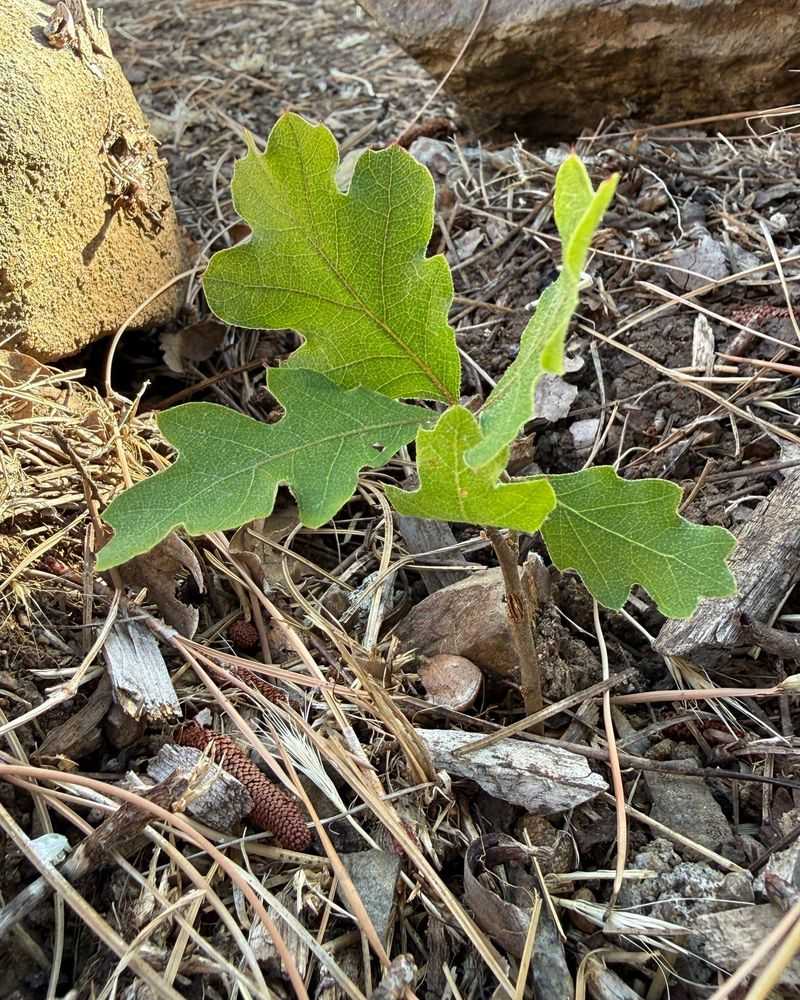
Some of the time, yes. When a squirrel carries an acorn away and buries it, the seed lands in a spot that may suit sprouting.
If the squirrel never comes back for it and the acorn is still viable, it may grow.
That word viable matters. A cache is not a planted tree.
Squirrels are both seed eaters and seed movers, as a research review on squirrel-seed interactions explains. Their choices about what to bury and when shift with acorn type and season.
Here is where it gets tricky. Many acorns get eaten.
Others are damaged, or simply cannot germinate. The same review notes that eastern gray squirrels have been seen removing the embryo from some white-oak acorns before storing them.
That stops those acorns from ever sprouting.
So the squirrel is a possible helper and a possible thief, sometimes with the same acorn. No one can say how many caches in your yard will turn into seedlings, and it would be wrong to guess.
The Game Commission’s squirrel profile agrees that squirrels can contribute to oak regeneration. Note the word contribute.
It does not say guarantee.
If a small oak pops up near your fence next spring, you may have a squirrel to thank. If not, the squirrel simply had a good lunch.
What Pennsylvania Forest Research Shows
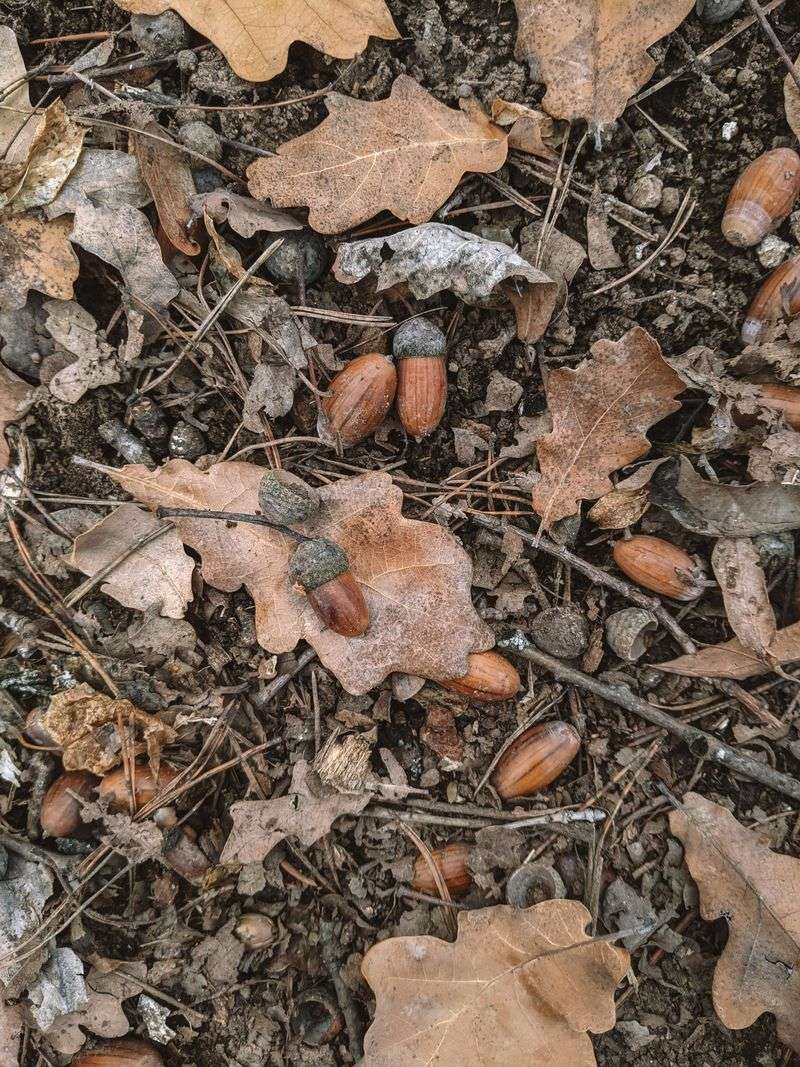
Out in Tuscarora State Forest in central Pennsylvania, researchers found a harsh reality. A USDA Forest Service report found that rodents and acorn insects destroyed nearly all acorns on some study sites.
Planted seedlings did not have an easy time either. Deer browsed them severely.
For a young oak, the gauntlet runs from acorn weevils to hungry rodents to deer.
This is forest research, not a yard survey. It tells us what happened on specific study sites, and it cannot prove what happens in every residential yard.
A suburban lot in the Delaware Valley has different animals, different oaks, and different neighbors.
What it does show is why rodents can hold back oak regeneration in some settings. When nearly every acorn gets eaten, there is little left to sprout.
But it does not rule out the other side. Some caches may still be missed and some of those seeds may still grow.
Both things can be true at once.
The takeaway for you is simple. Do not count on squirrels to fill your yard with oaks.
Treat any seedling that shows up as a lucky bonus, not a sure thing.
The Fungi Story Is Different
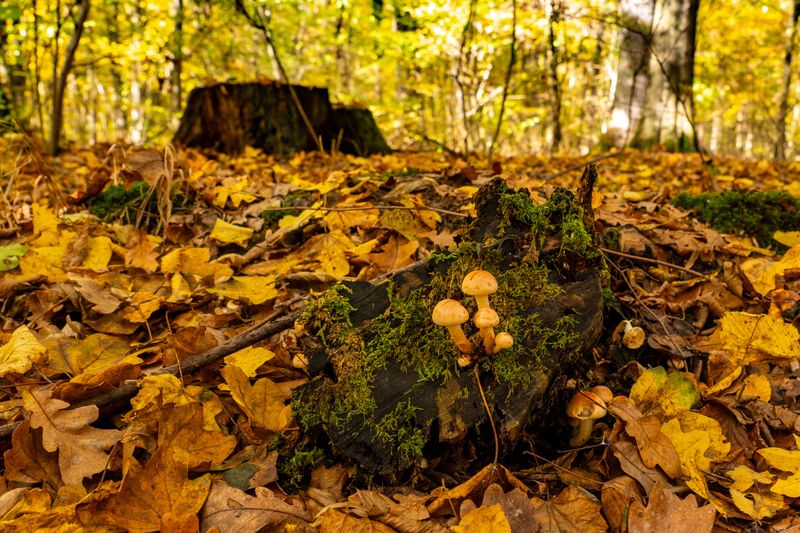
Beneath most trees, a quiet partnership is running. Mycorrhizal fungi grow in association with roots.
According to the USDA Forest Service, these associations can improve a plant’s access to water and nutrients. Oaks associate with a group called ectomycorrhizal fungi.
Now for the part that gets stretched too far. Pennsylvania gray squirrels do eat mushrooms, as the Game Commission notes.
But eating mushrooms does not prove they spread useful spores in your yard. The evidence does not show a measurable or necessary fungal benefit from common gray squirrels.
The research people often point to is narrow. A USGS-listed West Virginia study looked at particular fungi found at foraging sites of Virginia northern flying squirrels in high-elevation conifer forests.
That is a long way from a suburban lawn.
Here is the calming part. The Forest Service reports that tree roots are naturally colonized under most conditions.
Your oak does not need a squirrel to make this connection, and you do not need fungal products or special treatments to set it up.
So the fungi are real and they matter. The squirrel’s role in your own yard is simply unproven.
When to Let Caches Be
Some digging is harmless. A few small holes in a mulch bed or a patch of lawn will fill in with the next rain.
If a cache is not causing a problem, you can usually let it be.
That is the easy half of the choice. The other half is protecting what you want to keep.
Newly planted seedlings, bulbs, or small shrubs can get dug up, nibbled, or damaged by animals, and squirrels are only one possible culprit.
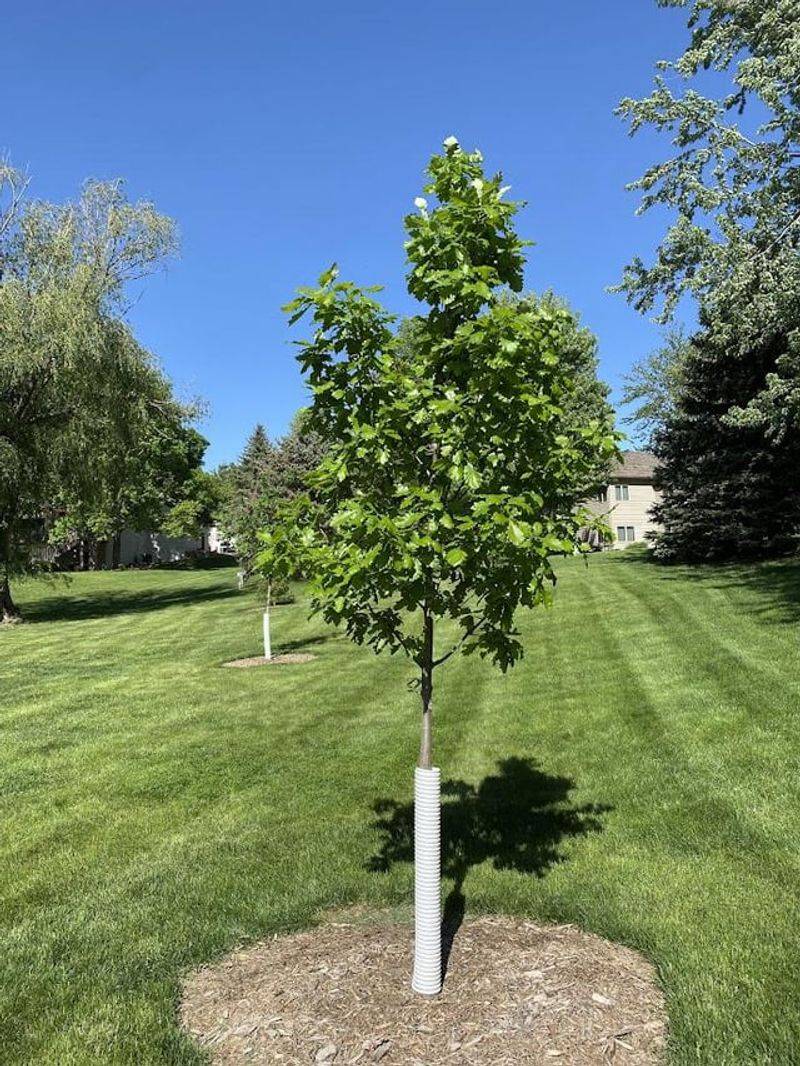
Tree shelters are one option. Penn State Extension describes them as a way to protect planted seedlings.
Its guidance is broader than squirrel damage alone, and shelters are not a complete answer. Deer, voles, and weather can still cause trouble.
So think in layers. Walk your yard in spring and fall.
Ask yourself which plantings matter most, then give those a bit of extra protection.
A seedling you did not plant that sprouts in a spot where it is not wanted can simply be pulled or moved while it is small. One that pops up in a good spot can stay.
You are choosing between letting nature run and guarding a few favorites. Most yards have room for both.
Why Feeding Squirrels Is Not the Answer
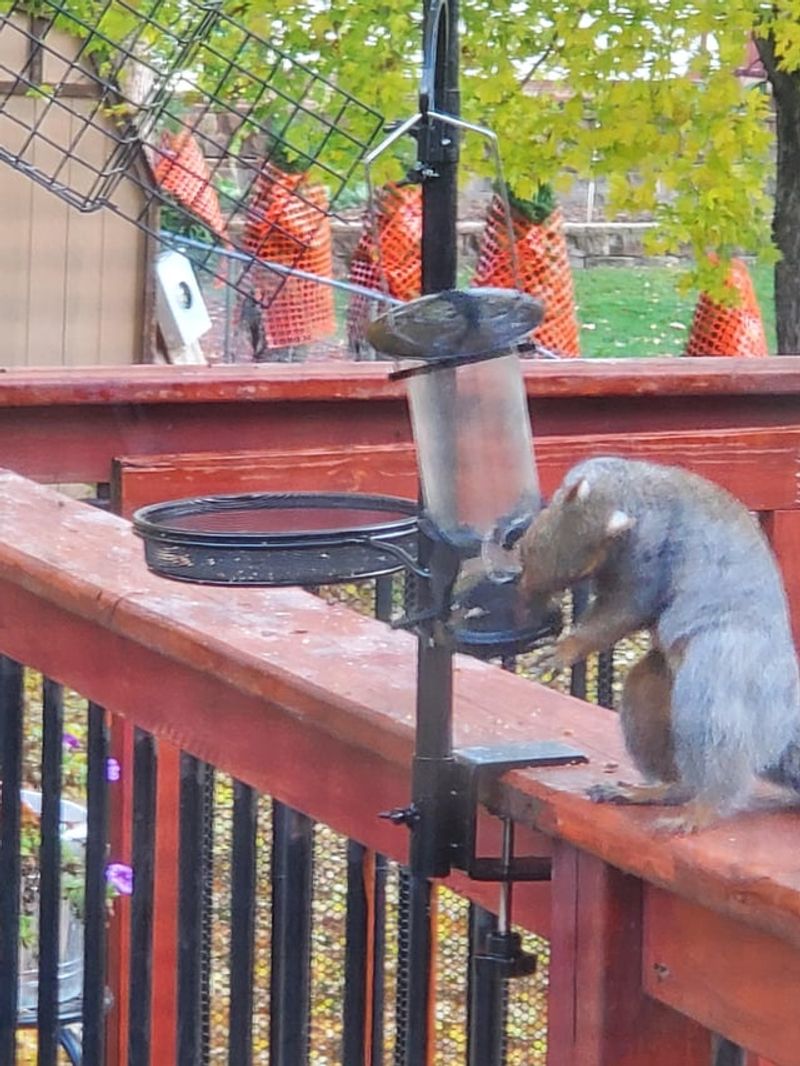
It might be tempting to set out a pile of peanuts and hope for more oaks. Please do not.
Feeding squirrels will not reliably boost seed dispersal or fungal benefits, and it can cause real harm.
The U.S. Fish and Wildlife Service warns that feeding wild animals can create health and safety problems.
Crowded animals can spread illness, and food can draw them closer to people, pets, and roads.
The agency recommends securing food and watching wildlife from a distance. In a yard, that means cleaning up spilled birdseed, keeping seed in sealed containers, and picking up fallen fruit and nuts you do not want to share.
A porch chair and a pair of binoculars do the job nicely. You can enjoy the show without setting the menu.
The balance is easy to hold. Appreciate what squirrels sometimes contribute, protect the trees and plantings you value, and let the rest happen on its own.
The best neighbor to a squirrel is one who keeps a respectful distance.
