
The Fast Texas Fence Vine That Hummingbirds Love And Never Turns Into A Problem
Follow us on Google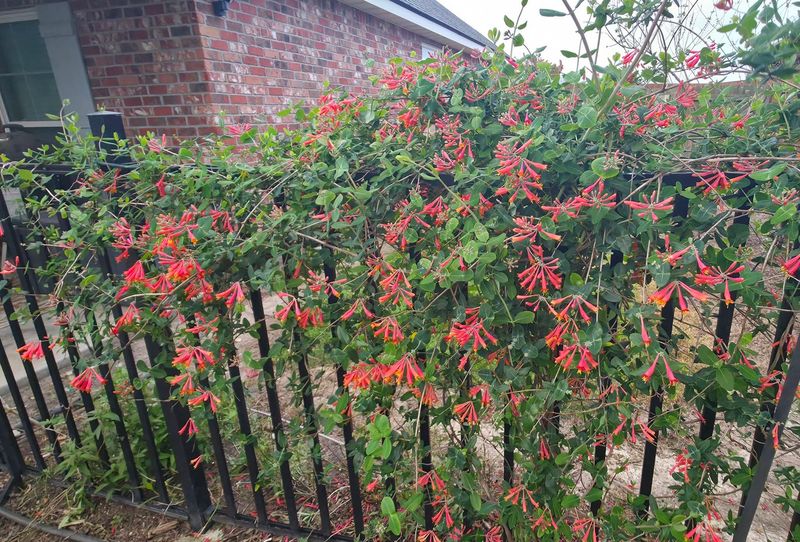
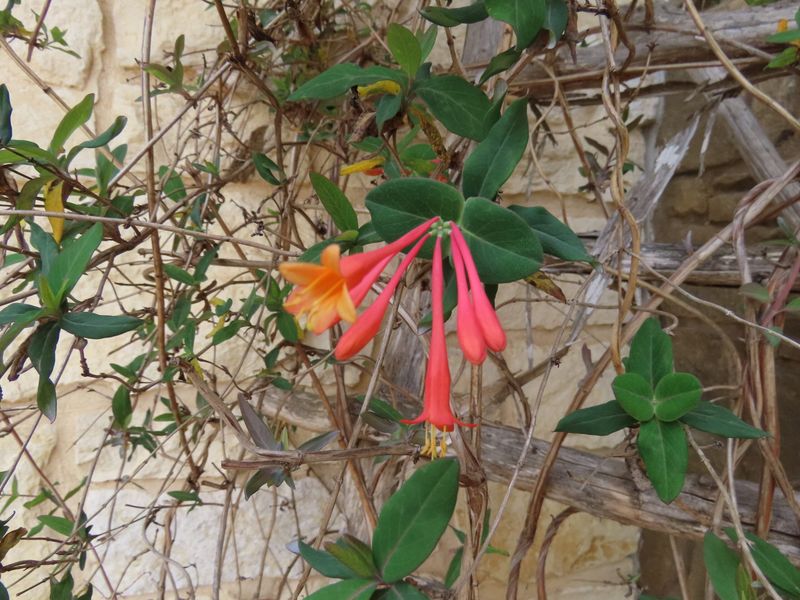
The vine you want for that bare Texas fence is coral honeysuckle. Its tubular red-orange flowers are loaded with nectar that hummingbirds are drawn to, and its stems twine along a fence that gives them something to hold.
It is also a far more polite neighbor than the Japanese honeysuckle that chokes so many fence lines. Here is how to grow it with realistic expectations and a little ordinary care.
Meet coral honeysuckle
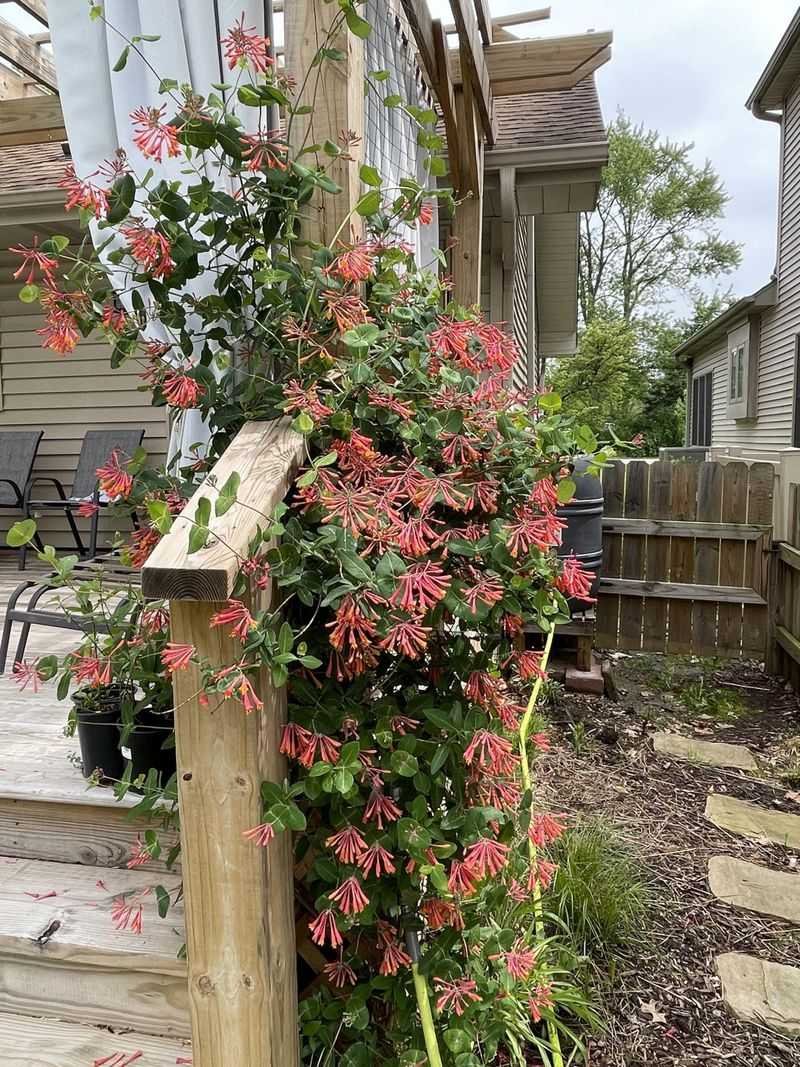
Coral honeysuckle (Lonicera sempervirens), also called trumpet honeysuckle, is the vine to look at if you want flowers and hummingbird interest along a fence. It is a perennial, woody, twining vine, which means its stems wrap around whatever they can reach.
The City of Austin plant guide says its nectar attracts hummingbirds and butterflies, and describes it as a twining vine for smaller structures.
Think of it as a plant that wants a partner. Give it a fence, trellis, or arbor, and the stems have something to grab.
Leave it with nothing, and it sprawls and tangles instead of climbing neatly.
Austin lists sun to part shade, medium water needs, and a spread of 6 to 12 feet. The Native Plant Society of Texas lists the plant as a vine that needs structural assistance, and its profile recommends pruning to direct and control growth.
So no, this is not a plant you plant and forget. It is a well-mannered vine that still needs support, some water while it settles in, and a trim now and then.
That is a fair trade for a fence that comes alive with flowers.
Nectar can attract hummingbirds
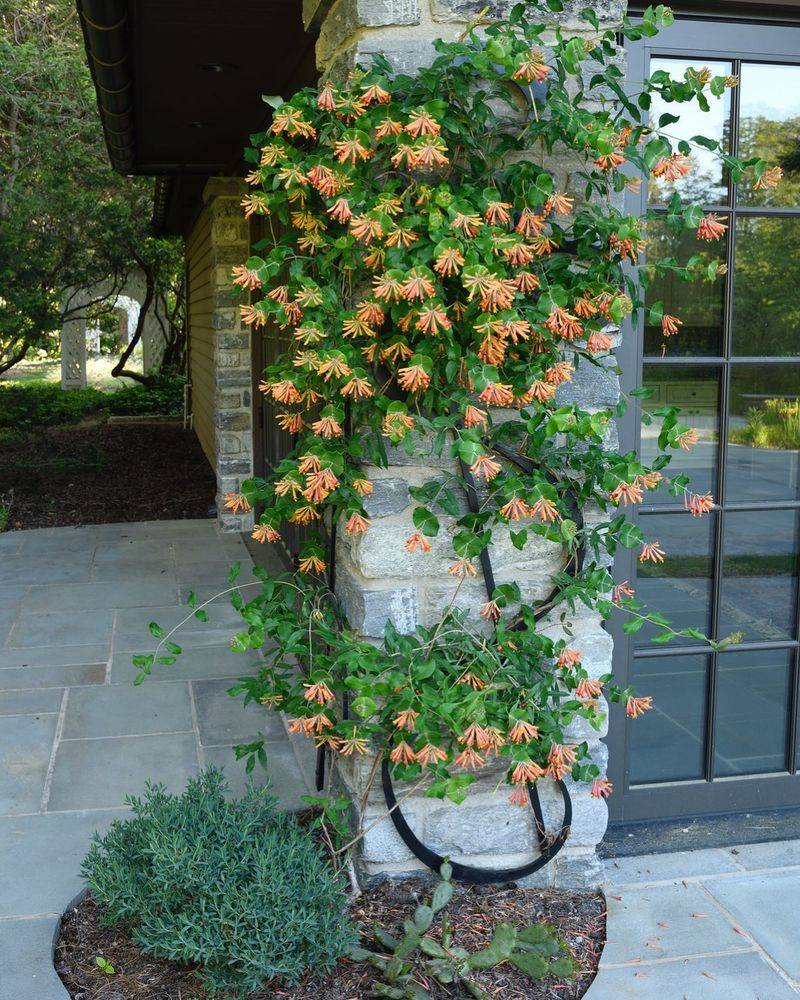
Picture a warm spring morning and a flash of wings at the fence. That is the scene coral honeysuckle sets up.
Austin’s plant guide says the nectar attracts hummingbirds, and the Native Plant Society of Texas lists hummingbirds among the wildlife benefits too.
Notice the wording. The flowers attract hummingbirds, but neither source promises a certain number of birds or constant visits.
Your yard, your neighbors’ feeders, and the time of year all play a part.
The Texas Native Plant Society profile lists bloom time as March through June, with spring and summer as the bloom seasons. Timing can shift with weather and conditions, so treat those months as a guide, not a calendar promise.
The tubular, coral-red blooms are shaped for long beaks and tongues, which is part of why they suit hummingbirds. If you plant one, give it a season or two to settle in, and keep your eyes on the fence in spring.
A visit is a possibility, and a pleasant one.
Growth depends on the site and support
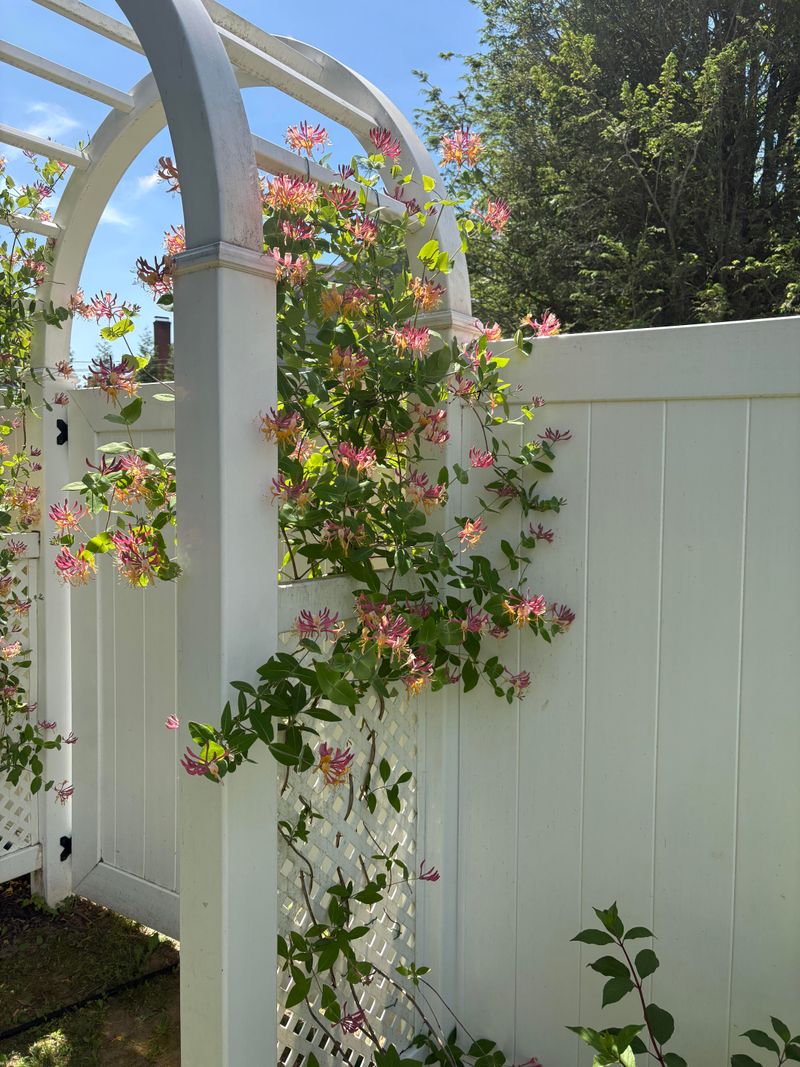
Here is where the word fast needs a footnote. University of Tennessee Extension rates coral honeysuckle as medium to fast growing and reports a height of 4 to 15 feet depending on support.
That is a Tennessee source, not a Texas fence-cover timeline.
The Native Plant Society of Texas lists a wider height range of 3 to 20 feet. These are source-specific mature sizes, so use them to picture a full-grown vine, not to predict when your fence will be covered.
Soil, sun, water, and support all change the pace.
Now the comparison people care about. Japanese honeysuckle (Lonicera japonica) is the troublemaker.
The U.S. Forest Service documents its rapid spread and invasive impacts, and a Florida Department of Agriculture pest alert notes that native coral honeysuckle is less aggressive and invasive.
Less aggressive is not the same as never. Keep an eye on it, and plan on pruning when it wanders.
Give its twining stems something to climb
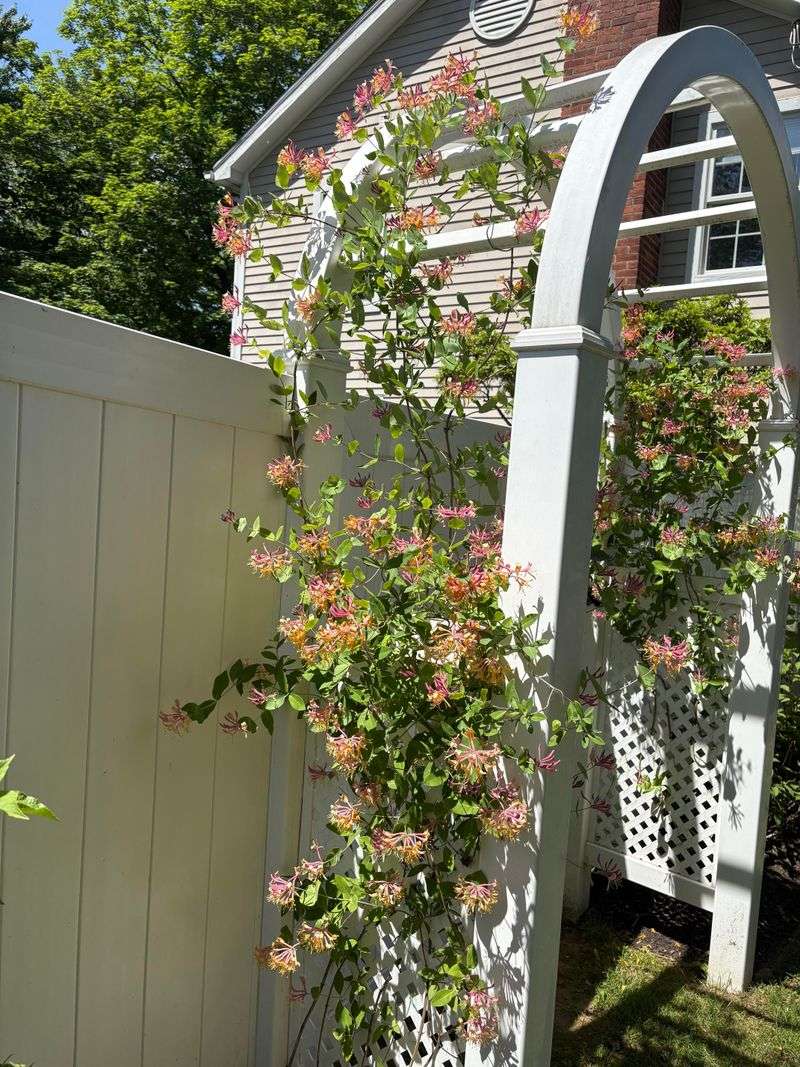
A twining vine wraps its stems around thin supports, so a bare solid board will not do much for it. A fence with wire, slats, or lattice gives it something to wrap.
A trellis or arbor works too, and Austin describes the plant as suited to smaller structures.
The Native Plant Society of Texas says coral honeysuckle needs structural assistance. Its profile also recommends pruning to direct and control growth.
In practice, that means guiding wandering stems back toward the support and trimming the ones heading for your gutter or the neighbor’s yard.
Use the size numbers loosely. Austin lists a spread of 6 to 12 feet, and the Texas profile lists a height range of 3 to 20 feet.
Those figures tell you the vine can get sizable, so choose a structure that can handle the weight over time.
Skip any exact spacing rule or pruning date you see for all of Texas. Your site decides.
Watch how the vine behaves for a season, then adjust. A little guiding early beats a lot of untangling later.
Help the young vine establish
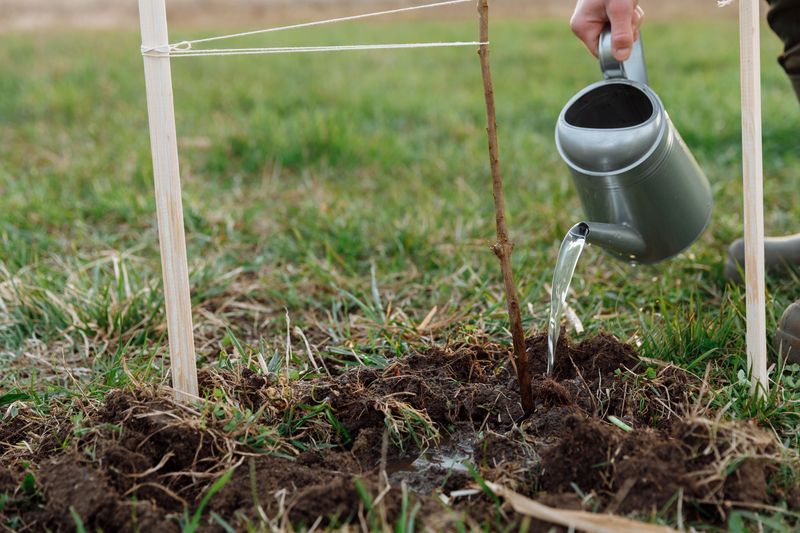
Drought-tolerant sounds like a free pass, but it is not. The Native Plant Society of Texas calls the vine drought-tolerant once settled, yet says it needs supplemental water while it establishes.
A new vine has not grown deep roots yet, so it leans on you.
Austin rates its water needs as medium. No single schedule fits every Texas yard.
Sandy East Texas soil drains fast, clay holds water longer, and a hot dry stretch changes everything. Check the soil near the roots and water when it feels dry.
Drainage and air matter too. The Texas profile says good drainage and air circulation help prevent powdery mildew, that white dusty coating on leaves.
They help, but they are not a guarantee. A vine crammed against a solid, stuffy fence is more likely to struggle than one with room for air to move.
The profile lists caliche, clay, sand, and well-drained soils among the soils associated with the plant. That does not mean every site will work.
Watch the vine, and let it tell you.
Check guidance for your part of Texas
Before you call coral honeysuckle a Texas native in your yard, check local guidance. The sources disagree a bit.
The Austin guide says the plant is not native to the Edwards Plateau or the Blackland Prairie.
The Native Plant Society of Texas profile lists those same ecoregions. Both are Texas sources, and the available information does not settle the difference.
So do not say it is native statewide.
Your next step is simple. Look for region-specific planting guidance for your county or ecoregion, such as from your local extension office or native plant chapter.
Ask what they say about coral honeysuckle where you garden.
The practical picture stays the same. Coral honeysuckle can grow along a supported fence and its nectar can attract hummingbirds, but it still wants water while young, pruning to stay in bounds, and room to breathe.
A fence covered in coral flowers is something you earn a little at a time.
