
Your Christmas Cactus Looks Wrinkled And Limp, And Watering More Makes It Worse
Follow us on Google
It’s a gray December evening, the kitchen smells like coffee, and your holiday cactus has gone soft and wrinkled on the windowsill. Your first instinct is to grab the watering can.
Hold off for a minute, because pouring more water on a plant sitting in wet mix can make a limp stem worse. Here is how to check what your plant actually needs, one simple step at a time.
Check the Mix Before You Add Water
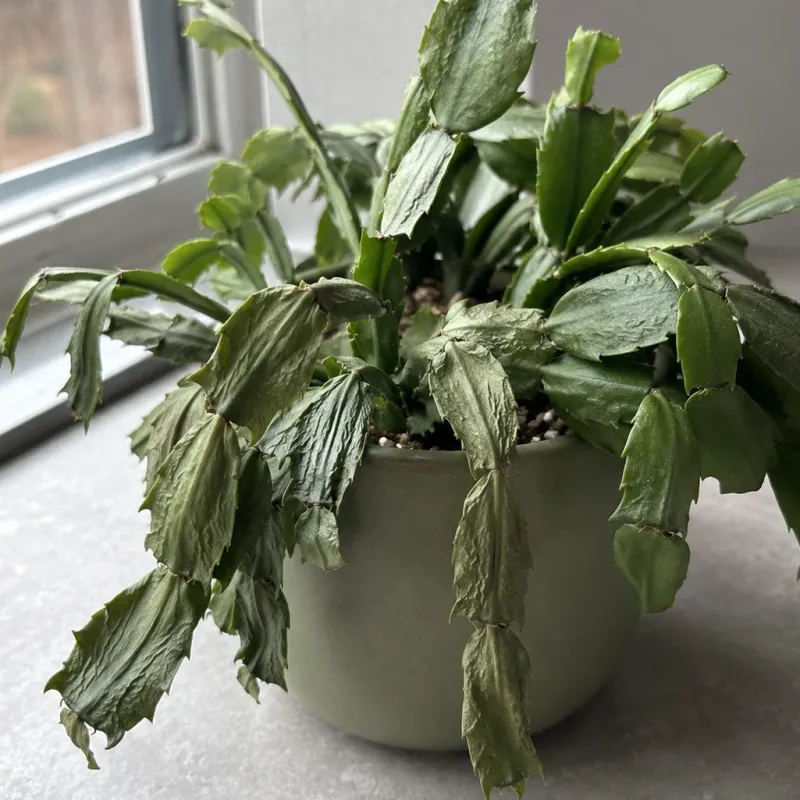
Picture the scene. The stems are puckered, the plant looks tired, and the watering can is already in your hand.
Stop right there and push a finger about an inch or two into the mix first.
Wrinkled stems do not reliably mean thirsty. Both underwatering and overwatering can cause shriveling.
But Illinois Extension says overwatering is the more common culprit, because damaged roots cannot take up water even when the mix is soaked.
Think of roots like straws. If the straws are crushed, pouring more into the glass does nothing for the plant.
It only keeps the mix soggy and the damage going.
So the mix tells you which path to take. If it feels wet or heavy, skip the watering and move on to checking drainage.
If it feels bone dry, underwatering is a real possibility, and UConn Extension describes shriveling from dry conditions too.
Lift the pot as well. A heavy pot usually holds plenty of moisture, while a very light one often means the mix has dried out.
Look at the stems and the mix together instead of following a weekly schedule.
One more note. Many plants sold as Christmas cactus are actually Thanksgiving cactus or hybrids.
Their care is close enough that this check works for all of them.
Two minutes with a finger and a lifted pot gives you a real diagnosis. That beats guessing every time.
If the Mix Is Wet, Check Drainage
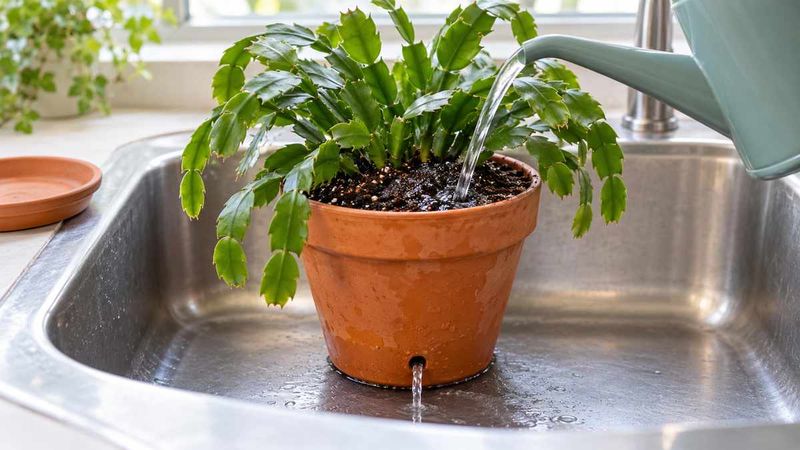
Many holiday cactus plants arrive wrapped in foil or sitting in a pretty outer pot. Lift yours out and look underneath.
A puddle hiding down there is a common reason the roots never get a break.
If the mix is wet and the stems are wilted, pour off any standing water from the saucer or decorative pot. Then confirm the container has open drainage holes and that water can actually escape through them.
Roots need air as well as moisture. Sitting in a swamp, they can suffocate, and that is how a plant ends up limp in wet mix.
Minnesota Extension links wet soil with wilting and root rot, and it advises letting the mix dry and checking drainage.
Set the plant somewhere with good airflow, not in a cold draft, and give it several days. Check the mix every day or two with a finger.
Do not add water until the top inch or so has dried.
Now watch the plant. If the stems perk up as the mix dries, you caught it early.
If it stays wilted even though the mix is wet, more water will not help.
That is your sign to look at the roots instead. Persistent limpness in wet mix points to trouble below the surface, and the next step covers it.
A plant that is drying out slowly is a plant getting a fair chance.
If the Mix Is Very Dry, Water Gradually
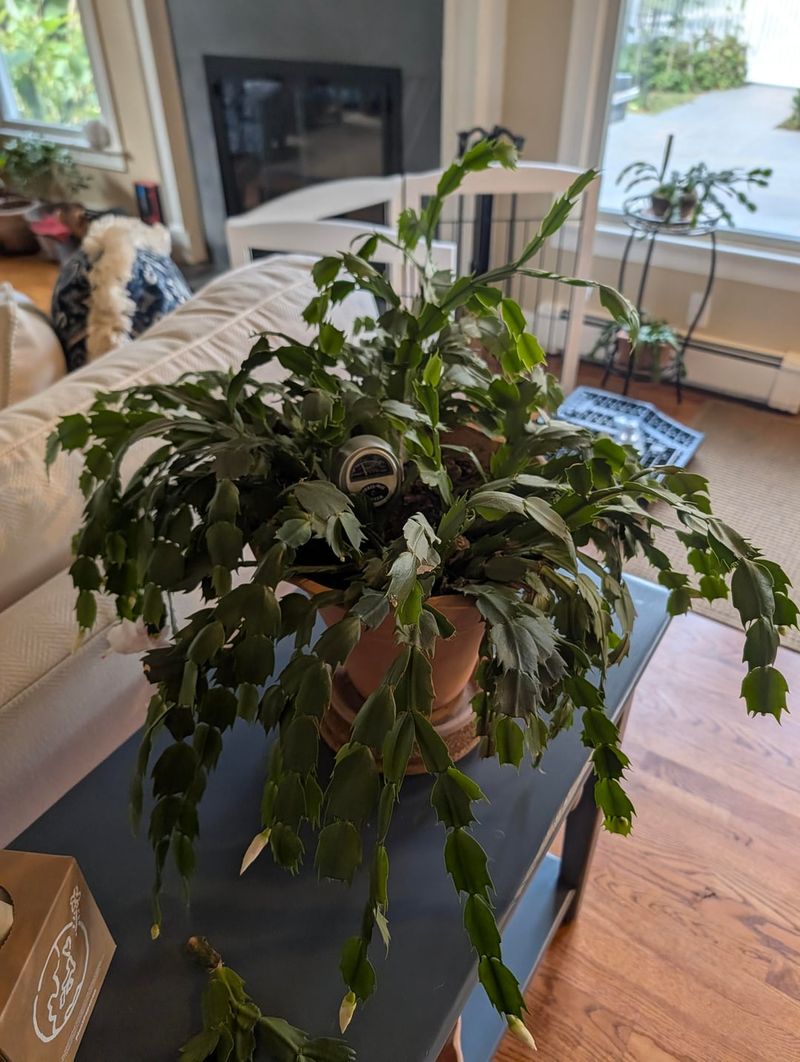
Now the opposite case. You press a finger in and the mix is dusty, light, and pulling away from the pot edge.
A warning about root trouble is not a rule against watering, and this plant may truly be thirsty.
Go gently, though. UConn Extension advises smaller, more frequent waterings for a wilted, underwatered plant rather than one big deluge, because drought-stressed roots may not handle a sudden flood.
Very dry mix can act like a stiff sponge and shed water down the sides. If your water runs straight out the bottom, UF/IFAS suggests watering in stages until the mix takes up moisture.
Here is a simple way to do it. Add a little water, wait several minutes, then add a little more.
Repeat until the mix feels evenly damp, then empty the saucer so the pot does not sit in a puddle.
Do not expect a miracle overnight. Plump stems may take a few days to return, and that is normal for a plant recovering from drought.
Skip the fixed calendar too. How fast mix dries depends on your pot, your room, and the season.
Not every limp plant has dry roots, so check the mix each time.
Slow and steady watering treats the plant like a guest recovering from a long trip.
When Wilting Persists, Inspect the Roots
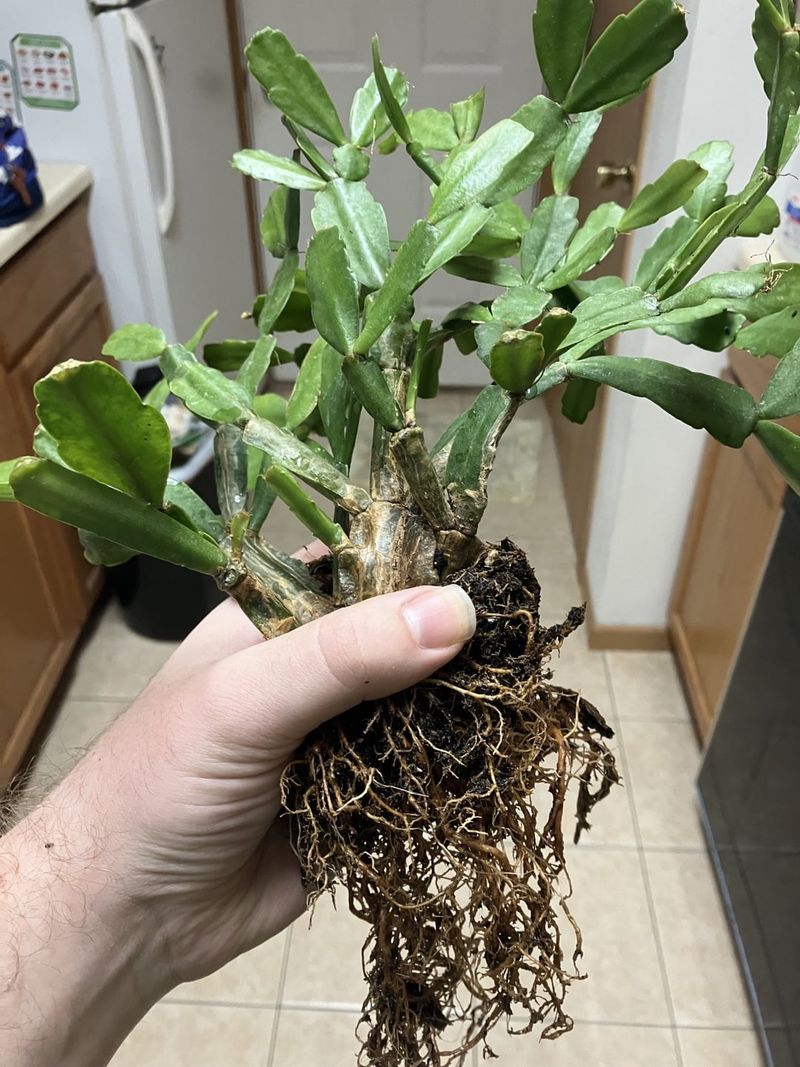
If the plant stays wilted while the mix stays wet, it is time to look underground. Slide it gently out of the pot and spread the root ball on newspaper.
This takes five minutes and tells you a lot.
Healthy roots look firm and light-colored. Rotted roots look dark and feel soft or mushy.
Minnesota Extension describes this dark, soft rot as a sign of root trouble.
If you find some, Wisconsin Extension recommends removing dead or diseased roots. Let the pruned roots air-dry for a few days, then repot in fresh, well-drained mix and water sparingly.
Be realistic here. Pruning and repotting are possible steps, not promises.
Severely damaged plants can be difficult to save, and stem cuttings may be your backup.
Watch for bigger warning signs too. Black, wet lesions at the soil line or stems that collapse can point to more serious rot.
The Pacific Northwest Pest Management Handbooks list several fungal and oomycete causes, and they differ from each other.
That means drying the mix or repotting may not fix it. In that case, taking healthy cuttings sooner can be wiser than waiting.
Roots are quiet workers, and a look at them tells the truth.
Choose Bright, Indirect Light
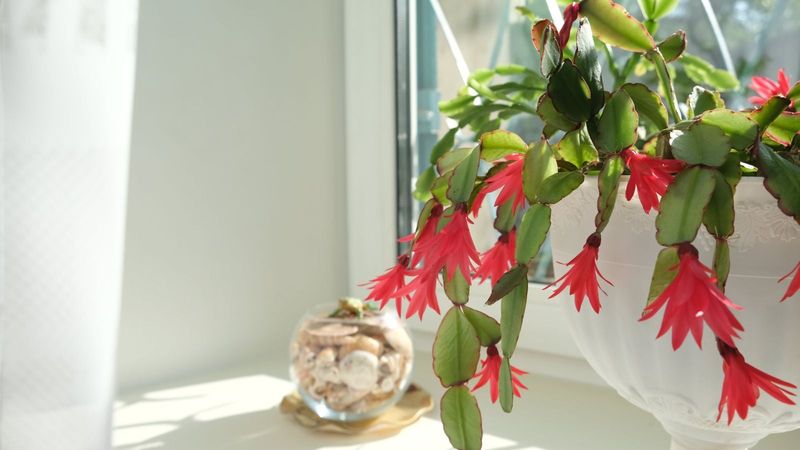
Light gets blamed for a lot, so here is the plain version. Bright, indirect light is what holiday cacti like best.
Think of the glow near a window, not a spotlight on the glass.
Strong direct sun is the thing to avoid. Wisconsin Extension recommends bright, indirect light, and prolonged hot sun can pale or scorch the stems.
Scorched stems look bleached or tan, not puckered and limp. That difference helps you read the plant.
Pale patches on the sunny side point to sun, while wrinkling with wet mix points back to roots.
Low light is a different story. The guidance I have seen treats it as a growth or flowering problem, and does not name it as the usual direct cause of shriveling.
Illinois Extension ties the common wilting trouble to roots and water.
So moving the plant is one layer of care, not a substitute for checking the mix and roots. If you shift it, do it after you have handled moisture first.
A good spot might be a few feet back from a south window, or beside an east window with morning light. Turn the pot a quarter turn now and then so growth stays even.
Give it good light, then let the real diagnosis happen below the surface.
Prevent Repeat Problems With Good Drainage
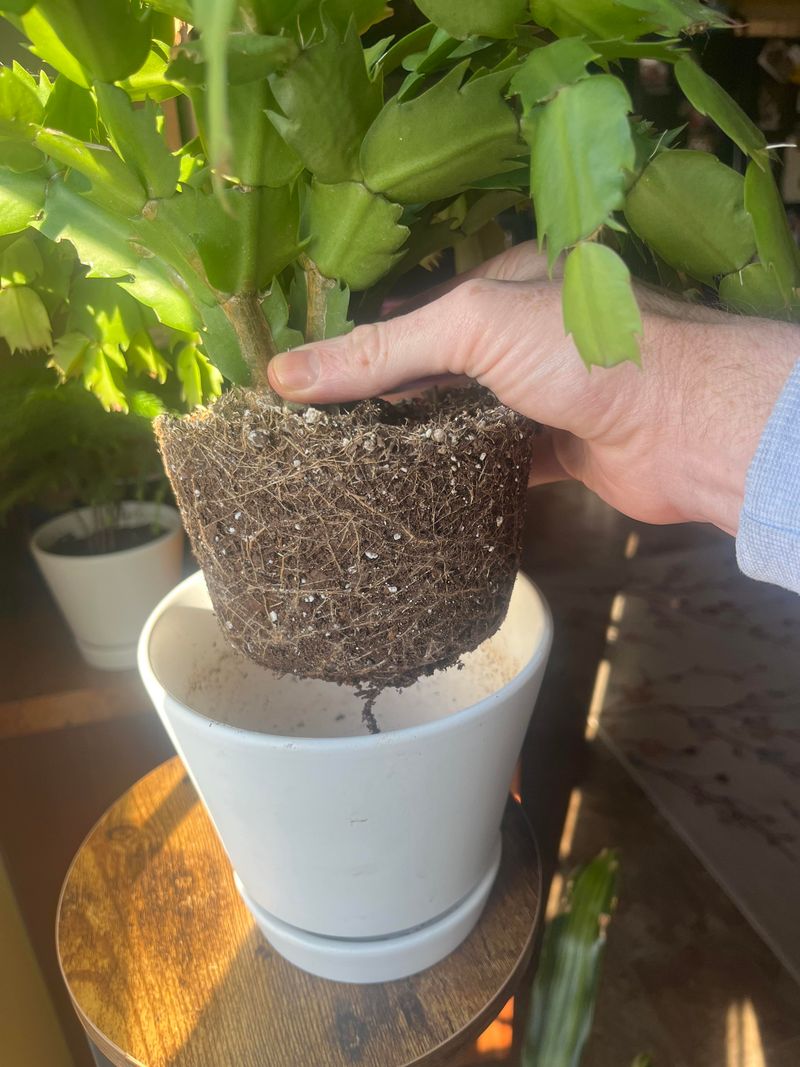
The best fix is a setup that forgives mistakes. Choose a pot with open drainage holes and a loose, aerated mix that drains well.
Empty the saucer after watering so roots never sit in water.
Then judge watering by the mix, not the calendar. Pressing a finger in beats any weekly rule, because pots, rooms, and seasons all change how fast mix dries.
The word cactus can mislead you. Iowa State Extension explains these plants differ from desert cacti, since holiday cacti are rainforest epiphytes that grow on trees in the wild.
Do not give them a desert watering schedule.
And remember that many plants sold as Christmas cactus are Thanksgiving cactus or hybrids. Their care is similar, so these steps apply to all of them.
Not every droop is a problem either. Wisconsin Extension notes that older plants are pendulous, with branches that sag naturally with age.
Shriveling and persistent limpness are what deserve attention.
Be honest about recovery. UConn notes plants may fail to regrow lost roots, so improvement can be slow or incomplete.
Stem cuttings of two to three joints are a possible backup, and rooting can take two to three weeks, but they are not a guaranteed rescue.
A plant with room to breathe tends to repay patience.
