
When Your Feeder Birds Freeze Motionless On The Branches, They Are Watching A Hawk You Have Not Spotted Yet
Follow us on Google
It’s a quiet morning at the feeder, and then every bird goes still. No flapping, no chatter, just a row of small shapes on the branches.
That sudden freeze is often how birds react to danger, and a hawk you have not spotted yet is a real possibility. Here is how to read the moment, what else could be going on, and what to do next without overreacting.
Stillness Can Be a Predator Response
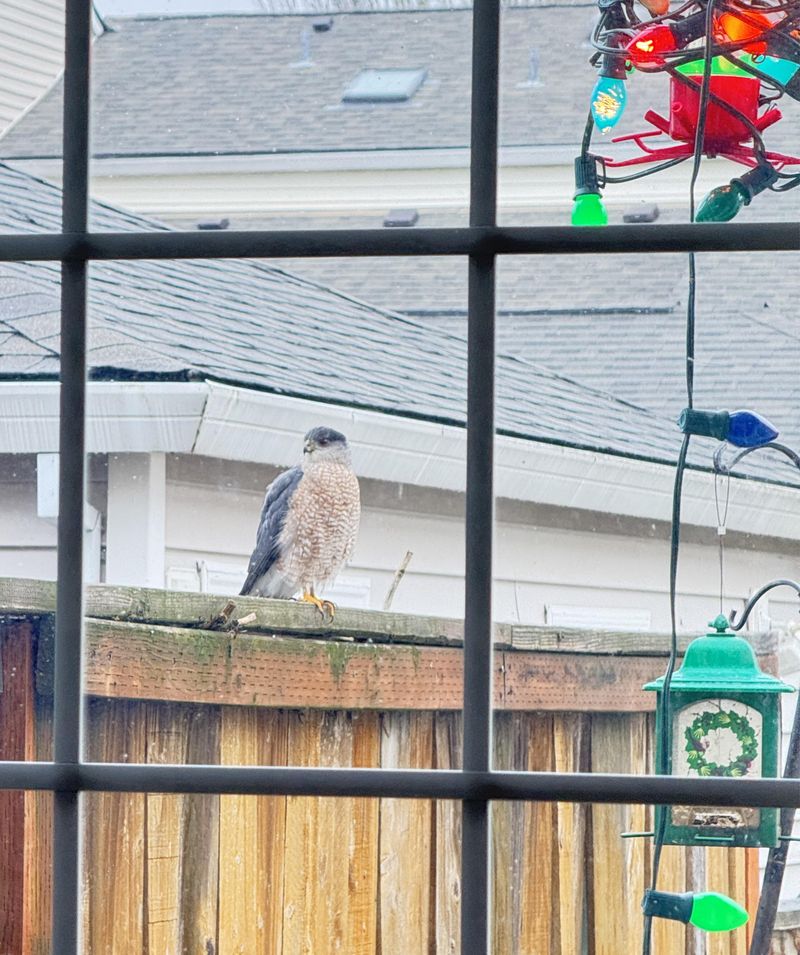
Picture the feeder at 7 a.m., coffee in hand, chickadees and sparrows busy at the seed. Then, all at once, nothing moves.
Birds may freeze after they spot a predator or hear another bird’s alarm call, so an unseen hawk is one possible reason for the hush.
Researchers have watched this kind of social warning at work. In a Florida playback study, birds from 31 species heard recorded Tufted Titmouse alarm calls.
They answered in different ways, including freezing and diving for cover.
Which response they chose varied with the species and the setting. So not every bird at your feeder will react the same way, and that is normal.
A controlled experiment points the same direction. In a study of captive female House Sparrows, birds that heard predator calls moved less than birds that heard sparrow song.
Think of it as a body-language alarm bell that rings in the whole flock.
Neither study tells us how often feeder birds freeze in everyday yards. They show that freezing is a real, documented response, not that it happens every time a hawk is near.
Treat it as a good reason to pay attention, and nothing more yet.
Stillness Does Not Confirm a Hawk
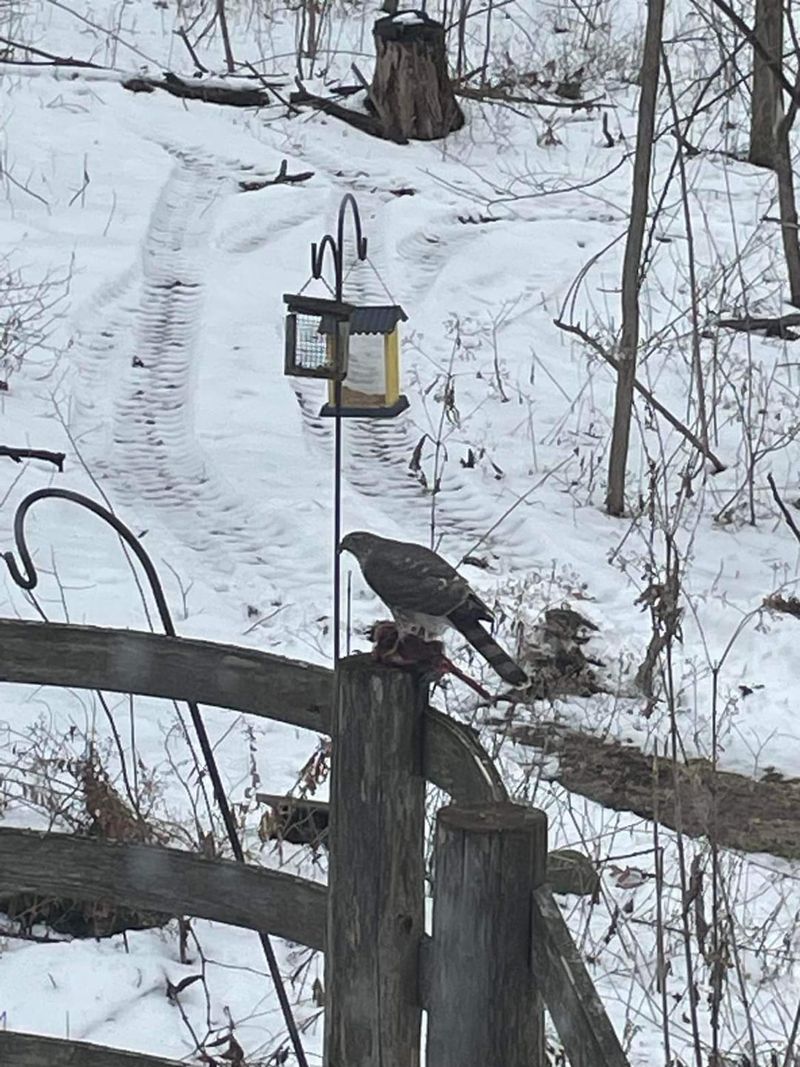
Here is the catch. Stillness is something you can see, but it does not tell you what the bird saw.
A freeze is a behavior, not a diagnosis.
The Florida work shows why. Birds there chose different escape moves, and the choice depended partly on species and distance from cover.
A bird near thick shrubs may dive in, while another in the open may hold still.
Alarms can also be wrong. A computer model of flock behavior looked at what happens when warning signals are ambiguous.
Birds can get false alarms, and they may not respond to every signal. That work is a model, not a study of backyard feeder flocks, so use it as a way of thinking rather than a measurement of your yard.
The practical meaning is simple. A sudden pause is a reason to look around and gather context.
It is not proof of a hawk, and it cannot tell you how close one is or which way it is facing.
Think of the freeze as a smoke alarm that sometimes chirps for burnt toast. You still check the kitchen, but you do not call the fire department yet.
Watch Quietly for More Context
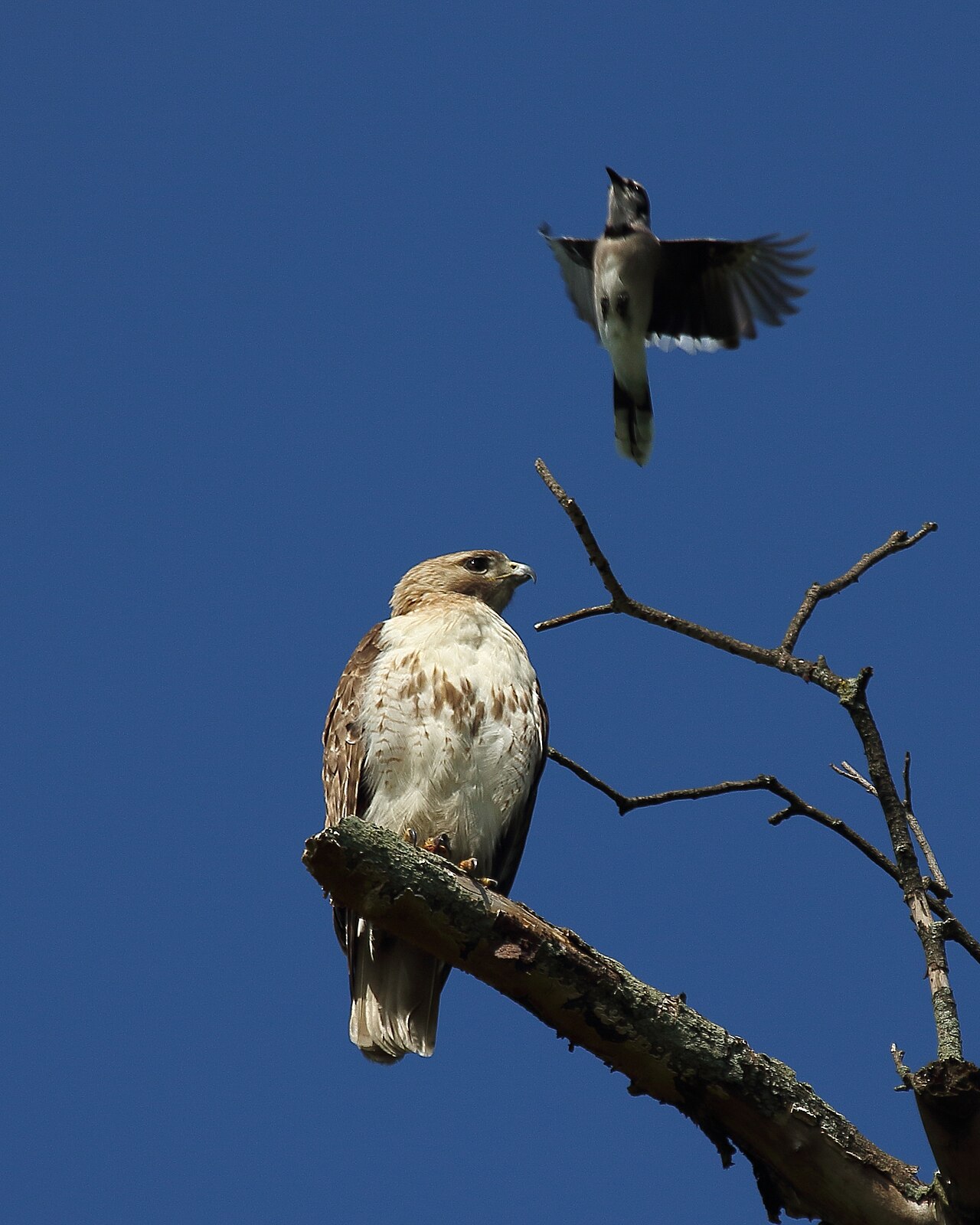
Stay inside and keep your movements small. Watching from a window or a few yards back keeps you from adding stress to a flock that is already tense.
Look for extra clues. Birds may give sharp alarm calls, a hawk may sit on a post or pass overhead, or the whole flock may scatter and then return a few minutes later.
Any of these can make a predator explanation more believable.
But none of them is a reliable test. A hawk sighting does not tell you what the birds saw a minute earlier, and a quiet return does not prove a hawk was ever there.
Intent and distance stay unknown.
Hawks can also be easy to miss. A Cornell FeederWatch camera clip shows a Hairy Woodpecker holding still while a Cooper’s Hawk perches nearby.
It is a vivid example of how a hawk can sit close while the feeder looks calm, not proof that every motionless flock means a hawk.
Give it five or ten minutes and simply notice what happens next. Treat each outcome as one more clue, and let the picture build slowly.
A Quiet Feeder Can Have Other Causes
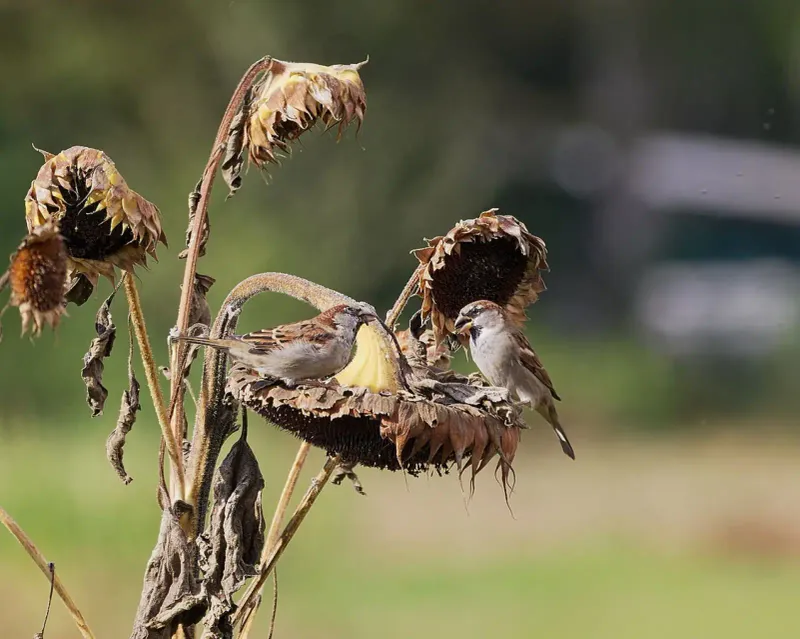
Plenty of quiet feeders have nothing to do with hawks. Before you treat a slow morning as an emergency, run a simple yard check.
U.S. Fish and Wildlife Service guidance in its feeding questions sheet says birds may desert a feeder for several ordinary reasons.
Natural food nearby can pull them away. Spoiled seed, a contaminated feeder, or a feeder in an exposed spot can do the same.
So look at the seed first. Does it smell musty, look clumped, or feel damp?
Then check the feeder itself for grime or mold. Finally, glance around the yard to see whether berries, seed heads, or insects are drawing birds elsewhere, and whether the feeder sits out in the open.
Cleaning is its own routine and is separate from any hawk response. The agency’s backyard-feeding guidance recommends cleaning seed feeders at least every two weeks and sweeping away old or discarded seed.
Think of an empty feeder like a restaurant with a bad review. Birds may simply be eating somewhere better, and a fresh, clean setup is the easiest fix.
When a Hawk Keeps Birds Away, Consider a Pause
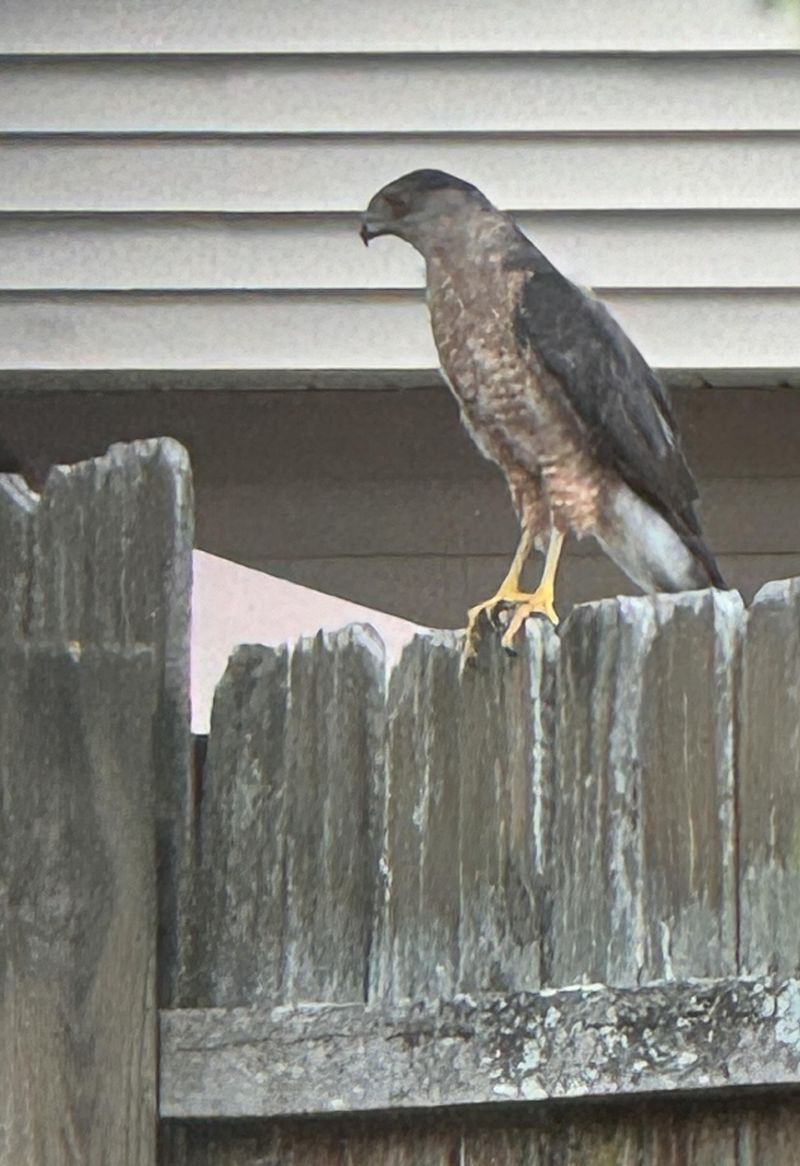
One freeze does not call for taking the feeder down. A single quiet moment is a thing to watch, not a reason to act.
Things change if a hawk becomes a regular problem. Michigan’s Department of Natural Resources advises that when hawks or owls repeatedly attack feeder birds, you stop filling the feeder or take it down for at least two weeks.
It also advises cleaning up spilled seed.
Audubon gives a different, less specific suggestion. In its bird FAQ, it says to pause feeding for a few days if a hawk is keeping other birds away.
That advice does not require repeated attacks.
Keep the two apart. Michigan’s two-week window is that agency’s guidance for repeated attacks, and Audubon’s shorter pause fits a hawk that hangs around and scares off other birds.
Neither pause is a guarantee. A break may not make a hawk leave, so treat it as one layer of a calm response.
Hawks are protected wild animals. Michigan DNR notes they fall under the Migratory Bird Treaty Act, so never try to harm, trap, or handle one.
Routine Feeder Care Supports Birds, Not Hawk-Proofing
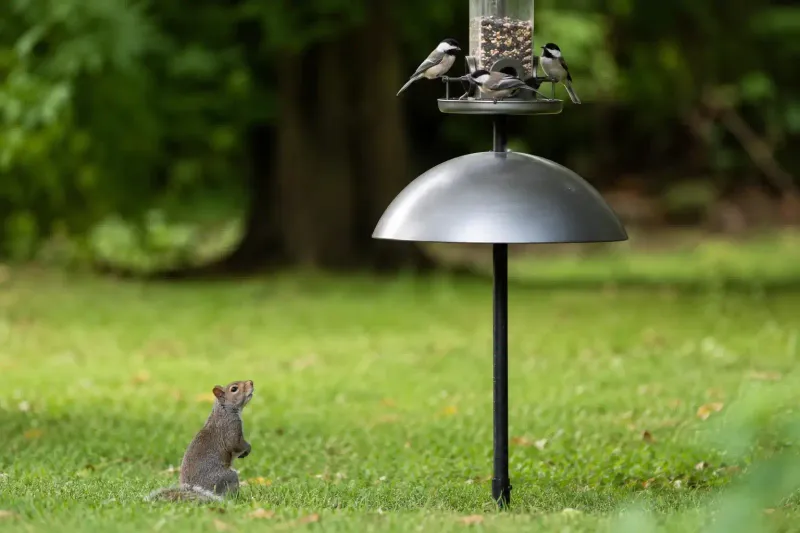
Good feeder habits help birds in general, but they do not hawk-proof anything. Think of them as everyday housekeeping.
For placement, the Project FeederWatch handbook recommends nearby natural cover where birds can duck out of sight. It also warns against putting a feeder right beside branches that cats or squirrels could use as launch points.
About 10 feet is offered as a compromise. That is general placement advice, not a tested way to stop hawk attacks.
Pair that with hygiene. U.S.
Fish and Wildlife Service guidance says to clean seed feeders at least every two weeks and sweep away old or discarded seed. Do it whether or not a hawk has ever visited.
So the sequence is easy to remember. Observe quietly, check the ordinary feeder conditions, and then respond to the evidence that actually applies, rather than to one pause.
The next time the flock goes silent, you will know the hush is a clue, not a verdict.
