
Bluebirds Stay in Your North Carolina Yard All Winter When This Shelter Goes Up Before the Hard Freeze
Follow us on Google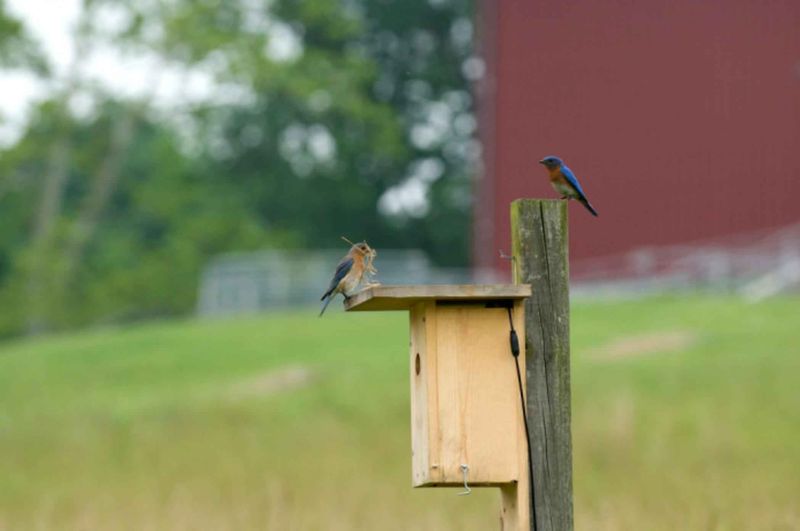
A small, dry wooden box with an entrance and a few perches inside can give bluebirds a place to shelter on a bitter North Carolina night. That is the shelter this story is about, and you can have it ready before the hard freeze.
Birds make their own choices, so a box is an invitation and not a promise. Here is how to prepare one, place it, and set honest expectations for spring.
A Roost Box Offers a Place to Shelter
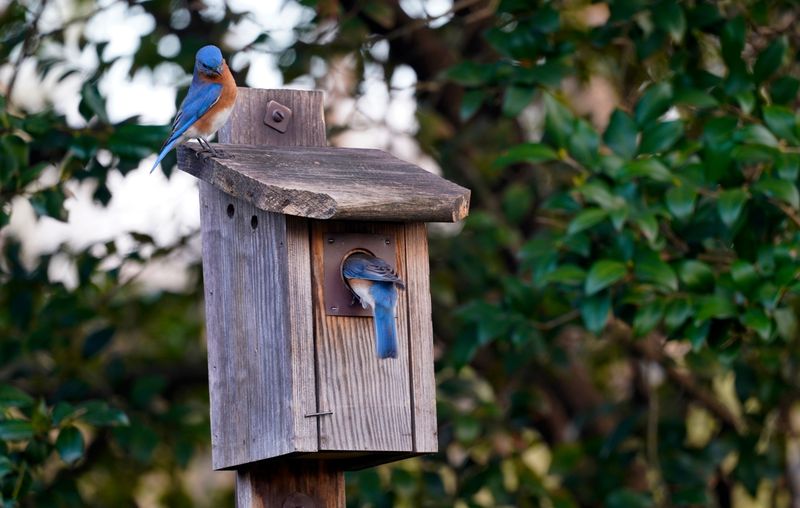
Picture a January night in the Piedmont when the temperature drops fast and the wind finds every gap. A small, dry wooden box with an entrance hole can give eastern bluebirds a spot out of that wind.
That is the whole offer, a chance at shelter.
Bluebirds decide for themselves. Some yards get visitors on cold nights and some never do, so think of the box as a porch light left on, not a guest you have booked.
According to N.C. Cooperative Extension, a small wooden box with an entrance can serve as a roost.
Adding perches inside gives birds places to sit instead of crowding onto the floor. Extension suggests a roosting ladder or diagonal sticks for that job.
Here is the part many people miss. A roost setup and a spring nest box are not the same thing.
Perches and a lower entrance are optional winter touches, and they do not make a box right for nesting.
A box meant for eastern bluebirds in spring needs the proper size, ventilation, drainage, and a way to open it for cleaning, all laid out in NC State Extension’s box-building guidance. If your box already meets those standards, you are halfway there before you pick up a tool.
So start with a sound box, offer the shelter, and let the birds make the call.
Cold Nights Can Bring Birds Together
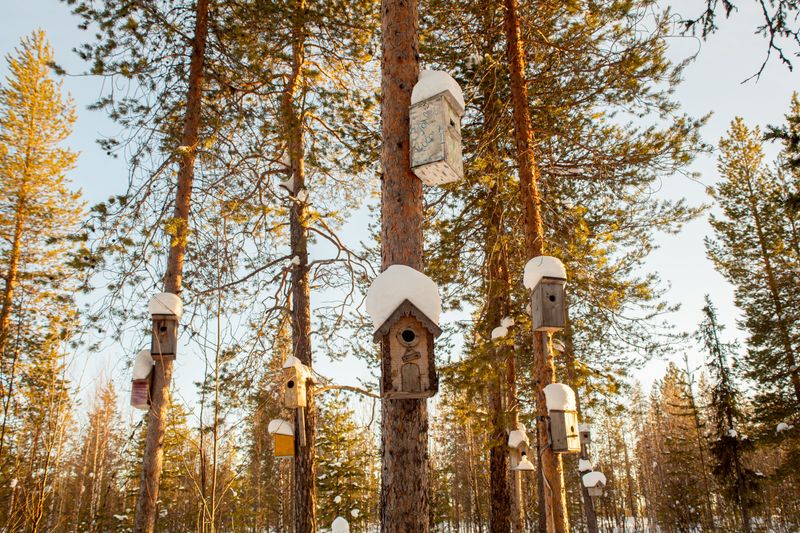
On the coldest nights, bluebirds do something that looks a lot like a sleepover. The N.C.
Wildlife Resources Commission notes that they may roost in woodland flocks or huddle together in nesting cavities.
Sharing space helps them hold in warmth. But seeing birds huddle somewhere does not tell you a box in your yard will keep a flock around all winter.
They roam, and they choose.
A U.S. Forest Service review gives one useful snapshot.
In Tennessee, bluebirds were seen roosting in nest boxes on especially cold days, at or below 14 degrees Fahrenheit, in groups of 1 to 16 birds.
Keep that in context. It is a Tennessee observation, not a North Carolina trigger.
No magic temperature or calendar date means your box will fill, so do not wait for a forecast number to act.
Shelter also has limits. Research on severe winter storms in Arkansas, Oklahoma, and Mississippi, described in a 2024 study, found that cavity roosting and huddling may not be enough when cold drags on and food runs short.
That is a candid reason to treat a box as one layer of help. Berries, water, and cover in your yard are the other layers.
Prepare the Box for Winter Roosting
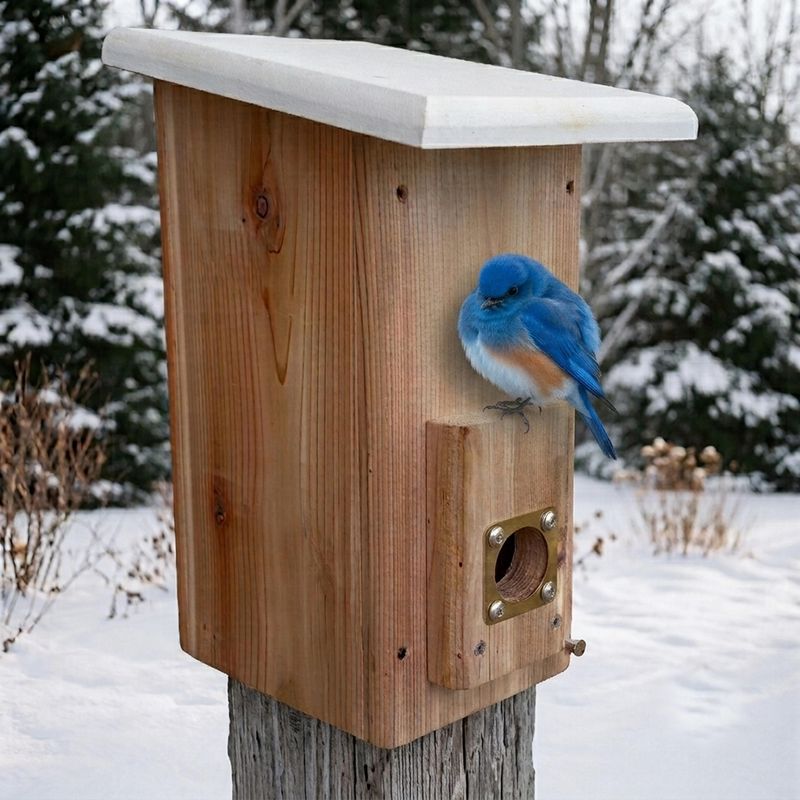
Fall is your window, and the job takes about an afternoon spread over a few days. Begin by opening the box and clearing out old nesting material.
Next, leave it open to air out for a few days. Then add a roosting ladder or a few diagonal sticks inside so birds have places to perch, as N.C.
Cooperative Extension recommends.
Here is one optional tweak. If your box design allows it, you may turn the front panel so the entrance sits lower, which can help hold in heat.
Only do this if the panel is built to turn. Do not rotate the whole box, and skip the change entirely if your design does not support it.
Now the warning. It is tempting to plug every vent to trap warmth, but please do not make permanent changes that cut off ventilation or drainage.
NC State Extension says nest boxes need both.
A box that cannot breathe or drain can turn damp and stuffy, and it still has to work well in a warm, muggy North Carolina spring. Any winter adjustment should be easy to undo.
Keep it simple, keep it reversible, and your box will be ready for both seasons.
Spring Nesting Needs a Suitable Box
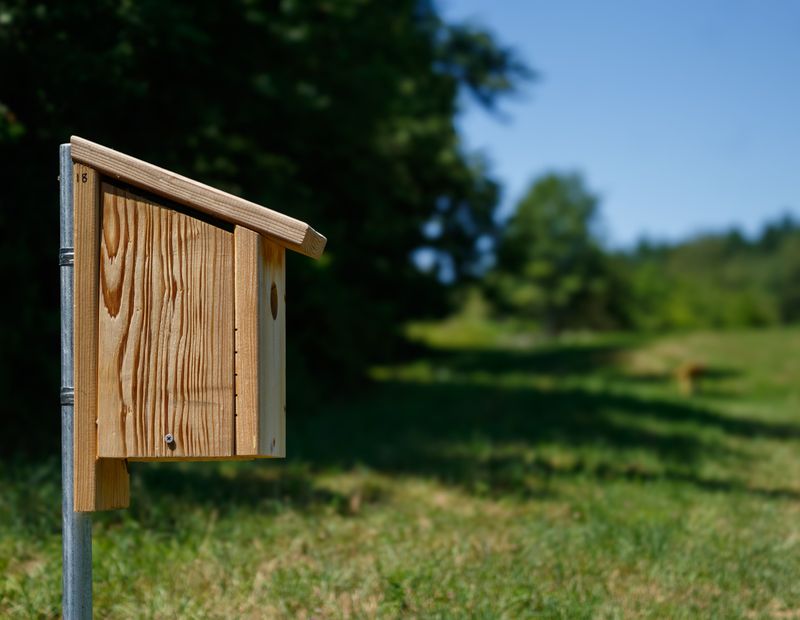
Come March, a roost box with sticks inside is not enough. A nesting pair wants a box built to their measurements, and you can check yours in about ten minutes with a tape measure.
Here are the specifications from NC State Extension for an eastern bluebird nest box. The floor should measure 5.5 by 5.5 inches, and the box should be 9 inches deep.
The entrance hole should be 1.5 inches across.
The box also needs drainage holes and ventilation holes. Use untreated, durable wood, and leave off any exterior perch, since an outside perch is not part of the recommended design.
Finally, the box should open so you can clean it.
Notice what is missing from that list. Internal roosting perches and a lowered entrance are winter extras, and they do not replace any of these nesting basics.
If your box falls short, say the hole is wider or there is no way to open it, plan to swap it or fix it before nesting season rather than hoping the birds will not mind.
A well-built box is the one thing you control, so it is worth getting right.
A Pole Baffle Deters Some Climbing Predators
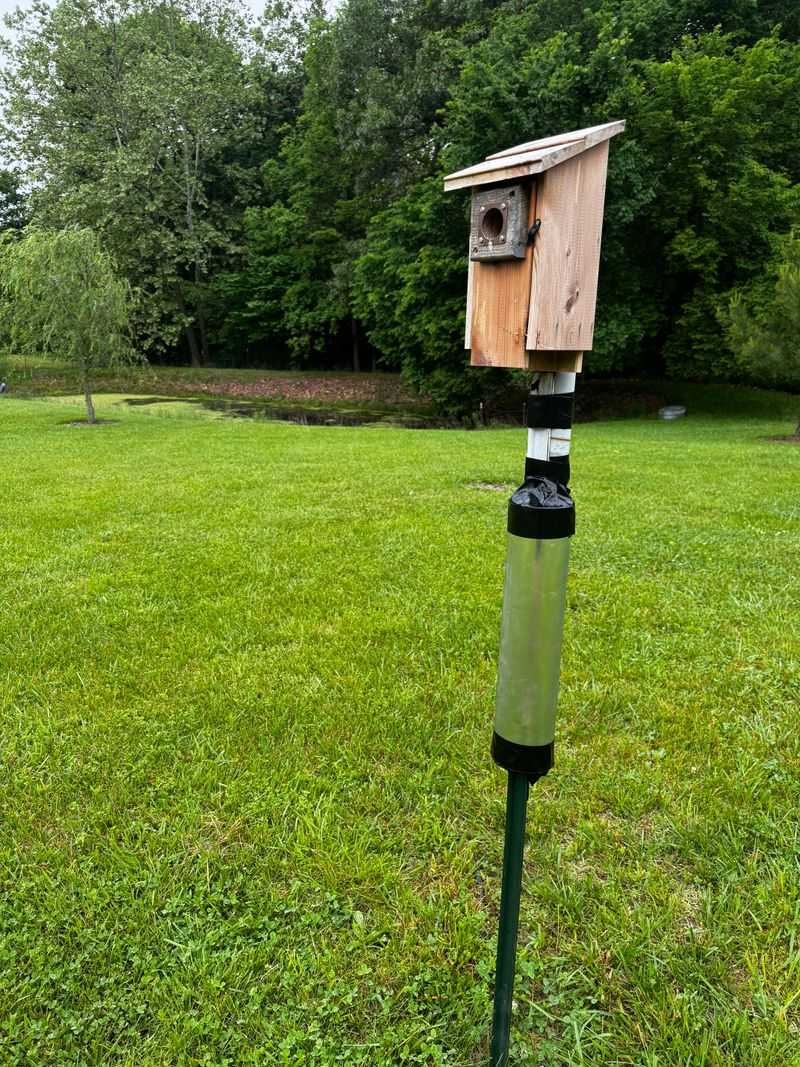
Raccoons are patient, cats are sneaky, and snakes are surprisingly good climbers. Opossums are on the list too.
The N.C. Wildlife Resources Commission names these animals as bluebird predators and recommends a pole-mounted box with a baffle.
The setup is simple. Mount the box on a self-supported pole, then fit a baffle below the box.
The baffle helps deter climbing predators by blocking some routes up the pole.
Notice the wording, though. It helps deter some of them.
A baffle cannot guarantee safety from every predator or every approach, so please do not call any box or guard predator-proof.
A peer-reviewed review of nest-box protections backs up that caution. It notes that how well protective measures work varies, and that some modifications can have unintended effects on temperature, humidity, and parental access.
That is a good reason to keep things plain and well chosen. Pick one sturdy pole and baffle, and avoid piling on extras you have not thought through.
Check the setup now and then, especially after storms, so the baffle stays snug and the pole stays steady.
Choose an Open Spot for the Box
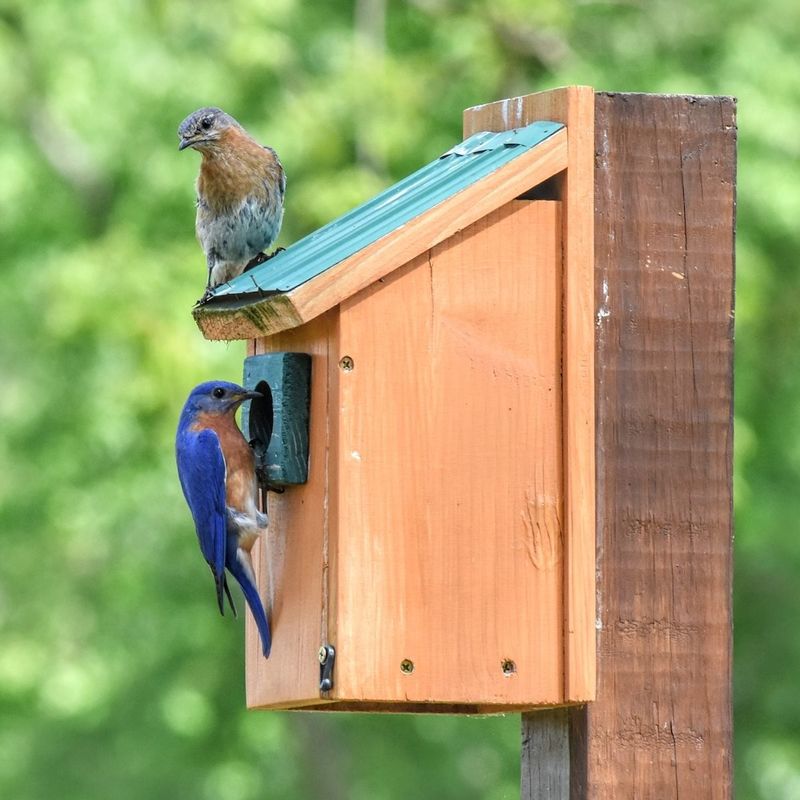
Walk your yard like a bluebird looking for a perch to scan the grass. These birds favor open places such as fields, pastures, and lawns, so the best spot is usually out in the open and not tucked under dense trees.
For height, NC State Extension recommends mounting a nest box 4 to 6 feet off the ground. The North Carolina Bluebird Society suggests a pole about 5 feet high with a predator guard.
The Society also advises pointing the entrance away from prevailing winds, toward the southeast if possible. That keeps cold gusts from blowing straight in.
Treat that as a helpful preference, not a rule that guarantees occupancy. A box facing the right way can still sit empty, and a plain spot sometimes gets noticed.
Notice also that none of this depends on a freeze date. Choose a place you can see from a window or porch and reach easily for cleaning.
A box you can watch is a box you will actually maintain.
Open grass, a steady pole, and a sensible direction are enough to start.
Keep Expectations Realistic in Spring
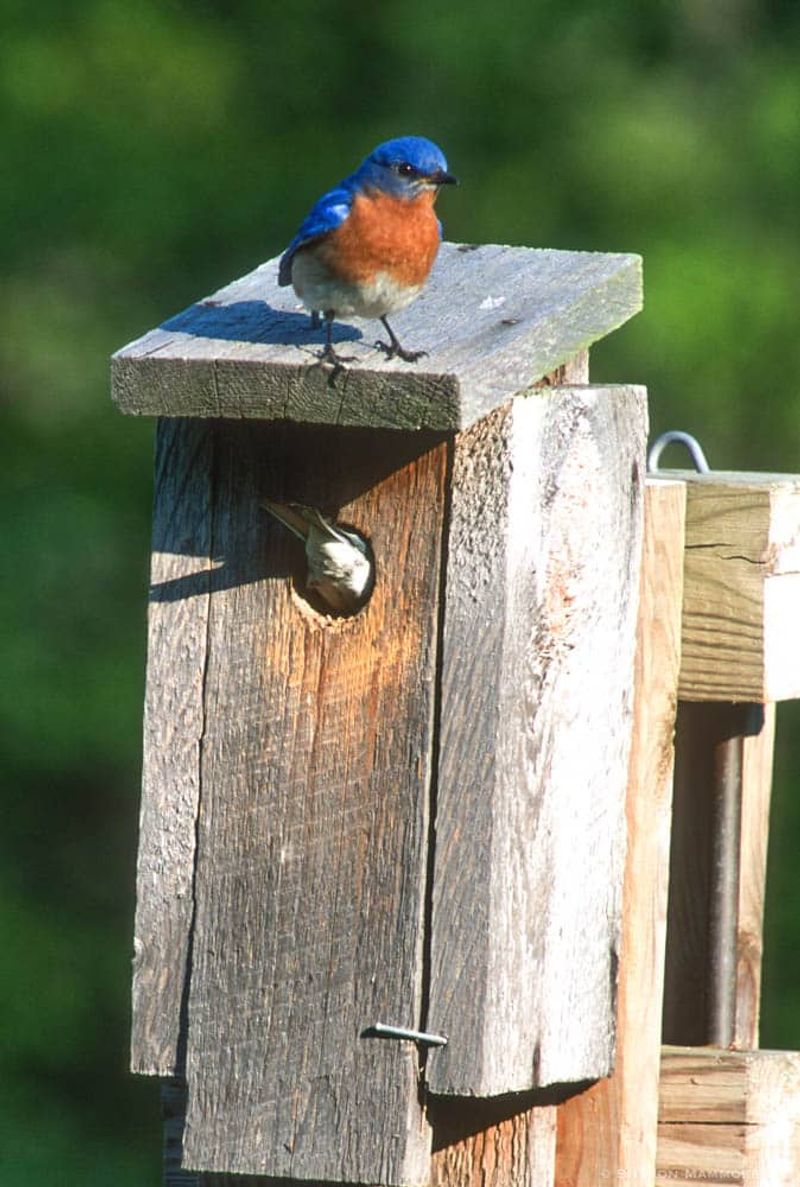
Bluebirds do not need your box to get through winter. They may also find shelter in woodland flocks, brush piles, leafy shrubs, or stacked firewood, as N.C.
Cooperative Extension points out. A tidy brush pile at the yard edge is a fine companion to a box.
Now the part that surprises people. In a North Carolina study of more than 300 nest boxes over two winters, spring occupancy was statistically similar whether boxes stayed open all winter or were blocked, 77.8 percent versus 80.4 percent.
The researchers also found no difference in when first eggs appeared. So winter access did not improve spring occupancy or change first-egg timing.
Winter shelter is a kindness for cold nights, not a way to win a nesting pair.
Maintenance is where you can make a real difference. NC State advises cleaning boxes each year after the young have fledged, and you can also clean in February before nesting season begins.
Skip pesticides inside the box. The North Carolina Bluebird Society advises against them.
And leave active nests alone, since the N.C. Wildlife Resources Commission notes that bluebirds, their nests, and their eggs are protected.
Put the box up, keep it clean, and let the birds surprise you. A quiet yard in February can still hold a blue flash by April.
