
Your Christmas Cactus Turning Red Is Not Dying, It Is Telling You Exactly What It Needs
Follow us on Google
Those red-tinged segments on your Christmas cactus are a signal, and they’re not a death sentence. Red gives you a clear reason to stop and check what the plant has been through lately.
Sun, soggy soil, and a heavy flush of flowers can all be behind it. Here is how to read the clues so you can choose the right next step.
Red Segments Give You a Place to Start
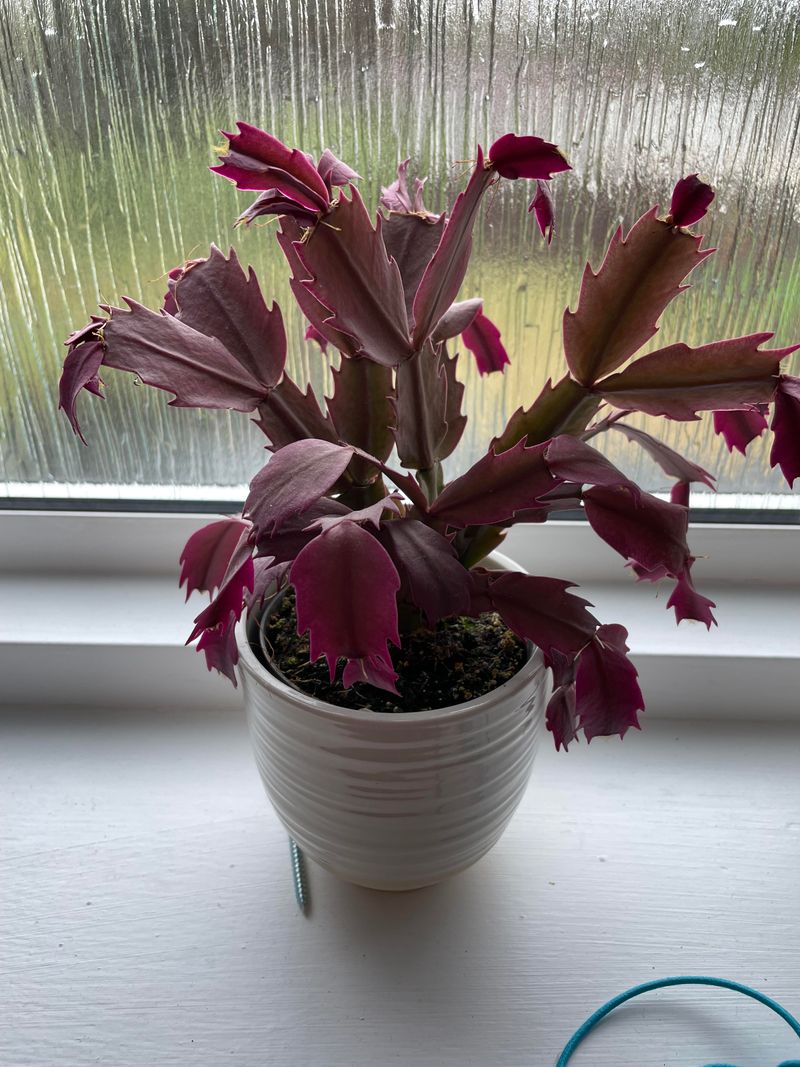
Picture a gray December morning, the kettle warming, and you notice the edges of your Christmas cactus have gone a rusty red. That small shock is understandable, but the color is not a verdict.
It is a nudge to look closer.
Here is the catch. Red does not point to one single cause.
UC Master Gardeners of Sacramento County describe red segments as a stress sign, with possible causes that include too much sun, overwatering, or the strain of a heavy bloom. Any of those could be at work, and sometimes more than one.
So think of the red like a smoke alarm. It tells you to walk through the house, but it does not tell you which room is the problem.
A plant with red segments is not automatically healthy, and it is not automatically dying either.
The way forward is to compare what has changed recently with what the plant looks like now. Ask yourself three things.
Did the plant move to a sunnier spot in the last few weeks? Has the potting mix stayed damp for days on end?
Is the red tissue smooth, or does it look sunken and damaged?
Those answers matter more than the color itself. They keep you from reaching for a quick fix that does not fit, like a fertilizer or a new watering routine, when the real cause might be a window.
The next sections walk through each check in order, starting with light.
Check for a Change in Sunlight
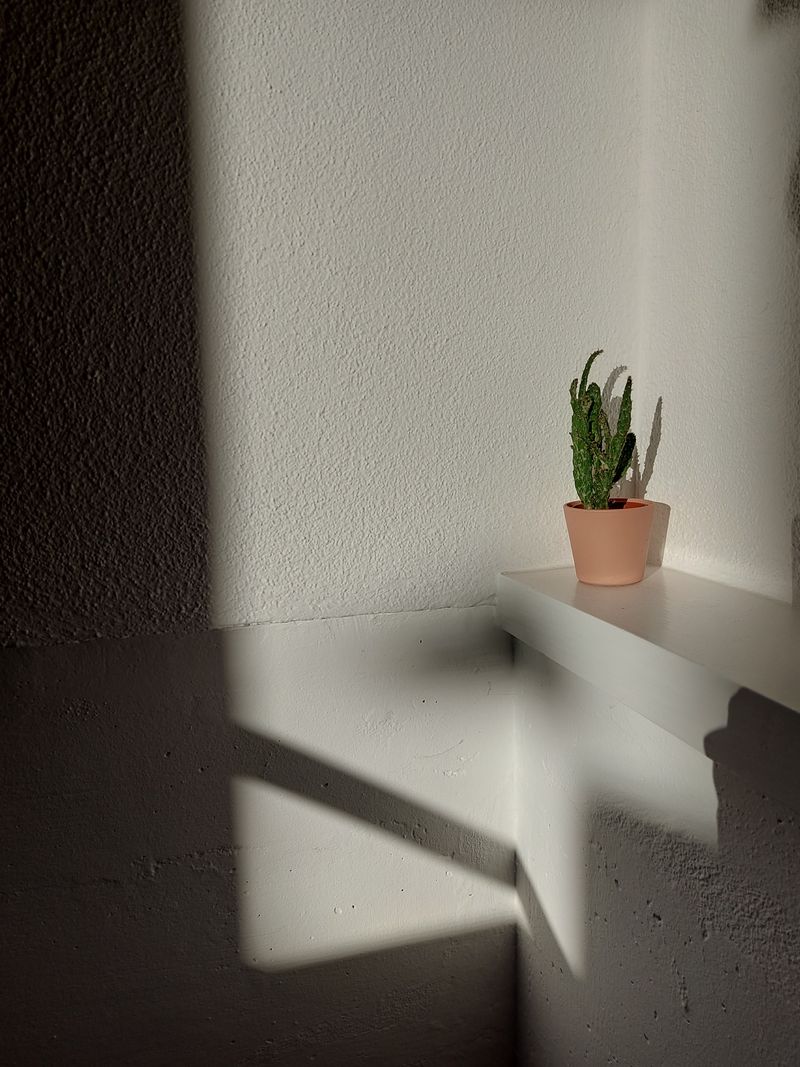
Most people forget that the sun moves. A window that was gentle in October can blast a shelf by December, when the sun sits lower and reaches deeper into the room.
Your cactus may not have moved at all, yet its light changed.
Holiday cacti are rainforest epiphytes from Brazil, which means they grow on tree branches in dappled shade, not in open desert. The NC State Extension Plant Toolbox points to bright, indirect light as the better fit.
Direct sun can burn or bleach the stems, and redness may show up as part of that stress.
Here is a simple check. Think back over the last two to three weeks.
Did the plant go to a new window, onto a porch, or out from behind a curtain? If so, sun is a strong suspect.
If the plant has been sun-exposed, move it to bright, indirect light. That could be a few feet back from the glass, or behind a sheer curtain.
Then leave it there. Hopping it around the house looking for a perfect spot adds a second stress on top of the first.
Keep this possibility apart from the soil question. A plant that turned red after a sunny move but sits in dry mix points one direction.
A plant in a dim corner with wet mix points another. Light is only one clue, and the soil is next.
Let the Soil Guide Your Watering
Forget the Sunday watering habit. Your cactus does not read a calendar.
How often it needs water depends on the pot, the mix, the light, and the room temperature, so a fixed weekly schedule will sometimes be wrong.
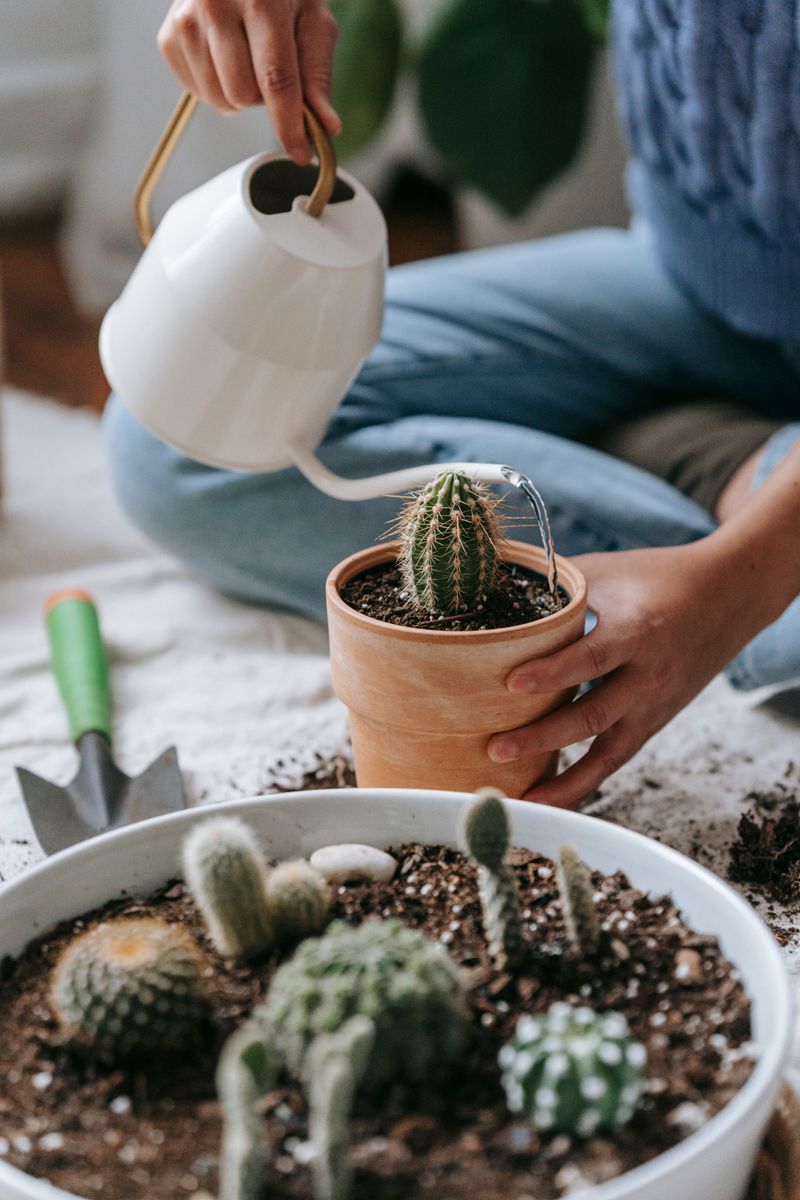
The University of New Hampshire Extension ties watering to the actual condition of the mix. So push a finger into the soil.
If it feels dry to the touch, water thoroughly and let the extra drain out the bottom.
If the mix still feels wet, do not add more water. Instead, lift the pot and look underneath.
Make sure the drainage hole is open and the pot is not sitting in a saucer of standing water. A good pot works like a gutter, moving extra water away before it pools around the roots.
Why does this matter? Waterlogged soil can contribute to root rot, and overwatering is one of the possible sources of stress linked with red segments.
University of Minnesota Extension also stresses a well-drained mix for holiday cacti.
Still, red alone does not prove root rot. Plenty of red plants have healthy roots.
Use the soil as your guide, and let wet or dry mix, not color, decide whether the watering can comes out.
Look Closely at Sunken Spots
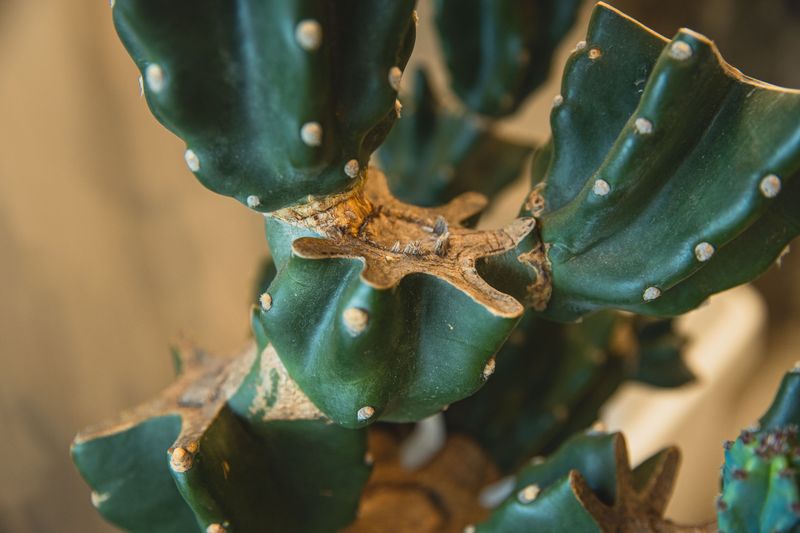
Smooth and sunken are two very different words. A segment with an even red or purplish tint, still firm and plump, is one thing.
A spot that looks pressed in, reddish-orange, and soft is another.
Greenhouse growers know this difference well. UMass Amherst greenhouse guidance describes reddish-orange sunken spots, along with segments falling off, as possible signs of Fusarium disease.
Other rot diseases can also cause lesions, discoloration, or collapse.
Keep the limits in mind. That advice comes from commercial production, and you cannot confirm a disease by looking at a leaf in your living room.
Treat these as warning signs, not a diagnosis.
So what do you do with them? Do not wave off worsening lesions as ordinary stress.
Check the spot every few days. Is it spreading?
Are more segments dropping? Is the mix staying wet?
If the answer is yes, take the problem seriously. Ease off watering if the mix is soggy, make sure the pot drains, and consider asking your local Cooperative Extension office or a trusted garden center for help.
A plant with only smooth red edges can usually be watched calmly. A plant losing segments deserves faster attention.
Short Days and Cool Nights Help Set Buds
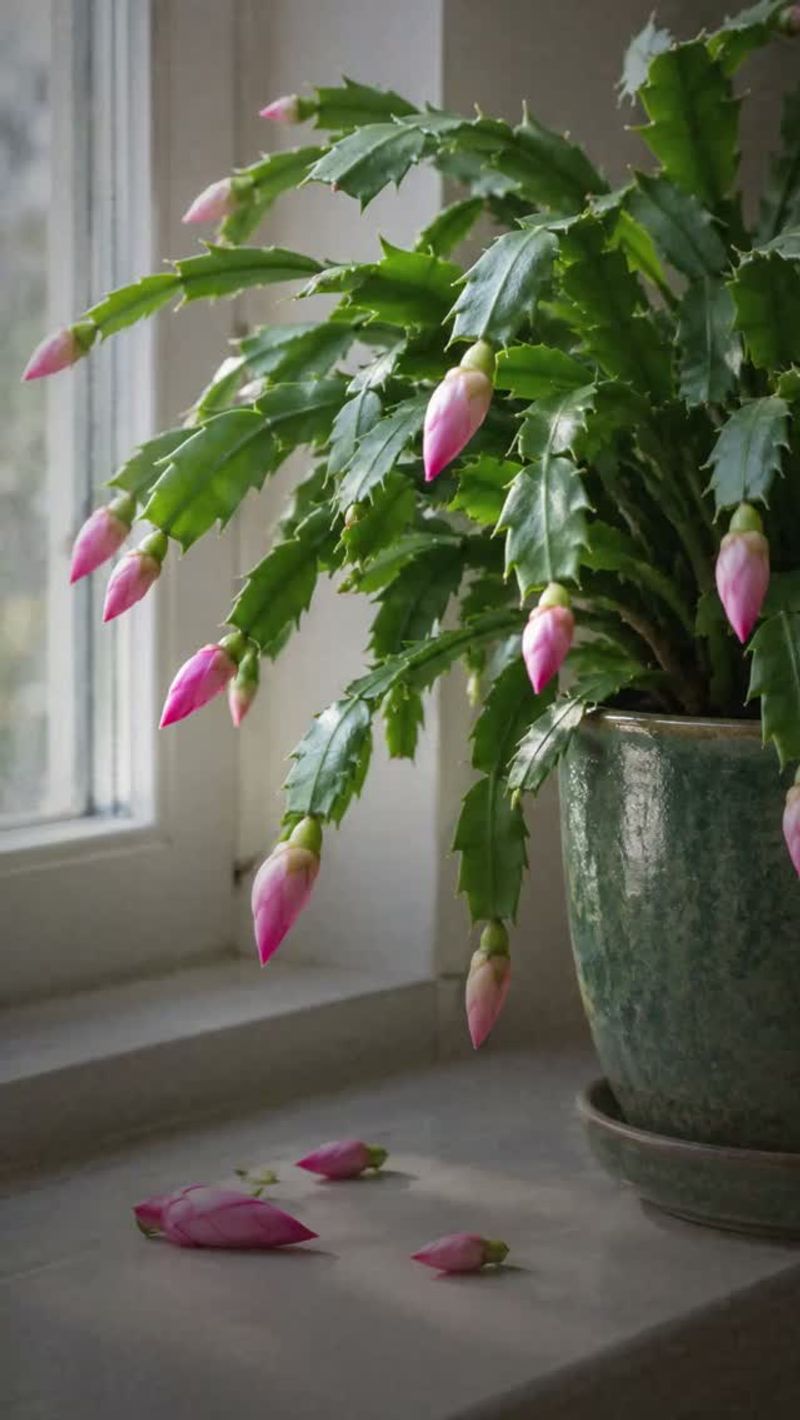
Here is a myth worth setting down. Red segments are not a sign that blooms are coming.
Flowering follows its own cues, and color is not one of them.
According to University of Minnesota Extension, Christmas and Thanksgiving cacti generally form buds after about six weeks of shorter days, paired with cool nights. The extension lists 55 to 65 degrees F at night as a suitable range.
Treat that range as guidance, not a guarantee. Homes differ, cultivars differ, and a plant in a 66 degree room may still set buds.
The number is a target to aim near, not a pass or fail test.
In practice, that means long, uninterrupted nights. A plant parked under a bright lamp that stays on until bedtime gets fewer dark hours than it needs.
A spare room or an entry that stays cooler at night can work well, as long as it is not drafty.
One more honest limit. Fixing a stressor like too much sun or soggy soil may leave you with a healthier plant, but it does not ensure buds.
Think of day length and cool nights as the invitation, and the plant decides whether to accept it.
Keep Conditions Steady While Buds Develop
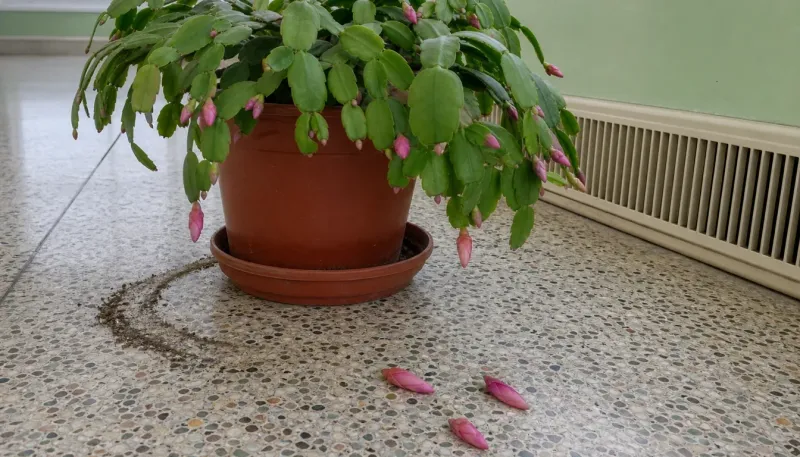
Once buds appear, the best move is often to do less. Buds are sensitive, like soap bubbles that pop at a bump.
Drafts and sudden swings in temperature, humidity, or light can lead to bud drop.
That is the warning from University of Minnesota Extension. So keep the plant away from heating vents, cold glass, and doors that open to winter air.
And resist the urge to carry it from room to room chasing an ideal spot.
Iowa State notes that dryness, drafts, or overwatering can contribute to bud drop during development, so steady, moderate care matters here. Keep checking the mix with your finger, as before, and water only when it calls for it.
A quick word on the name. Many plants sold as Christmas cactus are actually Thanksgiving cacti or hybrids, according to Iowa State University Extension.
Their segment shapes differ, and bloom timing varies by cultivar. Care is broadly similar, but do not count on a bloom date based on the label.
So when something looks off, go back to what you can see. Look at the light, the mix, and the tissue, then change one thing at a time.
A plant read patiently tends to repay you in its own season.
