
The Native North Carolina Trees That Draw Owls In and Quietly Shrink Your Rat Problem
Follow us on Google
You’re on the back porch after dark, sweet tea sweating in your hand, when something skitters along the fence line toward the trash cans. That flicker of movement is a rat, and in North Carolina it is rarely alone.
Here’s the good news: a handful of native trees can invite owls to patrol your yard every night, for free. Pick the right ones, skip the poison, and your rat problem can quietly shrink while your yard gets a little wilder in the best way.
1. White Oak
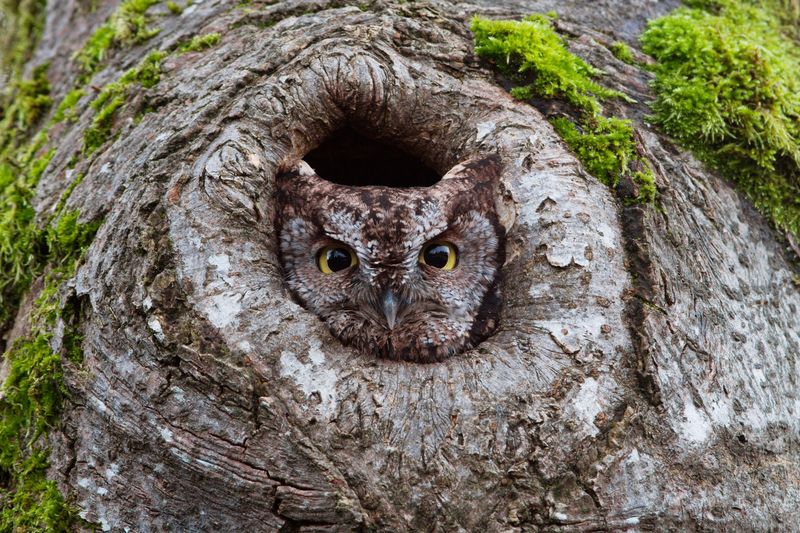
An eastern screech owl weighs about as much as a deck of cards, and it hunts like it weighs ten pounds. What it needs first is a hole to live in.
The white oak, Quercus alba, is one of the best tree hole factories in North Carolina.
Here is the surprise. Old oaks lose limbs in storms, and those broken stubs slowly rot into hollows.
Screech owls cannot dig their own cavities, so they move into these, often returning to the same oak year after year.
A white oak can live 300 years and grow 80 feet tall in Piedmont red clay. Plant one at least 30 feet from your house in fall, when cool soil helps roots settle.
If you already have a big oak, let a safe, healthy cavity stay instead of patching it.
Screech owls eat mice, young rats, and big insects. One tree will not end a rat problem, but it can give a small night guard a reason to stay.
That is a pretty good return on an acorn.
2. Southern Red Oak
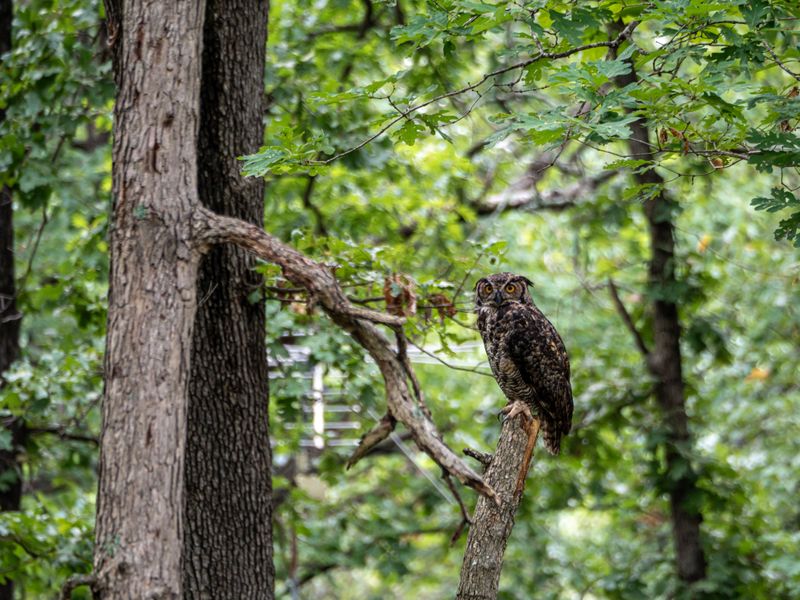
Most people think owls want deep woods. Great horned owls actually love the edge of a neighborhood, where open lawn meets big trees.
Southern red oak, Quercus falcata, gives them exactly that.
Its long, sturdy side limbs make perfect hunting perches. An owl sits still 20 to 40 feet up, listens, then drops silently onto a rat crossing open grass.
Great horned owls also borrow old hawk or crow nests in big oaks instead of building their own.
Southern red oak handles dry, sandy Coastal Plain soil and tough Piedmont clay. Give it full sun and about 40 feet of room.
Keep a few high, bare limbs when you prune, because those dead branches are prime lookout seats.
Heads up for pet owners, these owls are big hunters. Keep small cats and tiny dogs in at night.
Your rats, though, will not get that courtesy.
3. Eastern Red Cedar
A January cold snap hits, and the oaks stand bare. So where does your owl sleep.
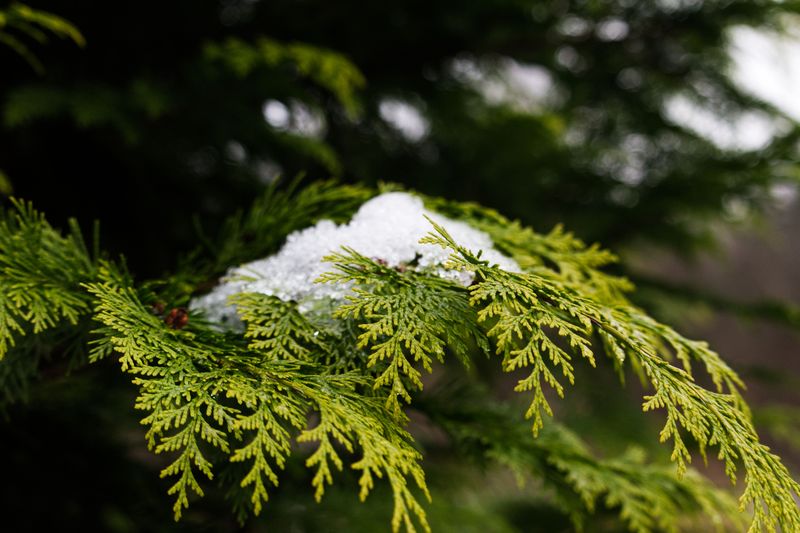
In North Carolina, the answer is often eastern red cedar, Juniperus virginiana.
Despite the name, it is a juniper. Its foliage stays thick all year, hiding roosting owls from crows and blue jays, which love to mob them in daylight.
A well rested owl hunts harder when nights drop toward 25 degrees.
Cedar is tough as an old boot. It handles poor clay, sandy soil, drought, and salt spray near the coast.
Plant small ones 8 to 10 feet apart along a property line to build a screen, and give them full sun.
Bonus, the blue berries feed cedar waxwings and bluebirds all winter. You get privacy, birdsong, and an owl hotel in one row.
Not bad for a tree that asks almost nothing.
4. Eastern White Pine
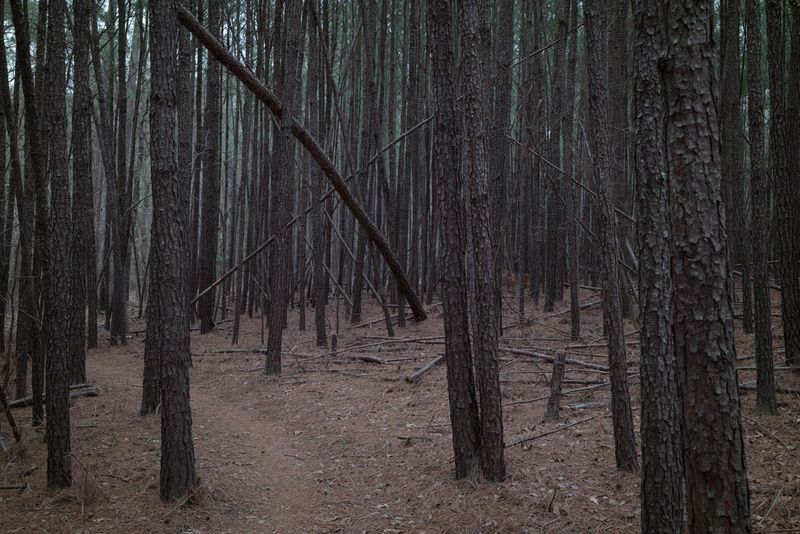
Up in the mountains, winter wind cuts hard. Eastern white pine, Pinus strobus, answers with layer after layer of soft needles that block wind like a quilt.
Owls tuck close to the trunk in these layered branches to save energy on bitter nights. In zones 6a to 7a, that shelter can mean the difference between an owl that stays and one that moves on.
White pine grows fast, often 2 to 3 feet a year once established. It likes moist, well drained soil and struggles in hot Piedmont heat and heavy clay, so it fits best in the mountains and cooler foothills.
Give it 25 feet of space.
Barred owls, the ones that call out who cooks for you, often roost in pines near creeks. Hear that call from your porch and you will know the pine is earning its keep.
5. Loblolly Pine
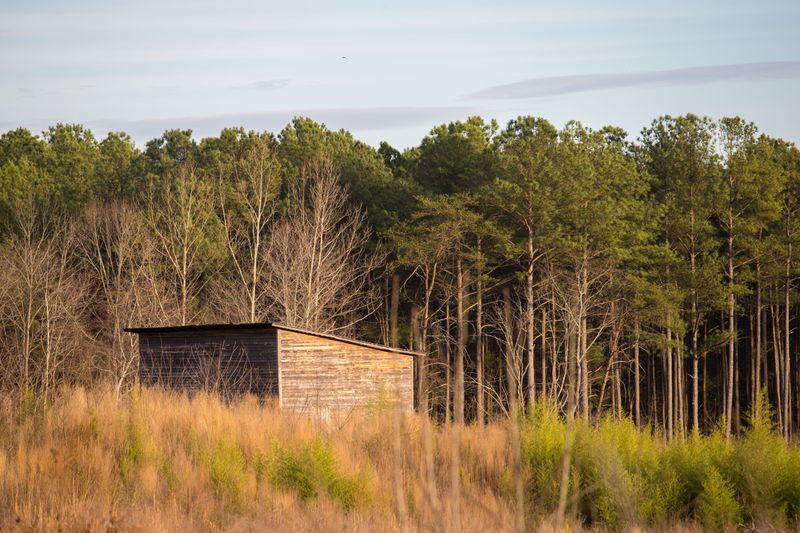
Drive anywhere east of Raleigh and you will see loblolly pine, Pinus taeda, lining every field. Most folks call it plain.
Owls see it differently.
Loblolly grows tall and straight, giving owls high roosts beside open ground where rodents run. Barn owls are rat specialists, and a single family can eat well over a thousand rodents a year.
They hunt open fields and need tall cover nearby.
Loblolly loves sandy Coastal Plain soil and grows 2 feet or more a year. Plant it at the back edge of a lot, at least 50 feet from the house, since big pines can drop limbs in hurricane season.
Keep the grass between pines and your yard open so owls can see prey.
It is not a fancy tree. It is a hardworking one, and that is exactly what rats should worry about.
6. American Sycamore
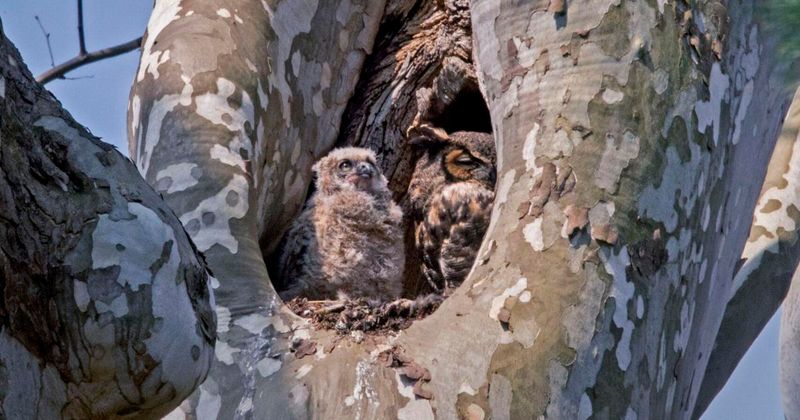
Sycamores hollow out on purpose, or close to it. American sycamore, Platanus occidentalis, often rots at the core while staying alive and sturdy outside.
Those big hollows are owl and bat apartments. Barred owls nest in them, and bats tuck into the crevices.
More bats means fewer mosquitoes on summer evenings, so one tree helps with two pests.
Sycamore wants wet ground, so it fits a low corner, a drainage swale, or a creek bank. It grows fast, up to 100 feet, so give it 50 feet of clearance and plant it far from the roof and septic lines.
That ghostly white bark glows at night, too. Watching an owl leave a pale sycamore at dusk is genuinely one of the best shows in a North Carolina backyard.
7. Southern Magnolia
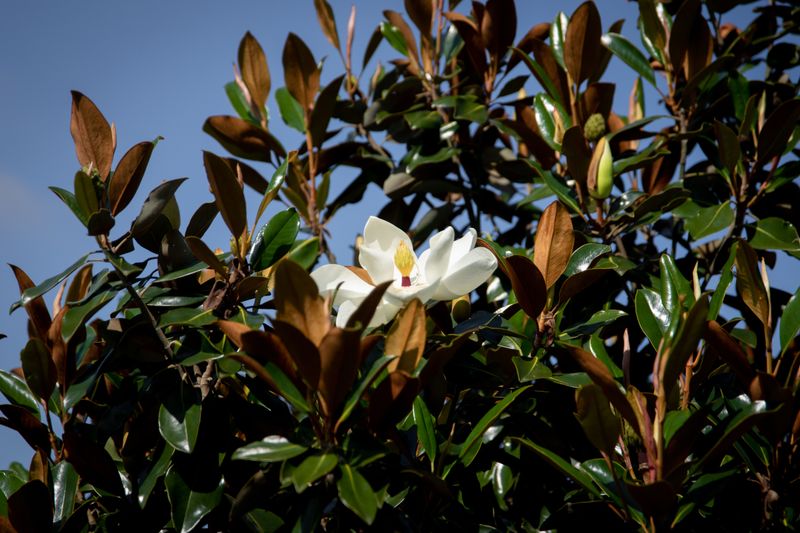
Ever notice how dark it is under a big magnolia. That shade is not just for kids playing hide and seek.
Southern magnolia, Magnolia grandiflora, keeps thick, glossy leaves all year, and owls use that cover.
It works much like cedar, but with broad leaves that shed rain during afternoon storms. Screech owls slip into the dense crown during the day and hunt the edges at night.
Its branches reach the ground, so leave the lower limbs if you can.
Magnolia grows in zones 7a to 9, handling Sandhills sand and Piedmont clay. Plant it 20 to 30 feet from walls, since leaves drop slowly all year.
Do not plant it right by bird feeders, because spilled seed under cover can actually shelter rats instead.
Done right, you get summer blooms the size of dinner plates and a quiet owl roost.
8. Dead Snag
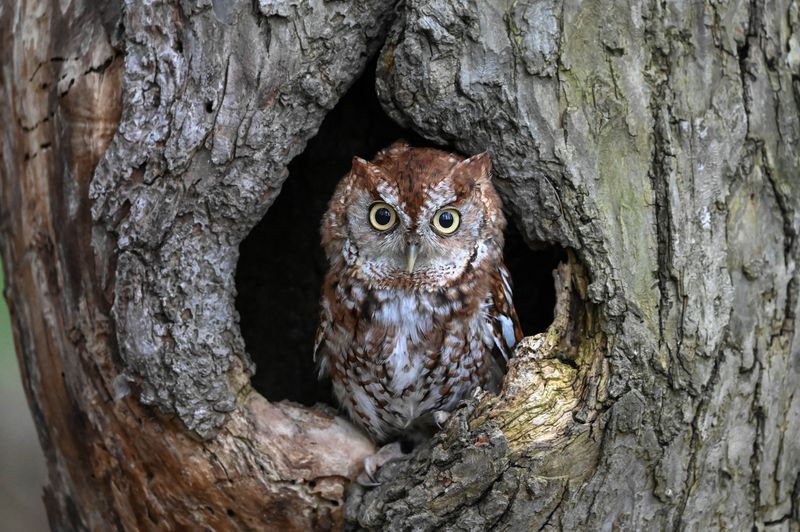
This last one is a tree you already own, or will someday. A snag is a dead tree left standing, and to owls it is premium real estate.
Woodpeckers drill holes in snags, and screech owls move in after. If a dead tree stands at least 50 feet from your house, driveway, and play areas, consider topping it to 15 or 20 feet instead of cutting it down.
Ask an arborist to check safety first.
No snag. Hang a screech owl box 10 to 15 feet up on a big tree, with 3 inches of wood shavings inside, between November and February.
Barn owl boxes go on poles in open areas.
Then skip rat poison. NC State Extension and wildlife groups warn that poisoned rats can poison owls that eat them.
Seal gaps over half an inch, lid your trash, and store pet food tight. Owls are one layer, and with these steps, your yard becomes safer and more alive, and you made that happen.
