
These North Carolina Shrubs Hold Their Color From June Into Fall Without Any Fuss
Follow us on Google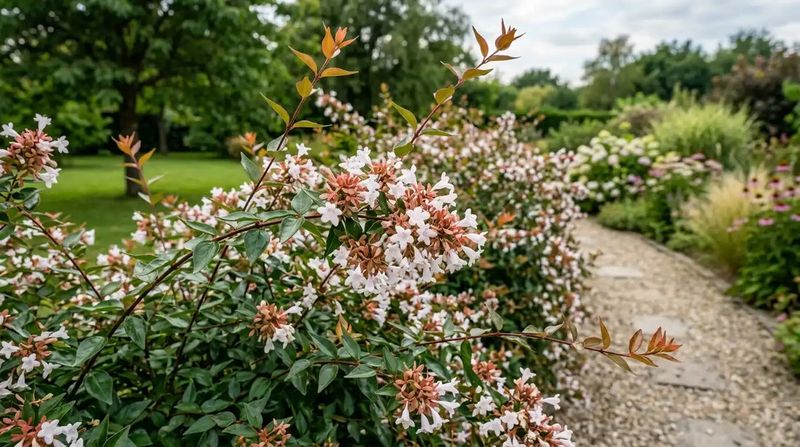
It is a sticky July evening in North Carolina, and you step onto the porch expecting color, but the azaleas are just green and the dogwoods finished months ago. Meanwhile, the yard down the street still looks like a party.
The difference is not luck or nonstop watering. A handful of tough shrubs simply keep blooming or glowing from June into fall, and they shrug off our heat, clay, and storms while feeding pollinators along the way.
1. Panicle Hydrangea
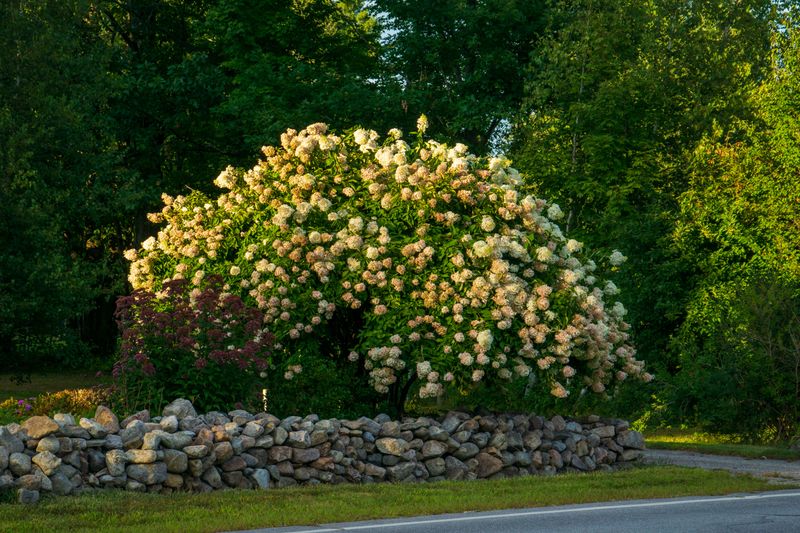
Most hydrangeas sulk in a North Carolina August. Their big leaves flop by 3 p.m., and you end up dragging the hose out every evening.
Panicle hydrangea, Hydrangea paniculata, plays by different rules.
Its cone-shaped flowers open creamy white or lime green in early summer, then slowly blush pink and rose as September nights cool. So you get two color shows from one plant.
It handles far more sun than the mophead types, and it grows on what gardeners call new wood, meaning this year’s stems make this year’s flowers.
Give it at least 4 to 6 hours of direct sun, with a little afternoon shade in the Sandhills or hotter Coastal Plain spots. Dig the hole twice as wide as the root ball but no deeper.
Water deeply once a week the first summer, then lay 2 to 3 inches of mulch to keep roots cool.
Pruning is genuinely easy. In late winter, cut established plants back by about one third.
That is it, and next July the cones come back like clockwork.
2. Glossy Abelia
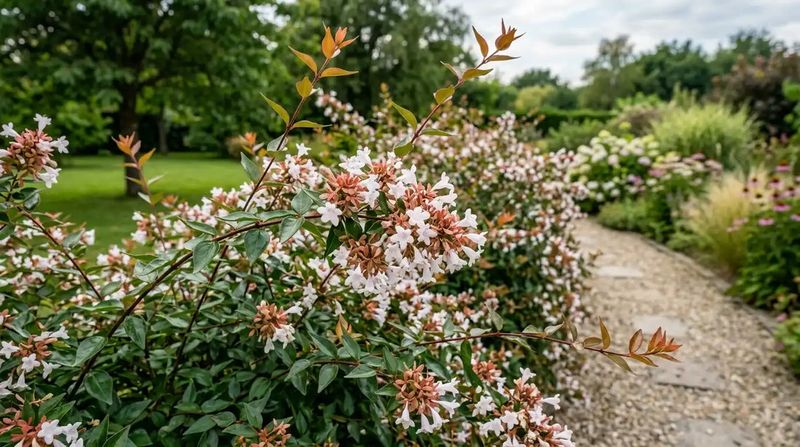
Stand next to a blooming abelia in July and you will hear it before you smell it. Bees hum all over it, butterflies drift in, and a hummingbird may zip past your ear.
Glossy abelia, Linnaea x grandiflora (long sold as Abelia x grandiflora), carries small, sweet bell flowers from late spring until the first hard frost. Then the leaves pick up reddish purple tones in fall.
In the Piedmont and on the coast it stays semi-evergreen, keeping some leaves through mild winters.
It is not fussy about red clay or sandy soil, and deer usually walk right past it. Plant it in 6 or more hours of sun for the heaviest bloom, and check the tag, because cultivars range from 2 feet to about 10 feet tall.
After its first season it handles dry spells on its own. A light trim in late winter keeps it tidy.
Your patio gets a hedge that actually feeds the yard.
3. Rose of Sharon
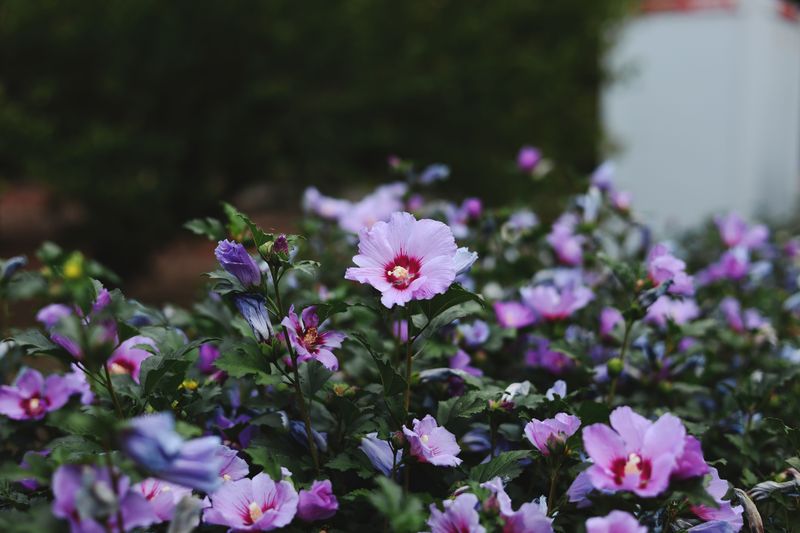
Here is a surprise for anyone who thinks tropical flowers need tropical care. Rose of Sharon, Hibiscus syriacus, opens hibiscus-style blooms about 3 inches across from midsummer into fall, and it laughs at humidity.
Colors run from white to pink, lavender, and soft blue, often with a dark eye in the center. It stays leafless until late spring, so do not panic in April, it is just a late riser.
Plant in full sun, at least 6 hours, in soil that drains. Mature shrubs reach 8 to 12 feet tall, so space them with room.
Water steadily the first year, then only in long dry stretches.
The one honest catch is seedlings. Older types drop seed freely.
Choose newer low-seed cultivars or pull sprouts in spring, and you keep the porch fiesta without the cleanup.
4. Crape Myrtle Dwarf Varieties
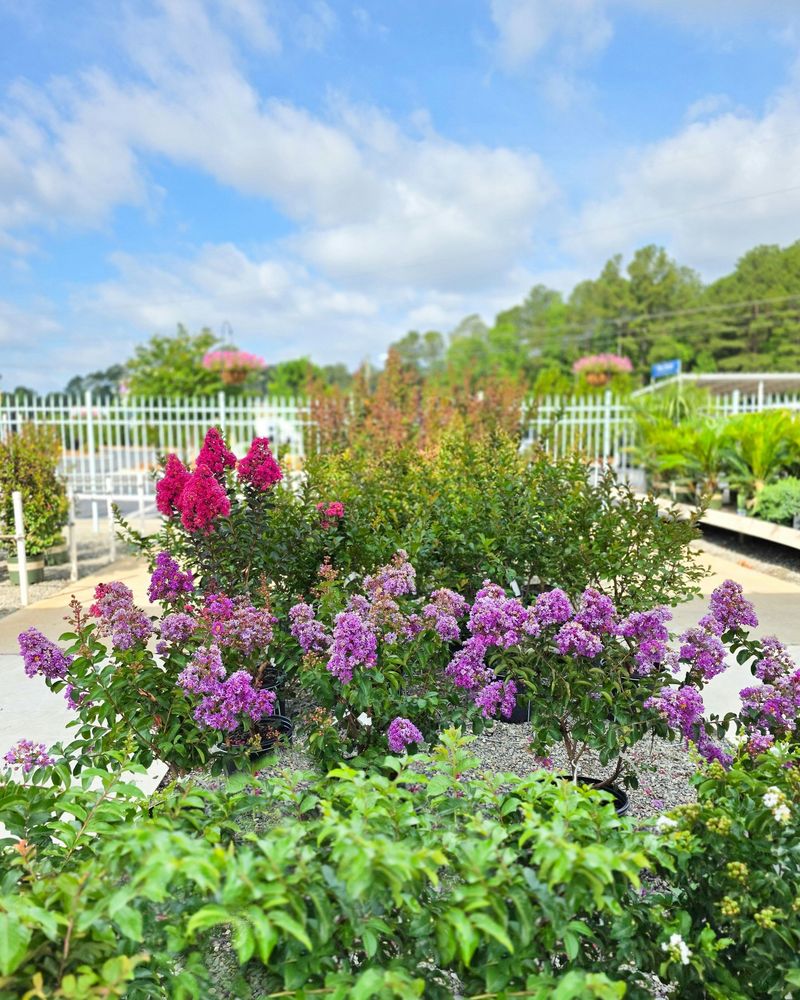
Crape myrtle is practically the official summer flower of North Carolina roadsides. But you do not need a tree-sized one, and you never need to chop it into ugly stumps.
Dwarf and semi-dwarf Lagerstroemia types stay around 3 to 6 feet tall and bloom from June or July well into September. Then many turn orange or red in fall.
They genuinely love heat, drought, and full sun.
Pick a spot with 6 to 8 hours of sun and good air flow, which helps limit powdery mildew in muggy weeks. Choose mildew-resistant cultivars and the size you actually want.
That way pruning is just snipping spent clusters if you like, which can coax a second flush.
Japanese beetles may chew a few leaves in June. Hand-pick them into soapy water in the morning.
The flowers win anyway.
5. Bottlebrush Buckeye
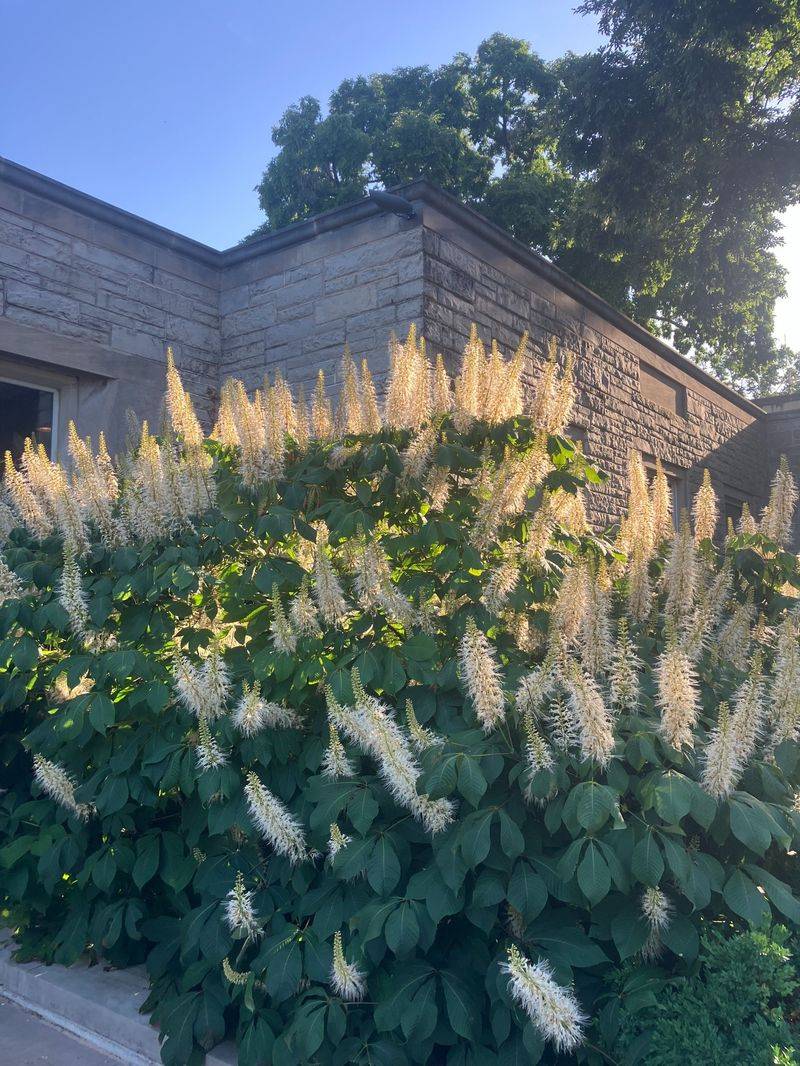
The strip under your oaks is not hopeless. Many Piedmont homeowners give up on shade, then discover bottlebrush buckeye, Aesculus parviflora, a Southeastern native that thrives there.
In June and July it sends up white, fluffy flower spikes up to a foot long. Butterflies crowd them.
By October the leaves turn clear butter yellow, so the corner glows twice a year.
Give it room, because it slowly spreads into a colony 8 to 15 feet wide. Part shade is ideal, and it handles clay if drainage is decent.
Water through the first summer, then it mostly cares for itself.
It is not a quick fix, growing slowly at first. But once settled, that dead zone under the trees becomes your favorite view.
6. Summersweet Clethra
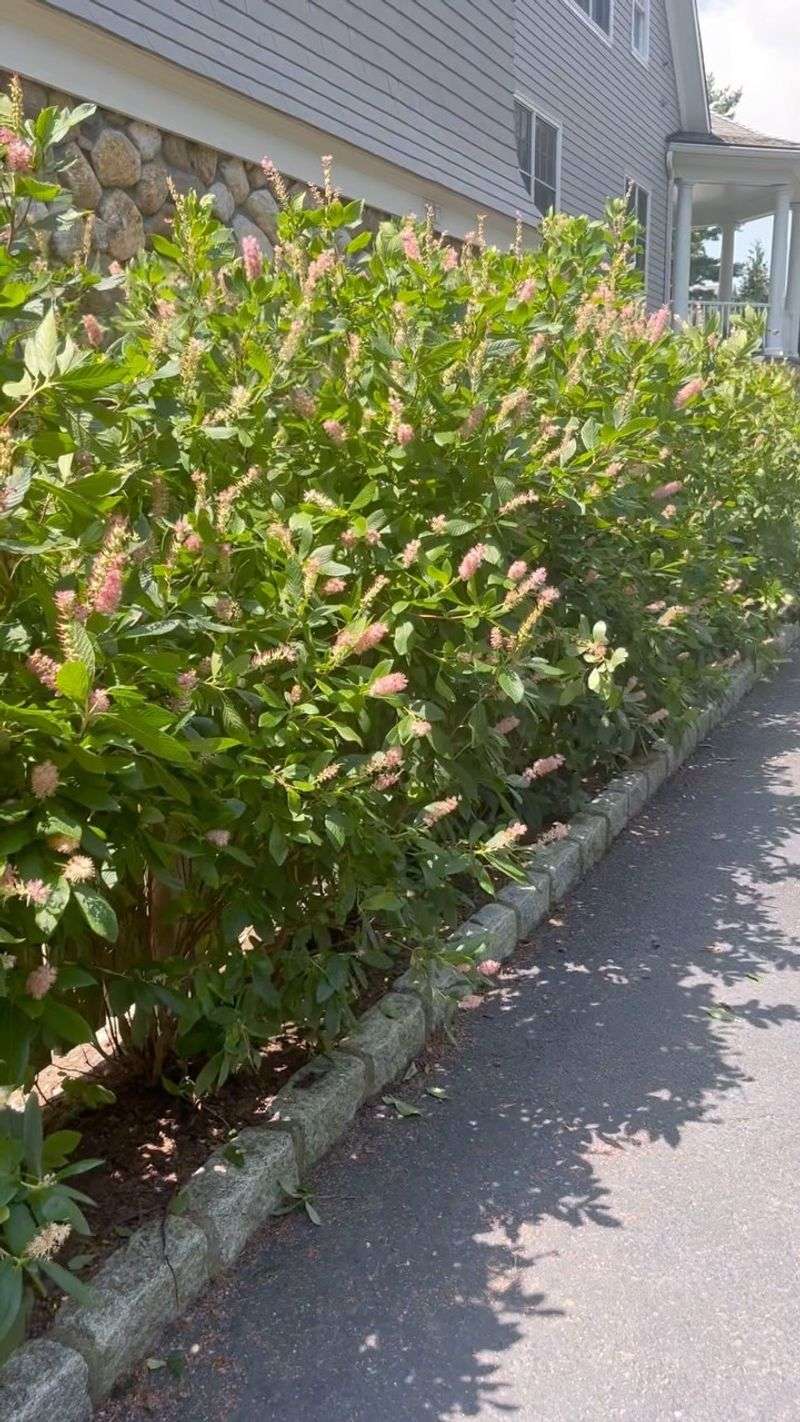
Smell first, then look. In July, summersweet, Clethra alnifolia, perfumes a whole side yard with a spicy sweetness you notice from the driveway.
It is native to the Coastal Plain, where it grows wild in damp ground. That makes it a rare shrub that welcomes soggy spots after afternoon storms.
Bees and butterflies love the white or pink spikes, and the foliage turns gold in fall.
Plant it in sun to part shade in moist, acidic soil, about 3 to 5 feet apart. Compact types like Sixteen Candles stay near 3 feet.
Prune lightly in late winter only if needed.
So that low corner where water sits after a storm finally has a job. And it smells wonderful doing it.
7. Oakleaf Hydrangea
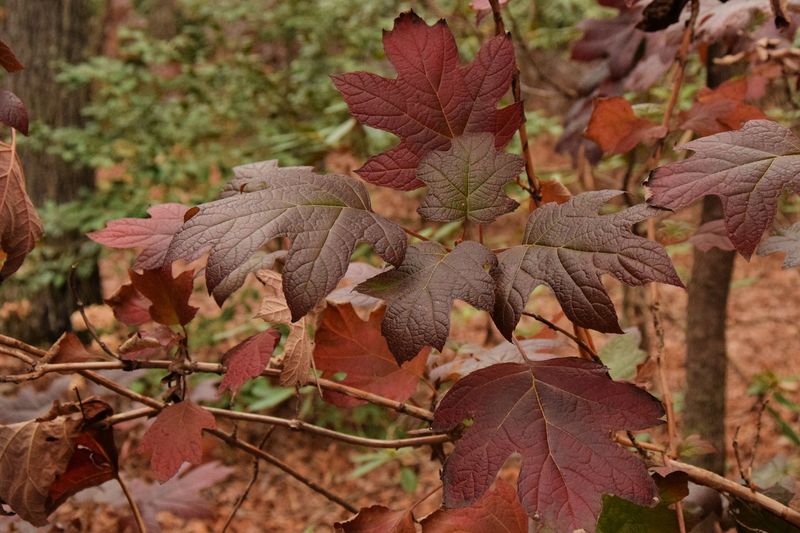
Myth first: hydrangeas look tired by August. Oakleaf hydrangea, Hydrangea quercifolia, a native of the Southeast, simply changes outfits.
Its white flower cones open in late spring, then age to pink and tan and hang on all summer. In fall the big oak-shaped leaves go burgundy and wine red, often lasting into November.
NC State Extension notes it tolerates more drought than many hydrangeas once established.
Give it morning sun and afternoon shade, well-drained soil, and room for 6 to 8 feet of spread. Amend heavy clay with compost, since soggy roots are its weak spot.
It blooms on old wood, so skip spring pruning.
Just leave it alone. Few shrubs reward doing less so well.
8. Beautyberry
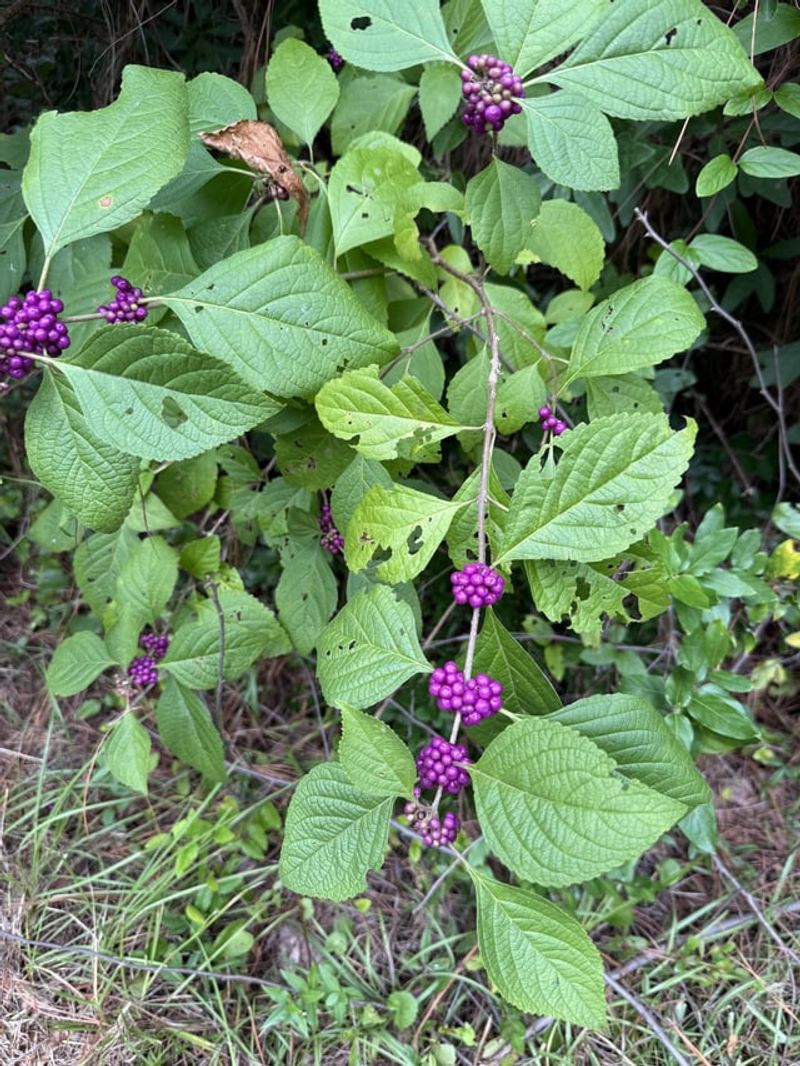
By September, most shrubs are done talking. American beautyberry, Callicarpa americana, is just getting started, wrapping its stems in clusters of shocking purple berries.
Native across North Carolina, it carries tiny pink flowers in early summer, then green berries that ripen to violet in late summer and fall. Mockingbirds, catbirds, and other songbirds feast on them, so your yard gets livelier right as fall monarchs pass through.
Plant it in sun or part shade, 4 to 6 feet apart. It blooms on new wood, so cut it back to about 12 inches in late winter for a tidy, berry-packed shape.
Its crushed leaves are a folk tradition for keeping mosquitoes off, though do not count on that alone.
It closes the season calmly, purple berries and birdsong, and you planted it.
