
Swallow-Tailed Kites in Florida: Why Spring Through Late Summer Is Their Season
Follow us on Google
You look up on a bright Florida morning and spot a black-and-white bird with a tail like open scissors. That bird is most likely the swallow-tailed kite, but it generally leaves for South America by late summer or early fall, so November is not the month to expect it.
Here is how to tell what you are seeing and when the kites usually come back.
That Forked Tail Belongs to a Swallow-Tailed Kite
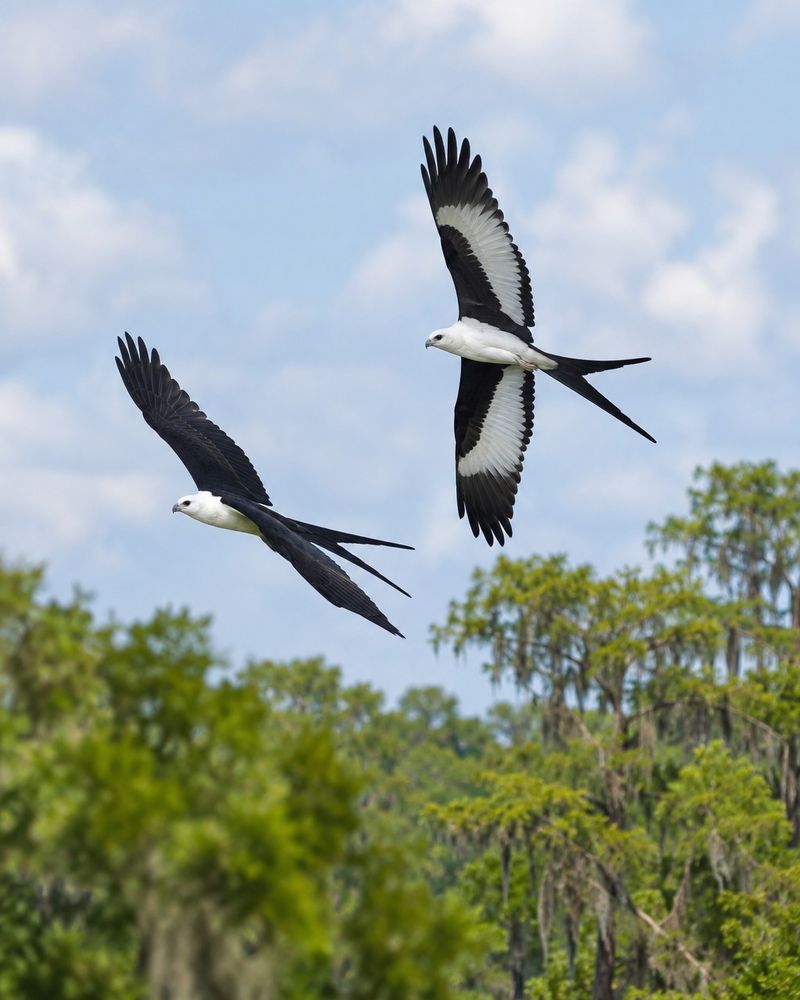
Picture a bird that looks cut from black and white paper, then tossed into the wind. That is the swallow-tailed kite (Elanoides forficatus), and it is almost certainly the bird the headline has in mind.
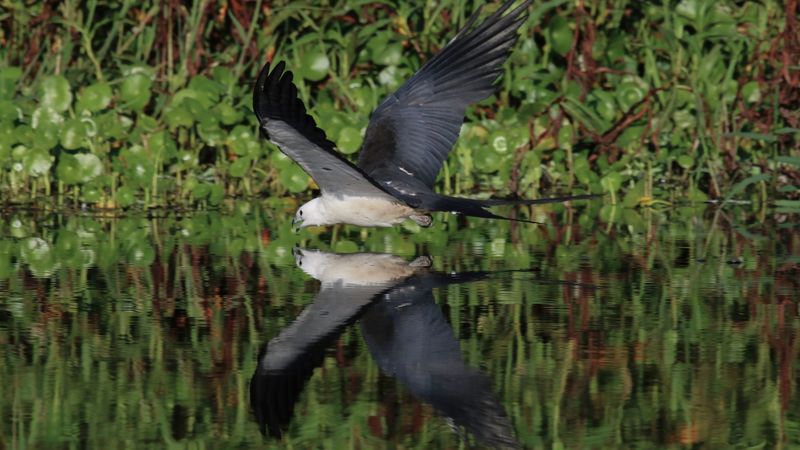
According to Florida Fish and Wildlife Conservation Commission, it is a striking raptor with a deeply forked tail. Its white head and underparts contrast with black wings and tail, and its long, pointed wings help it glide with ease.
Here is where the headline needs a gentle correction. The bird fits the dramatic picture, but it does not fit the calendar.
Kites are a spring-through-late-summer or early-fall visitor in Florida, so a promise that one is soaring over your yard in November does not hold up.
That does not mean the bird is out of reach. It means the best time to look up for it is in warmer months, when it is actually here.
Think of November as the quiet season for this species in Florida, not a failure on your part.
It also helps to keep two ideas apart. The swallow-tailed kite is the likely subject of the headline.
But a bird you spotted from the patio is its own question, and a quick look overhead does not settle it by itself. The next sections give you clues to sort that out, starting with when the kites come and go.
Florida’s Kites Leave Before Winter
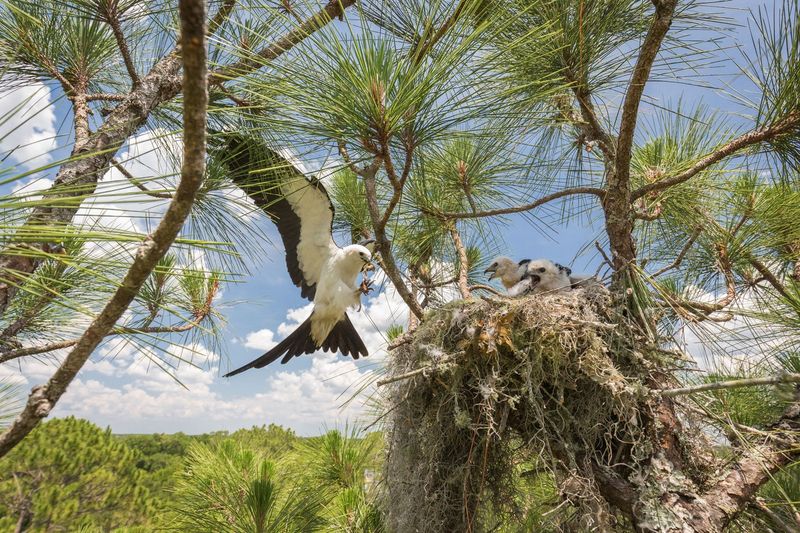
Swallow-tailed kites follow a seasonal arc, and it starts in spring. FWC says they arrive in Florida around early March, nest in tall cypress and pine, and begin gathering in communal roosts by early July before heading to South America.
Think of a roost as a shared sleeping spot, a bit like a neighborhood sleepover for birds.
Departure comes next. Audubon Florida places the southbound trip in August and September, and the return in spring.
That sounds a little different from FWC’s late summer or early fall, but the two fit together. Both describe the same broad window, just in slightly different words.
Along the Keys, Florida Keys Hawkwatch reports that counts beginning in August capture much of the kite migration there. That is a handy reminder that birds move through different places at different times.
So treat these dates as a general pattern, not a hard cutoff. Timing can shift by location and by year, and no one can say every kite leaves on the same day.
Here is why the word now misleads. By November, the usual window has been closed for weeks or months.
A reader who looks up on a November afternoon should not expect a kite overhead, and should not feel foolish for wondering.
The good news is that the story has a built-in sequel. The same birds that left are part of a yearly cycle that brings kites back toward Florida in spring.
The Flight Pattern Helps Confirm the ID
Color alone can fool you, so build your identification from several clues. Start with the plumage.
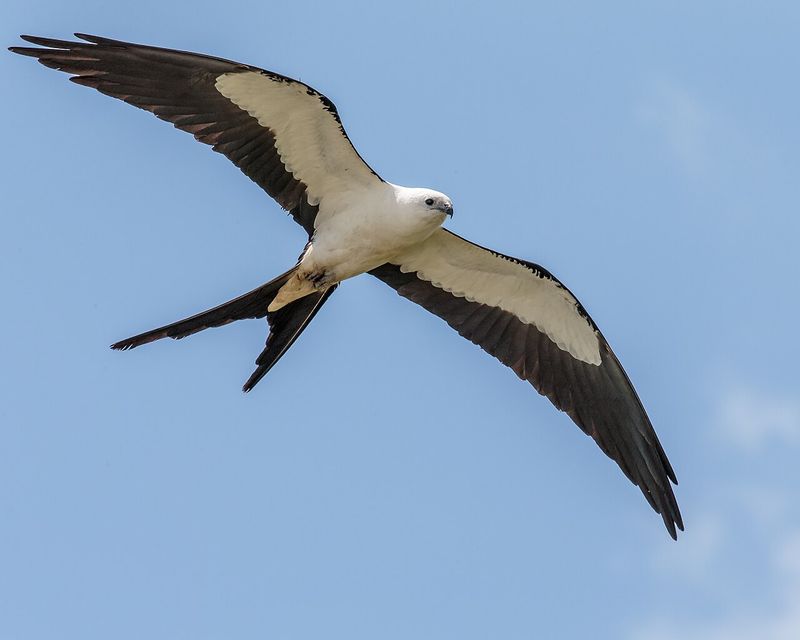
A swallow-tailed kite is black and white, with a bright white head and underside and dark wings and tail.
Next, check the shape. The wings are long and pointed, and the tail is deeply forked.
Cornell Lab’s All About Birds offers a helpful overview of these traits if you want to compare photos side by side.
Then watch how it moves. According to FWC, the kite often glides and twists overhead while catching flying insects.
It looks less like a bird hunting from a perch and more like a dancer working the air.
Each clue helps, but none of them should carry the whole decision. A distant dark shape with a hint of white could be several birds.
A single feature, such as a forked tail, does not prove anything on its own.
A practical habit is to note what you saw while it is fresh. Jot down the wing shape, the tail, the colors, and the way the bird moved.
If three or four clues line up, your guess gets stronger.
And if they do not, that is fine. Honest uncertainty beats a confident mistake, and the sky will give you another chance.
Could a November Raptor Be a Harrier?
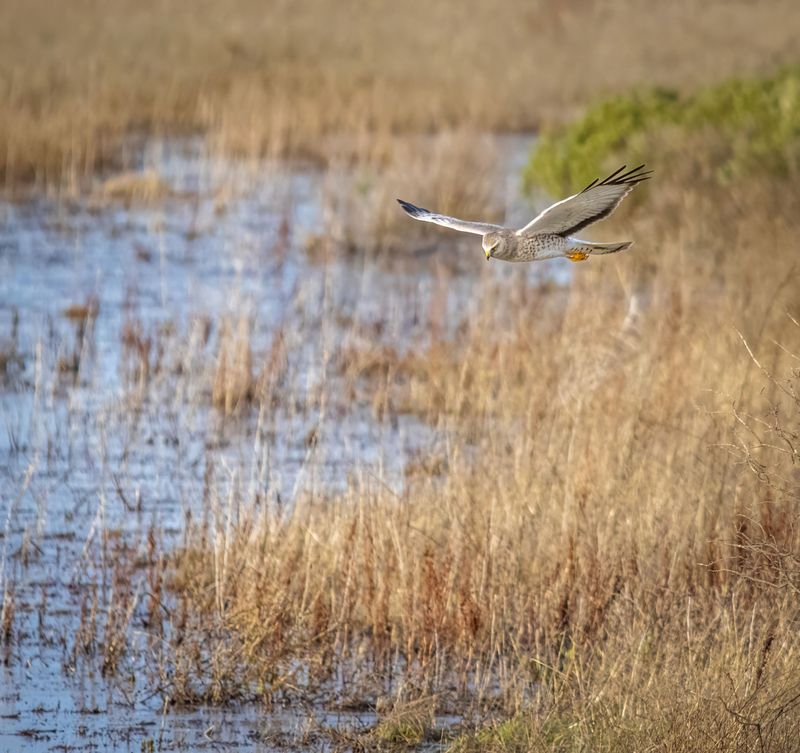
If you saw a raptor in November, one real possibility is the northern harrier. All About Birds notes that harriers winter in Florida and head north in spring, so the season fits.
The flight style is the big difference. Harriers usually hunt low over open fields and marshes, gliding and tilting just above the vegetation.
A swallow-tailed kite, by contrast, tends to glide and twist overhead.
So a harrier is not a simple stand-in for the kite. It lives a different kind of life in a different kind of place.
If the bird you saw was cruising close to the ground over a wide-open field, that detail matters.
The bird’s markings can help too. The identification page is a good place to compare shapes and patterns before you decide.
Still, be careful with conclusions. Neither the headline nor a brief sighting tells you which bird crossed your yard.
Many things can look similar from far away, and a quick glance rarely settles it.
The helpful approach is to treat the harrier as one possibility. Check where the bird was flying, how high it was, and how it moved.
Then let the clues do the talking.
A Passing Kite Does Not Make a Yard Its Habitat
Seeing a kite overhead feels personal, as if the bird picked your yard. But a flyover is a snapshot, not a promise.
The bird may be crossing on its way to somewhere else.
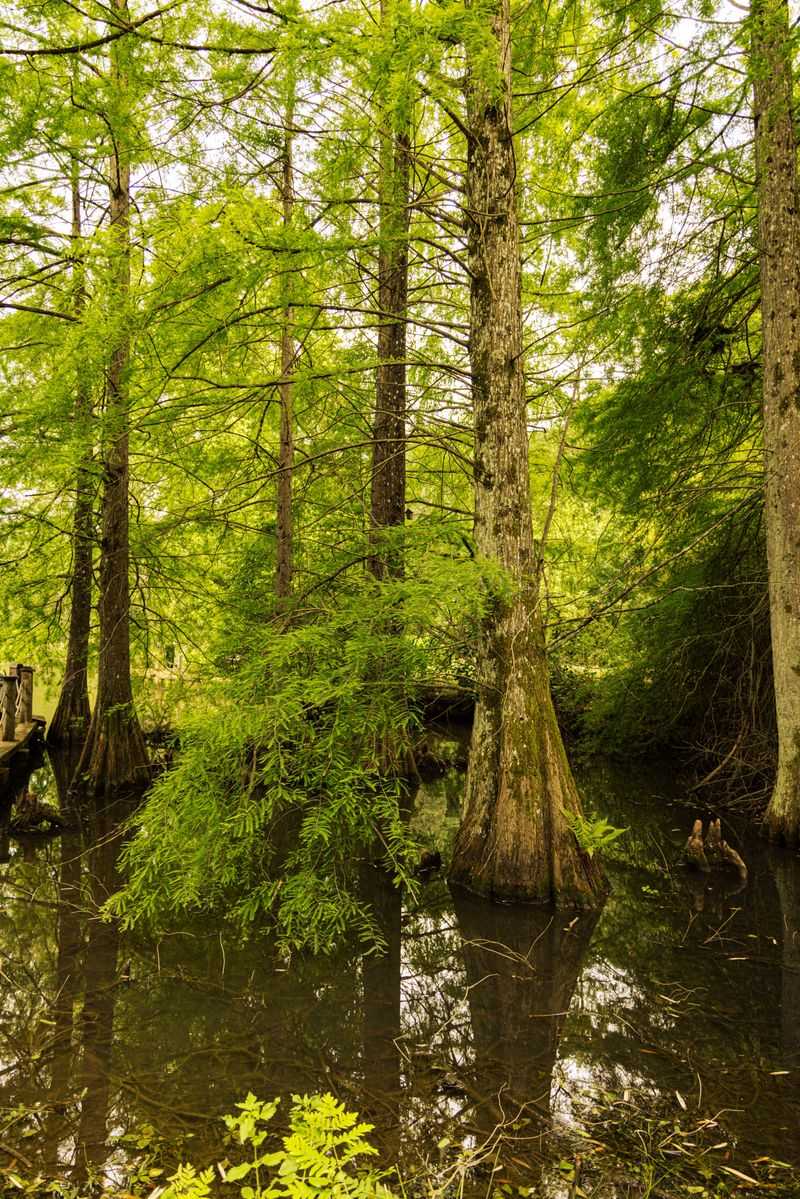
Kites are tied to broad natural habitats. According to FWC, they nest in tall cypress and pine, and you are most likely to spot them near wooded wetlands, swamps, and other suitable habitat.
All About Birds describes similar surroundings.
So a kite crossing the sky does not show that your yard is nesting habitat. It simply means the bird was there for a moment.
Here is the candid part. The sources do not describe a dependable way to attract kites with a certain plant, feeder, or yard treatment.
Anyone promising one is guessing.
FWC does name habitat loss as a major threat, which points toward protecting wild places rather than tweaking a flower bed. That is a bigger job than a backyard project, but it is the honest one.
So keep the goal simple. Step outside, scan the sky, and enjoy the sight when it comes.
Watching is a perfectly good way to take part.
Give the Bird Room and Watch for Spring
Good birdwatching starts with good manners. FWC’s wildlife tips suggest viewing animals through binoculars or from far enough away that they do not feel threatened.
That advice matters most around feeding, resting, and nesting. If you suspect a nest, do not walk up for a closer look.
Stay back, and let the birds go about their business without interference.
Binoculars are the easy answer. They let you notice the forked tail, the long wings, and the twisting flight without moving a single step closer.
Now for the sequel. Swallow-tailed kites generally return to Florida in early spring, as FWC describes it, with arrivals around early March.
That is a broad pattern, not a promise, since timing can vary by place and year.
So here is a realistic plan. Keep an eye on the sky in the warmer months, use several clues before you name a bird, and let any uncertain sighting stay a good question.
Winter sky watching has its own rewards, and plenty of other raptors pass through. The kites will be back when they are ready, and the sky will be worth the wait.
