
Before You Pull That Purple Weed in Your North Carolina Lawn, Here’s Who’s Feeding on It
Follow us on Google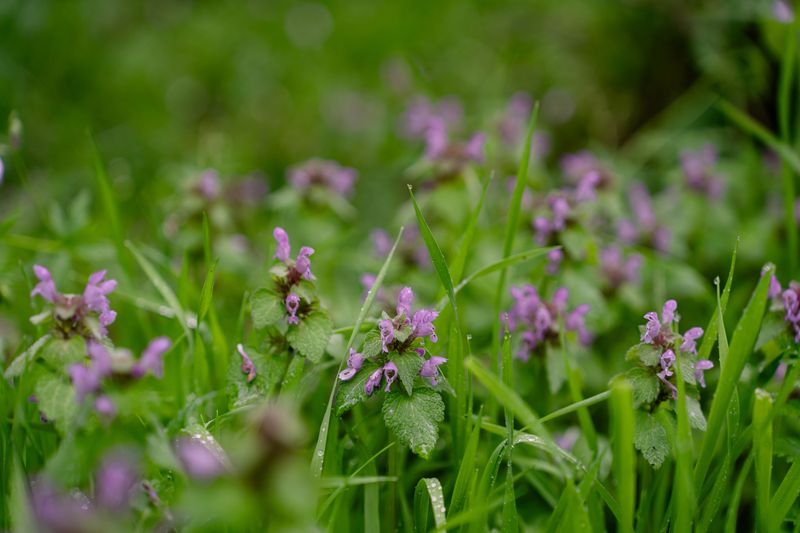
Bees are feeding on that purple haze in your North Carolina lawn. The plants are henbit and purple deadnettle, and bees have been documented visiting both when the flowers open in early spring.
That does not mean every patch is buzzing, or that you must leave it alone. Here is what the flowers can offer, what the weeds cost your turf, and how to choose without guilt.
What Bees Can Get From These Flowers
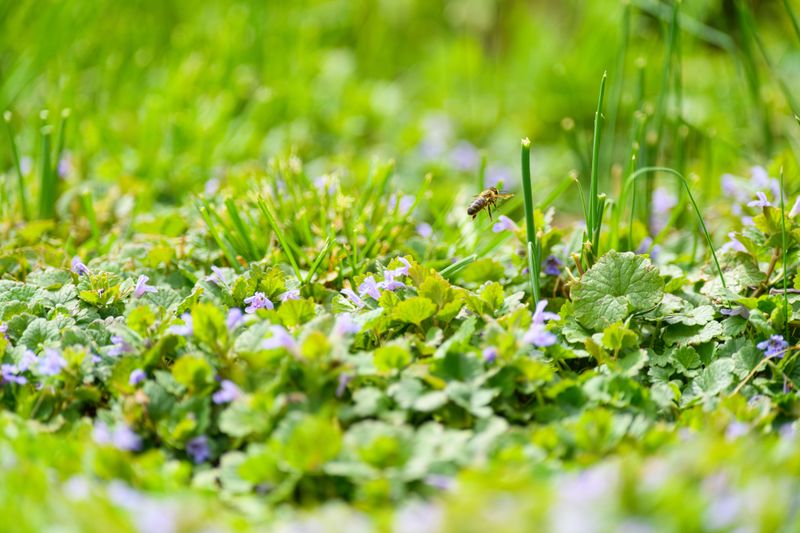
Picture a cool March morning in the Piedmont. You step outside with your coffee and notice a purple patch near the mailbox, and something small and fuzzy is working its way across it.
The plants are henbit (Lamium amplexicaule) and purple deadnettle (Lamium purpureum). Bees have been documented visiting both.
Cornell’s weed profile reports that henbit is pollinated by solitary bees and honeybees, while purple deadnettle can be pollinated by bumblebees and other bees.
University of Wisconsin Extension also describes henbit as an early-season nectar and pollen source for honeybees and bumblebees. So a flowering patch can offer food while it blooms, at a time when not much else is open.
Now the timing. NC State Extension describes both plants as flowering in early spring.
That is not the same as blooming all winter. Bloom dates shift with weather and location, so your patch might flower earlier, later, or thinly in a given year.
Here is the honest limit. A bee visit is not proof that bees need the plant.
Both weeds can self-pollinate, and nobody has shown that bees rely on them to survive. Some purple patches will be quiet, or not yet in flower at all.
Think of the patch as a snack bar that may or may not be open. Nice when it is, but not the whole menu.
The Leaves Tell These Weeds Apart
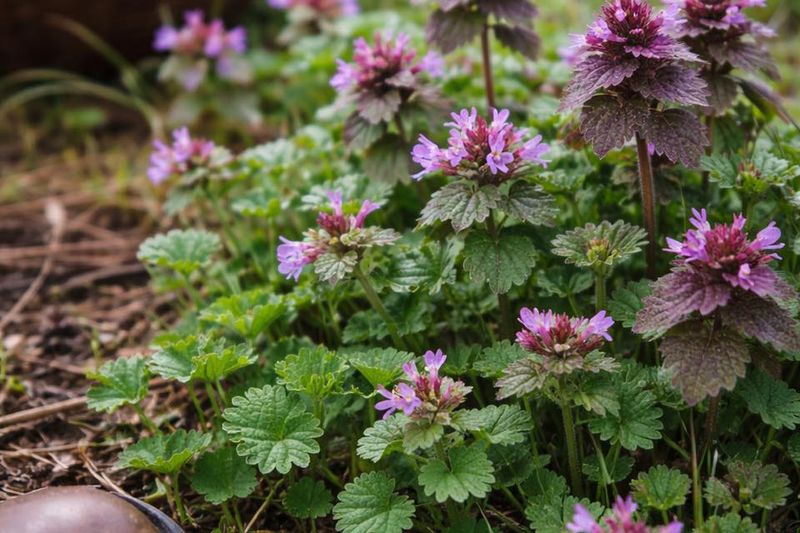
Most people lump the two together as purple weeds. They are cousins, and they do look alike from standing height.
Kneel down and the leaves give them away.
Start with the stem. Roll it between your fingers and you will feel four corners, because both plants have square stems.
That is a mint family trait.
Now check the upper leaves. According to NC State Extension, purple deadnettle has upper leaves on short stalks, often with a reddish or purple tinge, like a plant that spent the night in a cold snap.
Henbit’s upper leaves clasp the stem with no stalks at all, as if hugging it.
Why bother? Because the plants flower on slightly different calendars and spread in similar but not identical ways, and knowing which one you have helps when you read a product label or talk to your county Extension office.
One more thing worth knowing. Neither plant is native.
University of Wisconsin Extension lists henbit as native to Europe, western Asia, and northern Africa. A weed that offers a few early flowers is not a replacement for a diverse mix of regionally appropriate plants.
So you can enjoy the bees without pretending the weed is a pollinator garden.
Why the Weeds Appear in Spring
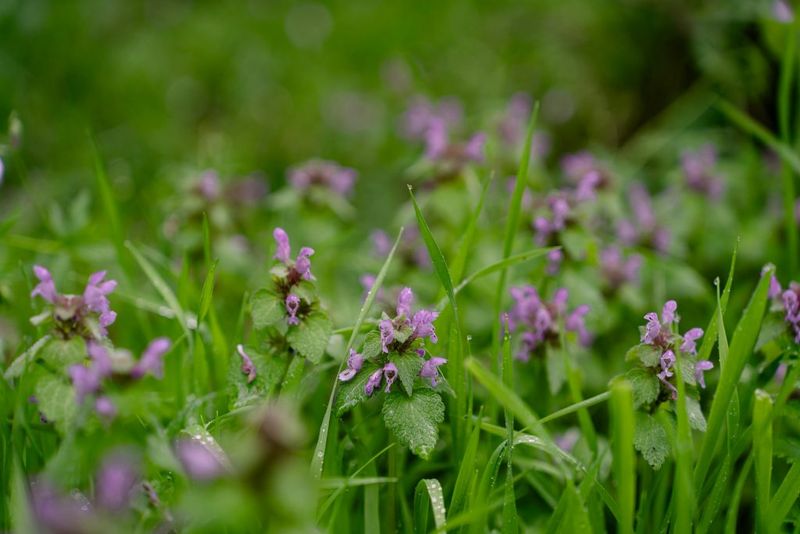
Here is the strange part. You never planted a thing, yet every spring the purple shows up, and by June it vanishes.
Your lawn is not haunted. It is following a schedule.
Both plants are winter annuals. NC State Extension lists purple deadnettle as a common winter annual in North Carolina.
Seeds sprout in fall or winter, the young plants sit low through the cold, then they flower in spring, set seed, and die as warm weather arrives.
That is why a patch seems to disappear. The plants did not leave.
They finished their job and dropped seed to wait for the next cool season.
The Extension Gardener Handbook covers winter annual weeds in more detail, and it explains why timing matters so much for control.
Bloom timing is not fixed. A warm February can bring flowers early on the coast, while the mountains may wait weeks longer.
A late cold snap can slow a Piedmont patch. Treat any date as a rough guide.
So the real story is seeds. Whatever you do in spring decides how many are waiting in the soil next fall.
When Leaving a Small Patch Makes Sense
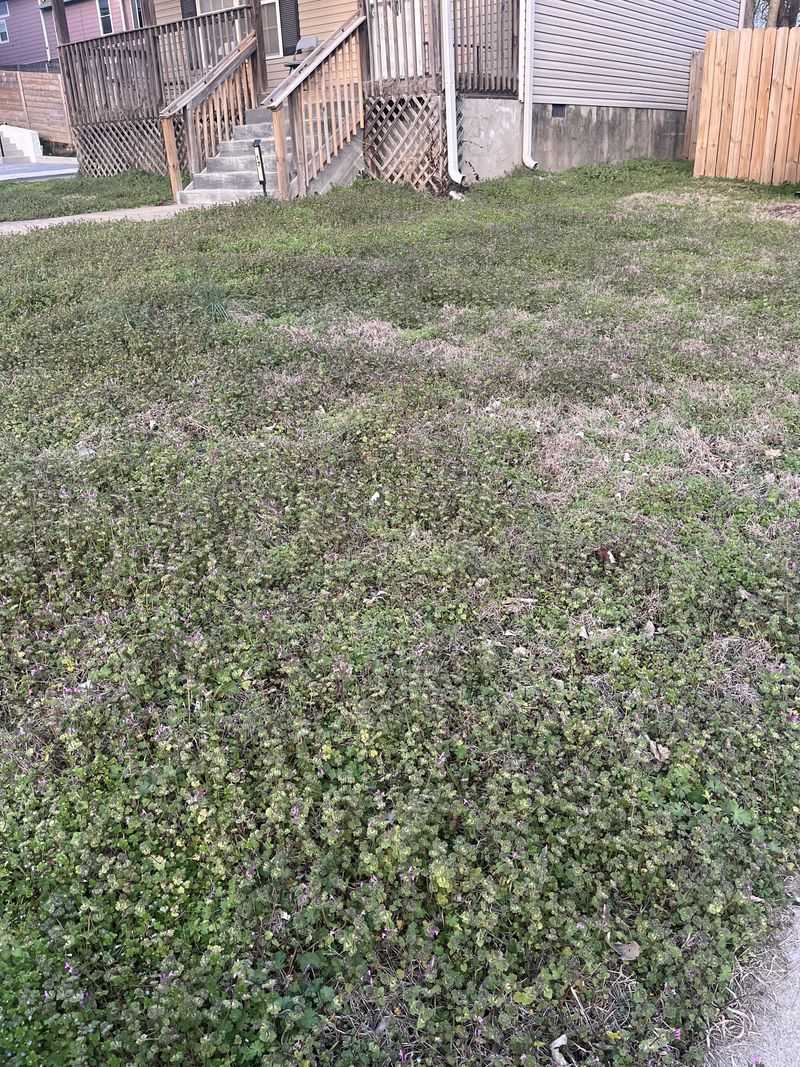
You do not have to pick between a perfect lawn and a bee-friendly one. If your patch is small, there is a middle road with a deadline.
Leave it while it flowers. Then remove it before it sheds viable seed.
Hand-pulling works well for small plants, and the roots come out easily in damp soil.
The deadline is the part people miss. Cornell’s profile reports that henbit can produce seed within weeks of flowering, and peak seed shedding comes within a month of flowering beginning.
Wait until the flowers fade and you have probably waited too long.
A simple habit helps. Note the day you first see flowers, and pull the patch well inside that month.
Bag the plants rather than tossing them in a corner of the yard where seed can drop.
University of Wisconsin Extension also lists hand-pulling as an option for small infestations.
Keep the purpose clear. This trades a temporary flower resource for a bit of delay in weed control.
It does not mean bees need your patch.
And if you would rather pull it today, that is a fine choice too. Your lawn, your call.
Dense Turf Leaves Less Room for Weeds
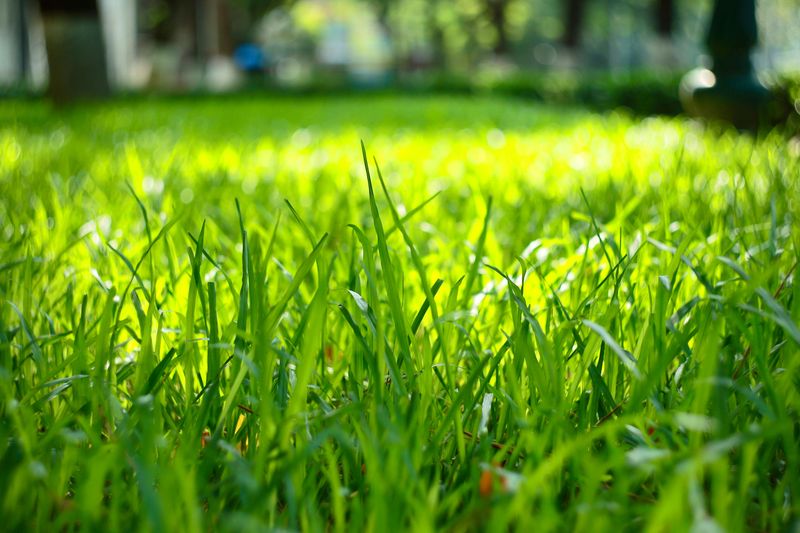
Walk your yard in early spring and look at where the purple sits. Odds are it is not in the thickest grass.
It is in the thin spots, the worn edges, and the bare strip near the driveway.
That is no accident. NC State Extension says these weeds can spread especially in thin turf.
Bare soil is an open invitation, and winter annual seeds accept it.
The long-term answer is not a quick fix. NC State’s guidance in the Extension Gardener Handbook points to dense, vigorous grass as the best defense.
A thick lawn leaves seedlings little light and little room.
What that looks like depends on your grass. A fescue lawn in the Piedmont and a bermudagrass or centipede lawn in the Coastal Plain or Sandhills want different mowing heights, fertilizer timing, and watering.
The lawns chapter breaks care down by turf type, so match your plan to your grass.
Then decide how much the patch bothers you. A small patch that vanishes by May may not be worth a fight.
A large one that returns thicker each year probably is.
Either way, you are working on the lawn, not just the weed.
Prevent New Weeds Before They Emerge
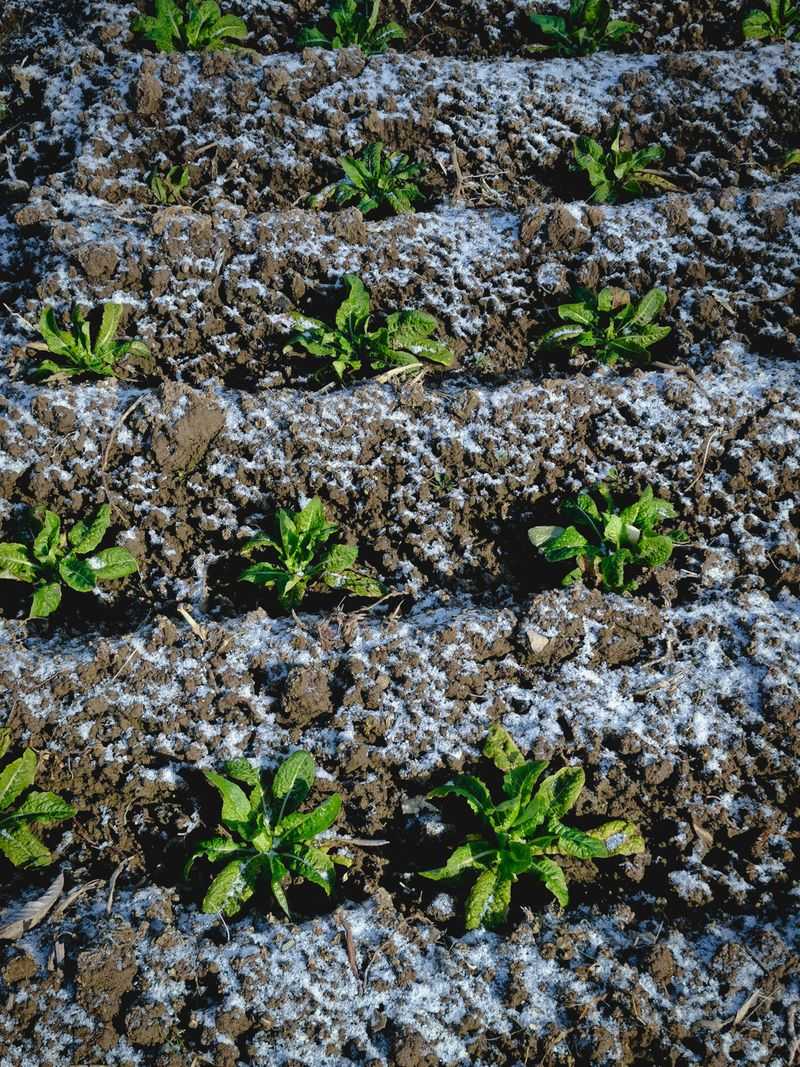
Spring is the wrong season to stop a spring weed. By the time flowers show, the seeds have already done their work.
Prevention happens months earlier.
That is where preemergent products come in. They form a barrier that keeps seeds from establishing.
For winter annuals such as henbit, NC State Extension generally places the application in late summer to early fall, before seeds emerge.
Here is the catch. A preemergent does not know the difference between weed seed and grass seed.
It can also stop the seed you want from germinating. The lawns chapter covers this tradeoff, so a plan to overseed in fall may not fit with a preemergent in the same area.
So ask yourself one question first. Will you be seeding this lawn?
If yes, you may need to choose between the two for that season.
Exact timing is not one schedule for the whole state. The mountains, Piedmont, and coast cool at different times, and products differ.
Rather than guess, read the label and check with your county Extension office.
Prevention is quiet work done in warm weather. You will not see it pay off until the next spring.
Check the Label Before Any Treatment
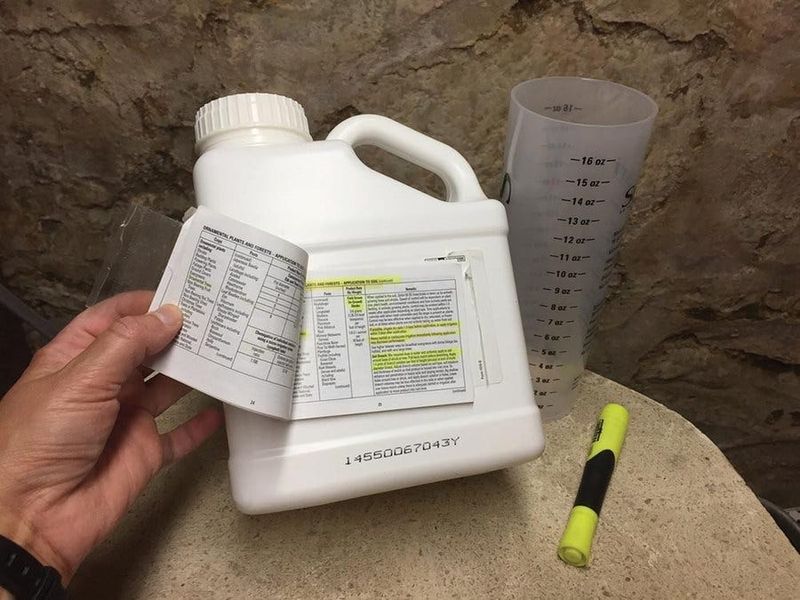
Standing in the garage with a bottle in your hand, it is tempting to just spray and be done. Slow down for one minute and read the label.
It is the rule book.
Start with two facts. Know exactly what the product is, and know what turf it is meant for.
Products vary by grass type, and NC State’s weed guidance says to read and follow the label rather than rely on a one-size recipe. This article will not give you a product or a rate for that reason.
Next, look for pollinator notes. The EPA notes that some labels set bloom-time or time-of-day limits to protect pollinators.
Not every product has them, and risks differ from one product to the next.
It helps to separate two ideas. Removing the flowers takes away a food source that bees may have been visiting.
That is different from saying every herbicide directly poisons bees, which is not true.
So weigh a few things. How big is the patch?
What do you want from your lawn? Are flowers open right now?
A careful look at the label is a small step. It also keeps the decision yours.
