
Evening Grosbeaks in Pennsylvania This Winter: A Possible Visitor, Not a Confirmed Arrival
Follow us on Google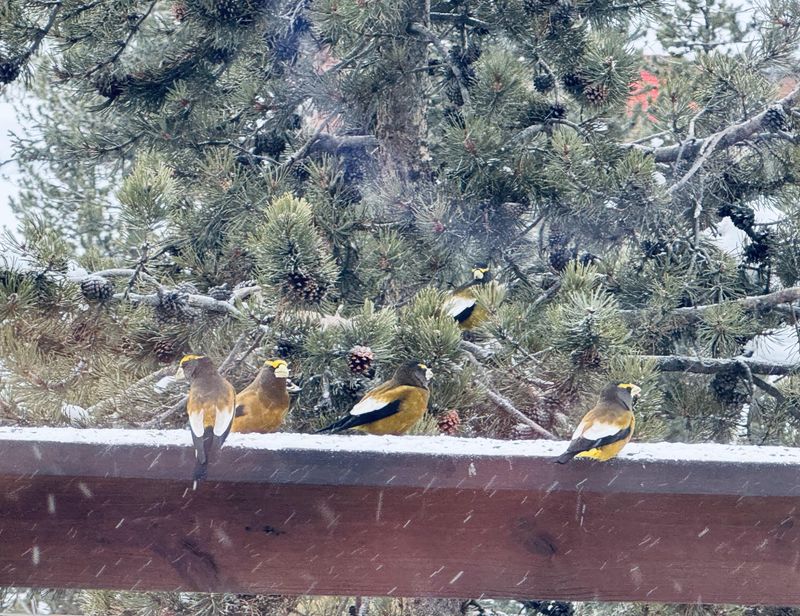
You glance out the window on a gray November morning and spot a chunky, unfamiliar bird in the yard. The title you clicked says a rare bird is turning up in Pennsylvania backyards and rarely touches a feeder.
The sources do not back that up, so here is the straight story. One possible candidate is the Evening Grosbeak, and it is a lot more interesting, and a lot more feeder-friendly, than that headline suggests.
What The Available Evidence Can—and Cannot—Identify
Let us start by fixing the headline. The research behind this article does not include a description, photo, or report that names the bird behind any particular Pennsylvania backyard sighting.
So nobody can honestly say which bird is in your yard from the title alone.
It also does not show a statewide wave of late fall backyard arrivals. Anyone claiming that is getting ahead of the facts.
Here is where the Evening Grosbeak comes in. It is one possible subject, and only a possible one, because it is an irregular winter visitor to the state.
The Pennsylvania Game Commission describes it as a winter visitor that may descend on yard feeding stations. That makes it a reasonable bird to learn about, but it is not a confirmed or even likely match for the mystery bird in the title.
The distinction matters more than you might think. Knowing a species well helps you judge a sighting, because you can compare size, color, and behavior against what you saw.
But species facts cannot verify a bird nobody has photographed or described.
Think of it like a neighbor saying a stranger looked familiar. You can describe what you remember, but you cannot name the person from a hunch.
Cornell Lab’s species overview is a handy place to compare notes.
The sections ahead walk through why the bird shows up unevenly, what the forecast says, how to spot one, and how to feed birds safely if you choose to.
Why Evening Grosbeaks Appear Irregularly In Pennsylvania
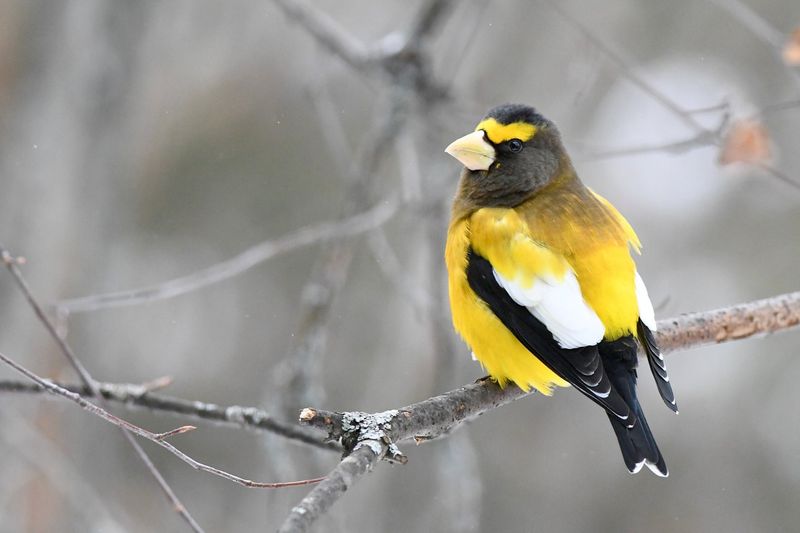
Some winters your neighbors swap grosbeak stories. Other winters, nothing.
That is exactly how the species behaves here, as an irregular winter visitor rather than a regular one.
In some years winter finches move south, and in others they stay farther north. The Game Commission links such movements in part to failures of key northern food sources, especially conifer seeds.
Birders call these movements irruptions. An irruption is an irregular movement beyond a bird’s usual range.
It is not a dependable annual migration, and it is not a promise that birds will reach every region or every backyard.
What drives them? Food matters, but it is not the whole story.
A 2025 peer-reviewed analysis of nine boreal bird species found irruptions tied to both food patterns and climate patterns, with the relationship varying from species to species.
So cold weather alone does not send these birds south. And nobody can honestly pin one particular Pennsylvania sighting on one particular seed failure.
Researchers, including those behind a Canadian government status report, point to several possible drivers.
Picture the birds as travelers checking a restaurant map. When the menu up north looks thin, some wander.
When it looks fine, they stay put.
What The 2026–27 Forecast Actually Says
Forecasts are easy to over-read. The Finch Research Network’s September 25, 2026 outlook says a small southward movement into Pennsylvania is possible this winter.
Possible is not certain.
The main forecast applies to the Northeast and Great Lakes region, so it does not predict activity in every corner of Pennsylvania. It also says good food crops in northeastern conifer forests may keep some birds in the woods.
You can read the 2026-27 winter finch forecast for the full picture.
Now the rare-bird side. The American Birding Association alert from November 20, 2026 highlights a young Purple Gallinule near Pittsburgh.
It does not mention Evening Grosbeaks.
That silence proves nothing. The alert covers notable rarities, so it cannot tell you whether a species is present across the state.
Keep three things separate in your mind. A forecast describes a chance.
A rarity alert lists standout birds. A confirmed local sighting is a photo or clear report from a real place.
Right now, the first two are all the sources offer. Think of the forecast as a weather watch, not a storm report.
How To Recognize An Evening Grosbeak
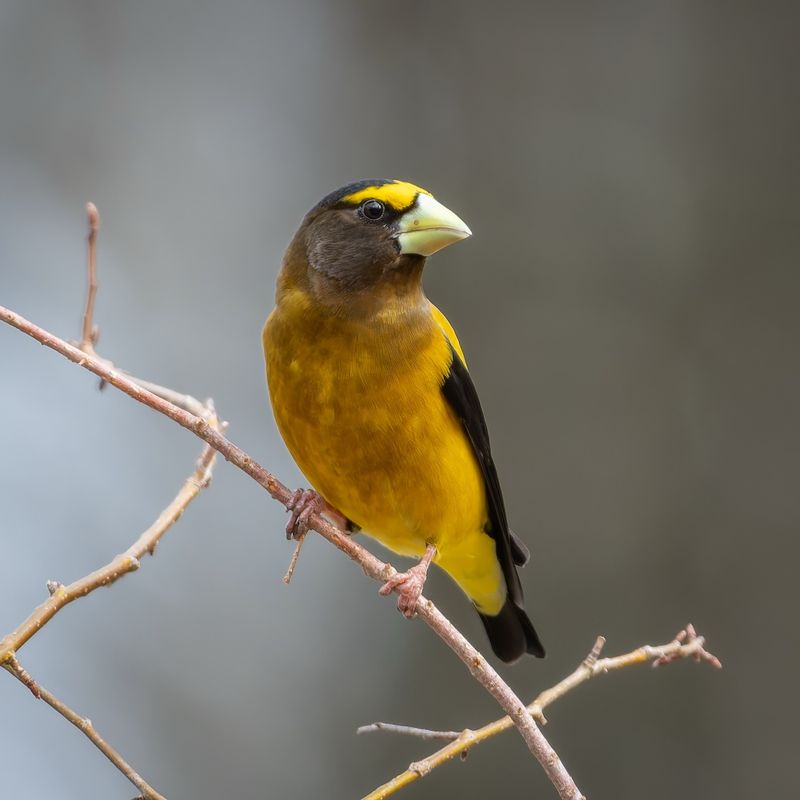
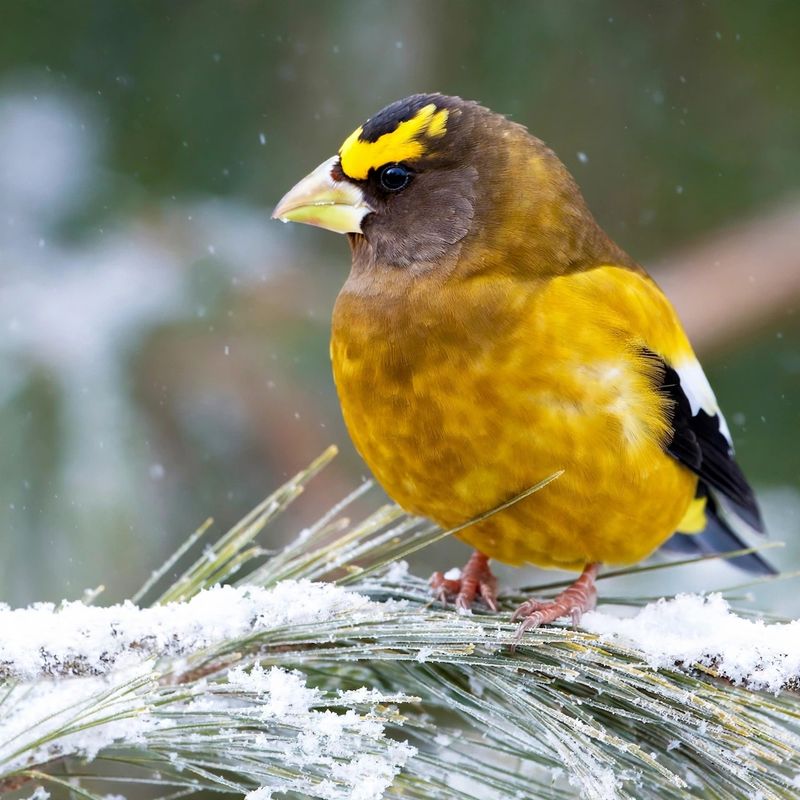
If a bird makes you stop mid-coffee, start with size and bill. Evening Grosbeaks are large, husky finches with a massive pale bill.
The Pennsylvania Society for Ornithology gives their length as about 8 inches, so think bigger than a goldfinch and chunkier than a cardinal’s slender frame.
Males wear yellow with dark areas and prominent white wing patches. Females are yellowish gray, a softer look that is easy to pass over.
The Game Commission’s finch page is a good reference for comparing what you saw.
Notice the order. Bill first, then body shape, then color, then wing patches.
Color alone can fool you in winter light.
One caution. These features describe an Evening Grosbeak.
They do not prove that an unidentified bird in your yard is one.
If you can, take a photo through the window and note the date, the place, and what the bird was eating. A clear picture does more than any memory.
Evening Grosbeaks Do Visit Feeders
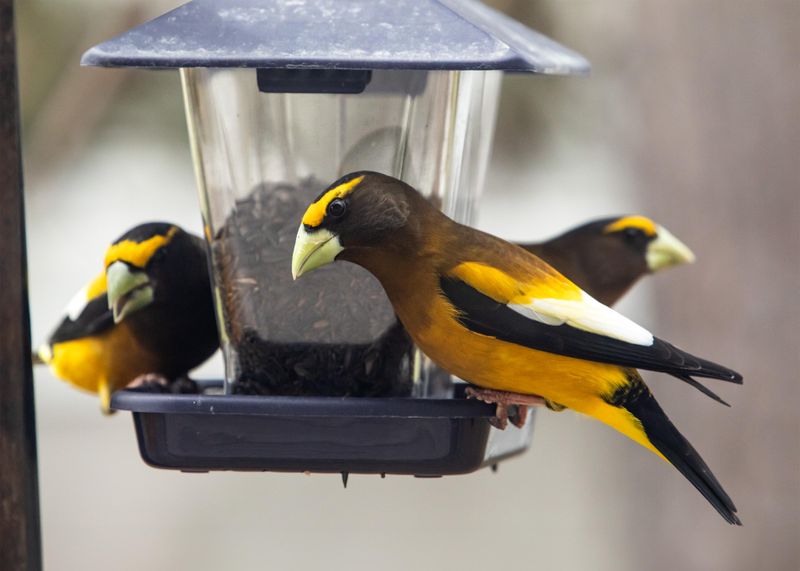
Here is the headline’s biggest miss. Calling this bird a rare feeder visitor gets it backward.
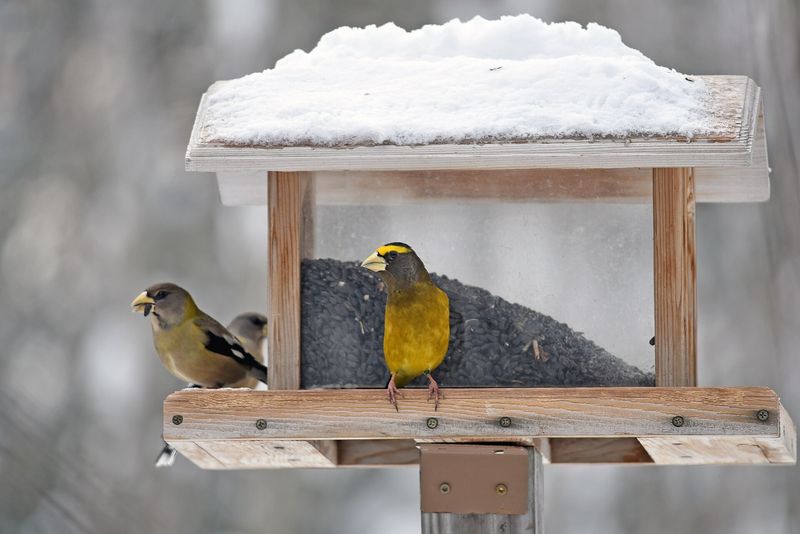
Cornell Lab says it readily visits platform feeders, especially with sunflower seeds.
Pennsylvania’s own wildlife agency agrees. The Game Commission says the bird may descend on yard feeding stations.
So the bird is scarce in some Pennsylvania winters, but it is not shy about feeders when it is around. Those are two different questions.
Willingness is one thing. Likelihood at your house is another.
A bird that would happily eat from your feeder still has to wander into your neighborhood first, and that depends on movements nobody can promise.
A feeder is also just one stop. Grosbeaks use natural seeds and other plant foods, so a bird can be nearby and never touch your tray.
Treat your feeder like an open porch light. It makes your yard welcoming if visitors are in the area, but it cannot call them in from the north.
Natural Food And Safe Feeding Set Realistic Expectations
Sometimes the woods win. The forecast says good food crops in northeastern conifer forests may keep some birds there instead of at feeders.
That does not explain any one Pennsylvania sighting, but it does set a fair expectation for your yard.
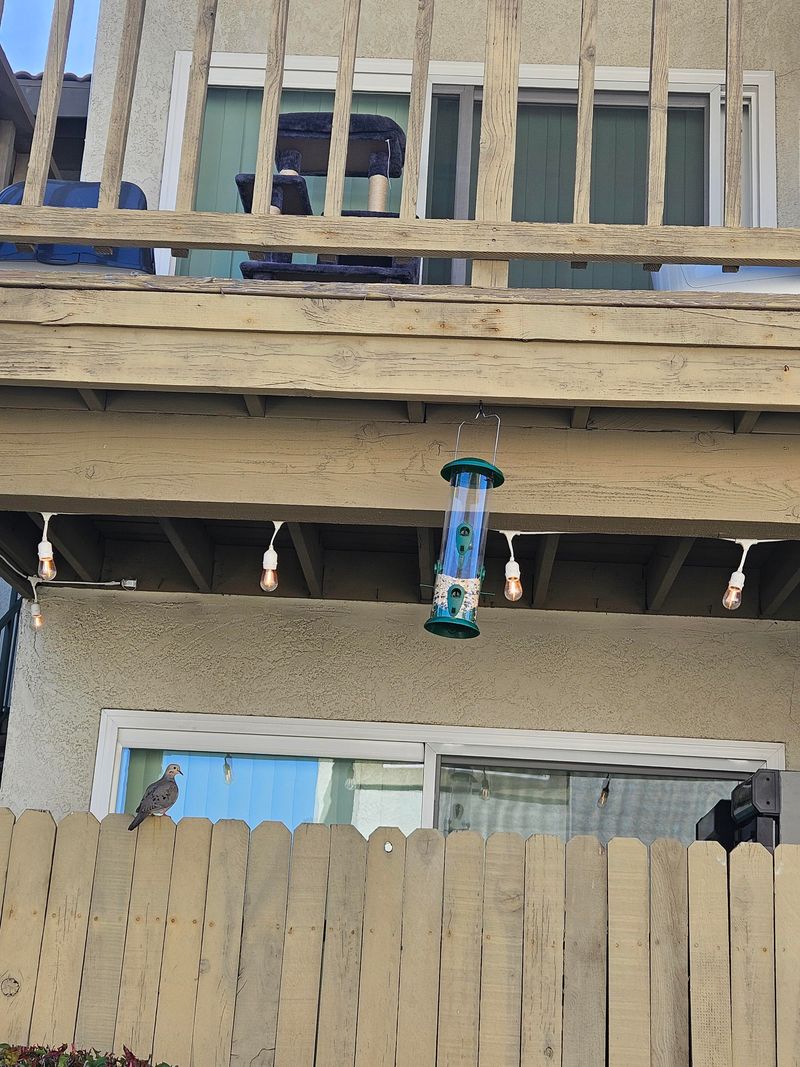
If you choose to feed, a platform feeder with black-oil sunflower seed is a reasonable viewing option. The Game Commission notes a regularly restocked sunflower feeder can hold wandering flocks in an area.
It is not a guarantee.
Hygiene matters just as much. Penn State Extension recommends offering only what birds can use in a day and scrubbing feeders weekly.
Keep seed dry, and throw out anything moldy.
Bears carry equal weight. The Game Commission advises taking feeders down when bears are active or have found the food.
In the Poconos, the northern tier, and the Laurel Highlands, that is a real rule, not a footnote.
A tidy routine keeps it simple. Fill small, scrub weekly, and watch the woods behind your fence for four-legged company.
The best feeder setup is one you can keep clean and safe all winter.
A Scarce Sighting Does Not Show Population Recovery
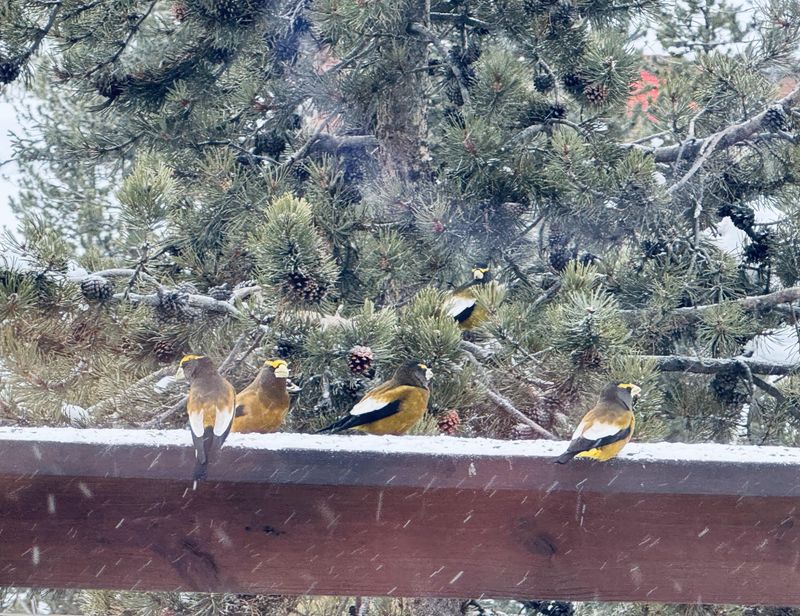
Scarce does not mean gone, and it does not mean saved. In Pennsylvania, rare here means an irregular or scarce visitor.
It does not mean endangered, and it does not mean never seen.
The bird’s wider story is more worrying. Audubon has reported on the Evening Grosbeak’s decline and on scientists trying to learn why.
Cornell Lab’s life history page adds background on how the species lives.
So one yard sighting cannot show recovery. It cannot show a new trend either.
A single bird, or even a single flock, is a snapshot, not a census.
That is fine. A good snapshot is still worth having, and you can make yours count by taking a clear photo and noting the date, place, and food.
Then hold your conclusions loosely. Say what you saw, where, and when, and leave the bigger story to the people counting birds across many years.
Some winters bring a golden surprise to the feeder. Others bring only a quiet yard and a full cup of coffee, and both are worth watching.
