
The Black Racer Streaking Past Your Florida Garage Means Your Yard Is Working Right
Follow us on Google
You are carrying groceries into the garage on a warm Florida morning when a dark streak flashes across the concrete and vanishes into the hedge. That snake was most likely a black racer, and it means a wild neighbor found your yard worth crossing.
It used your space for cover or a meal, which is compatible with a yard that supports wildlife. Here is what the visit tells you, what it does not, and how to keep the garage your own.
The Fast, Dark Snake May Be a Racer
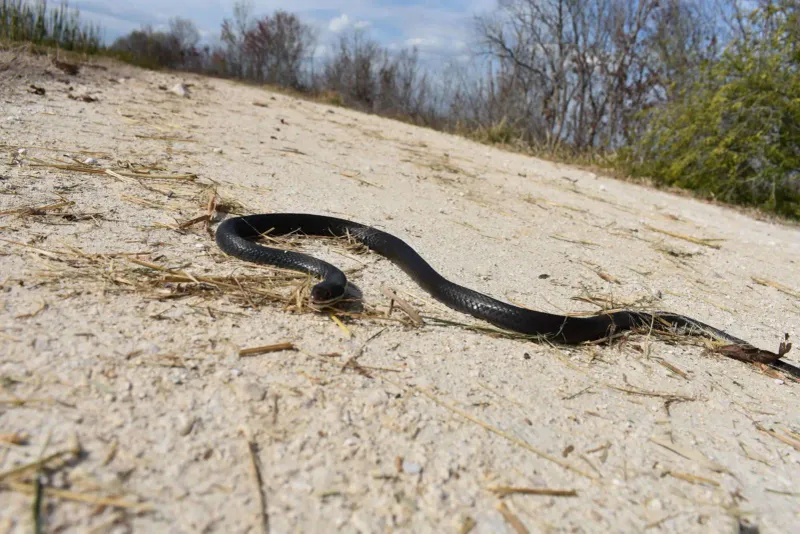
The streak you saw may well have been a black racer. Adult racers are long and slender, usually black or bluish-black, with a light chin.
They move fast, which is where that startling blur comes from.
Here is where it gets tricky. Young racers look nothing like their parents.
The Florida Museum’s snake guide describes juveniles as gray with reddish-brown blotches, and says they can be mistaken for pygmy rattlesnakes.
Florida also has other dark snakes, so color and speed alone cannot confirm what you saw. A quick glance at a fleeing tail is rarely enough for a sure answer.
Treat the name as a good guess, not a verdict.
Racers are nonvenomous, but they can bite if they are cornered, grabbed, or bothered. That is simply a frightened animal defending itself.
Nothing about it is sneaky or mean.
So watch from a comfortable distance and let it go on its way. Do not approach or handle any snake you cannot confidently identify.
A fast, dark visitor is a good story to tell, and it stays a good story when everyone keeps their space.
What a Racer Eats in Florida
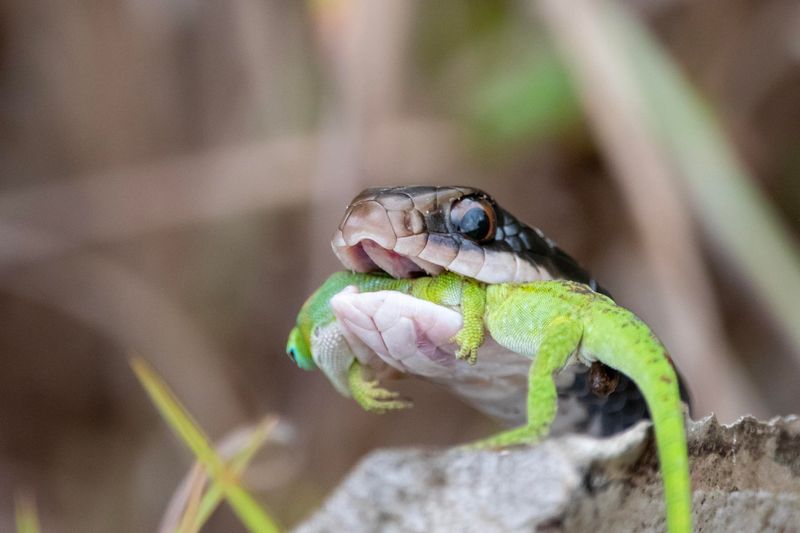
Ask most people what a snake in the garden is eating and they guess insects. That guess is mostly off.
In Florida, frogs, lizards, and small snakes make up much of a racer’s diet, according to the Florida Museum.
The menu is varied, though. Racers are adaptable hunters, and they take what their surroundings offer.
A tree frog by the downspout, an anole on the fence, or a small snake under a flowerpot could all be fair game.
That variety is why a racer can make a living in an ordinary neighborhood. It does not need one special food to show up.
It just needs something edible and a place to slip away.
Now the honest limit. One snake passing through does not prove your yard is packed with prey.
And it is not a pest-control crew, so do not count on it to handle your garden problems.
Think of it as a diner who stopped by, not a staff member you hired. Enjoy the visit, and keep your own pest plans in place.
One Sighting Is Not a Yard Report Card
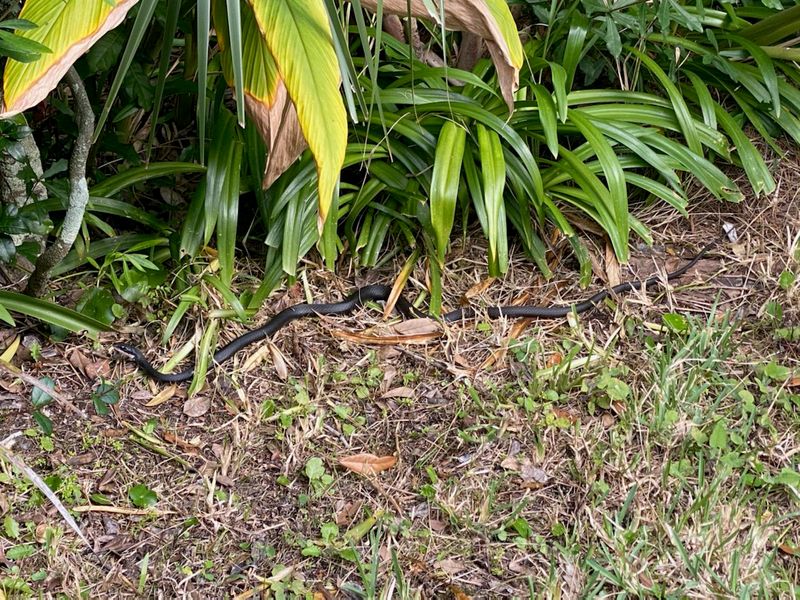
Racers are not picky about real estate. They use many natural habitats, plus disturbed and suburban areas, and they live throughout mainland Florida and the Keys.
The Florida Museum notes they are often seen in residential neighborhoods.
That changes what your sighting means. A yard may offer a racer shelter, a snack, or just a shortcut between two patches of cover.
Any of those would bring one past your garage.
So the snake is evidence that wildlife used your space. It is not a score.
It cannot tell you the yard is especially healthy or full of different species.
This is actually good news in a quiet way. You do not have to earn the visit or fear what it says about you.
A snake crossing your concrete does not mean you did something wrong, and it does not hand out a gold star either.
If you want a real picture of your yard, watch it over time. Notice the birds, butterflies, and lizards across a season.
One fast, dark blur is only a single frame in a long movie.
Keep Cover Away From the House

Leaf litter, brush, and shrubs give lizards, frogs, and other wildlife a place to live. Cover supports wildlife, and you do not need to strip it all away.
The trick is where you put it.
Piles of debris, firewood, and clutter right beside a house can shelter rodents and snakes too. UF/IFAS Extension recommends keeping such materials away from buildings and play areas.
Picture a simple map of your lot. Near the walls and the kids’ play spot, keep things tidy and open.
Farther out, let the wild corners stay wild.
Start with the easy moves. Shift stacked firewood well away from the garage wall.
Haul brush piles to the back edge of the property, and clear stray boards, buckets, and old pots from along the foundation.
Native plantings such as coontie or saw palmetto can live comfortably out in the yard, away from the house. That way you keep the habitat and lose the hiding places by the door.
You are drawing a boundary, not declaring war. A clear strip beside the house makes a quiet agreement with the neighbors who have no door key.
Check the Garage for Gaps
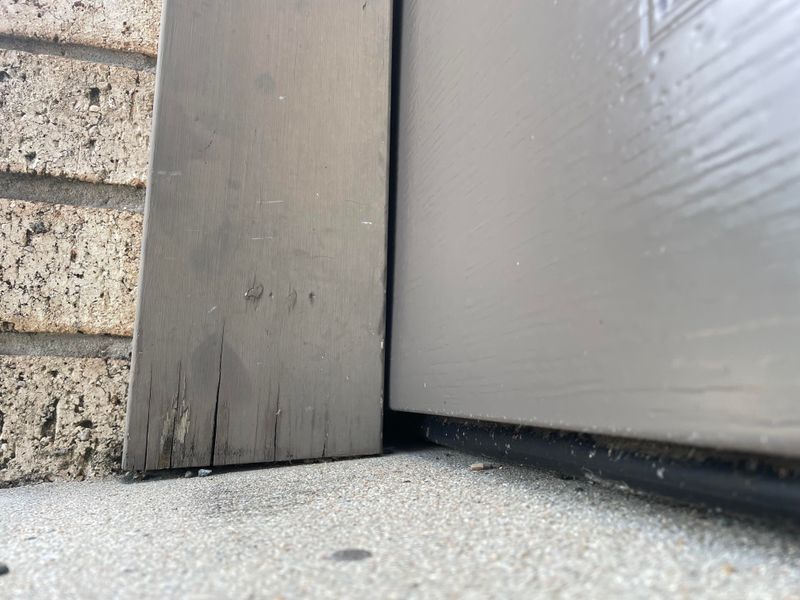
A garage is a dry, shaded room with plenty of corners. To a small animal, a gap under the door looks like an open invitation.
Closing those gaps is the most direct way to keep a snake from wandering in.
Walk the garage with a flashlight. Look under the door, and around plumbing, wiring, vents, and the foundation.
UF/IFAS Extension points to these as common entry spots.
Door sweeps and weather strips can help block those openings. But they only work while they are intact.
Rubber cracks in Florida sun and humidity, so check them again every so often, and replace any that have curled or worn thin.
Seal small holes around pipes and cables, and make sure vent covers fit snugly. A few minutes with a flashlight beats a surprise later.
None of this requires wiping out the wildlife outside. You are simply making one building less accessible.
The racer can keep its hedge, and you keep your garage.
Think of it as good fences making good neighbors, only the fence is a strip of rubber.
Repeated Snake Visits Can Point to Rodents
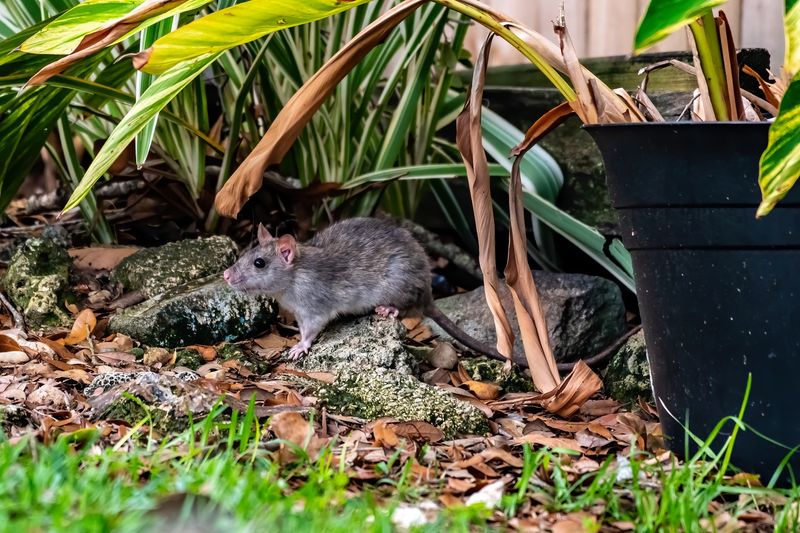
Here is a pattern worth noticing. The Florida Fish and Wildlife Conservation Commission says repeated snake sightings near buildings may indicate rodents.
That guidance, posted by FWC, covers snakes around buildings in general.
It does not mean a single black racer came for mice. One sighting is just one sighting.
But if snakes keep turning up by the same wall, ask what else is living there.
Food is the usual answer. Store birdseed and pet food in sealed containers, and sweep up spilled seed beneath feeders.
Look for signs of rodents like droppings or gnawed boxes, and deal with them.
One caution matters here. UF/IFAS Extension advises against rodent poison, because poisoned rodents can harm pets or wildlife that eat them.
Traps and sealed entry points are the safer route.
This is one layer, not a cure-all. Cutting off the food supply makes the garage a dull place for rodents, and for the snakes that follow them.
Give the Snake Room to Leave
Next time a snake appears, stay calm and stay back. Give an outdoor snake space and let it move toward cover.
Most want to leave far more than you want them to.
If you would like it gone sooner, UF/IFAS Extension says a gentle spray from a garden hose may coax it away. Do this only from a safe distance, and never to corner it.
Racers can bite if bothered, as the Florida Museum notes.
If the snake may be venomous, or you cannot tell what it is, call a professional. Do not try to move it yourself, and never catch, corner, or kill it.
Skip the mothballs too. UF/IFAS says they are not approved for outdoor snake control, and using them outside label directions is illegal and can harm people, pets, or the environment.
Sensible boundaries do the real work here. The racer was only passing through, and you handled it like a neighbor.
