
Great Blue Lobelia: A Late-Season Blue Native for Pennsylvania Gardens
Follow us on Google
You walk out on a late August morning in Pennsylvania, coffee in hand, and the garden looks tired. Then you spot upright spikes of deep blue glowing near the damp corner of the yard.
That plant is great blue lobelia, a native that brings cool blue color when many beds fade. It is not right for every yard, so here is how to tell if yours qualifies.
A Late-Season Blue Choice for Pennsylvania Gardens
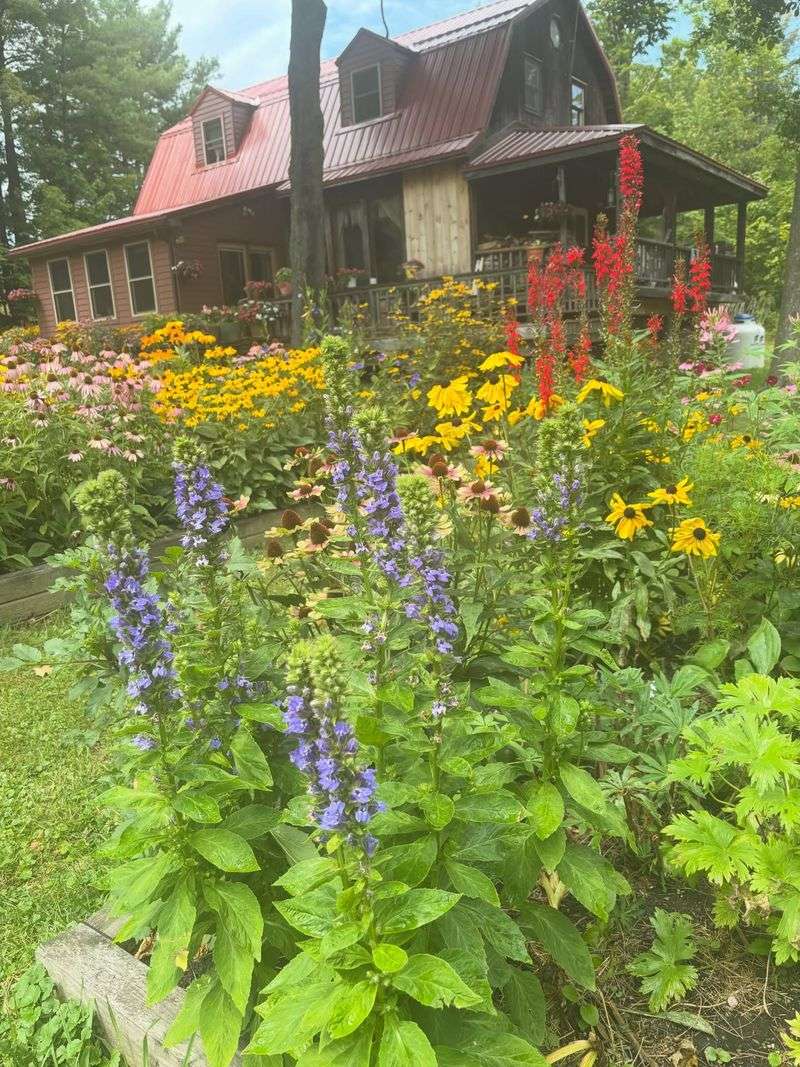
Blue is a rare color in the late garden, and great blue lobelia (Lobelia siphilitica) delivers it. This Pennsylvania native stands upright, sending up leafy stems topped with spikes of tubular blue flowers.
Each bloom looks like a small two-lipped trumpet, stacked along the stem like beads on a string.
Plan on a plant roughly one to four feet tall. Penn State Extension’s rain garden guide lists a typical height of 24 to 36 inches, which puts it at a nice middle height in a border.
Behind shorter plants, the blue spikes rise like quiet exclamation points.
Flora of Pennsylvania reports the species throughout the state, so it truly belongs here. That means it fits naturally beside other native plants such as native asters and goldenrod, whose purples and yellows play well against the blue.
Here is the honest framing. Great blue lobelia is a strong late-season color choice, not the last flower standing.
Other natives bloom late too, and Penn State’s fall native perennial guide names several of them. Think of lobelia as one bright voice in the late chorus.
It also has a catch, and it is a big one. The plant wants consistently moist soil, which rules out plenty of yards.
The next sections help you decide whether yours is a match before you buy a single plant.
When Great Blue Lobelia Blooms
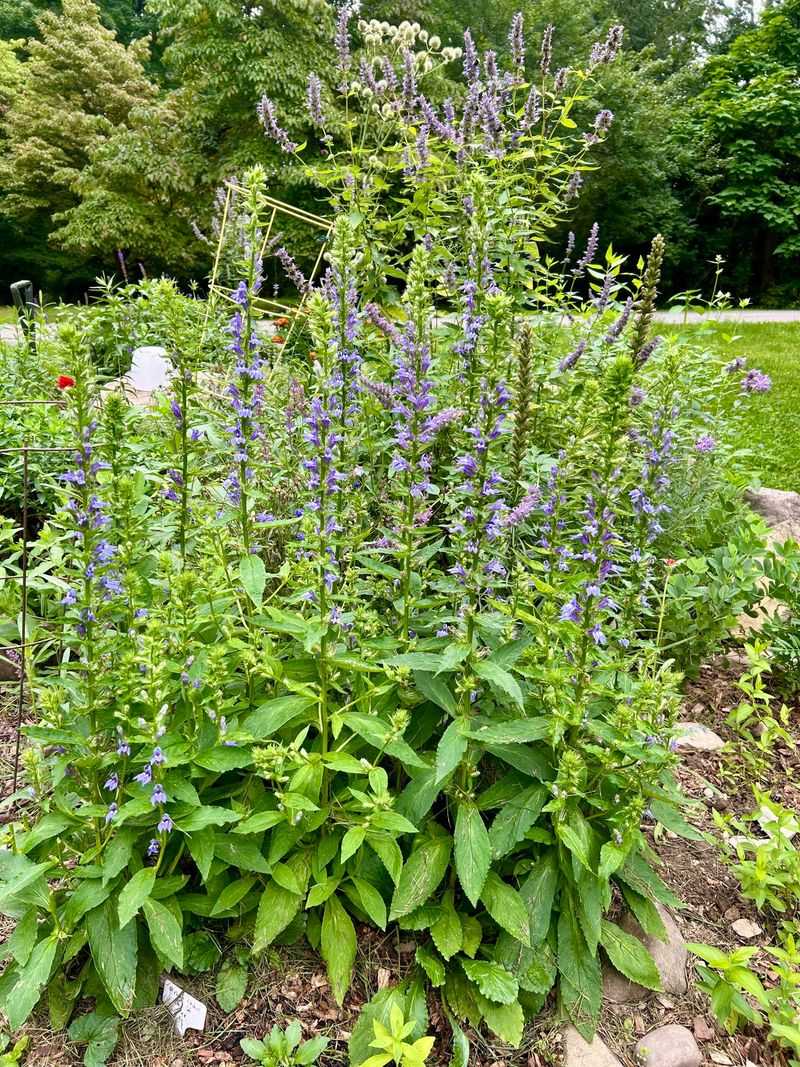
Bloom timing depends on who you ask, and that is fine. Pennsylvania Flora gives August and September as the usual bloom period, often lasting about four to six weeks.
Penn State Extension’s rain garden guide lists a wider window, August through October.
So October flowers are possible, but they are not assured. Neither schedule is a statewide appointment.
A cool northern tier garden, a warm Delaware Valley yard, and a shady spot on the Allegheny Plateau can all run on different clocks.
Weather matters too. A hot, dry summer or an early cold snap can shift things by weeks.
Treat the listed dates as a general range, not a promise for your fence line.
The best plan is to expect blue from late summer into early fall and call any October blooms a bonus. Watch your own plants for a season or two and jot down the first and last open flowers.
That notebook becomes the most accurate calendar you will own.
One more reality check. Great blue lobelia is not Pennsylvania’s latest-blooming wildflower.
Penn State’s fall guide also lists asters, goldenrods, and other plants flowering late into the season. Lobelia simply adds the blue that those neighbors lack.
Great Blue Lobelia Is Not Cardinal Flower
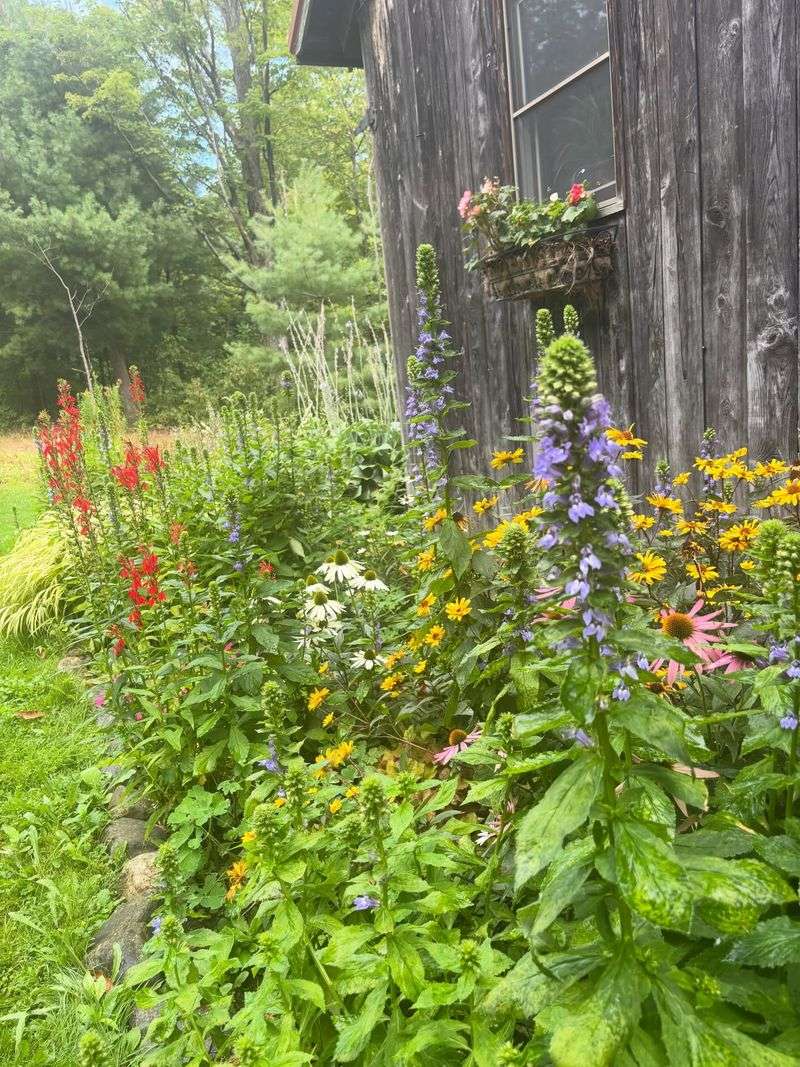
Plant names can send you down the wrong aisle at the nursery. Great blue lobelia, Lobelia siphilitica, has tubular blue flowers arranged along an upright spike.
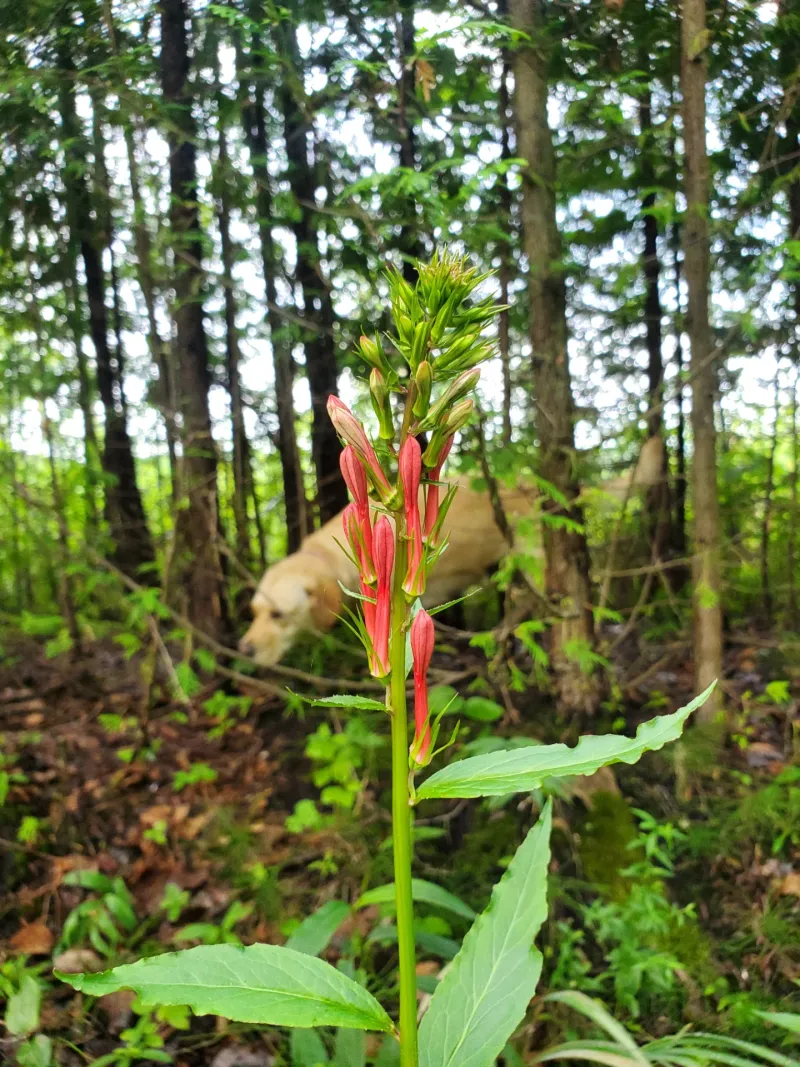
Cardinal flower, Lobelia cardinalis, is a related plant with scarlet red blooms.
They are cousins, and Penn State discusses them as related but separate plants. Both like moisture, both stand tall, and both can brighten a damp spot.
But only one gives you blue.
At a plant sale, check the tag for the botanical name, not just the word lobelia. Look for siphilitica and a blue flower photo.
If the tag says cardinalis, you are buying red, which may be lovely but is not the plant in this story.
Also skip the small trailing lobelia sold in hanging baskets. That is a different annual plant, and it will not give you a tall native spike.
Once you know the difference, spotting the blue one in a garden becomes an easy win. You will glance at a spike of deep blue trumpets and know exactly what it is.
Choose a Site With Consistently Moist Soil
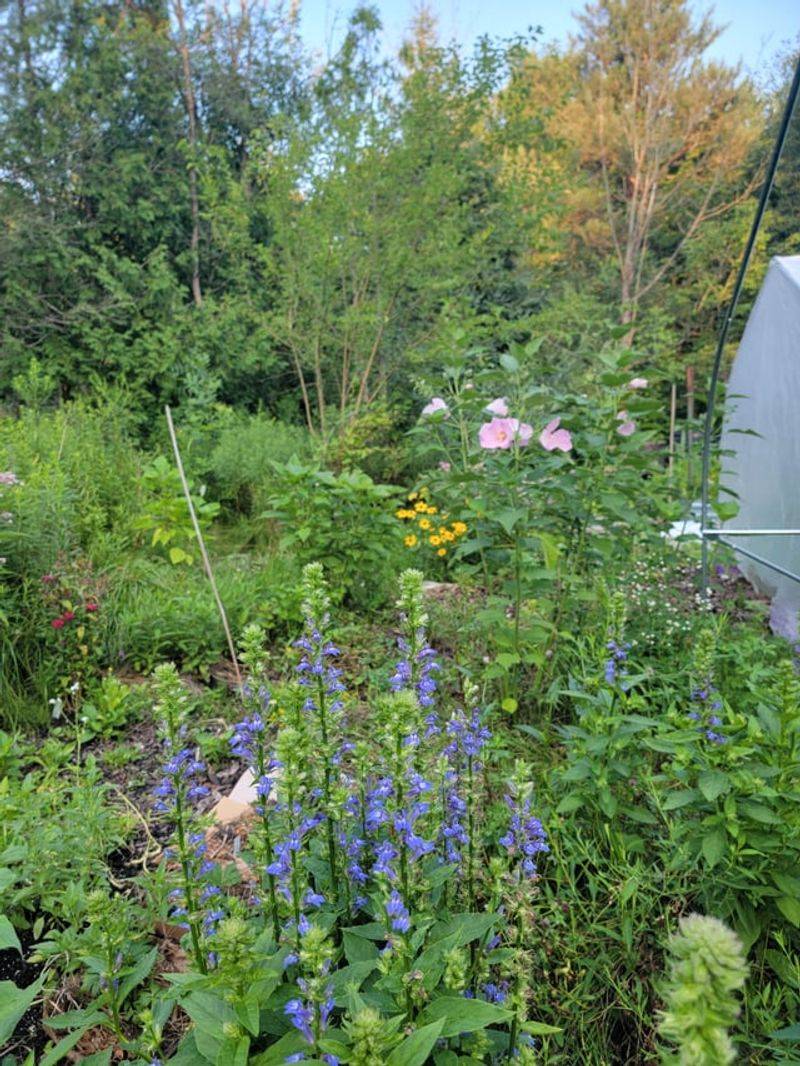
Here is the deal breaker. Great blue lobelia needs consistently moist soil to grow well.
Penn State says the plant is not drought-tolerant, though it can tolerate inundation, meaning periods of standing water.
Sun or partial shade both work. NC State Extension notes that full sun is tolerated if the soil stays consistently moist.
So full sun is fine only where moisture stays steady, not in a hot bed that bakes dry between thunderstorms.
Pennsylvania summers can swing between downpours and dry spells. A spot that feels damp in May may be crunchy by August.
Test your site by pushing a trowel 4 to 6 inches down a few days after rain, then again a week later. If the soil is still cool and damp, you are in good shape.
Soil texture is a separate question. Penn State says the plant tolerates several soil types, but growing in clay does not mean it tolerates drought.
A dry clay slope can still be a poor match.
If your beds dry out fast, skip lobelia and choose a plant that likes it dry. Matching plant to site is the actual secret, and it saves you money and frustration.
Place It in a Rain Garden or Moist Border
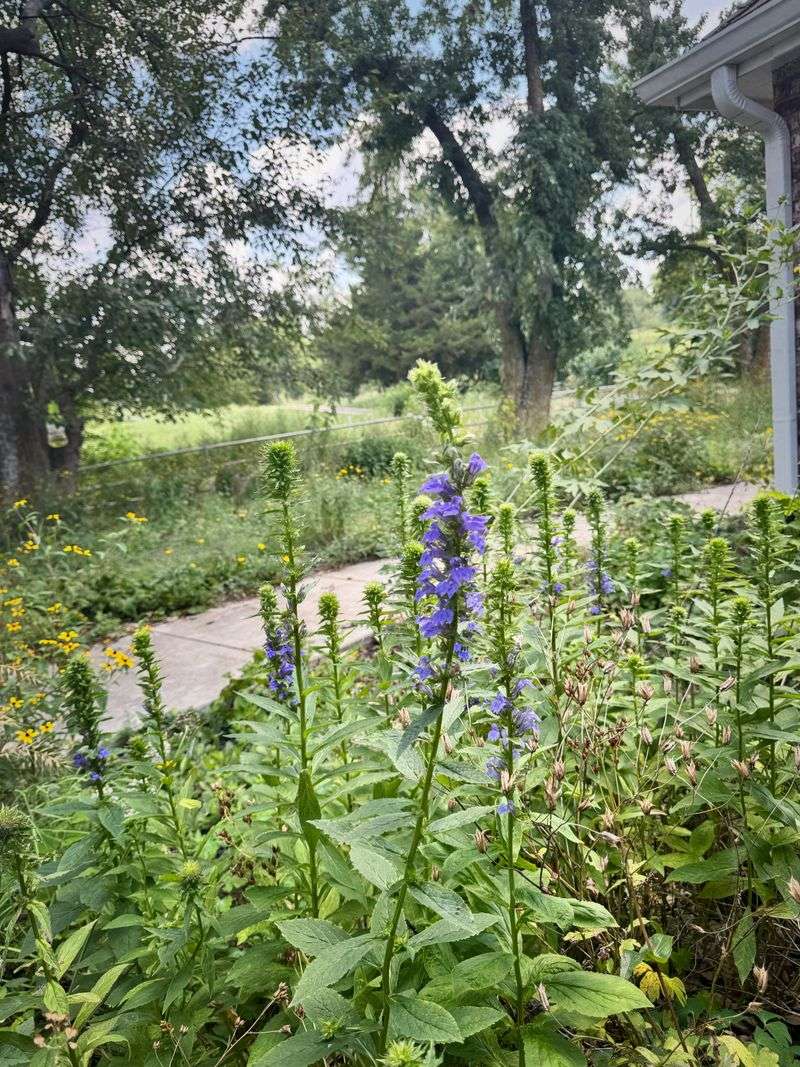
If you have a rain garden, this plant is made for it. A rain garden is a shallow bed that collects runoff from a roof or driveway, and lobelia handles the wet-then-drain rhythm well.
A naturally damp border near a downspout or low spot also works.
Do not assume your whole yard suits it. Place it only where the soil holds moisture, and let it share space with other moisture-lovers like Joe Pye weed.
For planting, follow Penn State’s native perennial guidance. Match the plant to the site, water thoroughly at planting, and give additional water during establishment as needed.
In practice, that means checking young plants weekly in dry weather during their first season.
Space plants about 12 to 18 inches apart so the spikes form a loose group instead of a lonely stick. Add a light layer of mulch, 2 inches or so, to help hold moisture without piling it against the stems.
Young plants are like new neighbors. They need a little attention before they settle in.
After that first season of care, a good spot does much of the work for you.
Self-Seeding Can Help Renew the Planting
Perennial does not mean forever. Pennsylvania Flora describes great blue lobelia as short-lived, with individual plants lasting only a few years.
So do not count on one permanent clump.
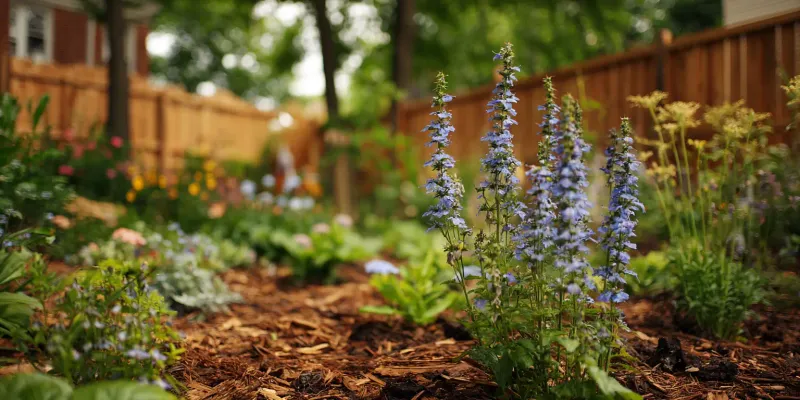
The plant has a backup plan, though. Penn State notes that it self-seeds and can form colonies.
Tiny seeds drop from spent flower spikes, and new seedlings may pop up nearby the next spring.
To help that happen, leave some spikes standing after flowering instead of cutting everything down at fall cleanup. Bare, moist soil near the parent plant gives seedlings a place to start.
Heavy mulch can smother them, so keep it thin around the area.
Seedlings are not guaranteed. Dry weather can wipe them out, and you may need to move a few volunteers to the spots you prefer.
Think of the colony as a slowly shifting crowd, not a fixed monument.
If you are buying plants, choose nursery-propagated ones. Penn State’s native planting guidance recommends this and warns against collecting plants from the wild.
Wild populations deserve to stay put, and nursery plants are easier to grow anyway.
Set Realistic Expectations for Wildlife and Safety
Bumblebees are the main pollinators of great blue lobelia, according to Pennsylvania Flora. Penn State also lists bees, butterflies, and hummingbirds.
Treat those as possible visitors and nectar support, not a guaranteed crowd.
Deer may browse it as well. Pennsylvania Flora reports deer browsing, and NC State Extension describes low resistance to deer damage.
In deer country, plan on fencing or repellents, and do not call it deer-proof.
Now a safety note. The species name siphilitica reflects an old belief that the plant cured syphilis.
NC State Extension notes that history, but the name is not proof of any treatment. Do not use this plant as medicine.
Cornell Botanic Gardens identifies toxic alkaloids in the plant and warns of serious consequences from overdose. The simple rule is to never eat any part of it, and to keep kids and pets from chewing on it.
If you suspect poisoning, Penn State gives the Poison Control number, 800-222-1222.
Enjoy it with your eyes, and let the bees do the sipping.
