
Save Your Geraniums Before Frost Hits, and Container-Kept Plants Are Often Bigger by Spring
Follow us on Google
The first cold snap is coming, and your porch pots are about to lose their color. Before you haul them to the trash, hold on.
Those familiar geraniums can often be carried through winter if you act before frost. Here is how to pick a method that fits your home.
Know Which Geranium You Are Saving
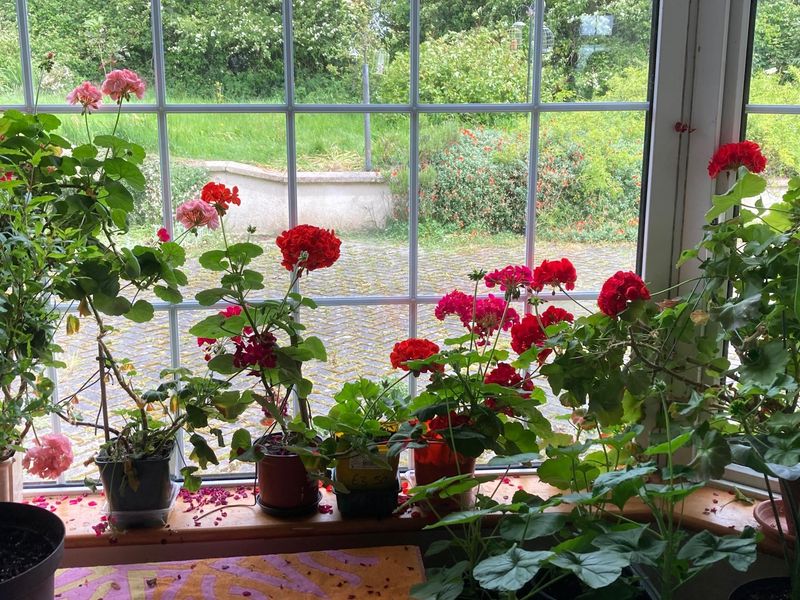
Frost had not touched the porch pots yet, but the air smelled like cold metal. That is your signal.
The red and pink plants most people call geraniums are usually Pelargonium, a frost-tender plant from warmer climates.
True hardy geraniums are a different group. They belong to the genus Geranium and are generally grown as perennials outdoors.
University of Minnesota Extension explains that the common name covers both, and that is why advice gets muddled. This guide is only for the frost-tender Pelargonium, the kind sold in flats each spring for patios and bedding.
Here comes the timing correction. Many gardeners assume they should wait until frost hits and then rescue the plant.
Extension guidance does not work that way. Iowa State Extension says to act before the first fall frost, whether you bring the plant in, dig it up, or take cuttings.
Nothing in those sources promises that a plant damaged by frost will bounce back. Think of frost as a closing door.
You want the plant on the other side of it.
Your first frost date depends on where you live. Check your local forecast and keep an eye on overnight lows in the 30s.
Then pick a method and get moving.
Choose A Winter Method That Fits Your Space
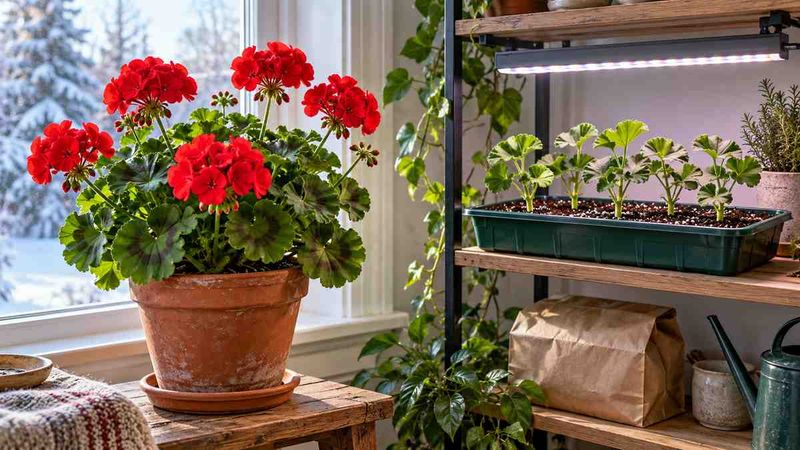
Space decides most winter plans. A sunny window with room for a full pot is one thing.
A crowded apartment shelf is another.
According to Illinois Extension, you have three options. You can keep the whole plant growing indoors, store it dormant, or root cuttings.
Keeping the whole plant growing asks for the most room and the brightest light. In return, you have a living plant all winter that you can pinch and tend.
Dormant storage asks for little space, but results are less certain, so treat it as a gamble worth taking when you are short on room.
Cuttings sit in the middle. A handful of small pots takes far less space than a mature plant, and you can start several at once.
They do need bright light and a few weeks of patience.
All three options start before frost. If you have room, you can even mix them.
Keep one prized plant growing, and root a few cuttings as backup.
Details for each method follow in the next three sections.
Keep The Whole Plant Growing Indoors
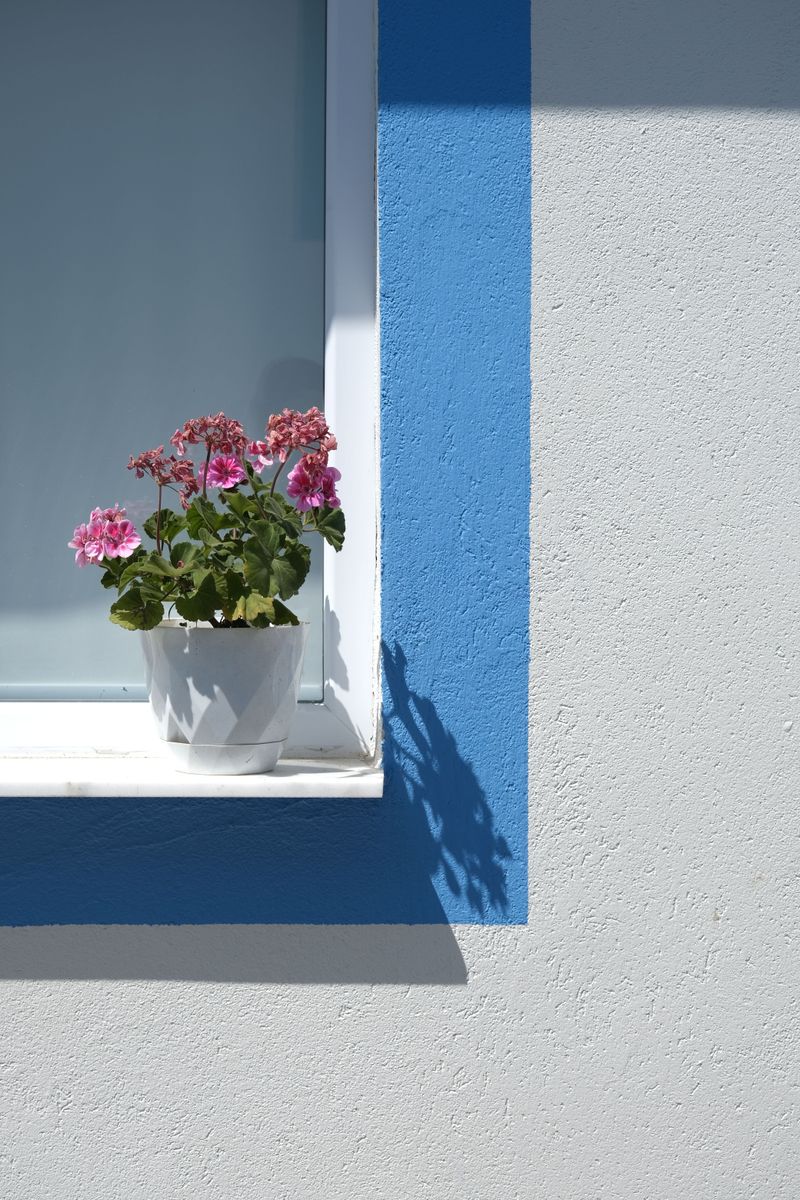
Winter windowsills can be a quiet nursery. Start with a healthy plant, one with no spots, no bugs, and firm stems.
Pot it in a container with drainage holes so the roots never sit in water.
Next, cut it back by roughly one-third to one-half. It feels harsh, but Illinois Extension recommends it.
A smaller plant is easier for a window to support.
Give it bright light. Illinois suggests daytime temperatures near 65°F, with nights slightly cooler.
A spot near a south-facing window often works, though your home may differ.
Water only when the growing medium dries out. Soggy soil is a common winter mistake.
When stems turn lanky and reach for the glass, pinch them back to encourage branching.
So what do you gain for all this care? Cornell Cooperative Extension says whole plants kept growing in containers over winter are typically larger than most geraniums sold in spring.
That describes this method only, and it is typical, not guaranteed.
Your own results depend on light, temperature, and the plant you started with. Still, a window full of green in January is a decent reward.
Store A Dormant Plant With Realistic Expectations
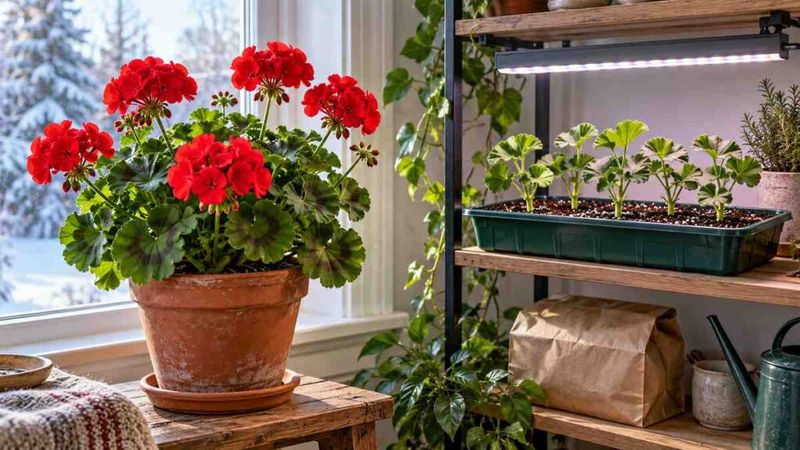
Dormant storage sounds easy, like putting a plant to bed. It can be challenging, though, and it may not work every time.
Here is the method Illinois Extension describes. Lift the plant before frost and remove loose soil from the roots.
Then store it in a paper bag or hang it upside down in a cool, dry place. Illinois recommends 45 to 50°F.
Come March, check the plant. Trim back to firm green tissue, pot it, and set it in a sunny spot to restart growth.
Shriveled, mushy, or hollow stems are a sign that tissue did not make it.
Do not treat those conditions as a universal recipe. University of Minnesota Extension describes bare-root storage in a cold, damp basement or root cellar.
That differs from Illinois, which says dry.
Minnesota also calls this approach challenging and recommends taking cuttings as insurance. That is wise advice.
If you try dormant storage, root a few cuttings too, so one failed plant does not end the story.
Root Cuttings To Save Space
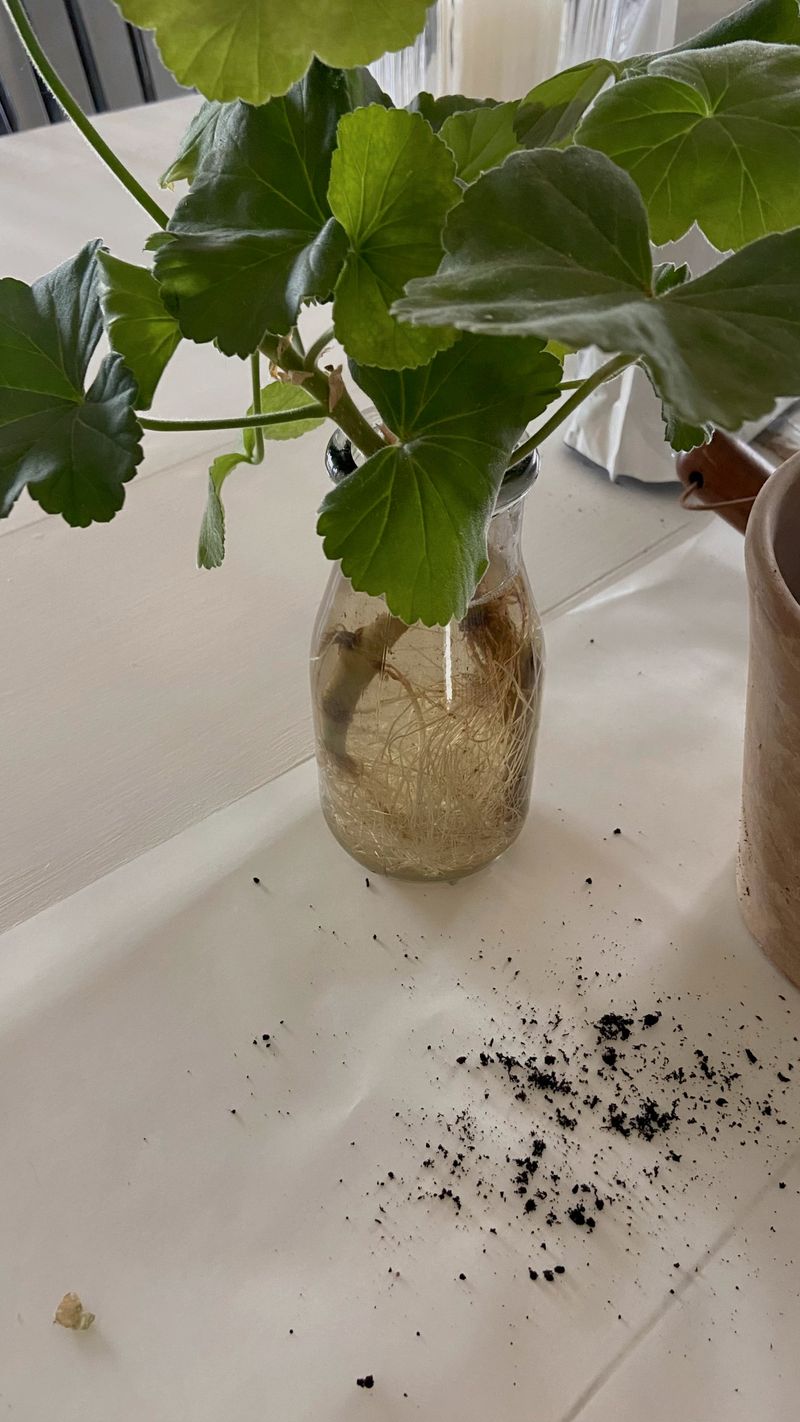
A whole plant can shrink to the size of your finger. That is the idea behind cuttings.
You carry a small piece of the plant through winter instead of the entire thing.
Follow the method from Illinois Extension. Take stem-tip cuttings about 3 to 4 inches long from a healthy plant, before frost.
Place them in moist rooting medium and set them in bright light.
Rooting takes patience. Illinois reports it can take roughly 4 to 8 weeks.
During that time, keep the medium moist but not soggy.
You can tell roots are forming when new growth appears at the tip. A light tug that meets slight resistance is another clue.
Rooting hormone is not required for this method, so you can skip it.
Once roots form, pot each cutting in its own container. Grow them indoors in bright light until local frost danger has passed outside.
Cuttings suit small kitchens, shared apartments, and anyone who would rather tend a shelf of tiny pots than a bulky plant. They also make a smart backup for any other method you choose.
Screen Plants Before Bringing Them Inside
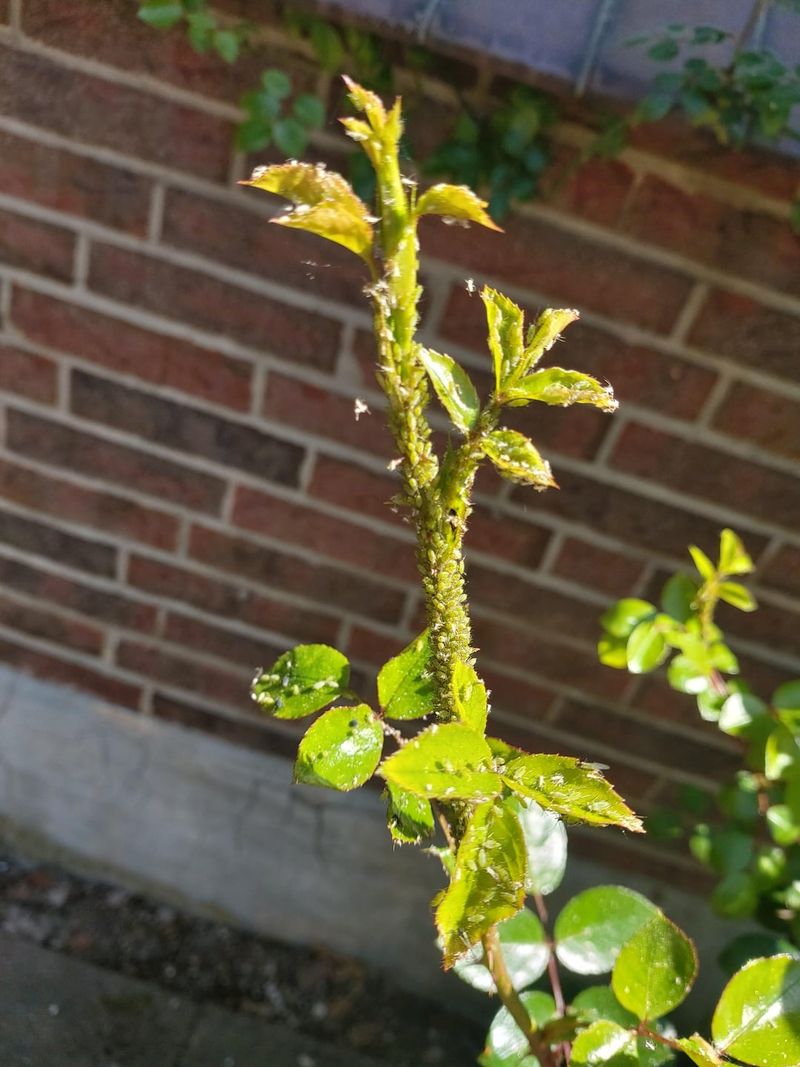
One hitchhiker can crowd a houseplant shelf fast. Before any pot crosses your doorway, look the plant over closely.
Check leaf undersides, stem joints, and the soil surface. Look for sticky residue, fine webbing, white fluff, or chewed leaves.
Chicago Botanic Garden advises tossing plants with disease or insect problems rather than risking spread to your indoor plants.
That may feel wasteful, but a rejected plant protects every other plant in your home. Take cuttings only from the healthiest stems of a plant that passes the check.
Documented pests include aphids, mites, whiteflies, mealybugs, and caterpillars, according to Clemson Cooperative Extension. You do not need to memorize them.
You just need to notice when something looks wrong.
If a plant looks clean, bring it in. If it looks doubtful, leave it outside.
Screening takes a few minutes and keeps winter simple.
Return Plants Outdoors After Local Frost Danger Passes
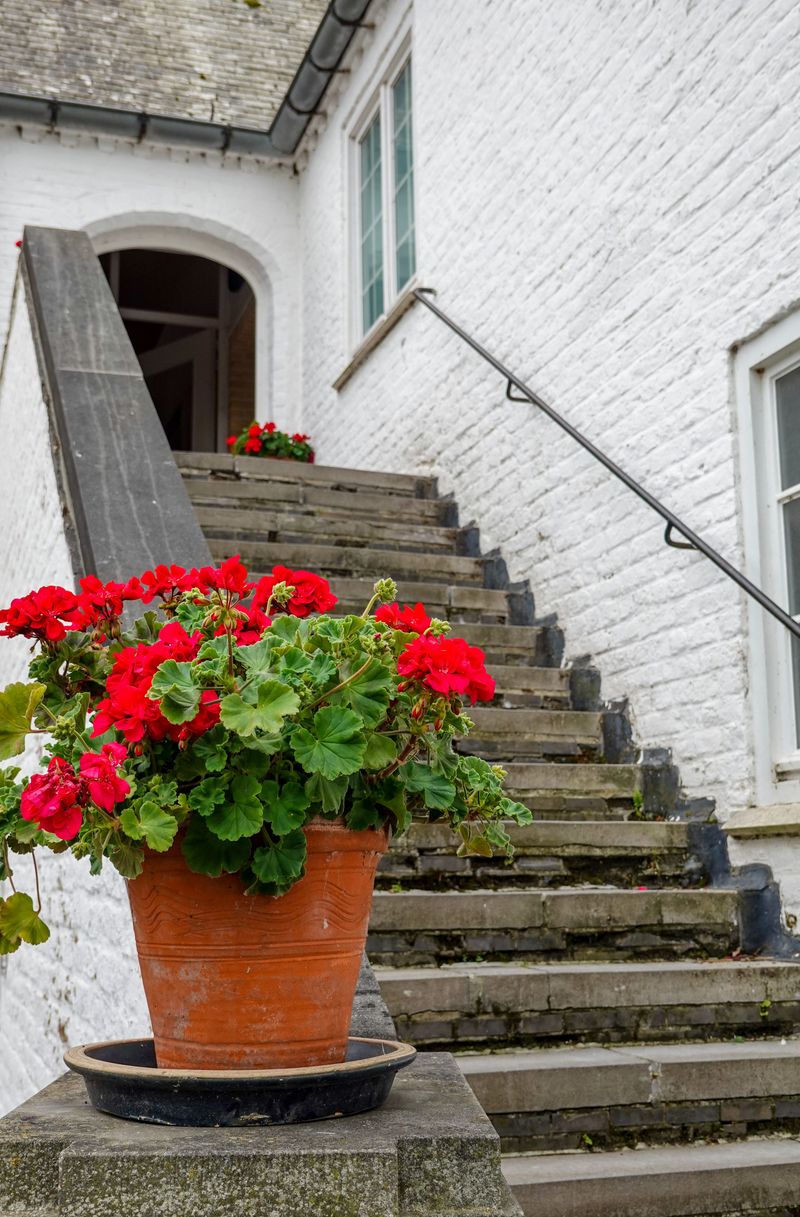
Spring tempts everyone to move plants out early. A warm afternoon in March is not a promise.
Wait until frost danger has passed in your own area, not on a fixed national date.
Your local forecast and neighbors who garden are better guides than a calendar alone. A hardiness zone tells you about winter cold, not when the last frost lands.
In Minnesota, University of Minnesota Extension also recommends waiting until soil reaches 60°F. That figure is Minnesota guidance, not a national rule, but it shows why soil temperature matters.
Its growing advice calls for full sun.
Iowa State is more specific, recommending at least 6 hours of sun each day, as noted in its annual geranium guide. Harden plants off first by setting them outside for a few hours at a time.
Overwintering may give a container-kept Pelargonium a head start. But survival is not guaranteed, and neither is a bigger plant.
Either way, you tried, and the porch is better for it.
