
The Box Turtle Sleeping Under Your North Carolina Leaves Is Exactly Where Your Fall Cleanup Hits
Follow us on Google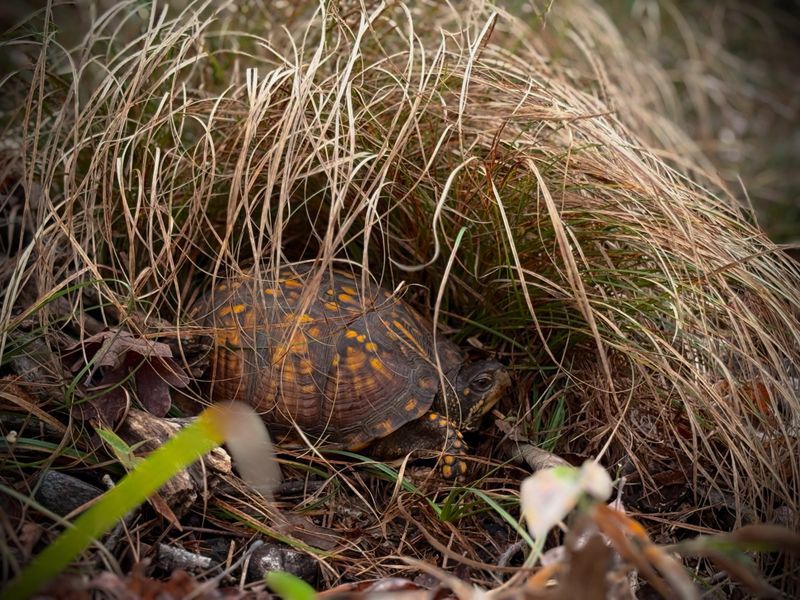
You’re raking oak leaves on a cool November afternoon in North Carolina, and the rake scrapes something that feels too solid. It could be a root or a rock.
It could also be a box turtle tucked in for winter. Nobody can say what sits under your particular leaves, but a few small habits can lower the chance of disturbing a sleeper.
A Turtle May Be Under Your Leaves
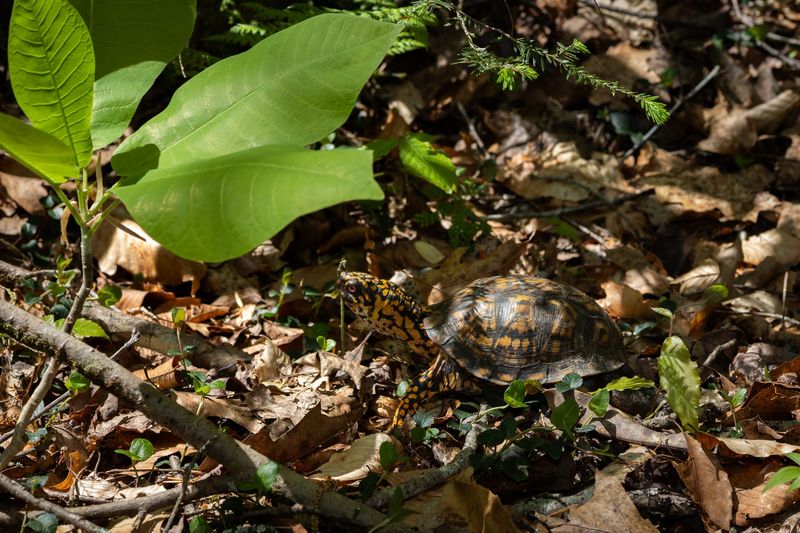
You know the feeling. It is a cool Saturday, the oaks have dropped everything, and the rake is already in your hand.
Somewhere between the porch and the tree line, you wonder what else is living in all that brown.
Here is the honest answer. An eastern box turtle may be sheltering in leaf litter or shallow soil on your property, and cleanup could disturb one.
But nobody can tell you whether a turtle is under your leaves right now. The headline you clicked is a possibility, not a promise.
What we do know comes from the state. NC Wildlife Resources Commission says box turtles typically bury in soil or leaf litter and become dormant during winter.
Dormant means their bodies slow way down, a bit like a house with the thermostat turned low.
Notice the word typically. Turtles do not read calendars, and they do not all pick the same spot.
A turtle that settles near a woodland edge, a log, or a damp corner has made a choice we can only guess at from the porch.
So this is not a reason to treat your whole yard like a minefield. You can still clean up.
You just need a few adjustments, such as leaving one patch alone, going easy near likely cover, and knowing what to do if a shell turns up.
Think of it as sharing the yard with a quiet neighbor you have never met. A little care costs you very little, and it keeps the yard tidy and a bit more alive.
Winter Shelter Is Not One Place
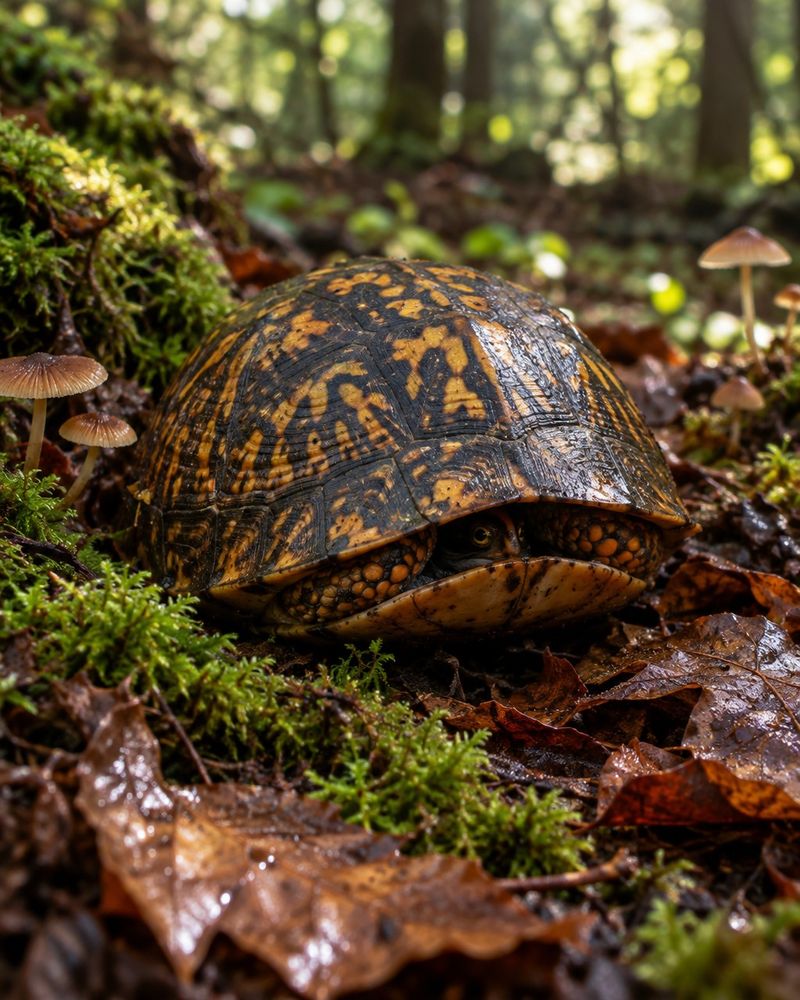
Picture a loose pile of leaves and you probably picture a turtle curled inside it. That picture is too simple.
Turtles pick from a whole menu of hiding spots.
A U.S. Forest Service species review describes overwintering sites that include soft soil, deep litter, woody debris, brush, natural depressions, stump holes, and sometimes burrows dug by other animals.
Leaf litter is one option on that list, not the only one.
That variety matters for you. It means a leaf pile does not automatically hide a turtle, and a bare patch of soil does not automatically hide none.
The list describes what turtles have used, not a map of your yard.
Please do not turn it into a search checklist. Poking through brush or stump holes to look for a sleeper would defeat the whole purpose.
The goal is to leave likely cover alone, not to inspect it.
Timing is just as loose. NC Wildlife says turtles typically become dormant in winter, yet they have been observed in every month of the year.
A mild stretch in the Piedmont or a warm spell on the coast can put a turtle on the move when you least expect it.
So skip the fixed date on the calendar. Treat late fall and winter as a time to be a little more careful, not as a switch that flips on one day and off another.
Think of winter shelter as a neighborhood with many addresses. You will never know which one is occupied, and that is fine.
Shallow Cover Can Be Disturbed
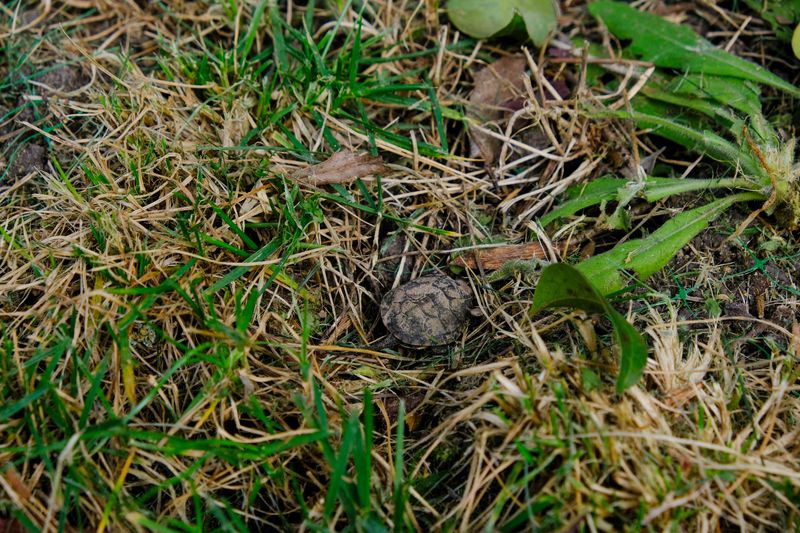
A turtle does not need a deep bunker to get through winter. Sometimes a thin layer of soil and leaves is the whole blanket.
That is why raking, digging, or dragging debris across a chosen spot could disturb one.
The Forest Service review reports that some studied eastern box turtles dug forms averaging about 0.21 inch below the surface. That is one reported average from particular studies, not a depth rule for your yard.
A North Carolina study gives another snapshot. Researchers tracked turtles for eight years at two longleaf pine sites and reported the greatest burial depth, 2.9 to 3.2 centimeters below the soil-litter interface, in late February.
You can read the details in the peer-reviewed overwintering study.
Notice how specific that is. Those were two sites, with their own soil, pines, and prescribed fire.
Your backyard in Raleigh or Wilmington may look nothing like them, so the numbers cannot tell you how deep to go or when to stop.
What they do tell you is that shallow cover is real. A turtle can rest close to the surface, which makes hard scraping in likely shelter a poor idea.
None of this says ordinary cleanup often hurts turtles. Nobody has counted that.
It simply means you can be gentle where turtles might plausibly settle, such as near logs, roots, and damp edges.
And never dig to check. Guessing wrong with a shovel is exactly how you cause the problem you are trying to avoid.
Keep One Leaf Patch Out of the Work Zone
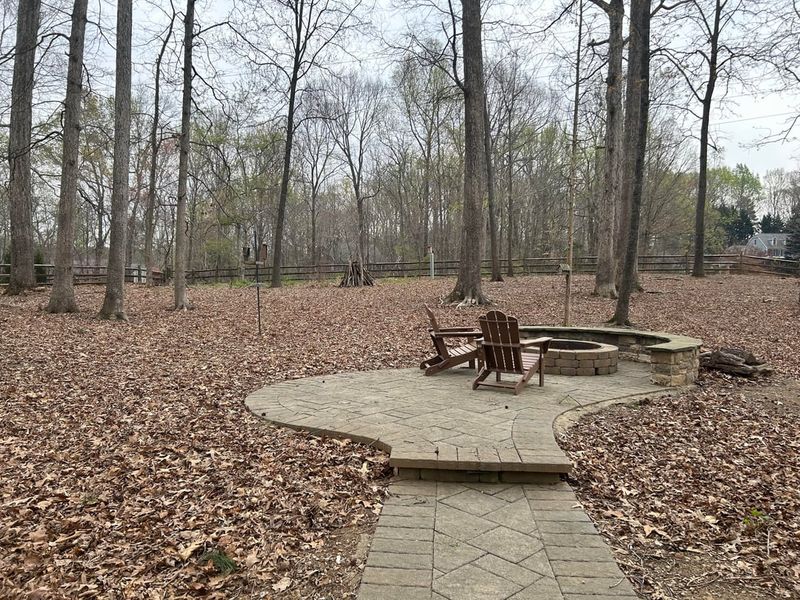
Here is the easy fix, and it will not ruin your weekend. Pick one out-of-the-way corner and leave its leaves alone.
That is it.
North Carolina Cooperative Extension says leaf litter can provide habitat for turtles and other small wildlife. A back corner, a spot under shrubs, or a strip along the tree line all work well.
Now the tradeoff. You do not want leaves everywhere.
New Hanover County Extension recommends leaving some litter undisturbed while keeping it off walkways and storm drains, and avoiding thick, unshredded layers on turf.
That makes sense when you picture a wet week. Soggy leaves on a front walk are slippery, and a mat on grass can smother it.
Clogged drains are a headache nobody needs.
The City of Raleigh offers similar advice. Its guidance suggests leaving leaves where cleanup is unnecessary or gathering them in a yard corner, while noting that thick layers can harm turf.
So keep it simple. Clear the paths, the driveway edge, and the drains.
Shred or thin the leaves on the lawn. Then let your chosen patch be.
Do not expect that patch to guarantee a turtle. It is one layer of a friendlier yard, and it also gives you less to haul.
What If You Find One?
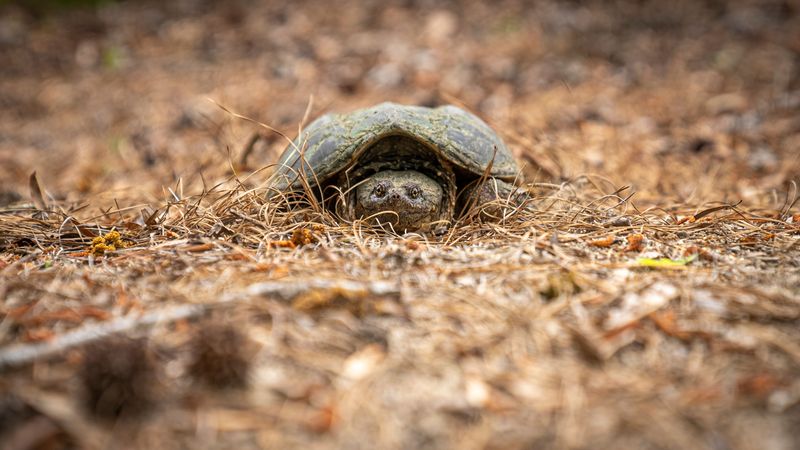
Say the rake does turn up a domed shell. Your heart skips, and that is normal.
Now stop and put the tool down.
The calm move is to stop work nearby and leave the turtle alone. A turtle that is resting and not in danger does not need your help.
Cover it back gently with the leaves that were around it if you can, and work somewhere else.
The exception is immediate danger, such as a mower, a driveway, or a road. In that case, NC Wildlife advises moving it the shortest distance possible, ideally less than 50 feet.
That number is for escaping danger. It is not a buffer zone around your cleanup, and it is not permission to carry a turtle to a nearby park or a better spot.
Keep it close to where you found it, facing the same direction it was headed.
If the turtle looks injured, call a licensed reptile rehabilitator. Cracked shells, bleeding, or obvious weakness all count.
Your local wildlife agency can point you to one.
One more thing. NC Wildlife calls the eastern box turtle a nongame species with no open season and advises against taking one from the wild.
So do not bring it home as a pet.
That is the whole plan. Pause, protect from immediate danger, and call a pro if it is hurt.
A Tidy Yard Can Still Leave Cover
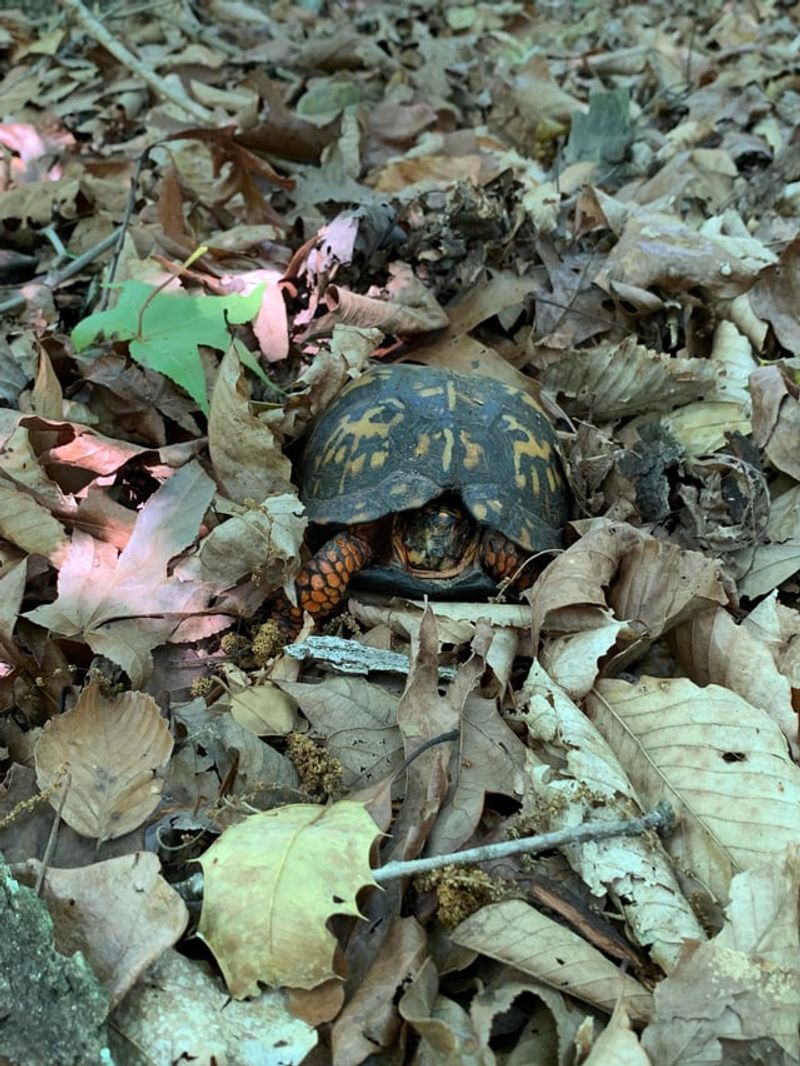
Here is the routine in a nutshell. Choose one patch to leave undisturbed.
Keep the walkways, drains, and turf clear. And skip the digging or probing in places a turtle might plausibly settle.
That is a tidy yard with a small pocket of cover, not a wild one. You still get clean steps for the kids and a lawn that can breathe.
It is also honest about the limits. A leaf patch does not guarantee a turtle is there, and it does not guarantee one is safe.
It simply makes room for the chance.
Do the work on your own schedule. No fixed deadline decides when a yard is turtle-ready, and a bit of care on any weekend beats perfect timing you never get to.
Some evening you might notice a patterned shell crossing the mulch in spring. That is the quiet payoff of sharing a yard.
