
When Every Bird At Your Feeder Vanishes At Once, A Cooper’s Hawk Has Learned Your Setup
Follow us on Google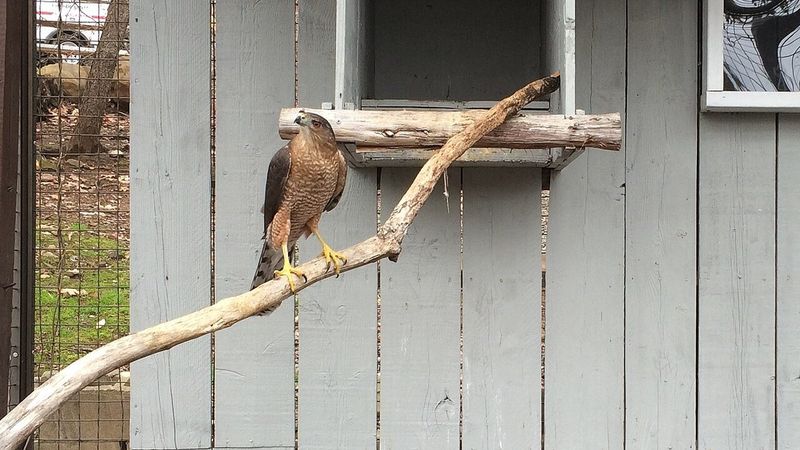
It’s a gray morning, the coffee is hot, and the feeder outside your window hangs completely still. A minute ago it was busy, and now nothing.
A Cooper’s hawk is one possible reason, but it is only one. Here is how to read the quiet calmly and what to do if a hawk really is the cause.
A Quiet Feeder Is Not a Diagnosis
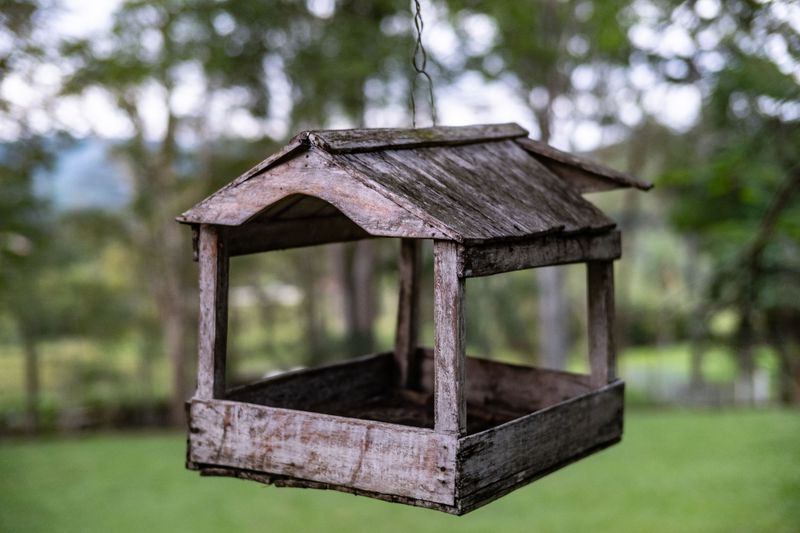
You glance out the window with your coffee, and the feeder that was buzzing ten minutes ago is empty. It is an unsettling little moment, and it is easy to jump straight to the worst explanation.
Hold off for a minute. A feeder is a narrow view of a much bigger yard.
Cornell Lab FeederWatch experts note that birds may be in surrounding trees and shrubs, at a birdbath, or on the ground rather than at the feeder itself.
Feeders are also only part of the menu. Birds rely on other food sources, so a quiet feeder does not necessarily mean the birds have left the area.
Think of your feeder as one restaurant in a town full of them.
Several other things can shift activity too. Weather can change how often birds visit, and seasonal changes can alter who is around.
Natural food, like seeds and berries, can pull birds away for a stretch. Flocks also move on and shift from day to day, and that can leave a feeder empty without any drama at all.
A Cooper’s hawk is on that list of possibilities, but it is not the only name on it. Nothing about an empty feeder points to a hawk all by itself.
So your first step is simple and free. Before you move the feeder, change the seed, or blame a predator, take a slow look at the wider yard.
Step outside quietly, scan the hedges and the ground under the trees, and listen for chirps. Often the birds are close by, just busy somewhere else.
Cooper’s Hawks Can Hunt Feeder Birds
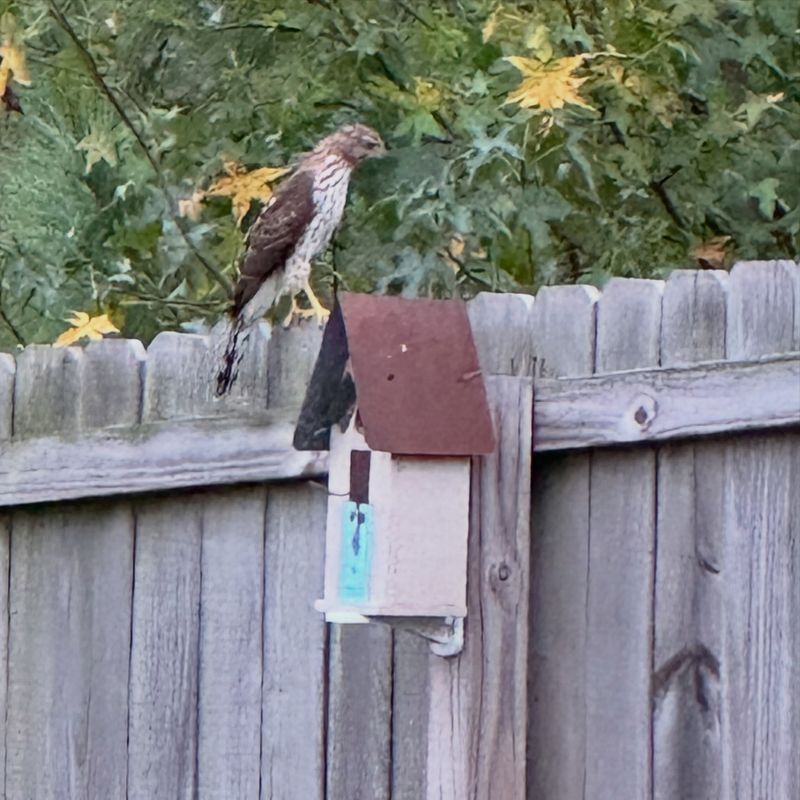
Here is the blunt truth. A Cooper’s hawk eats birds, and a spot where small birds gather can look like a good place to hunt.
The National Audubon Society describes it as a bird-eating hawk that uses stealth and cover to get close to its prey.
Researchers have seen this happen. In a study of urban Cooper’s hawks, they recorded ambush hunting from dense vegetation as well as attacks on birds near feeders.
So a hawk visit is a plausible reason for sudden alarm and a scattered flock.
Now for the other side. A study of wintering hawks found that feeder locations were not major hunting focal points.
Hawk use of areas around feeders was not significantly different from random.
That does not mean a particular hawk never hunts at a particular feeder. It might, and some do.
It simply means feeders are not a guaranteed hotspot for every hawk.
So where does that leave you? A hawk can hunt feeder birds, and sometimes does.
But silence at the feeder cannot tell you that a hawk has learned your setup. Without having actually seen a hawk or an attack, a quiet feeder remains an open question.
Look Beyond the Feeder
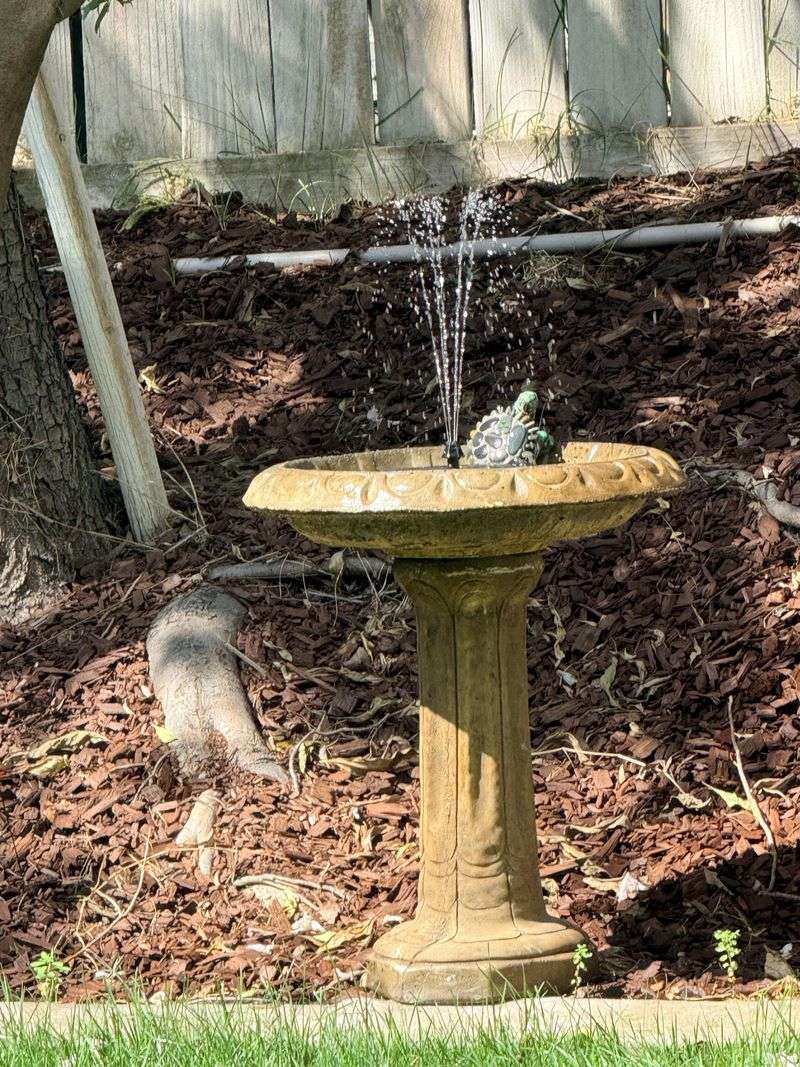
Try a ten-minute yard walk before you decide anything. Move slowly, stay quiet, and let your eyes settle on the places birds like to rest or feed when they are not at the feeder.
Check the shrubs and hedges, the tree branches, the birdbath, and the bare ground beneath them. Cornell Lab experts point out that birds may be using exactly those spots.
If you find them there, the mystery may be solved.
Next, separate what you saw from what you guessed. An observed attack looks like a hawk swooping in, birds bursting away, or feathers left behind after a strike.
An unexplained quiet spell is just a feeder with no visitors. Those are two different situations, and only the first points clearly to a hawk.
If you saw nothing, treat the cause as unknown. That is perfectly fine, and it is more honest than guessing.
Then keep notes for a few days. Jot down the weather, the time of day, and whether the birds seem to be eating nearby berries or seeds.
Patterns show up quickly. A cold snap, a seasonal shift, or a roaming flock may explain the lull on its own.
Patience is the tool here. A calm, curious look usually tells you more than a quick fix.
Nearby Cover Helps, but Placement Matters
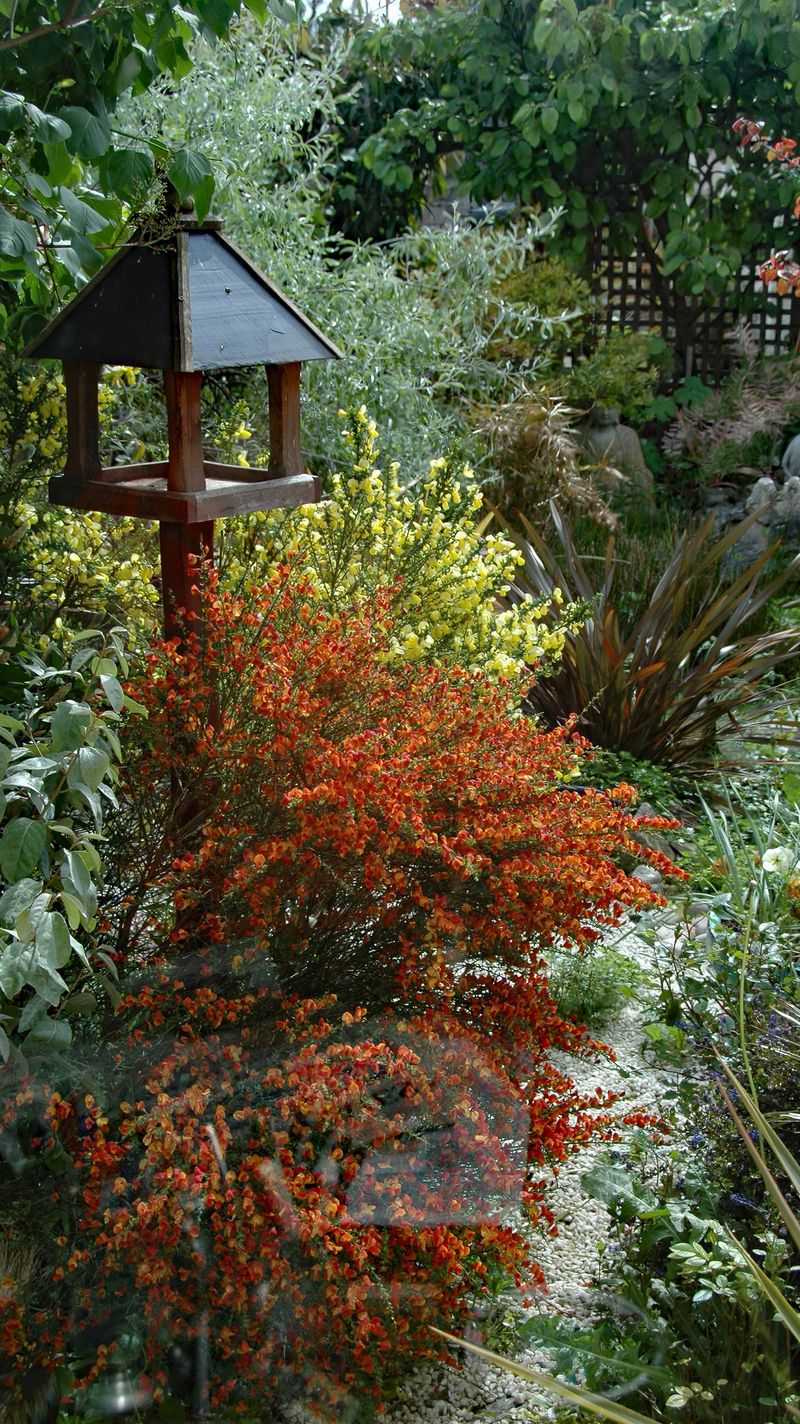
Songbirds like an escape hatch. Trees and shrubs near a feeder give them a place to dart into when something startles them.
But cover cuts both ways. Dense vegetation can also hide an ambush predator, whether that is a hawk or a neighborhood cat.
A feeder pushed right into thick brush may make things easier for whatever is waiting there.
Penn State Extension recommends a well-planted yard that offers songbirds cover. Notice the wording.
It is about the whole yard, not about hiding a feeder in the bushes. Cornell’s feeder-placement advice also helps you think about where a feeder sits in relation to the cover around it.
So what should you do? Walk your yard and look at the layout.
Ask where birds could reach shelter quickly, and where a predator could sneak up unseen. If outdoor cats roam your area, pay extra attention to low, dense spots near the feeder.
There is no single best distance that works for every home. A small townhouse yard and a wooded acre need different answers, so adjust to what you see.
And be honest about the limits. Good cover can give birds options, but it will not promise that attacks never happen.
It is one layer of a wider approach.
Consider a Temporary Pause After Repeated Attacks
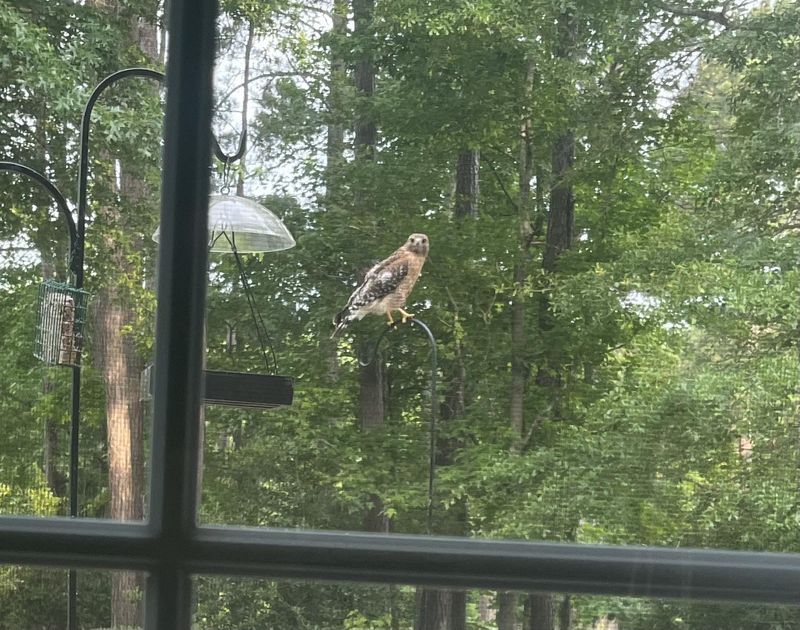
There is a difference between a quiet feeder and a feeder where you have watched a hawk strike again and again. The first is a mystery.
The second is a pattern you can respond to.
If you do see repeated attacks, the Michigan Department of Natural Resources has a practical suggestion. Michigan DNR advises stopping the seed or removing the feeder for at least two weeks.
Along with that, clean up spilled seed. Seed on the ground keeps drawing birds to the same spot, so a tidy patio and lawn helps the pause do its job.
Think of it as a reset, not a punishment. You are taking away the gathering point for a short while, and it is a nonlethal choice that does not involve the hawk at all.
Keep your expectations realistic. This is one agency’s practical recommendation, not a guarantee.
It may not stop the attacks, the hawk may or may not move on, and birds may not return on any set schedule.
When the two weeks are up, you can put the feeder back out and see how things go. Start with a small amount of seed, watch for a few days, and keep the yard clean.
If attacks begin again, you will know what to try next.
Protect Feeder Birds Without Targeting the Hawk
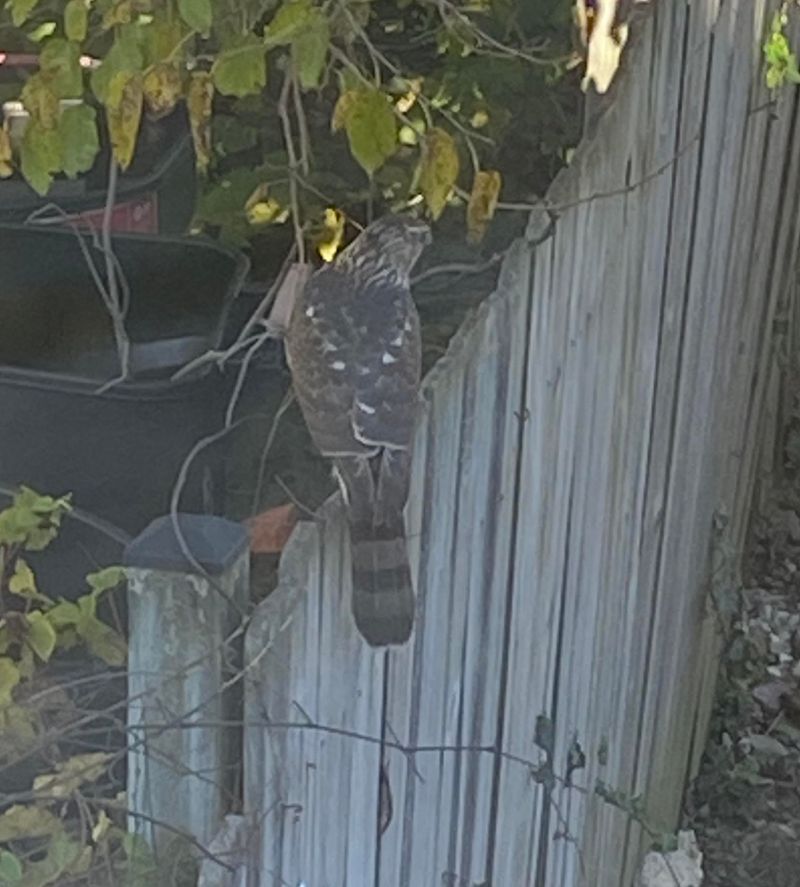
The plan is gentler than it first seems. Start by looking at the wider yard.
Adjust cover thoughtfully, with your layout and any outdoor cats in mind. Consider a temporary pause only after you have seen repeated attacks.
Equally important, leave the hawk alone. Cooper’s hawks are protected.
The U.S. Fish and Wildlife Service explains the Migratory Bird Treaty Act, and the species appears on the federal list of protected birds.
Federal rules generally prohibit taking protected birds without authorization.
So harming, capturing, or relocating a hawk is not the answer. Nonlethal feeder management is, and it is usually enough to make a difference in how comfortable your yard feels for small birds.
Remember too that a hawk is part of the neighborhood food web. Its visit is a sign that your yard supports wildlife, even if the timing feels rough.
You do not need to fix everything in a day. Make one small change, watch what happens, and give the birds time to settle.
The birds will come back to a yard that feels safe, and they will do it on their own schedule.
