
How Black-Capped Chickadees Handle Winter Cold at Your Feeder
Follow us on Google
The snow is squeaking under your boots when a chickadee zips past your ear, grabs one sunflower seed, and vanishes into the hedge. It’s tiny, it’s cheerful, and it’s staying put through weather that sends many other birds packing.
Scientists have found that shivering is only one of several tricks it uses. Here’s how the bird gets through the cold, and how your yard can lend a hand.
Meet the Black-Capped Chickadee That Stays for Winter
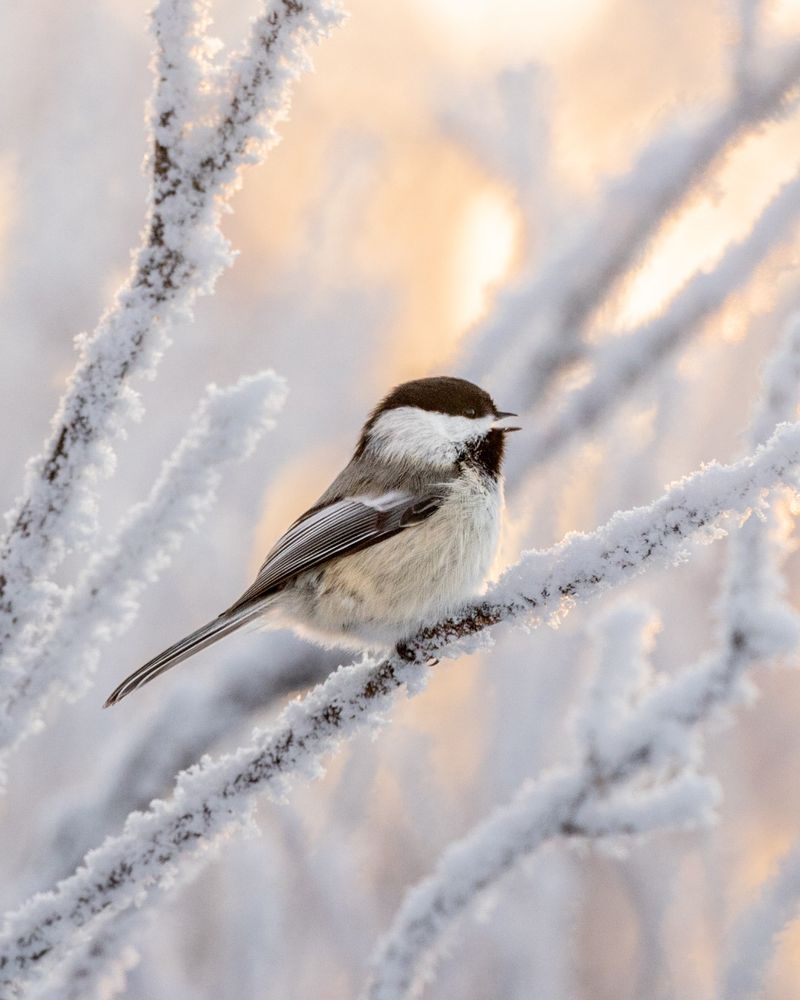
A gray morning in a northern backyard, frost on the railing, and a small voice calling its own name from the spruce. That is the Black-capped Chickadee (Poecile atricapillus), and the bird at your feeder in January is very likely the same one you saw in October.
Adults generally stay within their range all winter. According to Cornell Lab range and migration notes, these birds are not long-distance migrants.
But staying put is not the whole story. Some chickadees make local movements, and now and then large numbers move irregularly in events called irruptions, which means birds suddenly show up in places they are normally scarce.
The Alaska Department of Fish and Game profile shows how this bird fits into a northern landscape, where winter is long and the margin for error is thin.
One more correction before we go on. Plenty of other birds stay through winter too, including woodpeckers, nuthatches, and cardinals in many regions.
Chickadees are just a wonderful bird to watch, because they are small and bold and visit feeders often.
Also keep geography in mind. Other chickadee species live in other parts of the country, such as the Carolina Chickadee across much of the Southeast and the Mountain Chickadee in western highlands.
Their ranges and needs are not identical to the Black-capped’s, so match what you read here to what you actually see.
Over the next few sections, you will see the bird’s cold-weather toolkit, from shivering to stashed seeds, and then the ways your feeder and shrubs can back it up.
Shivering Is One Part of Its Cold Strategy
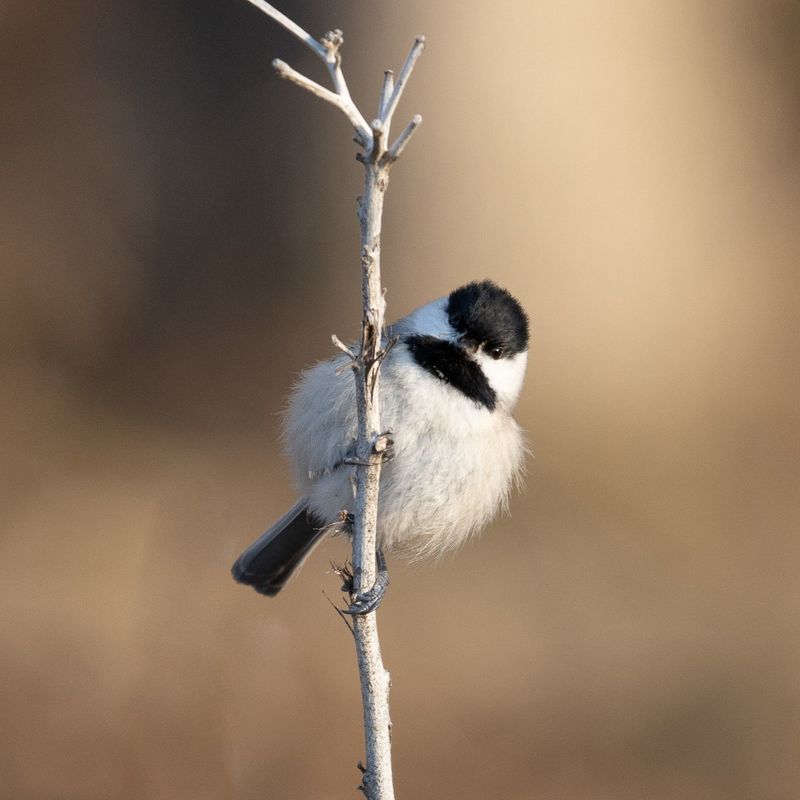
Blunt truth first: shivering helps, but it is not the whole plan. When muscles shiver, they burn fuel and make heat, a bit like a tiny furnace that runs on seeds and fat.
Researchers have studied this in chickadees through cold-acclimation experiments. In a 2023 study of thermal acclimation, a non-migratory songbird adjusted to cold mainly by raising its thermogenic capacity, meaning its ability to make heat, rather than by changing how fast heat leaks out.
That is a lab measure, though. It does not mean every wild bird is shivering through every night.
Then there is a surprise. A 2026 study held 10 wild-caught chickadees in captivity and compared nights at 20°C and 3°C, which is about 68°F and 37°F.
Most birds let their body temperature drop and lost more fat in the colder condition. Birds with bigger temperature drops lost less fat overnight.
Responses varied from bird to bird. So some chickadees cooled themselves overnight, but you cannot say every chickadee does.
And please do not read this as proof about a 0°F night outdoors. The study was small, indoors, and tested much milder cold.
What it shows is that no single mechanism explains every bird.
Daytime Fuel and Cached Food Carry Over
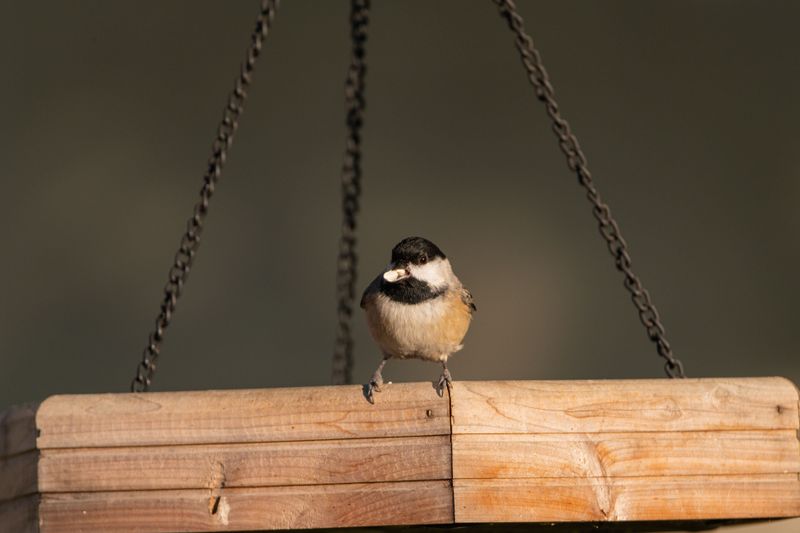
Watch a chickadee at your feeder for five minutes and you may notice something odd. It grabs a seed and leaves, then comes right back.
That bird is often not eating at all.
Chickadees hide individual food items to eat later, according to the Cornell Lab overview, and they can remember thousands of cache locations. Think of the bark and needle clusters around your yard as a scattered pantry the bird keeps in its head.
Their winter menu is varied. Per the Cornell life history page, they eat seeds and other plant foods, along with insects and spiders they find in bark and twigs.
Daytime feeding matters because the bird has to build energy to burn after dark. Research on seasonal flexibility in metabolic performance recorded changes in body mass across the day and the season.
Those are measurements of variation, so do not picture every bird gaining or losing the same fixed amount.
Your part is modest but real. A reliable food source and some natural cover can make a chickadee’s busy day a little easier.
It is one layer of help, not a replacement for what the bird does on its own.
A Feeder Adds Food, Not a Guarantee
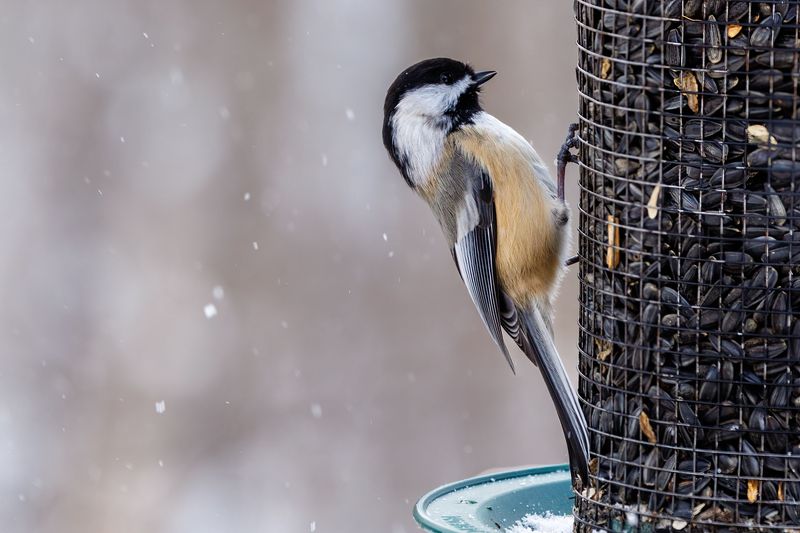
Picture a cold porch morning, coffee in hand, and a tube feeder swinging gently with a chickadee on it. It looks like a simple gift.
But a feeder only works well when it stays clean and dry.
Chickadees take sunflower seeds, peanuts, and suet, according to the Cornell life history page. A tube feeder is one reasonable choice for small birds like these.
Keep the seed dry and toss anything that smells musty or looks moldy.
For cleaning, Cornell suggests about every two weeks, and more often in wet weather or when the feeder is busy. Penn State Extension is stricter for some setups and advises weekly cleaning for platform feeders and feeders on decks or balconies.
If you are unsure, the shorter interval is the safer pick.
Wear gloves when you scrub, and wash your hands afterward. USDA APHIS bird health materials, such as its 2026 Defend the Flock planner, back up basic hygiene around birds.
If you find a sick or dead bird, do not handle it.
Extra food may matter most when weather turns severe. Still, a feeder is not essential everywhere, and it cannot promise any single bird will make it through winter.
Woody Cover Extends Help Beyond the Feeder
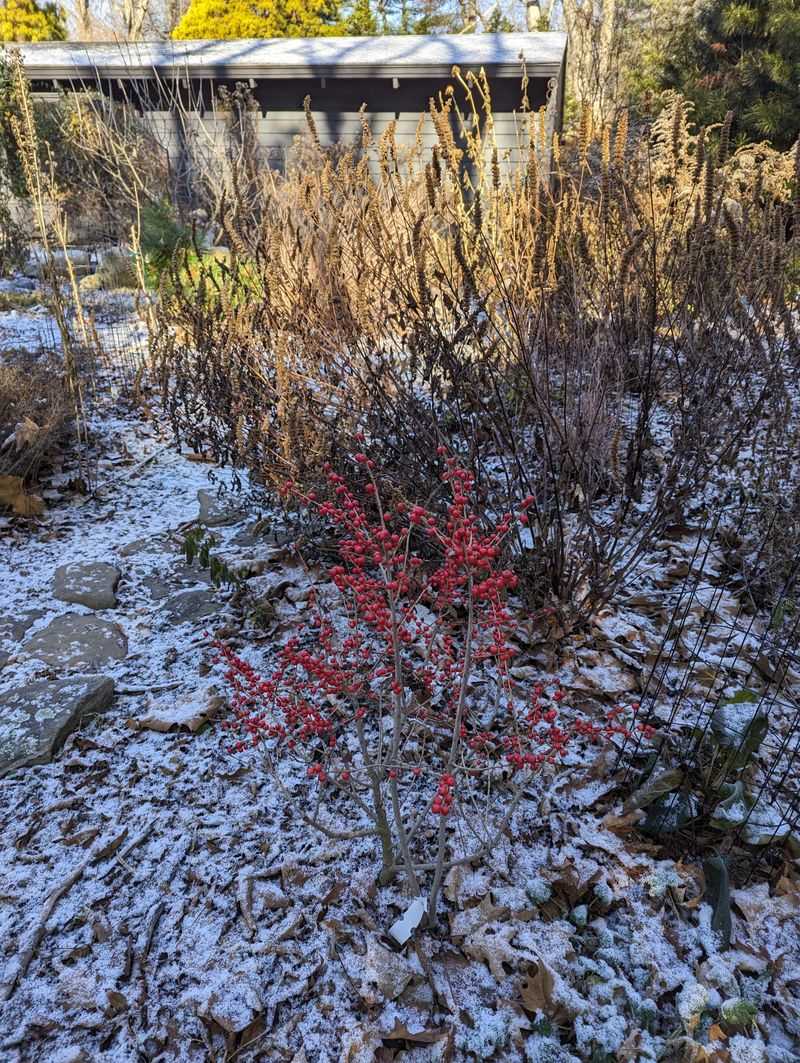
Here is a myth worth retiring: a yard full of seed is a yard full of help. Seed is only half of it.
Chickadees also need places to duck out of the wind.
Dense evergreens can break a cold gust and give a bird a quiet spot to rest. Shrubs and trees can also supply natural food, like berries and the insects that hide in bark.
Cornell’s Landscaping for Birds guide lists plants such as serviceberry, bayberry, winterberry, viburnum, pines, and birches for Black-capped Chickadees.
But a list like that is a starting point, not a shopping order. A plant that suits a Minnesota yard may struggle in Georgia, and some are native in one region but not another.
Before you buy, check with local resources. The University of Minnesota Extension page on trees and shrubs is one example of the kind of guidance to look for, and your own state extension office or native plant society can tell you what fits your soil, sun, and winter lows.
Young shrubs also take years to fill in, so start small and be patient. Planting adds shelter and food over time, but it does not erase winter risks.
Think of it as another layer working alongside your feeder.
Feeder Placement Balances Cover and Risk
Moving a feeder five feet can change who shows up for dinner, and not always in a good way. Cover helps the birds, but it can help cats and squirrels too.
Nearby woody cover gives chickadees a quick refuge. Yet branches or thick shrubs too close can give a cat a hiding place or a squirrel a launch pad.
Cornell suggests placing a feeder about 10 feet from cover as a compromise. Treat that as a starting point, not a safety rule.
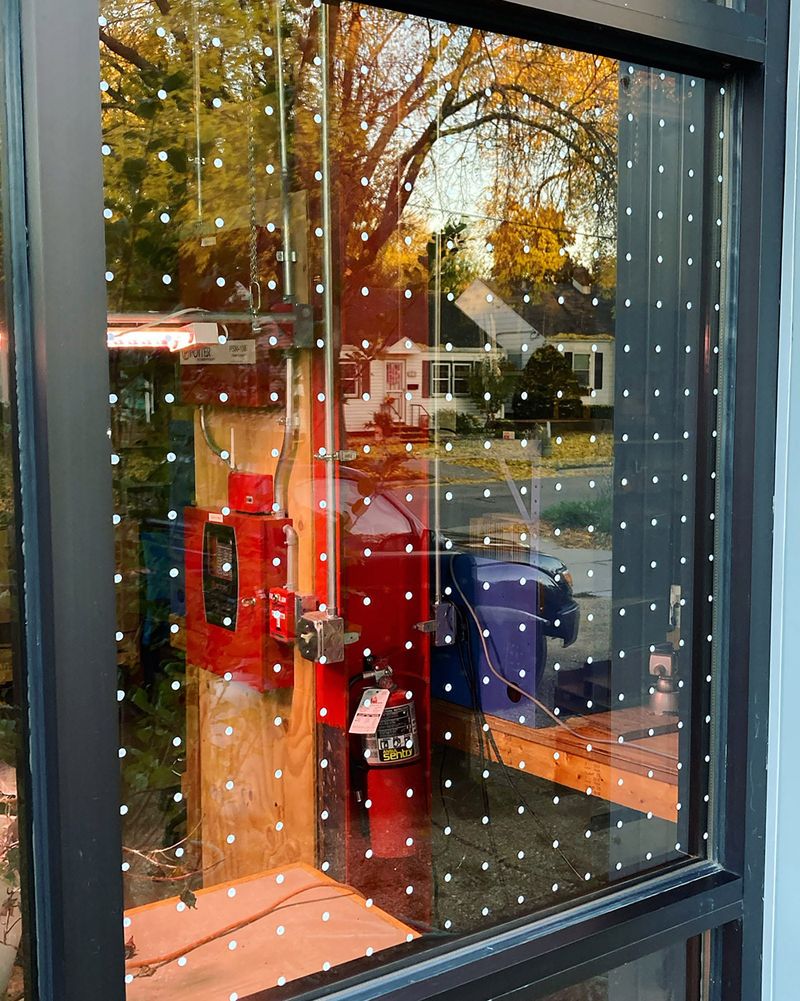
Windows are trickier, and the advice differs. Cornell recommends feeders either within 3 feet of a window or well away from it.
But American Bird Conservancy stresses that no feeder distance makes untreated glass reliably safe.
So put your effort into the glass itself. Add bird-visible treatments on the outside of the window, especially on windows where a bird has already hit.
Walk your yard, look at which panes reflect trees, and start there.
You will not remove every risk. Good placement just lowers the odds, and that is a worthwhile goal.
Feeding Studies Show That Help Depends on Conditions
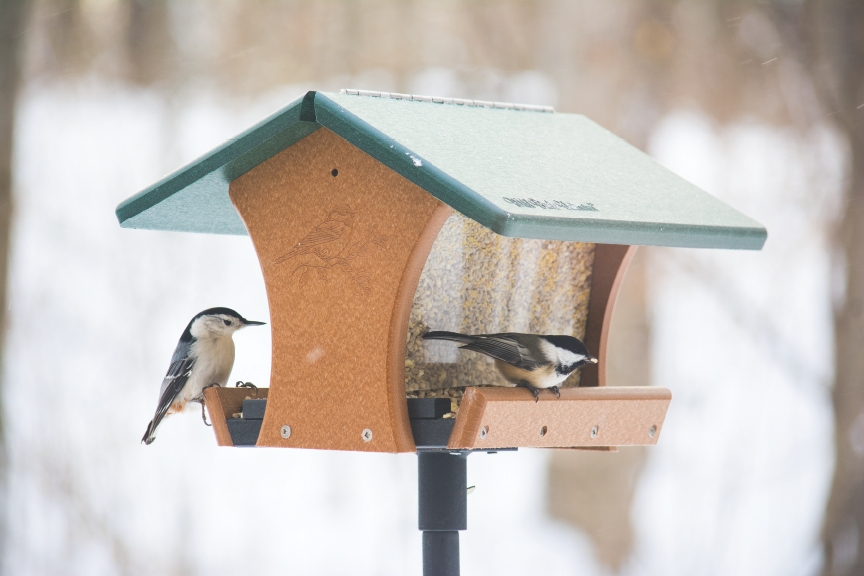
Does extra food really help chickadees live through winter? Sometimes, and the details matter.
A 1988 study in Ecology found higher survival for chickadees that had supplemental food during its study. The differences stood out most during severe weather.
That fits the idea that extra food matters most when the cold bites hardest.
A separate Pennsylvania study, on a southern population, told a more mixed story. It found habitat-linked differences in survival.
But survival did not differ between the two habitats where supplemental food was available.
Read side by side, the two studies say the same thing. Results depend on the place, the habitat, and the conditions that winter.
Neither is a promise for your yard.
So keep feeding if you enjoy it, keep the feeders clean, and add cover where it suits your region. That is real support for a small bird doing hard work.
A chickadee does not need you to save it. It just appreciates a good neighbor.
