
The Texas Trees Worth Planting Before Thanksgiving For Deeper Roots By Summer
Follow us on Google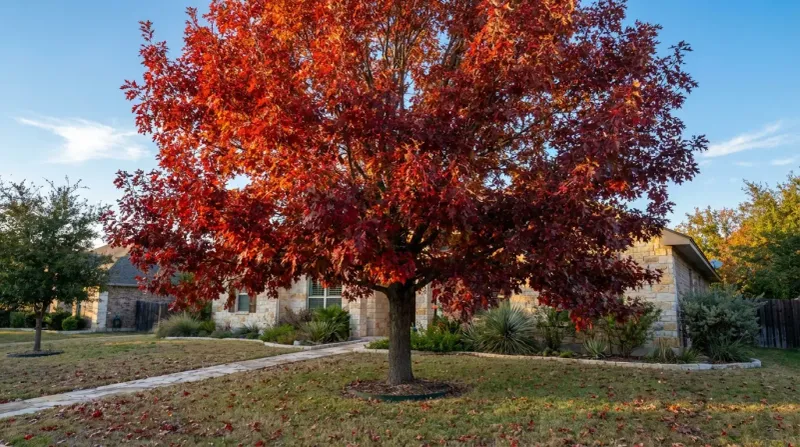
You step outside on a cool November morning, coffee in hand, and the soil under the oak still feels warm to your fingers. That warmth is the secret window most Texas homeowners miss, because trees planted now grow roots all winter while their branches rest.
By the time August hits triple digits, a fall-planted tree has months of root growth working for it. Here are 8 trees worth getting in the ground before the turkey comes out of the oven.
1. Live Oak
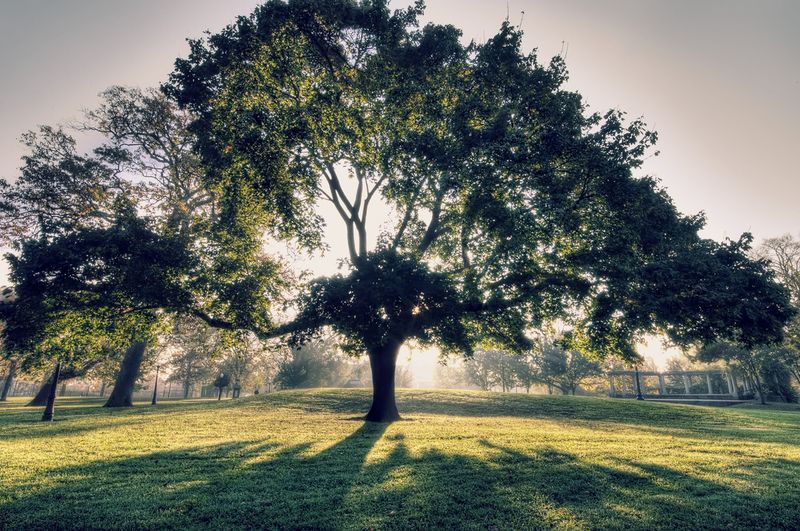
Picture the shade you want over the patio in twenty years. That shade starts with a skinny live oak (Quercus virginiana) planted this month, while the soil is still warm.
Here is the quiet advantage. Texas A&M AgriLife Extension notes that tree roots keep growing whenever soil stays above about 40 degrees, which covers most of a Central Texas or Gulf Coast winter.
Your young oak spends those months digging in instead of pushing leaves.
Give it room. Live oaks can reach 50 feet with a canopy wider than they are tall, so plant at least 25 feet from the foundation.
Dig the hole two to three times wider than the root ball, but no deeper.
Oak wilt is the villain worth knowing. Avoid pruning between February and June, and paint any wounds right away.
Do that, and your oak becomes the tree the whole block remembers.
2. Cedar Elm
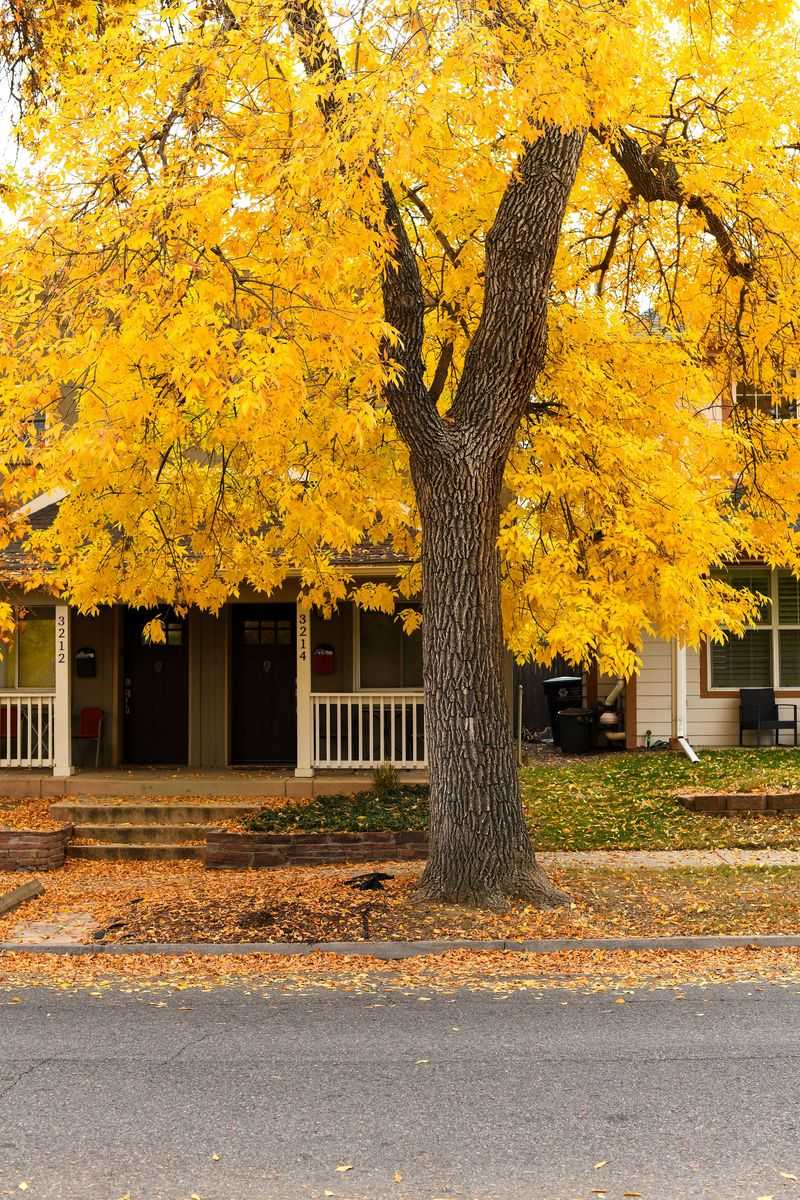
Blunt truth: blackland clay breaks a lot of trees. The cedar elm (Ulmus crassifolia) just shrugs.
Across North Texas and Central Texas, this native handles sticky clay, sandy loam, drought, and even a soggy spring. It grows 50 to 70 feet with tiny leaves that turn soft gold in late fall, so the rake work stays light.
Plant it before Thanksgiving and water deeply, aiming to wet the soil 12 to 18 inches down. For the first month, that means about three soakings a week, then taper to twice weekly in month two.
It is not flashy, and that is the point. Cedar elm is the dependable neighbor who shows up every summer and never asks for anything back.
3. Texas Red Oak
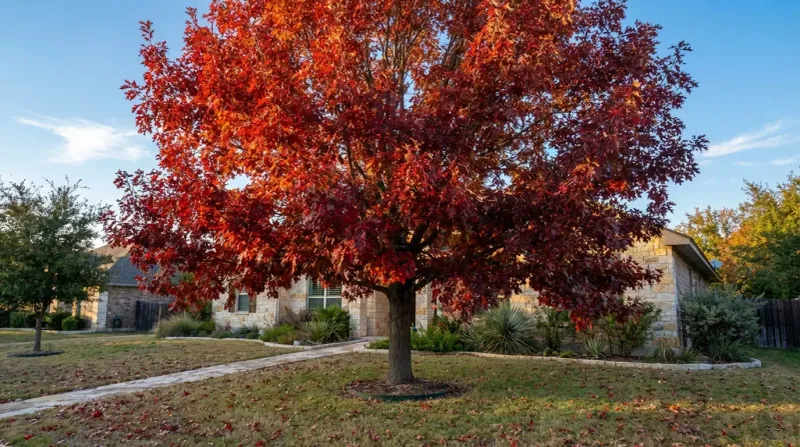
Many people assume Texas cannot do real fall color. Then a Texas red oak (Quercus buckleyi) turns scarlet on a Hill Country hillside and proves them wrong.
Here is where it gets interesting. This oak actually likes the shallow, rocky limestone soil that stunts other shade trees.
It typically reaches 30 to 50 feet, a tidy size for most lots.
Get it planted by late November so roots can wedge into rock cracks over winter. Spread 2 to 4 inches of shredded mulch across the root zone, keeping it a hand’s width from the trunk.
Like live oak, it can catch oak wilt, so skip spring pruning. Next November, you will be the yard people slow down to photograph.
4. Texas Redbud
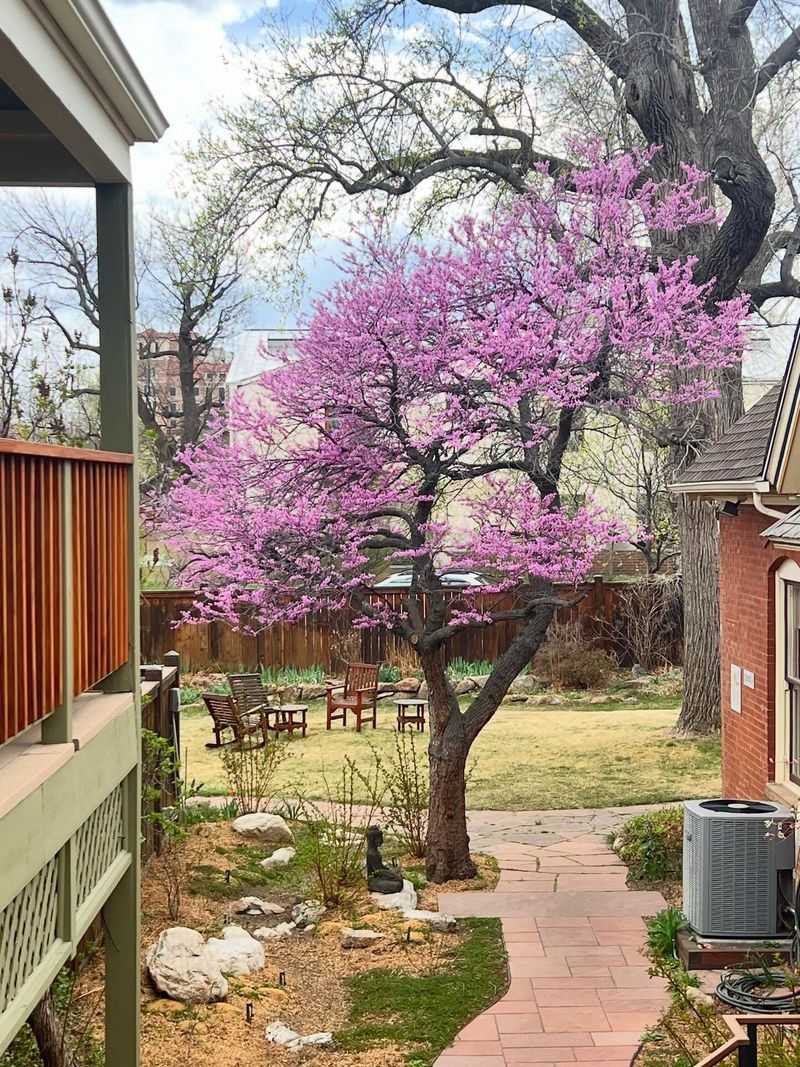
Late February, the yard still looks gray, and then one tree lights up magenta on bare branches. That is the Texas redbud (Cercis canadensis var. texensis) announcing spring early.
Its glossy, leathery leaves are a heat adaptation, built to hold moisture through a West or Central Texas July. At 10 to 20 feet, it fits beside a patio or under taller trees.
Plant it now and it stores energy all winter for that first bloom. Water slowly at the dripline, using roughly 2 gallons per inch of trunk width each session.
Early bees will find it before almost anything else blooms. Small tree, big announcement.
5. Mexican Plum
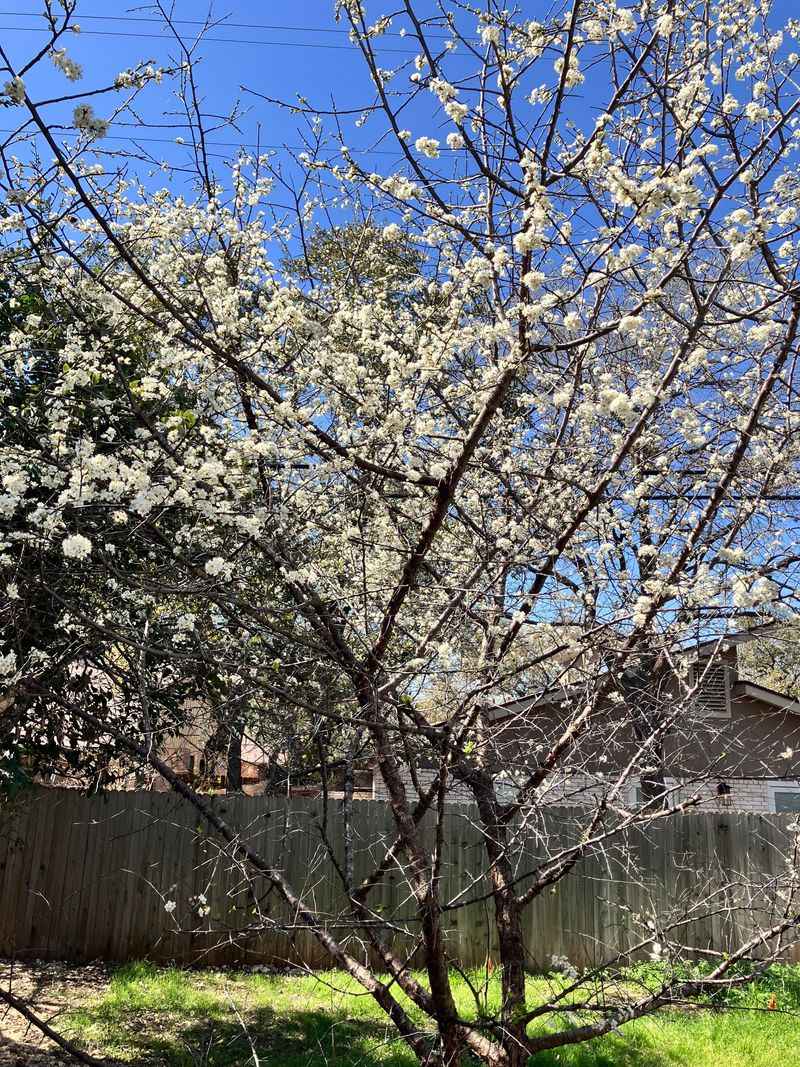
Fragrance is what stops people. A Mexican plum (Prunus mexicana) in March smells sweet from across the yard, covered in white blossoms before most trees wake up.
The flowers feed early pollinators, the small plums feed birds in late summer, and the leaves color up in fall. At 15 to 25 feet, it works as a backyard focal tree in North and Central Texas.
It wants decent drainage, so on heavy clay, plant it slightly high, with the root flare an inch above grade. Fall planting gives roots time to settle before that big spring bloom.
So you get a wildlife buffet, a perfume show, and fall color in one compact tree. Not a bad trade for one afternoon of digging.
6. Bur Oak
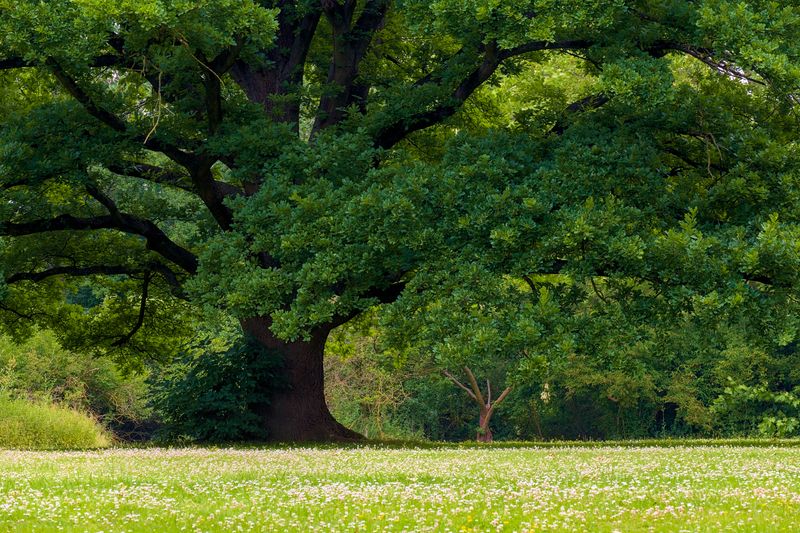
Some trees are built like linebackers. The bur oak (Quercus macrocarpa) drops acorns the size of golf balls, wrapped in shaggy fringed caps kids love to collect.
Its real strength is underground. Bur oaks send down a deep taproot, which is exactly why fall planting matters so much, it gives that root a head start toward water before summer bakes the top foot of soil.
Plant it in a sunny, open spot at least 30 feet from structures, since it can top 60 feet. It handles North Texas clay, alkaline soil, and Panhandle wind better than most shade trees.
Growth is steady rather than speedy. But you are planting a tree that genuinely could outlive your grandchildren.
7. Chinquapin Oak
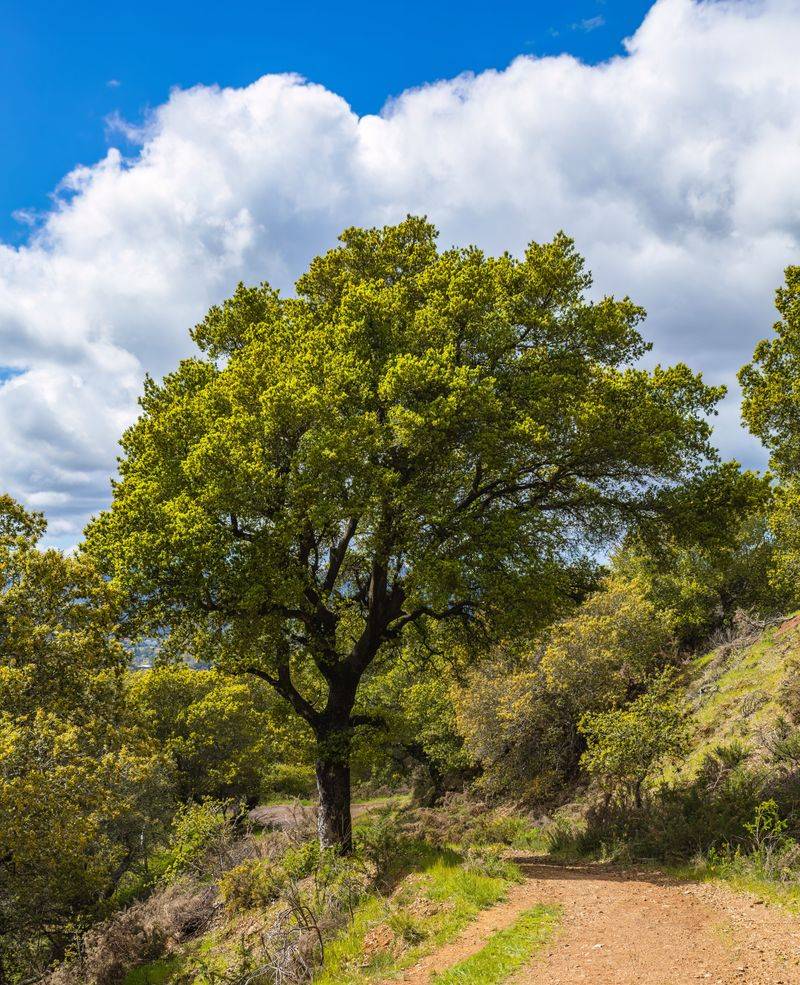
Myth: every oak needs deep, rich soil. The chinquapin oak (Quercus muehlenbergii) happily grows in thin, alkaline ground sitting over caliche.
That makes it a smart pick for the Hill Country and much of Central Texas, where shovels hit rock 8 inches down. Its toothed leaves look almost like chestnut leaves, and it is less troubled by oak wilt than live and red oaks.
Plant before Thanksgiving, break up the rock at the sides of the hole, and backfill with native soil only. Amended soil can act like a bathtub and hold water around the roots.
It reaches 40 to 60 feet over time. Rocky lot, shady future.
8. Desert Willow
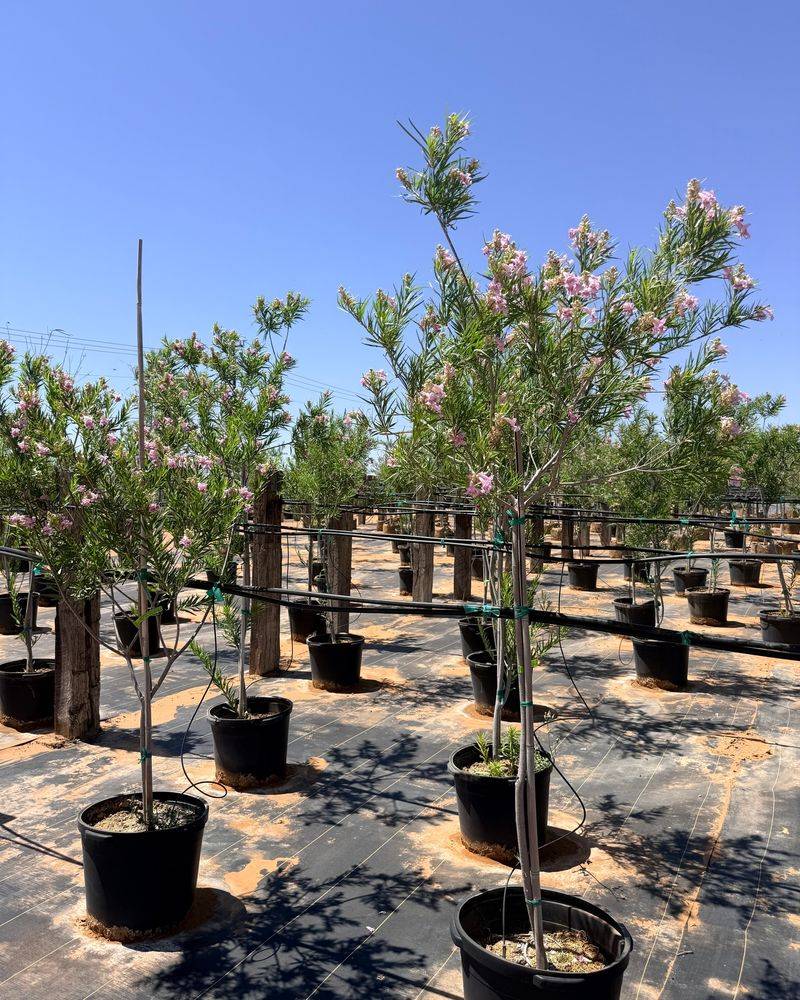
A long, dry summer in West Texas or South Texas sends most trees into survival mode. The desert willow (Chilopsis linearis) picks that exact moment to bloom.
Orchid-like pink and purple trumpets appear from late spring through summer, pulling in hummingbirds. It stays 15 to 25 feet, with narrow leaves that lose little water to hot wind.
Fall planting lets its roots reach deep before heat arrives. Water weekly the first three months, then once a month in dry spells through the first year, and check the soil a few inches down before you water.
Soggy East Texas sand is not its home, so be honest about your spot. Planted right, you will watch hummingbirds from the porch in August and feel pretty proud of that decision.
