
The Right Way To Swap A Florida St. Augustine Lawn For A Native Ground Cover
Follow us on Google
Pulling out a Florida St. Augustinegrass lawn sounds satisfying until you picture weeks of bare, muddy soil baking under a July sun.
There is a better way, one that keeps the ground covered the whole time while native plants quietly take over.
The method is called staged sheet mulching, and it works with Florida’s heat and rain instead of fighting them.
Pick the right plant for your specific yard first, follow the steps in order, and you can have a low-maintenance native groundcover filling in before the summer rainy season ends.
Choose The Groundcover Before You Remove Turf
Grabbing a shovel before you know what you are planting is the fastest way to end up with a bare, weedy patch that nobody wants.
Walk your yard at different times of day and record exactly how many hours of direct sun each area receives.
Mark the low spots that stay soggy after a downpour, note where tree roots run close to the surface, and trace the paths where people actually walk every day.
UF/IFAS right-plant-right-place guidance is specific: match your plant to light, soil moisture, drainage, salinity, and intended use before you remove anything.
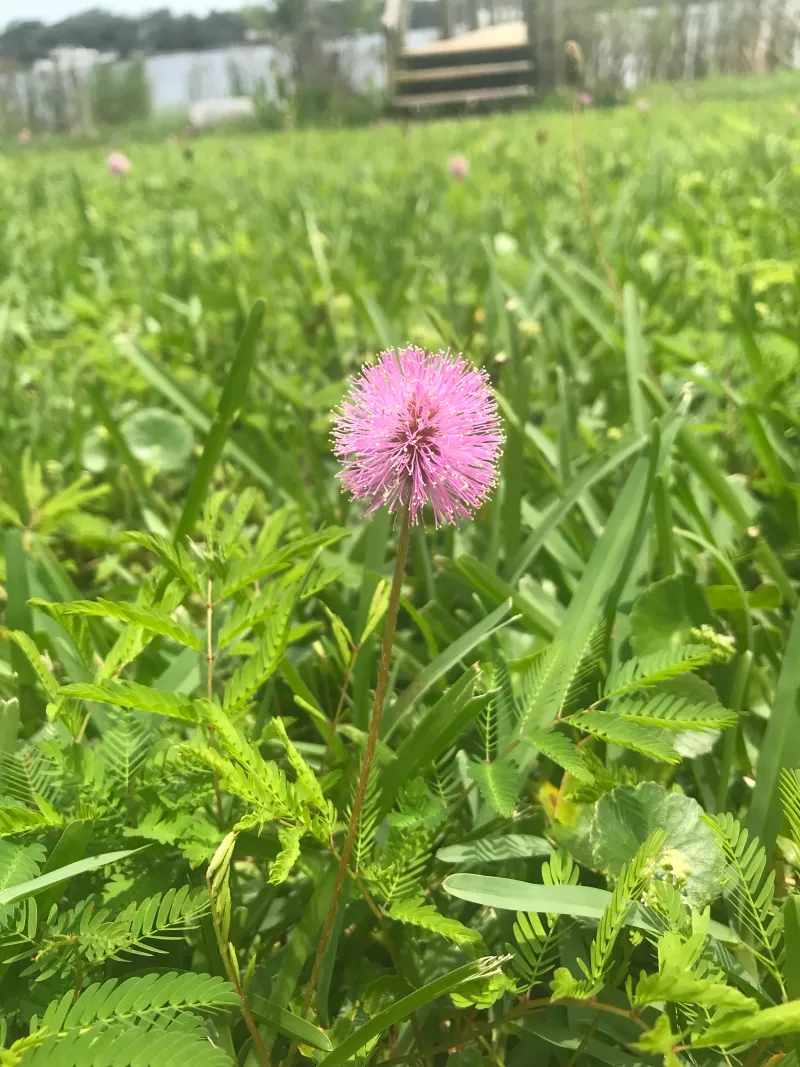
For sunny to partly sunny areas with reasonably good drainage, sunshine mimosa, Mimosa strigillosa, is the strongest starting candidate.
UF/IFAS describes sunshine mimosa as a fast spreader that fixes nitrogen, blooms pink from spring through fall, and tolerates some light foot traffic.
It can be mowed, which gives you a little control over its spread.
The catch is that it may go dormant or turn brown during cold snaps, so North Florida and Central Florida homeowners should expect a dull winter appearance and plan for it.
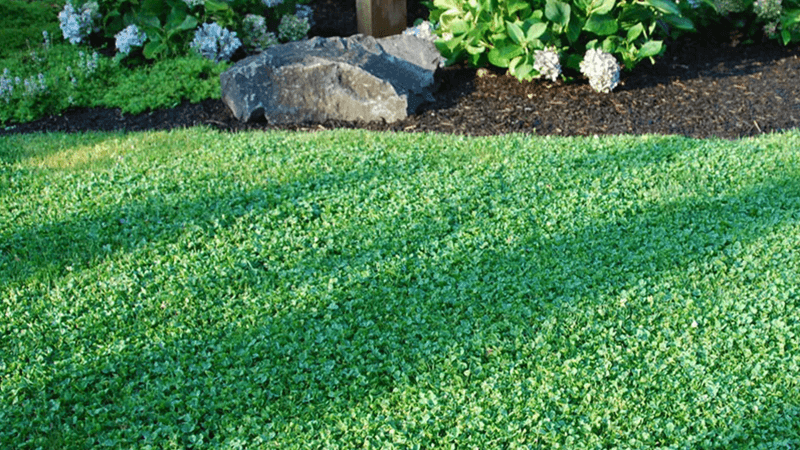
Where you want a denser mat, or where soil moisture varies more and some light shade is present, frogfruit, Phyla nodiflora, is worth considering.
Frogfruit spreads by aboveground stolons, tolerates a wide range of soil textures and pH, and handles both drier and moister conditions than sunshine mimosa typically prefers.
Along the Gulf Coast and Atlantic Coast, frogfruit also offers high tolerance to windborne salt spray, though it does not handle repeated flooding with salt or brackish water.
For spots under a dense tree canopy where fewer than 4 hours of sun reach the ground, neither plant is the right answer.
UF/IFAS native groundcovers for shade points to options like creeping sage, twinflower, and partridgeberry for those low-light zones.
Knowing your site’s actual conditions before you start keeps you from investing time and money in the wrong plant.
Start With A Manageable Pilot Patch
Converting the entire front yard at once sounds ambitious on a Saturday morning and exhausting by noon.
A pilot patch of roughly 100 to 300 square feet gives you a real test without turning your whole property into a project.
You can watch how the area drains after a hard summer rain, check how much hand watering the new plugs actually need, and see how the groundcover handles a cold snap, all before committing to more space.
This is not a reversible step, since sheet mulching adds material and changes the soil profile, but a smaller area is far easier to water, weed, edge, and evaluate.
Before you touch a thing, walk the patch and mark every path people actually use.
Those routes need stepping stones, pavers, or a strip of retained turf, not a groundcover that will get stomped flat.
Right-plant-right-place planning includes traffic, and skipping that step is one of the most common reasons a conversion disappoints.
Once the paths are marked, mow the St. Augustinegrass as low as your mower safely allows.
Leave ordinary clippings in place, they become organic matter under the covering.
Remove anything thicker, stones, woody debris, thick thatch mats, or anything else that would create air pockets and prevent the cardboard from lying flat against the soil.
UF/IFAS no-dig garden bed guidance is clear that close contact between the covering and the ground is what makes the method work.
Gaps are where St. Augustine stolons find their way back.
A clean, low-cut, debris-free surface takes maybe an hour on a 200-square-foot patch.
UF/IFAS lawn establishment guidance confirms that good surface preparation before any renovation pays off in fewer problems later.
Get this step right and everything after it goes more smoothly.
Build A Continuous Light-Blocking Cover
Here is where the method actually works its magic, and where most people make their first mistake.
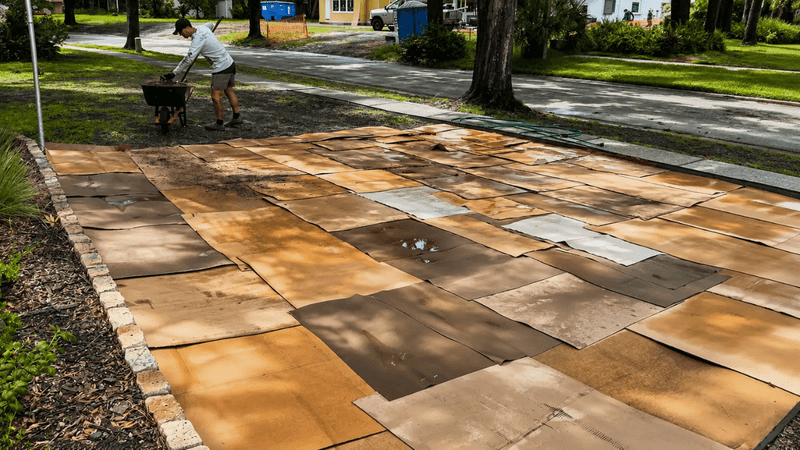
Lay 1 to 2 layers of plain, unwaxed cardboard directly onto the mowed surface, or substitute 4 to 6 layers of plain newspaper if cardboard is hard to source.
The seams are the weak point.
Overlap every edge by several inches so that St. Augustine stolons cannot find a sliver of light sneaking through a gap.
This grass is genuinely good at exploiting thin spots, so treat every seam like it matters.
Once the cardboard is positioned, wet it until it is thoroughly saturated, not just damp on top.
A dry or partially dry layer will shrink, crack, and curl at the edges as it dries out in Florida’s heat.
UF/IFAS sheet-mulching guidance explains that the covering works by blocking light and leaving the sod in place to decompose as organic matter, not by killing everything instantly.
Expect the process to take time, not days.
After wetting, check the perimeter edges.
Exposed cardboard at the borders will dry out faster, curl up, and create an open invitation for weeds or returning grass.
Tuck the edges under or weight them down with soil before adding the top layer.
Thin areas in the middle of the sheet deserve the same attention, add a second layer of cardboard there rather than hoping one thin piece holds.
Remove any staples, tape, or glossy coated cardboard before you lay anything down.
Plain brown corrugated cardboard from appliance or moving boxes works well.
Avoid boxes printed with heavy colored ink or sealed with plastic tape.
The goal is a continuous, unbroken light-blocking blanket across the entire pilot patch, with no shortcuts at the edges.
Add The Planting Layer And Respect The Waiting Period
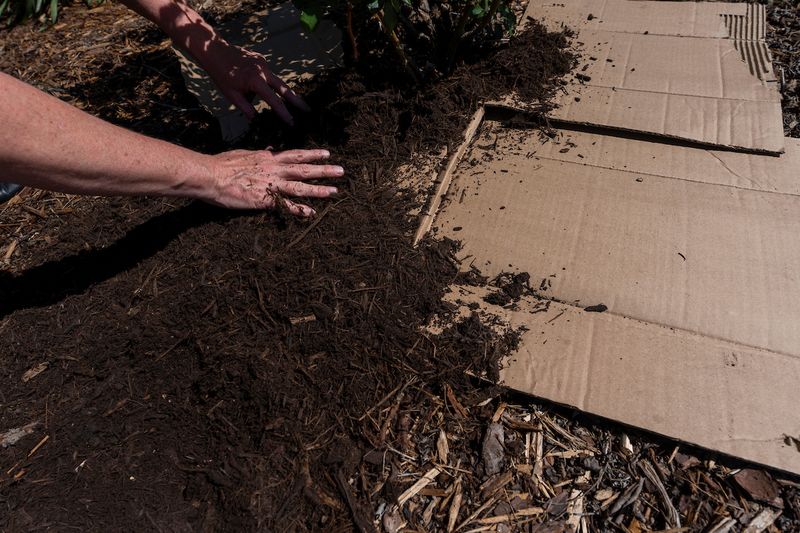
Once the wet cardboard is down and the edges are secured, spread approximately 2 to 3 inches of finished compost or clean garden soil evenly across the entire surface.
This top layer serves two purposes.
It holds the cardboard in place through Florida’s afternoon thunderstorms, and it gives your plugs an actual planting medium so roots do not have to push through soggy cardboard right away.
Keep the surface covered at all times during the transition, bare soil is an open invitation for weeds and erosion.
UF/IFAS no-dig bed preparation guidance recommends allowing the sheet-mulched area to decompose for several months before planting.
That waiting period is the supported default, and it gives the old sod time to break down into organic matter that will feed your groundcover later.
Do not treat a faster timeline as established guidance based on this method alone.
If you want to experiment with planting sooner into the 2- to 3-inch compost layer, treat that as an unverified experiment and watch closely for problems.
When planting time arrives, install your groundcover plugs by pressing them through the top compost layer and into position.
UF/IFAS reports that 4 or 5 sunshine mimosa pots can cover up to 300 square feet in a single season under suitable conditions, which gives you a rough sense of scale without requiring a fixed spacing rule.
Place plugs closer together if you want faster coverage and can absorb the higher plant cost.
Space them farther apart to save money upfront, but understand that wider gaps stay open longer and give weeds more opportunity to establish.
Frogfruit plugs follow the same logic, closer spacing fills in faster.
UF/IFAS lawn establishment guidance confirms that wider plug spacing prolongs the establishment period and that keeping the surface mulched helps retain moisture and reduce erosion during that time.
Covered soil, not bare dirt, is the goal from day one through full coverage.
Establish Plugs With Targeted Watering
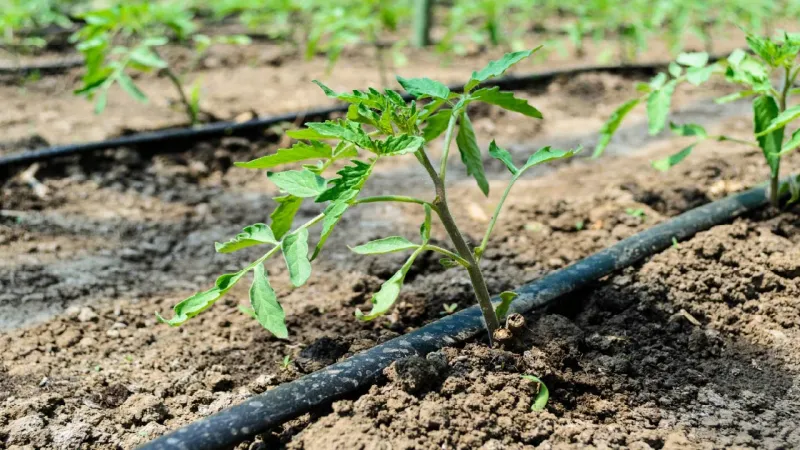
New plugs need water, full stop.
Replacing St. Augustinegrass with a native groundcover does not mean the yard runs on rainfall alone from day one.
During the establishment period, especially in Florida’s sandy soil where water drains fast and summer heat is relentless, you need to irrigate new plugs regularly until they are well rooted.
How often depends on your soil, the season, recent rainfall, and your specific location, not a single universal schedule.
Use a watering wand, drip line, or soaker hose directed at the root zone rather than running broad turf sprinklers across the entire former lawn.
Broad sprinkler coverage wastes water on areas between plugs and can encourage weed germination in open gaps.
UF/IFAS irrigation guidance and Southwest Florida Water Management District irrigation scheduling both recommend targeted, low-volume application rather than blanket watering.
For established Florida landscapes when irrigation is needed, roughly one-half to three-quarters of an inch per irrigation event is commonly cited general guidance, with rainfall counted toward that total.
That figure applies to established plants, not new plugs, which may need more frequent attention.
Watch the plants themselves rather than a fixed calendar.
Footprints that stay visible in the groundcover after you walk across it signal drought stress.
Folded or cupped leaves and a blue-gray tint in foliage are other signs the plants need water soon.
Do not let new plugs wilt repeatedly during the establishment period, especially in exposed locations, hot months, or coarse sandy soil typical of much of Florida.
Before you run any irrigation at all, check your current water-management district, county, and utility rules.
Watering restrictions vary across the state, and some areas have seasonal limits with separate establishment-period allowances that require a permit or notification.
Do not assume that because your neighbor waters freely, you can too.
Plan For Traffic, Shade, Salt, And Seasonal Change
Sunshine mimosa is a genuinely fast mover.
Under good conditions it can spread across a 300-square-foot area in a single growing season, which is impressive and occasionally inconvenient.
UF/IFAS sunshine mimosa guidance notes that it tolerates some light foot traffic, but that tolerance has a ceiling.
It is not a surface for a dog run, a sports area, or a main walkway where concentrated foot traffic hits the same path every day.
Install a clean edge around the bed and plan to trim it back periodically where it reaches sidewalks, driveways, or garden borders.
In North Florida and during Central Florida cold snaps, sunshine mimosa may go dormant or brown significantly.
That is normal, not a sign of failure.
But if a green lawn look matters to your household through December and January, factor that seasonal change into your decision before you plant.
Florida-Friendly Landscaping plant guidance supports matching plants to expected winter appearance, not just summer performance.
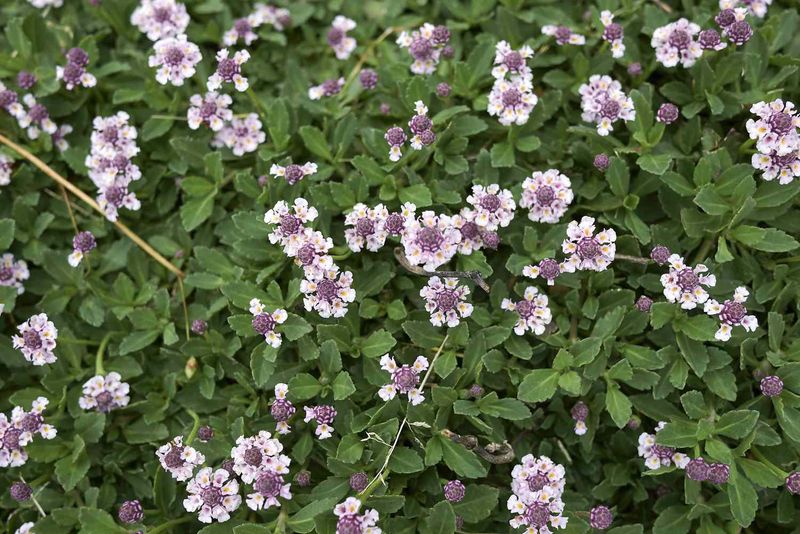
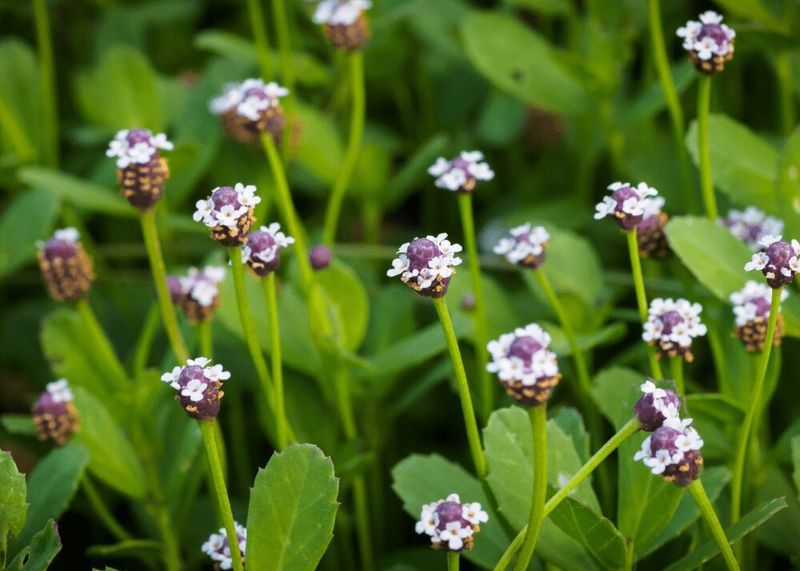
Frogfruit handles more varied conditions, including some light shade and a wider range of soil moisture levels.
One plant can spread 8 to 10 feet long, forming a mat roughly 6 to 12 inches tall.
UF/IFAS alternative-lawn guidance is candid that frogfruit cannot handle heavy concentrated foot traffic.
Occasional and moderate use is fine, but provide stepping stones or a retained strip of turf for any route that gets daily use.
Along the coasts, salt spray is a different problem than salt flooding.
Frogfruit tolerates windborne salt well but does not survive repeated inundation with salt or brackish water.
A low spot near the coast that floods during storms is a different challenge entirely.
For deeply shaded spots under live oaks or dense canopies, UF/IFAS shade groundcover options point to alternatives like partridgeberry or twinflower instead.
For large areas heavily infested with weeds or invasive plants before conversion, soil solarization is an optional preparation step.
Clear plastic sealed tightly at the edges for approximately 6 to 8 weeks, ideally during June, July, or August, can reduce weed seed banks and some soil pests.
The tradeoff is that it also harms beneficial soil organisms temporarily and takes the area out of use during treatment.
Maintain The Conversion As It Fills In
The work does not stop when the plugs go in.
For the first several months, plan to walk the patch every week or two and check seams, edges, and any gaps between plugs.
Weeds move fast in Florida’s warm, humid conditions, and a weed that seeds out in an open gap is a problem that multiplies.
Pull or cut weeds before they flower, and replace any plugs that did not root.
A failed plug is not a reason to abandon the project, it is just a signal to check drainage, shade, or watering at that specific spot.
Trim spreading plants before they cross the intended bed boundary.
Sunshine mimosa in particular will move toward any open ground it can find.
A clean physical edge, a shovel cut along the perimeter every few months, keeps the conversion from turning into a different kind of lawn problem.
Frogfruit needs the same periodic attention at edges, especially near sidewalks or planting beds.
A well-matched native groundcover can genuinely reduce the amount of turf you mow, fertilize, and irrigate over time.
UF/IFAS is clear that native status alone does not guarantee lower water use, and water savings depend on plant selection, irrigation design, soil conditions, and homeowner behavior.
A Central Florida study comparing whole-landscape and irrigation designs found that homes with less turf, more planted beds, and microirrigation used about 39 percent less irrigation water than typical comparison homes.
That result reflects the full landscape and irrigation system working together, not just the plant swap alone.
Buy plugs from a reputable native plant nursery rather than collecting from roadsides or natural areas.
UF/IFAS right-plant guidance recommends verified nursery stock and cautions that some introduced plants can become invasive.
The staged no-dig method rewards patience more than any single product or shortcut.
A yard that fills in slowly, with covered soil, monitored edges, and site-matched plants, tends to hold together better than one rushed into place.
The real payoff is a yard that takes less from you every season, quietly and on its own terms.