
Most People Guess This Backyard Bloom Wrong, And It Is Actually The Toughest Flower For A Hot Dry Bed
Follow us on Google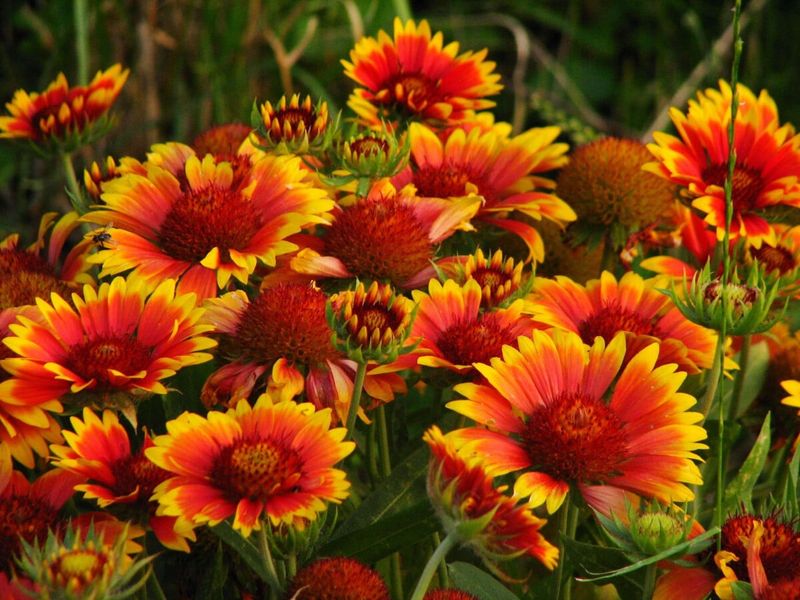
That bold, daisy-like flower baking happily in your driest garden strip is easy to confuse with black-eyed Susan, but it’s probably something tougher.
If the rays are banded in red, orange, or burgundy instead of solid yellow, and the foliage feels rough and gray-green, you may be looking at blanket flower.
Knowing which plant you have changes everything about where you put it and how you care for it.
Get the placement right and this flower can carry a scorching foundation bed or gravel strip through a full summer with surprisingly little help from you.
The Bloom May Be Blanket Flower
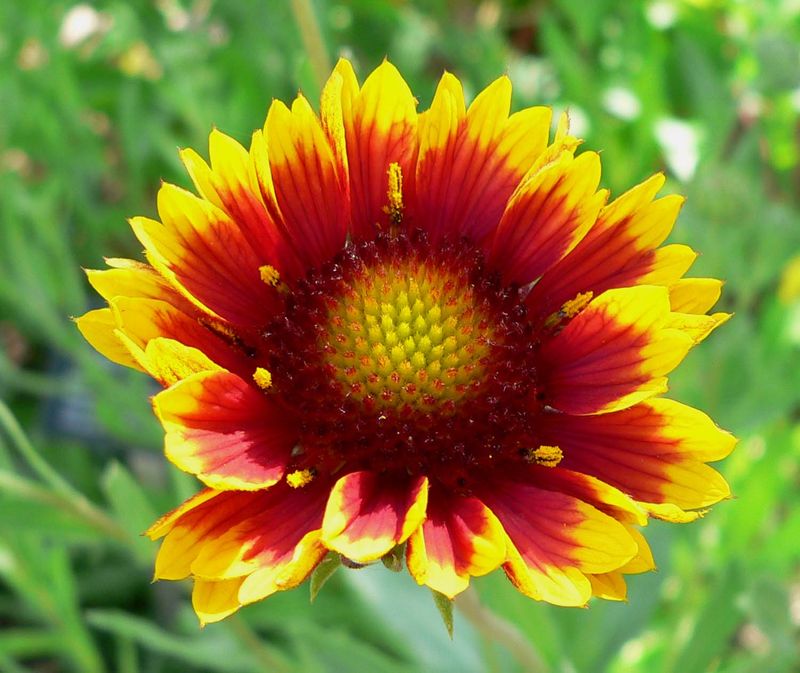
Standing at the edge of a hot garden bed, you spot a daisy-like flower with fiery rings of red and orange tipped in yellow, and your first instinct is probably black-eyed Susan.
That instinct is understandable, but the bloom you’re looking at may well be blanket flower, and the two plants have some real differences once you know where to look.
Blanket flower covers a family of species and hybrids.
The one most common in garden beds is Gaillardia x grandiflora, a hybrid bred from two parent species.
You may also encounter Gaillardia pulchella, commonly called Indian blanket or firewheel, which tends to behave as an annual or short-lived perennial.
Both produce composite flower heads made of many small florets, not simple individual petals, and both can stop you in your tracks on a July afternoon.
The visual comparison is worth slowing down for.
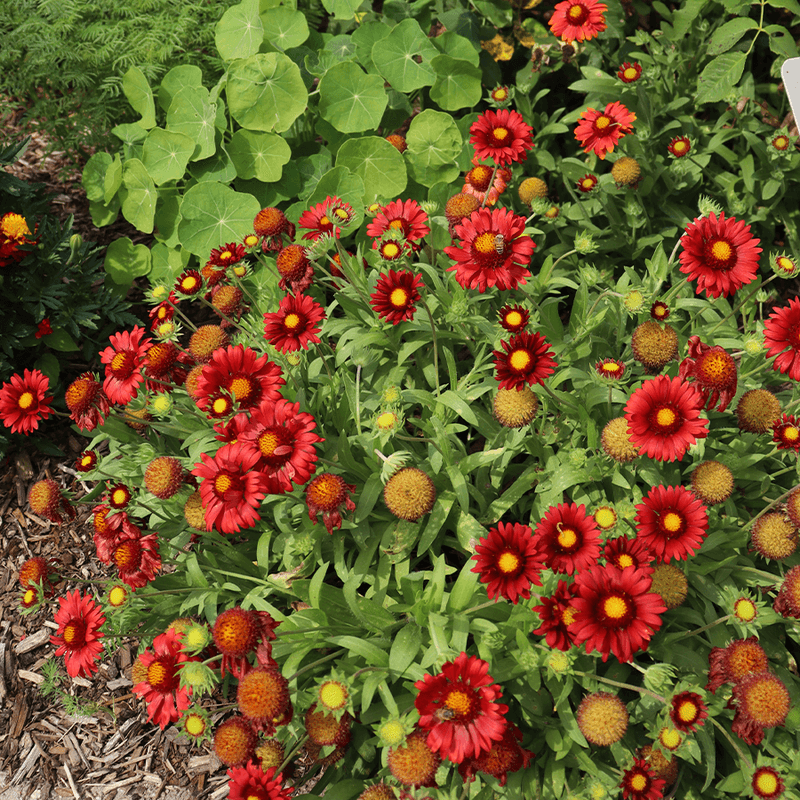
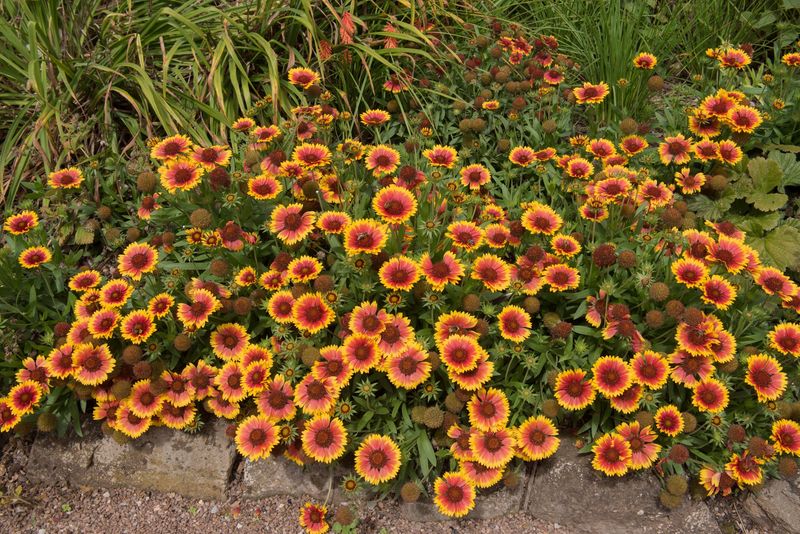
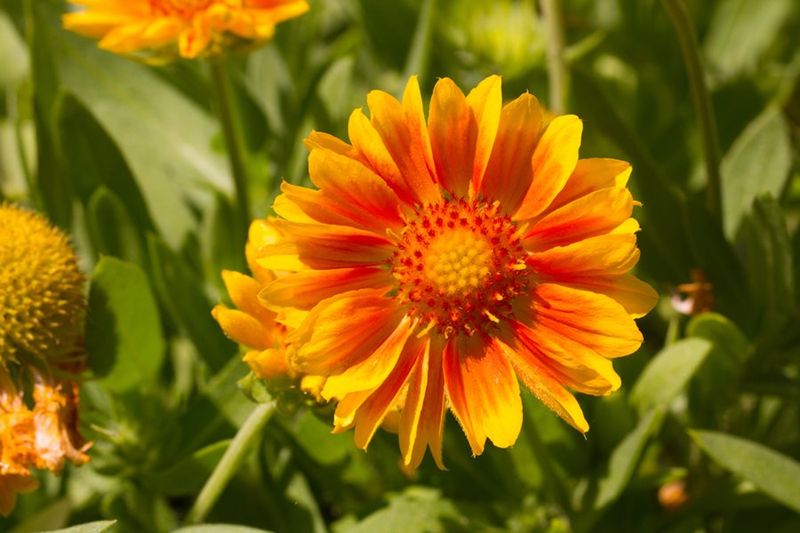
Blanket flower rays are often banded, running from deep red or burgundy near the center out to yellow or orange tips.
The center of the flower head tends to be flatter and reddish rather than the dark, dome-shaped center you see on black-eyed Susan.
The foliage on blanket flower is hairy and gray-green, while black-eyed Susan, usually a Rudbeckia species, more often carries solid yellow rays around a raised dark center and somewhat rougher but greener leaves.
The U.S.
Forest Service notes that black-eyed Susan is occasionally mistaken for Gaillardia, which tells you the confusion runs both directions.
Species and cultivars vary enough that no single description covers every plant, so treat this comparison as a useful starting point rather than a guaranteed ID.
If the colors, center shape, and leaf texture match up, blanket flower is a strong candidate.
Why It Fits A Hot, Dry Bed
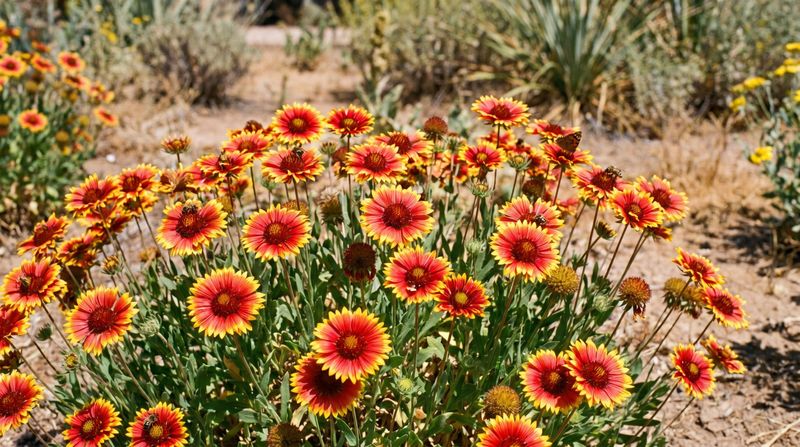
Some plants merely survive a scorching south-facing border.
Blanket flower actually seems to prefer it.
Authoritative extension sources consistently describe it as heat tolerant, drought tolerant after establishment, and well suited to dry or sandy soil, which puts it in a short list of flowers that belong in the yard’s most punishing spots.
Full sun is the starting requirement, meaning at least 6 hours of direct light daily.
Give it less than that and you’ll get weak stems and fewer blooms.
The University of Wisconsin Horticulture Extension notes that blanket flower performs well in hot, dry conditions once it’s settled in, and that lean soil is not a problem as long as drainage is fast.
Think about the spots in your yard that cook in summer and stay dry between rains.
A hot foundation strip on the south or west side of the house, a gravel bed along a driveway edge, a south-facing border that reflects heat off a fence or wall, a rock garden, or a sandy coastal site all fit the profile.
According to University of Florida IFAS guidance on Gaillardia pulchella, the plant handles those conditions without the wilting and browning you’d expect from many other flowering perennials.
The key phrase in all of this is “after establishment.” Blanket flower is not a plant you drop into a dry bed and walk away from on day one.
It needs time to push roots deep enough to tap subsoil moisture.
But once those roots are in place, the plant handles summer heat and dry spells with a toughness that earns it a real spot in a problem bed rather than just a polite mention.
Fix Wet Soil Before You Blame The Plant
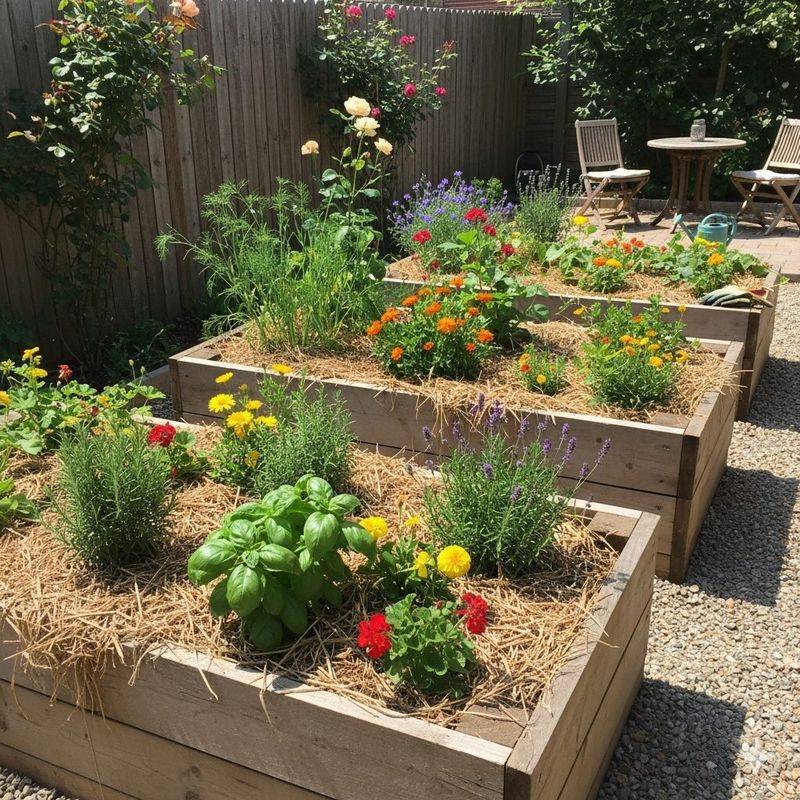
Blanket flower’s main enemy in most American backyards is not summer heat.
It is water that has nowhere to go.
If your bed holds puddles for hours after rain, or if the soil stays damp through winter, that is where the plant’s trouble starts, not in August.
Saturated soil creates the conditions for root and stem rots.
Penn State Extension’s overview of Gaillardia diseases identifies fungal issues as a real concern, particularly when air circulation is poor and soil moisture stays high.
Heavy clay that drains slowly after rain is the most common version of this problem in residential yards, and winter wet in clay is often what finishes off a plant that looked fine in July.
Before you blame the flower, check your drainage.
Dig a hole about 12 inches deep, fill it with water, and watch how long it takes to drain.
If water is still sitting there two hours later, the site needs work before you plant anything that demands fast drainage.
The fix is not simply watering less.
NC State Extension notes that Gaillardia x grandiflora needs well-drained soil to perform reliably.
If your native soil is heavy clay, move the plant to a raised bed, a berm with amended soil, or a container filled with a fast-draining mix.
Adding coarse sand or grit to an existing clay bed can help, but a raised planting surface is a more dependable solution.
University of Florida IFAS guidance specifically flags poor drainage as a major failure point for this plant.
Drought tolerance does not compensate for roots sitting in wet soil, and no amount of summer toughness will save a blanket flower that spends winter in a soggy bed.
Give The Plant Sun And Breathing Room
Crowded plants struggle.
Blanket flower is no different, and getting the spacing right from the start saves you from replanting a failed clump two seasons later.
Many Gaillardia x grandiflora hybrids mature at roughly 1 to 3 feet tall and about 2 feet wide, though that range shifts with cultivar.
NC State Extension describes the typical garden hybrid as reaching those dimensions under good growing conditions, which means your spacing plan needs to account for the full spread, not just the transplant size at the nursery.
For Gaillardia pulchella specifically, University of Florida IFAS recommends 12 to 18 inches between plants as a starting point.
If you want a looser, spreading effect across a wider bed, the same source suggests 2 to 3 feet between plants for a mass planting.
That extra room lets each plant develop its root system without competing for moisture, and it keeps air moving through the foliage, which matters for disease resistance in humid climates.
The cultivar label on the plant you buy should always control your final spacing decision.
Compact varieties bred for containers or small beds may stay well under 12 inches wide, while some taller hybrids push past 2 feet in every direction.
University of Wisconsin Horticulture Extension recommends reading the label for the specific cultivar rather than relying on general species guidance, because the range across hybrids is wide enough to matter.
And regardless of cultivar, the sun requirement stays constant: at least 6 hours of direct light daily, with more being better in most US climates.
Establish It Before You Cut Back Water
A lot of gardeners hear “drought tolerant” and treat it as permission to plant and walk away.
With blanket flower, that approach will cost you the plant.
The drought tolerance that makes this flower so useful in a hot bed is something it earns over weeks, not something it arrives with.
New roots need consistent moisture to push out into the surrounding soil.
A general starting point from University of Massachusetts Extension guidance on watering new plantings is roughly 1 inch of rain or supplemental water every 5 to 7 days, adjusted for your specific conditions.
Heat, wind, sandy soil, and container planting all increase water demand.
A rainy week in a shaded location cuts it.
Check the soil a few inches down rather than going by schedule alone.
UC Master Gardeners of the Lake Tahoe Basin describe Gaillardia as needing regular water during establishment before transitioning to lower irrigation once the plant is settled.
That transition is the goal, not a shortcut you can take on week two.
Once the plant has been in the ground through a full growing season and shows strong new growth, you can pull back on irrigation and let the plant demonstrate the toughness it’s known for.
At that point, keeping the soil constantly moist does more harm than good.
Blanket flower in an established bed prefers to dry out between waterings rather than sit in persistent moisture.
University of Florida IFAS reinforces that overwatering an established plant in warm weather is one of the faster ways to shorten its life.
Planting dates vary too much by region and frost date to give a single national calendar, so time your planting around your local last frost and give yourself enough of the growing season for roots to settle before summer heat peaks.
Sow Seeds Shallowly And Follow The Packet
Starting blanket flower from seed is straightforward, but depth matters more than most gardeners expect.
Plant too deep and the seed may never break the surface.
Plant too shallow and a single heavy rain can wash it out of position.
The USDA plant guide for Indian blanket recommends sowing seed at about 1/8 to 1/4 inch deep, and notes that erring on the shallow side is safer than going too deep.
Some annual Gaillardia seed germinates best at or very near the soil surface, where it can catch light.
That variation between strains is exactly why the packet instructions for your specific cultivar should take priority over any general rule.
Surface preparation matters too.
A raked, firm seedbed with good contact between seed and soil gives better results than loose, fluffy ground where seeds can fall into air pockets.
University of Wisconsin Horticulture Extension notes that blanket flower can be direct-seeded into the garden or started indoors, with timing adjusted to your local frost dates.
Under favorable conditions, some blanket flower plants will bloom in their first growing season from seed, which is one of the reasons gardeners reach for this plant when they want color quickly in a new bed.
University of Missouri Extension describes Gaillardia as capable of producing first-year flowers, though timing depends on species, region, and when you get the seed in the ground.
Annual forms like Gaillardia pulchella are generally quicker to bloom than the hybrid perennial forms.
Either way, patience through the seedling stage pays off once the first flower heads open above the foliage.
Summer Toughness Does Not Mean Long Life
Here is the part most plant tags leave out.
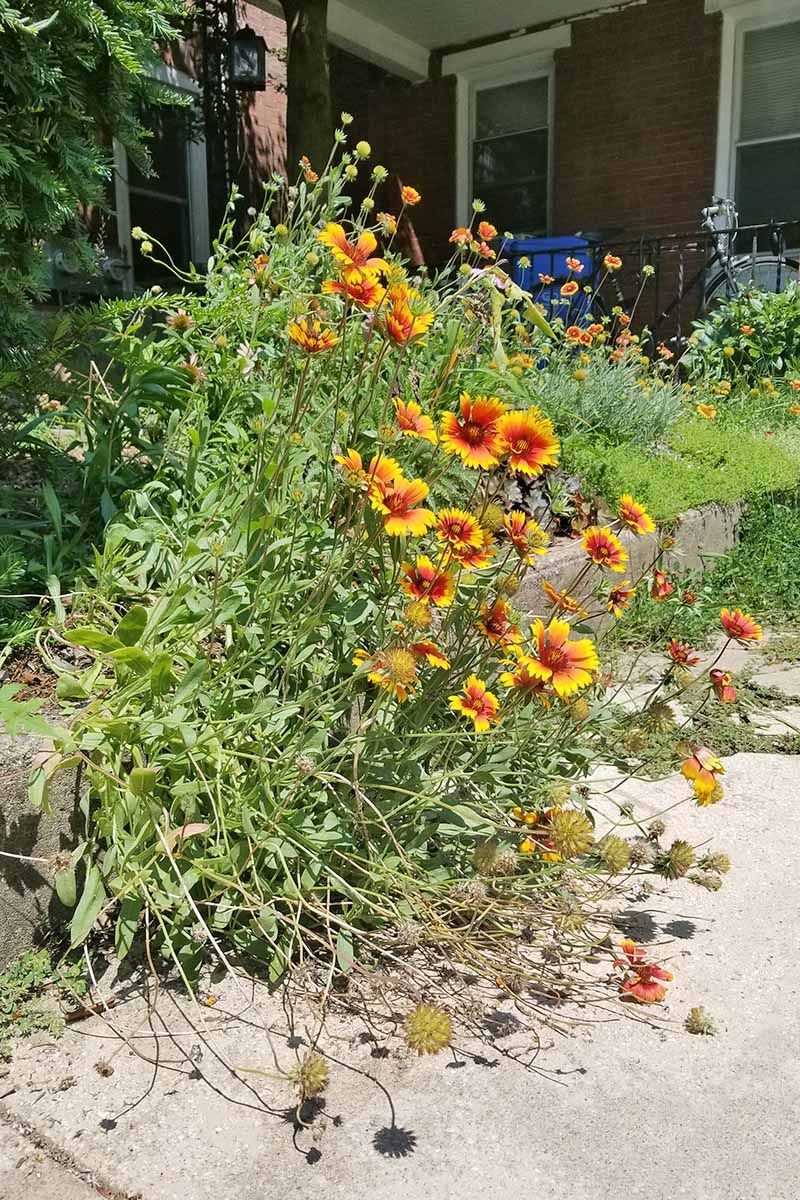
Blanket flower can handle punishing summer heat and still die out after a couple of seasons, and that is normal, not a sign that you did something wrong.
University of Wisconsin Horticulture Extension reports an average lifespan of about 2 years for Gaillardia x grandiflora, even under good growing conditions.
Some plants persist longer, and a well-drained site in a favorable climate can keep a clump going for several seasons.
But going in with realistic expectations means you will not be surprised when a plant that bloomed beautifully for two summers simply does not return in spring.
Deadheading gives you some control over what the plant does with its energy.
Removing spent flower heads regularly can encourage additional blooms and tidies the bed through summer.
NC State Extension notes that deadheading can extend the blooming period, which matters when you’re trying to carry color through a hot August.
Leaving some seed heads in late summer is a different choice with its own payoff.
Goldfinches and other small birds will work through the seed heads, and the plant may self-sow into nearby bare soil, giving you new plants the following season.
Self-sowing is not the same as invasive spreading.
USDA does not classify Indian blanket as a known invasive, though UF/IFAS advises Florida gardeners to keep Gaillardia pulchella from spreading into natural areas.
Behavior varies by species, cultivar, and local habitat.
On fertilizer, less is more.
Colorado State University Extension notes that blanket flower performs well in lean soil, and pushing it with rich fertilizer tends to produce lush foliage at the expense of flowers and can shorten the plant’s already modest lifespan.
Useful For Wildlife, With A Few Limits
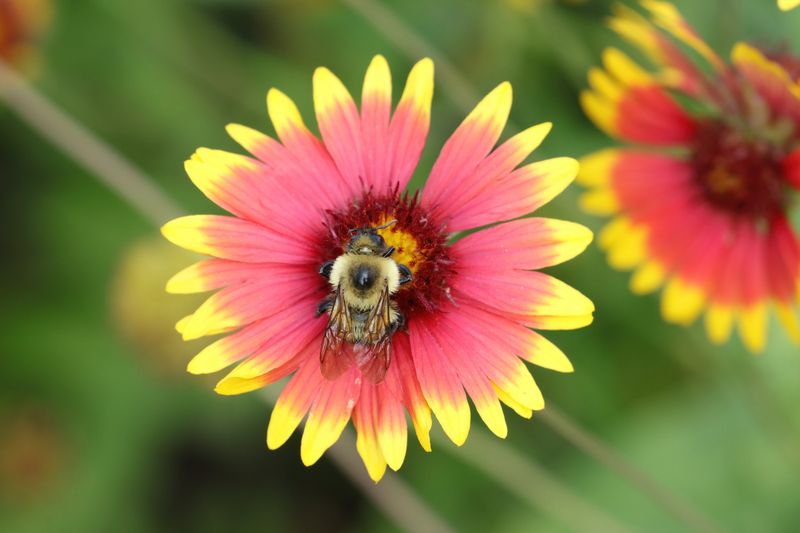
Beyond surviving a difficult bed, blanket flower earns its spot by doing something useful while it’s there.
Bees and butterflies visit the flowers regularly, drawn by the open composite flower heads that make nectar and pollen accessible.
The USDA plant guide for Indian blanket identifies the plant as valuable to pollinators, and birds may work through the seed heads in late summer and fall.
That combination of pollinator and bird value adds up in a bed that might otherwise just be a hot, difficult strip of ground.
Deer resistance is a real benefit, though not a guarantee.
University of Georgia Cooperative Extension warns that deer may browse plants typically considered resistant when food pressure is high or alternatives are scarce.
Blanket flower is generally deer tolerant, not deer proof.
Rabbit resistance is similarly reported but similarly imperfect.
One caution worth passing along: blanket flower foliage can cause contact dermatitis in susceptible gardeners.
University of Wisconsin Horticulture Extension notes this skin sensitivity, and if you find your hands or arms reacting after handling the plant, gloves and long sleeves are the straightforward fix.
The available evidence does not support calling the plant toxic to pets or people, but skin irritation in sensitive individuals is documented.
The full decision rule is simple.
Choose a species or cultivar suited to your region, give it a spot with full sun and fast drainage, water it consistently through establishment, and treat it as a strong ally for a difficult bed rather than an indestructible plant.
A flower that blooms hard through July and August in a spot where most plants give up is worth planting again when the first one fades.