
The Orange Snake Turning Up Around Your Florida Shed, Garden, And Compost Pile
Follow us on Google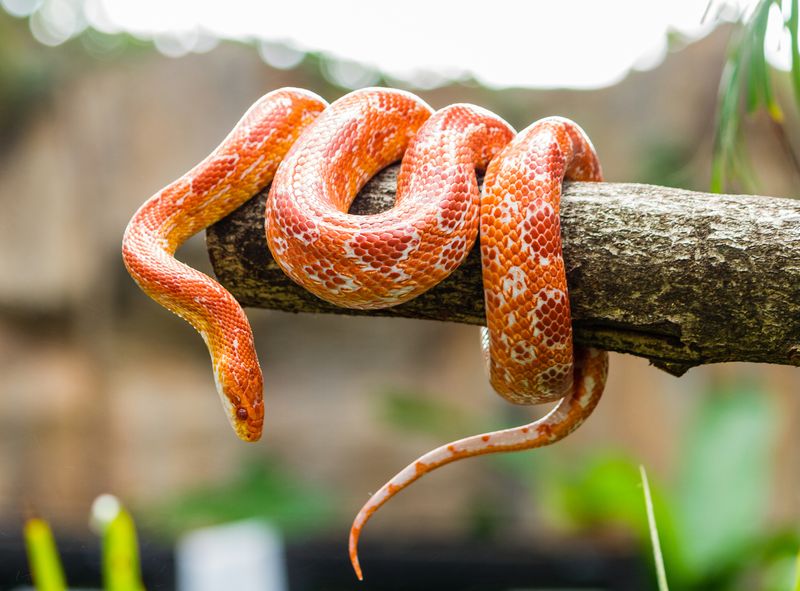
You step out to the shed on a Saturday morning and there it is, coiled near the base of the door: an orange snake with dark-edged blotches and a head marking that looks almost like an arrowhead.
Your first instinct is probably alarm, and that is fair.
But knowing what that snake most likely is, and what its presence might actually mean about your yard, puts you in a much better position than either panic or overconfidence.
This article walks you through what you are probably looking at, what a sighting may signal, and what practical steps can reduce the conditions that bring snakes close to your home.
The Likely Orange Snake Is A Red Cornsnake
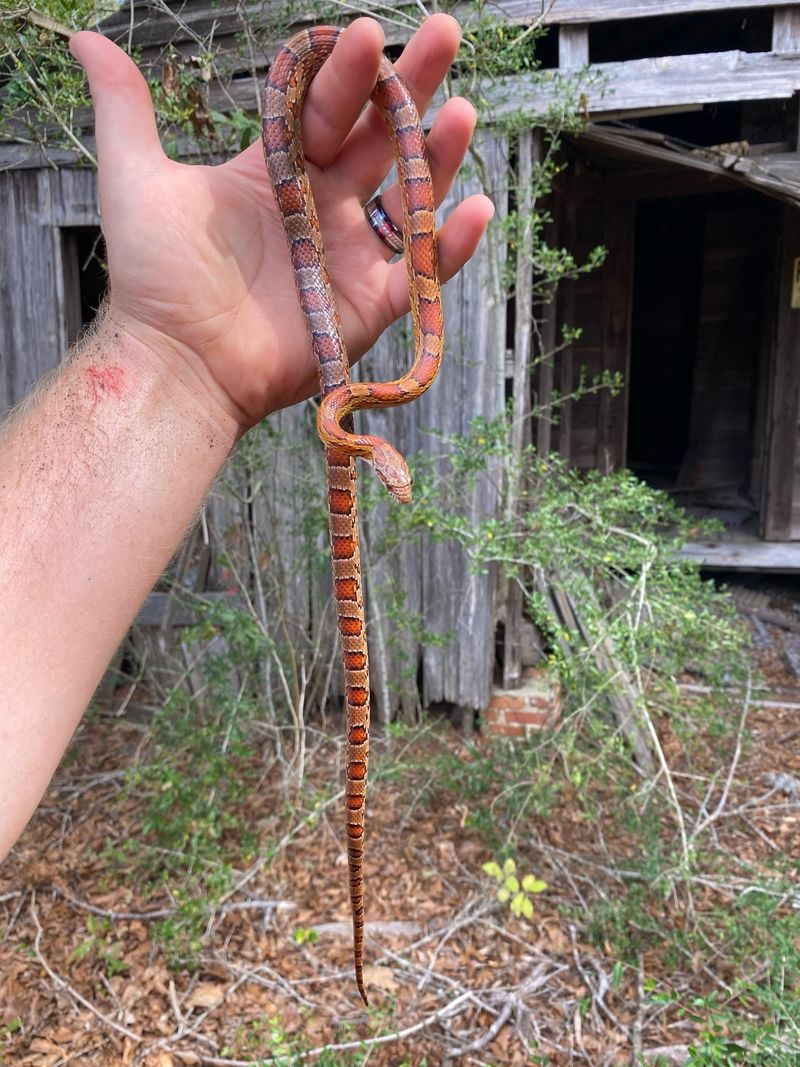
That orange snake near your shed has a name that most Florida homeowners do not expect: the red cornsnake, also called the red rat snake, or Pantherophis guttatus in scientific terms.
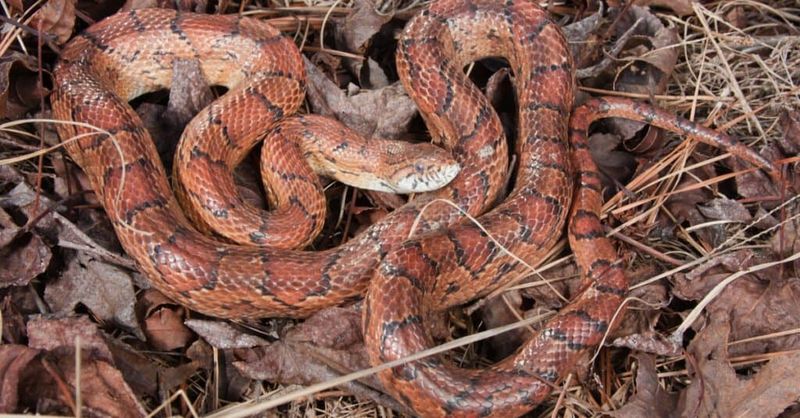
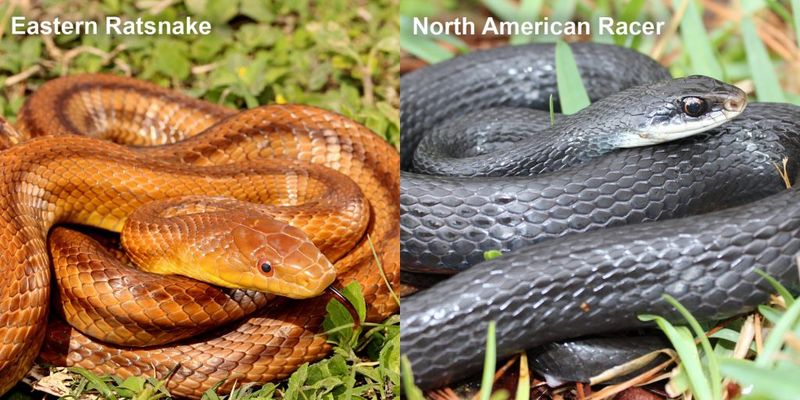
Florida Museum’s snake identification resource describes it as an orangish or yellowish-tan snake with red or rusty, dark-edged blotches and a distinctive spear-shaped marking on the head and neck.
Adults commonly reach 30 to 48 inches long, and the recorded maximum is about 74 inches.
That is a big snake, and seeing one at close range near a door is genuinely startling.
The good news is that red cornsnakes are nonvenomous.
They do not carry toxic venom, and they lack the hollow fangs that venomous species use to inject it.
FWC’s guide to nonvenomous snakes identifies the red cornsnake as the large red-orange snake most likely to be encountered around developed areas of Florida, which covers yards, outbuildings, gardens, and compost areas exactly like yours.
They are generally not dangerous to people or pets, but that does not mean you should pick one up.
They bite defensively when grabbed, pinned, or cornered, and even a nonvenomous bite is unpleasant.
Red cornsnakes are strong climbers and turn up in places that surprise people: palm fronds, tree hollows, logs, rocks, and the walls or rafters of sheds.
They are found throughout mainland Florida and in the Keys.
So rather than focusing on the snake itself, shift your attention to what your yard might be offering it, specifically shelter and prey, and what you can do about those conditions.
A Sighting May Point To Shelter Or Prey
Here is where it gets tricky.
Spotting a red cornsnake near your compost pile or shed does not automatically mean you have a rodent infestation or that the compost pile itself called the snake over.
The connection is more indirect than that.
UF/IFAS guidance on snakes around homes explains that ratsnakes may enter sheds, garages, or attics when rodents are present, and that exposed food scraps or clutter can attract rodents and other small animals that, in turn, attract snakes as prey.
Red cornsnakes eat more than just rodents.
Their diet includes lizards, frogs, birds, and bird eggs, so a snake working your garden may simply be following a frog population or checking a tree cavity for a nest.
Florida Museum notes that they kill larger prey by constriction and are active hunters that use structures for both cover and hunting opportunity.
A single sighting does not prove that rodents are present or that anything in your yard directly drew the snake by smell.
FWC points out that snakes are animals with large travel areas, so the one you saw today may be gone by tomorrow.
It could be passing through, using a temporary hiding spot under a board or brush pile, or following seasonal prey movement.
A sighting may mean the yard offers something useful, but it does not identify the cause.
The practical response is to inspect your food storage and clutter rather than searching for the snake itself.
Color Alone Cannot Identify An Unknown Snake
Assuming every orange or red snake in your Florida yard is a harmless cornsnake is a mistake that can go wrong fast.
Several Florida species share orange, red, or brownish tones, and young snakes often look quite different from adults of the same species.
Florida Museum’s scarletsnake page describes a species with red blotches separated from pale blotches by black bands, which can look similar to a cornsnake at a glance.
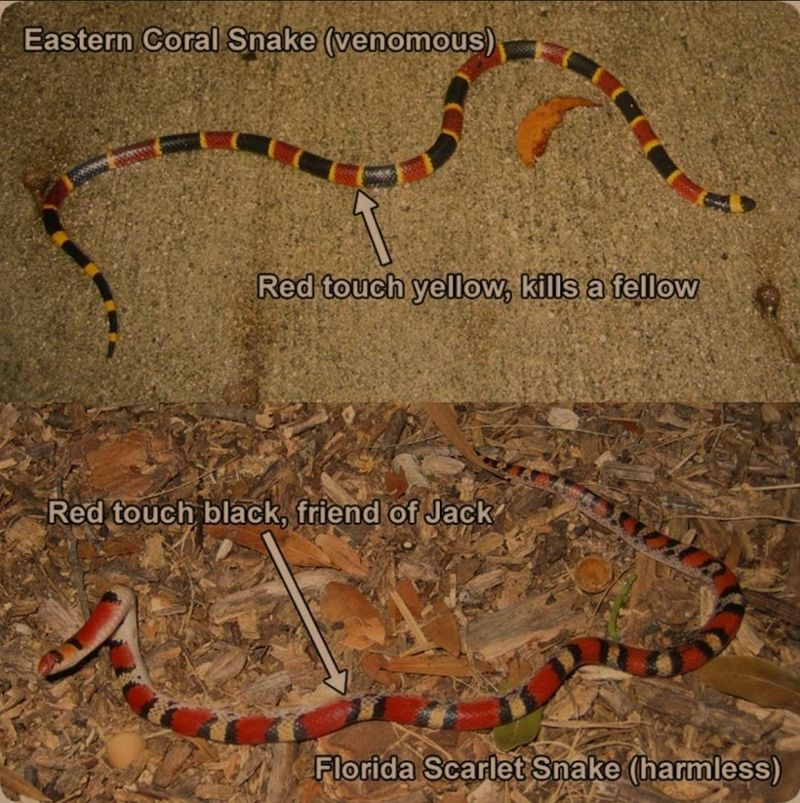
The eastern coral snake, by contrast, has red and black rings separated by yellow or pale bands and is genuinely venomous.
You may have heard the rhyme about red touching yellow or red touching black as a way to tell coral snakes from look-alikes.
Florida Museum states directly that such rhymes hold true only most of the time and that unusual color variation can break the pattern entirely.
That is not a reliable enough margin to justify walking up to a snake you cannot confidently identify.
UF/IFAS extension guidance on Florida’s venomous snakes recognizes six venomous species in Florida: the eastern coral snake, southern copperhead, cottonmouth, eastern diamondback rattlesnake, timber rattlesnake, and dusky pygmy rattlesnake.
Copperheads do have a limited Florida range, concentrated west of Tallahassee and in parts of the western Panhandle, so most Central and South Florida homeowners are unlikely to encounter one.
But that geography is background information, not permission to dismiss an unidentified snake.
FWC’s Imperiled Species Management Plan also notes that the Lower Keys red cornsnake population carries special conservation status, which means you should not attempt to collect, relocate, or keep one regardless of where in Florida you live.
When in doubt, stay back.
Give The Snake Space And A Clear Way Out
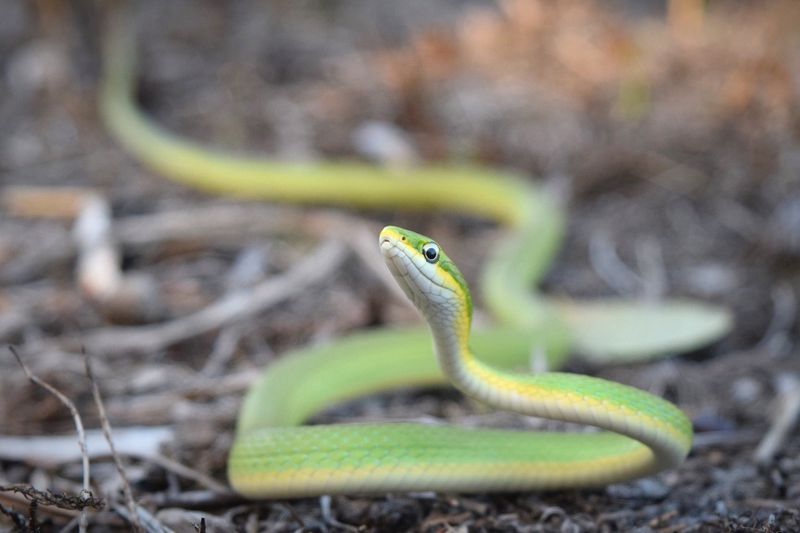
Most bites from nonvenomous snakes happen the same way: someone tries to grab the snake, pin it, chase it off, or kill it, and the snake does the only thing it can.
Florida Museum’s coexistence guidance is plain about this: most Florida snakes avoid people, and the safest response to an unidentified snake is to leave it alone.
Step back, keep children and pets inside or well away, and give the animal a clear path to move off on its own.
Do not try to corner it against a wall or fence to get a better look.
Do not prod it with a stick or broom.
Cornering a snake removes its escape option, and a snake that cannot flee will defend itself.
FWC advises standing back and allowing the snake to move away, which a red cornsnake will typically do once it senses an opening.
Most encounters resolve themselves in minutes if people stay calm and give the animal room.
Do not attempt to capture or relocate the snake yourself, even if you are fairly confident it is a cornsnake.
You cannot be completely certain of the species without expert confirmation, and amateur handling creates the bite risk you are trying to avoid.
If a snake is inside your home, is genuinely venomous, or poses an immediate safety concern that distance alone cannot resolve, contact a licensed wildlife removal professional.
Distance protects both your household and the snake, and it costs you nothing.
Inspect The Shed For Rodent Access
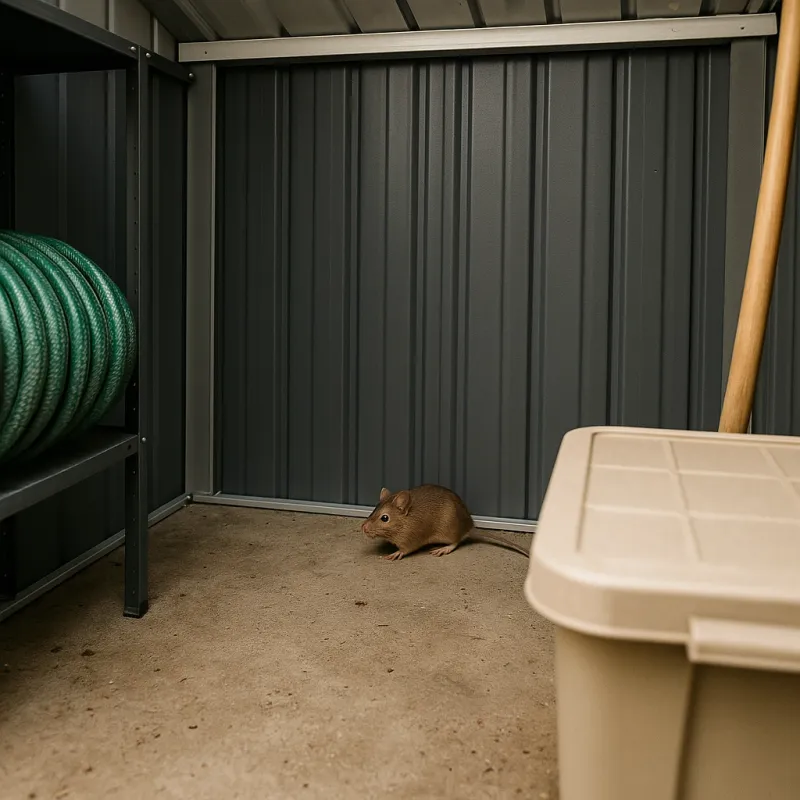
After the snake moves on, the most useful thing you can do is not search for it.
Walk around the shed and garage instead and look for the conditions that may have drawn prey there in the first place.
UF/IFAS guidance on snakes around structures recommends checking for droppings, chewed cardboard or bags, spilled birdseed, and exposed pet food, all of which suggest rodents may be using the space.
These clues may be absent entirely, and their absence does not guarantee no rodent activity, but finding them gives you a clear starting point.
Pay attention to how the building fits together.
Ratsnakes can enter sheds, garages, and attics when prey is available inside, and some smaller snakes can squeeze through an opening no larger than a pencil.
Look for gaps beneath doors, cracks around pipe penetrations, and spaces where siding meets the foundation.
Tight-fitting doors and properly installed door sweeps close off the easiest entry points.
Seal wall openings with appropriate materials and move cardboard boxes off the floor, since cardboard on a concrete slab is practically a welcome mat for rodents.
Store birdseed, pet food, and grass seed in sealed hard-sided containers rather than in paper or plastic bags.
If you keep a small chest freezer or extra refrigerator in the garage, make sure nothing edible is sitting open on a shelf nearby.
These steps reduce the food sources that support rodents and, by extension, reduce the prey base that might bring a ratsnake back to the same spot.
This is not a guarantee that no snake will ever cross the yard, just one layer of a practical approach.
Manage Compost Without Blaming The Pile
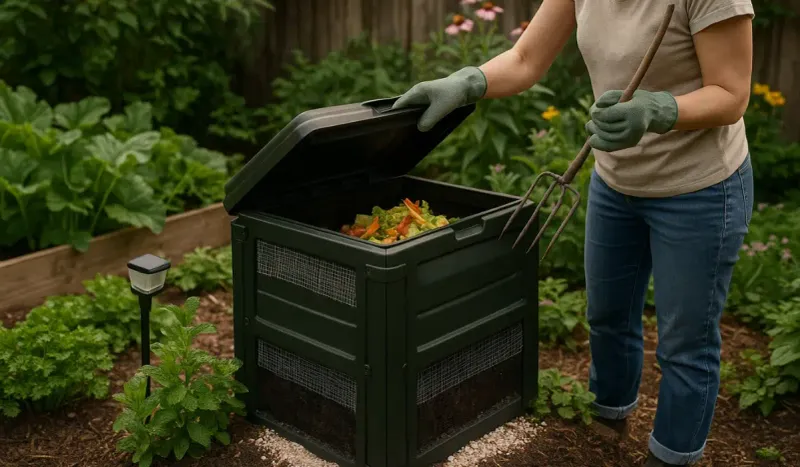
A compost pile does not send out a signal that pulls snakes across the yard by smell.
What it can do, if it is poorly managed, is support the small animals that snakes actually follow.
UF/IFAS guidance on composting connects exposed food scraps and clutter around bins to increased rodent and wildlife activity, which is the indirect link between compost and snakes worth taking seriously.
Place your compost bin as far from the house and outbuildings as your yard allows.
A completely enclosed bin with a secure lid is the most effective option for reducing access by animals.
When you add fresh kitchen scraps, cover them immediately with a layer of brown material such as dry leaves, straw, or shredded cardboard.
UF/IFAS extension composting resources recommend burying fresh additions within the pile rather than leaving them on the surface where animals can reach them easily.
Keep meat, bones, fats, oils, and dairy products out of a home compost pile entirely.
These materials attract animals, create strong odors as they break down, and do not compost cleanly in a standard backyard setup.
UF/IFAS home composting guidance recommends balancing green materials such as vegetable scraps and grass clippings with roughly equal amounts of brown materials like dry leaves or straw, applied in layers about 3 to 4 inches deep.
Additional UF/IFAS composting research supports this layering approach for maintaining a healthy, low-odor pile.
A well-managed pile is genuinely less likely to become a problem than one that is open, odorous, and piled near the back of the shed.
Reduce Hiding Places Around Buildings
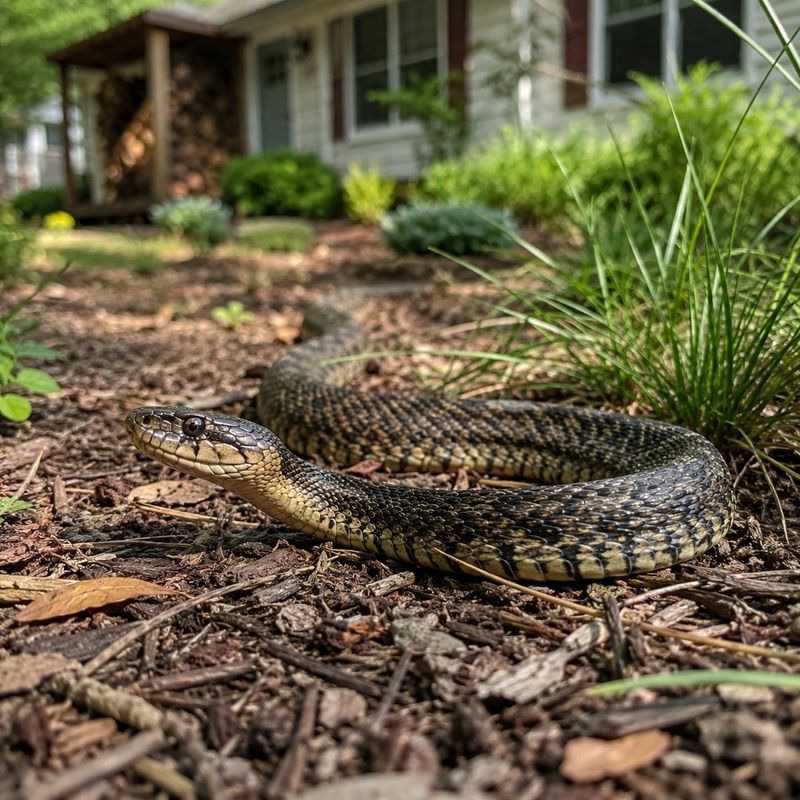
Clutter around a building is essentially free real estate for snakes and their prey.
Brush piles, stacked firewood, old lumber, palm frond debris, and loose rock piles all create the kind of cool, sheltered spaces that both rodents and cornsnakes use for cover.
Moving these materials away from buildings and play areas removes one of the main reasons a snake would linger in a specific spot rather than simply passing through.
Florida Museum’s cornsnake profile notes that red cornsnakes are capable climbers found under logs and rocks, in palm fronds and trees, and around structures where prey and hiding places are available.
Cleaning up does not promise a snake-free yard, but it reduces the number of reasons for one to settle in.
Stack firewood on a raised platform at least 18 inches off the ground and keep it away from the house wall.
Clear fallen palm fronds and other organic debris regularly, especially along fence lines and the sides of sheds.
Some homeowners ask about snake fencing for a garden or play area.
UF/IFAS exclusion guidance describes this as a specialized option for defined spaces, not a simple fix for an ordinary yard.
The specifications are specific: gaps no wider than 1/4 inch, a fence at least 36 inches high, and mesh trenched at least 6 inches into the ground.
The guidance also warns that incomplete fencing can actually trap snakes inside the enclosed area, and that climbing species may still get over it.
Think of it as a tool for a specific situation, such as a small play area for young children, rather than a general solution for the whole property.
Skip Repellents And Know What To Do After A Bite
Walk into any garden center and you will find products claiming to repel snakes.
Save your money.
UF/IFAS guidance on snakes around homes states that advertised snake repellents do not work.
Mothballs are sometimes suggested as a home remedy, but UF/IFAS pesticide information makes clear that using mothballs outdoors to repel snakes is illegal and can harm people, pets, and wildlife.
Additional UF/IFAS wildlife guidance puts ultrasonic devices in the same ineffective category.
Glue traps and broad rodenticide use are also poor choices for snake management.
UF/IFAS exclusion and control guidance warns that these products can injure pets and nontarget wildlife.
If you genuinely suspect a rodent problem after your inspection, start with habitat cleanup and secure food storage.
A licensed pest management professional can assess the situation and recommend targeted control if cleanup alone is not enough.
If someone is bitten by a snake, the response is straightforward.
Move away from the snake immediately.
Call emergency services.
Keep the person calm and as still as possible, because movement speeds venom absorption if the snake turns out to be venomous.
Remove any rings, watches, or tight clothing near the bite site before swelling starts.
UF/IFAS bite first aid guidance and CDC guidance on venomous snakes are both explicit: do not cut the wound, do not try to suck out venom, do not apply ice or a tourniquet, and do not attempt to catch or kill the snake.
Seek immediate medical attention regardless of whether you think the snake was venomous.
A sighting near the shed or compost pile may reflect temporary shelter or available prey in the area, but it does not identify the cause or establish that anything is wrong.
The yard that attracts a passing cornsnake is often just a yard with some good hiding spots and a few frogs.
Fix the conditions you can control, leave the snake alone, and you have done the right thing.