
These Pennsylvania Native Plants Look Beautiful While Quietly Turning The Tables On Spotted Lanternfly
Follow us on Google
You step onto the back patio on a July evening in Berks County, and there they are again.
Spotted lanternflies dotting the porch post, dropping sticky honeydew on your chairs, showing up like uninvited cookout guests.
Ever since this pest turned up in Pennsylvania in 2014, homeowners have been swatting, scraping egg masses, and feeling outgunned.
But some native plants are quietly fighting back for you, and they happen to be gorgeous while doing it.
Here are seven that pull their weight in the yard and give this bug a much harder time.
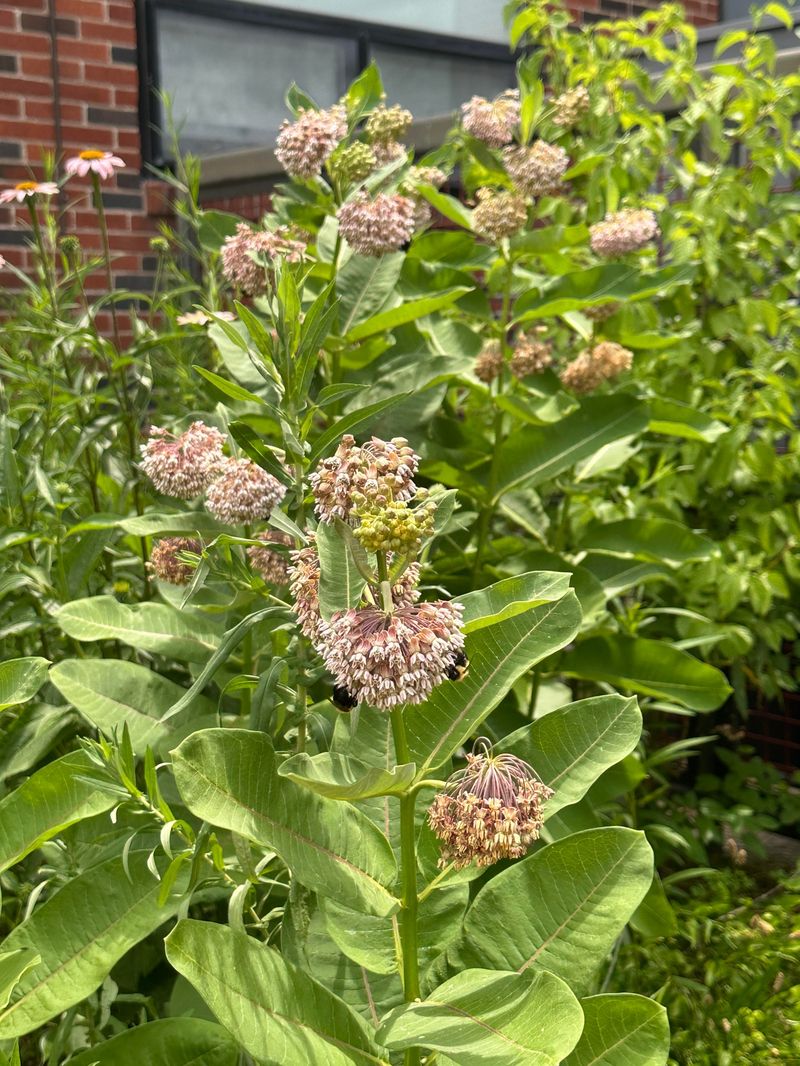
1. Common Milkweed
Picture a bug that takes one bite and does not walk away.
Recent Penn State research through SARE project LNE25-494R found that common milkweed, or Asclepias syriaca, can genuinely be toxic to spotted lanternflies.
In controlled studies, 60 to 80 percent of nymphs and adults died within 24 hours of feeding on it, even when grapevines sat right nearby as an easier meal.
The secret is a group of compounds called cardiac glycosides, the same chemistry that protects monarch caterpillars.
Older Extension advice was cautious about this, so treat it as one promising layer, not a magic solution.
Give it full sun and it shrugs off poor, dry, sandy, or clay soil across most of Pennsylvania.
Plant seeds in fall or early spring, allowing 10 to 30 days of cold to wake them up, and space plants 12 to 18 inches apart.
It grows 3 to 5 feet tall with a rangy, wild look that suits a meadow edge more than a tidy bed.
It does spread by root and seed, so pick a spot where wandering is welcome.
And every stem you plant doubles as monarch nursery.
That is a quiet hero earning its keep.
2. Joe Pye Weed
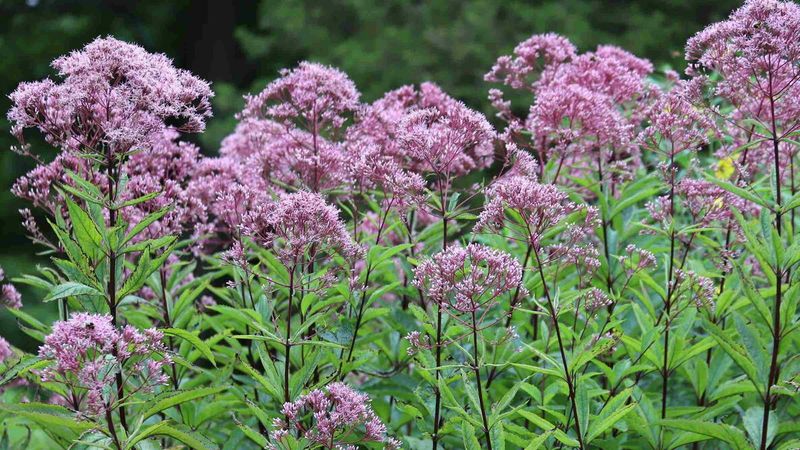
Stand near a stand of Joe Pye weed in August and you hear it before you see it.
The mauve-pink flower heads hum with bumblebees, skippers, and beetles for a solid 6 to 8 weeks.
That racket is the whole point.
Eutrochium species do not poison lanternflies directly.
Instead, they run an all-you-can-eat diner for beneficial insects, and that crowd invites the generalist predators that make lanternflies nervous.
Praying mantises, wheel bugs, yellowjackets, and orbweaver spiders all patrol yards with steady insect traffic.
Here is where it gets tricky.
This plant wants consistently moist, fertile soil, mimicking the marshy spots it comes from.
Let it dry out in a Susquehanna Valley drought and the leaves scorch fast.
So tuck it in a low, damp corner or beside a downspout.
It reaches 3 to 7 feet tall, sometimes taller, and spreads 3 to 4 feet wide, so give it room.
The compact variety Gateway suits smaller beds.
Deer and rabbits mostly leave it alone, which is a rare gift in the Poconos.
Plant it and you are not just decorating.
You are stacking the deck with allies.
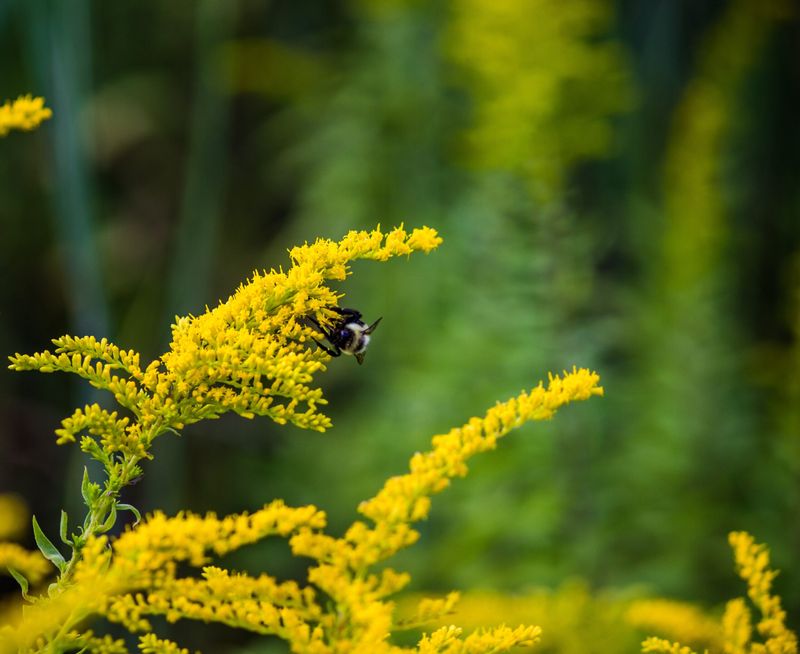
3. Goldenrod
Goldenrod gets blamed for fall allergies it never caused.
That is ragweed, blooming at the same time.
Goldenrod is actually one of the hardest-working natives you can grow, and Pennsylvania has 30 species of it, out of more than 100 across North America.
From August to first frost, those golden wands feed butterflies, native bees, syrphid flies, and soldier beetles.
Adult soldier beetles sip nectar while their larvae hunt aphids and other soft-bodied pests.
A yard full of that diversity supports the natural pest control that keeps lanternfly numbers in check.
It asks for almost nothing.
Most goldenrods take full sun, poor dry soil, and drought, and deer usually pass them by.
For shadier spots, wreath goldenrod, or Solidago caesia, tolerates part shade nicely.
One warning.
Canada goldenrod, Solidago canadensis, runs by rhizomes and will colonize a bed.
Choose clumping types like showy goldenrod, Solidago speciosa, or manage the spread.
Space plants 12 to 18 inches apart and cut them back once in early summer for bushier, flower-heavy plants.
Come October, the seeds feed goldfinches and chickadees through the cold.
Beautiful, tough, and busy behind the scenes.
4. Spicebush
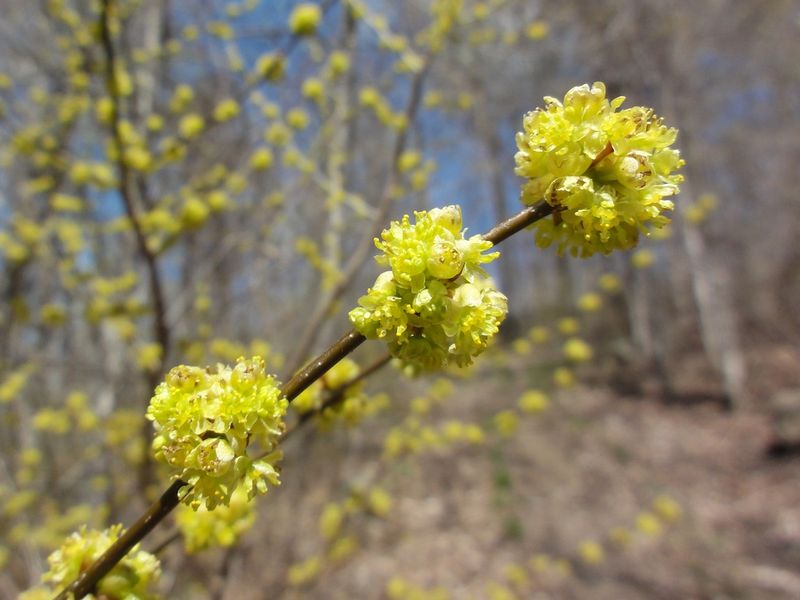
Brush against a spicebush leaf and your fingers smell like citrus and pepper.
Lindera benzoin is the understory shrub that quietly builds the kind of layered habitat where lanternfly predators actually live.
Bare stems light up with tiny yellow flowers in early spring, often before your last frost around May 15th across much of the state.
Later, red berries feed migrating thrushes and wood thrushes passing through the Allegheny Plateau in fall.
It is also the host plant for the spicebush swallowtail, whose caterpillar folds itself into a leaf like a little green sleeping bag.
Why does that matter for lanternflies?
A yard with dense native shrub cover shelters birds, spiders, and predatory insects year round.
A bare lawn offers those allies nothing.
Give it part shade and moist, rich soil at a woodland edge.
It grows 6 to 12 feet tall and wide over time, so space plants 6 to 8 feet apart.
Water deeply, about an inch a week, through the first two summers while roots settle.
Deer will nibble young stems, so cage new plantings until they toughen.
Plant one and you have started building a real thicket, not just a shrub.
5. Bee Balm
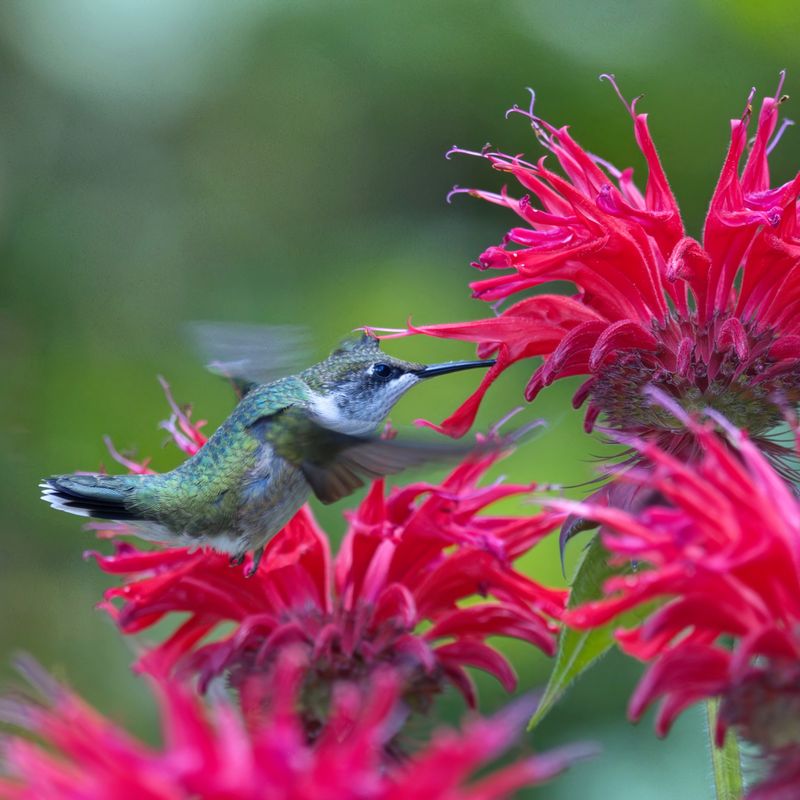
Bee balm looks like a firework frozen mid-burst.
The shaggy scarlet or lavender heads of Monarda didyma pull in hummingbirds, native bees, and a whole squad of predatory insects that treat your garden like a hunting ground.
That is the tie to lanternflies.
Wasps, hoverflies, and other beneficials that visit bee balm also patrol nearby plants for soft-bodied prey and pest eggs.
More predators cruising your yard means fewer pests settling in comfortably.
But bee balm has one famous weakness, powdery mildew, the gray dusty film that shows up in humid Pennsylvania summers.
Beat it with airflow.
Space plants 18 to 24 inches apart, give them full sun, and thin crowded stems in spring.
Mildew-resistant varieties like Jacob Cline hold up far better in the Delaware Valley.
It likes average to moist soil and spreads by runners, so it fills a bed within a couple seasons.
If it wanders too far, just pull the outer clumps in spring.
Cut spent blooms and it often reflowers into September.
A patch of bee balm turns a quiet corner into the busiest street in the neighborhood, and that traffic works for you.
6. Switchgrass
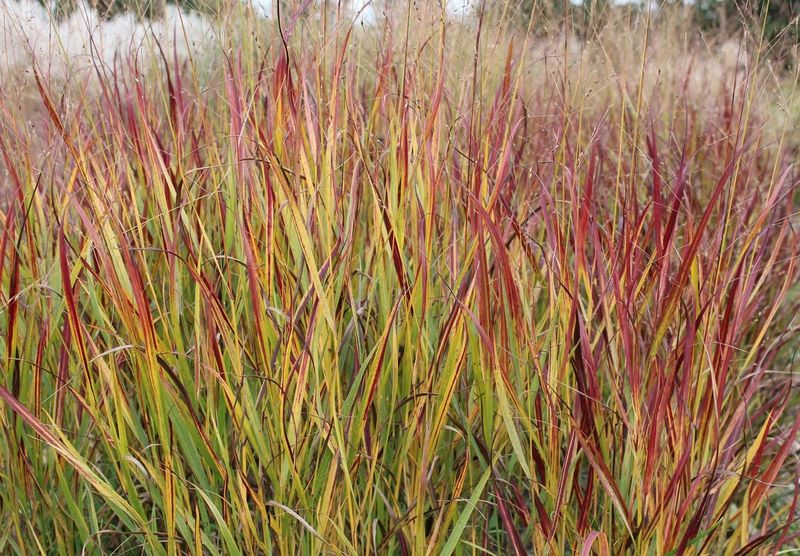
Most people think grass and think mowing.
Switchgrass, or Panicum virgatum, flips that idea.
It stands 4 to 6 feet tall, sways in every summer thunderstorm, and turns gold and burgundy by fall.
Its real job here is shelter.
Dense clumps of native grass give ground beetles, spiders, and overwintering beneficial insects a place to hide, hunt, and survive the cold.
Those are the same generalist predators that chip away at lanternfly populations across a season.
It is genuinely tough.
Switchgrass handles clay, shale, drought, and the rocky glacial soils of the northern tier without complaint.
Full sun keeps it upright, while too much shade or rich soil makes it flop.
Space plants 24 to 36 inches apart so clumps have room to fill in.
Leave the stems standing all winter.
They catch snow, feed sparrows and juncos on the seed, and shelter insect life until spring.
Then cut everything to about 4 inches in early spring before new growth pushes up.
Varieties like Northwind and Shenandoah stay narrow and upright, handy for tight beds near a Pittsburgh patio.
Plant a drift of it and you have built a wildlife hotel that also looks stunning in December.
7. New England Aster
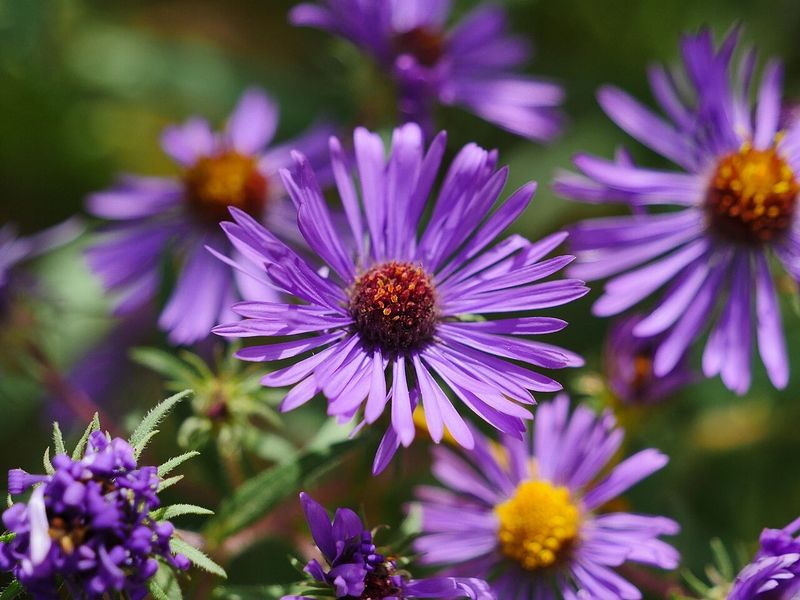
By late September, most of the garden is winding down.
Then New England aster, or Symphyotrichum novae-angliae, throws open thousands of purple daisies right when everything else is fading, and the timing is no accident.
That last big bloom is a lifeline.
Migrating monarchs, late bumblebees, and beneficial predatory insects all crowd onto it before frost.
Keeping predators fed and active into fall matters, because that is exactly when lanternflies are laying the egg masses that carry 30 to 50 eggs each into next year.
Asters reach 3 to 6 feet and can get leggy or mildewed if ignored.
The fix is easy.
Pinch them back by about half in early June, sometimes called the Chelsea chop, and you get shorter, sturdier, flower-packed plants without staking.
Full sun and average, evenly moist soil suit them best, and they take the heavy clay common across southeastern Pennsylvania.
Space plants 18 to 24 inches apart for airflow.
Leave the seed heads standing and finches will work them all winter.
A yard humming with predators in October is a yard that gave the lanternfly a rough final act.
And you did it with flowers, not chemicals, which feels pretty good on a cool porch evening.