
10 Climbing Plants That Cover A Bare Texas Fence In One Season
Follow us on Google
You step outside before breakfast and the patio already feels warm, that familiar Texas summer hello.
Then your eyes land on the old fence line, still bare and gray, still staring back at you like it did last spring.
Most homeowners think a green privacy screen takes years, but our long growing season and generous sun say otherwise.
Here are ten fast climbers that can turn that plain barrier into a living wall before the worst heat settles in.
1. Crossvine Climbs with Dazzling Orange Trumpets
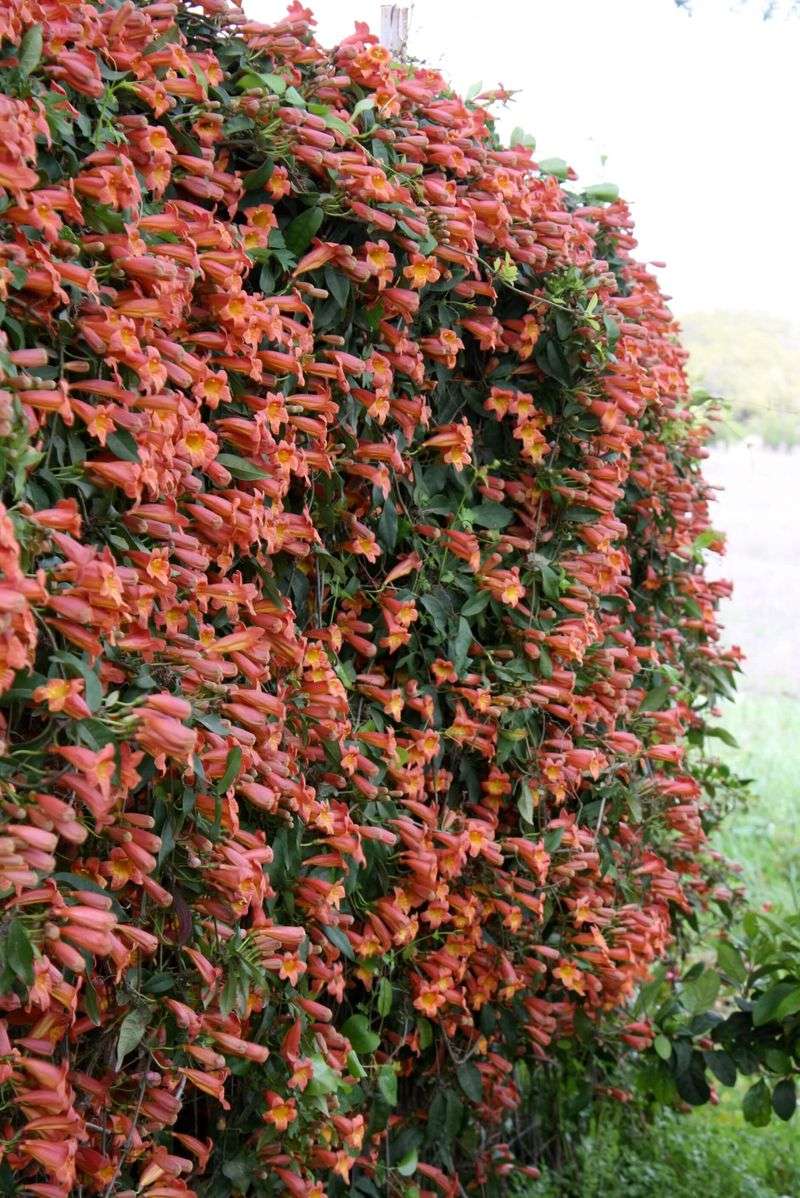
A bare fence is really just a canvas waiting for color, and native crossvine (Bignonia capreolata) answers with a flourish of orange and red.
This vine is a true Texas workhorse, stacking up dense, glossy green leaves fast.
Here is where it gets good.
Given a sturdy structure, crossvine can reach 15 to 20 feet tall and wide in a single season.
Tiny adhesive disks on its tendrils let it grip and climb with almost no help from you.
Many Central Texas gardeners plant it in full sun, but it handles a little afternoon shade out in West Texas just fine.
It adapts to acidic sandy loam in East Texas and the blackland clay up north, as long as drainage is decent.
Water deeply after planting.
Once established, it is genuinely drought-tolerant and appreciates a good soaking about once a month during dry stretches.
Those cheerful trumpets show up from late winter into spring, color when little else bothers to bloom.
2. Carolina Jessamine Offers Fragrant Yellow Blooms
You step onto the porch in early spring, and a sweet scent drifts in on a Gulf Coast breeze before you even see the flowers.
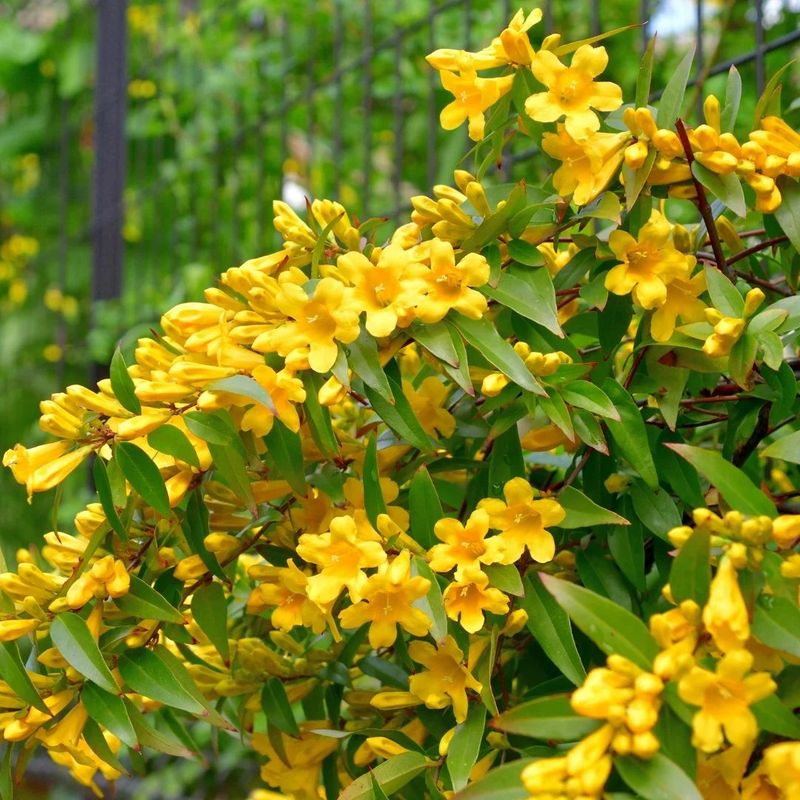
That is Carolina jessamine (Gelsemium sempervirens), an evergreen vine native to East Texas and the Southeast.
Some call its growth rate medium, but it actually establishes quickly, then takes off.
With support, it climbs 10 to 20 feet, covering fences and arbors with a wash of green all year.
Plant it in full sun for the most bright yellow, trumpet-shaped flowers, which arrive from late winter into spring.
It tolerates both acidic sandy soils in South Texas and the alkaline caliche of the Hill Country, so long as water drains away.
Space plants about 4 to 6 feet apart for a full screen.
One honest warning.
Every part of this plant is toxic if eaten, so tuck it where curious pets and children cannot reach.
A little planning now buys you years of that spring perfume.
3. Coral Honeysuckle Attracts Hummingbirds
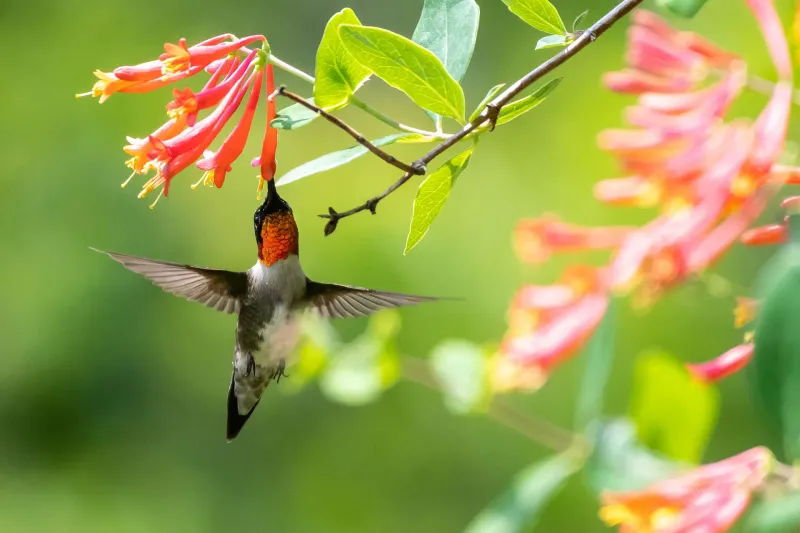
Nothing beats watching a hummingbird dart along a fence on a warm Texas afternoon, a flash of emerald against red.
Coral honeysuckle (Lonicera sempervirens) is the native hero that pulls them in.
Unlike its thuggish Japanese cousin, this one behaves.
It climbs 10 to 20 feet tall and 3 to 6 feet wide, twisting its stems around any support without swallowing the whole yard.
That restraint is a real win.
Clusters of coral-red to orange tubular flowers open from late spring through summer, sometimes repeating lightly into fall.
Hummingbirds and butterflies cannot resist them.
It thrives in full sun from the Panhandle down to the Lower Rio Grande Valley and shrugs off our stubborn clay once settled in.
Give it a deep drink every two weeks during long dry spells, and it rewards you with a fence that hums.
4. Trumpet Creeper Offers Bold Summer Color
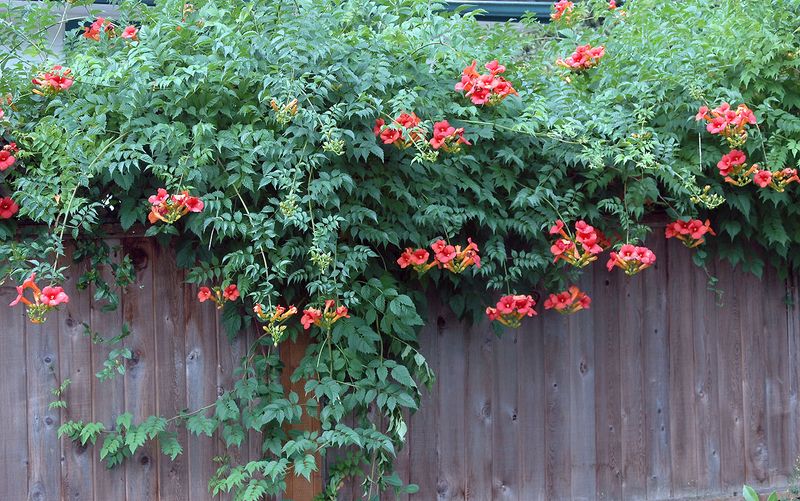
Need a fence covered yesterday?
Trumpet creeper (Campsis radicans) is the enthusiastic partner you call, sometimes adding 10 or more feet in a single season.
This native woody vine is flat-out vigorous, capable of reaching 30 to 40 feet over time and clinging with aerial rootlets.
Bold scarlet to orange trumpets pour out from early summer to early fall, a long show that hummingbirds absolutely mob.
It loves full sun but tolerates partial shade, though you trade some flowers for the shade.
It handles nearly every Texas soil, from sandy coastal plains to heavy North Central clay, and takes both wet spells and drought once rooted.
Now the tricky part.
This vine spreads by suckers and self-seeds, so pick its spot carefully or plan to keep it in line.
Prune in late winter, cutting long shoots back to about 6 inches from the main stems, and you get bushier growth with more blooms.
Give it boundaries, and it gives you a spectacle.
5. Passion Vine Delivers Exotic Blooms and Butterflies
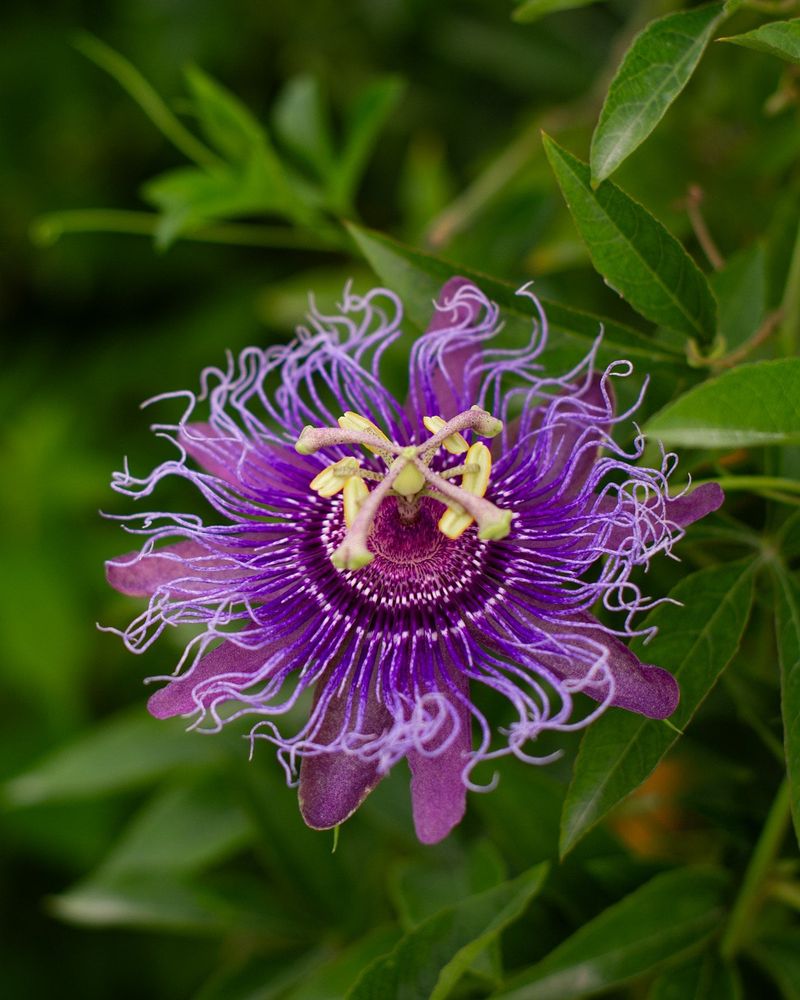
A flash of orange wings catches your eye one morning, a Gulf Fritillary flitting around an otherworldly purple flower.
That is passion vine (Passiflora incarnata) doing its thing.
This fast native truly transforms a fence in one season, sending out stems 10 to 15 feet long.
Delicate tendrils grab hold and build a dense canopy of three-lobed leaves, then the show starts.
Lavender to purple blooms, often 2 to 3 inches across, open from late spring through the first frost and act like a magnet for pollinators.
It grows happily from the Hill Country to Montgomery County in full sun to part shade, and it is genuinely drought-tolerant once established.
Good drainage matters here.
If you garden in heavy clay, work in compost before planting to save yourself headaches later.
An inch of compost each spring is usually all the feeding it needs, since too much fertilizer buys you leaves instead of flowers.
6. Lady Banks Climbing Rose Creates a Thornless Cascade
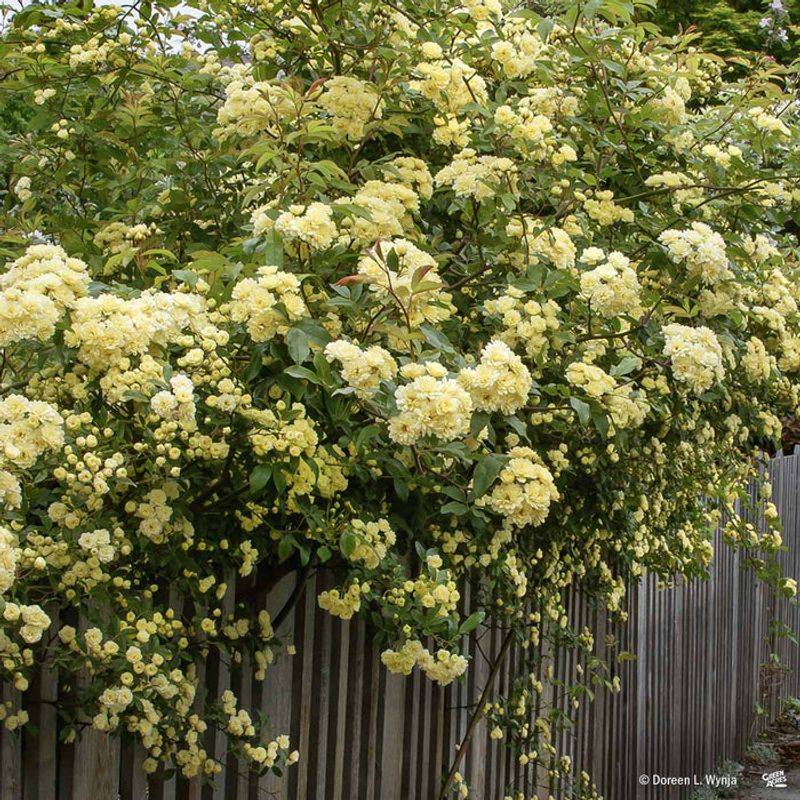
Roses have a reputation for being fussy divas, but the Lady Banks climbing rose (Rosa banksiae) breaks the mold with almost no drama.
It is thornless, too, so you will not bleed for its beauty.
This vigorous climber can reach 15 to 20 feet tall and wide in a season, quickly draping a fence or arbor.
In milder Texas climates it stays evergreen, giving you green structure through winter.
Come early spring, it erupts with hundreds of dime-sized yellow or white double blooms in a breathtaking cascade.
The popular ‘Lutea’ runs yellow, while the white form carries a light fragrance.
Give it at least six hours of full sun for the best flowering.
It accepts many soil types as long as they drain, and once settled it needs little supplemental water even through a scorching summer.
Prune right after the spring bloom to shape it, and this quiet champion keeps its manners.
7. Mexican Flame Vine Brings Fiery Orange Energy
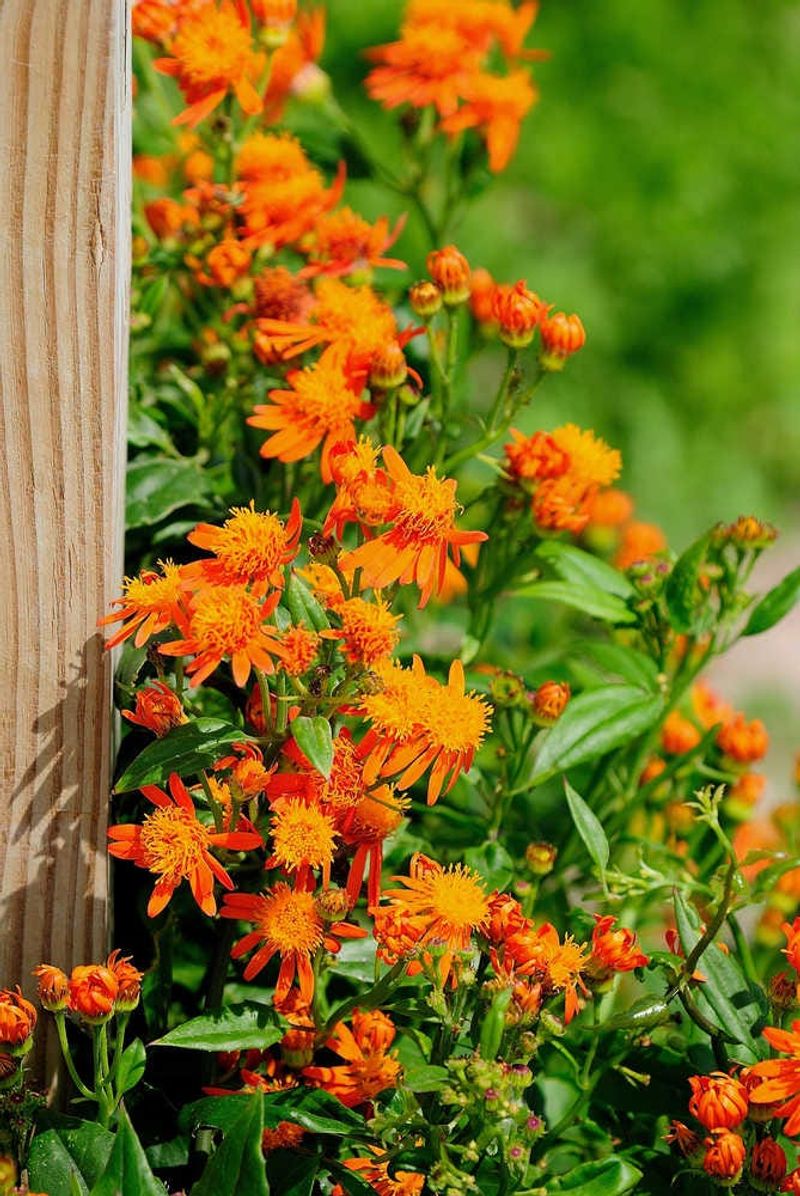
Picture a fence erupting in fiery orange, buzzing with bees and fluttering with monarchs.
That is the spectacle of Mexican flame vine (Pseudogynoxys chenopodioides), a grower that truly earns its name.
Along the Texas Gulf Coast, many gardeners find a single one-gallon plant can cover a six-foot fence in one season.
Grown as a perennial in warm zones and an annual in colder ones, its stems stretch 6 to 15 feet.
Two-inch, daisy-like orange flowers bloom from spring through fall, pumping out nectar right up to the first frost.
It wants full sun, though a bit of afternoon shade in West Texas eases heat stress and stretches the bloom.
It prefers well-drained soil and steady water, maybe weekly in extreme heat.
Be honest with yourself about your zone.
Below 30 degrees Fahrenheit it can die back to the ground, but in USDA Zone 9b and warmer it usually returns from its roots, ready to blaze again.
8. Virginia Creeper Provides Quick, Drought-Tolerant Green
Sometimes you just need green, and a lot of it, fast.
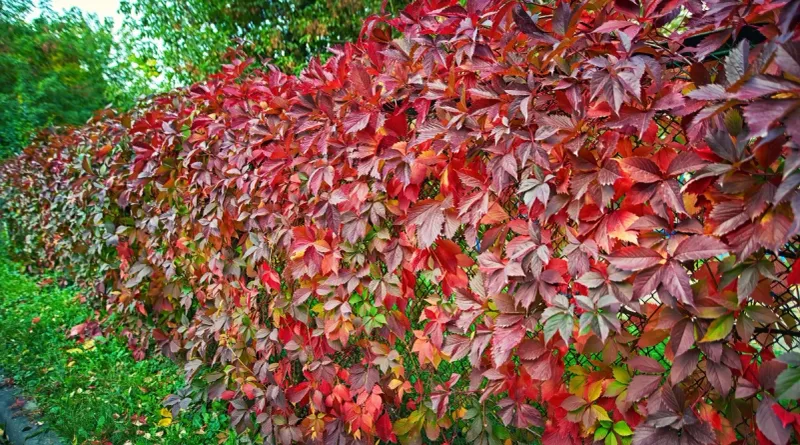
Virginia creeper (Parthenocissus quinquefolia) delivers, putting on 12 to 15 feet in its first year and reaching 30 to 50 feet at maturity.
This native woody vine grips with adhesive holdfasts, so it hides large fences and walls with a dense screen of dark green, five-lobed leaves.
Then fall arrives and the real drama begins.
Those leaves flip to brilliant red and purple across East and North Texas.
Adaptability is its superpower.
It performs in full sun to full shade and takes sandy loams or heavy clay without complaint.
Once established, it is genuinely drought-tolerant, making it a low-water pick for xeriscaping in dry West Texas.
One caution keeps it safe around the family.
Birds love the berries, but they are toxic to people and pets, so weigh that when you choose its spot.
Handle that detail, and you get fast cover plus a fall fireworks show.
9. Morning Glory Offers Classic, Speedy Charm
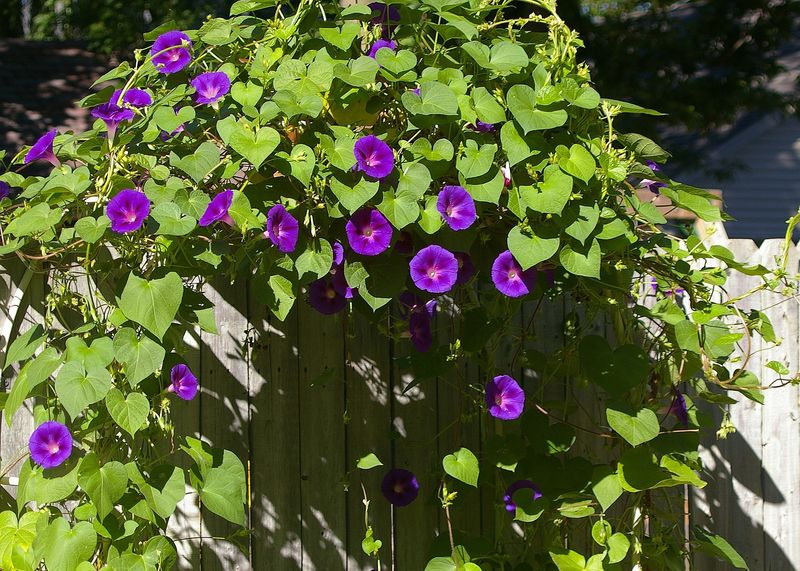
There is a timeless charm to morning glories, those trumpet flowers that unfurl with the rising sun like a fresh hello.
Common morning glory (Ipomoea purpurea and related annuals) is one of the fastest vines you can grow from seed.
From a packet, it can climb 8 to 12 feet or more in a single season.
Heart-shaped leaves and blooms in blue, purple, pink, and white quickly blanket fences, trellises, or a tumbling retaining wall.
Sow seeds right in the ground after the last frost, usually mid-spring in North Texas, spacing them about 6 inches apart.
They thrive in full sun, though they welcome afternoon shade during the brutal summers of South Texas.
Go easy on the fertilizer, since rich soil buys foliage over flowers.
Water regularly until the plants take hold.
Fair warning, morning glories self-seed aggressively, so deadheading spent blooms keeps them from wandering where you did not invite them.
10. Hyacinth Bean Vine Delivers Dramatic Purple
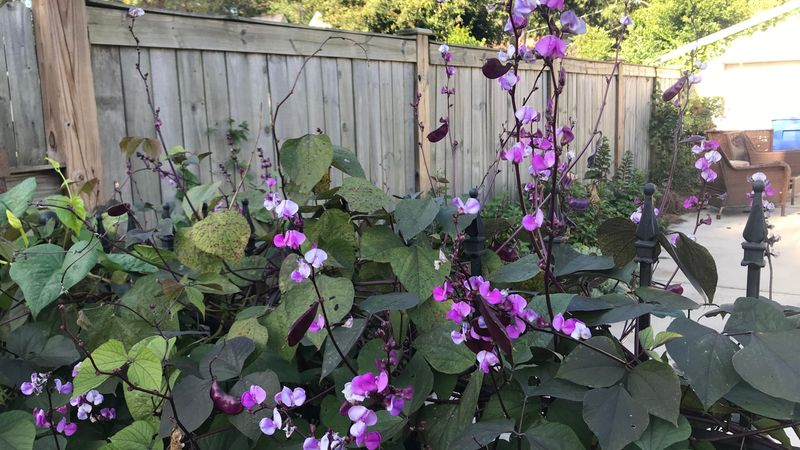
For a fence that looks straight out of a storybook, hyacinth bean vine (Lablab purpureus) is the answer.
It turns a bare stretch into a lush, dramatic wall in one warm season.
This fast annual can reach 10 to 20 feet tall, and its vigor makes it ideal for quick cover across every part of Texas.
Heart-shaped leaves, often flushed burgundy, set the stage for what comes next.
Clusters of fragrant, pea-like flowers open in white, lavender, and deep purple from early summer through fall.
Then come the shiny ruby to purple bean pods, arguably as showy as the blooms themselves.
Sow seeds directly in mid-spring, spacing them about a foot apart in full sun.
It likes well-drained soil and steady water through our hot summers, but do not drown it, especially in heavier clay.
A genuine showstopper, it hands you privacy and unusual beauty at the same time, and that is a fine way to end a fence line.