
Why North Carolina Homeowners Keep Spritzing Vinegar Around The Yard All Summer
Follow us on Google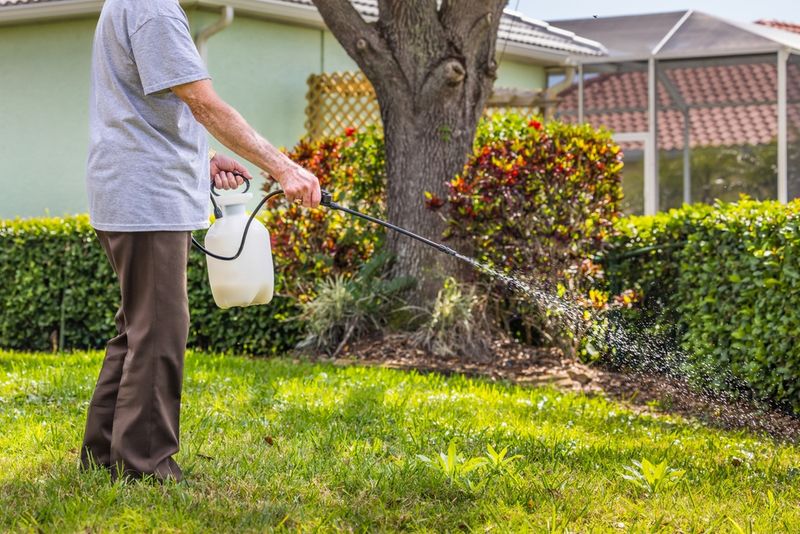
Pull up to almost any neighborhood in the Piedmont on a hot July morning and you might catch a neighbor crouched at the driveway edge, squirt bottle in hand, aiming at a crack full of tiny weeds. Vinegar is cheap, it sits right there under the kitchen sink, and within an hour those little green sprouts look convincingly dead.
That quick visible result is the whole story, and it is a much narrower story than most people expect. Before you fill a spray bottle and head outside, it helps to know exactly what vinegar can and cannot do in a North Carolina yard.
A Hardscape Habit, Not A North Carolina Trend
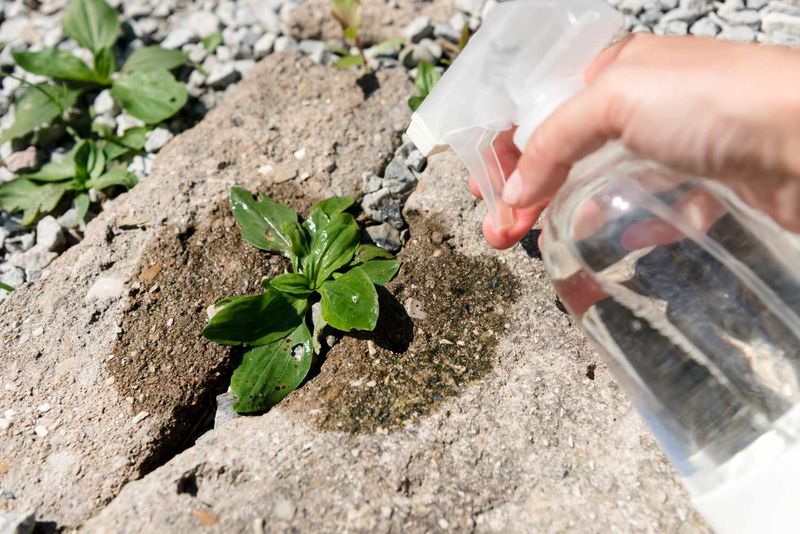
Grab a bottle of vinegar and aim it at a driveway crack, and you will likely see results fast. That quick browning is the reason some homeowners may reach for it during the growing season, when weeds seem to push through every seam in the concrete almost overnight.
What the available evidence does not tell us is how many North Carolina homeowners actually do this, or whether it happens all summer long. There is no survey or extension data measuring how common the practice is, so framing it as a statewide trend would overstate things considerably.
What the research does support is a narrow, specific use. The National Pesticide Information Center explains that acetic acid, the active ingredient in vinegar, works as a contact herbicide, damaging the green tissue it touches and causing rapid drying and browning.
It does not move through the plant to the roots, and it does not stop new weed seeds from sprouting. That makes it a short-term surface treatment, not a season-long solution.
The spots where this approach makes the most sense are driveway cracks, sidewalk edges, gravel paths, and other places where you want zero vegetation. NC State Extension guidance on nonselective herbicides recommends carefully directed spot treatments in exactly these kinds of locations, where there are no desirable plants nearby to catch stray spray.
Some people also spritz vinegar hoping it will keep mosquitoes or ticks out of the yard entirely. NC State’s mosquito-control guidance does not list vinegar among proven yard treatments, and Iowa State Extension’s tick resource makes clear that outdoor sprays generally do not effectively repel ticks.
The treatment location, the target weed, and the product label matter far more than the pantry appeal of using something you already own.
Acetic Acid Burns What It Touches
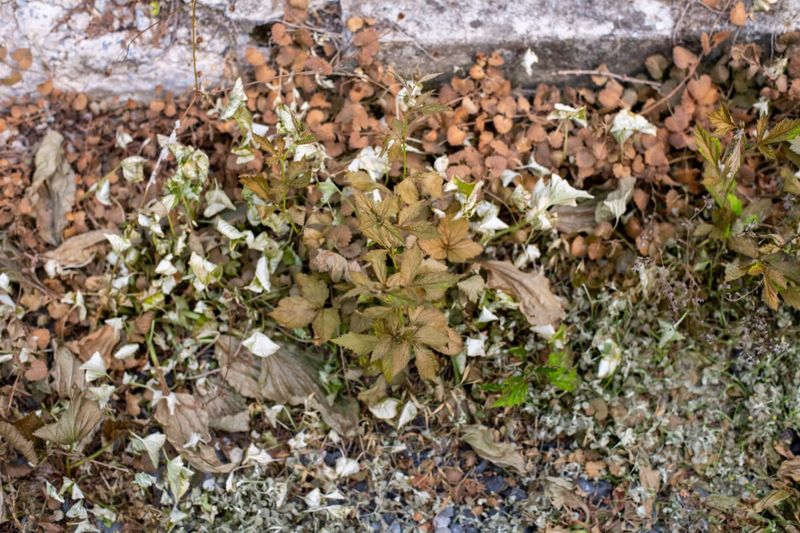
Acetic acid is not subtle. The moment it lands on a leaf, it begins breaking down cell membranes and pulling moisture out of the tissue.
Within hours, especially on a warm Piedmont afternoon, green leaves shrivel and turn brown in a way that looks thoroughly decisive. The chemistry is genuinely fast, and that speed is a big part of why the practice catches on.
Here is where it gets tricky, though. According to NPIC, acetic acid works only where it lands.
It is a contact herbicide, not a systemic one, meaning the chemical does not travel down through stems into roots or underground tissues. The weed may look completely finished on the surface while its root system sits untouched below the soil.
Vinegar is also nonselective, which is the part that surprises people most. It does not distinguish between the weed you are targeting and the lawn grass, azalea, hydrangea, or dogwood three inches away.
NC State’s Extension Gardener Handbook on weeds notes that nonselective herbicides can injure or kill desirable plants if spray contacts their green tissue, including flowers, vegetables, shrubs, and young trees.
NC State’s nonselective herbicide guidance recommends these products only for carefully directed spot treatments or places where no vegetation is wanted at all. A squirt bottle aimed at a sidewalk seam is one thing.
A broad sweep across the lawn or a planting bed is something very different, and the same acid that browns a weed will brown your favorite garden plants just as efficiently.
Small Annual Broadleaf Weeds Offer The Best Odds
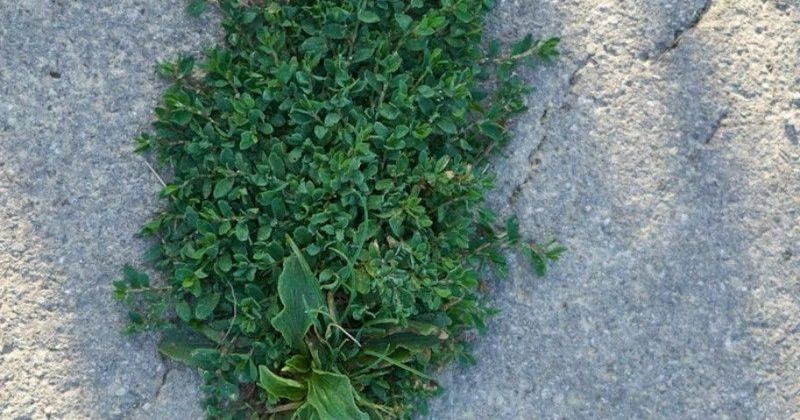
Vinegar is not equally useful against every weed in the yard. The realistic sweet spot is a small, actively growing annual broadleaf weed with only a few leaves, sitting in a hardscape seam or gravel area where it has nowhere to hide.
Think of a tiny purslane sprout or a young chickweed poking through a driveway crack in May, still only an inch or two tall. That is the target where contact treatment has its best shot.
University of Maryland Extension research on vinegar as an alternative to glyphosate found that small annual broadleaf weeds generally responded better than grasses, tap-rooted weeds, and established perennial weeds. Larger, more mature plants may show top burn and then push new growth back up from the roots within a week or two.
The browning looks convincing, but the plant is not actually gone.
Grasses present a particular challenge. Even young grass seedlings may respond less reliably to acetic acid than small broadleaf annuals, and established grass can recover after top-kill because its growing points sit at or below the soil surface.
If you are dealing with a grassy weed problem in a hardscape area, vinegar may produce inconsistent results depending on the species and its stage of growth.
A USDA study on acetic acid as a weed management tool found that control varied by species, growth stage, concentration, and spray volume. Those results reflect controlled research conditions, not a universal recipe you can replicate in a backyard.
Mature dandelions, poison ivy, nutsedge, and established perennial weeds are genuinely poor targets. NPIC reinforces that vinegar does not move to underground tissues, which means any weed with a substantial root system has a strong chance of coming back.
Brown Leaves Do Not Prove Dead Roots
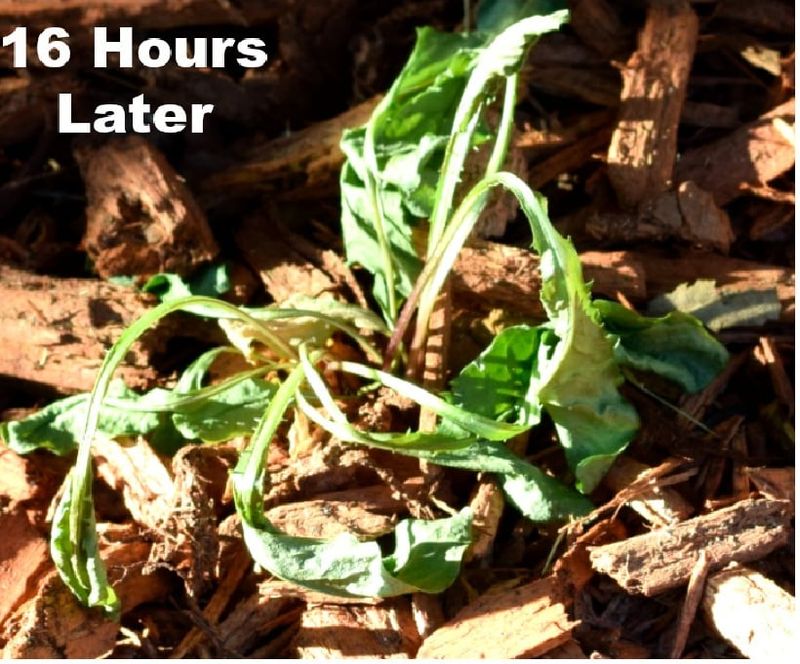
A weed can look completely dead within a few hours of being sprayed on a hot North Carolina summer day. The foliage collapses, turns brown, and dries out fast, especially when temperatures climb into the 90s across the Coastal Plain or Sandhills.
That speed feels like proof of success, and it is genuinely satisfying to watch. The problem is that visible top-burn is a contact effect, not a death certificate for the whole plant.
NC State’s nonselective herbicide guidance describes vinegar-based products as contact herbicides, meaning they act on the tissue they reach rather than traveling through the plant system. For established perennial weeds and grasses, the underground portions remain alive and can push new growth back to the surface within days or a couple of weeks.
The plant essentially sheds its burned top and starts over.
Maryland Extension’s research confirms that perennial weeds and grasses commonly recover after acetic-acid treatment. Give any treated weed 10 to 14 days before deciding it is actually controlled.
If fresh green growth reappears at the base, the root system is still very much alive.
Repeated applications might seem like the logical answer, but they come with their own costs. NC State’s weed management guidance notes that reapplying a nonselective treatment increases the chance of drift reaching nearby desirable plants, raises the risk of runoff toward ponds or garden beds, and adds to your own exposure.
Spraying a perennial weed repeatedly while it keeps recovering from below is actually a losing situation, not a persistence strategy. Evaluate results honestly over time, and consider a different approach for any weed that bounces back.
Household Vinegar Is Not Horticultural Vinegar
Picking up a bottle of white vinegar at the grocery store feels like a responsible, low-risk choice. And for salad dressing, it absolutely is.
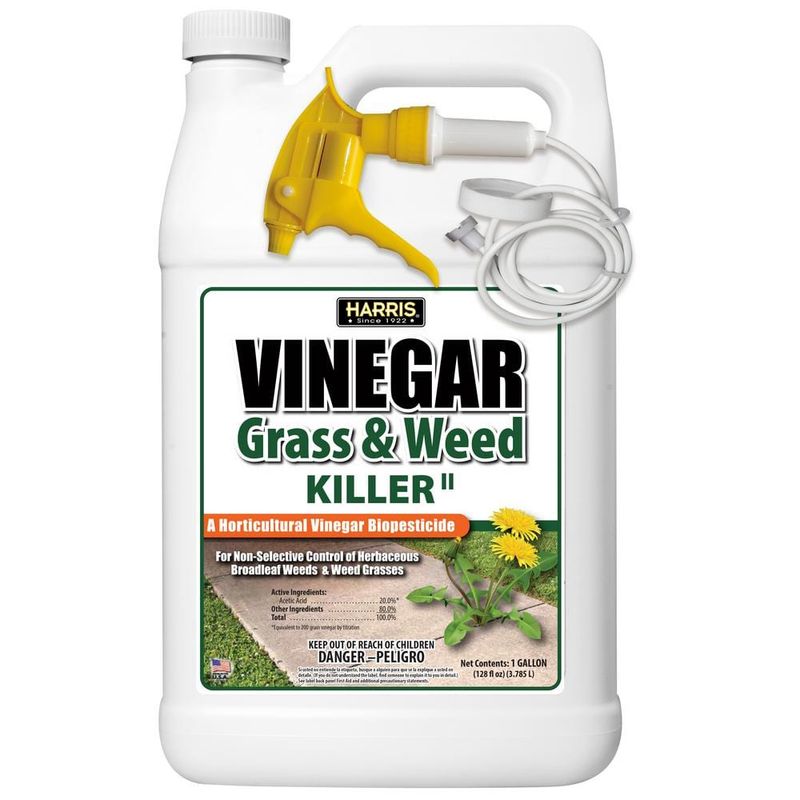
For weed control, though, that bottle occupies a different and somewhat complicated legal and practical category. Food-grade vinegar commonly contains about 4% to 6% acetic acid, which is enough to brown very small, young annual weeds under favorable conditions but falls well short of the strength that research has found most effective for weed control.
Horticultural vinegar is a different product. It typically refers to formulations containing 20% or more acetic acid, which is roughly 3 to 5 times more concentrated than what sits in your pantry.
NPIC notes that higher concentrations cause substantially greater risks to eyes, skin, and airways. Concentrated acetic acid can permanently damage the cornea, cause serious skin burns, and irritate the respiratory tract. “Natural” does not mean harmless when the concentration goes up.
EPA guidance on minimum-risk pesticides explains that acetic acid appears on lists of eligible active ingredients for certain exempt products, but a grocery-store bottle is a food product, not an automatically labeled herbicide. If you want to use acetic acid specifically for weed control, look for a product labeled for that use.
EPA’s pesticide registration guidance explains that registered products generally carry an EPA registration number along with a signal word, directions for use, personal protective equipment requirements, and first-aid information. Some qualifying minimum-risk products may be exempt from registration and may not display a registration number, so read the label carefully and follow all applicable North Carolina requirements.
The label is the legal document that tells you what the product may be used for and how to use it safely.
A Tiny Spray Area Still Needs Care
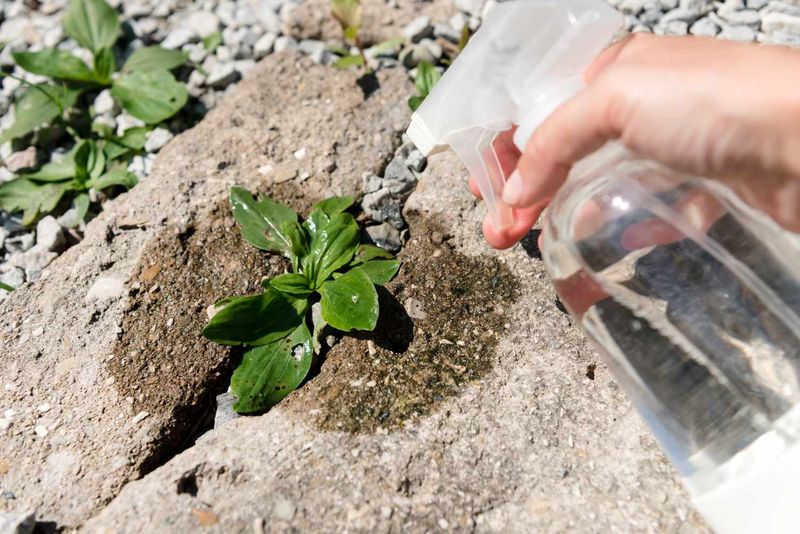
Even a squirt bottle aimed at a single sidewalk crack deserves some respect for what it contains. Acetic acid, even at household concentrations, can irritate eyes and skin on contact, and stronger horticultural products create significantly greater hazards.
Before you spray anything, read the product label completely. The label tells you what protective equipment to wear, how to store the product, what to do if someone is exposed, and when it is safe to let people and pets back into the treated area.
Wind is a genuine problem with any liquid spray. A light breeze across the Piedmont can carry fine droplets onto turf, azaleas, hydrangeas, vegetable plants, or a neighbor’s flower bed with no drama at all.
NC State research on natural acids and oils documents leaf burn, fruit spotting, and necrosis from spray drift onto desirable plants. Do not apply when wind could carry droplets, and follow whatever weather and application restrictions appear on the product label rather than defaulting to a general time-of-day rule.
Keep treatment well away from ponds, rain gardens, and drainage channels unless the label specifically permits use near water. Do not spray broadly across a lawn, into a planting bed, or along a brush line where wildlife forage.
A carefully directed spot on a hardscape crack is the appropriate scale.
Two mixing warnings deserve plain, direct language. Penn State Extension warns that adding salt to vinegar can cause salt to persist in the soil, move with runoff, and injure nearby plants over time.
Household dish detergent is formulated for dishes, not plants, and is not an appropriate additive. Most critically, CDC guidance on cleaning products makes clear that mixing vinegar with bleach can release dangerous chlorine gas.
NPIC reinforces that these combinations should never happen. Use vinegar alone, exactly as the label directs, and keep the treatment area as small as the job actually requires.
Beds And Biting Pests Need Different Tools
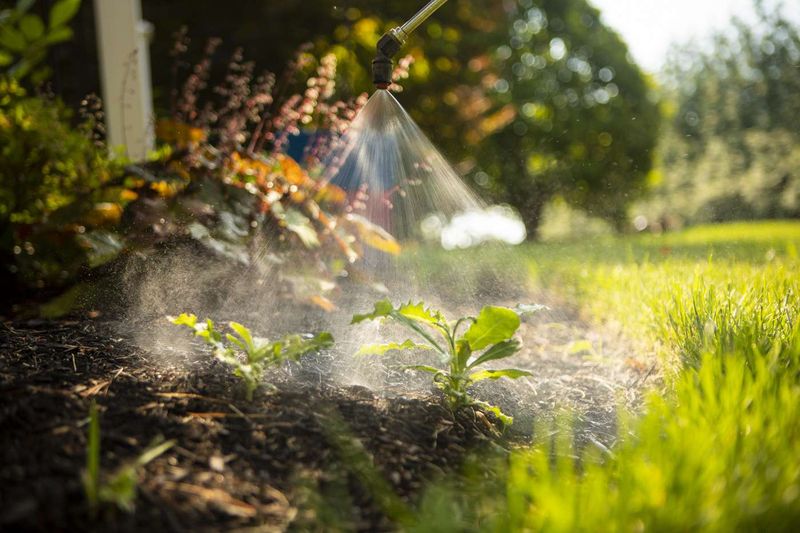
Planting beds and lawns call for a different approach than a driveway crack. Hand-pulling young weeds when the soil is slightly moist after a rain is genuinely effective, and it removes the root along with the top.
NC State’s organic gardening guidance recommends weekly scouting so weeds get pulled before they set seed. Catch them at 2 to 3 inches tall and the job takes seconds.
Mulch is one of the most practical tools available to North Carolina homeowners. NC State’s planting guidance recommends organic mulch applied about 3 to 4 inches deep to suppress annual weeds and retain soil moisture through the muggy summer months.
Dense plant spacing in beds closes the gaps where weeds establish, and NC State’s lawn care guidance notes that thick, healthy turf is one of the best defenses against weeds moving into grass areas.
Mosquito and tick concerns belong in a separate category entirely. Spraying vinegar around the yard does not create a reliable barrier against either pest.
NC State’s mosquito-control guidance focuses on removing standing water, which can produce mosquitoes in as little as 7 to 10 days, and reducing dense brush. CDC vector-borne disease prevention guidance recommends EPA-registered personal repellents and protective clothing as the proven personal protection layer.
For ticks specifically, Iowa State Extension’s tick guidance points to reducing tall grass and leaf litter as habitat management, and Penn State’s repellent guidance covers how to use EPA-registered repellents safely and check for ticks after being outside. Vinegar, where a product is actually labeled for weed control and the treatment can be carefully directed, earns its place on the hardscape edge.
The rest of the yard, and every biting pest in it, genuinely needs different tools.