
The Best Native Texas Plant Homeowners Grow Instead Of Hostas In Shade
Follow us on Google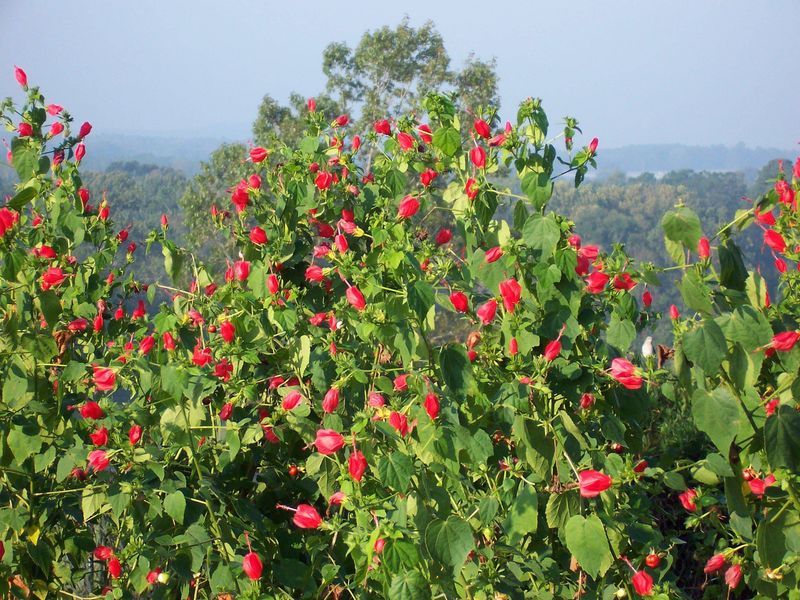
Plenty of Texas homeowners have planted hostas in a shady corner, watered them faithfully all summer, and watched the leaves turn to brown paper anyway.
The heat, the dry spells, the blazing afternoon sun that sneaks around every tree, Texas is genuinely hard on plants that were designed for cooler, moister places.
There is a native alternative that handles those conditions far better on many sites, and it blooms fire-engine red while hummingbirds fight over it.
That plant is Turk’s cap, and it might be exactly what your shaded bed has been waiting for.
A Strong Native Alternative To The Hosta Default
Calling any single plant the best shade option in all of Texas is a stretch, and this article will not make that claim with a straight face.
What the evidence does support is that Turk’s cap, botanically Malvaviscus arboreus var. drummondii, is a particularly credible native alternative for many Texas shade gardens, especially when you want flowers, wildlife action, and lower water demands after the plant gets settled in.
Turk’s cap is genuinely native to this state.
The University of Texas at Austin describes it as common to abundant in open woods across eastern, central, and southern Texas, where it can reach 3 to 6 feet tall under typical conditions and sometimes stretches to 10 feet in a particularly happy spot.
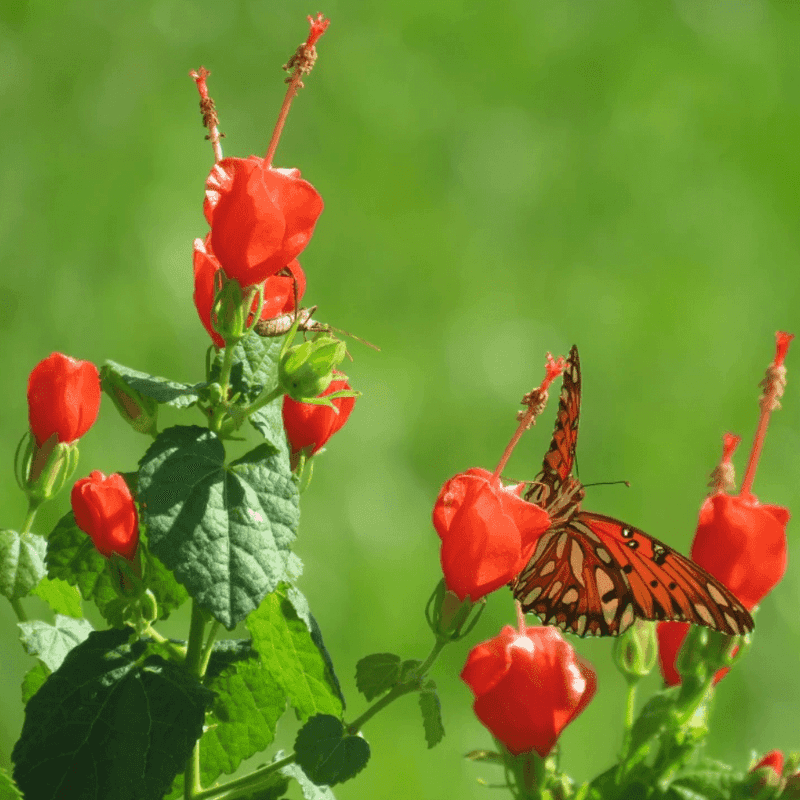
The flowers are unmistakable: bright red petals that never fully open, staying twisted into a turban shape that hummingbirds and butterflies find irresistible.
The foliage is coarse and heart-shaped, nothing like a hosta’s smooth, layered look, but bold enough to hold its own in a mixed shade bed.
Texas Tech University lists it as a native plant suited to partial shade, with shade tolerance, drought tolerance, and no serious pest problems on record.
That combination is genuinely rare in a Texas summer.
But Turk’s cap grows broad and upright, not low and tidy like a hosta clump, so think of it as a different design solution rather than a direct swap.
The plant works well as an informal hedge, a foundation anchor, or a back-of-border accent.
It does not replace careful site matching, and it does not prove that hostas are always the wrong call.
What it does offer is a native option that was shaped by Texas conditions rather than imported into them.
Why Hostas Can Struggle In Texas
Hostas are not inherently wrong for every Texas yard.
They originate from China, Japan, Korea, and the Russian Far East, and North Carolina Extension guidance confirms they can grow in southern gardens when given full or dappled shade, rich organic soil, good drainage, and consistent moisture.
Some cultivars handle more heat than others, so writing off the entire genus would be inaccurate.
The problem is that Texas stacks the deck against them on many sites.
Hostas need a winter dormant period with temperatures dropping below 40 degrees Fahrenheit for roughly a couple of months, and they prefer the kind of reliably moist, organically rich soil that does not come naturally to blackland clay in North Texas, shallow caliche in the Hill Country, or sandy, fast-draining ground in East Texas.
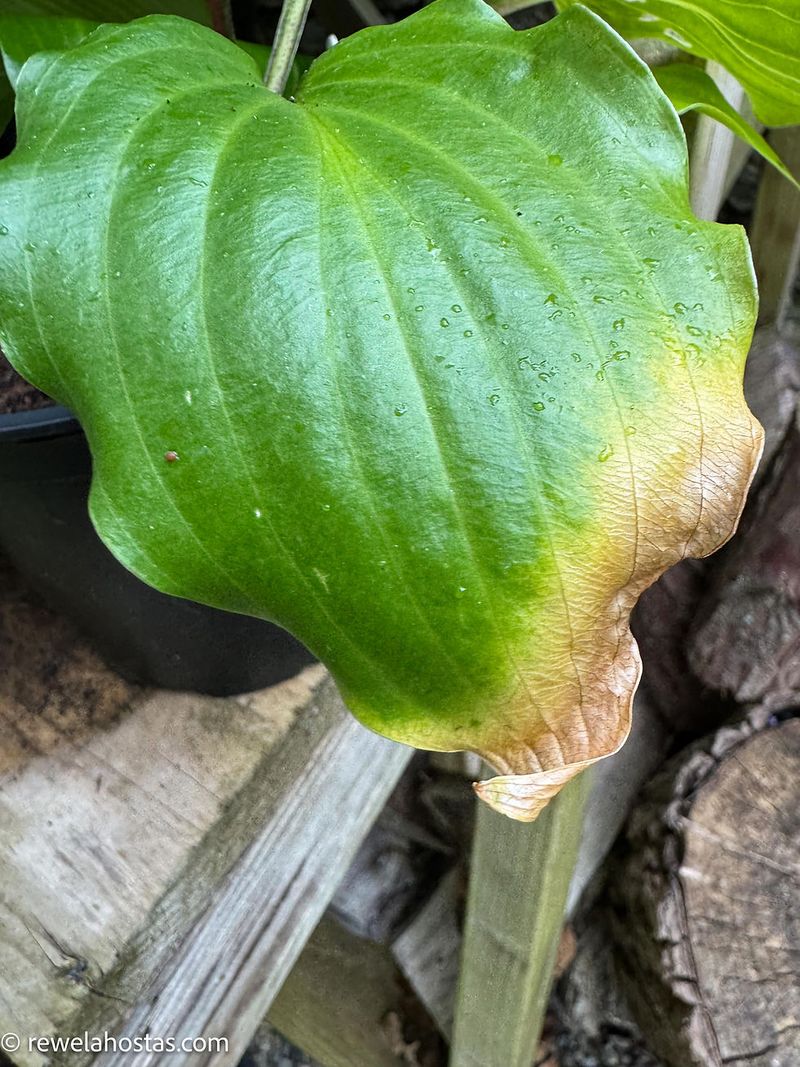
When afternoon sun finds a hosta that was supposed to be shaded, the leaf edges scorch fast, turning what was meant to be a lush focal point into a crispy disappointment by mid-July.
Maintaining a hosta through a Central Texas summer often means hauling extra water, amending soil heavily, and positioning the plant so carefully that the margin for error is thin.
That is not impossible, but it is work.
Texas A&M AgriLife Extension’s Earth-Kind guidance emphasizes matching the plant to the site rather than reshaping the site to fit the plant, and hostas often require the second approach in Texas.
The comparison with Turk’s cap is really about site adaptation and maintenance load, not about native versus nonnative as a moral argument.
If your yard can genuinely provide what hostas need, they can work.
If it cannot, you are fighting the Texas climate every single season.
Choose Partial Shade, Not A Lightless Corner
One of the most common mistakes with shade-tolerant plants is treating shade tolerance as an invitation to plant in the darkest spot available.
Turk’s cap can survive in lower light, but flowering generally improves with more available light, while some shade tends to produce better-looking, less-stressed foliage.
Those two facts pull in opposite directions, and finding the sweet spot between them is the actual job.
Texas Superstar notes that flowers are heavier in sun, while foliage looks more attractive with some shade.
Practically speaking, that means morning sun with protection from harsh afternoon sun is often a strong starting position, especially in Central Texas, the Hill Country, and North Texas, where afternoon heat can be punishing from June through September.
A spot that gets 3 to 4 hours of direct morning light and then dappled shade for the rest of the day gives the plant enough energy to bloom without cooking the leaves.
Dense shade under a solid canopy is a different situation.
Texas A&M AgriLife Extension’s shade-gardening materials distinguish between full shade, partial shade, and dense shade, and Turk’s cap is best matched to partial or dappled conditions rather than a lightless corner beneath a dense live oak canopy.
The right read of your yard matters more than any general rule.
Watch how light moves across the bed from morning to late afternoon on a clear day in late spring, when the sun angle is already climbing but the trees are still leafing out.
Texas Tech’s plant profile confirms partial shade as the recommended condition, and that guidance holds whether you are in East Texas with its filtered pine-canopy light or in a North Texas suburb where the shade is all fence and house wall.
Establish The Roots Before Relying On Drought Tolerance
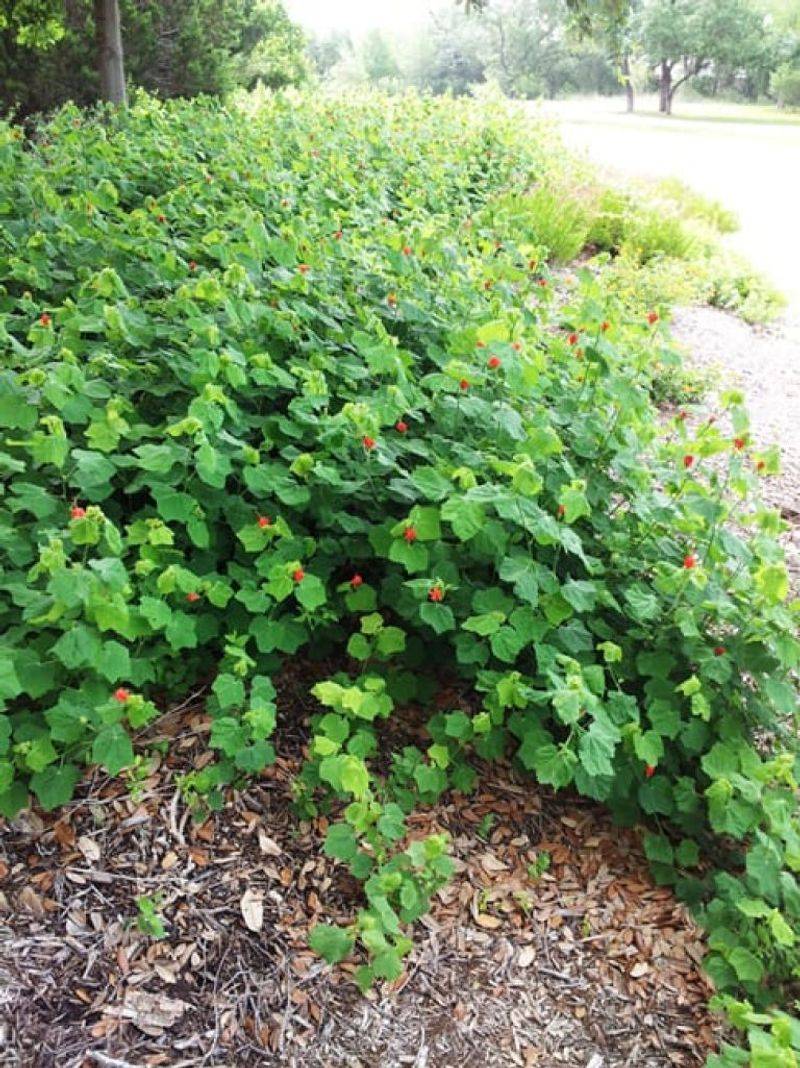
Drought tolerance is one of Turk’s cap’s most talked-about traits, and it is real, but it comes with a condition that matters a lot during the first season.
Texas Superstar describes the plant as very drought tolerant once established, and that qualifier carries serious weight in a Texas summer.
A plant that went into the ground last month is not established.
Its roots are still reaching into unfamiliar soil, and pulling water from a limited zone, so abandoning the hose too early is one of the fastest ways to lose a new planting.
Regular, deep watering during the first growing season gives the roots room to spread and anchor.
Texas A&M AgriLife Extension’s general landscape guidance recommends wetting soil to a depth of at least 6 inches and notes that roughly 1 inch of water per week is a common growing-season starting point.
Treat those figures as general orientation, not a rigid prescription.
Sandy soils in East Texas drain faster and may need checking more often, while heavy blackland clay in North and Central Texas holds moisture longer but can stay waterlogged after a downpour.
Check the soil at 2 to 3 inches deep before watering again, and adjust for rainfall, heat, wind, drainage, and any local watering restrictions your municipality has in place.
A 1-to-2-inch layer of organic mulch around the plant helps hold soil moisture and moderates soil temperature through the hottest weeks.
Keep the mulch pulled back a few inches from the stems so it does not trap excess moisture against the base, which can invite rot or pest pressure.
Once the plant has been in the ground through a full Texas summer and shows vigorous new growth, it is far better equipped to handle dry stretches on its own.
Even then, during a prolonged drought, reflected heat from a wall or fence, or an unusual heat event, even a mature plant may benefit from supplemental water.
Plan For A Broad, Upright Grower
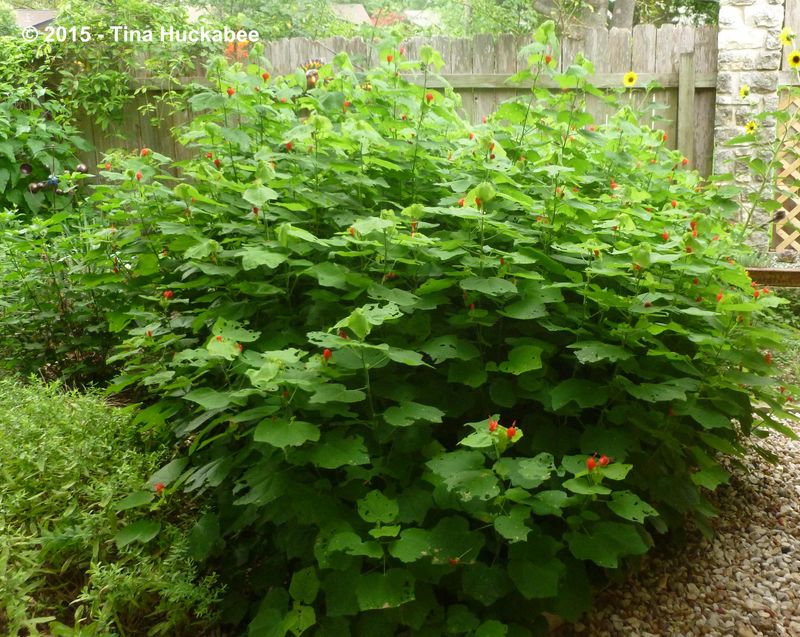
Anyone expecting Turk’s cap to sit quietly in a tidy, hosta-sized mound is in for a surprise.
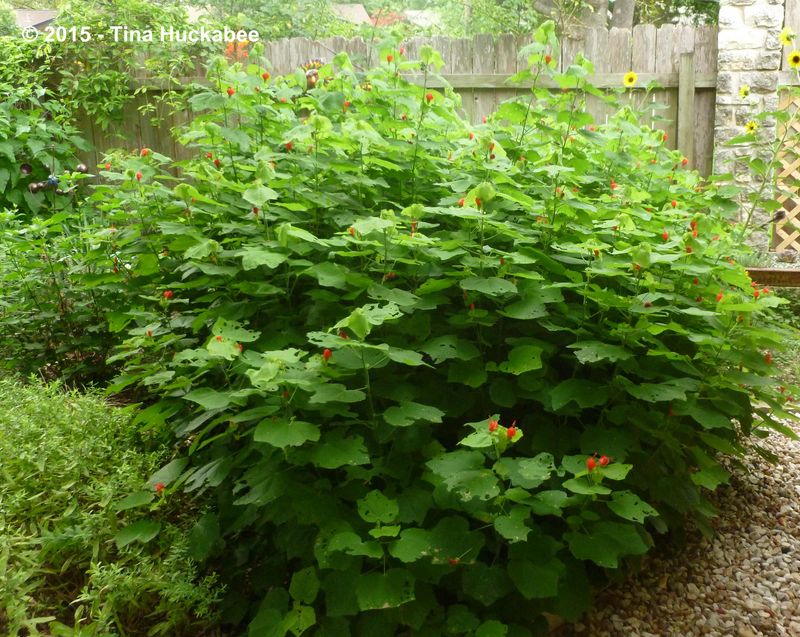
This is a broad, upright plant with real presence, and giving it enough room from the start saves a lot of pruning frustration later.
Texas Tech’s profile gives a typical height of 2.5 to 3.5 feet and a spread of 3 to 5 feet under standard conditions.
Texas Superstar reports a larger mature range of 3 to 6 feet in both height and spread, and the University of Texas at Austin notes it can reach 10 feet in favorable conditions.
The honest answer is that size depends heavily on soil richness, water availability, and how much sun the plant receives.
Plan for at least 3 feet of lateral clearance for a smaller planting, and allow considerably more if the site is fertile, regularly irrigated, or in a warmer part of the state where growth runs long.
Crowding it against a walkway edge or a foundation corner is a setup for constant pruning.
Better uses include an informal hedge along a back fence, a foundation anchor at a corner where there is room to spread, or a back-of-border accent that gives shorter plants something bold to grow in front of.
Pruning tall or sprawling stems encourages denser, more compact growth and keeps the plant looking intentional rather than rangy.
Do that in late winter or early spring before new growth emerges.
Turk’s cap also spreads by sending up basal suckers from the root zone, and those new shoots can quietly double the plant’s footprint over a few seasons.
Removing them while they are small and easy to pull is much simpler than digging out an established clump that has taken over a bed corner.
Let Your Texas Region Set The Winter Expectation
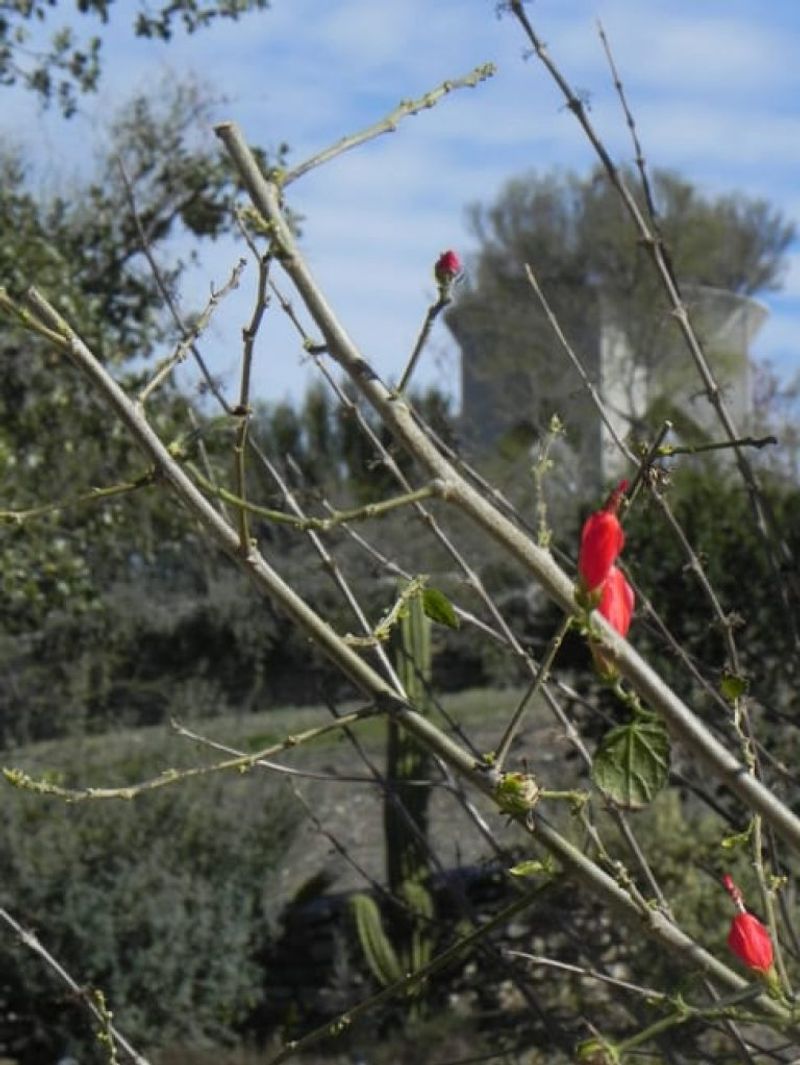
Texas does not have one winter.
The Panhandle can drop into the single digits during a hard freeze, while Brownsville and the Lower Rio Grande Valley rarely see a frost at all.
That range matters enormously for how Turk’s cap behaves between December and March, and expecting the same performance statewide sets some gardeners up for disappointment.
Texas Superstar lists Turk’s cap as root-hardy across most of Texas and gives a hardiness range of USDA Zone 7b through 11.
In South Texas and warmer coastal areas, the plant is more likely to maintain persistent above-ground growth through winter and behave as a true perennial year after year.
In colder North Texas locations, particularly in zones 7b and 8a, above-ground stems can die back completely after a hard freeze, leaving the plant to re-emerge from the roots once soil temperatures warm in spring.
That is not failure; it is just how the plant behaves in those conditions.
The roots typically survive, but the growing season effectively shortens.
The USDA Plant Hardiness Zone Map provides location-specific zone data, and checking your actual zone rather than assuming a regional average gives you a more accurate picture of what to expect.
A garden in the Hill Country at higher elevation may behave more like North Texas than like San Antonio even if the two are not far apart by road.
Soil conditions across the state vary just as much as the climate does.
Texas A&M AgriLife Extension emphasizes that Texas differences in temperature, rainfall, topography, and soil make site-specific assessment essential.
Check drainage before planting, amend where genuinely needed based on what the soil test shows, and resist the urge to apply a single statewide soil recipe to a state that spans four distinct soil regions.
Make The Choice By Matching The Site
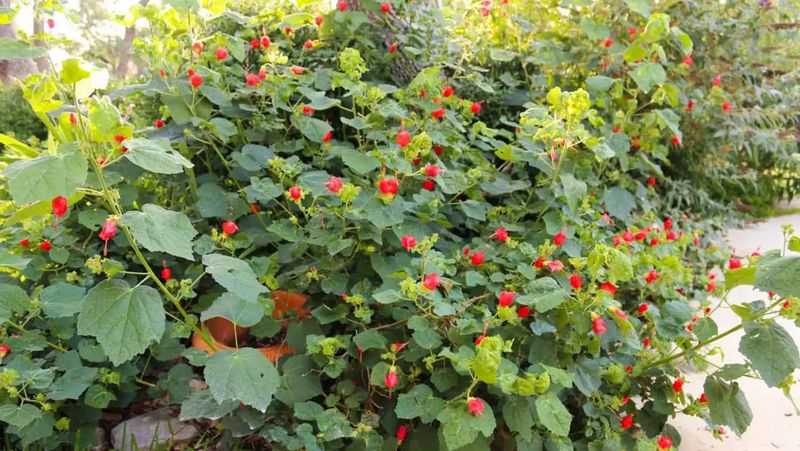
The decision comes down to one practical question: does the site actually fit the plant.
Turk’s cap makes real sense when you have partial or dappled shade, enough room for a plant that may spread 3 feet or more in each direction, and the ability to water consistently through at least one full growing season while the roots establish.
If those three conditions are present, you have a strong starting position.
Texas A&M AgriLife Extension’s Earth-Kind guidance makes the broader point clearly: native plants are not automatically maintenance-free.
The benefit of choosing a native is strongest when the plant goes into conditions that resemble its natural adaptation.
Put a plant documented for partial shade and Texas heat into full blazing sun with compacted clay and no supplemental water, and it will struggle just as badly as anything else.
Texas Superstar’s assessment captures what makes Turk’s cap worth considering: adaptable, attractive to wildlife, capable of handling Texas heat once it is settled, and genuinely native to the landscape where it will grow.
That combination is harder to find than it sounds.
The headline’s promise holds, as long as you read it as a strong option for many Texas shade gardens rather than a guaranteed winner on every lot in every county.
Hostas are not universally wrong, and Turk’s cap is not universally right.
The yard that suits one may not suit the other.
A plant chosen to match the actual site, the real light, the honest soil, and the realistic watering routine, that is the one most likely to still look good by August.
And in Texas, August is the whole argument.