
Texas Rat Snake: The Barn Predator That May Quietly Reduce Your Rodent Problem
Follow us on Google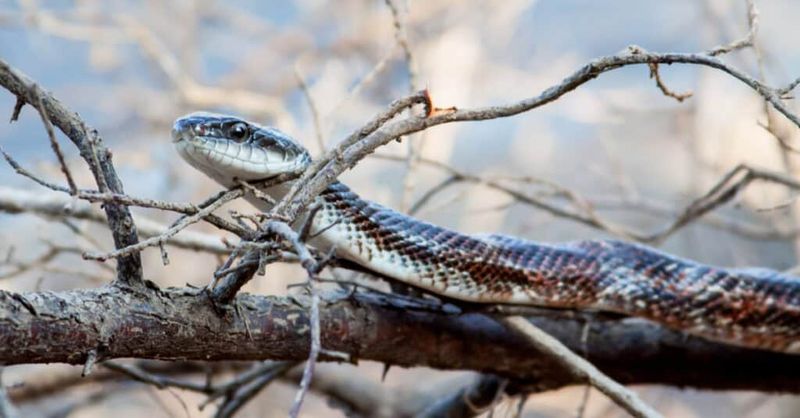
Walk into your barn on a cool morning and you might spot a long, dark shape sliding along a rafter overhead.
That is likely a Texas rat snake, and it is not there by accident.
These big nonvenomous climbers turn up in feed rooms, sheds, and outbuildings across the eastern two-thirds of Texas because wherever grain and hay gather, mice and rats follow.
Understanding what this snake actually does, and what it cannot do, helps you make smarter choices about rodent control on your property.
Meet Texas’s Likely Barn Predator
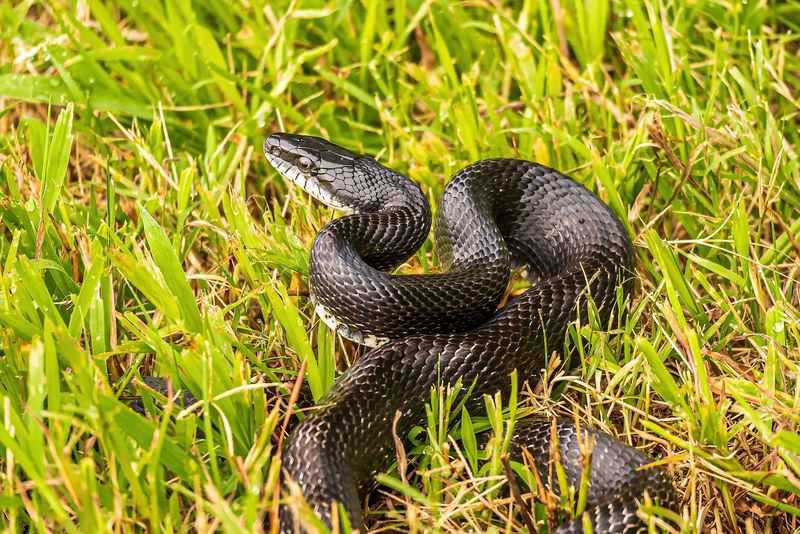
Spot a thick, dark snake working its way along a fence post or disappearing into a gap near your feed room, and there is a good chance you are looking at a Texas rat snake.
Known more broadly as the western rat snake, Pantherophis obsoletus, this is one of the most common large nonvenomous snakes in the eastern two-thirds of Texas, and it shows up regularly in barns, sheds, garages, and other outbuildings.
Size alone sets this snake apart from most backyard visitors.
Texas Parks and Wildlife reporting on rat snake biology puts typical length at about 3.5 to 6 feet, with some individuals exceeding 7 feet.
Adults often appear dark gray to black with faint blotching, though younger snakes carry a more distinct pattern.
The belly is flattened and the lower scales project slightly outward, giving the snake a grip that lets it climb trees, rough walls, cliffs, and rafters with surprising ease.
That climbing ability is part of what makes this animal a plausible barn predator.
Its documented diet includes rodents, birds, eggs, and other small mammals, so a Texas rat snake working through a structure has genuine opportunity to encounter mice and rats.
Texas Parks and Wildlife identifies it as a nonvenomous predator of rodents, and its range covers much of East Texas, Central Texas, the Gulf Coast, and into North Texas.
Calling it a barn predator is accurate as a general description.
Calling it a guaranteed rodent-control system is a different claim entirely, and the evidence does not quite go that far.
Think of it as a useful ecological presence rather than a hired hand you can count on to clock in every morning.
What The 190-Mice Claim Really Shows
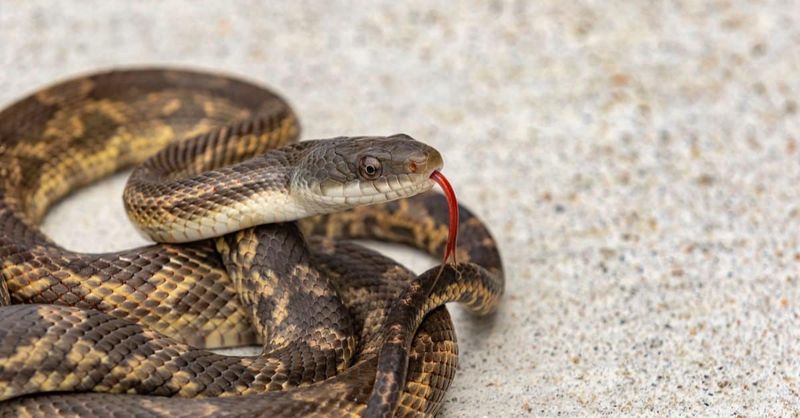
You have probably seen the number somewhere online: one rat snake eats up to 190 mice a year.
It gets shared in gardening groups, quoted in articles, and posted alongside photos of snakes draped over fence posts.
The figure sounds specific enough to be scientific.
The problem is that no reliable Texas study or species-specific feeding record actually backs it up.
Here is where the number appears to come from.
Secondary gardening media including the Old Farmer’s Almanac repeat the claim in discussions of beneficial reptiles, but the underlying government source is an Illinois Department of Natural Resources page on snakes that says medium and large snakes can consume up to 9 pounds of rats and mice per year.
That statement does not say 190 mice.
It does not refer specifically to Texas rat snakes.
And it counts rats alongside mice, which matters because a rat weighs several times more than a mouse.
Converting 9 pounds of mixed rodents into a precise mouse count is not something the source supports.
What the Illinois figure does tell you is that a large snake can remove a meaningful weight of rodents over time.
That is a genuinely useful ecological fact, even if it cannot be pinned to a single species in a single Texas county with a single tidy number.
The honest version of the claim is this: a Texas rat snake may consume substantial numbers of rodents, but actual consumption depends on the individual snake, the prey it encounters, and how available that prey happens to be.
Body size, the mix of mice versus rats versus other animals, and simple opportunity all shape what any given snake eats in a year.
The 190-mice figure works as a memorable hook, not as a verified annual average you should plan around.
Bullsnakes Add A Regional Texas Perspective
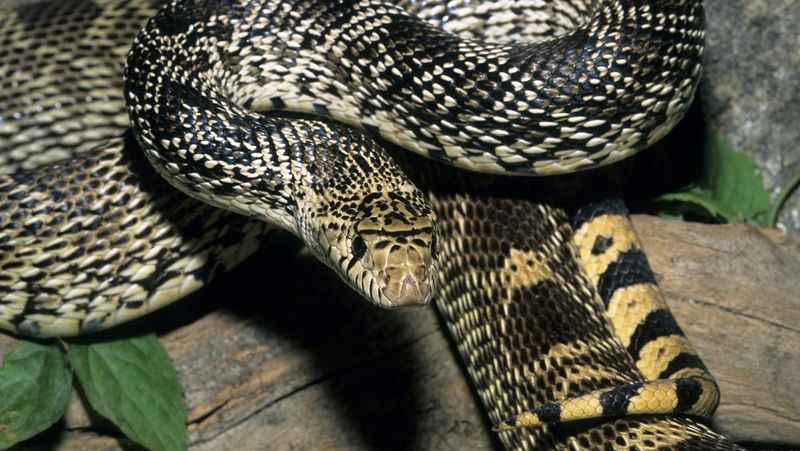
Anyone writing about Texas barn snakes and stopping at the Texas rat snake is only telling part of the story.
Texas is a big state with dramatically different landscapes, and the snake most likely to be working the rodent population in your outbuilding depends heavily on where in Texas you actually live.
In the Panhandle and much of West Texas, the animal filling that ecological role is often a bullsnake.
Texas Parks and Wildlife’s bullsnake species page describes these snakes as eating quantities of mice, cotton rats, gophers, and other small mammals.
They are common throughout Texas except for the extreme eastern portion of the state and the extreme western Trans-Pecos region.
Adults typically run 3 to 5 feet, though larger individuals turn up regularly.
Bullsnakes and Texas rat snakes are both nonvenomous, both active predators, and both capable of showing up in a barn or shed.
The geographic split matters because a homeowner in Amarillo or Lubbock is far more likely to encounter a bullsnake than a Texas rat snake, while someone in Nacogdoches or Beaumont is more likely to see the reverse.
Central Texas and North Texas sit in a zone where either species could reasonably appear depending on the specific habitat.
Presenting bullsnakes as an additional regionally relevant example is not the same as saying they are more effective predators.
No comparative study in this research supports that kind of ranking.
The practical takeaway is simpler: if you see a large nonvenomous snake near your barn in Texas, the species depends on your region, and both of these animals are worth understanding rather than fearing.
A Snake Sighting May Point To Hidden Rodents
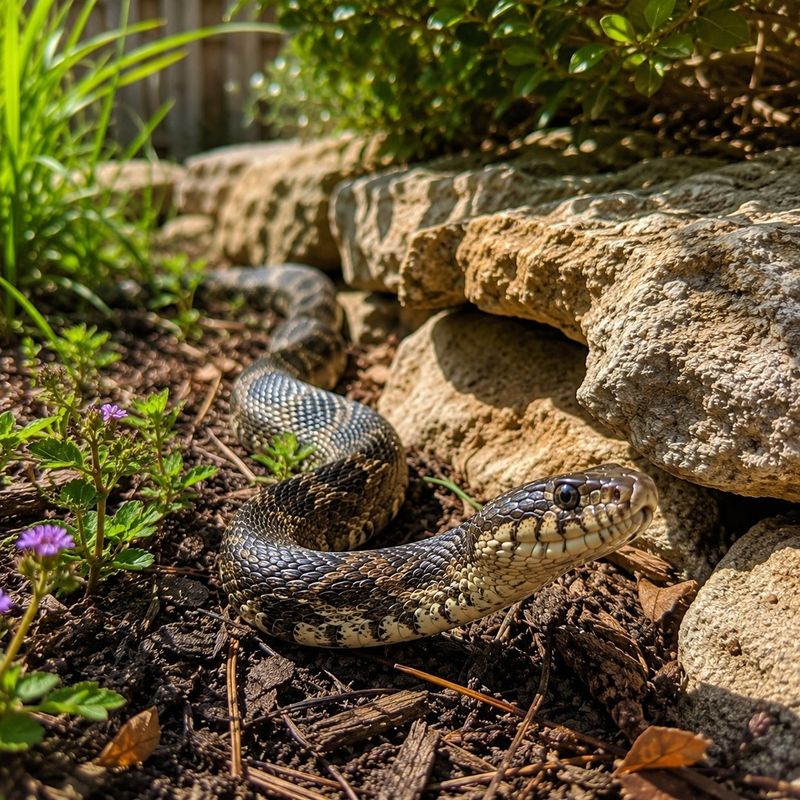
Finding a snake inside your barn is not the end of the story.
In many ways it is the beginning of the inspection you probably should have done already.
Texas Parks and Wildlife notes that rat snakes and gopher snakes are attracted to properties with meadow voles, deer mice, cotton rats, and similar small rodents, and that snakes may enter barns and other buildings because of rodents, insects, and cool dark shelter.
So a snake near your feed room is a signal worth taking seriously.
Grab a flashlight and look for droppings, which are small dark pellets often found along walls and near food sources.
Check for greasy rub marks left by rodents traveling the same path repeatedly.
Look for gnaw marks on wood, plastic feed containers, or cardboard.
Texas A&M AgriLife Extension’s rodent management guidance identifies droppings, tracks, gnaw marks, greasy runways, burrows, and damage to hay or containers as the most useful signs of an active infestation.
What the snake sighting does not confirm is that the problem is already solved.
A Texas rat snake may provide some rodent suppression as it moves through a structure, but it might also be hunting outside, resting in the cool dark, or passing through entirely.
Wildlife services rodent management resources from AgriLife reinforce that rodent populations can sustain themselves even when predators are present, because mice and rats reproduce quickly and use spaces a snake simply cannot reach.
Treat the sighting as a prompt for action, not a reason to relax.
The snake may be helping, but your inspection is what tells you whether the rodent situation is actually under control.
Build The Rodent-Control System The Snake Cannot Provide
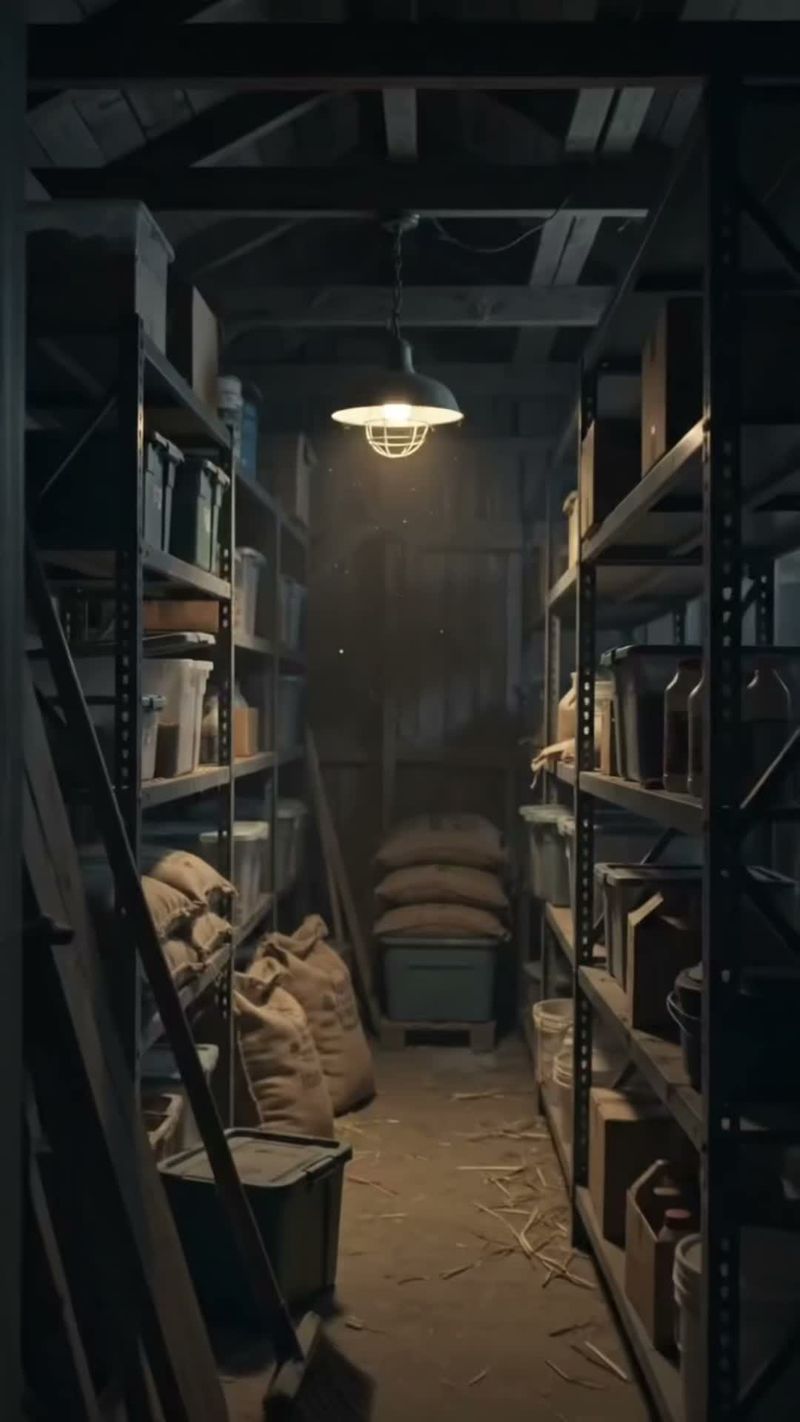
A snake passing through your barn is a welcome visitor, not a substitute for actual rodent management.
The food, shelter, and access that sustain a mouse population will keep sustaining it long after any snake moves on.
Building a real layered system is what actually keeps numbers down.
Start with food storage.
Grain, livestock feed, pet food, and seed should go into thick plastic, metal, or glass containers with tight-fitting lids.
Texas A&M AgriLife Extension’s managing rats and mice resource makes clear that accessible food is the single biggest driver of rodent activity around outbuildings.
Clean up spilled feed the same day it happens.
Keep trash in covered bins and move it away from barn entrances.
Next, seal the building.
CDC guidance on rodent exclusion states that mice can squeeze through a hole about one-quarter inch, roughly 6 millimeters, wide.
That is smaller than a dime.
For small gaps around pipes, conduit, and baseboards, push steel wool into the opening and cover it with caulk.
For larger openings around doors, vents, eaves, and foundation gaps, use hardware cloth with openings no larger than one-quarter inch, sheet metal, cement, or similar rigid materials.
Check the roofline too, because a Texas rat snake climbing your walls is following the same routes mice use.
Then add traps.
AgriLife Extension trapping guidance recommends placing snap traps along active travel routes, most often directly beside walls and in corners where fresh droppings or greasy rub marks show current activity.
Check traps every 24 hours and reset them promptly.
AgriLife wildlife services rodent resources note that properly placed trapping can be as effective as rodenticides when you follow the fresh signs and stay consistent.
Food storage, exclusion, and trapping together form the dependable foundation.
A snake working your property is a useful addition to that system, not a replacement for any part of it.
Respond To An Unidentified Snake Without Handling It
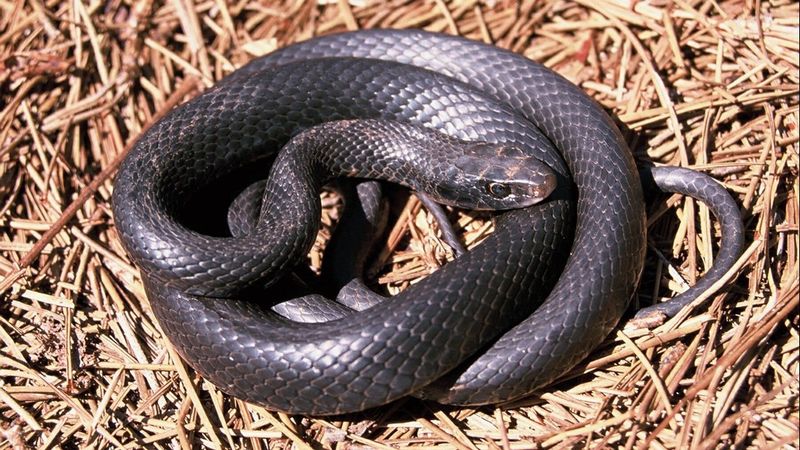
Nonvenomous does not mean harmless to pick up.
A Texas rat snake that feels cornered will hiss, may strike, can vibrate its tail rapidly against dry leaves or debris to mimic a rattlesnake sound, and will release a foul-smelling musk if grabbed.
Texas Parks and Wildlife’s coverage of rat snake behavior describes exactly these defensive responses, and their safety guidance is consistent: do not handle an animal unless you can identify it with certainty.
Here is where identification gets genuinely tricky.
Many people believe they can tell a venomous snake from a nonvenomous one by looking at head shape.
Texas A&M’s snake identification guidance for wildlife professionals specifically warns against this approach, noting that there is no single characteristic shared by all venomous Texas snakes.
A defensive nonvenomous snake can flatten and widen its head to look more triangular, and pit openings on pit vipers are difficult to observe safely from any reasonable distance.
Texas has four broad groups of venomous snakes that every homeowner should know exist: rattlesnakes, copperheads, cottonmouths, and coral snakes.
Texas Parks and Wildlife’s nongame wildlife FAQ confirms that most Texas snake species are not venomous, but that does not mean an unfamiliar snake is automatically safe to approach.
The practical response to any snake you cannot confidently identify is straightforward.
Keep people and pets away from it.
Give it space and time to move on its own.
Most snakes that enter a structure will leave the same way they came in if they are not cornered or threatened.
If the snake is inside your home, near children, or in an active livestock area, TPWD’s wildlife guidance recommends contacting a qualified local wildlife or snake-removal professional rather than attempting to capture or relocate it yourself.
Value The Predator Without Making It The Plan
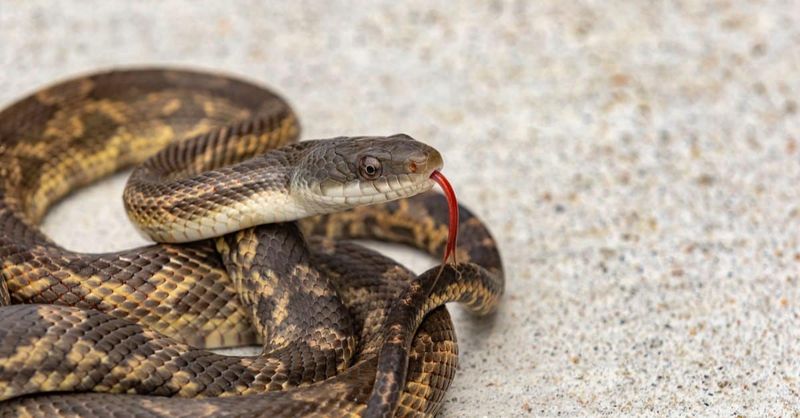
A wild snake working your property is genuinely useful, and it costs you nothing.
Rodents it encounters along its path are rodents your traps do not have to catch.
That is a real contribution, and it deserves acknowledgment.
What it does not deserve is the kind of trust you place in a sealed feed bin or a properly set snap trap.
A Texas rat snake cannot be assumed to stay on your property, eat only mice, or eliminate an established infestation.
Rodents reproduce fast, hide in wall voids and burrow systems no snake can reach, and exploit any food or shelter source left available.
The snake is one layer in a broader approach, and the other layers need to be solid.
Rodenticide use deserves a careful look in this context.
EPA’s pesticide safety review for rodenticides identifies reptiles among the nontarget wildlife that can experience secondary exposure by consuming poisoned rodents.
Pets face similar risks.
If you use a rodenticide, follow the product label and bait-station requirements exactly, place stations where nontarget animals cannot access them, and consider whether Texas A&M AgriLife’s integrated rodent management approach using exclusion, sanitation, and trapping can handle the problem first.
Texas A&M’s integrated pest management principles frame the best rodent control as a system: secure food storage, sealed entry points, active monitoring, and well-placed traps working together.
CDC rodent exclusion guidance reinforces that physical exclusion is the most durable single step you can take.
One more thing worth knowing.
Texas Parks and Wildlife and TPWD’s habitat FAQ both note that brush piles and rock piles attract snakes, and both recommend keeping such materials away from walkways, doorways, and areas where snakes are not wanted.
Do not build habitat features beside barn entrances, porches, play spaces, or livestock areas hoping to recruit a snake as a rodent patrol.
The snake you attract may not be the one you expected, and the habitat you create serves the rodents just as well as it serves any predator.