
The Florida Native Edibles That Look Like Landscaping But Feed You Every Season
Follow us on Google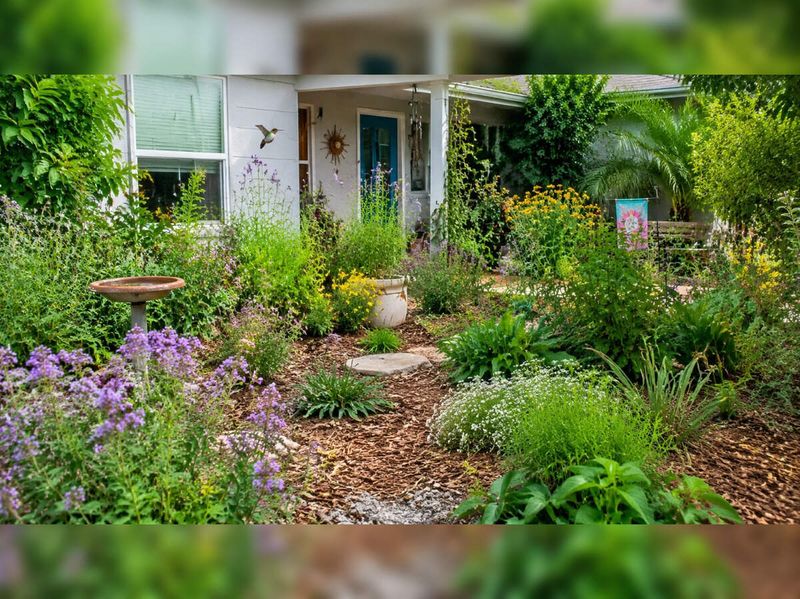
You step onto the patio after breakfast and the air already feels heavy, promising another long, bright Florida day.
That green hedge across the yard has always looked good, but what if it could do more than just sit there and look pretty?
Some of Florida’s toughest native plants quietly grow food while pulling double duty as landscaping.
This is not about tearing everything out for a vegetable patch.
It is about letting the yard you already have feed you a little through every season.
1. Your Landscape Can Do More Than Just Look Good
Many Florida homeowners plant a hedge, admire it for years, and never once think of it as a food source.
But some of our most beautiful natives are quietly generous.
They stand tall, bloom bright, or form dense green walls, looking every bit like ordinary landscaping while offering an actual harvest.
The surprise is that edibles do not have to live in a separate raised bed.
That evergreen shrub with glossy leaves might drop fruit you can turn into jelly.
The sprawling vine on your fence could be hiding a native delicacy you walk past every day.
These plants were built for Florida, the humid summers, the intense sun, the sudden downpours that dump 2 inches in an hour.
Once established, they usually need less water and fewer chemicals than fussy non-natives.
So you get a landscape that looks sharp, feeds pollinators, and slips a few ingredients into your kitchen.
That is genuinely a better deal than a hedge that only ever asks for trimming.
2. Cocoplum Hides Sweet Fruit In A Coastal Hedge
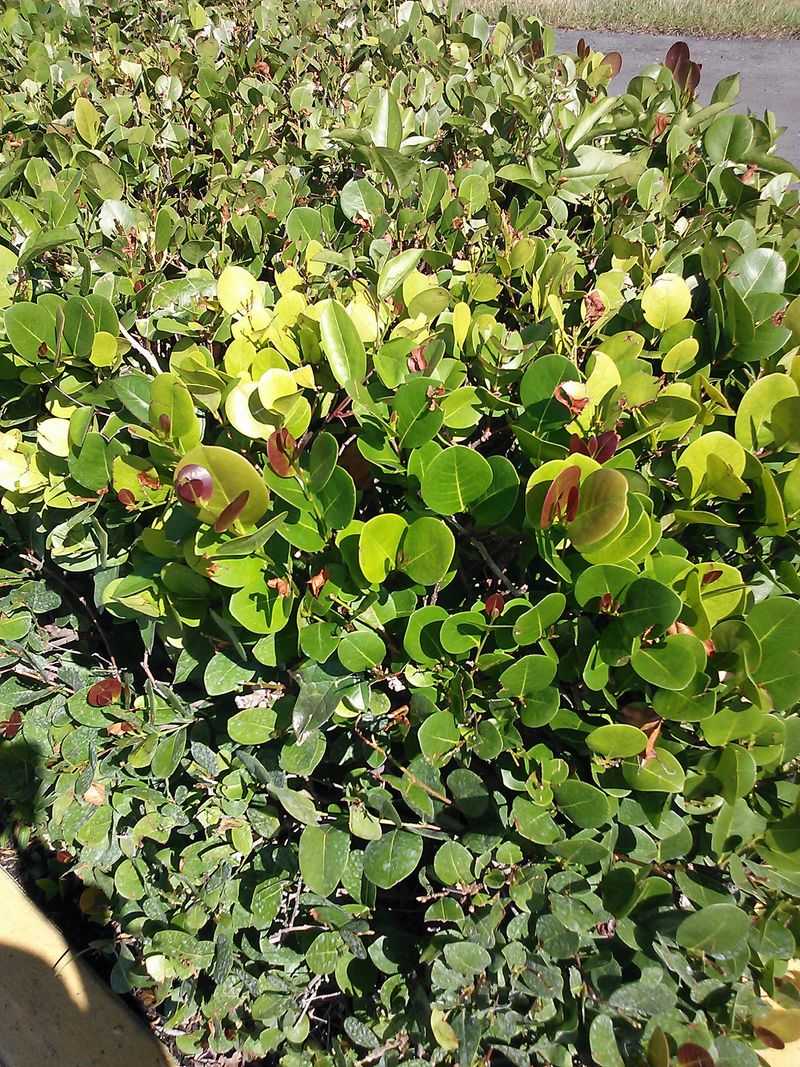
Picture a dense evergreen hedge lining the property, leaves shimmering, new growth blushing coppery-pink.
That is cocoplum, or Chrysobalanus icaco, and it looks perfectly at home from a formal South Florida yard to a sprawling groundcover along the Gulf Coast.
Here is where it gets tricky.
People prune it hard and toss the little plum-like fruits, never knowing they are sweet.
Ripe cocoplums turn pink to purple, soft with a cotton-candy texture, ready to eat right off the branch or cooked into jam.
Even the single pit roasts up with an almond flavor.
Let the fruit fully mature first, because unripe ones taste astringent.
For a thick hedge, space plants 36 to 50 inches apart.
The coastal type stays under 6 feet and can be kept as low as 18 inches for a border.
The inland type climbs 15 to 25 feet if left alone, great for a privacy screen.
Cocoplum loves full sun to moderate shade and shrugs off salt and wind, thriving in zones 10A through 12B.
Water new plants consistently for the first five to seven months, then it becomes remarkably drought tolerant.
A resilient plant that offers beauty and a bite.
3. American Beautyberry Turns Fall Into Purple Jelly
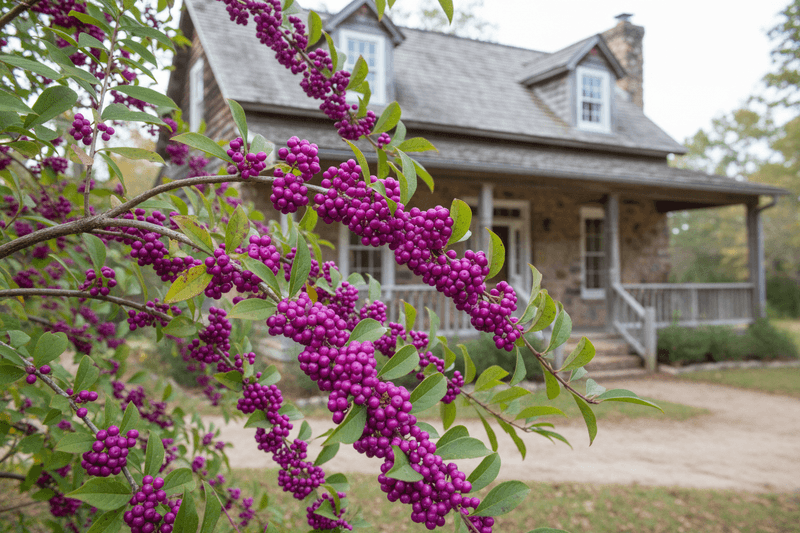
Walk through a pine flatwood in North or Central Florida come fall and you cannot miss it.
Arching branches sag under clusters of metallic-purple berries so bright they look painted.
American beautyberry, Callicarpa americana, is a true showstopper right when other plants start fading.
Most folks assume those berries are strictly for the birds.
But they are edible for people too, once you transform them.
Raw, they are dry and bland.
Cooked into jelly or syrup, they turn sweet with a hint of spice, something close to Asian five spice.
And crushed leaves contain natural compounds that can genuinely help repel mosquitoes and ticks, which is a nice bonus on a porch evening.
Beautyberry asks for almost nothing.
It grows in full sun to partial shade, with the heaviest berry crop coming from sunnier spots.
It handles sandy or loamy soil and goes drought tolerant once settled in.
Expect 3 to 8 feet of height and width, planted 3 to 6 feet apart for an informal screen.
Cut it back hard in late winter, because it fruits on new growth, and fall rewards you with that spectacular purple display.
4. Simpson’s Stopper Smells Like Nutmeg And Feeds Birds
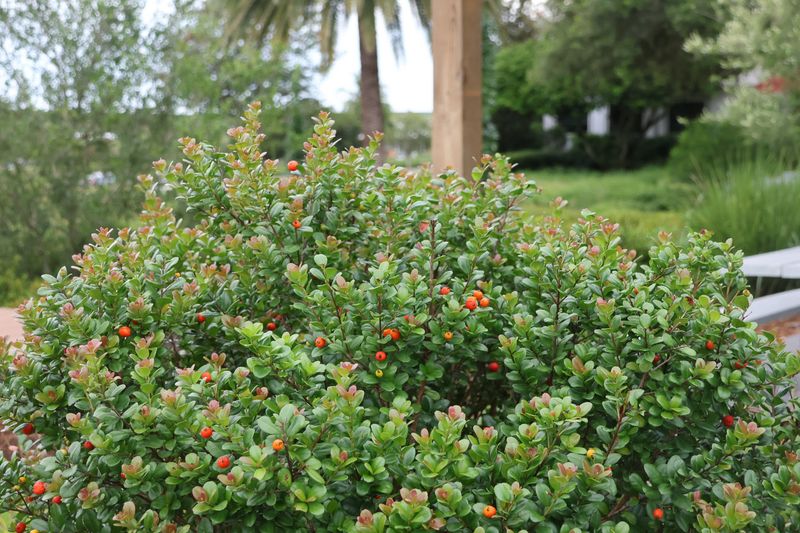
A tidy evergreen hedge with glossy leaves and tiny white flowers that smell wonderful.
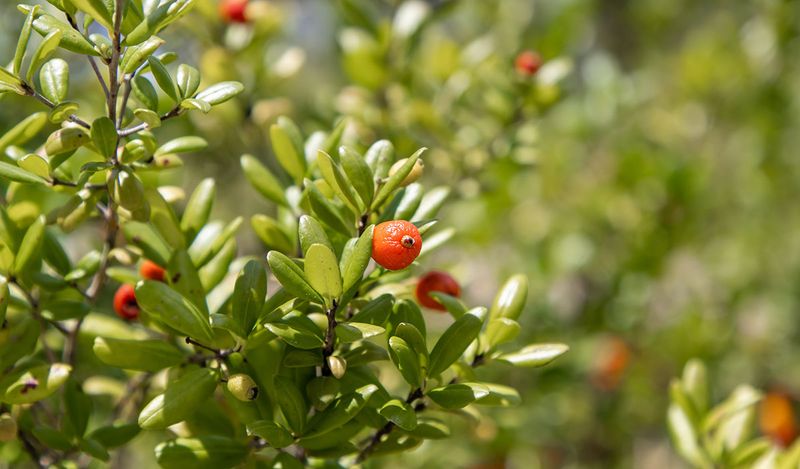
Odds are you have admired Simpson’s stopper, Myrcianthes fragrans, without knowing its name.
It grows from the Panhandle to the Keys and slides into formal landscapes without a fuss.
The catch is that people shear it constantly and never taste what it offers.
After the spring blooms come small, round, reddish-orange berries.
They are edible for humans, mild in flavor, and beloved by mockingbirds, blue jays, and cardinals.
Anything you leave feeds local wildlife.
Crush a leaf and it releases a spicy, nutmeg-like scent that surprises first-time gardeners.
Low-maintenance barely covers it.
Simpson’s stopper takes full sun to deep shade, and in shadier spots its peeling reddish-brown bark becomes a feature all its own.
It tolerates sandy, alkaline, and even poorly drained soil, plus it is highly salt tolerant for coastal lots.
Once established, usually around four years in, it needs little to no extra water.
It adds about a foot a year and can reach 20 feet, or stay a neat hedge spaced 3 to 5 feet apart.
The dwarf ‘Compacta’ holds near 5 feet.
A quiet hero, fragrant and productive all year.
5. Maypop Passionflower Climbs Beautiful And Fruits Wild
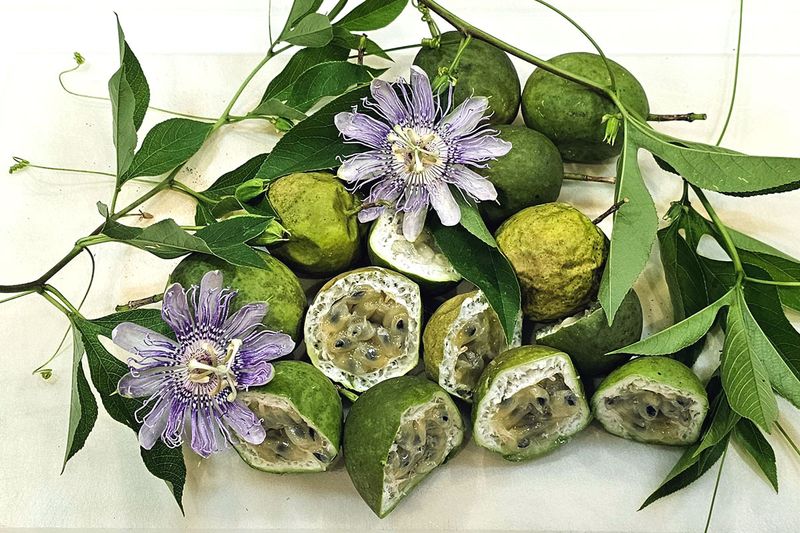
Strolling a Central or North Florida yard in summer, your eye snags on an impossible flower, a swirl of lavender and purple fringe that looks engineered by an artist.
That is maypop passionflower, Passiflora incarnata, a vigorous native vine that climbs fences and arbors with real enthusiasm.
Then you notice the egg-shaped green fruits dangling among the leaves and wonder if they do anything.
They do.
Those maypops are edible, milder than their famous tropical cousins but with a gentle sweetness.
Some eat them fresh, others brighten them in jellies, desserts, or a tea brewed from the leaves.
A tangible reward for a little curiosity.
Passionflower is tough and easy across Florida, hardy in zones 7B through 11.
It wants full sun but tolerates some shade, and it goes drought tolerant once rooted.
Give it a trellis and it will reach 10 to 20 feet fast, spreading from the roots, so plant it where it can roam or keep it in a container with support.
Gulf fritillary and zebra longwing caterpillars will nibble the leaves, but the vine bounces back quickly.
Heavy pruning keeps it in bounds.
Breathtaking blooms, butterflies, and fruit, all from one wild climber.
6. A Season By Season Harvest From One Yard
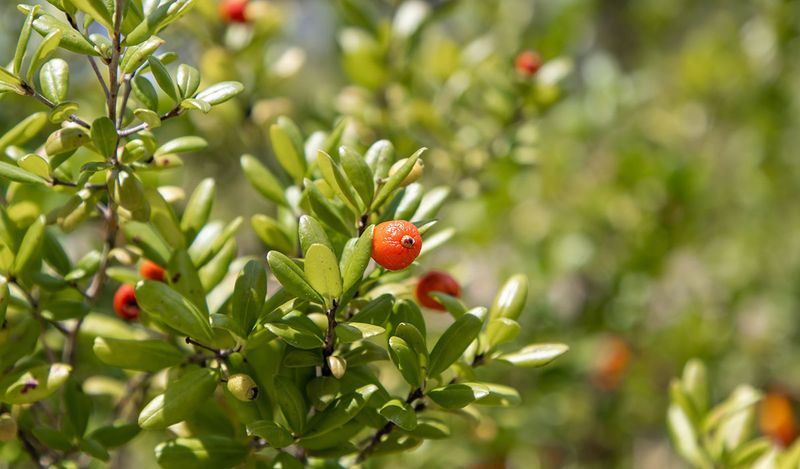
Feeding you every season sounds like a stretch until you stack these plants together.
No single one produces daily all year, but a thoughtful mix hands you something to gather across the calendar while the yard stays handsome.
Late spring and early summer, cocoplum blooms and then ripens fruit through the hot months, perfect for fresh snacking or a batch of jelly.
As summer slides into fall, maypop keeps fruiting and American beautyberry lights up with those purple clusters, good for jelly deep into winter.
Simpson’s stopper fruits heaviest in late summer and early fall, but in warmer South Florida it drops small red berries off and on all year.
Even in the cool winter stretch, beautyberry’s berries can hang on, a splash of color when the yard goes quiet.
The ornamental payoff never stops either.
Cocoplum and Simpson’s stopper stay evergreen.
Beautyberry loses its leaves but shows off jewel-toned fruit against the bare stems.
Passionflower blooms through the warm season.
Choose a few of these and your Florida yard genuinely looks good and feeds you, month after month.
7. Making These Edible Natives Actually Thrive At Home
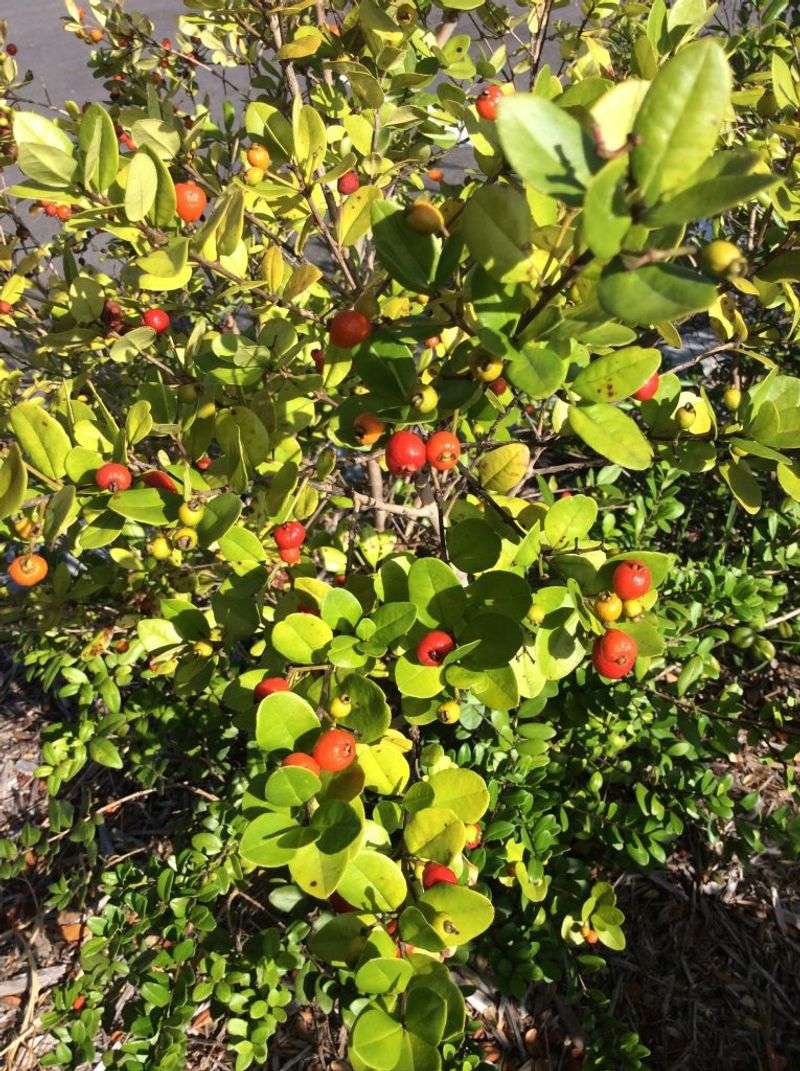
Getting these workhorses established is simpler than most people expect, since they already speak Florida’s language.
The real trick is matching each plant to the right spot before you dig.
Most want full sun to partial shade, so watch your yard for a day and find a place that gets at least 6 hours of direct light for the best flowering and fruit.
Soil matters too.
Cocoplum and Simpson’s stopper handle alkaline conditions common near the coast or over limestone.
All of them need decent drainage, because root rot is the silent antagonist in low, soggy pockets.
Heavy clay improves fast with a little organic matter worked in.
The first year is where success is won.
Water deeply and consistently so roots dig in, keeping the top 6 inches of soil moist for young plants, then ease off as they mature.
After that, drought tolerance kicks in and your water bill thanks you through the winter dry spell.
Prune for shape and production.
Beautyberry and maypop fruit on new growth, so cut them in late winter or early spring.
Cocoplum and Simpson’s stopper take light regular trimming, but do not shear them bald if you want fruit.
UF/IFAS Extension is your best free resource when a question comes up.
Follow these steps and you end up with a yard that looks the part and quietly feeds you.