
That Dead Bird On Your Doorstep Is Your Cat Deciding You Cannot Hunt For Yourself
Follow us on Google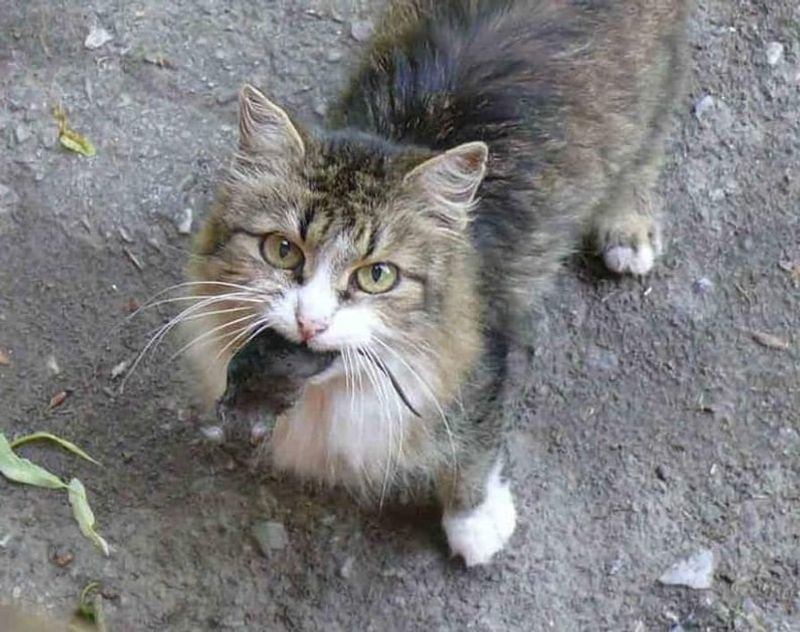
You open the front door and there it is: a small bird on the welcome mat, your cat sitting nearby looking perfectly unbothered.
The popular explanation is that your cat brought it as a lesson, proof that you are too helpless to feed yourself and need a demonstration.
That story is funny, but it is mostly made up, and the truth about what cats actually do with prey is more interesting and more useful to know.
This article separates the real science from the joke, then walks you through what to do next, whether that bird is alive, injured, or already gone.
The Incompetent Kitten Is A Joke, Not A Finding
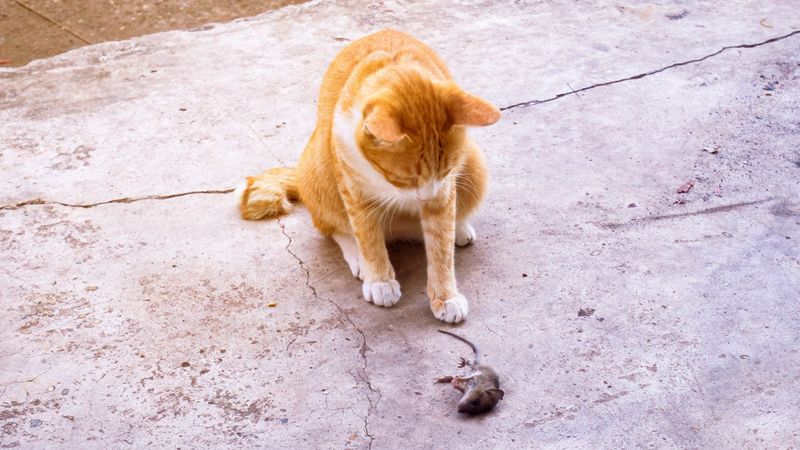
Walk past almost any pet forum and someone will explain that your cat brought you a dead bird because it thinks you are an incompetent kitten who cannot hunt.
The joke lands because it sounds just plausible enough.
Cats do teach kittens to hunt.
You are, in some sense, part of your cat’s household.
So the mental leap feels reasonable.
But researchers studying feline social behavior have not found reliable evidence that adult cats carry prey to human owners with the goal of teaching them to hunt.
A review of feline social organization describes the maternal hunting pattern in detail, but the extension of that pattern to human owners remains speculation, not a documented finding.
The behavior alone cannot tell you what the cat intended, and researchers are careful to say so.
There is another wrinkle worth knowing before you assume your cat is the culprit at all.
The cat may not have killed that bird.
Birds get stunned by window collisions, weakened by illness, or injured before a cat ever finds them.
Cats Protection notes several overlapping reasons a cat might carry prey home, none of which require an intent to educate you.
This article will cover what mother cats genuinely do with kittens, why a familiar doorstep may simply be a convenient place to bring prey, and what you should actually do about the bird in front of you right now.
The incompetent-kitten joke is worth keeping.
The confident explanation behind it deserves a closer look.
Mother Cats Really Do Demonstrate Hunting
Here is where the popular story gets its grip.
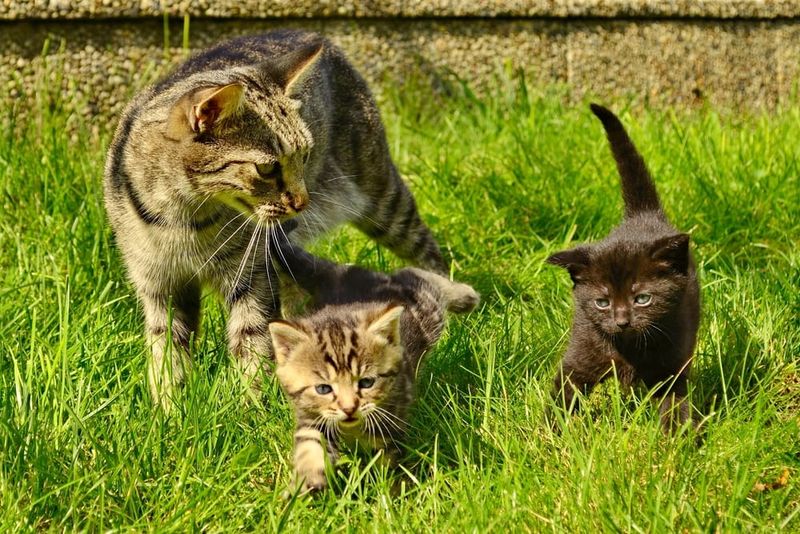
Mother cats do bring prey to their kittens, and the pattern follows a recognizable sequence.
Early on, a mother cat may carry dead prey back to the nest.
As the kittens grow, she begins bringing live prey, sometimes releasing it so the kittens can practice chasing and catching.
Research on predatory behavior in domestic cat mothers, including T.
Caro’s study of maternal predatory teaching, describes this progression clearly.
The mother may also demonstrate hunting movements herself, giving kittens a live model to watch.
Feline social organization research confirms that this kind of skill transfer among cats is documented and real.
The UC Davis guide to feline behavior notes that kittens raised with hunting mothers tend to develop stronger predatory skills, which supports the idea that observation and practice matter in how cats learn.
That is genuine cat-to-cat teaching, grounded in evidence.
The gap appears when people apply this same framework to adult cats and their human owners.
A cat bringing a bird to the doorstep does not prove it is running the same program it would run for a kitten.
The maternal teaching evidence is real.
The leap to “your cat is teaching you” is the part that has not been demonstrated.
Appreciating both sides of that line makes the behavior more interesting, not less.
A Familiar Doorstep Can Be A Safe Place
Forget the classroom metaphor for a moment and think about what the doorstep actually represents to your cat.
Home territory is where a cat feels secure, where competing animals are less likely to interfere, and where resources are predictable.
Carrying prey into that space makes practical sense from the cat’s point of view, even without any teaching motive involved.
Cats Protection explains that cats may bring prey home to eat it in a safer spot, to store it, or simply because the home range is where the cat naturally ends up after a hunt.
Play is another real possibility.
Cats often continue interacting with prey after catching it, and the familiar environment may be where that play continues.
Social familiarity is also worth naming as a possibility.
A cat that shares its home range with people it trusts may bring objects, including prey, into that shared space as a normal part of moving through its territory.
That could reflect a kind of comfort or attachment in a broad sense, though it does not confirm affection as the specific motive.
What this means practically is that several explanations fit the same behavior: safe-territory use, eating, storage, play, instinct, and social familiarity all remain on the table.
Researchers cannot determine which one applies from the behavior alone.
The doorstep is probably not a classroom.
But it is almost certainly a place your cat considers its own, and that is enough of an explanation to work with.
The Bird May Not Be Your Cat’s Kill
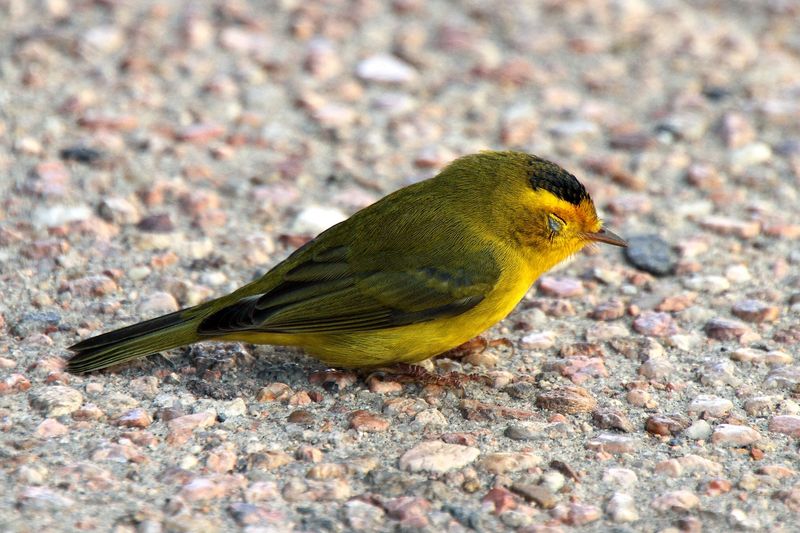
Finding a bird near your cat does not prove your cat injured it.
Birds hit windows with enough force to stun or kill them, and a cat that finds a stunned bird on the ground may simply pick it up and carry it home.
A Frontiers in Ecology and Evolution study on cat predation found that some birds recovered near cats showed signs of blunt-force trauma consistent with a window strike rather than a cat attack.
The cat may be an opportunist, not the original cause of harm.
Even so, cat contact is its own medical emergency for a bird.
Cat saliva carries bacteria that can cause severe or fatal infection in wildlife, and puncture wounds are often too small to see.
A bird that was in a cat’s mouth or scratched by a cat needs professional advice quickly, even when it looks physically fine.
One important distinction: a fledgling bird hopping on the ground is not necessarily injured.
Young birds learning to fly often spend time on the ground while their parents continue feeding them.
That is normal.
A fledgling that has been caught or touched by a cat is a different situation entirely, because even a tiny scratch can lead to a dangerous infection.
If the bird is alive, move the cat and any other pets indoors immediately and keep them away.
Do not attempt to release the bird, and do not offer food or water without direction from a professional.
Audubon’s guidance on injured birds and the U.S.
Fish and Wildlife Service both recommend contacting a licensed wildlife rehabilitator or your state wildlife agency as the next step.
Washington Department of Fish and Wildlife and Tufts Wildlife Clinic both emphasize that cat-contact cases need prompt professional evaluation, not a wait-and-see approach.
Handle A Dead Bird Without Creating A Health Scare
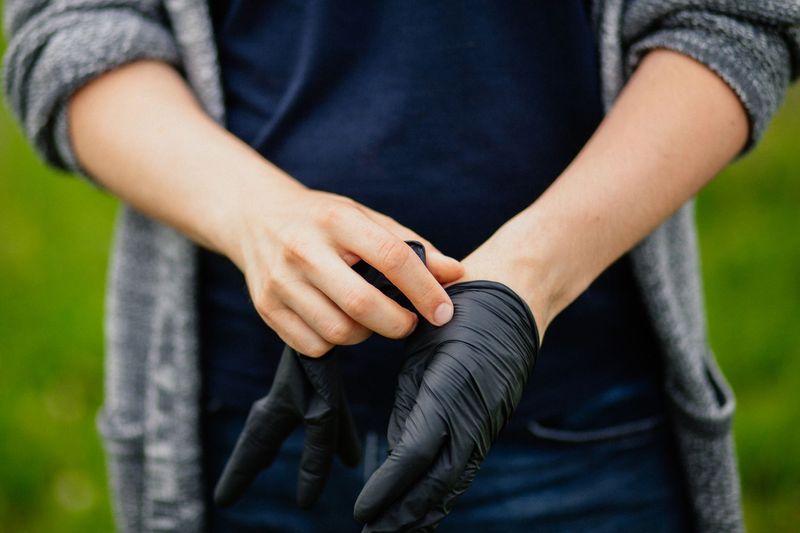
A dead bird on the doorstep is upsetting, but the handling steps are straightforward.
Do not pick it up with bare hands.
Pull on disposable gloves or use an inverted plastic bag as a makeshift glove, scoop the bird up, then seal the bag and place it inside a second bag before disposing of it.
Wash your hands thoroughly afterward with soap and water.
CDC guidance on dead birds and West Nile virus recommends this same approach, and CDC surveillance guidelines note that local health departments may want dead birds reported during active monitoring periods.
Check your county or state health department’s current rules before disposing of the remains, especially if multiple sick or dead birds have appeared in your area recently.
For your cat, the concern is different.
A cat that handled, ate, or spent time near a sick or dead bird should be monitored for the next several days.
CDC guidance on bird flu in pets identifies outdoor contact with sick or dead birds as a possible exposure route for cats, though most documented US cat infections have involved farm settings, raw pet food, or unpasteurized milk rather than a single backyard songbird.
Symptoms worth reporting to a veterinarian include fever, fatigue, poor appetite, eye or nasal discharge, breathing difficulty, tremors, incoordination, or sudden vision changes.
One dead bird at the door does not mean your cat has been exposed to avian influenza, but it does mean a quick check-in with your vet is reasonable if anything seems off in the days that follow.
Give Indoor Hunting Somewhere To Go
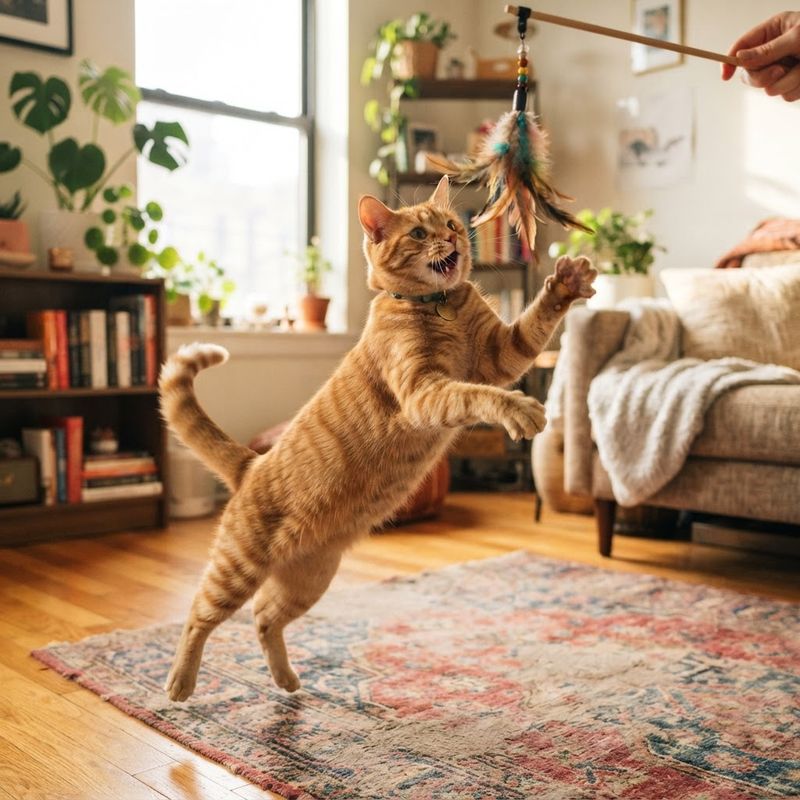
Hunting is not a bad habit your cat picked up from questionable influences.
Stalking, chasing, pouncing, biting, and catching are normal predatory behaviors that are largely separate from hunger.
Feline Veterinary Medical Association environmental guidelines are clear that food availability does not eliminate the hunting drive.
A well-fed cat will still hunt, because the urge to hunt is not the same as the urge to eat.
What you can do is give that drive somewhere useful to go indoors.
Interactive toys that mimic prey movement, such as feather wands and small motorized toys, let a cat run through the full predatory sequence without a live animal involved.
FeVMA guidance on addressing undesirable behaviors recommends at least two short play sessions daily, timed to the cat’s natural activity peaks, with sessions ending in a catch so the cat finishes the sequence rather than stopping mid-chase.
Food puzzles add another layer.
A cat that has to work for its food engages some of the same mental energy it would spend on a hunt.
ASPCA feline enrichment guidance suggests rotating puzzle types regularly to keep the challenge fresh.
Window perches, hiding spaces, vertical climbing areas, and scratching surfaces round out an indoor environment that gives a cat real options for how to spend its energy.
VCA Animal Hospitals notes that enrichment does not guarantee an immediate change in outdoor hunting behavior, but it does provide an outlet, and cats with more indoor stimulation tend to be less restless overall.
Think of it as redirecting the behavior rather than erasing it.
Controlled Outdoor Access Reduces Repeat Encounters
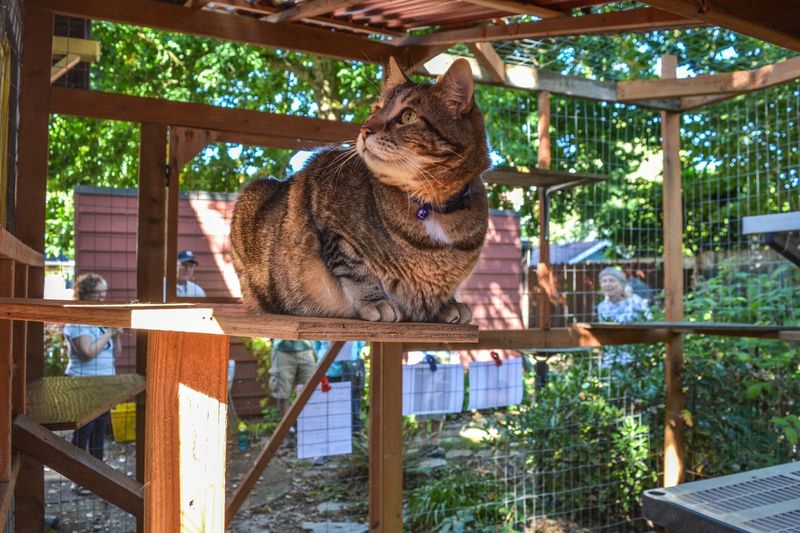
Preventing unsupervised roaming is one of the most reliable ways to reduce outdoor wildlife encounters.
That does not mean your cat has to give up the outdoors entirely.
A secure outdoor enclosure, often called a catio, lets a cat experience fresh air, sunlight, and outdoor sounds without the ability to chase wildlife.
Leash-acclimated walks offer a similar benefit for cats that tolerate a harness.
The Humane Society’s cat care guidance recommends gradual transitions for formerly free-roaming cats, starting with longer indoor periods, indoor feeding and play, window perches, and climbing areas before moving to supervised outdoor time.
The transition takes patience, but most cats adjust.
AVMA animal welfare guidance supports controlled outdoor access as a practical middle ground between full confinement and unsupervised roaming.
If your cat continues to go outside freely, collar-mounted tools can offer some reduction in captures, though they are not a substitute for limiting roaming.
A USGS-supported study on the Birdsbesafe collar cover found that cats wearing the brightly colored cover recovered 2.7 times fewer birds per cat, but the researchers described it as one tool within a broader effort, not a standalone solution.
Bells have a more mixed record.
Research in Applied Animal Behaviour Science found variable results depending on prey type and location, and the Frontiers in Ecology and Evolution collar study suggests bright visual covers may be more useful for birds specifically.
Any collar used should be a properly fitted breakaway type, checked regularly for fit and wear.
Collar tools reduce risk at the margins.
Controlled access changes the situation at its source.
Keep The Joke, Follow The Evidence
Back at the doorstep, the scene is the same but the explanation is more honest.
Your cat brought something home.
Why it did that is genuinely uncertain.
Cats Protection and feline social organization research both point to a range of overlapping possibilities: safe-territory use, prey storage, eating, play, instinct, and social familiarity.
None of those requires a teaching motive, and none rules one out either.
Researchers cannot determine the cat’s specific intention from the act alone.
The maternal teaching story explains why the incompetent-kitten joke feels convincing.
Mother cats do bring prey to kittens and sometimes demonstrate or allow hunting practice.
That part is real.
The part where your adult cat extends the same program to you, the six-foot-tall person who operates the can opener, has not been demonstrated by anyone studying cat behavior.
And the bird itself may not be your cat’s victim at all.
A window strike, a prior illness, or simple bad luck may have done the original damage before your cat arrived on the scene.
Cat contact still creates a real infection risk for live birds regardless of how the injury happened, so the response is the same: separate the cat, contact a wildlife rehabilitator, and follow professional direction.
The practical order of operations is straightforward.
If the bird is alive, protect it and get professional help fast.
If it is dead, handle it carefully and check local reporting rules.
Then look at enrichment and controlled outdoor access to reduce how often this scene repeats.
FeVMA environmental guidelines make clear that the hunting drive is not going anywhere, which means the most useful thing you can do is work with it rather than against it.
The joke stays.
The confident backstory gets an honest edit.