
The Underrated North Carolina Native That Keeps Blooming Straight Through a Red-Clay Drought
Follow us on Google
Most summers in the Piedmont, there comes a week in July when the garden just gives up. The coneflowers droop, the black-eyed Susans go pale, and the water bill climbs while the yard looks worse.
One plant in that same bed, though, can hold its yellow flowers like the heat is someone else’s problem, and most gardeners walk right past it at the nursery without a second look. That plant is threadleaf coreopsis, and once it settles into the right Piedmont spot, it can carry a real summer display through ordinary dry spells without asking much in return.
Meet North Carolina’s Threadleaf Coreopsis
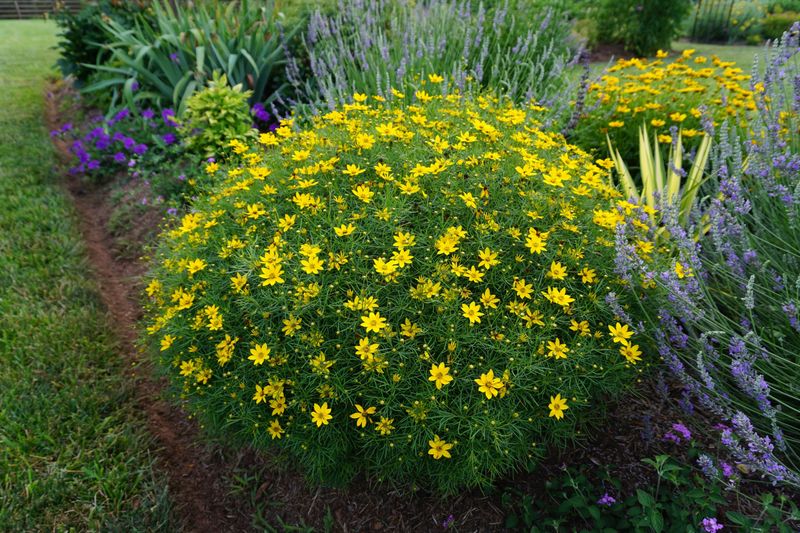
Pull up the NC State Extension Gardener Plant Toolbox and search for threadleaf tickseed, and you will find it listed under the current botanical name Anacis verticillata, though many nurseries and older references still use Coreopsis verticillata. Both names refer to the same plant.
When you are standing at a garden center reading a tag, either name on the label is the one you want.
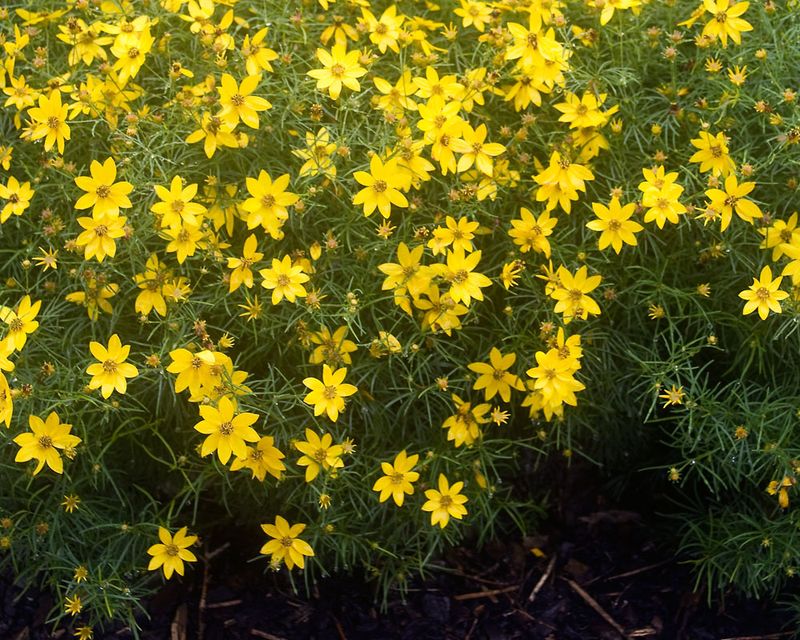
The plant forms a dense, fine-textured clump with foliage so thin it looks almost feathery. Mature plants typically reach 2 to 3 feet tall and spread about 1.5 to 2 feet wide.
Small, yellow, daisy-like flowers rise above that airy green mass from late spring into summer, and in a good year with favorable conditions, the display can stretch into late summer or early fall.
In North Carolina, threadleaf coreopsis is most at home in the central and eastern Piedmont, where it occurs naturally in dry to moderately moist open woodlands, rocky slopes, and wooded borders. It is less common in the mountains, western Piedmont, and Coastal Plain, so gardeners in those regions should match expectations to local conditions rather than assuming the same performance.
One thing worth saying clearly: this plant can maintain a long summer display through ordinary dry weather once it is established, but the evidence does not support claiming it will flower continuously through every severe drought without any care. That distinction matters when you are planning a border you actually want to rely on.
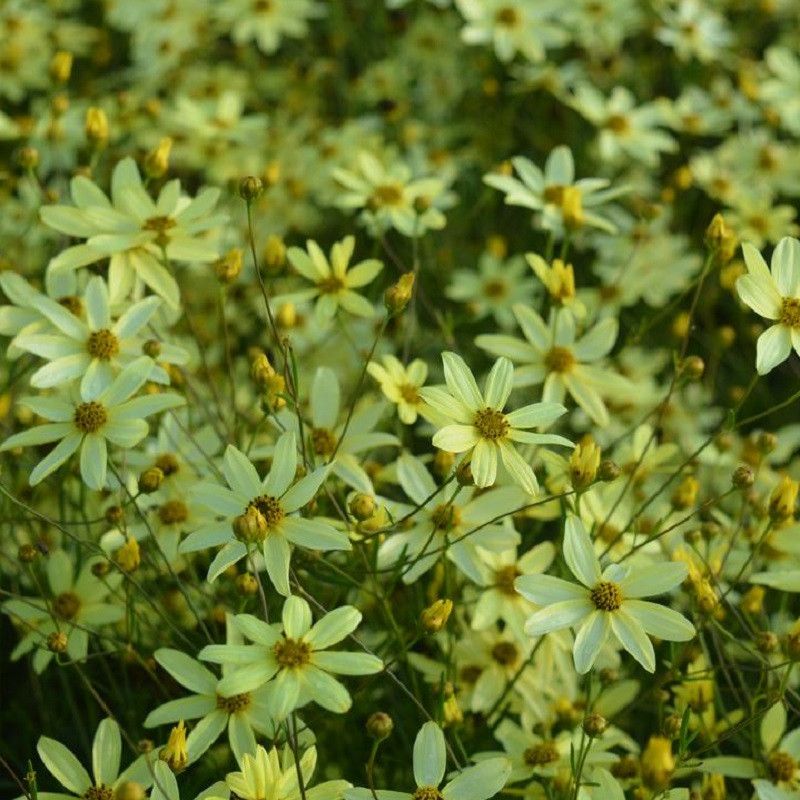
Also worth noting: threadleaf coreopsis is not interchangeable with every plant sold under the coreopsis name. Eared coreopsis, lanceleaf coreopsis, hybrids, and named cultivars differ in size, bloom timing, spread, and drought response.
Match the botanical name to the plant you actually want, and confirm the mature size on the nursery label before you leave the parking lot.
Why It Holds Up In Dry Weather
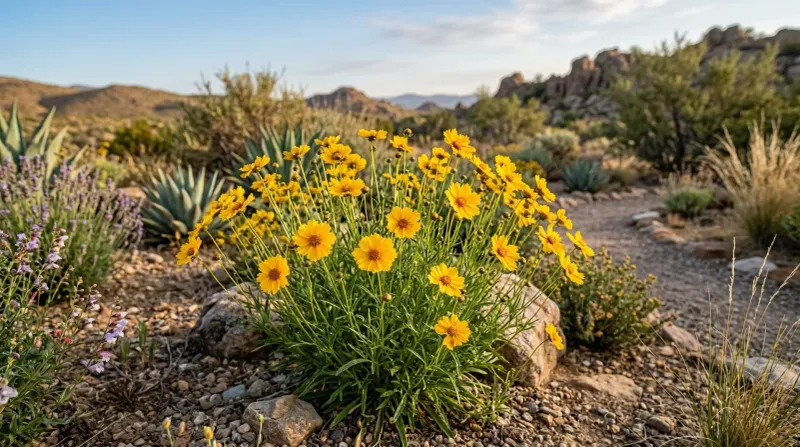
Here is where it gets practical. NC State Extension lists threadleaf coreopsis as drought tolerant, heat tolerant, and humidity tolerant, which puts it in a short category of perennials that actually suit a Piedmont summer rather than just surviving one.
Those traits are real, but they come with a condition: the plant needs to be in the right place first. Full sun, meaning at least 6 hours of direct light per day, gives it the energy to hold strong stems and keep producing flowers.
Good drainage keeps the crown and roots from sitting in moisture after a storm. Lean soil, not overly rich or frequently fertilized, keeps the stems upright rather than floppy.
Excessive moisture or fertility can actually make the plant worse. Gardeners sometimes respond to a disappointing summer border by adding compost or fertilizer, and with this plant, that instinct can backfire.
Overly rich or wet conditions encourage weak, sprawling growth that looks tired even when the plant is technically healthy.
Picture two spots in a typical Piedmont yard. One is a raised sunny border along a fence line where rainwater runs off quickly and the soil bakes between storms.
The other is a low pocket near a downspout where water sits against plant crowns for a day or two after every afternoon thunderstorm. Threadleaf coreopsis can hold its display in the first spot.
In the second, no amount of drought tolerance will save it from root problems during a wet stretch.
During a genuinely prolonged drought, even an established plant can show stress. Drought tolerance means the plant can handle ordinary dry spells without constant irrigation, not that it ignores every weather condition equally.
Matching the site is what makes that tolerance actually useful.
Red Clay Needs Drainage, Not Hype
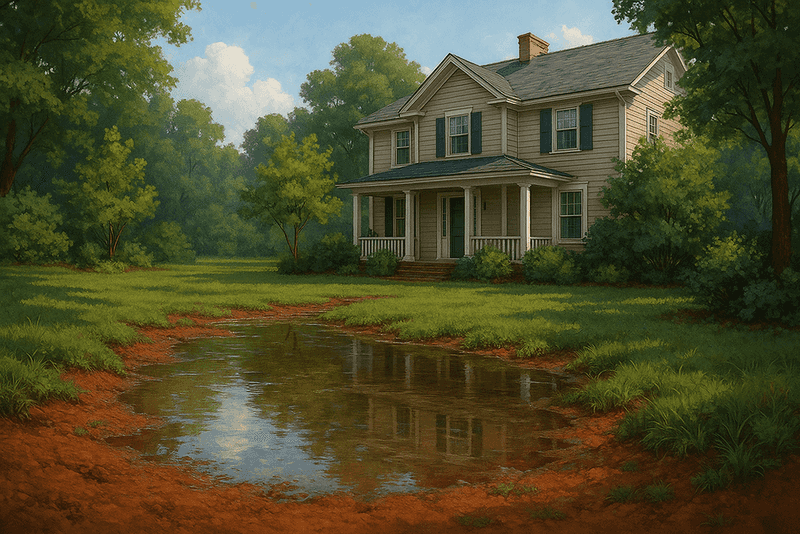
Red clay gets a complicated reputation in Piedmont yards. On one hand, NC State does list clay as an acceptable soil texture for threadleaf coreopsis.
On the other hand, the compacted subsoil that shows up in many residential Piedmont lots is a genuinely different problem, and treating it as acceptable without correction is a mistake that costs plants their first season.
Compacted clay can restrict root growth, shed irrigation water rather than absorbing it, and stay wet for days after a heavy rain. NC State Extension identifies compacted Piedmont subsoil as a common landscape problem and recommends addressing compaction before planting, using organic matter appropriately, and considering raised beds where drainage remains consistently poor.
Before you plant, do a simple drainage check. Dig a hole about 12 inches deep, fill it with water, and watch how long it takes to drain.
If water is still sitting in that hole after several hours, you have a drainage problem that needs to be solved before a threadleaf coreopsis goes in the ground. A slope, a raised bed, or a border with loosened soil structure can all work.
A low pocket that collects stormwater will not.
Soil texture and soil structure are not the same thing. NC State Extension’s soils guidance explains that structure, meaning how soil particles clump and how air and water move through them, matters as much as whether the soil is clay, sand, or loam.
You can have clay that drains reasonably well once it is loosened and amended correctly, and you can have clay that sheds every drop of irrigation off the surface like a parking lot.
Do not reach for a bag of rich compost as an automatic fix, and do not add lime or fertilizer without a soil test. NC State’s plant profile specifically warns that overly rich or moist conditions weaken this plant’s stems.
The goal is workable, well-drained soil, not a heavily amended bed that holds moisture and pushes lush growth.
Give New Plants A Fair Start
Drought tolerance is something a plant earns after it has been in the ground long enough to root deeply into the surrounding soil. A transplant sitting in a freshly dug hole on a hot August afternoon has not earned it yet, and treating a new plant like an established one is one of the most common ways to lose a native perennial in its first summer.
NC State recommends spring or fall planting to reduce the irrigation burden on new plants. Fall planting in particular gives roots several months to establish before summer heat arrives.
If you plant in summer, plan to water consistently through the first several weeks, not just the first few days.
For spacing, NC State’s landscape management guidance notes that spring and fall are the preferred planting windows for perennials in North Carolina. A practical starting point for threadleaf coreopsis is 18 to 24 inches between plants, though NC State’s plant profile gives a broader range of 12 inches to 3 feet depending on cultivar and desired density.
Read the nursery label before you commit to spacing, because named cultivars can vary noticeably in mature width.
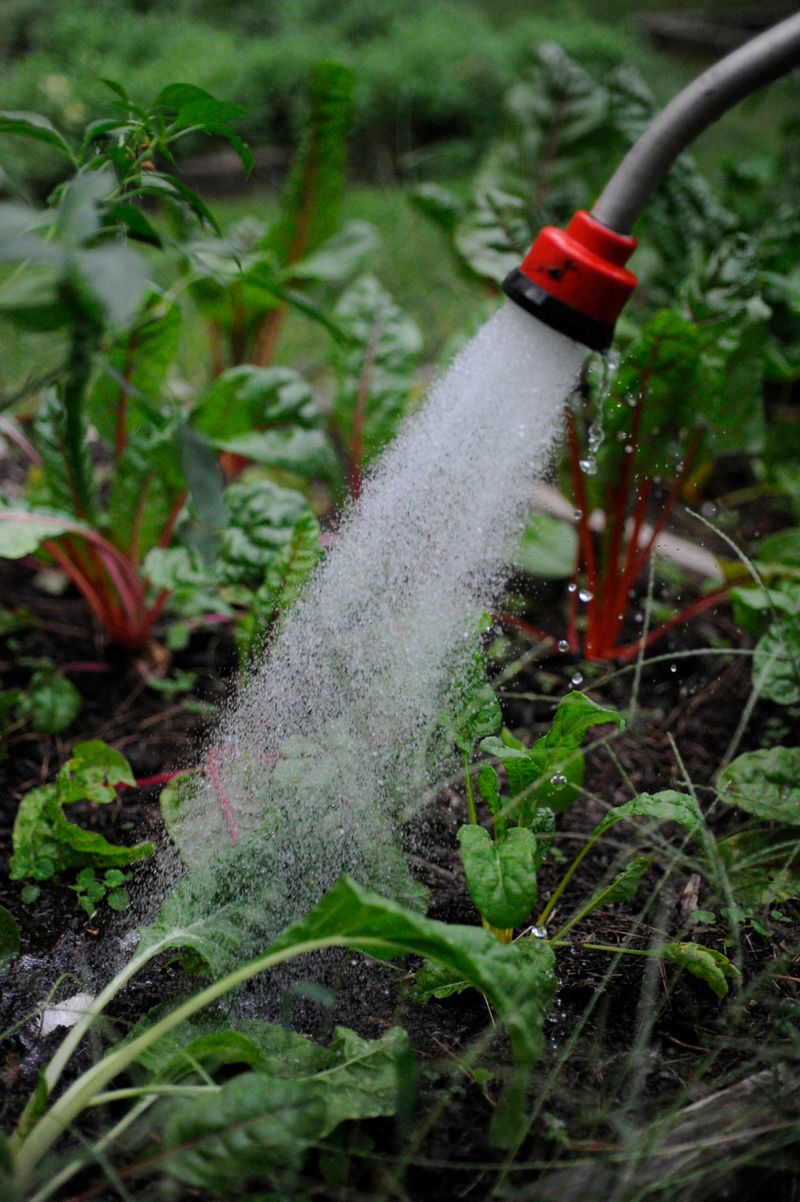
When you water a new plant in clay soil, slow is better than fast. A quick blast from a hose can run off the surface before it reaches the root zone, which means the plant stays dry even though the surrounding soil looks wet.
NC State’s North Carolina watering guidance emphasizes deep, infrequent watering and warns that clay accepts water slowly, making runoff a real risk when gardeners apply water too quickly.
Let the water soak in gradually, then check the soil a few inches down before watering again. Shallow daily sprinkling keeps the top inch moist while the root zone stays dry, and it encourages roots to stay near the surface rather than growing deeper where they will find more reliable moisture during a dry spell.
The goal is to build a plant that can genuinely use its drought tolerance, not one that depends on you to water it every other day forever.
Sunlight And Lean Soil Do The Heavy Lifting
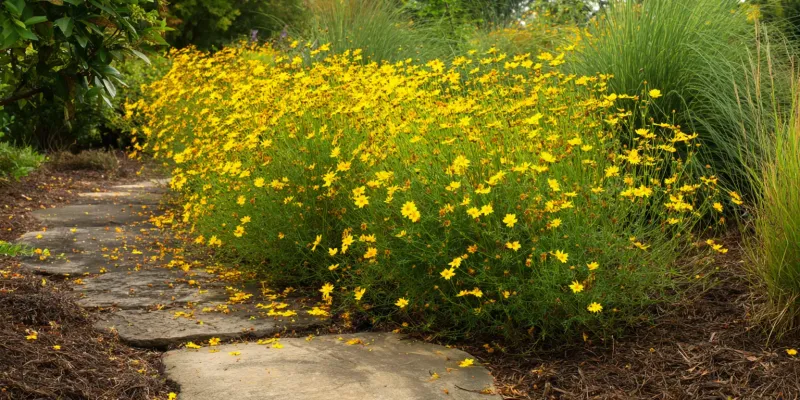
After establishment, the two things that protect a threadleaf coreopsis display more than anything else are sunlight and restraint. Full sun means at least 6 hours of direct light per day, and more is generally better for stem strength and flower production.
The plant can tolerate partial shade, but flowering tends to weaken and stems can get lax when light drops below that threshold.
Restraint means not adding things the plant does not need. NC State’s plant profile is direct about this: overly rich or moist soil produces weak, floppy stems.
If your threadleaf coreopsis is sprawling by midsummer and the flowers are getting lost in a tangle of foliage, the most likely culprit is not the plant’s genetics. It is the soil conditions or the light level.
Resist the urge to fertilize when bloom disappoints. More fertility in lean-soil natives often means more green growth and fewer flowers, not the payoff gardeners expect.
If you want to troubleshoot a struggling plant, look at sun exposure first, then drainage, then soil richness. Those three factors explain most of the variation in how this plant performs from yard to yard.
Good spots in a Piedmont yard include a sunny border along a south- or west-facing fence, a slope where water runs off naturally, a meadow edge that gets full afternoon sun, or a naturalized bed away from downspouts and low areas. The plant will gradually fill its space through rhizome spread, so give it room to move without crowding neighboring perennials.
An 18-to-24-inch starting gap gives it space to establish without immediately overrunning whatever is planted beside it.
The low-input approach is genuinely the right one here. Match the site, skip the fertilizer, and let the plant do what it does naturally in the dry, sunny habitats where it actually thrives.
A Summer Shear May Bring More Flowers
The bloom calendar for threadleaf coreopsis in North Carolina is a range, not a fixed date. North Carolina’s vascular plant records list flowering from May through July, while garden references describe a display that can extend into late summer or early fall under favorable conditions.
How long your plant actually blooms depends on rainfall, heat, light, plant age, cultivar, and how you manage it during the season.
Missouri Botanical Garden recommends cutting the plant back in mid to late summer to promote rebloom and reduce sprawling foliage. NC State uses more careful language, noting that shearing after blooming will sometimes produce fall flowers.
Both sources agree that a shear is worth trying. Neither promises a guaranteed second flush, and you should not expect one every time.
If you decide to shear, cut the plant back by roughly one-third after the first main flush of bloom fades. Do not cut it to the ground.
The goal is to remove spent stems, tighten the clump’s shape, and give the plant a chance to push new growth before fall temperatures arrive. Whether that new growth produces flowers depends on how much summer is left and what the weather does.
The clump spreads gradually by rhizomes and can also self-seed. NC State lists division in fall or early spring as a propagation option, and that is the right time to divide when clumps become crowded or begin moving beyond the area you intended them to occupy.
There is no fixed schedule for this. Watch the plant, and divide when the clump looks congested or when it starts edging into a neighbor’s space.
Division also gives you free plants to fill in other sunny spots in the yard, which is one of the quieter rewards of growing a native that actually wants to be there.
The Honest Payoff Goes Beyond Yellow Flowers
Yellow flowers through a dry July are a real thing to look forward to on a water-bill-conscious summer afternoon. But threadleaf coreopsis offers something beyond the color.
NC State lists it as a native wildlife plant that supports butterflies and other pollinators through nectar, and its seeds are eaten by songbirds once the flowers finish. That is a useful combination in a sunny Piedmont border, though one plant does not create complete habitat by itself.
NC State Extension’s wildlife landscaping guidance frames native plants as one layer of a broader approach to supporting yard wildlife, and that framing fits here. Threadleaf coreopsis is deer and rabbit resistant, which is genuinely helpful in many Piedmont neighborhoods, but resistant means less likely to be eaten, not immune.
Wildlife pressure varies by location and how much else is available to browse.
Native status is also not a guarantee of equal performance across the whole state. NC State’s native plants handbook emphasizes matching plants to the specific soil, moisture, drainage, and regional conditions of the planting site.
Threadleaf coreopsis is most relevant to the central and eastern Piedmont, where it occurs naturally. Gardeners in the mountains, western Piedmont, or Coastal Plain should confirm local adaptability before planting a full border of it.
The practical checklist before you buy: confirm the species name is Anacis verticillata or Coreopsis verticillata, check that the spot gets at least 6 hours of direct sun, verify that water drains rather than pools after rain, and plan to water the plant consistently through its first season. After that, treat drought tolerance as one useful trait in a broader resilient planting plan, not as permission to ignore the plant entirely.
In a correctly placed Piedmont bed, threadleaf coreopsis can hold a useful summer presence during ordinary dry weather, keep pollinators moving through the yard, and feed a few goldfinches by September. That is a genuinely good return on one plant, and it does not require pretending that drought causes no stress at all.